

The Global Scholarly Directory.
Discover world-class academic programs curated for the modern intellectual. Search through 19877+ degrees and professional certificates.
 EDUCBA
Java Spring Boot - Advanced
This advanced-level course empowers learners to design, develop, and monitor enterprise-grade applications using Spring Boot. Covering a wide range of advanced features, the course begins with a deep dive into Spring Boot Actuator for health checks and custom endpoints. It then transitions into NoSQL integration, guiding learners to construct data solutions with MongoDB, Solr, and Elasticsearch. Learners will then analyze and build scalable microservices architectures, incorporating concepts like service discovery, load balancing, and service segmentation. The course further covers custom metric development and endpoint exposure, enhancing application observability and control. Deployment proficiency is achieved through modules that demonstrate how to manage environments with Spring Boot profiles, YAML configurations, and real-world deployment techniques. Lastly, learners will implement robust file upload mechanisms, including AJAX-powered multi-file handling, solidifying both backend and frontend integration skills. By the end of this course, participants will be able to: Construct scalable and modular Java applications using microservices. Implement NoSQL data access strategies in a Spring Boot environment. Design and monitor custom health checks, metrics, and actuator endpoints. Deploy Spring Boot applications across environments using configuration profiles. Integrate file upload capabilities with advanced client-side interaction. Ideal for backend developers and Java professionals looking to apply, evaluate, and synthesize modern development patterns using the Spring Boot framework.
 Google
Den UX-Designprozess beginnen: Empathie aufbauen, Fokus definieren, Ideen entwickeln
„Den UX-Designprozess beginnen: Empathie aufbauen, Fokus definieren, Ideen entwickeln“ ist der zweite Kurs des Zertifikatsprogramms, mit dem Sie die nötigen Fähigkeiten erwerben, um sich für Einstiegspositionen im Bereich User Experience Design (UX-Design) zu bewerben. In diesem Kurs absolvieren Sie die ersten Phasen des Entwurfsprozesses für ein Projekt, das Sie in Ihr Portfolio aufnehmen können. Sie lernen, wie Sie Empathie mit Nutzenden aufbauen, ihre Probleme verstehen, ihre Anforderungen mit Problembeschreibungen definieren und Lösungsideen finden. Der Kurs wird von aktuell bei Google tätigen UX-Designschaffenden und UX-Forschenden geleitet. Bei praktischen Aktivitäten werden Sie reale UX-Designszenarien simulieren. Lernende, die die sieben Kurse dieses Zertifikatsprogramms absolvieren, können sich auf Einstiegspositionen im Bereich UX-Design bewerben. Es sind keine Vorkenntnisse erforderlich. Nach Abschluss dieses Kurses können Sie: – Gängige Methoden der UX-Forschung beschreiben – Empathie mit Nutzenden aufbauen und ihre Probleme und Bedürfnisse verstehen – Empathy Maps, Personas, User Storys und User Journey Maps erstellen und damit die Anforderungen der Nutzenden besser kennenlernen – Bedürfnisse der Nutzenden mithilfe von Problembeschreibungen definieren – Ideen für mögliche Problemlösungen entwickeln – Wettbewerbsaudits durchführen – Voreingenommenheiten und Verzerrungen in der UX-Forschung identifizieren und damit umgehen – Mit dem Design einer mobilen App für ein neues Projekt für Ihr professionelles UX-Portfolio beginnen
 University of Colorado System
C++ Class Development
This course is the third course in the specialization about learning how to develop video games using the C++ programming language and the Unreal game engine on Windows or Mac. This course assumes you have the prerequisite knowledge from the previous two courses in the specialization. You should make sure you have that knowledge, either by taking those previous courses or from personal experience, before tackling this course. Throughout this course you'll continue building your foundational C++ and Unreal knowledge by exploring more C++ and Unreal topics. Module 1: Learn how abstraction helps us develop good software and design and implement console app classes Module 2: Explore how functions really work "under the covers" Module 3: Design and implement Unreal classes and include them in a game. Discover how strings work in both C++ and in an Unreal HUD Module4: Expand your understanding of pointers and add sound effects to an Unreal game
 Coursera
Design Ethical AI Rewards and Policies
"Design Ethical AI Rewards and Policies" is an engaging course for professionals, data scientists, AI practitioners, and decision-makers seeking to implement responsible AI practices in their organizations. In an era where AI systems significantly impact business operations, understanding how to balance performance metrics with ethical considerations is crucial. This course provides a comprehensive foundation in the principles of reinforcement learning, focusing on creating effective reward functions that align with business goals while ensuring compliance with ethical standards. Through hands-on labs, interactive dialogues, and real-world case studies, you will learn to identify and mitigate biases in AI policies, including adherence to global regulatory frameworks like GDPR. By integrating theory with practical application, this program equips you with the skills to lead initiatives that prioritize fairness and accountability in AI development. Whether your goal is to enhance customer interactions or ensure ethical governance, this course lays the groundwork for building trustworthy AI systems that deliver value without compromising integrity.
 O.P. Jindal Global University
Statistical Methods for Psychological Research
This course focuses on enhancing the understanding of statistics for psychology students and introduces some introductory and advanced statistical concepts. The course presents statistical principles and techniques used in psychology, encapsulating an understanding and application of statistics in critical, creative and fun ways. The course aims to equip students with knowledge and skills in basic statistical methods progressively covering differences between descriptive and inferential statistics, analysis of variance, simple linear regression, as well as some non-parametric statistical techniques. The course endeavors to provide students with proficiency in both fundamental and advanced statistical methodologies, thereby enabling a deeper comprehension of concepts and their subsequent application in future scholarly research.
 National Taiwan University
工程圖學 3D CAD
腦袋裡常裝著許多立體物件的形貌,想分享出來,可是不知道怎麼表達?怎麼將心中那個立體的形象,「繪製」出來呢?3D建模技術,幫助我們建構最直觀可以理解的立體模型,跳過利用平面圖解讀三維物體的過程,最能直接有效地表達我們的想法。 我們設計了許多範例,讓大家可以快速地理解3D CAD軟體 Sketchup 的使用邏輯,與繪製技巧,從入門到進階,介紹SketchUp 各項3D建模技術。完成『工程圖學3D CAD』後,把天馬行空的想法,以3D建模技術繪製出來,不再是難事! 本課程目標是建構三維模型,電腦實作為主要講授教材,以豐富有趣的範例與完整的繪製過程,步驟化地引導如何使用Sketchup這套3D建模軟體的技術。完成『工程圖學3D CAD』,你將有能力將存在於想像裡的立體物件,透過3D建模,實現出來!
 Coursera
Créer des visuels Facebook avec PicMonkey pour entreprises
Ce projet vous permet de créer des visuels variés pour Facebook en utilisant PicMonkey, outil de conception de designs en ligne. Vous serez capables de créer des designs personnalisés pour votre page Facebook professionnelle afin d’améliorer la visibilité de votre marque en ligne et de fidéliser vos clients. Vous aurez toutes les compétences de base pour créer facilement et rapidement des éléments graphiques variés pour la page business de votre marque ou petite entreprise. Ce projet est destiné aux chefs et membres de petites entreprises ou startups.
 EDUCBA
Master Advanced Flutter App Development
Learners will analyze Flutter’s widget architecture, implement interactive UI components, and design validated, user-driven mobile applications using advanced Flutter concepts. They will develop login workflows, build functional calculators, create dynamic task-based applications, and apply robust form validation techniques to ensure data accuracy and usability. This course empowers learners to move beyond basic Flutter knowledge and confidently build real-world mobile interfaces. By working through practical examples such as login pages, home screens, to-do lists, media integration, and advanced text form fields, learners gain hands-on experience with state management, user input handling, and responsive layout design. Each lesson emphasizes clean UI structure, logical separation of concerns, and best practices used in professional Flutter development. What makes this course unique is its example-driven, incremental approach, where learners see complete features evolve step by step rather than isolated code snippets. The course is ideal for developers who already understand Flutter fundamentals and want to apply, optimize, and validate complex UI interactions. Upon completion, learners will be equipped to design scalable Flutter interfaces suitable for production-ready mobile applications and advanced project work.
 Universidad Nacional Autónoma de México
Cáncer de próstata
El profesional de la salud que lleve a cabo este curso tendrá presente la importancia de conocer el tema de cáncer de próstata, esto por ser el tumor maligno más frecuente en los hombres; además de identificar los factores de riesgo asociados a la presentación de la enfermedad y por tanto conocerá cómo se lleva a cabo el tamizaje en cáncer de próstata. Podrá sugerir la manera en cómo se diagnostica, clasifica y etapifica esta enfermedad, así como el tratamiento por etapas clínicas.
 Microsoft
Project Manager Engagement with Stakeholders
In this course, you’ll learn about the vital role of communication in aligning with the organization's strategic goals and fulfilling its business needs. You'll learn to identify and address cultural nuances, fostering effective communication and collaboration across cultural boundaries to enhance project success. Additionally, you'll explore strategies for ensuring clarity, transparency, and alignment in project communications. You’ll also examine how organizational culture, structure, and governance influence project management decisions and outcomes. By recognizing the impact of these factors, you'll be better equipped to navigate complexities and implement strategies that align with the organization's overarching objectives. After completing this course, you’ll be able to: • Discuss the importance of communication with the organization's strategic goals and business needs. • Discuss the impact of organizational culture, structure, and governance on project management decisions and outcomes. • Describe cultural nuances affecting project communications and stakeholder engagements in unique project environments. This is a great way to prepare for the industry-recognized PMI® Authorized PMP® Exam, a global standard in project management certification.
 EDUCBA
Build and Manage Insurance Claims with MariaDB
Learners will design relational databases, create structured tables, write SQL queries, and manage interconnected health insurance claim data using MariaDB. They will retrieve, update, organize, and combine records to prepare accurate claim listings suitable for web-based applications. This hands-on project-based course guides learners through the complete lifecycle of building a health insurance claims database—from creating the database and tables to inserting, editing, sorting, and joining records. By working with realistic insurance claim scenarios, learners gain practical experience applying SQL commands such as INSERT, SELECT, UPDATE, DELETE, ORDER BY, LIMIT, and JOIN in a structured MariaDB environment. What makes this course unique is its strong focus on real-world implementation rather than isolated SQL concepts. Learners work on a single, cohesive project that mirrors how insurance data is handled in production systems, helping them understand not just how queries work, but why they are used. Upon completion, learners will be able to confidently manage relational data and prepare backend data for web-based claim listing applications, making this course ideal for aspiring database developers, backend engineers, and IT professionals.
 Packt
Packt
Mastering Linux Admin with Rocky - A Hands-On Approach
This course features Coursera Coach! A smarter way to learn with interactive, real-time conversations that help you test your knowledge, challenge assumptions, and deepen your understanding as you progress through the course. Mastering Linux Administration with Rocky Linux offers hands-on experience in managing and troubleshooting Rocky Linux systems. You'll learn how to install and configure Rocky Linux, set up servers, manage users, configure network settings, and perform essential administrative tasks. Through practical exercises, you'll cover topics such as user creation, managing file permissions, and enabling SSH access for remote management. The course also includes monitoring system performance, troubleshooting disk space issues, and installing software packages using the package manager. By the end, you'll confidently manage Rocky Linux systems to ensure optimal performance and security. This course is designed for learners with a basic understanding of Linux or the command line. A foundational knowledge of Linux concepts and system administration is recommended, making this course ideal for those seeking to build upon existing skills and dive deeper into Linux management.
 LearnKartS
Continuous Integration & Continuous Deployment with Jenkins
Welcome to the Continuous Integration & Continuous Deployment with Jenkins Course! This course provides a comprehensive introduction to building automation, Git Integration with Jenkins, Maven, Jenkins CLI, Jenkins X, and Docker. You will learn the configuration of Git with Jenkins, execute shell commands and scripts in Jenkins, and learn to install and configure Tomcat. The course requires a basic understanding of DevOps, CI/CD, and Jenkins concepts and features. By the end of this course, you will be able to: - Master the Jenkins lifecycle from source code management to continuous deployment. - Use Jenkins for build automation, Git integration, and Maven setup. - Learn Deployment of Simple Java web application using Tomcat. - Configure Jenkins jobs for parameterized and distributed builds and email notifications. - Implement advanced Jenkins features like pipelines, Jenkins file configuration, and CLI usage. - Understand deployment strategies and parallel builds for continuous delivery. - Explore Jenkins X in modern DevOps practices. - Utilize Jenkins with Docker for efficient CI/CD pipelines. The course includes videos, demos, assignments, and readings designed to enrich your learning experience and ensure you gain practical, actionable skills in Continuous Integration & Continuous Deployment with Jenkins.
 Rice University
Investment Strategies and Portfolio Analysis
In this course, you will learn about latest investment strategies and performance evaluation. You will start by learning portfolio performance measures and discuss best practices in portfolio performance evaluation. You will explore different evaluation techniques such as style analysis and attribution analysis and apply them to evaluate different investment strategies. Special emphasis will be given to recent financial market innovations and current investment trends. After this course, learners will be able to: • Describe performance measurement measures • Evaluate portfolio performance • Describe and contrast different investment strategies • Propose investment strategy solutions
 Packt
Packt
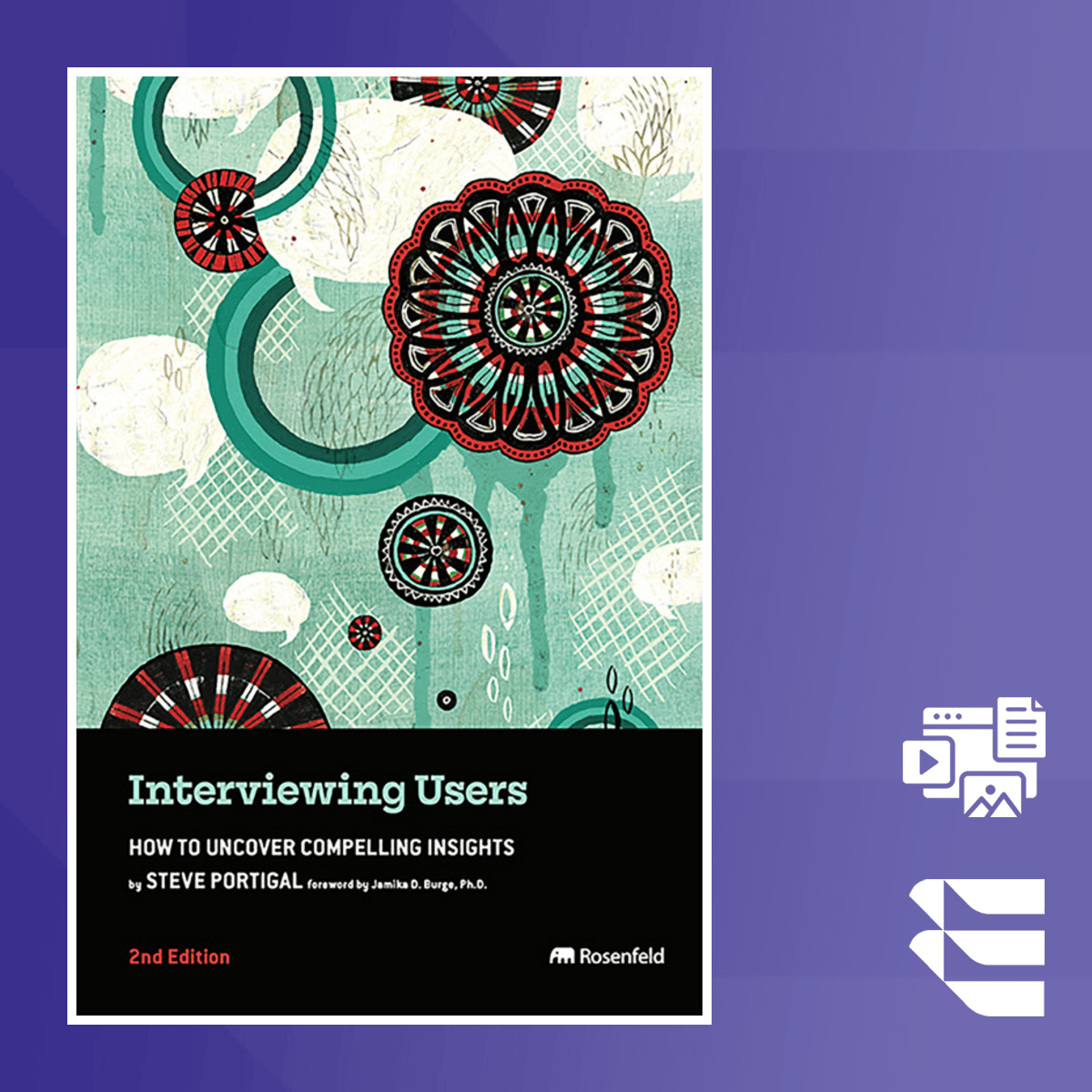
Interviewing Users: Conducting Effective User Research
This course provides a structured approach to conducting user interviews that align with both business goals and user needs. You will learn to plan, execute, and analyze interviews with an emphasis on actionable insights. This process will enhance your ability to engage users meaningfully and translate their feedback into impactful decisions. The course equips you with practical tools and techniques to plan interviews, ask the right questions, and extract valuable insights. You will also gain expertise in presenting findings that influence business outcomes and improve user-centered design. What sets this course apart is its blend of foundational knowledge and real-world application. It combines theory with practice, ensuring that you can apply the skills directly to your work in user research and product development. Ideal for UX researchers, designers, and product managers, this course requires no formal research training but will benefit those with some familiarity with user-centered practices. Copyright © 2023 Steve Portigal. All rights reserved. Originally published by Rosenfeld Media, LLC. This course edition is published by Packt Publishing under license from Rosenfeld Media LLC. No part of this material may be reproduced, distributed, or transmitted in any form or by any means—electronic, mechanical, photocopying, recording, or otherwise—without prior written permission from the author or the publisher.
 Coursera
Build Data Tables
Build Data Tables is a practical, hands-on course for IT management professionals who need to organize, communicate, and track information clearly in fast-moving environments. The course focuses on creating effective data tables that improve clarity, productivity, and collaboration by reducing ambiguity and supporting better decision-making. Learners explore why tables matter in IT management, how to create them efficiently, avoid common mistakes, and optimize them for clarity and reuse. Through short videos, quizzes, and hands-on activities, learners apply these skills by designing and populating a project milestones table that clearly communicates deliverables, timelines, progress, and risk for stakeholders.