

The Global Scholarly Directory.
Discover world-class academic programs curated for the modern intellectual. Search through 19877+ degrees and professional certificates.
 Coursera
Govern Healthcare Data: Protect Patient Privacy
Healthcare data breaches cost organizations an average of $10.93 million per incident—the highest of any industry. Protecting patient privacy isn't just about compliance; it's about maintaining trust and delivering quality care. This Short Course was created to help data analysis professionals accomplish secure and compliant healthcare data governance. By completing this course, you'll be able to confidently implement role-based access controls, systematically evaluate data requests using governance frameworks, and clearly communicate PHI compliance requirements—skills you can apply immediately to protect your organization and patients. By the end of this course, you will be able to: - Apply role-based access controls when sharing workbooks - Evaluate data use request forms for completeness using a governance checklist - Explain compliance requirements for handling Protected Health Information (PHI) This course is unique because it combines technical security implementation with regulatory compliance knowledge, giving you both the "how" and the "why" of healthcare data protection. To be successful in this project, you should have basic familiarity with digital file sharing and an understanding of healthcare data concepts.
 Microsoft
Build and Operate Machine Learning Solutions with Azure
Azure Machine Learning is a cloud platform for training, deploying, managing, and monitoring machine learning models. In this course, you will learn how to use the Azure Machine Learning Python SDK to create and manage enterprise-ready ML solutions. This is the third course in a five-course program that prepares you to take the DP-100: Designing and Implementing a Data Science Solution on Azurecertification exam. The certification exam is an opportunity to prove knowledge and expertise operate machine learning solutions at a cloud-scale using Azure Machine Learning. This specialization teaches you to leverage your existing knowledge of Python and machine learning to manage data ingestion and preparation, model training and deployment, and machine learning solution monitoring in Microsoft Azure. Each course teaches you the concepts and skills that are measured by the exam. This Specialization is intended for data scientists with existing knowledge of Python and machine learning frameworks like Scikit-Learn, PyTorch, and Tensorflow, who want to build and operate machine learning solutions in the cloud. It teaches data scientists how to create end-to-end solutions in Microsoft Azure. Students will learn how to manage Azure resources for machine learning; run experiments and train models; deploy and operationalize machine learning solutions, and implement responsible machine learning. They will also learn to use Azure Databricks to explore, prepare, and model data; and integrate Databricks machine learning processes with Azure Machine Learning.
 Amazon Web Services
Amazon Connect: Introduction to the Administrative Interface
This course is part of the Amazon Connect curriculum. The course is designed for supervisors and technical roles to get familiar with the administrative interface. The course covers basic navigation and how to view and publish reports and analytics. You will explore the three main reporting options: real-time metrics, historical metrics, and login/logout reporting used to review agent-customer communication. Then you will work with dashboards, contact search records, and create and publish reports.
 Coursera
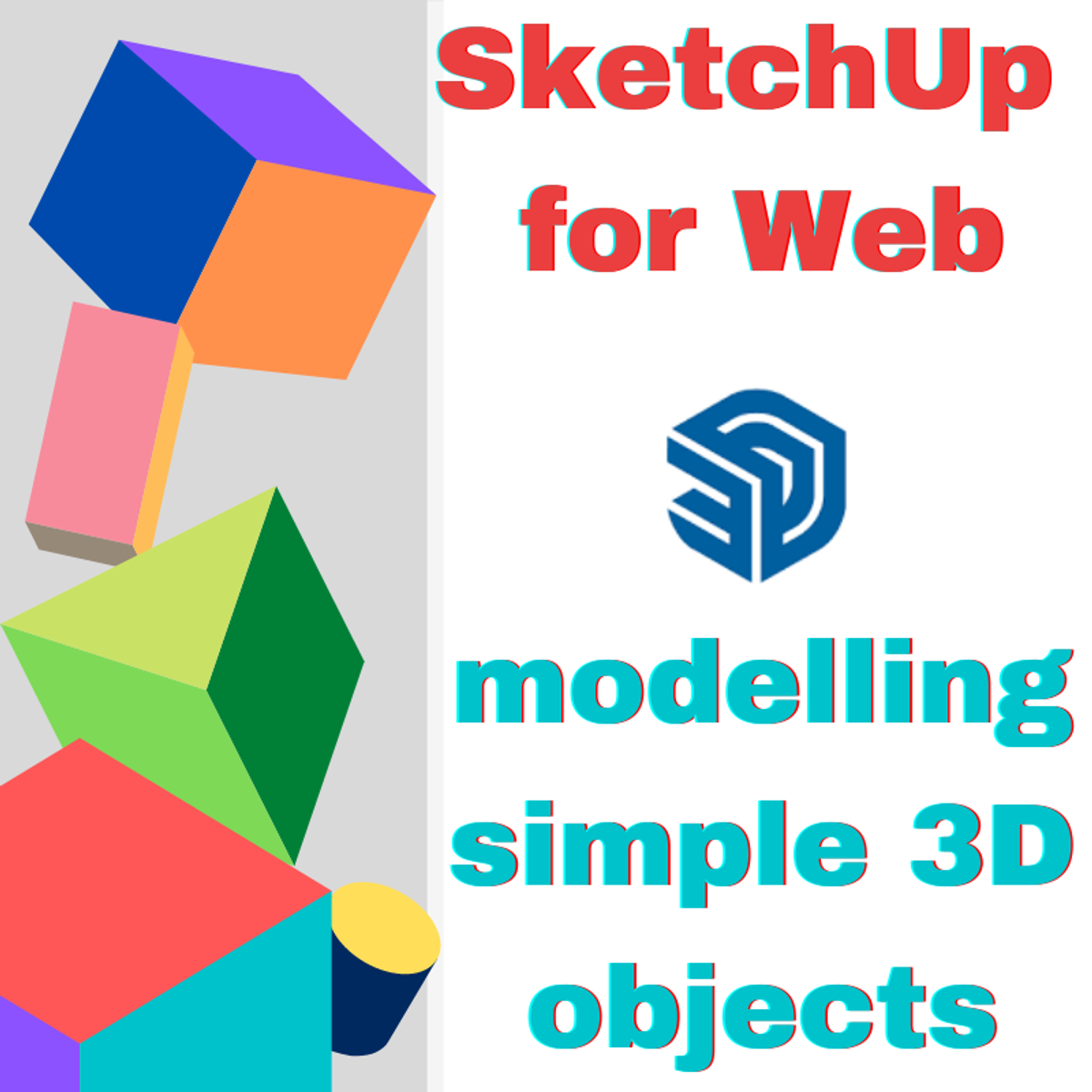
SketchUp: how to start modelling simple 3D objects
By the end of this project, you will learn how to use Sketch Up for web to model simple 3D objects 3D modeling is largely used in the design fields, to represent interiors, products, games. In 3D computer graphics, 3D modeling is meant as the process of developing a mathematical representation of any surface of an object in three dimensions via modeling software. The product of this process is called a 3D model. This model can also be displayed as a two-dimensional image through a process called 3D rendering or used in computer simulations. Nowadays thanks to the use of 3D printers modelers are able to physically create the 3D model. SketchUp for Web is a free version of SketchUp that runs in a web browser. It shows a simple interface where anyone can simply draw and create 3D models. This makes 3D modeling accessible and easy to use to anyone interested in exploring this field. This guided project is for students, graphic designers, illustrators, or artists who want to explore SketchUp for Web as a free tool to try 3D modeling. Anyone interested in exploring 3D modeling.
 AI CERTs
AI for Mining
AI for Mining course is designed for engineers, geologists, and data professionals who want to harness artificial intelligence to revolutionize mining practices. This course bridges the gap between traditional mining operations and digital transformation, helping learners understand how AI drives smarter exploration, safer extraction, and more sustainable resource management. You’ll explore how machine learning enhances ore discovery and mineral prediction, how predictive analytics minimizes equipment downtime, and how computer vision and robotics are reshaping safety and productivity. The curriculum combines real-world case studies from global mining leaders with hands-on labs using tools such as Orange Data Mining, Python, TensorFlow, Keras, and Google Earth Engine to apply AI in geological mapping, predictive maintenance, and environmental monitoring. Each module builds progressively - from AI fundamentals and data modeling to advanced analytics and implementation - so you gain both technical fluency and strategic understanding. You’ll also learn how to evaluate AI models, interpret data outputs, and apply ethical frameworks for responsible mining innovation. Upon successful completion, you’ll earn the certification, validating your ability to apply AI across modern mining workflows - empowering you to contribute to data-driven, efficient, and sustainable mining operations.
 Board Infinity
Libraries and Frameworks for Frontend Development
This course is designed for individuals who want to learn how to build robust and scalable web applications using Angular and React. Throughout the course, you will learn the fundamental concepts of front-end development and understand how to create dynamic and interactive user interfaces. In the first module, "React for Frontend development," we'll dive deep into the React library. You will be introduced to its fundamentals, such as components, state, props, and JSX. This understanding will enable you to craft user interfaces that are both interactive and dynamic, setting the stage for efficient web applications. The second module, "Angular for Frontend Development," transitions to Angular, an equally compelling but distinct framework for building scalable web applications. Here, you'll immerse yourself in the core concepts of Angular, encompassing components, modules, directives, services, and templates. With hands-on exercises, you'll gain proficiency in constructing robust applications that are both modular and maintainable. Finally in the third module, "Building a Dynamic Website." This module synthesizes the knowledge you've acquired, guiding you through the process of creating a full-fledged website. By integrating the functionalities from React and Angular, you will see firsthand how these tools can come together to produce powerful user experiences. By the end of the course, you will have a thorough understanding of how to use Angular and React to develop high-quality and responsive web applications. Disclaimer: This course is an independent educational resource developed by Board Infinity and is not affiliated with, endorsed by, sponsored by, or officially associated with Alphabet Inc, Meta, or any of their subsidiaries or affiliates. This course is not official preparation material for any of these companies. All trademarks, service marks, company names, logos, and brand names mentioned are the property of their respective owners and are used for identification, educational, and informational purposes only. No claim is made to exclusive rights to use any third-party trademarks apart from their context in this educational material.
 Coursera
Publier des designs sur Slack avec Canva pour entreprises
À la fin de ce projet, vous aurez toutes les compétences de base pour créer des designs professionnels et les publier sur Slack en utilisant la plateforme Canva, outil en ligne de création et d’édition de visuels Marketing. Vous serez en mesure d'intégrer Slack à votre Canva et de faire partager vos designs avec vos collègues.
 EDUCBA
Predictive Analytics: Apply, Analyze & Interpret
By completing this course, learners will be able to apply predictive modeling, perform hypothesis testing, analyze correlations, and build regression models to interpret complex datasets. They will gain skills in statistical tools such as ANOVA, chi-square, t-tests, and control charts while learning to implement and interpret outputs using Minitab and Excel. The course equips learners with the ability to identify patterns, evaluate case-based insights, and apply statistical reasoning to real-world data such as customer complaints, loan applicants, health indicators, and financial performance metrics. Through structured modules, learners will progress from foundational concepts in predictive analytics to advanced regression techniques for decision-making. What makes this course unique is its strong emphasis on practical application and interpretation. Each module combines theory with real-world examples, ensuring learners can translate statistical outputs into actionable insights. By the end, learners will not only understand statistical models but also apply them effectively in business, finance, and research settings.
 Google
AI for Brainstorming and Planning
Need to get a new project off the ground? In this course, you’ll gain hands-on experience turning abstract ideas into detailed, actionable plans. You’ll learn how to brainstorm with speed, evaluate ideas against frameworks, and use Gemini to uncover hidden risks and dependencies. Finally, you'll walk away with the resources and tools you need to move from idea to execution. By the end of this course, you will create: • A strategic plan to validate your next big idea: Move from a rough concept to a data-backed market research plan in minutes. • An actionable project roadmap: Instantly transform a simple brief into a detailed workback plan, complete with identified risks. • A centralized project hub: Build a shareable resource in NotebookLM that provides instant answers and keeps your team informed and moving forward.
 L&T EduTech
Design of General Utility Systems
This course is designed for Mechanical and Chemical Engineering professionals, faculty members, and students who are involved in the design, operation, and management of Chemical and Process Industry (CPI) facilities. It provides a comprehensive understanding of utility systems that are critical for safe, reliable, and efficient plant operations. The course begins with an introduction to essential utilities such as water, steam, nitrogen, compressed air, and electricity, along with applicable industrial codes, safety regulations, and environmental guidelines. Learners will gain in-depth knowledge of compressed air system design, focusing on stable and energy-efficient supply, air quality requirements (ISO 8573), and relevant standards to minimize corrosion, malfunctions, and safety risks. The nitrogen system module covers high-purity nitrogen generation and supply for blanketing, purging, inerting, and pressure transfer, with emphasis on international standards such as API 2000, ASME B31.3, and NFPA 55. The water system modules (Part I & II) address sourcing, treatment, storage, and distribution of raw, potable, fire, boiler feed, soft, demineralized, and seawater, including treatment methods, chemical dosing, corrosion control, equipment procurement strategies, and design references. Overall, the course equips learners with practical design knowledge to optimize utility performance, ensure compliance, and enhance operational efficiency while minimizing energy use and environmental impact.
 Whizlabs
AWS: Networking and Content Delivery
AWS: Networking and Content Delivery Course is the third course of Exam Prep DVA-C02: AWS Certified Developer Associate Specialization. This course covers fundamental concepts of Amazon Virtual Private Cloud (VPC), including subnets, CIDR notation, security groups, network ACLs, route tables, and NAT Gateways. It explores Amazon Route 53 for DNS management and Amazon CloudFront for content delivery. It also delves into key infrastructure services such as AWS Elastic Load Balancer (ELB) for traffic distribution and Amazon EC2 Auto Scaling for managing and scaling EC2 instances. The course is divided into two modules and each module is further segmented by Lessons and Video Lectures. This course facilitates learners with approximately 3:00-3:30 Hours of Video lectures that provide both Theory and Hands-On knowledge. Also, Graded and Ungraded Quizzes are provided with every module to test the ability of learners. - Module 1: Amazon VPC and Amazon Route 53 - Module 2: Amazon CloudFront and Elastic Load Balancing This course is designed for developers who want to design highly available, performant, and secure applications on AWS. By the end of the course, learners will be able to: - Implement secure and scalable VPCs. - Utilize Route 53 and CloudFront for efficient and reliable DNS and content delivery. - Explore load balancing and auto-scaling for high availability and performance. - Understand API Gateway for building and managing APIs.
 University of Michigan
Community Organizing for Social Justice
The course examines specific strategies for community organizing for social justice in a diverse, democratic society. It examines core concepts of social justice and practical steps for bringing people together to set goals and priorities, assess community assets and needs, develop action plans, and build support for implementation. It includes information on how to form core groups, build organizational capacity, and formulate strategy for reaching out to constituents and allies. Because each person learns in a different way, the course features a variety of learning activities, information on successful programs, individual instructions, and small group exercises, as well as hands-on materials for problem solving and program planning. You can use these activities with individuals, with a small group of people, or with several groups in a community campaign. The course draws upon work with people who are striving for community change in metropolitan Detroit, an area which is becoming both more segregated and more diverse. But it is designed for people who want to create change in communities, everywhere. If you were to take the course with ideas in mind, and conclude with plans in hand, then our purpose will be served.
 Skillshare
Iconic Logo Design: Brainstorm & Refine Unique Concepts
Create simple and clear logo designs that also seriously stand out with Will Paterson! Great logos are iconic and evocative of a brand—but designing them well without copying everyone else can be one of the biggest challenges in graphic design. In this class, graphic designer and YouTuber Will Paterson will walk you through the unique process for creating memorable logos for a variety of brands, and give you the tools to do the same. Starting from an imaginary client brief, you’ll work alongside Will as he goes step-by-step through the process of getting to a final design, including: - Researching the client and their competition, and coming up with a mood board of creative visuals to represent them. - Brainstorming potential concepts using Will’s approach of rapidly sketching and refining ideas until you “fail to success” and find the one that works. - Turning your best idea into a final vector in Illustrator, and choosing fonts and colors to round out your final design. Along the way, he’ll share pro tips about what makes a good logo great, strategies to properly assess your own work, and plenty of tools to level up your workflow. Whether you have a logo project you’re working on for a client or are just looking to grow your graphic design skills, this class will leave you with a system you can confidently follow to create great logos time and time again. This class is great for beginners who want to learn to design logos step-by-step, or more immediate designers who are hoping to refine their process and skills. You’ll need Adobe Illustrator or a similar vector program to complete the final project. A tablet with a digital drawing app like Procreate might help you out, but you can also complete the early brainstorming phases using pencil and paper. Instructor bio: Will Paterson is a professional logo designer and hand lettering artist who helps businesses of all kinds build memorable brands through custom logos and identity systems. Beyond his client work, Will is widely known for sharing his expertise with a global creative community on YouTube and Instagram, where he offers practical design insights and inspiration to millions of viewers. As the author of Calligraphy In 15, Will combines a passion for traditional lettering with modern design approaches, making his teaching both accessible and engaging. His courses are designed to give learners the tools, techniques, and confidence to develop their own creative style while mastering the foundations of professional logo design and lettering.
 SkillUp
The Product Owner Profession: Unleashing the Power of Scrum
Product Owners are a key driving force behind successful Agile teams, ensuring the product vision aligns with business goals and delivers maximum value. This course gives you the ideal introduction to starting your Product Owner journey. During the course, you'll learn about the roles and responsibilities of an Agile Product Owner in Scrum teams, comparing them to other traditional product roles, for example, product manager. You'll explore the skills, competencies, and knowledge requirements for a successful project owner. You'll examine the end-to-end Scrum framework and understand the key stakeholders with which Product Owners collaborate to achieve success. Plus, you'll look at how to create and communicate a compelling product vision that aligns with organizational goals and provides direction for the development team. Through the course, you'll gain hands-on experience in labs and projects, investigating product strategy and value. Plus, you'll explore the employment opportunities for a Product Owner so you can envision your career path. You will also hear from experts who will share their insights and tips that will help in your Product Owner journey. If you're looking to take your first step toward becoming a Product Owner, ENROLL TODAY and start building your path to future success.
 Google Cloud
HTTP Google Cloud Functions in Go
This is a self-paced lab that takes place in the Google Cloud console. In this lab, you’ll build an HTTP Cloud Function in Go.
 Universidades Anáhuac
Inteligencia Emocional: Un enfoque práctico
La inteligencia emocional es un conjunto de herramientas personales que nos ayudan a potenciar todas las situaciones de nuestra vida, planear nuestras acciones y en general, tomar mejores decisiones. Pensar en tener éxito sin inteligencia emocional es como construir una casa sin herramientas: podemos intentar construirla con los mejores materiales (habilidades profesionales) pero si no sabemos cómo trabajarlos, nunca llegaremos a la meta. Este curso online aporta una visión práctica de la inteligencia emocional ayudándote a desarrollar competencias profesionales. Durante las actividades, te evaluarás y conocerás para poder determinar como mejorar áreas específicas de tu personalidad y potenciar las áreas fuertes. En este curso de inteligencia emocional, también aprenderás cómo responder adecuadamente a los distintos escenarios del mundo laboral que harán la diferencia al cerrar un trato, firmar un convenio, asombrar en una presentación y/ o motivar a un equipo.