

The Global Scholarly Directory.
Discover world-class academic programs curated for the modern intellectual. Search through 19877+ degrees and professional certificates.
 University of Lausanne
Dopage : Sports, Organisations et Sciences
L'objectif du cours est de permettre une compréhension distanciée du dopage. C’est pour atteindre cet objectif que le cours s’appuie sur une approche pluridisciplinaire qui constitue une opportunité d'observer comment diverses disciplines abordent un même objet, selon différents angles et de manière complémentaire. Il s'agit également de donner des repères permettant d'appréhender le dopage dans sa complexité. Le dopage dans le sport est une pratique complexe dont la définition et l'identification renvoient à la construction sociale et historique de normes. Le cours propose une clarification des processus qui ont conduit à l'usage et la prohibition des produits dopants. L'amélioration des performances ou les transformations des apparences sont deux aspects du dopage qui dérangent alors que pourtant les sociétés vantent les mérites de "l'amélioration" du corps et que les marchés du "human enhancement" prospèrent. Ces apparentes contradictions seront analysées en montrant que, au-delà des questions sanitaires, le dopage est au croisement de multiples enjeux sociaux, scientifiques ou encore juridiques. Pour y faire face, les autorités sportives et étatiques ont contribué à la mise en place d’institutions en charge de l'identification du dopage, de politiques de prévention, de répression et de recherche. Les dispositifs biologiques de contrôle comme le passeport biologique, les dimensions juridiques qui fondent la lutte contre le dopage, les organisations de production de la performance, comme les dimensions sociologiques du dopage seront abordés par ce cours. Outre les enseignants de l’Université de Lausanne, les meilleurs spécialistes du dopage, d’un laboratoire antidopage (LAD), du TAS (Tribunal Arbitral du Sport), de l’UEFA (football) et de l’AMA (Agence Mondiale Antidopage) interviennent dans ce cours. Teaser: https://www.youtube.com/watch?v=70ZQVQsWAdo Objectifs pédagogiques principaux : A la fin de ce cours les participants seront capables de: 1. Identifier la dimension « culturelle » du dopage, c’est-à-dire comme pratique qui a une histoire en lien avec la transformation de normes sociales 2. Passer d’un mode de raisonnement binaire sur le dopage, pour ou contre, à la compréhension de la complexité d’un phénomène à la fois biologique, psychologique et sociologique 3. Reconnaître les institutions, les acteurs et les pratiques de lutte contre le dopage 4. Expliquer comment le contexte social et organisationnel pèse sur les décisions des individus et comment il peut être réduit par des mesures de prévention. 5. Identifier comment fonctionne la lutte contre le dopage et les procédures de contrôle
 LearnKartS
Master Microsoft Excel with Copilot
Excel Skills Are Expected. But AI-Powered Excel Skills Make You Irreplaceable. Still spending hours writing formulas and fixing spreadsheet errors? In today’s AI-driven workplace, basic Excel knowledge is no longer enough. This Microsoft Excel with Copilot Course helps you master Excel fundamentals and elevate your skills using Microsoft 365 Copilot to automate data analysis, generate insights instantly, and build AI-powered workflows. Inside this course, you will: • Master formulas, logical & lookup functions • Clean and structure messy datasets • Build pivot tables and business-ready reports • Automate repetitive tasks with Excel • Apply prompt engineering for smarter Copilot outputs Unlike traditional Microsoft Excel courses that stop at formulas, this course teaches you how to strategically combine Excel expertise with AI to save hours every week, reduce manual errors, and boost productivity. Designed for students and professionals who want a future-ready, high-demand skill set. By the end, you’ll confidently analyze data, automate workflows, and stand out in a data-driven world. Enroll today and gain the AI-powered Excel advantage. Note: Learners need to have Microsoft 365 Copilot license.
 Case Western Reserve University
Basic Principles of Geostatistical Geospatial Modeling
Ready to harness the power of geostatistics for your data? In this Geospatial Specialization Course #1: Basic Principles of Geostatistical Geospatial Modeling course, you’ll learn how to identify key variables, address outliers and missing data, and apply univariate and bivariate analyses—all within the versatile R programming environment. You’ll quickly master correlation and covariance matrices, construct dynamic visualizations (histograms, boxplots, crossplots), and uncover insights hidden in your spatial datasets. Next, you’ll dive into advanced geostatistical techniques, such as building omnidirectional and directional variograms, developing nested models, and performing kriging and co-kriging for precise spatial predictions. You’ll even explore conditional simulation to capture the full range of possible outcomes. Rigorous post-processing methods—including cross-validation, error variance mapping, and isoprobability analyses—let you confidently validate and refine your models. Whether you’re tackling environmental or mining data (or anything in between), you’ll finish the course with a powerful geostatistical toolbox and the know-how to apply it. Join us and discover how R-powered geostatistical modeling can transform raw data into actionable intelligence!
 Yale University
Global Quality Maternal and Newborn Care
This course is designed for administrators, advocates, policy makers, clinicians, and service users. It will give you the background, recommendations, and tools you need to address issues related to high quality maternal and newborn care in your own setting. In particular, you will learn about the evidence behind implementing the midwifery model of care as a means to advancing the health and wellbeing of mothers and babies globally. The modules in this course are structured around the Quality Maternal and Newborn Care Framework, first published in the landmark 2014 Lancet Series on Midwifery. You will learn from nearly 20 expert contributors as they discuss their research and personal experiences in low, middle, and high resource settings.
 Universidad de Palermo
Historia del Arte: Del Arte Prehistórico al Renacimiento
El arte deriva de un deseo de la persona para comunicarse con otros” (Edvard Munch). Y es desde la prehistoria que el humano ha dejado impresas sus huellas a través del arte. ¿Qué características tienen esas huellas artísticas? ¿Qué nos comunican sobre el periodo de tiempo al que pertenecen? Sumergite en la historia del arte recorriendo este curso. Comenzarás en la prehistoria, reconociendo los testimonios que nos ofrecen los primeros atisbos artísticos de la humanidad. Avanzarás por el camino recorriendo los diferentes sistemas de representación dominantes de distintos períodos hasta llegar al Renacimiento. Al culminar el curso conocerás más sobre cómo fue la evolución y el devenir del arte a través del tiempo. ¡Te invitamos a emprender este viaje! Los objetivos generales de este curso son: • Conocer y analizar el desarrollo de las artes visuales desde la prehistoria hasta las obras de los grandes maestros del Renacimiento. • Desentrañar los sistemas de representación predominantes en los períodos abordados. • Identificar las relaciones entre los procesos artísticos y su contexto histórico, social y económico. • Adquirir herramientas conceptuales específicas para analizar la historia del arte.
 Packt
Packt
ReactJS and Tailwind CSS Fundamentals
Updated in May 2025. This course now features Coursera Coach! A smarter way to learn with interactive, real-time conversations that help you test your knowledge, challenge assumptions, and deepen your understanding as you progress through the course. In this comprehensive course, you will embark on a journey to master ReactJS and Tailwind CSS, two of the most powerful tools in modern web development. We begin with an introduction that sets the stage for what you can expect, including the prerequisites to ensure you are prepared. From there, you will learn how to install ReactJS and Tailwind CSS, followed by creating your first template, which will serve as the foundation for your project. As you progress, the course delves deeper into creating various pages and routes, essential for any multi-page application. You will also construct a robust header component, complete with a navigation bar to enhance user experience. The highlight of this course is the in-depth module on authentication using Firebase Auth Version 9. Here, you will create sign-in, sign-up, and forgot password pages, implement OAuth functionality, and ensure users can securely access their accounts. By the end of this course, you will have a fully functional web application, showcasing your ability to integrate front-end frameworks with backend services seamlessly. Whether you are looking to upskill or pivot into web development, this course provides the knowledge and practical experience needed to succeed. This course is designed for aspiring web developers with a basic understanding of HTML, CSS, and JavaScript. Familiarity with fundamental programming concepts is recommended but not required.
 Packt
Packt
Frontend Development with React
Updated in May 2025. This course now features Coursera Coach! A smarter way to learn with interactive, real-time conversations that help you test your knowledge, challenge assumptions, and deepen your understanding as you progress through the course. Master the art of frontend development with this comprehensive course focused on React, one of the most powerful libraries for building dynamic web interfaces. You'll learn to build responsive UIs, manage complex application state with Redux, and create seamless user experiences that interact with real backend APIs. By the end of this course, you’ll have a fully functional frontend integrated with user authentication, post creation, and real-time feedback. The course begins by walking you through the backend routes for posts, where you'll set up APIs to create, delete, like, and comment on user-generated content. Once the backend is complete, you’ll dive into React—starting with a UI overview and progressing through setup, component creation, and navigation using React Router. You’ll also implement core features like user registration and login, directly connecting your frontend to backend services. From there, the course introduces Redux, giving you a strong foundation in global state management. You'll build a Redux store, handle alerts through reducers and actions, and integrate these features into the app using custom components. The final module focuses on building secure and dynamic user experiences through authentication workflows, managing tokens, and updating UI elements based on user status. This course is ideal for frontend developers who want to build modern, interactive applications using React and Redux. Familiarity with JavaScript and some backend concepts is recommended. The course is Intermediate in difficulty and perfect for developers aiming to become full-stack professionals.
 Board Infinity
Master Financial Analysis & Modeling Fundamentals
Build practical financial analysis and modeling skills used by analysts and finance professionals to evaluate business performance and support decisions. This course walks you through financial statements, ratio analysis, forecasting, and valuation, helping you convert raw numbers into clear insights. You’ll learn how income statements, balance sheets, and cash flow statements connect, and how to assess profitability, liquidity, efficiency, and leverage. Next, you’ll apply ratio analysis and DuPont decomposition to identify performance drivers and working capital efficiency. You’ll build integrated financial models in Excel or Google Sheets, run scenario and sensitivity analysis, and apply valuation methods like DCF and comparables. Finally, you’ll explore forecasting and budgeting techniques (SMA, EMA) and use Excel, Sheets, and Python to automate analysis. This course emphasizes hands-on modeling and business interpretation, so you understand what the numbers mean. By the end of this course, you will be able to: • Analyze financial statements to evaluate business performance • Apply ratios, DuPont analysis, and CCC for financial diagnostics • Build integrated models with scenarios and valuation techniques • Forecast outcomes and interpret results for strategic decisions This course is ideal for: • Aspiring financial analysts and FP&A professionals • Commerce, finance, and MBA students • Professionals transitioning into finance roles • Early-career analysts strengthening modeling skills Start building the financial modeling skills used to drive confident, data-backed business decisions. Disclaimer: This is an independent educational resource created by Board Infinity for informational and educational purposes only. This course is not affiliated with, endorsed by, sponsored by, or officially associated with any company, organization, or certification body unless explicitly stated. The content provided is based on industry knowledge and best practices but does not constitute official training material for any specific employer or certification program. All company names, trademarks, service marks, and logos referenced are the property of their respective owners and are used solely for educational identification and comparison purposes.
 Google Cloud
Cloud Spanner について
このコースでは、Cloud Spanner について解説します。Cloud Spanner の基本的な知識や、他のデータベース プロダクトとの違いを学習するほか、大規模なリレーショナル データベースのニーズに対応するために Cloud Spanner を使用すべきタイミングとその方法についても学びます。さらに、Google Cloud の各種ツールを使用して Spanner データベースを作成し管理する方法、Spanner の分散データベース モデルを考慮してリレーショナルなスキーマを最適化する方法、Spanner API を使用して Spanner データベースを操作する方法、Spanner とアプリケーションを統合する方法、他の Google ツールを使用して Spanner データベースとデータを管理する方法についても紹介します。
 National Taiwan University
機器學習基石上 (Machine Learning Foundations)---Mathematical Foundations
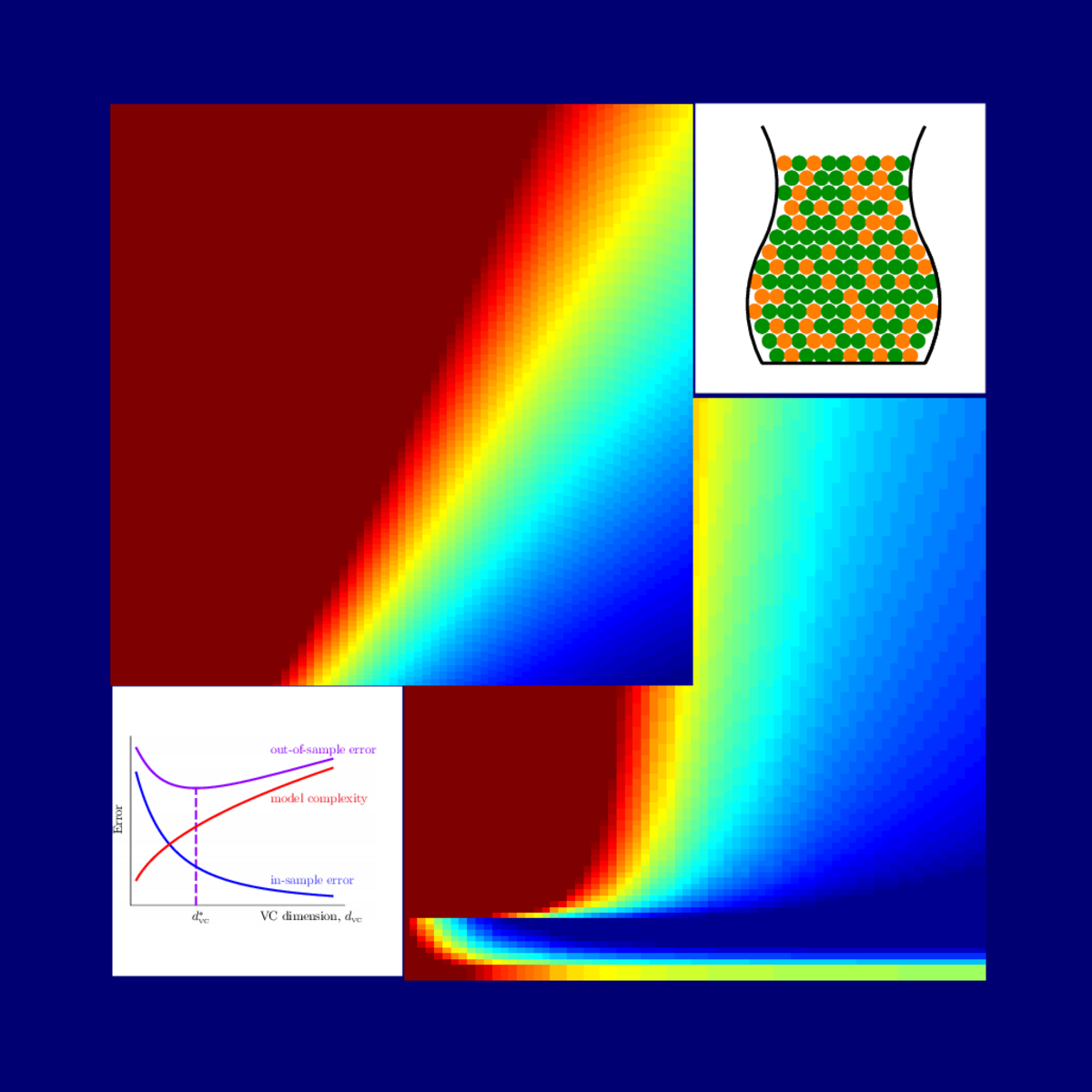
Machine learning is the study that allows computers to adaptively improve their performance with experience accumulated from the data observed. Our two sister courses teach the most fundamental algorithmic, theoretical and practical tools that any user of machine learning needs to know. This first course of the two would focus more on mathematical tools, and the other course would focus more on algorithmic tools. [機器學習旨在讓電腦能由資料中累積的經驗來自我進步。我們的兩項姊妹課程將介紹各領域中的機器學習使用者都應該知道的基礎演算法、理論及實務工具。本課程將較為著重數學類的工具,而另一課程將較為著重方法類的工具。]
 Simplilearn
Data Validation in Excel for Beginners
This Excel course offers a comprehensive journey into mastering data management, analysis, and visualization. Start by learning foundational skills like Goal Seek, creating drop-down lists, and applying data validation. Explore advanced features such as SUMIFS, Pivot Tables, and Conditional Formatting to enhance data insights. Gain practical expertise in locking cells, calculating percentages and averages, and highlighting duplicates to ensure data accuracy. Learn to optimize page setup, manage page breaks, and create professional reports. Build stunning visualizations with charts, track progress with templates, and create Gantt charts for effective project management. By the end of this course, you will: - Master foundational Excel skills like Goal Seek and data validation. - Analyze data using SUMIFS, Pivot Tables, and Conditional Formatting. - Create visualizations, Gantt charts, and track progress effectively. - Optimize reports with page setup, page breaks, and error-free data handling. Ideal for beginners and professionals looking to unlock Excel’s full potential for productivity and data-driven decisions.
 Niel Asher Education
Yoga Methods for Functional Well-Being
By the end of this course, you will (1) adapt foundational yoga poses and breath practices to diverse bodies and (2) integrate yoga principles into manual therapy and exercise plans while staying within scope. You’ll learn alignment essentials, safe progressions and regressions, and clear teaching cues that improve mobility, stability, and body awareness. Step-by-step videos translate theory into action, showing how to combine movement, props, and paced breathing for common goals such as easing back or neck discomfort, improving balance, or reducing stress. What makes this course stand out is its clinician-friendly, outcomes-oriented approach: every module links technique choice to assessment findings and client goals, with options for home programs and session templates you can use immediately.
 Arizona State University
Creatividad, diseño e innovación: Técnicas y herramientas - Proyecto Final
El estudiante deberá identificar un problema complejo, analizar las oportunidades disponibles y utilizar las herramientas de design thinking, elaboración experiencial de prototipos y una estrategia de innovación para desarrollar soluciones creativas. Dichas soluciones se evaluarán a partir de métricas establecidas para juzgar su idoneidad. El proceso a seguir para ir del problema a la solución es el siguiente: a. Encontrar una situación que se beneficiaría con soluciones innovadoras. b. A partir de lo aprendido en los cursos previos, desarrollar un proceso para ir de la búsqueda de problemas dentro del contexto estudiado a la implementación de la solución final. c. Evaluar las ideas generadas a partir de herramientas y procedimientos específicos. d. Reflexionar críticamente sobre el proceso. El proyecto terminal constituye un ejemplo de aprendizaje basado en proyectos en el que el estudiante debe integrar la base de conocimiento y habilidades desarrolladas en los cursos previos de la especialización para resolver un problema específico. Así, pondrá en juego el manejo de diversas herramientas y técnicas que aprendió a lo largo del programa.
 Coursera
Fine-Tune & Optimize Generative AI Models
In today’s AI-driven world, optimizing large language models for specific domains while managing cost is a key competitive skill. This course trains AI engineers, ML practitioners, and data scientists to transform baseline generative models into efficient, production-ready solutions. Through hands-on labs using Hugging Face Transformers, PEFT, and Evaluate, you’ll master decoding strategies (temperature, top-k, top-p, beam search), automated evaluation (BLEU, ROUGE, BERTScore, custom metrics), and parameter-efficient fine-tuning (LoRA) that cuts trainable parameters by 99% without losing quality. Real-world projects cover fine-tuning 7B+ models for legal, medical, and financial applications while analyzing GPU and inference costs. The capstone simulates real constraints—limited GPU memory, latency, budget, and compliance—requiring technical, analytical, and executive deliverables. By course end, you’ll confidently optimize and evaluate LLMs, balancing quality, performance, and cost for advanced roles in LLM engineering, MLOps, and AI product development. This course is ideal for DevOps engineers, SREs, cloud engineers, and developers who manage containerized applications and want to streamline deployments using Helm. It’s also suited for technical leads and engineers who design or maintain CI/CD or GitOps pipelines for modern, scalable systems. Participants should have basic proficiency in Python, an understanding of machine learning fundamentals, and familiarity with natural language processing (NLP) concepts and machine learning frameworks to fully engage with the course content. Participants should have basic proficiency in Python, an understanding of machine learning fundamentals, and familiarity with natural language processing (NLP) concepts and machine learning frameworks to fully engage with the course content.
 University of Pennsylvania
Money, Risk, and Ethics: The Psychology of Decision-Making
This course examines how ethical decision-making unfolds at the intersection of law and psychology. Drawing on real-life legal casesand a host of classic psychological experiments, we explore how cognitive biases such as loss aversion, status quo bias, and framing effects can complicate even the most straightforward moral choices. You’ll explore how our natural tendency to focus on what is most salient in any given situation can skew risk assessments, and how motivated reasoning and self-serving biases may subtly warp our judgments, whether in the boardroom, the courtroom, or everyday life. Finally, we round out our investigation with practical tools—like decision matrices—that empower you to break down complex decisions into their component parts, ensuring that your choices not only reflect your core values but also withstand rigorous, objective scrutiny.
 University of London
Narrative Foundations for Immersive Media and Video Games
Developed in partnership with multi-award-winning XR writer and designer Rob Morgan, and the founding funder UK Research and Innovation ('UKRI') under the 'StoryFutures Academy' project led by the National Film and Television School ('NFTS'), the course blends hands-on creative practice with cutting-edge case studies. It is an intensive and practice-led experience, designed for learners who want to develop future-ready creative skills and stay ahead of industry trends. This course explores the art and science of designing interactive narratives specifically for immersive media and video games. Participants will learn about the various types of player choices and their impact on agency, as well as analyse existing interactive narratives to understand branching design. The course will guide learners through the process of designing and prototyping a simple branching narrative, while also defining the differences between location-specific and location-agnostic storytelling. In addition, students will evaluate how the environment shapes narrative and design guided walks with strong narrative concepts. The course will cover immersive qualities unique to VR and games, spatial storytelling principles, and the critique of player self-consciousness in immersive media. During the course participants will be developing a complete immersive narrative concept or prototype, integrating user-centered storytelling principles, and communicate their design clearly for a creative portfolio. By the end of the course the participants will be able to 1. Design, and prototype branching interactive narratives for immersive media and video games. 2. Explain location-based storytelling techniques to create audience-aware experiences. 3. Apply spatial storytelling concepts from VR to enhance immersion and emotional engagement. 4. Produce and present a portfolio-ready immersive narrative concept integrating branching, location, or VR techniques.