

The Global Scholarly Directory.
Discover world-class academic programs curated for the modern intellectual. Search through 19877+ degrees and professional certificates.
 Google Cloud
Developing Applications with Cloud Run on Google Cloud: Fundamentals
This course introduces the Cloud Run serverless platform for running applications. In this course, you learn about the fundamentals of Cloud Run, its resource model and the container lifecycle. You learn about service identities, how to control access to services, and how to develop and test your application locally before deploying it to Cloud Run. The course also teaches you how to integrate with other services on Google Cloud so you can build full-featured applications.
 LearnQuest
Advanced AI Techniques for the Supply Chain
In this course, we’ll learn about more advanced machine learning methods that are used to tackle problems in the supply chain. We’ll start with an overview of the different ML paradigms (regression/classification) and where the latest models fit into these breakdowns. Then, we’ll dive deeper into some of the specific techniques and use cases such as using neural networks to predict product demand and random forests to classify products. An important part to using these models is understanding their assumptions and required preprocessing steps. We’ll end with a project incorporating advanced techniques with an image classification problem to find faulty products coming out of a machine.
 Coursera
GenAI for Risk Managers: Advanced Risk Analysis Techniques
In this course, you’ll discover how Generative AI can enhance risk detection, automate monitoring, and improve decision-making. Through hands-on projects and real-world case studies, you’ll gain practical expertise to apply AI-driven strategies in complex risk environments. Whether you’re a risk professional or business leader, this course will equip you with the tools to transform your approach to risk management. This course is designed for experienced professionals at the forefront of risk management, quantitative analysis, and AI-driven modeling. Whether you're a Senior Risk Analyst or Manager looking to enhance predictive insights, a Quantitative Risk Specialist refining complex risk models, or an AI Risk Model Developer integrating GenAI into risk assessment frameworks, this course offers advanced methodologies to elevate your expertise. Enterprise Risk Architecture Specialists will gain insights into multi-source data integration, while Advanced Risk Analytics Professionals will explore cutting-edge AI-driven techniques to automate risk detection and enhance decision-making in high-stakes environments. To ensure you gain the most from this course, we recommend a solid foundation in risk analysis and AI-driven methodologies. Learners should have completed GenAI for Risk Managers: Essentials (or possess equivalent experience), along with a working knowledge of risk modeling, quantitative analysis, and fundamental machine learning concepts. Familiarity with established risk management frameworks and tools will further enhance your ability to apply advanced GenAI techniques effectively. This course is designed for professionals ready to push the boundaries of AI-driven risk strategies. By the end of this course, you will have the skills and confidence to integrate Generative AI into your risk management strategies effectively. You’ll be equipped with advanced techniques for risk detection, scenario modeling, and real-time monitoring, enabling you to make data-driven decisions with greater precision. As AI continues to transform the risk landscape, your ability to leverage GenAI will position you at the forefront of innovation in risk management.
 Coursera
Erstelle eine Facebook Gruppe
Nach Beendigung dieses Projekts kannst du eine Facebook Gruppe erstellen. Wir werden ein persönliches Profil und eine Unternehmensseite erstellen, wir werden lernen wie du eine Gruppe erstellst, wie du deine Gruppe beschreibst, wie du Leute einlädst, wie du mit den Leuten in deiner Gruppe kommunizierst, und wie du Events gestaltest.
 Yale University
Music and Social Action
What is a musician’s response to the condition of the world? Do musicians have an obligation and an opportunity to serve the needs of the world with their musicianship? At a time of crisis for the classical music profession, with a changing commercial landscape, a shrinking audience base, and a contraction in the number of professional orchestras, how does a young musician construct a career today? Are we looking at a dying art form or a moment of reinvigoration? In this course we will develop a response to these questions, and we will explore the notion that the classical musician, the artist, is an important public figure with a critical role to play in society. The course will include inquiry into a set of ideas in philosophy of aesthetics; a discussion about freedom, civil society, and ways that art can play a role in readying people for democracy; discussion on philosophy of education as it relates to the question of positive social change; and an exploration of musical and artistic initiatives that have been particularly focused on a positive social impact. Guiding questions for this course inquiry will include: - How can classical music effect social change? - How has music made positive change in communities around the globe? - What can the field of classical music learn from other movements for social change? - How have educators and philosophers thought about the arts and their connection to daily contemporary life? Each class will explore one critical question through lectures, discussions, interviews, or documentaries.
 Imperial College London
Interventions and Calibration
This course covers approaches for modelling treatment of infectious disease, as well as for modelling vaccination. Building on the SIR model, you will learn how to incorporate additional compartments to represent the effects of interventions, such the effect of vaccination in reducing susceptibility. You will learn about ‘leaky’ vaccines and how to model them, as well as different types of vaccine and treatment effects. It is important to consider basic relationships between models and data, so, using the basic SIR model you have developed in course 1, you will calibrate this model to epidemic data. Performing such a calibration by hand will help you gain an understanding of how model parameters can be adjusted in order to capture real-world data. Lastly in this course, you will learn about two simple approaches to computer-based model calibration - the least-squares approach and the maximum-likelihood approach; you will perform model calibrations under each of these approaches in R.
 IBM
IBM
Cybersecurity Compliance Framework, Standards & Regulations
Cyber threats present a constant challenge today, costing billions and affecting everyone, from governments to small businesses. Are you ready to contribute to the solution? This course will provide you with a deep understanding of cybersecurity principles, industry standards, regulations, and audit processes. You will explore the fundamental concepts of information security and compliance, covering topics such as governance, risk, compliance, cybersecurity frameworks, and process management. You will also learn about IT service management and explore the NIST risk management framework and AI ethical considerations. You will gain insights into cybersecurity laws and regulations, focusing on both US and global perspectives, including HIPPA, GDPR, and PCI DSS. Additionally, you will familiarize yourself with the audit processes using the COBIT framework and SOC reports. You will also explore prominent standards such as OWASP, ISO, and IEEE, learning how to apply them effectively. Throughout this five-module self-paced course, you will engage in interactive activities to apply your knowledge in real-world scenarios. You will also complete a final project to test your skills and showcase your understanding. Join us on this cybersecurity journey!
 Google Cloud
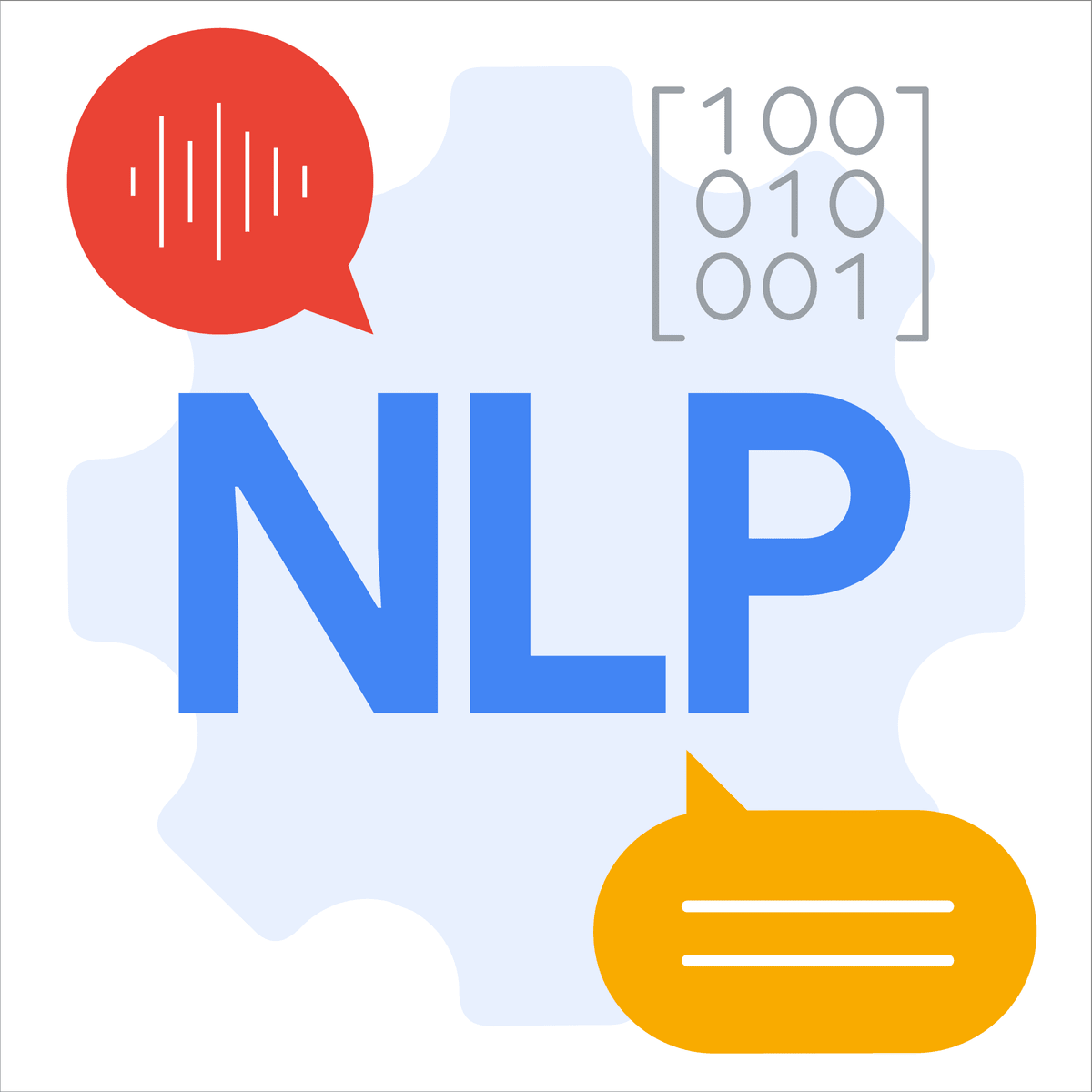
Natural Language Processing on Google Cloud
This course introduces the products and solutions to solve NLP problems on Google Cloud. Additionally, it explores the processes, techniques, and tools to develop an NLP project with neural networks by using Vertex AI and TensorFlow. - Recognize the NLP products and the solutions on Google Cloud. - Create an end-to-end NLP workflow by using AutoML with Vertex AI. - Build different NLP models including DNN, RNN, LSTM, and GRU by using TensorFlow. - Recognize advanced NLP models such as encoder-decoder, attention mechanism, transformers, and BERT. - Understand transfer learning and apply pre-trained models to solve NLP problems. Prerequisites: Basic SQL, familiarity with Python and TensorFlow
 Coursera
Créer un tableau de bord d'analyse marketing à l'aide de Hubspot
Dans ce projet guidé d'une heure, vous apprendrez à créer un tableau de bord marketing sur HubSpot, à gérer vos rapports marketing et à utiliser les meilleurs rapports marketing sur votre tableau de bord marketing. À la fin de ce projet, vous serez en mesure de créer vos tableaux de bord marketing. Vous pourrez également gérer vos rapports marketing et utiliser les meilleurs rapports marketing sur votre tableau de bord marketing HubSpot.
 Johns Hopkins University
Data Science Decisions in Time: Using Causal Information
This is the fourth course in the specialization and is aimed at those with basic knowledge of statistics, probability and linear algebra. It will prove to be especially interesting for those with datasets that are being used to make decisions: either business, medical, or technology based.
 Packt
Packt
Essential Concepts of Vector Databases
Updated in May 2025. This course now features Coursera Coach! A smarter way to learn with interactive, real-time conversations that help you test your knowledge, challenge assumptions, and deepen your understanding as you progress through the course. In this comprehensive course, you will gain a deep understanding of vector databases, their structure, and how they differ from traditional databases. By exploring fundamental concepts, including their benefits and real-world applications, you will be equipped with the knowledge needed to leverage these cutting-edge technologies in data management and AI. The course begins with an introduction to vector databases, explaining why they have become essential in modern data management. You will discover their key advantages and how they address limitations found in traditional databases. Moving forward, the course dives into embeddings and vectors, key components in understanding the data flow within vector databases, and the importance of similarity searches. Next, the course covers a hands-on section where you will work with the Chroma vector database. Through practical exercises, you will learn how to set up your development environment, create databases, query data, and manage embeddings with OpenAI APIs. Additionally, the course explores advanced topics like vector similarity measures, including cosine similarity, Euclidean distance, and dot product, as well as the integration of vector databases with large language models (LLM). This course is ideal for developers, data scientists, and anyone keen on understanding the cutting-edge field of vector databases. A solid grasp of databases and basic programming knowledge will be beneficial for mastering the material.
 Berklee
Pro Tools Basics
Producing music is an incredibly creative process, and knowing the tools of the trade is essential in order to transmit the musical ideas in your head into the DAW in a creative and uninhibited way. Whether you have used a computer to create music before, or you have been curious about production for years, this 4-week course will give you an introductory look into the world of Avid Pro Tools and Pro Tools First.
 EDUCBA
Analyze Employee Performance Using Excel Pivot Tables
By the end of this course, learners will be able to analyze employee performance data, calculate performance-based increments, build and refine Pivot Tables, compare results across departments and locations, and evaluate budget deviations to support data-driven decisions. This course provides a practical, hands-on case study focused on employee performance ratings, designed to help learners move beyond basic Excel functions into real-world analytical thinking. Learners will begin by understanding and preparing a structured dataset, applying formulas to compute performance metrics, and visualizing data relationships. The course then guides learners through constructing Pivot Tables to answer business questions, perform comparative analysis, and uncover meaningful performance trends. What makes this course unique is its end-to-end, scenario-based approach. Instead of isolated Excel features, learners work through a single, coherent business case that mirrors real workplace analysis. Each step builds progressively, reinforcing analytical skills and practical problem-solving. Upon completion, learners will gain job-relevant Excel skills, improved confidence in performance analysis, and the ability to transform raw HR data into actionable insights—skills directly applicable to roles in business analysis, HR analytics, and operations.
 University of Alberta
Design Patterns
This course extends object-oriented analysis and design by incorporating design patterns to create interactive applications. Through a survey of established design patterns, you will gain a foundation for more complex software applications. Finally, you will identify problematic software designs by referencing a catalog of code smells. You will be challenged in the Capstone Project to redesign an existing Java-based Android application to implement a combination of design patterns. You will also critique a given Java codebase for code smells. After completing this course, you will be able to: • Demonstrate how to use design patterns to address user interface design issues. • Identify the most suitable design pattern to address a given application design problem. • Apply design principles (e.g., open-closed, dependency inversion, least knowledge). • Critique code by identifying and refactoring anti-patterns. • Apply the model-view-controller architectural pattern.
 Logical Operations
Crystal Reports: SQL Statements and Complex Formulas
In this course, you'll continue developing your data-reporting skills in Crystal Reports by using Structured Query Language (SQL) statements to create and summarize report data, as well as create joins and subqueries. You'll also create more complex formulas by working with loops and arrays. These tools and techniques provide you with even greater control over how your data is presented. This is the third course in a multi-course Specialization. All of the courses in this Specialization require that you have SAP Crystal Reports 2020 installed. You also need to have an installation of Office 2019 apps or later, particularly Access. The course setup instructions provided in the first course go into more detail about the hardware and software requirements.
 Coursera
Introduction to Workflow Management
Analyzing and effectively managing workflows is essential for every organization. Workflow inefficiencies have a direct effect on an organization’s profitability. Managing workflows and the logistics surrounding it is imperative. Everyday teams in every company around the work are using workflows to deliver value. The role of the leader, then, is to ensure that the workflows are the correct ones and are enabling the right value at the right time. It is crucial that more leaders understand workflows and how to leverage them to improve profitability. This knowledge and skill set will be a key differentiator of individuals in their workplace. This course is designed for Team Leaders, Supervisors, and Managers who oversee individuals and teams, as well as professionals engaged in business process management, supply chain management, and logistics. Participants will benefit from understanding how to streamline operations and enhance team efficiency through effective workflow management. Participants should have a basic understanding of process management principles. For those in leadership roles or involved in process improvement, a solid grasp of process management tools and best practices is essential to fully engage with the course content. By the end of this course, learners will be able to analyze key concepts, benefits, and types of workflows, enabling a comprehensive understanding of workflow systems. They will evaluate workflow diagrams and assess digital tools for workflow mapping, applying techniques to critically assess and optimize current workflows within their organization.