

The Global Scholarly Directory.
Discover world-class academic programs curated for the modern intellectual. Search through 19877+ degrees and professional certificates.
 Packt
Packt
Feedback Skills
Updated in May 2025. This course now features Coursera Coach! A smarter way to learn with interactive, real-time conversations that help you test your knowledge, challenge assumptions, and deepen your understanding as you progress through the course. Master the art of effective communication with this comprehensive course on Feedback Skills. Gain essential insights into giving and receiving feedback, ensuring your communication is constructive and impactful. By the end of this course, you’ll have the tools to deliver feedback that inspires growth and fosters collaboration. Begin your journey by learning how to deliver negative feedback constructively, followed by best practices for giving and receiving feedback. Discover the emotional responses involved and how to navigate them effectively. Gain insights into crafting quality feedback and employing techniques that leave a lasting, positive impression on the recipient. Next, explore the principles that underpin great feedback and dive deep into the nuances of constructive feedback. Learn to balance the positive with the critical, ensuring your communication supports personal and professional growth. Conclude with an exploration of feedback mechanisms to monitor progress and enhance performance continuously. This course is ideal for professionals, managers, and leaders looking to elevate their communication skills. No prior experience is required, but a willingness to reflect on communication practices is essential. With a beginner-friendly approach, this course equips you with skills that are practical and immediately applicable.
 Alex Genadinik
Improve Focus And Concentration For A Longer Attention Span
Improve your focus and concentration, and immediately improve the quality of your work, and get better results in you work! LEARN HOW TO IMPROVE FOCUS AS YOU WORK Learn to narrow your focus on mentally challenging work, and concentrate for longer periods of time by eliminating different kinds of physical, auditory, and mental distractions. SCIENCE-BASED APPROACH The strategies to improve focus and concentration presented in this course are backed by science, and leading scientific research. BETTER FOCUS AND ATTENTION SPAN THROUGH BETTER SLEEP Sleep affects every cell in your body, and better sleep relates directly to better focus and concentration. In this course, you'll learn how to improve your sleep, get regular sleep, and be more rested when you wake up. BETTER WORK AREA DESIGN FOR IMPROVED FOCUS Your work area has a large impact on your quality of focus. It begins by getting rid of auditory and visual distractions, and distractions that come from people near you. Once you optimize your work area to have fewer distractions, you will learn how to organize your work area so there is not clutter. You can further design your work area to be optimized to help you for creative work or analytical work. OPTIMIZE CAFFEINE CONSUMPTION TO IMPROVE FOCUS AND ALERTNESS Most people take caffeine from coffee, tea, or some foods. In this course, you'll learn good practices for when and how to get your caffeine in order to maximize your energy levels, and improve your ability to focus. OPTIMIZE YOUR CIRCADIAN RHYTHM TO HELP YOU FOCUS Managing when you get light exposure will help many processes in your body take place correctly and at the right time, which will help you be more alert and focused. DON'T LOSE CONFIDENCE IN YOURSELF IF YOU CAN'T FOCUS We often blame ourselves for our inability to focus. It might not be an issue with you at all. It might be an issue with your work area, diet, or sleep schedule. DEVELOP YOUR SOFT SKILLS FOR BUSINESS In professional settings, we often compete with co-workers or other businesses that have similar skillsets. Soft skills like leadership, communication skills, self-management, personal development, time management, and productivity will help you get ahead. Improve your soft skills, and watch your business or career skyrocket. Invest in your future! Enroll today!
 Peking University
Chinese Characters for beginner 汉字
Welcome to "Chinese Characters for beginner"! This is an elementary course on learning Chinese characters. Together, we will start from the basic element of Chinese characters-- Strokes. Then we will learn 1,200 basic Chinese words composed of 240 commonly used Chinese characters, which begin with “一”(one), including pronunciation, shape and meaning, so that to improve the learning effect. ① Each Chinese character is with pinyin; ② Each Chinese character is shown in the form of animation in the process of writing, namely strokes; ③ English translation is used on the Chinese character can be a word itself. Other Chinese characters can not be independent of words are the characters of. The English translation of this kind of characters is marked in parentheses; ④ Each Chinese word is accompanied by Pinyin, English translation and picture, which is easy to understand; ⑤ There are proper exercises at the end of each lesson. Good luck !
 Coursera
Introducción a Hootsuite
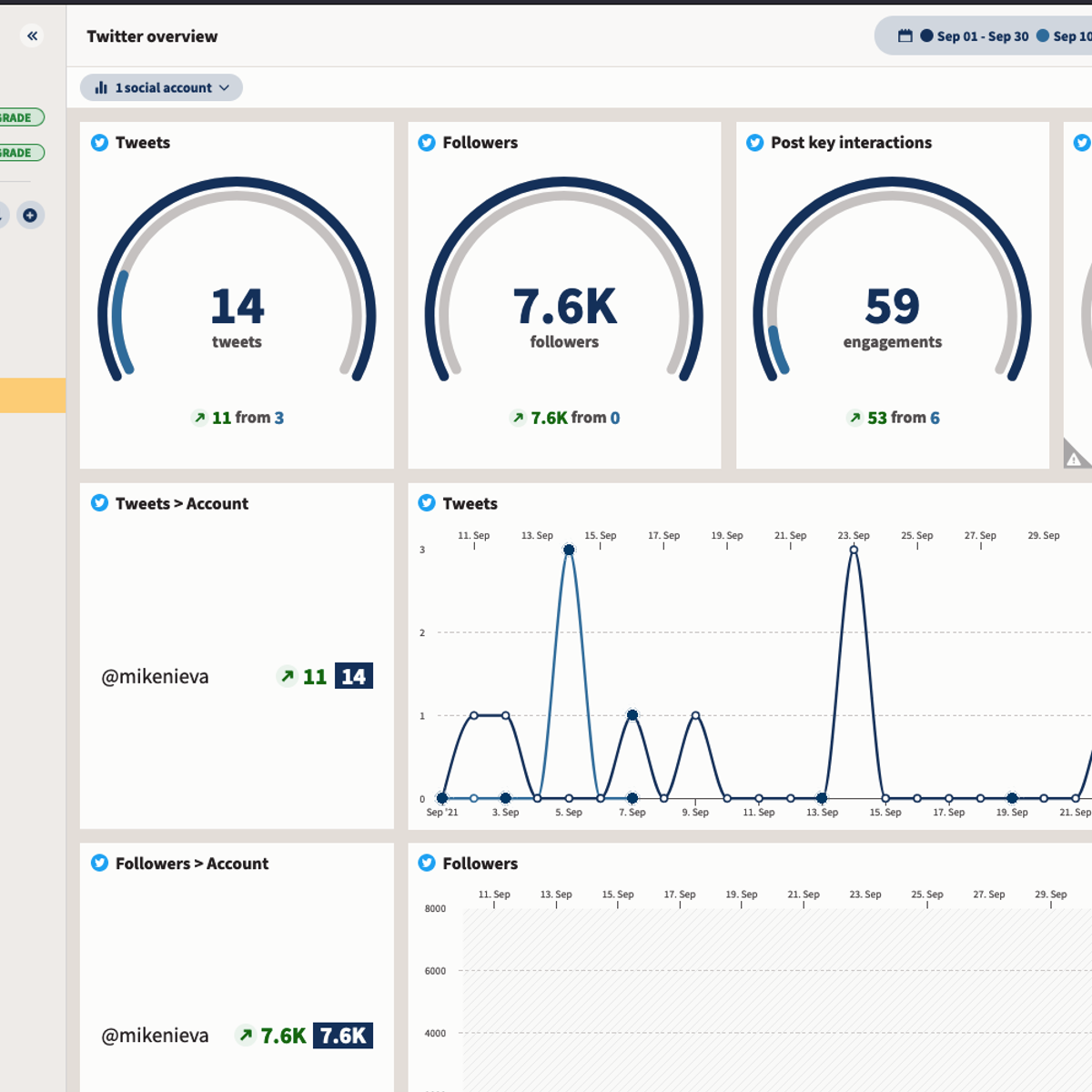
En este proyecto, estaremos gestionando nuestras redes sociales para promover contenido a través de Hootsuite. Nuestro objetivo será conocer las herramientas, requisitos y visualizar todos los recursos que brinda la aplicación.
 Coursera
Data Analytics with Skills.AI: Create Data Visualizations
In this 1-hour long project-based course, you will learn how to Navigate and register on the Skills.AI platform effectively, Create infographics and visualize data using AI tools, and Interact with visual reports for enhanced insights.
 EDUCBA
Master Machine Learning with TensorFlow: Basics to Advanced
By the end of this course, learners will be able to build, train, and evaluate machine learning and deep learning models using Python, Scikit-learn, and TensorFlow. They will confidently preprocess datasets, apply classical algorithms, visualize insights, and design neural networks to solve real-world problems. This hands-on program takes students from zero to hero, beginning with the foundations of machine learning and progressing through data wrangling, visualization, preprocessing, and model building. Learners gain practical skills by working with industry-standard tools like Jupyter, Anaconda, NumPy, Pandas, Matplotlib, and Seaborn before mastering TensorFlow for deep learning applications such as image classification with MNIST. What makes this course unique is its step-by-step structured approach, blending theory with coding practice across multiple modules and lessons. Each concept is reinforced through quizzes, case studies, and real-world datasets, ensuring both comprehension and application. Whether you’re a beginner exploring machine learning for the first time or a professional looking to sharpen TensorFlow skills, this course provides a comprehensive pathway to mastering ML workflows.
 Peking University
International Perspectives on Health and Nursing 健康和护理的国际化视角
The course “International Perspectives on Health and Nursing” will be given totally in English. It is a 6-week course with one topic in each week. Topics covered by this course include global health challenges, healthcare systems in different countries, nursing specialties and roles in different healthcare system, nursing education programs in various countries, nursing research agencies and status in different countries, and technologies that have changed nursing practice significantly.
 Coursera
Visualize Retention: Heatmaps & Clarity Unlocked
Transform raw user retention data into compelling visual narratives that drive business decisions. This course empowers data analysts to master the art and science of retention visualization through advanced heatmap techniques and rigorous accessibility evaluation. You'll learn to calculate cohort retention rates, render time-based heatmaps with strategic event annotations, and critically assess visualizations for clarity, accessibility, and accuracy. By completing this course, you'll confidently create visualizations that not only capture complex behavioral patterns but also communicate insights effectively to diverse stakeholders while meeting accessibility standards. This course is unique because it combines technical visualization skills with accessibility expertise, ensuring your data stories reach and resonate with all audiences. To be successful in this course, you should have experience with data analytics tools like Tableau, understanding of user retention concepts, and familiarity with basic statistical analysis.
 University of California, Davis
Research Proposal: Initiating Research
Market Research is a growing and important field that is used in many industries around the world. Given all the data that is collected whether by organizations, industries, social media, governments, etc., it’s important that someone can review and sift through all the noise to provide valuable insights. And that’s where you come in as a market researcher. This course will only scratch the surface and provide you a foundational understanding of this field. In this course, you will be able to define market research and identify some tools used in the industry. You will be able to discuss the importance of secondary and internal research in terms of the planning process. You will be able to define what primary research is and identify the various ways to conduct primary research. You will be able to focus on an actual research plan or proposal for your peer review project. You will be able to compose a response to a request for a proposal or research plan and be able to address the various components of the proposal and package it in a professional manner.
 EDUCBA
Analyze Financial Markets with Technical Analysis
Learners will be able to analyze price trends, interpret technical indicators and oscillators, evaluate market cycles, and apply technical analysis across multiple asset classes including equities, fixed income, futures, currencies, options, and exchange-traded products. This course provides a comprehensive introduction to technical analysis aligned with CMT Part I learning requirements. Learners develop a strong foundation in charting principles, trend and reversal analysis, Point & Figure techniques, momentum and breadth indicators, and cycle theory. Through structured modules, the course progresses from core price-based analysis to advanced applications across global financial markets, enabling learners to interpret market behavior with confidence and discipline. By completing this course, learners gain practical skills to assess market direction, validate trading signals, manage risk through volatility awareness, and understand intermarket relationships. The course emphasizes real-world applicability, analytical rigor, and exam relevance, making it suitable for aspiring technical analysts, traders, portfolio managers, and finance professionals. What makes this course unique is its integrated approach—combining classical charting, indicator analysis, cycle theory, and cross-asset application within a single, cohesive learning path—while maintaining strong alignment with professional certification standards and industry best practices.
 University of Pennsylvania
Copyright Law
Copyright law is unique in the greater intellectual property regime, as it protects original expression that is fixed in a tangible medium and is the product of authorship. This course is designed for creative professionals — such as screenwriters, musicians, documentary filmmakers or artists — who want to understand the scope and limits of which works can enjoy U.S. copyright protection. The course will introduce students to the workings of copyright law through an examination of the system’s basic principles, rules, and institutions. Topics will include; the justifications for copyright law, copyrightable subject matter, authorship, the nature and scope of copyright’s exclusive rights, fair use, and remedies for infringement. We will also explore real-world examples of legal battles surrounding copyright law, from the recent litigation over Robin Thicke’s hit song “Blurred Lines” to more peculiar cases such as the infamous “monkey selfie” case. By understanding what copyright does and does not protect, producers of creative expression will be able to protect and maximize the commercial value of their works.
 The University of North Carolina at Chapel Hill
Epidemiology: The Basic Science of Public Health
Often called “the cornerstone” of public health, epidemiology is the study of the distribution and determinants of diseases, health conditions, or events among populations and the application of that study to control health problems. By applying the concepts learned in this course to current public health problems and issues, students will understand the practice of epidemiology as it relates to real life and makes for a better appreciation of public health programs and policies. This course explores public health issues like cardiovascular and infectious diseases – both locally and globally – through the lens of epidemiology.
 National Taiwan University
材料力學一 (Mechanics of Materials (1))
課程介紹與教學目標 (About the course) 房屋為我們遮風避雨,讓我們安心工作、生活,而結構系統又是房屋的骨幹,讓房屋能站的又高、又直、又穩。你知道橫者為梁,直者為柱,但你知道在結構工程師的眼中,梁與柱有什麼其他的不同嗎?他們其中藏著什麼秘密,能支撐起整個結構?工程師要怎麼決定梁該有多深?柱該有多粗?該用矩形、圓形還是其他形狀?該用實心還是空心?在有地震的地方,設計上是否又有不一樣的考量? 材料力學是通往上述問題解答關鍵的一步。在材料力學(一)裡,我們會由大家熟知的虎克定律開始,以蓋房子的重要材料「結構鋼」為例,深入探討「力量」與「變形」這兩個令結構工程師愛恨交加的物理量之間的關係。然後依序探討結構桿件受軸力(拉/壓)、受扭、受彎、受剪四大外力作用下,會在桿件內部產生怎樣的相對應變形與受力,並探討建築結構設計概念與提供桿件設計演算範例。 本課程是希望精通「鋼筋混凝土設計」、「鋼結構設計」、「木構造設計」者必備的先修課程,也為對「彈性力學」有興趣者,提供許多基礎知識與這些知識如何實際應用於工程設計。 主要授課對象為土木、建築相關從業人員與在學學生,其他包括工學院各科系同學或對材料力學有興趣的人士,也歡迎選修。 授課形式 (Course format) 本堂課將以影片的形式為主, 搭配課後作業及期末報告的形式來進行。 修課背景要求 (Recommended background) 靜力學 ( Statics )
 Coursera
Transform Financial Data: Recall & Import
Financial analysts spend hours manually reformatting data feeds—time that could be spent on analysis. This intermediate course teaches you to recognize data structures and automate transformations using Power Query, turning repetitive cleanup into one-click refreshes. You'll start by classifying structured, semi-structured, and unstructured data across typical financial sources—understanding how each format affects accuracy, governance, and reporting workflows. Then you'll master Power Query to import JSON feeds, flatten nested hierarchies, and create automated refresh pipelines that keep dashboards current without manual intervention. Through short videos, practical readings, and hands-on labs, you'll connect data concepts to daily analyst work—from explaining structure types in governance meetings to building repeatable transformation workflows. Real-world examples from firms like PwC and EY show how data literacy and automation drive accuracy, efficiency, and compliance. By the end, you'll transform messy JSON into clean tables, automate refresh workflows, and build the foundation for reliable, efficient financial reporting that scales.
 Google Cloud
Responsible AI for Developers: Fairness & Bias - Português
Neste curso, apresentamos conceitos de IA responsável e princípios de IA. Ele contém técnicas para identificar e reduzir o viés e aplicar a imparcialidade nas práticas de ML/IA. Vamos abordar ferramentas e métodos práticos para implementar as práticas recomendadas de IA responsável usando produtos do Google Cloud e ferramentas de código aberto.
 IBM
IBM
Project Management Capstone
This capstone project course will give you the chance to practice the work that project managers do in real life when managing projects. You will assume the role of a project manager and gain hands-on experience managing a project from start to finish. You will plan, execute, and close the project. By the end, you will have many artifacts that will showcase both your knowledge of predictive and adaptive methodologies, which can then be added to your portfolio to show employers. As part of this course, you will produce common project deliverables. Artifacts you will create using a predictive methodology include a work breakdown structure, network diagram, budget, quality and communications management plans, and a risk register. Artifacts that showcase your adaptive methodology skills include user stories, examples of product and sprint backlogs, and a burndown chart analysis. You will also produce a project status report, a change form, and a closeout report. This capstone course is a great way to build out your project management portfolio and showcase your skills to prospective employers.