

The Global Scholarly Directory.
Discover world-class academic programs curated for the modern intellectual. Search through 19877+ degrees and professional certificates.
 Universidades Anáhuac
Modelos predictivos con Machine Learning
Este curso tiene como objetivo proporcionar a los estudiantes una comprensión integral de los modelos predictivos utilizando técnicas de Machine Learning. Los participantes aprenderán a implementar, evaluar y mejorar modelos predictivos aplicables a diversas problemáticas reales, utilizando herramientas como Python y bibliotecas especializadas.
 Universitat Politècnica de València
Introduction to SQL and relational databases
In the modern business landscape, information represents the most valuable resource for organizations, with the majority of this critical data housed within digital relational database systems. The overwhelming majority of database management platforms currently deployed across industries rely on SQL as their primary language for data manipulation and retrieval operations. As a globally recognized standard, SQL empowers users to execute sophisticated data analysis and aggregation operations through an intuitive command structure that maximizes efficiency. For professionals pursuing careers in data analytics, software development, or any field requiring database interaction capabilities, SQL proficiency serves as a fundamental prerequisite. This comprehensive course will guide you through essential database management principles while providing hands-on experience with SQL implementation. Beginning with fundamental data retrieval techniques from single tables, you'll progress to advanced multi-table operations that enable comprehensive data analysis—all practiced using our cloud-based SQL simulation environment throughout your learning journey.
 EDUCBA
SEO Case Study: Analyze, Optimize & Grow
By the end of this course, learners will be able to define SEO fundamentals, analyze company contexts, evaluate strategic frameworks, develop SEO strategies, conduct audits, and implement goal-driven optimization plans. They will also monitor and assess attribution models to drive measurable improvements in search visibility and consumer engagement. This course benefits learners by combining theory with a real-world European multinational case study, ensuring they not only understand SEO concepts but also apply them in practical, business-driven contexts. Participants will gain the ability to translate organizational vision into actionable SEO objectives, craft strategies using PESTLE and SWOT, and execute structured processes for setup, monitoring, and analysis. What makes this course unique is its immersive case study approach, bridging academic rigor with corporate application. Unlike traditional SEO tutorials, it integrates business ethos, geographical profiling, and strategic mileposts to provide a holistic perspective on search engine optimization. Learners will leave equipped with the skills to design, implement, and optimize SEO initiatives that align with long-term organizational goals.
 University of Toronto
Bioinformatic Methods I
Large-scale biology projects such as the sequencing of the human genome and gene expression surveys using RNA-seq, microarrays and other technologies have created a wealth of data for biologists. However, the challenge facing scientists is analyzing and even accessing these data to extract useful information pertaining to the system being studied. This course focuses on employing existing bioinformatic resources – mainly web-based programs and databases – to access the wealth of data to answer questions relevant to the average biologist, and is highly hands-on. Topics covered include multiple sequence alignments, phylogenetics, gene expression data analysis, and protein interaction networks, in two separate parts. The first part, Bioinformatic Methods I (this one), deals with databases, Blast, multiple sequence alignments, phylogenetics, selection analysis and metagenomics. The second part, Bioinformatic Methods II, covers motif searching, protein-protein interactions, structural bioinformatics, gene expression data analysis, and cis-element predictions. This pair of courses is useful to any student considering graduate school in the biological sciences, as well as students considering molecular medicine. Both provide an overview of the many different bioinformatic tools that are out there. These courses are based on one taught at the University of Toronto to upper-level undergraduates who have some understanding of basic molecular biology. If you're not familiar with this, something like BIO101 from Saylor Academy (https://learn.saylor.org/course/view.php?id=889) might be helpful. No programming is required for this course. Bioinformatic Methods I is regularly updated, and was completely updated for January 2026.
 University of California, Davis
Social Network Analysis
This course is designed to quite literally ‘make a science’ out of something at the heart of society: social networks. Humans are natural network scientists, as we compute new network configurations all the time, almost unaware, when thinking about friends and family (which are particular forms of social networks), about colleagues and organizational relations (other, overlapping network structures), and about how to navigate delicate or opportunistic network configurations to save guard or advance in our social standing (with society being one big social network itself). While such network structures always existed, computational social science has helped to reveal and to study them more systematically. In the first part of the course we focus on network structure. This looks as static snapshots of networks, which can be intricate and reveal important aspects of social systems. In our hands-on lab, you will also visualize and analyze a network with a software yourself, which will help to appreciate the complexity social networks can take on. During the second part of the course, we will look at how networks evolve in time. We ask how we can predict what kind of network will form and if and how we could influence network dynamics.
 Scrimba
Build a Mobile App with Firebase
e.g. This is primarily aimed at first- and second-year undergraduates interested in engineering or science, along wiUnlock Your App Development Potential: Creating a Feature-Rich Shopping List App Are you ready to turn your visionary app ideas into reality? If your answer is a resounding 'YES,' then this course is your gateway to a transformative journey. In this meticulously designed course, we will guide you through the creation of a sophisticated shopping list app using a powerful tech stack, including HTML, CSS, JavaScript, and Firebase. Leveraging Firebase's real-time database capabilities, you'll learn how to store and manage data seamlessly. Course Highlights: Mastering Database Fundamentals: Delve into the world of databases as we demystify the intricacies of Firebase Realtime Database. Gain the skills needed to establish and configure your database, while learning the art of data storage and retrieval. Progressive Web App (PWA) Magic: Elevate your app development expertise by utilizing a unique technique that transforms your web app into a mobile-like experience. Learn how to create PWAs that exhibit remarkable responsiveness and user-friendliness. Hands-On Experience: Throughout the course, you'll embark on a series of challenges designed to solidify your understanding and proficiency in each topic. Practical application is at the heart of our teaching methodology. Real-Time Data Interaction: Discover the enchanting world of real-time data synchronization. Witness the magic as your app dynamically updates and displays data changes in real time, enhancing user engagement. Comprehensive Learning: By the course's conclusion, you'll have the knowledge and skills to set up, connect, populate, display, and manage data in your Firebase Realtime Database. Plus, you'll be well-equipped to handle data deletion tasks. Exploration Beyond: This course serves as a stepping stone to explore the myriad of other impressive features Firebase offers. You'll have the foundation needed to explore and utilize Firebase's full potential. Join us on this immersive journey, where innovation meets practicality. Transform your app development aspirations into reality, and become proficient in crafting feature-rich, real-time applications. Enroll today and embark on your path to app development excellence.th high school students and professionals with an interest in programming.
 EDUCBA
Predictive Analytics with SPSS: Analyze & Apply
By the end of this course, learners will be able to import and manage datasets in SPSS, apply descriptive statistics, analyze correlations, construct linear and multiple regression models, and interpret logistic and multinomial regression outputs. Through hands-on practice with real-world case studies—including heart pulse, copper expansion, energy consumption, and debt assessment—learners will evaluate predictors, interpret coefficients, and validate results. This course is designed to build a step-by-step mastery of predictive analytics using SPSS, starting from data handling fundamentals to advanced regression modeling. Each module integrates theory with applied case studies, enabling learners to connect statistical concepts to practical decision-making. What makes this course unique is its structured approach that combines clear explanations, SPSS demonstrations, and diverse datasets across health, psychology, and finance domains. Learners will gain not only technical proficiency in SPSS but also the confidence to apply predictive modeling techniques in real-world research, business, and academic contexts. Whether you are a student, researcher, or professional, this course equips you with the tools to transform raw data into actionable insights.
 Microsoft
Advanced DAX and Performance Optimization
This course focuses on advanced DAX (Data Analysis Expressions) concepts and performance optimization techniques essential for Power BI developers. Participants will learn to write complex DAX formulas, create calculated columns and measures, and implement sophisticated business logic. The course emphasizes performance optimization methodologies and troubleshooting techniques to ensure reports are efficient and responsive. By leveraging tools like Performance Analyzer and DAX Studio, learners will diagnose and resolve common performance issues.
 University at Buffalo
Computer Vision Basics
By the end of this course, learners will understand what computer vision is, as well as its mission of making computers see and interpret the world as humans do, by learning core concepts of the field and receiving an introduction to human vision capabilities. They are equipped to identify some key application areas of computer vision and understand the digital imaging process. The course covers crucial elements that enable computer vision: digital signal processing, neuroscience and artificial intelligence. Topics include color, light and image formation; early, mid- and high-level vision; and mathematics essential for computer vision. Learners will be able to apply mathematical techniques to complete computer vision tasks. This course is ideal for anyone curious about or interested in exploring the concepts of computer vision. It is also useful for those who desire a refresher course in mathematical concepts of computer vision. Learners should have basic programming skills and experience (understanding of for loops, if/else statements), specifically in MATLAB (Mathworks provides the basics here: https://www.mathworks.com/learn/tutorials/matlab-onramp.html). Learners should also be familiar with the following: basic linear algebra (matrix vector operations and notation), 3D co-ordinate systems and transformations, basic calculus (derivatives and integration) and basic probability (random variables). Material includes online lectures, videos, demos, hands-on exercises, project work, readings and discussions. Learners gain experience writing computer vision programs through online labs using MATLAB* and supporting toolboxes. * A free license to install MATLAB for the duration of the course is available from MathWorks.
 Skillshare
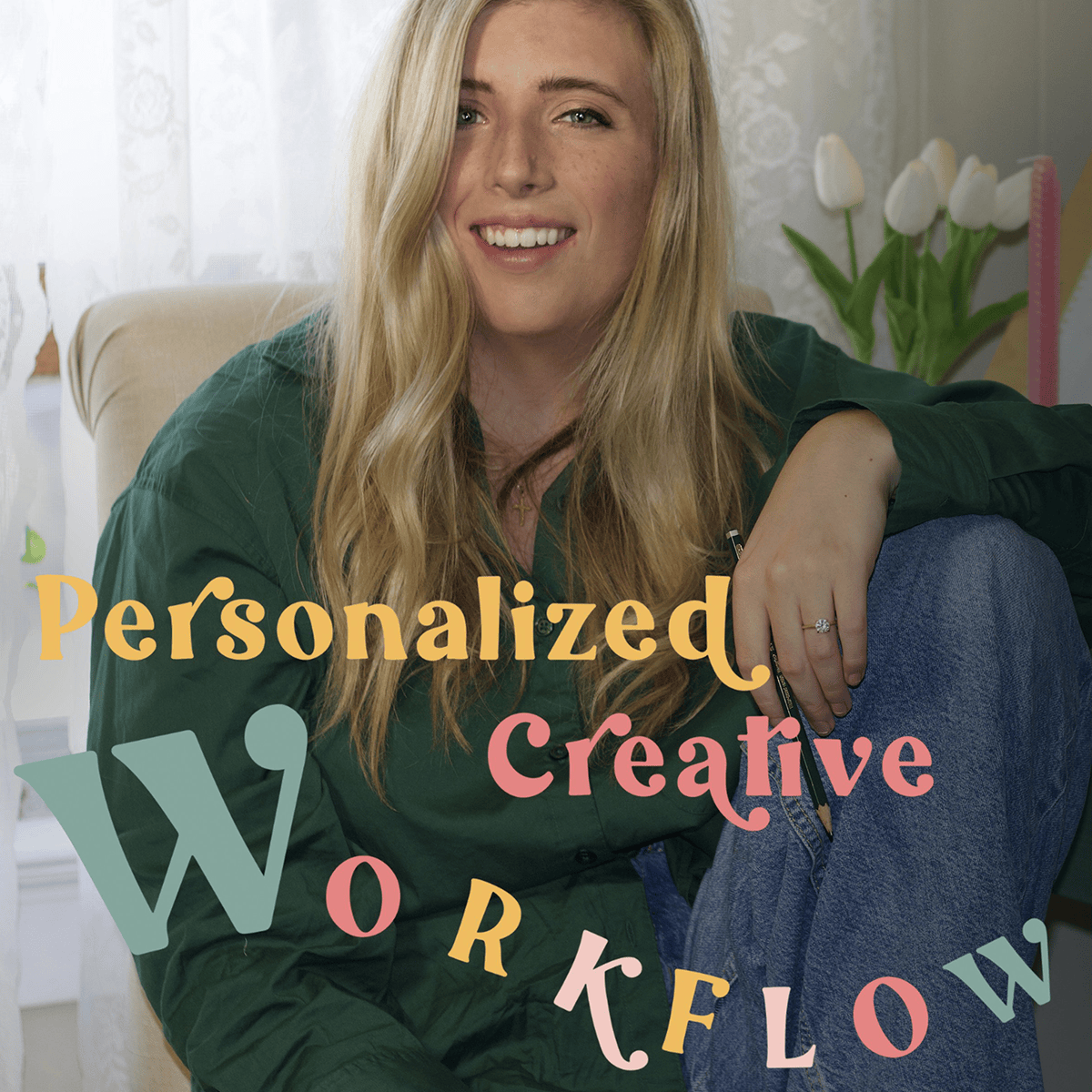
Defeat Procrastination: Design Your Own Creative Workflow
By the end of this course, you will be able to design a personalized creative workflow, identify and work with your strengths and weaknesses, reduce procrastination and overwhelm, and confidently move projects from idea to completion. Taught by Art Director, creative educator, and mental health advocate Sarah Edwards, Defeat Procrastination: Design Your Own Personalized Creative Workflow helps you stop forcing productivity systems that don’t fit—and start building a process that works for you. This course is structured in three parts, guiding you from understanding the power of process, to designing your workflow framework, to practicing discipline, grace, and sustainable success. You’ll learn how to break free from common productivity myths, brainstorm more effectively, manage ideas without mental overload, and become your own project manager. Through guided exercises and a 35+ page workbook, you’ll uncover your creative “superpowers” and “kryptonites,” integrate mental health into planning, and build systems that support real-life creativity—not burnout. This course is for anyone who considers themselves creative, from professionals to parents and hobbyists. No prior productivity or design experience is required—just curiosity, self-awareness, and a willingness to try a new approach to getting things done.
 Fred Hutchinson Cancer Center
Data Management and Sharing for NIH Proposals
The National Institutes of Health (NIH) has a new policy for the management and sharing of scientific data starting for (most) grants submitted January 25, 2023 or later. In this course we will describe what the new policy requires, places where you might want to share your particular kind of data, and how to deal with possible challenges associated with the policy. This course is for anyone writing a grant proposal for NIH that needs to know more about this policy and how to abide by it. It will guide learners gently through the process and help you figure out where you might need to share your data. This course is intended for those who are somewhat familiar with the grant writing process, however those who are completely new to grant writing will still find the material useful, but may need to look up a few terms. Learning Objectives: 1) Explain why the NIH has implemented this new policy 2) Describe the elements required in a data management and sharing plan 3) Identify appropriate data sharing repositories for different projects 4) Write a data management and sharing plan Unique Features of this Course - Beginner friendly for those who want to get started learning about this policy - Guided gentle step-by-step process to write your own data management and sharing plan - Easy access to relevant links associated with this policy and helpful tools - Helpful guidance about where to share your data - Information about nuances involved in the policy Key Words Data Sharing, NIH, Data Management, Data Sharing and Management Plans, Grant Writing, Grant Applications Intended Audience - Those involved in writing NIH grants - Those involved in submitting NIH grants Accessibility We are committed to making our content accessible and available to all. We welcome any feedback you might have at https://forms.gle/3sTZpctxzYyhj74NA. Questions related to accessibility accommodations should be directed to https://studentserviceportal.force.com/s/.
 Skillshare
3D Animation in Unreal Engine: Create an Original Character
Bring a character to life with the power of 3D design in Unreal Engine. In this class, your instructor, Lucas Ridley, will teach you how to use Unreal Engine for the first time and leverage the software to create your own custom character. From recording a personalized facial capture to customizing a Metahuman character, you’ll discover that creating a playable character within Unreal Engine isn’t as intimidating as you might think. With Lucas as your guide, you’ll: - Discover Unreal Engine and how to navigate the software - Use the Metahuman app to create a customized character - Import your character into Unreal Engine - Play your character within a template level - Plus, you’ll get a behind-the-scenes look at Lucas’ work process as a full-time animator. Whether you dream of working as an animator in films or video games or you are just curious about 3D character animation, you’ll leave this class knowing how to create your own unique character that your audience can connect to. To take this class, you don’t need any Unreal Engine experience. All you need is an interest in creating your own 3D films or video games as well as the Unreal Engine software, a computer, and a three button mouse. To record your own facial capture you’ll need an iPhone and the Live Link App but you can also download free motion capture data online if you don’t have an iPhone. Instructor bio: Lucas Ridley is a professional animator whose work has appeared in films by directors like Steven Spielberg and Robert Zemeckis, as well as in major game studios. Originally from Kentucky, his career has taken him around the world, from Los Angeles to London, contributing to blockbuster projects while also pursuing personal creative work. Lucas brings that industry experience into teaching, where he focuses on making animation approachable and frustration-free. His goal is to give learners clear, practical guidance to help them build confidence and create with independence.
 Edureka
Microsoft Fabric Analytics Engineer: DP-600 Exam Prep
Microsoft Fabric represents a paradigm shift in enterprise analytics—unifying data engineering, data warehousing, and business intelligence into a single, cohesive SaaS ecosystem. This course is your definitive guide to mastering that ecosystem, moving beyond theoretical concepts to the practical implementation required to earn the Fabric Analytics Engineer Associate certification. As a Fabric Analytics Engineer Associate, you are expected to demonstrate subject matter expertise in designing, building, and deploying enterprise-scale analytics solutions — while confidently querying and analyzing data using SQL, KQL, and DAX. This program is purpose-built to help you master those competencies with clarity and precision. You will navigate the full Microsoft Fabric ecosystem, including OneLake, Lakehouse, Warehouse, Apache Spark, Data Factory, Dataflows Gen2, Real-Time Intelligence, Semantic Models, and Power BI. The course emphasizes how these components integrate into a unified, high-performance analytics architecture. From orchestrating robust data ingestion pipelines and Spark transformations to structuring Medallion architectures powered by Delta Lake, you will develop scalable data foundations. You will then advance into analytical engineering — implementing T-SQL in Warehouses, designing real-time intelligence solutions using Eventhouse and KQL, and building optimized semantic models using advanced DAX techniques. Beyond implementation, the course reinforces enterprise-grade standards. You will configure security frameworks including RLS and OLS, integrate governance through Microsoft Purview, monitor capacity and performance metrics, and align deployments with compliance and operational best practices. By the end of this course, you will be equipped to: - Design enterprise-grade analytics architectures using Microsoft Fabric components. - Develop scalable data ingestion and transformation workflows across Lakehouse, Warehouse, Spark, and Real-Time workloads. - Analyze data using SQL, KQL, and DAX in structured and streaming environments. - Construct optimized semantic models using appropriate storage and performance strategies. - Implement security and governance frameworks aligned with enterprise standards. Designed for analytics engineers, data professionals, and BI architects seeking to validate and elevate their expertise, this course blends certification precision with real-world architectural depth. Elevate your capabilities. Prove your readiness. Become a certified Microsoft Fabric Analytics Engineer.
 Packt
Packt
Advanced Security and Troubleshooting
Updated in May 2025. This course now features Coursera Coach! A smarter way to learn with interactive, real-time conversations that help you test your knowledge, challenge assumptions, and deepen your understanding as you progress through the course. Strengthen your expertise in network security and troubleshooting with this advanced course. Delve into the latest techniques to secure networks, establish robust connections, and proactively address vulnerabilities. You’ll learn how to counter sophisticated cyber threats, optimize remote access, and implement wireless security measures effectively. The course begins with a deep dive into network security essentials. Explore topics such as remote access protocols, social engineering tactics, VPN implementation, and enterprise physical security. Understand best practices for network hardening, from securing SNMP communications to advanced wireless protections like geofencing and EAP. Transitioning to troubleshooting, the course follows CompTIA's structured model, guiding you through problem identification, testing theories, implementing solutions, and system verification. You’ll master essential tools for diagnosing and resolving network issues, including cabling challenges, software tools, IP commands, and DNS troubleshooting techniques. Designed for IT professionals, network administrators, and cybersecurity specialists, this course requires a foundational understanding of networking concepts. If you’re ready to tackle advanced security and troubleshooting challenges, this course is for you.
 Johns Hopkins University
Civil Registration & Vital Statistics in Population Health
In this course, you will learn about the role and importance of civil registration and vital statistics (CRVS) systems that are used to track birth, death, and life events. Experts from around the world will explain what CRVS systems are, how they are used, the legal bases for registering vital events, and challenges experienced with CRVS systems. You will learn about how CRVS data can be used to inform population-level decision-making, including around specific methods such as medical certification of cause of death (MCCOD) and verbal autopsy, and the application of a gender and equity lens to data systems to ensure they are responsive to the needs of populations. Our overarching goals for the course are to support the collection of country-level death and birth data, to improve the use of data to inform policy priorities, track trends, and plan interventions, and enhance monitoring of major risk factors for early death, especially from noncommunicable diseases. The course is the result of a collaboration among multiple partners, including Vital Strategies, the Centers for Disease Control and Prevention (CDC), the CDC Foundation, the Johns Hopkins Bloomberg School of Public Health, Global Health Advocacy Incubator, and University of New South Wales, Sydney. This course was funded by Bloomberg Philanthropies, with co-funding from the Australian government and Bill and Melinda Gates Foundation.
 Coursera
Create a Cover Letter with an Envelope using Microsoft Word
After successfully completing this project, you will have created a cover letter and an envelope using Microsoft Word. While composing a cover letter, you will use various features in Word such as headers, styles, and page size. You will also learn how to adjust page margins and use the markers on the ruler. This project is useful for learning the basic features in Word to create a formal block style letter and envelope.