

The Global Scholarly Directory.
Discover world-class academic programs curated for the modern intellectual. Search through 19877+ degrees and professional certificates.
 Packt
Packt
Unreal Engine 5 for Games - Physics
This course features Coursera Coach! A smarter way to learn with interactive, real-time conversations that help you test your knowledge, challenge assumptions, and deepen your understanding as you progress through the course. Unreal Engine 5 is one of the most powerful game development tools available today. This course offers a comprehensive guide to mastering Unreal Engine's physics system, providing you with the skills to create realistic, dynamic game environments. Throughout this course, you will learn how to simulate physical interactions, handle object collisions, and manipulate forces and materials for a more immersive gaming experience. The course starts with foundational physics principles in Unreal Engine 5, such as physics bodies, vectors, and collision volumes. As you progress, you'll explore more advanced topics like destruction physics, cloth simulation, and cable dynamics. Practical applications will guide you through creating interactive gameplay elements, and by the end of the course, you'll be able to apply your knowledge in real-world game development projects. This course is ideal for aspiring game developers, particularly those with an interest in the technical aspects of Unreal Engine. No prior experience with physics engines is required, although familiarity with game development basics will be helpful. The course has an intermediate difficulty level, so it is perfect for learners with some foundational knowledge of game development who are ready to dive deeper into physics simulations. By the end of the course, you will be able to simulate realistic physics interactions in Unreal Engine 5, create dynamic environments with forces and materials, design destructible objects, and implement advanced simulation systems such as cloth physics and cable dynamics.
 Coursera
Business Model Canvas y Business Case en Miro
Gracias a este curso aprenderás a desarrollar un Business Model Canvas y un Business Case en Miro. El Business Model Canvas te permitirá crear y mejorar tu modelo de negocio. Y el Business Case te permitirá evaluar la viabilidad de tus iniciativas. Además aprenderás acerca de Miro. Miro es una herramienta para trabajar con pizarras virtuales infinitas con todo tu equipo en tiempo real y desde cualquier lugar. Para ello, te guiaremos desde cero para que aprendas que es un Business Model Canvas y un Business Case, a cómo desarrollarlos y a cómo utilizarlos. Después avanzaremos con Miro, desde el manejo básico hasta funcionalidades avanzadas . Finalmente desarrollarás un proyecto de principio a fin donde utilices todo lo aprendido acerca del Business Model Canvas, del Business Case y de Miro.
 Packt
Packt
Deep Learning, NLP, and AI Applications
This course features Coursera Coach! A smarter way to learn with interactive, real-time conversations that help you test your knowledge, challenge assumptions, and deepen your understanding as you progress through the course. Explore the cutting-edge world of Deep Learning, Natural Language Processing (NLP), and AI applications in this advanced course. You’ll gain hands-on experience with neural networks, CNNs, RNNs, transformers, and other state-of-the-art architectures. Learn to tackle real-world AI tasks such as image classification, sentiment analysis, text summarization, and language translation. This course will guide you through the powerful tools and techniques that are transforming industries, preparing you to build sophisticated AI models. You will start by building foundational knowledge in deep learning, understanding neural networks, forward propagation, and backpropagation. As the course progresses, you’ll work with convolutional neural networks (CNNs) for image recognition, recurrent neural networks (RNNs) for sequence modeling, and transformers for NLP tasks. Additionally, you’ll learn transfer learning to leverage pre-trained models for efficient AI development. This course is designed for learners with a background in machine learning or deep learning who want to expand their expertise into NLP and advanced AI techniques. Whether you’re an AI researcher or aspiring AI engineer, this course will help you apply deep learning to real-world applications. By the end of the course, you will be able to design and implement deep learning models, optimize them for complex AI tasks, and apply cutting-edge NLP techniques to build powerful AI applications.
 University of Colorado Boulder
Applied Sustainability Engineering
Applied Sustainability Engineering, the second course in the "Applied Sustainability for Technical Managers" specialization discusses the techniques used by engineers and scientists to develop and assess the environmental impact of products and processes required to make those products. It begins with a discussion of different renewable energy technologies and their economics – highlighting how continued reductions in cost have made wind and solar power the least expensive way to generate electricity. It then addresses carbon footprints and how they are determined, applying a practical example where you determine your residential and transportation carbon footprints. From there, the course transitions to defining sustainable and circular products and packaging and showcasing several examples. As Technical Managers, you’ll need metrics for determining whether a product is truly sustainable, so the course introduces techniques such as Life Cycle Assessment (LCA), Streamlined LCA (S-LCA), and the Eco-Audit methodologies. The course concludes with an overview of sustainable product design frameworks, including Cradle-to-Cradle, Design for the Circular Economy, and Biomimicry, just to name a few. This course is very practical, introducing you to several areas critical to managing and learning about sustainability initiatives, from assessing the environmental and social impacts of a product or process, to designing more sustainable and circular products. If you want to work towards having a positive impact on the planet and on society, then this course is for you! This course was developed in collaboration with Siemens Digital Industries Software and is part of the "Design for the Circular Economy" collection. Learners who complete and pass the course can receive an industry-recognized digital badge. The “Design for the Circular Economy” microcredential and graduate certificate are developed around the educational goals of providing technical, business, and leadership knowledge and skills that inspire the transformation towards a more circular economy. This includes gaining technical knowledge to apply circular economy principles in product design, minimizing waste and maximizing impact; developing business acumen to implement innovative circular economic models that prioritize sustainability and resilience; and acquiring leadership strategies to communicate effectively and inspire change within an organization. This course can be taken for academic credit as part of CU Boulder’s Master of Engineering in Engineering Management (ME-EM) degree offered on the Coursera platform. The ME-EM is designed to help engineers, scientists, and technical professionals move into leadership and management roles in the engineering and technical sectors. With performance-based admissions and no application process, the ME-EM is ideal for individuals with a broad range of undergraduate education and/or professional experience. Learn more about the ME-EM program at https://www.coursera.org/degrees/me-engineering-management-boulder.
 École Polytechnique
Aléatoire : une introduction aux probabilités - Partie 2
Ce cours d'introduction aux probabilités a la même contenu que le cours de tronc commun de première année de l'École polytechnique donné par Sylvie Méléard. Le cours introduit graduellement la notion de variable aléatoire et culmine avec la loi des grands nombres et le théorème de la limite centrale. Les notions mathématiques nécessaires sont introduites au fil du cours et de nombreux exercices corrigés sont proposés. Ce cours propose aussi une introduction aux méthodes de simulations des variables aléatoires comme la méthode de Monte Carlo. Des expériences numériques interactives sont également mises à votre disposition pour vous permettre de visualiser diverses notions.
 Amazon Web Services
Getting Started with Amazon DocumentDB (with MongoDB compatibility)
Using the document database service Amazon DocumentDB (with MongoDB compatibility), you can store and scale JavaScript Object Notation (JSON) workloads. You don't need to worry about running cluster management software, configuring backups, or monitoring production workloads. You can also migrate self-managed MongoDB-compatible databases to Amazon DocumentDB because it is fully managed. In this course, you will learn about the benefits and technical concepts of Amazon DocumentDB. If you are new to the service, you will learn how to start using Amazon DocumentDB through a demonstration of the AWS Management Console and AWS Command Line Interface (AWS CLI). You will learn about the native architecture and how the built-in features help scale and manage your document database workload. The course covers how Amazon DocumentDB fits into a larger cloud-based architecture and typical use cases that are a good fit when building solutions.
 University of California, Davis
How to Write Emails and Engage Professors
This course is designed to help you take the next step in your academic journey by mastering two critical skills: professional communication and strategic planning for research involvement. You’ll begin by learning how to write clear, respectful, and persuasive emails that encourage timely responses—an essential skill for connecting with professors and securing opportunities. Next, you’ll explore strategies for resilience and problem-solving when facing challenges such as unanswered messages or rejection. Finally, you’ll move from preparation to action by creating a personalized research plan, identifying your resources, and setting a realistic timeline to stay motivated. By the end of this course, you’ll have the confidence and tools to communicate effectively and turn your research goals into reality.
 SkillUp
Understanding Management and Leadership
Organizations don’t appoint managers simply as a career milestone. They place managers in roles that directly influence team performance, workplace culture, and business success. If you’re aspiring to become a manager, recently stepped into a leadership role, or want to strengthen your people management skills, this course is for you. In this course, you will develop practical management skills and leadership skills to succeed in modern workplaces. You will understand how organizations evaluate the manager role, and how managerial authority and influence are earned through ethical leadership, accountability, and strong decision making. You will build the ability to motivate teams, improve team performance, and practice effective people management through real-world scenarios and reflective activities. You will also learn how to deliver impactful coaching and feedback, create psychological safety, and align team efforts with organizational goals through clear vision setting and communication skills. By the end of this course, you will be able to apply performance management, strengthen workplace leadership, and confidently handle the responsibilities and challenges that come with managing people and driving business success.
 AI Business School
Introduction to AI for marketing professionals
Welcome to the “Introduction to AI for marketing professionals” — a unique, hands-on course designed to help you build foundational AI and Generative AI literacy. In this course, you’ll discover how Generative AI is transforming the marketing profession, explore key risks and best practices, while experimenting with powerful AI tools in interactive, marketing-focused applications. By the end of this course, you will be able to: - Understand the fundamentals of AI and its potential opportunities in marketing - Explore and recognize risks and limitations associated with AI and how to address them - Practice with different AI tools to get hands-on experience - Get started with essential prompting techniques for using different Generative AI models - Discover and try out various marketing-specific use cases and AI technologies, explore the ways to integrate them into daily job routines - Participate in a project to generate a marketing-specific AI use case idea with an interest in programming. - Prepare for the next phase of your AI journey, progressing from foundational to advanced applications Welcome to the unique “Introduction to AI for marketing professionals” course. Just start your AI journey and discover all the fascinating opportunities opened up for you by Artificial Intelligence.
 Packt
Packt
MCP for Leaders - Architecting Context-Driven AI
This course features Coursera Coach! A smarter way to learn with interactive, real-time conversations that help you test your knowledge, challenge assumptions, and deepen your understanding as you progress through the course. In this course, you will explore how Model Context Protocol (MCP) is revolutionizing AI by providing dynamic, context-aware decision-making frameworks. With a focus on both technical and business perspectives, you will gain a deeper understanding of MCP’s architecture, its real-world applications, and how it can transform AI systems. The course will walk you through the core concepts of MCP, including context routing, agent-driven operations, and enabling multi-modal intelligence, making it an essential tool for today’s AI-driven businesses. You will also explore business applications of MCP, with specific case studies and leadership strategies to help you make informed decisions about integrating MCP into your AI strategy. As you progress, the course covers everything from building AI-ready teams to evaluating the cost vs. value of MCP. With hands-on examples and guided exercises, you’ll understand how to implement MCP in your organization’s AI ecosystem effectively. This course is designed for executives and leaders seeking to gain a strategic advantage in the AI field. It is ideal for decision-makers, AI strategists, and business leaders looking to drive AI initiatives that leverage dynamic context-driven intelligence. The course requires no prior technical knowledge but a basic understanding of AI concepts will be beneficial. By the end of the course, you will be able to integrate MCP principles into your AI strategy, build context-driven AI systems, optimize decision-making with dynamic context, and lead your organization through AI transformation with a structured roadmap.
 Johns Hopkins University
R البرمجة باستخدام لغة
ستتعلم في هذه الدورة كيفية البرمجة بلغة R وكيفية استخدامها لتحليل البيانات بصورة فعالة. ستتعلم كيفية تثبيت البرامج اللازمة لبيئة البرمجة الإحصائية وتكوينها وكيفية وصف مفاهيم لغة البرمجة العامة إذ يتم تطبيقها بلغة إحصائية عالية المستوى. تتناول الدورة المشكلات العملية في الحوسبة الإحصائية التي تشمل البرمجة في لغة R، وقراءة البيانات في لغة البرمجة R، والوصول إلى حزم R، وكتابة دوال R، وتصحيح الأخطاء، وتحديد التعليمات البرمجية R، وتنظيم التعليمات البرمجية R والتعليق عليها. ستعرض الموضوعات في تحليل البيانات الإحصائية أمثلة عملية.
 Coursera
Advertise and grow your business on Facebook with Canva
By the end of this project, you will know how to use Canva to promote and advertise your business on Facebook. You will learn how to create a Facebook Ad, a Facebook Post and a Facebook Cover with the help of Canva. We will use templates, and create designs from scratch. You will be able to incorporate a color scheme, images, and other design elements. Creating high quality advertisements is the perfect way to proactively engage with your target audience. This project will include intermediate to advanced level skills using the free version of Canva. Note: This course works best for learners who are based in the North America region. We’re currently working on providing the same experience in other regions.
 University of Michigan
Leveraging Generative AI for Social Impact Organizations
Leveraging Generative AI for Social Impact Organizations focuses on the issue of resource scarcity commonly faced by social impact organizations and how generative AI tools can help free up limited staff capacity from routine administrative tasks. Social impact organizations often find themselves overwhelmed by repeatedly responding to common inquiries, data management and documentation needs, and other basic functions that limit their ability to fully devote time to core programming and service delivery. In this course, you’ll learn concrete examples of how AI could improve efficiency in areas like automatically answering frequently asked questions, converting information requests into readable reports, or drafting, designing, and distributing communications materials. Gain insight into key opportunities to leverage AI to expand your organization’s bandwidth for mission-critical activities. The course also explores the limitations and ethical considerations of relying on generative AI versus human judgment and nuanced interactions in social programming.
 The Museum of Modern Art
透过摄影看世界
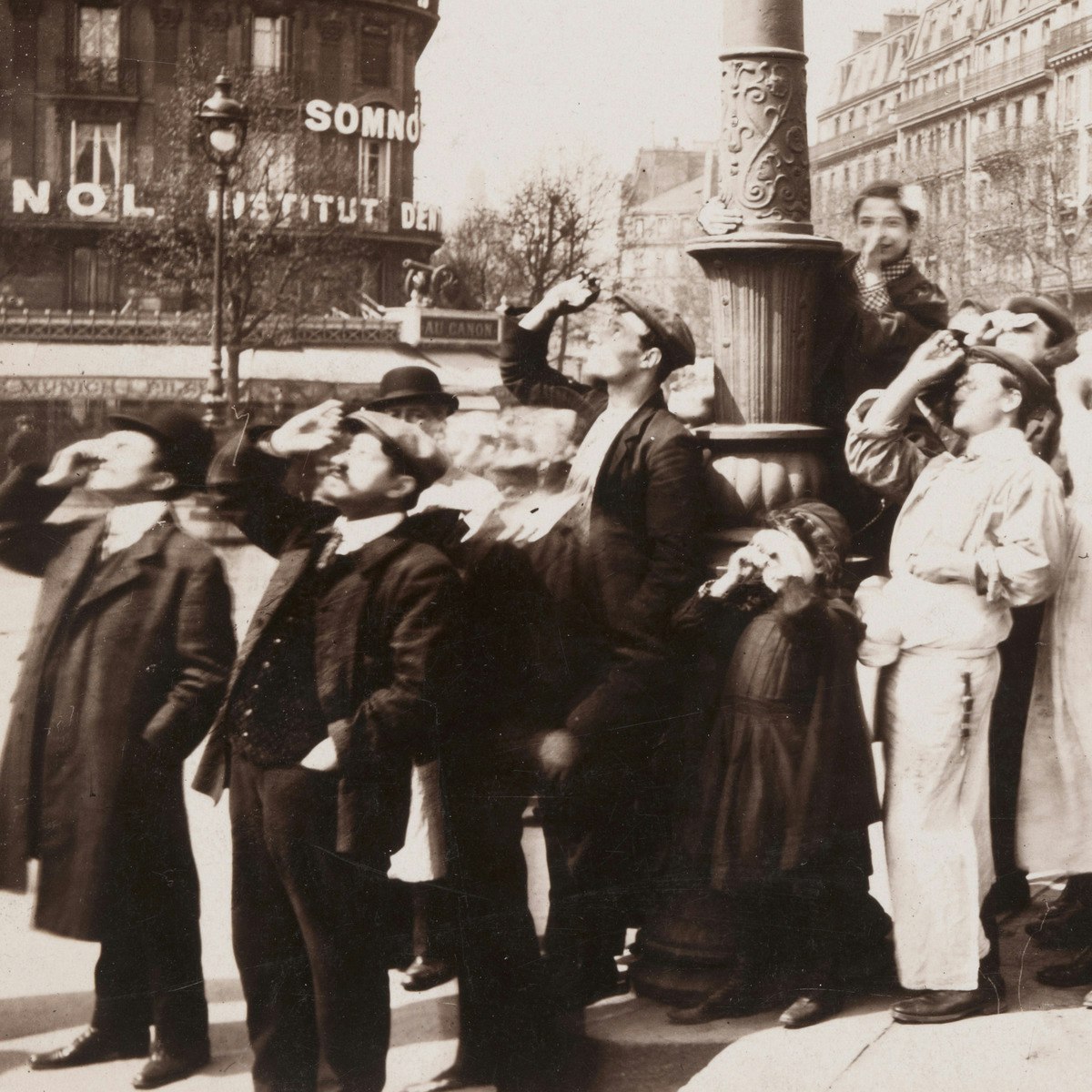
对于我们中的许多人来说,虽然拍照、分享和浏览照片已经成了日常生活中的习惯,但我们与图像的频繁接触并未培养我们在视觉表达上的素养。 这个课程的目的在于通过介绍影响摄影作品的创意、手段与技术,讨论观看照片与真正理解照片之间距离的问题。 在这个课程里,你将近距离观看纽约现代艺术博物馆收藏的照片,聆听从不同角度对照片的解读,以及摄影在将近180年历史中被使用的方式:作为艺术表现的途径、作为科学和探索的工具、作为纪实文献的媒介、作为讲述故事和记录历史的手段,以及作为日益视觉化的文化中一种交流和批评的模式。 学习目标 训练技巧,以便更好地检视和理解照片与摄影图像之间的不同。 发现语境如何影响摄影图像的制作、传播和接收。 学习摄影中各种不同模式的艺术和技术试验和创新。 探讨摄影在日益视觉化的文化中所发挥的作用
 Google Cloud
Google Meet - Español
En este curso, te presentamos Google Meet, el software para videoconferencias de Google que se incluye en Google Workspace. Aprenderás a crear y administrar reuniones de videoconferencia con Google Meet. Descubrirás diferentes maneras para abrir Google Meet y agregar personas a una videoconferencia. También aprenderás a unirte a reuniones desde diferentes fuentes, como eventos de calendario o vínculos de reuniones. Explicaremos cómo Google Meet te puede ayudar a comunicarte mejor, intercambiar ideas y compartir recursos con tu equipo donde sea que estén. Aprenderás a personalizar el entorno de Google Meet según tus necesidades y a utilizar eficazmente los mensajes de chat durante una videoconferencia. También descubrirás diferentes maneras para compartir recursos, como usar las invitaciones o los archivos adjuntos del calendario. Aprenderás a usar los controles del organizador en Google Meet para administrar a los participantes y utilizar las funciones de moderación interactiva. También aprenderás a grabar y transmitir en vivo las videoconferencias.
 Arizona State University
Building Relationships with Communication
Do you struggle to relate to others outside the scope of work? Do you need to learn to express compassion for your teammates and appreciate them as people? Learn these skills and more from the Building Relationships with Communication course!