

The Global Scholarly Directory.
Discover world-class academic programs curated for the modern intellectual. Search through 19877+ degrees and professional certificates.
 Packt
Packt
HTML5 Canvas Graphics and Animations
This course features Coursera Coach! A smarter way to learn with interactive, real-time conversations that help you test your knowledge, challenge assumptions, and deepen your understanding as you progress through the course. Dive into the world of HTML5 canvas graphics and animations, where you will learn how to create dynamic and interactive visuals for web applications. The course begins with an introduction to the fundamental canvas element and progresses to more advanced drawing techniques like lines, shapes, and curves. You’ll explore how to use different drawing styles and color gradients to enhance your visuals, as well as how to manipulate images and apply filters for stunning effects. As you continue, you will be introduced to essential concepts in transformations, animations, and event handling, providing you with the skills to animate objects, handle user interactions, and create complex visual effects. The course also guides you through practical examples such as particle systems, allowing you to build engaging animations and interactive graphics step by step. This course is perfect for anyone looking to master HTML5 Canvas, whether you’re a beginner with no experience in graphics or a developer seeking to enhance your web design skills. No prior knowledge of HTML5 or animations is required, making it suitable for those new to web development and those looking to expand their skillset. The course is designed to be hands-on, with plenty of practical examples to help you apply your learning.
 Amazon Web Services
Skills and Best Practices for Cloud Support Associates
So far in the course series, students would have been introduced to general IT knowledge and some AWS foundations. In this course, students will be introduced to specific topics for the Support Associate role. The instructors will present the following: Cloud Support Associate best practices, how tools such as automation and genAI can help, troubleshooting methodologies, how Cloud workloads change support’s approach, root cause analysis, post-mortem writing skills, and how to be your customers’ trusted technical and business advisor. This course will also be the first one on the series where we will bring Amazon employees in support roles to talk about their experiences and best-practices when interacting with their customers. We brought two Amazonians who work as a manager to ask them questions about hiring on the role, and two Amazonians who work as Individual Contributors assisting customers. On camera, you can expect having the dynamic duo Morgan and Raf doing their best, which is sharing their experiences, as well as lecturing topics that will give you a good idea on what to expect on the Cloud Support field.
 Coursera
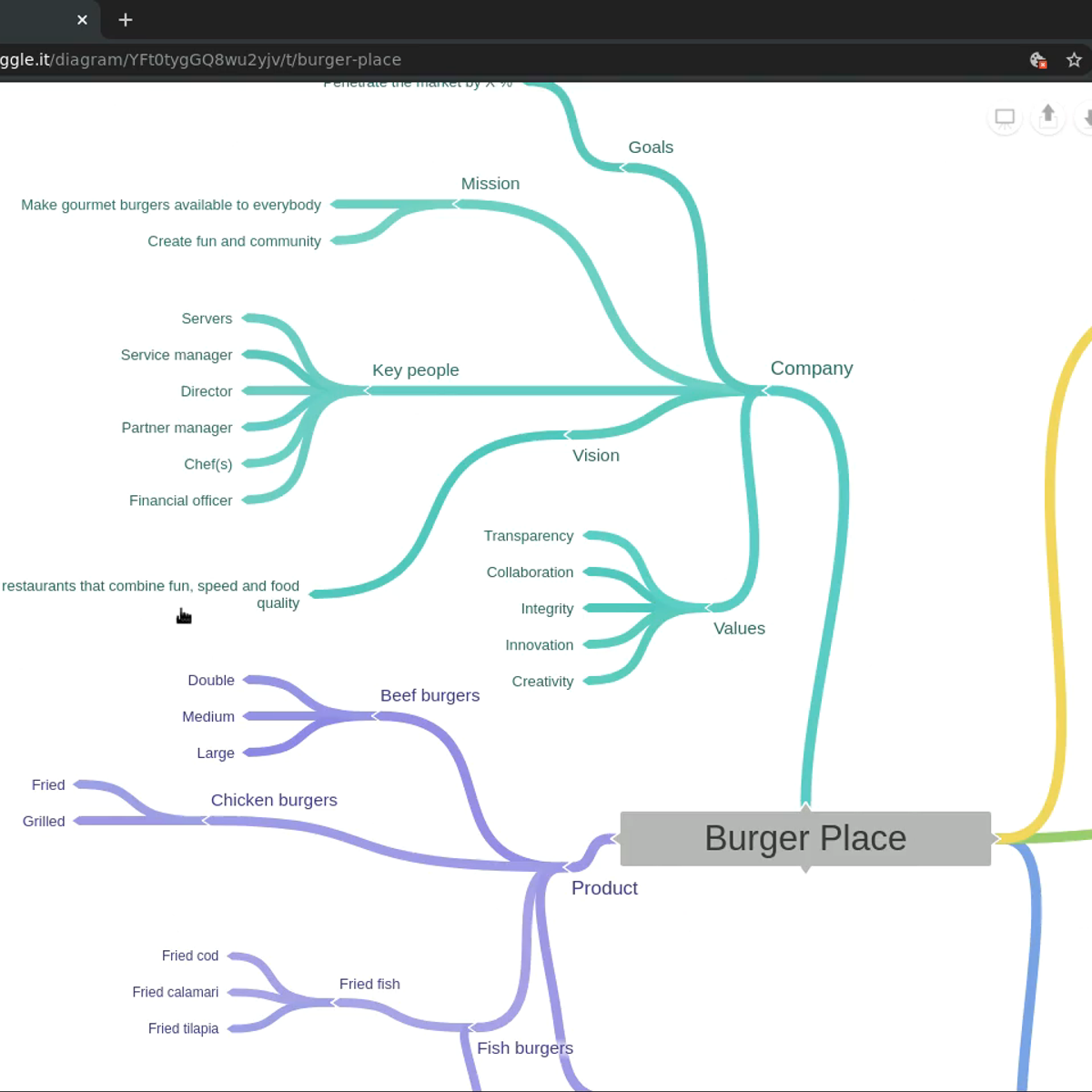
Create a business mind map with Coggle
In this 1-hour long project-based course, you will learn how to build a business plan mind map using Coggle. You will create branches with keywords stemming from a central idea, analyze product and market fit, services, company structure and summarize an executive overview. You will learn how to use signifiers to organize information and establish hierarchies. Finally you will share, comment and manage revision history for solid collaboration. Note: This course works best for learners who are based in the North America region. We’re currently working on providing the same experience in other regions.
 Board Infinity
Semantic HTML & Accessibility
"The Semantic HTML & Accessibility course is designed for web developers and designers who want to build inclusive, high-performing websites using modern HTML standards. Even if you're new to accessibility or haven't explored semantic markup in depth, this course will guide you step by step to create structured, accessible, and search-optimized web content. In the first module, you'll explore the foundations of semantic HTML, including the difference between semantic and non-semantic tags, the role of landmarks and headings, and how these elements support screen readers and search engines. You’ll also learn how ARIA roles enhance navigation and accessibility. The second module dives into performance and user experience. You’ll learn to optimize your pages using Core Web Vitals like LCP, CLS, and INP, apply responsive design with clean HTML markup, and implement features like lazy loading and native modals to enhance interactivity across devices. The final module introduces modern enhancements such as Progressive Web Apps, Web Components, and structured data. You'll learn how to configure web app manifests, use Shadow DOM for component encapsulation, and prepare your site for global audiences with localization and SEO-friendly markup. By the end of this course, you will confidently: 1. Structure web pages using semantic HTML tags that improve readability and SEO 2. Enhance accessibility using ARIA roles, keyboard navigation, and best practices 3. Optimize performance with Core Web Vitals, responsive design, and lazy loading 4. Use modern HTML features like , custom elements, and Shadow DOM 5. Build inclusive, future-ready websites aligned with accessibility and SEO standards This course is ideal for those who: - Want to build accessible, inclusive websites using modern web standards - Have basic HTML knowledge and want to deepen their skills in semantic and responsive design - Are frontend developers, designers, or marketers focused on SEO, UX, and accessibility - Are preparing for roles in web development or upgrading existing sites to meet modern guidelines This course empowers you to go beyond basic HTML and build websites that are not only functional and beautiful, but also accessible, discoverable, and performance-optimized for every user. Disclaimer: This is an independent educational resource created by Board Infinity for informational and educational purposes only. This course is not affiliated with, endorsed by, sponsored by, or officially associated with any company, organization, or certification body unless explicitly stated. The content provided is based on industry knowledge and best practices but does not constitute official training material for any specific employer or certification program. All company names, trademarks, service marks, and logos referenced are the property of their respective owners and are used solely for educational identification and comparison purposes.
 University of Colorado System
Easing Physical Symptoms: It's Not Just Hospice Anymore
Palliative care provides important support for people living with serious or life-limiting illnesses and their family caregivers. In this course, you will learn to use symptom assessment tools to better understand which symptoms are present and which are most distressing. In subsequent weeks you will learn about some of the most common and distressing symptoms such as anorexia (loss of appetite), dyspnea (shortness of breath), fatigue (weakness), delirium(confusion) and constipation and nausea/vomiting. For each of these symptoms, you will learn about the underlying cause and potential ways to support people and their families to manage the symptoms with simple practical and non-medical approaches as well as a review of medications as appropriate. In addition, you will learn to help people with their emotional response to symptoms and loss of function. You will be able to immediately use these insights, skills, and tools in your work with people living with serious illness. In other courses, you will learn communication skills, whole person assessment, how to ease physical pain and explore ways to ease psycho-social-spiritual distress.
 Universidad de los Andes
Gestión del alcance: el qué de la triple restricción
Bienvenido al curso de Gestión del alcance. Soy Gonzalo Vela y te acompañaré a lo largo de estas 7 semanas en las que aprenderás los fundamentos básicos para definir el alcance de un proyecto de manera efectiva, con lo cual podrás entender los beneficios que ofrece un proyecto complejo, la manera en la que se obtienen, cómo se organiza un plan de trabajo y cómo debes definir los componentes, entregables, criterios de aceptación y otros elementos. Este curso es un espacio académico en el cual podrás conocer, entender y aplicar las mejores prácticas y métodos para definición del alcance. Mediante el uso de varios recursos pedagógicos, podrás conocer, entender y aplicar conceptos clave de gestión de proyectos para obtener los documentos esenciales que plasman la definición del alcance, tales como el acta de constitución, el enunciado del alcance y la estructura de desagregación del trabajo, entre otros. Al finalizar este curso estarás en capacidad de entender qué hace que un proyecto sea complejo, cuáles son las etapas de su ciclo de vida y cuáles son los procesos adecuados para definir su alcance correctamente. El conocimiento adquirido y las habilidades desarrolladas te permitirán abordar con confianza uno de los desafíos de la planificación de un proyecto. Como consecuencia, mejorarás tu perfil profesional y podrás acceder a nuevas oportunidades en el campo laboral. Este curso está respaldado por los estándares de calidad que la Universidad de los Andes mantiene en su oferta académica. Adicionalmente, este curso ofrece 36 PDUs para aquellas personas certificadas como PMP, PMI-RMP o PMI-SP de acuerdo con el Triángulo del Talento del PMI®. Los PDUs están distribuidos de la siguiente manera: Formas de trabajo – 20 PDUs Habilidades de poder – 6 PDUs Visión para los negocios – 10 PDUs
 Simplilearn
Introduction Course to Autoencoders, VAEs, and GANs
This deep learning course provides a comprehensive introduction to Autoencoders, Variational Autoencoders (VAE), and Generative Adversarial Networks (GANs). Begin by exploring how autoencoders compress and reconstruct data, and discover how VAEs add probabilistic modeling to enhance generative capabilities. Learn the VAE training process and implement a VAE using TensorFlow for image generation with the MNIST dataset. Progress to mastering GANs—understand their adversarial training approach, how the generator and discriminator interact, and explore real-world applications. Gain hands-on experience by building a GAN to generate realistic fake images through step-by-step demos. To be successful in this course, you should have a basic understanding of neural networks, machine learning concepts, and Python programming. By the end of this course, you’ll be able to: - Implement and train autoencoders and VAEs - Apply VAEs for generative tasks like image synthesis - Build and train GANs to generate realistic data - Understand and apply adversarial training in real-world use cases Ideal for aspiring AI developers, ML engineers, and data scientists exploring generative deep learning.
 École Polytechnique Fédérale de Lausanne
Functional Program Design in Scala
In this course you will learn how to apply the functional programming style in the design of larger Scala applications. You'll get to know important new functional programming concepts, from lazy evaluation to structuring your libraries using monads. We'll work on larger and more involved examples, from state space exploration to random testing to discrete circuit simulators. You’ll also learn some best practices on how to write good Scala code in the real world. Finally, you will learn how to leverage the ability of the compiler to infer values from types. Several parts of this course deal with the question how functional programming interacts with mutable state. We will explore the consequences of combining functions and state. We will also look at purely functional alternatives to mutable state, using infinite data structures or functional reactive programming. Recommended background: You should have at least one year programming experience. Proficiency with Java or C# is ideal, but experience with other languages such as C/C++, Python, Javascript or Ruby is also sufficient. You should have some familiarity with using the command line. This course is intended to be taken after Functional Programming Principles in Scala: https://www.coursera.org/learn/progfun1.
 Vanderbilt University
Claude Code: Software Engineering with Generative AI Agents
Master AI-Assisted Development with Claude Code: From Fear to 1000X Productivity Transform your software engineering practice by learning to work effectively with AI as your development partner. This comprehensive course takes you from initial skepticism about AI coding tools to confidently leveraging Claude Code for dramatic productivity gains. In just the first few lessons, you'll learn to have Claude Code build entire applications in minutes - complete with user interfaces, databases, and business logic. By the end of this course, you'll know how to orchestrate Claude Code working concurrently across multiple git branches, with parallel AI agents developing different features simultaneously and automatically integrating their work. This isn't about getting better autocomplete - it's about fundamentally changing how software gets built. You'll discover how to treat AI as scalable development labor, implement the "Best of N" pattern to generate multiple solution approaches, and establish robust quality assurance processes that ensure AI-generated code meets professional standards. The course covers essential skills like writing effective CLAUDE.md files for project context, creating reusable commands for common workflows, and managing parallel development streams with git worktrees and AI subagents. Through hands-on exercises and real-world examples, you'll learn to overcome the common fears engineers have about AI tools while building practical systems for code evaluation, documentation generation, and feature development. By the end, you'll have a complete toolkit for scaling your development capabilities and a personalized process that fits your workflow. What You'll Learn: - Break free from micromanaging Claude Code and start delegating like a tech lead managing a team of senior developers - Write "big prompts" that get Claude Code building entire features instead of generating single functions you copy-paste - Use the "Best of N" pattern with Claude Code to generate 3-5 versions of every feature and cherry-pick the best parts or versions - Teach Claude Code to critique its own code using contextual rubrics that catch bugs before you ever see them - Master CLAUDE.md files that turn onboarding into autopilot - give Claude Code perfect project context so it writes code that fits your architecture from day one - Build Claude Code command libraries that compress complex development workflows into single prompts (code reviews, feature builds, testing suites) - Train Claude Code through examples so it writes code that matches your team's style without 100-page style guides - Orchestrate parallel feature development with Claude Code working multiple git branches simultaneously while you focus on architecture - Design codebases that scale with AI labor - understand token limits and architect projects for maximum Claude Code efficiency - Deploy Claude Code subagents that work independently on different features in parallel and then have Claude Code perform the merging and integration when they are done - Build your personal AI-first development process that multiplies your output while maintaining code quality - Use multimodal prompting to turn cocktail napkin sketches and whiteboard sessions into complete UI components, architectures, and processes in minutes Real Impact for Developers: - Cut feature development time from days to minutes - Never write boilerplate code again - Get comprehensive test suites written automatically - Have Claude Code handle code reviews and refactoring - Build multiple prototypes before committing to an approach - Scale your personal productivity like you hired a team Who This Is For: Software engineers, tech leads, and development teams ready to embrace AI-assisted coding while maintaining code quality and engineering best practices. Prerequisites: Basic software development experience and familiarity with version control (Git). This course requires a paid subscription that includes Claude Code.
 IBM
IBM
IBM COBOL Basic Testing and Debugging
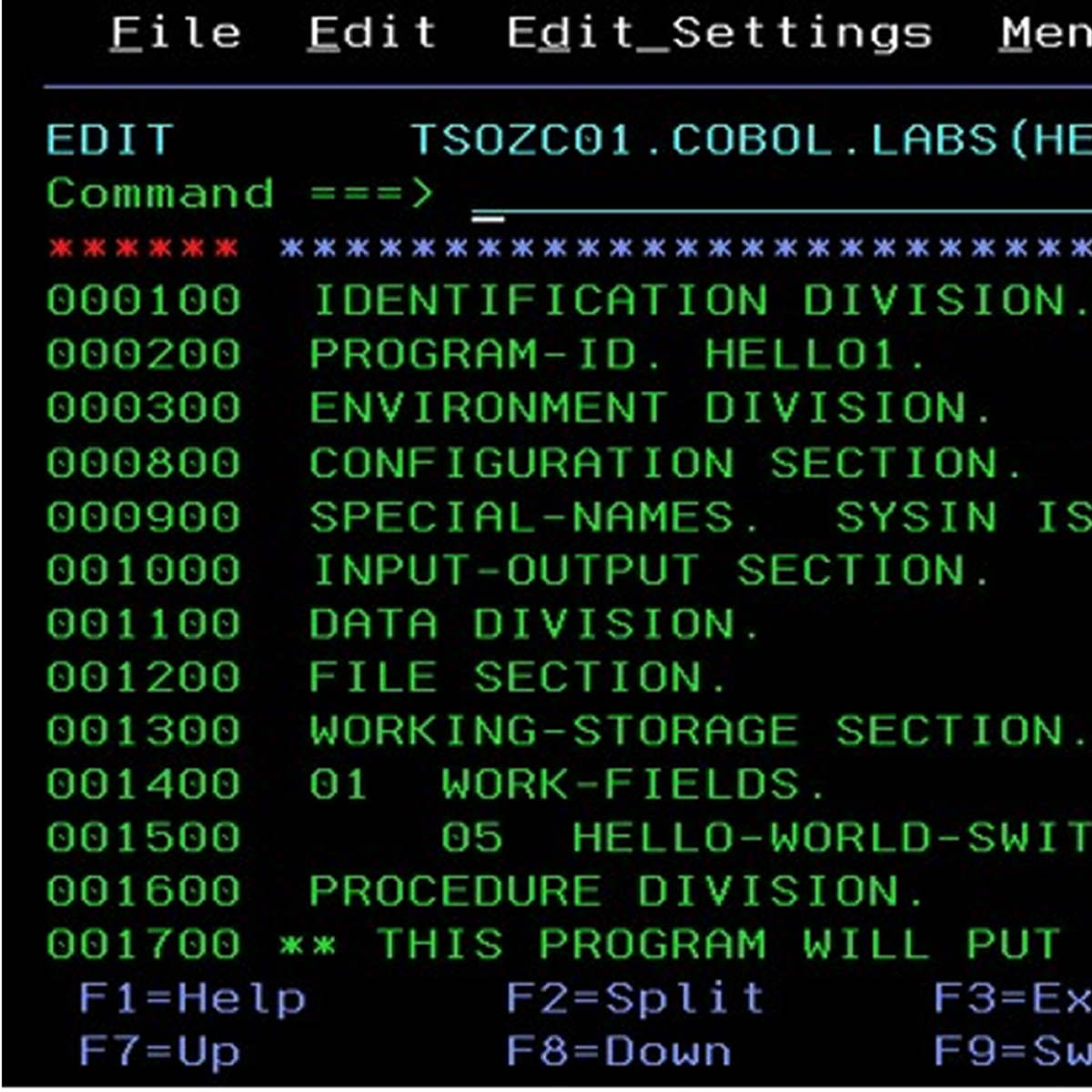
Welcome to IBM COBOL – Basic Testing and Debugging! By enrolling in this course, you are taking a big step in increasing your knowledge and hands on experience with IBM COBOL testing and debugging topics and technologies. In this course, you will describe common errors associated with working with COBOL. You will list file status codes. You will also describe the process of debugging COBOL code. So let’s get started!
 Johns Hopkins University
The Data Scientist’s Toolbox
In this course you will get an introduction to the main tools and ideas in the data scientist's toolbox. The course gives an overview of the data, questions, and tools that data analysts and data scientists work with. There are two components to this course. The first is a conceptual introduction to the ideas behind turning data into actionable knowledge. The second is a practical introduction to the tools that will be used in the program like version control, markdown, git, GitHub, R, and RStudio.
 Codio
Codio
Visualizing Data & Communicating Results in R with RStudio
Code and run your first R program in minutes without installing anything! This course is designed for learners with limited coding experience, providing foundational knowledge of data visualizations and R Markdown. The modules in this course cover different types of visualization models such as bar charts, histograms, and heat maps as well as R Markdown. Completion of the previous course (Data Analysis in R with RStudio & Tidyverse) in this specialization or similar experience is recommended. To allow for a truly hands-on, self-paced learning experience, this course is video-free. Assignments contain short explanations with images and runnable code examples with suggested edits to explore code examples further, building a deeper understanding by doing. You’ll benefit from instant feedback from a variety of assessment items along the way, gently progressing from quick understanding checks (multiple choice, fill in the blank, and un-scrambling code blocks) to small, approachable coding exercises that take minutes instead of hours. Finally, a cumulative lab at the end of the course will provide you an opportunity to apply all learned concepts within a real-world context.
 Google Cloud
Como criar data lakes e data warehouses no Google Cloud
Os dois principais componentes de um pipeline de dados são data lakes e warehouses. Neste curso, destacamos os casos de uso para cada tipo de armazenamento e as soluções de data lake e warehouse disponíveis no Google Cloud de forma detalhada e técnica. Além disso, também descrevemos o papel de um engenheiro de dados, os benefícios de um pipeline de dados funcional para operações comerciais e analisamos por que a engenharia de dados deve ser feita em um ambiente de nuvem. Este é o primeiro curso da série ""Data Engineering on Google Cloud"". Após a conclusão, recomendamos que você comece o curso ""Building Batch Data Pipelines on Google Cloud"".
 EDUCBA
Oracle DBA Mastery: Backup, Recovery & Data Movement
By completing this course, learners will be able to design schema objects, enforce constraints, configure sequences, manage undo data, administer users, and implement robust backup and recovery strategies in Oracle. They will also apply advanced RMAN techniques, optimize database performance, and execute secure data movement with SQL*Loader and Data Pump. This course is designed for aspiring Oracle DBAs, IT professionals, and database developers who want to master critical administration tasks. Learners will gain hands-on skills in user management, tablespace configuration, and recovery techniques, ensuring they can protect and optimize enterprise databases. What makes this course unique is its end-to-end coverage of Oracle DBA essentials, from schema design to advanced recovery scenarios, reinforced with real-world demonstrations. It not only teaches backup strategies and data movement techniques but also equips learners with support and patch management skills to ensure ongoing database stability and security. By the end of the course, learners will be able to analyze, configure, and secure Oracle databases effectively, preparing them for professional DBA roles and advanced certification paths.
 Akamai Technologies, Inc.
Introduction to Web Applications
In Introduction to Web Applications, you’ll learn about HyperText Markup Language (HTML), the fundamental language of the web. You’ll gain foundational knowledge of the ground rules for creating compliant HTML tags and learn to create engaging web pages. Upon completing this course, you’ll be able to: ● Embed images, video, and audio in web pages ● Structure information tables across web pages ● Create hyperlinks using both text and images ● Use CSS to creatively format web pages changing colors, and adding elements like borders, drop-shadows, and external style sheets Throughout this course, hands-on labs will guide you in creating a multi-page website with a consistent theme, encompassing tables, forms, and animated elements. At the end of this course, you’ll complete a capstone project, allowing you to showcase the knowledge and skills you learned throughout the course.
 LearnQuest
Data Processing with Azure
This Azure training course is designed to equip students with the knowledge need to process, store and analyze data for making informed business decisions. Through this Azure course, the student will understand what big data is along with the importance of big data analytics, which will improve the students mathematical and programming skills. Students will learn the most effective method of using essential analytical tools such as Python, R, and Apache Spark.