

The Global Scholarly Directory.
Discover world-class academic programs curated for the modern intellectual. Search through 19877+ degrees and professional certificates.
 Google Cloud
Essential Google Cloud Infrastructure: Core Services 한국어
이 속성 주문형 과정은 참가자에게 Google Cloud에서 제공하는 포괄적이고 유연한 인프라 및 플랫폼 서비스를 Compute Engine을 중심으로 소개합니다. 참가자는 동영상 강의, 데모, 실무형 실습을 통해 네트워크, 시스템, 애플리케이션 서비스와 같은 인프라 구성요소를 포함한 솔루션 요소를 탐색하고 배포해 볼 수 있습니다. 또한 이 과정에서는 고객 제공 암호화 키, 보안 및 액세스 관리, 할당량 및 요금 청구, 리소스 모니터링 등 실용적인 솔루션을 배포하는 방법에 대해서도 설명합니다.
 University of Maryland, College Park
Successful Interviewing
The goal of hiring managers is not just to hire people who need a job. It’s to hire people who believe in their organization, its mission and the work that’s involved in the job position. Every hiring manager knows: Hire people to do a job and they’ll work for your money. Hire people who believe in the work and they’ll work for their passion. And this is not a case of “fake it until you make it.” You have to be genuine about your belief in an organization and its mission. That means you have to have researched the industry, the company, and the position – and be able to show how your goals in life align with the company’s mission. Having done so will shape the impression you convey as a candidate, the way you answer traditional questions, and the way you demonstrate that you’re the right candidate for the job. This course is the second in a five-course specialization. We recommend that courses #1, #2 and #3 be taken in sequence. Course #4 - on resume and cover letter writing - can be taken in any sequence, while course #5 is the capstone for the specialization as a whole. This course can be thought of as "Interviewing I", while course #3 is "Interviewing II." Course #3 covers more advanced interview formats, including behavioral and situational interviews - along with the special case of telephone screenings. The logic for including telephone screenings - which happen at the start of the interview process - late in this specialization on interviewing is that those screenings, while happening early in the process, involve all the skills that you'll learn from course #1 through course #3. As for this course, it will teach you how to: 1. Do thorough research on a company of your choice. 2. Prepare for those critical first 3-5 minutes of an interview (when many recruiters say an interview is either won or lost). 3. Prepare for the all important "Tell Me About Yourself" question. 4. Prepare for traditional interview questions. 5. Use strategies for handling the salary question. We don't teach you salary negotiation techniques, but we do teach you how to avoid putting yourself in a weak negotiation position. 6. Prepare an elevator speech - all three variations. 7. Use persuasive speech techniques to present professional accomplishments and qualifications in a manner that conveys benefits to a potential employer. 8. Use persuasive speech techniques to convince a potential employer of your interest, motivation and preparation for a particular position. 9. Adapt your nonverbal communication style to the expectations of English-speaking interviewers.
 Pearson
Red Hat Certified Engineer (RHCE) EX294: Unit 4
This course is designed for IT professionals aiming to validate their skills and knowledge in managing Red Hat Enterprise Linux systems. It offers a comprehensive sample exam that mirrors the structure and complexity of the actual RHCE test. You'll engage with multiple tasks that challenge your understanding and application of key concepts. Each task is accompanied by a sample lab solution, allowing you to verify your approach and explore alternative solutions. This hands-on practice is invaluable for solidifying your expertise and boosting your confidence. By the end of this course, you'll be well-prepared to tackle the RHCE exam.
 Pearson
Skill Up with Python: Web Development Recipes
Python has risen to popularity as one of the most versatile and beginner-friendly programming languages. Its simplicity, readability, and extensive libraries make it a powerful language for a wide variety of different domains. It’s widely used in web development, data analysis, scientific computing, artificial intelligence, and automation. Python’s versatility and large community support make it an excellent language to kickstart your programming journey. This course offers a hands-on approach to building your Python skills through a series of practical projects from scratch. Hone your expertise in areas such as data analysis, machine learning, web scraping, and more.
 University of California San Diego
Computational Thinking for K-12 Educators: Sequences and Loops
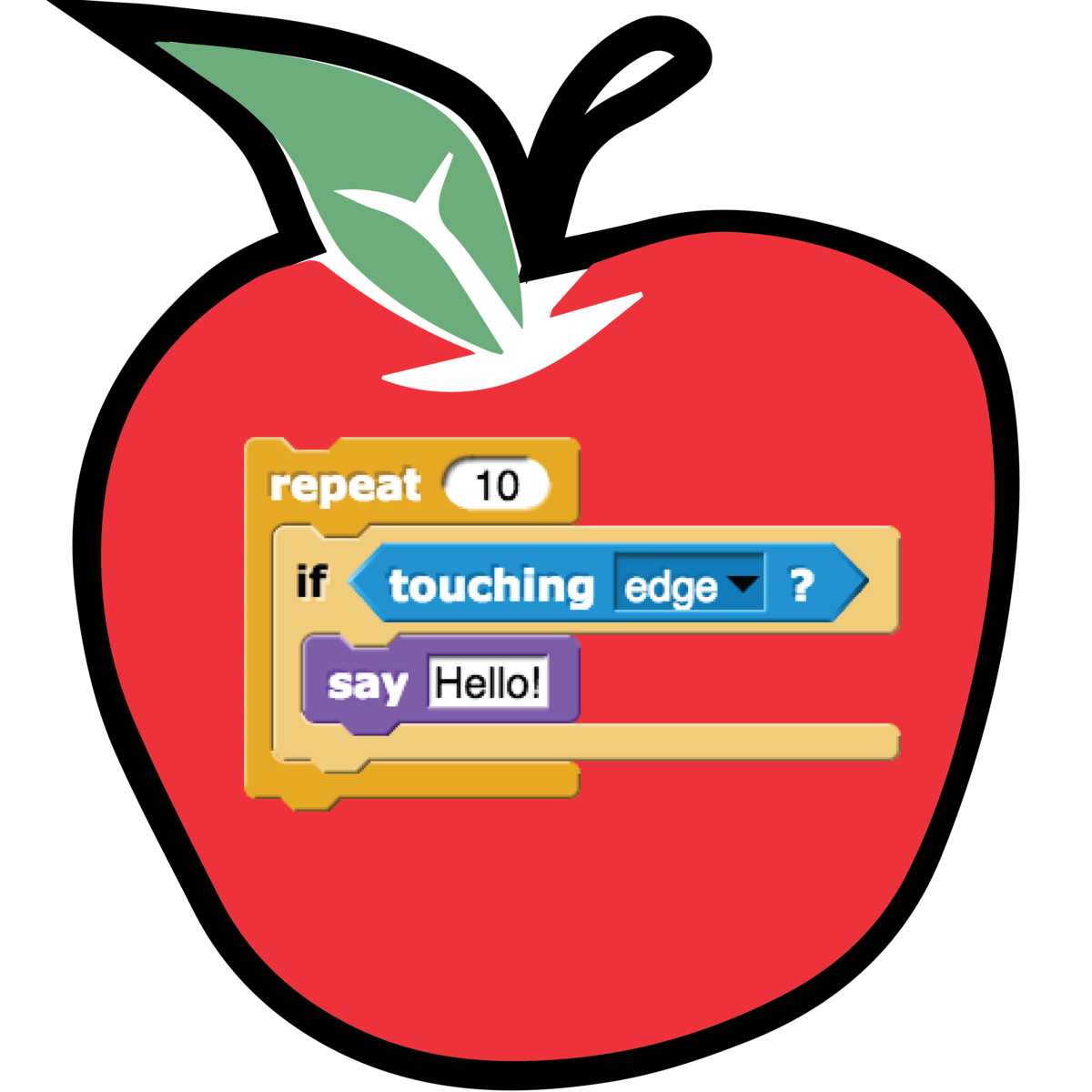
How do we give instructions to a computer? Isn't programming hard? Not really! Whether it's giving someone directions to a nearby store or writing out some dance moves we frequently exhibit aspects of computational thinking in our everyday lives! This class teaches the first key concepts of programming -- sequences of instructions and basic counted repetition of instructions. For each concept, we'll start by helping you connect real-world experiences you are already familiar with to the programming concept you are about to learn. Next, through a cognitively scaffolded process we'll engage you in developing your fluency with problem solving with sequences and repeated instructions in a way that keeps frustration at a minimum. Along the way you will learn about the common challenges or "bugs" students have with these concepts as well as ways to help them find and fix those concepts. You'll also be guided in running classroom discussions to help students develop deeper understanding of these concepts. Finally, you'll learn about a recommended pedagogical practice, Pair Programming, and find out why research recommends teaching block-based programming first.
 LearnKartS
Microsoft Advertising Course
Ready to go beyond Google and tap into a hidden goldmine of high-intent audiences? This Microsoft Ads Course is your key to dominating one of the most untapped advertising platforms on the internet. Understand how to build, refine, and expand ad campaigns with measurable results — utilizing Bing Search to the Microsoft Audience Network. Ideal for marketers, entrepreneurs, freelancers, and business owners, this course pushes you from a beginner to a Microsoft Ads professional by the end of it. You will master everything — from adding keywords, keyword strategy, bidding, and match types to ad copies and ad extensions to conversion tracking, remarketing, and ecommerce campaigns. Get hands-on experience with advanced techniques, including the Microsoft Ads Editor, UET tags, and automation workflows. In the end, you won’t just have the expertise to become skilled in data-driven ad management, but also be able to turn insights into impactful campaigns that attract, convert, and retain customers. Enroll today to unleash the full potential of Microsoft Ads, reach untapped audiences, and supercharge your digital marketing career.
 Codio
Codio
Software Security for Web Applications
Explore software security for web applications concepts without installing anything! This course is designed for intermediate learners, providing a solid foundation of common skills in software security. Learners will build an understanding of some of the most common software security techniques currently employed. The modules in this course cover front-end security, back-end security, as well as passwords and authentication. At the end of the course, learners will be able to directly implement security techniques they've learned to their own softwares. To allow for a truly hands-on, self-paced learning experience, this course is video-free. Assignments contain short explanations with images and suggested exploration examples, building a deeper understanding by doing. You'll benefit from instant feedback from a variety of assessment items along the way, gently progressing from quick understanding checks (multiple choice, fill in the blank, and un-scrambling answer blocks) to small, approachable exercises that take minutes instead of hours.
 DeepLearning.AI
Apply Generative Adversarial Networks (GANs)
In this course, you will: - Explore the applications of GANs and examine them wrt data augmentation, privacy, and anonymity - Leverage the image-to-image translation framework and identify applications to modalities beyond images - Implement Pix2Pix, a paired image-to-image translation GAN, to adapt satellite images into map routes (and vice versa) - Compare paired image-to-image translation to unpaired image-to-image translation and identify how their key difference necessitates different GAN architectures - Implement CycleGAN, an unpaired image-to-image translation model, to adapt horses to zebras (and vice versa) with two GANs in one The DeepLearning.AI Generative Adversarial Networks (GANs) Specialization provides an exciting introduction to image generation with GANs, charting a path from foundational concepts to advanced techniques through an easy-to-understand approach. It also covers social implications, including bias in ML and the ways to detect it, privacy preservation, and more. Build a comprehensive knowledge base and gain hands-on experience in GANs. Train your own model using PyTorch, use it to create images, and evaluate a variety of advanced GANs. This Specialization provides an accessible pathway for all levels of learners looking to break into the GANs space or apply GANs to their own projects, even without prior familiarity with advanced math and machine learning research.
 Coursera
Lean Manufacturing & Robotics for Flexible Systems
This course explores the integration of Flexible Manufacturing Systems (FMS) with Lean Manufacturing principles, emphasizing how a lean transformation facilitates robotics and automation. Participants gain a solid understanding of FMS and Lean principles, delve into Lean tools integration within FMS, and explore robotics and automation integration for enhanced adaptability and precision in manufacturing. Through interactive video lectures, case study analyses, and scenario-based learning activities, participants acquire hands-on skills in optimizing manufacturing processes. Real-world examples highlight successful implementations of FMS, Lean principles, robotics, and automation, fostering skill-building and empowering participants to drive continuous improvement in manufacturing environments. Designed for manufacturing engineers, operations managers, lean practitioners, and robotics enthusiasts, this intermediate to advanced course offers practical problem-solving experiences and critical analysis of manufacturing scenarios. Pre-requisites include a basic understanding of manufacturing principles and familiarity with Lean concepts, though not mandatory.
 Packt
Packt
Getting Started with Vector Databases and AI Embeddings
A smarter way to learn with interactive, real-time conversations that help you test your knowledge, challenge assumptions, and deepen your understanding as you progress through the course. Unlock the power of vector databases and AI embeddings to build smarter, faster, and more responsive AI systems. In this course, you’ll explore how vectors are used in AI to represent data, measure similarity, and drive key functions like semantic search, recommendation engines, and anomaly detection. You’ll gain a deep understanding of how vector embeddings work and the role of vector databases in storing and querying high-dimensional data. Starting with the fundamentals, you'll learn the importance of vectors in machine learning and generative AI, and how embeddings translate data into machine-readable formats. You'll then progress to hands-on concepts such as similarity metrics and vector search. Throughout, you'll explore real-world applications of these technologies in powerful AI solutions. The course wraps up with real market use cases, including Retrieval-Augmented Generation (RAG), visual search, and recommendation systems. Whether you're new to the field or looking to upskill, this course offers a solid foundation with a clear progression from theory to practice. This course is ideal for developers, data engineers, ML practitioners, and product managers. No prior experience with vector databases is required, but a basic understanding of AI and data concepts is recommended. By the end of the course, you will be able to explain the role of embeddings in AI, choose and implement vector search workflows, evaluate vector databases for different use cases, and apply them effectively in AI-powered applications.
 Packt
Packt
Gen AI - RAG Application Development using LangChain
This course features Coursera Coach! A smarter way to learn with interactive, real-time conversations that help you test your knowledge, challenge assumptions, and deepen your understanding as you progress through the course. This comprehensive course will equip you with the skills to develop advanced language model applications using LangChain and Retrieval-Augmented Generation (RAG). Through hands-on projects and demonstrations, you will learn how to integrate large language models, prompt engineering, and vector databases into scalable AI-driven applications. Starting with the basics, the course progresses through fundamental concepts of LangChain and builds to complex RAG applications. The course begins by introducing core concepts such as LangChain, large language models, and the basics of prompts. It moves on to essential topics like agents, tools, and working with language embeddings, providing you with practical knowledge to construct powerful applications. You will then apply these skills to real-world projects, ranging from SQL data integration to building conversational chatbots and extracting information from invoices. With practical demonstrations and expert guidance, you will create sophisticated systems using LangChain and RAG techniques. By the end of the course, you will have developed hands-on projects that demonstrate your ability to build and deploy robust language model applications. You will gain proficiency in using advanced techniques like conversational memory, document parsing, and LangChain expression language, which are critical to modern AI applications. This course is designed for developers, data scientists, and AI enthusiasts eager to learn about language models and their real-world applications. Basic programming knowledge is required, and familiarity with Python will be beneficial. The difficulty level is intermediate, assuming the learner has some experience with AI concepts or software development. By the end of the course, you will be able to design and deploy Retrieval-Augmented Generation applications, utilize LangChain for AI application development, build and integrate vector databases, and optimize your applications using LangChain’s advanced tools.
 Tecnológico de Monterrey
Las redes sociales en acción
Como un mercadólogo, tenemos claro que nuestra función principal en las empresas es identificar las necesidades del mercado y con base en ellas establecer estrategias de compra – venta que causen impacto y satisfagan las necesidades de los consumidores. Éste es un reto importante, pero además de ser creativos en la definición de estas estrategias, tenemos que tener en cuenta el desarrollo que a través de los últimos años ha tenido el Internet y atrás de él las redes sociales. Es por ello que hay que estar conscientes de la importancia que las redes van teniendo y cómo pueden ayudar a la promoción de los productos y servicios que como proveedor estamos ofreciendo. En este curso podrás conocer cómo se ejecuta una estrategia de redes sociales y las consideraciones que debes de tener para controlar y medir el desempeño de tu estrategia. Podrás identificar cómo evaluar si es posible gestionar la estrategia con recursos propios, si es necesario utilizar una agencia o si es apropiado hacerlo con un esquema mixto; también reconocerás la importancia de realizar una escucha activa y las herramientas que te permitirán desarrollar esta actividad, las plataformas más convenientes y la frecuencia más apropiada para tu negocio, los indicadores clave de medir y cómo hacerlo y finalmente las técnicas para optimizar el desempeño de tu estrategia de redes sociales y lograr tus objetivos. Seguramente te serán de gran utilidad dentro del ámbito de la mercadotecnia.
 University of Colorado Boulder
Robotic Path Planning and Task Execution
This course, which is the last and final course in the Introduction to Robotics with Webots specialization, will teach you basic approaches for planning robot trajectories and sequence their task execution. In "Robotic Path Planning and Task Execution", you will develop standard algorithms such as Breadth-First Search, Dijkstra's, A* and Rapidly Exploring Random Trees through guided exercises. You will implement Behavior Trees for task sequencing and experiment with a mobile manipulation robot "Tiago Steel". It is recommended that you complete the first and second courses of this specialization, “Introduction to Robotics: Basic Behaviors” and "Robotic Mapping and Trajectory Generation" , before beginning this one. This course can be taken for academic credit as part of CU Boulder’s MS in Computer Science degrees offered on the Coursera platform. These fully accredited graduate degrees offer targeted courses, short 8-week sessions, and pay-as-you-go tuition. Admission is based on performance in three preliminary courses, not academic history. CU degrees on Coursera are ideal for recent graduates or working professionals. Learn more: MS in Computer Science: https://coursera.org/degrees/ms-computer-science-boulder
 Arizona State University
Object-Oriented Programming and GUI with Python
In this course we will implement object-oriented programming into Python programs; outline the importance of why and how we use object-oriented programming; and learn how to use inheritance when designing a program. We will also look at how to build a graphical user interface for a basic program. You do not need programming or computer science experience to learn the material in this course. This course is open to anyone who is interested in learning how to code and write programs in Python. We are very excited that you will be learning with us and hope you enjoy the course!
 Coursera
Get started with Mailchimp
In this project-based course, you will get an introduction to the Mailchimp dashboard. You will learn to create landing pages and email campaigns on Mailchimp. You will learn to increase subscribers in the mailing list using a manual process, through CSV files, and through signup forms available on the landing pages. You will learn to integrate Mailchimp with third-party apps like Canva. You will also learn to use images from Pixabay and upload them to Mailchimp's dashboard
 Technical University of Munich (TUM)
Cost Accounting: Profit and Loss Calculation
Companies do not only need to know the costs of different products, but they also need to know whether they gain a profit or realize a loss. We explain how companies use cost information to calculate their profit and assess their profitability. Depending on how companies account for changes in inventories, we distinguish "absorption costing" and "variable costing". In addition, some companies structure their income statement according to the "nature of expense method", while others structure it according to the "cost-of-sales method". We explain both methods and discuss their advantages and disadvantages.