

The Global Scholarly Directory.
Discover world-class academic programs curated for the modern intellectual. Search through 19877+ degrees and professional certificates.
 Johns Hopkins University
Surveillance Systems: The Building Blocks
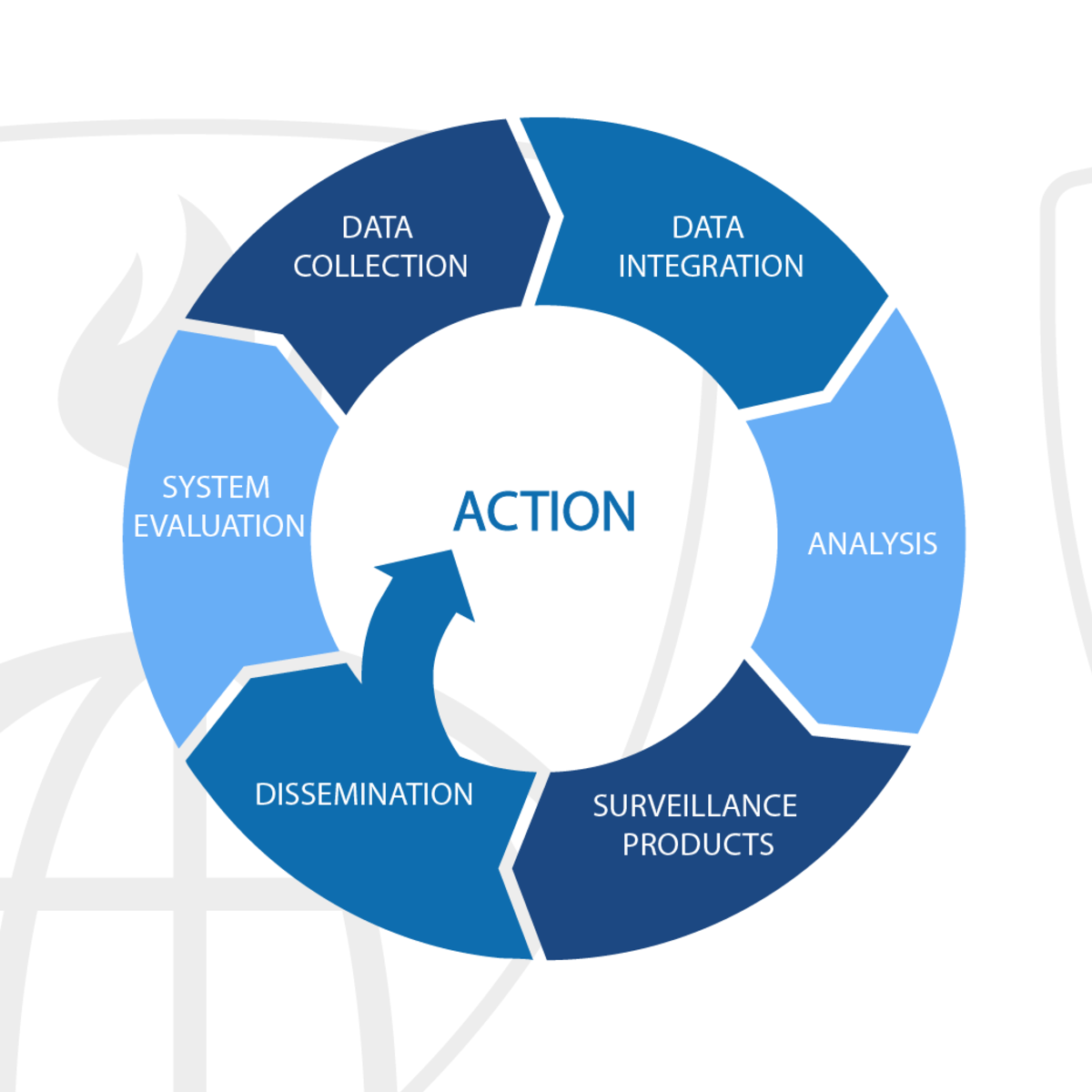
Epidemiology is often described as the cornerstone science and public health and public health surveillance is a cornerstone of epidemiology. This course will help you build your technical awareness and skills for working with a variety of surveillance systems. Along the way, we'll focus on system objectives, data reporting, the core surveillance attributes, and performance assessment. This course is designed for public health practitioners and anyone who wants to learn more about the basics of public health surveillance. If you develop or implement surveillance systems or aspire to do so or use the data resulting from surveillance, then this course is for you. It's s also for people who are interested in understanding more about this fundamental epidemiologic tool and public health practice.
 Erasmus University Rotterdam
Regulated Competition in Healthcare Systems: Theory & Practice
In this MOOC you will learn about the theory and practice of 'regulated competition' (also known as 'managed competition') in healthcare systems. Many countries have implemented or consider implementation of regulated competition in healthcare. Examples include Australia, Belgium, Chile, Colombia, Germany, Ireland, Israel, The Netherlands, Switzerland and the United States. After completing this MOOC, you will be able to explain how regulated competition (in theory) promotes affordability, accessibility and efficiency of healthcare. Moreover, you will be able to explain why (in practice) successful implementation of regulated competition is very complex and often requires difficult trade-offs between policy objectives. We think this MOOC is highly valuable to any student, researcher or professional interested in healthcare system reform and design. Specific topics in this MOOC include a typology of healthcare systems, the economics of healthcare markets, theory and preconditions of regulated competition, risk adjustment and risk selection in health insurance, competition policy and provider payment.
 AI CERTs
AI for Education
AI for Education equips educators with the skills to integrate AI into teaching, learning, and administration, preparing them for the future of education. This program blends foundational AI concepts with practical tools and hands-on exercises, enabling educators to design AI-enhanced curricula, streamline classroom workflows, and deliver personalized learning experiences. Learners explore how AI can improve teaching outcomes, assess student performance efficiently, and foster data-driven decision-making. The course also emphasizes responsible and ethical AI use, covering bias mitigation, sustainability, and privacy considerations in educational contexts. Participants gain practical experience with AI tools such as ChatGPT, Eduaide, GradeScope, and Classtime, learning to analyze educational data, enhance assessments, and design innovative learning strategies. With both self-paced and instructor-led options, the program offers flexibility while providing real-world scenarios, projects, and case studies to solidify learning. By the end of the course, educators will be prepared to lead AI-enabled classrooms, create impactful curricula, and drive digital transformation in their institutions. This certification positions learners at the forefront of AI in education, empowering them to foster a new generation of tech-savvy, future-ready students.
 Packt
Packt
Advanced Development, Deployment, and Cloud Integration
Updated in May 2025. This course now features Coursera Coach! A smarter way to learn with interactive, real-time conversations that help you test your knowledge, challenge assumptions, and deepen your understanding as you progress through the course. This comprehensive course provides you with in-depth knowledge of advanced development, deployment, and cloud integration in ASP.NET Core applications. By the end of the course, you will be proficient in building scalable, maintainable applications and deploying them to different platforms such as IIS and Microsoft Azure. The course begins with a focus on advanced module development techniques. You will learn to design and implement a fully-featured Employee Leave Request module, incorporating data models, validation logic, and views for both employee and admin interfaces. You will also address real-world issues such as bug fixes, role-based authentication, and third-party tool integrations, ensuring a seamless experience for all users. Next, you will delve into advanced architecture concepts. This section covers project architecture layouts, the separation of concerns, and best practices in handling errors, logging, and migrations. By applying these advanced strategies, you’ll ensure that your applications are both scalable and maintainable. You'll also explore advanced UI concepts to improve the user experience, including custom layouts and design modifications. In the final sections, you will gain hands-on experience with deployment. You will learn how to deploy your applications to IIS for local setups, as well as to Microsoft Azure for cloud-based environments. The course concludes with a look ahead, empowering you to apply these development and deployment techniques in real-world ASP.NET Core projects. Basic programming knowledge and some familiarity with web development concepts, particularly in ASP.NET Core, are recommended. This course is designed for developers who already have prior ASP.NET Core experience and a solid understanding of software development principles, seeking to enhance their skills in building, deploying, and managing advanced web applications across platforms.
 Coursera
Extract, Map, and Analyze Clinical Data
Transform raw clinical data into actionable insights that improve patient care. This course equips healthcare data analysts with foundational skills to navigate complex healthcare data systems effectively. This Short Course was created to help data analysis professionals accomplish systematic clinical data extraction and mapping that directly supports patient outcome improvements. By completing this course, you'll be able to confidently select appropriate data elements from healthcare dictionaries, execute reliable data extraction procedures, and create clear documentation that ensures data integrity throughout your analytical pipeline. By the end of this course, you will be able to: • Identify required data elements from healthcare data dictionaries for specific clinical questions • Apply standardized procedures to extract data exports from Epic Clarity and similar clinical systems • Analyze and document source-to-target mappings with complete transparency This course is unique because it combines hands-on practice with real Epic Clarity workflows and provides practical templates used in actual healthcare analytics environments. To be successful in this project, you should have a background in basic data concepts and familiarity with healthcare terminology.
 Meta
Meta
Data Analytics Methods for Marketing
This course explores common analytics methods used by marketers such as audience segmentation, clustering and marketing mix modeling. . You'll explore how to use linear regression for marketing planning and forecasting, and how to assess advertising effectiveness through experiments. By the end of this course you will be able to: • Understand your audience using analytics and variable descriptions • Define a target audience using segmentation with K-means clustering • Use historical data to plan your marketing across different channels • Use linear regression to forecast marketing outcomes • Describe marketing mix modeling and apply different attribution models • Assess advertising effectiveness • Explain how A/B testing works and how you can use it to optimize ads • Evaluate experiment results and assess the strength of the experiment • Optimize your sales funnel This course is for people who want to learn how to plan, forecast and optimize marketing efforts using marketing mix modeling, attribution models and A/B tests.
 University of Michigan
Introduction to Thermodynamics: Transferring Energy from Here to There
COURSE DESCRIPTION This course provides an introduction to the most powerful engineering principles you will ever learn - Thermodynamics: the science of transferring energy from one place or form to another place or form. We will introduce the tools you need to analyze energy systems from solar panels, to engines, to insulated coffee mugs. More specifically, we will cover the topics of mass and energy conservation principles; first law analysis of control mass and control volume systems; properties and behavior of pure substances; and applications to thermodynamic systems operating at steady state conditions. COURSE FORMAT The class consists of lecture videos, which average 8 to 12 minutes in length. The videos include integrated In-Video Quiz questions. There are also quizzes at the end of each section, which include problems to practice your analytical skills that are not part of video lectures. There are no exams. GRADING POLICY Each question is worth 1 point. A correct answer is worth +1 point. An incorrect answer is worth 0 points. There is no partial credit. You can attempt each quiz up to three times every 8 hours, with an unlimited number of total attempts. The number of questions that need to be answered correctly to pass are displayed at the beginning of each quiz. Following the Mastery Learning model, students must pass all 8 practice quizzes with a score of 80% or higher in order to complete the course. ESTIMATED WORKLOAD If you follow the suggested deadlines, lectures and quizzes will each take approximately ~3 hours per week each, for a total of ~6 hours per week. TARGET AUDIENCE Basic undergraduate engineering or science student. FREQUENTLY ASKED QUESTIONS - What are the prerequisites for taking this course? An introductory background (high school or first year college level) in chemistry, physics, and calculus will help you be successful in this class. -What will this class prepare me for in the academic world? Thermodynamics is a prerequisite for many follow-on courses, like heat transfer, internal combustion engines, propulsion, and gas dynamics, to name a few. -What will this class prepare me for in the real world? Energy is one of the top challenges we face as a global society. Energy demands are deeply tied to the other major challenges of clean water, health, food resources, and poverty. Understanding how energy systems work is key to understanding how to meet all these needs around the world. Because energy demands are only increasing, this course also provides the foundation for many rewarding professional careers.
 Tecnológico de Monterrey
Mentalidad Emprendedora
En un mundo Volátil, Incierto, Complejo, Hiperconectado y Ambiguo (VUCHA), los ciclos de negocios e innovación se están reduciendo como nunca antes. El ciclo de vida de las empresas se ha reducido a menos de un tercio en los últimos 30 años. La democratización de la innovación ha abierto posibilidades infinitas para muchas personas, empresas y regiones en todo el mundo. En particular, los emprendedores y las startups están aprovechando las oportunidades generadas por la transformación que se esta produciendo, en este curso en línea entenderás como puedes comenzar a desarrollar esas habilidades innovadoras y de emprendimiento, y así aplicarlas de forma exitosa. Este curso online se enfoca en comprender las estrategias, las herramientas y los conceptos básicos que los emprendedores utilizan para emprender innovaciones en el mercado y escalar sus emprendimientos, generando valor y disrupción en muchos mercados. En este curso de administración los estudiantes entenderán: Como validar un problema y su solución (Problem-Solution Fit) Como validar si un producto tiene una aceptación en un mercado (Product-Market Fit) Como escalar sus emprendimientos (Business Model Fit)
 University of Colorado Boulder
The Neuroscience of Personal Excellence
Many of us struggle to understand our actions and behavior in any given situation. Especially when pressure and stress are highest. What if we could make better decisions, create healthy habits more easily, regulate our emotions, become more mentally tough and perform well under pressure? There are certain defining moments in your life, in this course you'll learn to tap into your personal excellence when it matters. The reason we struggle often comes down to the fact that we are unaware how our engine works. The engine, in this metaphor, is our brain. It is the driving force behind our actions and behavior. Understanding how it works best is crucial to perform at your best. This course is part of the "Neuroscience of Leadership" specialization, which examines leadership techniques through the lens of social cognitive neuroscience and psychology. Utilizing the latest research, we develop a leadership practice based on the foundation of neuroscience. The focus of this course is developing your personal excellence to lead oneself better. We start with a journey through your brain and nervous system to give you a basic understanding of how the system works. You'll learn how the brain learns and creates habits. You'll come away with knowledge about decision making and problem solving. Understanding how to regulate your arousal and find your sweet spot is crucial for high performance. Lastly, you'll learn how to be more mentally tough and resilient when chaos reigns. This course can be taken for academic credit as part of CU Boulder’s Master of Engineering in Engineering Management (ME-EM) degree offered on the Coursera platform. The ME-EM is designed to help engineers, scientists, and technical professionals move into leadership and management roles in the engineering and technical sectors. With performance-based admissions and no application process, the ME-EM is ideal for individuals with a broad range of undergraduate education and/or professional experience. Learn more about the ME-EM program at https://www.coursera.org/degrees/me-engineering-management-boulder.
 Coursera
Build Your First React Website
In this 1-hour long project-based course, you will gain hands-on experience with one of the hottest web development framework, React. If you have some experience with HTML, CSS, JavaScript and want to start developing with React, this course is for you! By the end of this course You will understand the fundamental of React and be able to create and build a website with React with ease.
 EDUCBA
Build and Execute Automation Tests with Tosca
By the end of this course, learners will be able to explain core automation testing concepts, analyze testing needs, build reusable automation assets, and execute end-to-end tests using a model-based automation approach. This course provides a structured, hands-on introduction to automation testing using Tosca, guiding learners from foundational testing concepts to real-world web application automation. Learners will first understand why automation is critical in modern software development and how continuous testing supports agile and DevOps practices. The course then moves into practical setup, tooling, and project organization, enabling learners to create reusable modules and manage automation assets effectively. Finally, learners will design robust test cases, manage execution cycles, and automate web applications with a focus on reliability and maintainability. What makes this course unique is its emphasis on scriptless, model-based automation, making it especially accessible to beginners, manual testers transitioning to automation, and professionals seeking faster ROI from test automation. By combining conceptual clarity with practical workflows, the course ensures learners gain job-ready skills that can be directly applied to real testing projects. This course is ideal for aspiring automation testers, QA professionals, and software engineers who want to confidently build and execute automated tests using modern testing practices.
 Fred Hutchinson Cancer Center
Determining AI Needs
There are a ever increasing number of options, strategies and solutions for integrating AI solutions into a project. It can feel overwhelming to understand what these options entail let alone understand how to decide what solution best fits a use case. In this course we aim to give individuals the basic info they need to make basic plans for integrating AI tools into their project. The course is intended for individuals who have an AI related project in mind or think that they might need to incorporate AI into their project. They are likely the leader who is guiding others in an AI related project and not necessarily the person who will write code or carry out the technical aspects of the project.
 Packt
Packt
Object Oriented Java
This course features Coursera Coach! A smarter way to learn with interactive, real-time conversations that help you test your knowledge, challenge assumptions, and deepen your understanding as you progress through the course. In this comprehensive course, you'll gain the skills to write and understand object-oriented Java programs from scratch. You'll start by mastering the fundamentals, including the installation of essential tools, basic syntax, control structures, and working with primitive types. The course progresses to more complex topics like arrays, loops, and strings, giving you a solid foundation in Java programming. The second section dives into key Java concepts, including methods, static methods, input/output techniques, and essential debugging strategies. Through hands-on exercises like building a number guessing game, you'll gain confidence in writing reusable code and testing your programs effectively. You'll also learn how to handle exceptions and understand the process of deploying your code. In the final part of the course, you'll focus on object-oriented principles like classes, inheritance, interfaces, and abstract classes. You'll implement these concepts with practical exercises and even develop 2D graphics for a game using Java. This course is perfect for anyone seeking a deep, hands-on understanding of Java and object-oriented programming. It's ideal for learners with basic programming knowledge or familiarity with any programming language—no prior experience with Java is necessary
 Macquarie University
Cyber Security: Security of AI
AI Security: Risks, Defences, and Safety. This course prepares cyber security professionals, developers, data scientists, and policy leaders to defend intelligent systems. As artificial intelligence integrates into critical infrastructure and applications, new cyber risks emerge, from adversarial attacks to data leakage. Developed by Macquarie University’s Cyber Skills Academy, this program aligns with emerging threats and international standards. You will gain real-world skills to: * Understand AI systems, architecture, and security risks (adversarial inputs, model poisoning, data leakage). * Assess and mitigate AI-driven cyber-physical risks in Operational Technology (OT) and Industrial Control Systems (ICS). * Navigate threats in AI deployments, including deepfakes, misinformation, ethical misuse, and privacy violations. * Apply security testing strategies and technical controls, such as encryption, red/purple/blue team exercises, and robustness benchmarking. * Align AI systems with Responsible AI frameworks, covering fairness, transparency, regulatory compliance, and trust. * Anticipate evolving risks from Artificial General Intelligence (AGI) and deploy proactive defences. To succeed, learners should have a foundational understanding of cyber security concepts. This course provides the technical fluency, ethical awareness, and strategic insight to secure AI across industries.Lead the defence. Secure AI now.
 Packt
Packt
Master Apple Device Deployment with Microsoft Intune (2025)
This course features Coursera Coach! A smarter way to learn with interactive, real-time conversations that help you test your knowledge, challenge assumptions, and deepen your understanding as you progress through the course. Mastering Apple device deployment is a crucial skill for modern IT professionals, and this course provides the tools to do just that using Microsoft Intune. By the end of the course, you'll be proficient in managing and securing Apple devices within enterprise environments. You'll gain expertise in both Apple Business Manager and Microsoft Intune, exploring automated enrollment, device security, app management, and more. The course structure follows a clear, step-by-step approach, starting with an introduction to the Apple MDM framework, including key concepts like declarative device management and Apple’s enrollment models. You’ll then move on to mastering Apple Business Manager, learning how to integrate MDM solutions and configure essential resources. As you progress, you’ll gain hands-on experience with device enrollment and app deployment strategies through Microsoft Intune, with a strong focus on real-world scenarios. Throughout the course, you’ll be guided through key deployment projects, from BYOD solutions to zero-touch provisioning for company-owned devices. You'll configure security policies, manage software updates, and even optimize enterprise networks for Apple devices. By the end of this course, you’ll have the skills to handle a wide range of deployment scenarios with confidence. This course is ideal for IT administrators, network engineers, and professionals responsible for deploying Apple devices in an enterprise environment. A basic understanding of mobile device management (MDM) and IT infrastructure is recommended, but the course is designed for learners at all levels.
 Google Cloud
Architecting Google Kubernetes Engine: Workloads in italiano
In questo corso, ""Architecting with Google Kubernetes Engine: Workloads", imparerai come eseguire le operazioni Kubernetes, creare e gestire i deployment, quali sono gli strumenti di networking di GKE e come fornire archiviazione permanente ai tuoi carichi di lavoro Kubernetes. Questo è il secondo corso della serie Architecting with Google Kubernetes Engine. Dopo il completamento di questo corso, iscriviti al corso Reliable Google Cloud Infrastructure: Design and Process o al corso Hybrid Cloud Infrastructure Foundations with Anthos."