

The Global Scholarly Directory.
Discover world-class academic programs curated for the modern intellectual. Search through 19877+ degrees and professional certificates.
 École Polytechnique Fédérale de Lausanne
Mobilité et urbanisme
Le cours présente un tour d’horizon introductif des interactions entre la mobilité et les dynamiques urbaines. Il propose des outils méthodologiques et opérationnels permettant d’appréhender et de réguler la mobilité. Ces vingt dernières années, la mobilité urbaine a beaucoup changé. Le nombre de déplacements de loisirs a augmenté tandis que la part des déplacements pour motif travail a diminué. Dans le même temps, de nouvelles formes de mobilités se sont développées, comme la multirésidentialité, la pendularité de longue distance, le tourisme urbain et l’excursionnisme. Ces changements ont été concommittants de transformations urbaines comme l’étalement urbain ou la fragmentation. Dans ce contexte, la mobilité est un enjeu pour l’ingénierie des transports urbains et le développement territorial, en particulier urbain: sa régulation nécessite une appréhension nouvelle de la demande de transport. Le cours montre ainsi aux étudiants les interrelations entre la ville et la mobilité, l’espace urbain et les flux de déplacements, tout en leur offrant une vision renouvelée du transport et de son impact sur le territoire et les modes de vie.
 University of Virginia Darden School Foundation
Customer Service in the Age of Generative AI
The Customer Service in the Age of Generative AI course provides you with the essential knowledge to use Generative AI to build and develop chatbots for customer engagement and customer support. In this course, you will learn how personalized chatbots are impactful and essential for customers and how the continuous need to evaluate and enhance chatbots to meet customer expectations and needs effectively. In this course, you will ,learn how chatbots can be leveraged to provide more targeted and customized messages to deliver more relevant and engaging information, support, and service to customers. This course is ideal for marketing professionals seeking to develop and enhance customer service and marketing using chatbots and Generative AI.
 Skillshare
Modern Frontend Web Development: Frameworks & APIs
Join instructor Christopher Dodd and explore the cutting edge of frontend development by mastering JavaScript frameworks, utility-first CSS with Tailwind, and working with APIs to build dynamic, data-driven web applications. This course offers a practical introduction to frameworks that simplify complex UI development, empowering you to build responsive, scalable interfaces faster than ever before. You’ll also learn how to harness the power of APIs to fetch and display real-time data, making your applications smarter and more engaging. Guided by Christopher's expert instruction, you’ll complete a hands-on project that integrates these skills into a cohesive web application. This course is designed for learners ready to apply modern frontend techniques and tools in real-world scenarios, accelerating your path to becoming a confident frontend developer. Instructor bio: Christopher Dodd is a self-taught web developer, YouTuber, and blogger dedicated to helping individuals gain the skills to freelance and build a location-independent career. Since learning web development in 2015, Chris has worked remotely while traveling the world, gaining over nine years of experience in the field. Through his YouTube channel, blog, and Instagram, he shares practical tips, tutorials, and guidance to inspire aspiring digital nomads to pursue their passions and achieve professional independence.
 Universidad de Palermo
Plan de Negocios
¿Cómo construir el escenario futuro en un mundo volátil, incierto, complejo y ambiguo en el cual se desarrollará un proyecto? ¿Cómo elaborar un plan estratégico para lograr los objetivos de un proyecto? ¿Cómo investigar las oportunidades que brinda el mercado y diseñar una propuesta de valor que sea apreciada por los destinatarios? ¿Cómo diseñar una organización adecuada para lograr los objetivos, medir sus impactos y sus riesgos? Estos son algunos de los interrogantes sobre los que trabajaremos en el curso. Los objetivos son: • Asumir y gestionar la incertidumbre a futuro inherente de un proyecto. • Comprender el rol del planeamiento estratégico en la gestión de proyectos. • Internalizar la metodología plan de negocios y su vigencia. • Reconocer al análisis externo como evaluación de oportunidades y amenazas. • Reconocer el desarrollo de la propuesta de valor. • Examinar los condicionantes del mercado. • Planear los ingresos y su proyección a futuro. • Elaborar un cuadro de resultados para calcular los resultados. • Realizar un análisis de sensibilidad de algunas variables. ¿Qué pasaría si…?
 ISC2
ISC2
Incident Response, BC, and DR Concepts
Welcome to course 2 of 5 of this Specialization, Incident Response, BC, and DR Concepts. This course focuses on the availability part of the CIA triad and the importance of maintaining availability of both human and system resources. These are usually accomplished through the implementation of Incident Response (IR), Business Continuity (BC) and Disaster Recovery (DR) plans. While these three plans may seem to overlap in scope, they are three distinct plans that are vital to the survival of any organization. After completing this course, the participant will be able to: Explain how organizations respond to, recover from and continue to operate during unplanned disruptions. - Recall the terms and components of incident response. - Summarize the components of a business continuity plan. - Identify the components of disaster recovery. - Practice the terminology of and review incident response, business continuity and disaster recovery concepts. Agenda Course Introduction Module 1: Incident Response (IR) Module 2: Business Continuity (BC) Module 3: Disaster Recovery (DR) Module 4: Incident Response, Business Continuity, and Disaster Recovery Review This training is for IT professionals, career changers, college students, recent college graduates, advanced high school students and recent high school graduates looking to start their path toward cybersecurity leadership by taking the Certified in Cybersecurity entry-level exam. There are no prerequisites to take the training or the exam. It is recommended that candidates have basic Information Technology (IT) knowledge. No work experience in cybersecurity or formal education diploma/degree is required.
 University of Glasgow
Generative AI in Education
Discover the foundations of generative AI in our dynamic course. Gain a comprehensive grasp of generative AI basics, including definitions, prompt engineering, ethical considerations, and best practices. This engaging, discussion-focused course empowers learners to explore generative AI through hands-on practice with recommended tools. Learners actively participate in discussions, sharing insights and findings in the forum. Our course is uniquely structured, emphasising both practical exercises and in-depth conversations. By providing initial insights and encouraging practice, we nurture learners' confidence in understanding generative AI. We facilitate a supportive environment where learners critically evaluate AI's impact, discussing its advantages and challenges in educational contexts. Join us to cultivate expertise in generative AI, bridging theory and practical application. Explore its potential, refine your skills, and contribute meaningfully to the discourse surrounding AI in education.
 Microsoft
Foundations of Coding Front-End
This course focuses on the fundamental concepts of front-end development. You'll learn to solve problems, design algorithms, and write efficient, modular code using industry-standard practices. By the end of this course, you will be able to… Summarize the foundational principles and practices of front-end development. Plan front-end projects using industry-standard tools and methodologies. Apply logical thinking and problem-solving techniques in programming. Design algorithms and flowcharts to represent logical steps in programming. Implement control structures and loops for repetitive tasks. Develop modular code using functions and methods.
 Packt
Packt
Practical Apps & Interaction Patterns
This course features Coursera Coach! A smarter way to learn with interactive, real-time conversations that help you test your knowledge, challenge assumptions, and deepen your understanding as you progress through the course. In this course, you will dive deep into the creation of interactive apps using SwiftUI, focusing on practical applications and design patterns. You will explore building dynamic, responsive, and user-friendly applications while implementing real-world features such as hotkeys, tip calculators, flashcards, and puzzles. The course is structured to guide you through different stages of app development, starting with foundational concepts such as building models and view models, and progressing towards more advanced topics like animations, custom fonts, and iPad support. You will also work with data models, UI components like buttons, sliders, and text fields, and learn how to integrate external APIs. Each section is filled with hands-on exercises that will build your skills in UI development, user interaction, and state management. By the end of each lesson, you will see how every small piece contributes to the bigger picture, enabling you to build feature-rich apps from scratch. This course is ideal for anyone interested in developing apps using SwiftUI, particularly those who want to improve their skills in building interactive and polished mobile apps. It’s suitable for learners who have basic programming knowledge and are familiar with the fundamentals of app development in iOS. You will build a strong foundation in SwiftUI, along with essential features like dynamic views and responsive layouts, helping you advance your development skills. Whether you're a beginner or someone looking to refine your app-building skills, this course offers a comprehensive and engaging learning experience. By the end of the course, you will be able to design and implement SwiftUI-based apps with advanced interactions, customize UI elements, integrate third-party services, and adapt apps for different screen sizes and orientations.
 Real Madrid Graduate School Universidad Europea
AI in Fan Engagement
This course focuses on how artificial intelligence is transforming the relationship between sports organizations and their fans, creating new opportunities for connection and loyalty. Learners will explore how AI enables more personalized and effective marketing campaigns, as well as interactive experiences that enhance audience engagement during events and across digital platforms. The course will examine advanced strategies in media and broadcasting, the intelligent use of fan data, and the creation of content tailored to audience behavior and preferences. It also addresses the economic impact of these technologies, including the optimization of sponsorship deals, dynamic ticket pricing, and attendance prediction through predictive algorithms. Throughout the course, Real Madrid C.F.’s approach to digitalization and innovation in fan engagement is highlighted, showing how data-driven decision-making improves the overall fan experience.
 The University of Melbourne
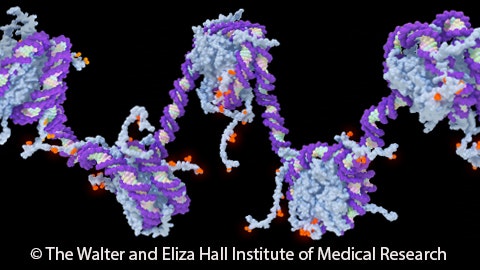
Epigenetic Control of Gene Expression
While the human genome sequence has transformed our understanding of human biology, it isn’t just the sequence of your DNA that matters, but also how you use it! How are some genes activated and others are silenced? How is this controlled? The answer is epigenetics. Epigenetics has been a hot topic for research over the past decade as it has become clear that aberrant epigenetic control contributes to disease (particularly to cancer). Epigenetic alterations are heritable through cell division, and in some instances are able to behave similarly to mutations in terms of their stability. Importantly, unlike genetic mutations, epigenetic modifications are reversible and therefore have the potential to be manipulated therapeutically. It has also become clear in recent years that epigenetic modifications are sensitive to the environment (for example diet), which has sparked a large amount of public debate and research. This course will give an introduction to the fundamentals of epigenetic control. We will examine epigenetic phenomena that are manifestations of epigenetic control in several organisms, with a focus on mammals. We will examine the interplay between epigenetic control and the environment and finally the role of aberrant epigenetic control in disease. All necessary information will be covered in the lectures, and recommended and required readings will be provided. There are no additional required texts for this course. For those interested, additional information can be obtained in the following textbook. Epigenetics. Allis, Jenuwein, Reinberg and Caparros. Cold Spring Harbour Laboratory Press. ISBN-13: 978-0879697242 | Edition: 1 The course will re-open in 2022.
 Packt
Packt
Foundations of Modular Environment Design in Blender
This course features Coursera Coach! A smarter way to learn with interactive, real-time conversations that help you test your knowledge, challenge assumptions, and deepen your understanding as you progress through the course. Dive into the art and science of modular environment creation using Blender 4, as you explore kitbashing techniques, greyboxing, and procedural design. Whether you're a 3D enthusiast or aspiring game environment artist, this course equips you with hands-on skills to build immersive, reusable assets and architectural elements. From Aztec temples to marketplaces, you’ll gain practical experience shaping complex environments with artistic accuracy and efficiency. Your journey begins with mastering essential Blender navigation and reference workflows, followed by building the foundation of your Aztec city using greyboxing. As you progress, you'll design key architectural features—stairs, arches, pools, and rooftops—through modular principles that emphasize scalability and visual cohesion. The course integrates advanced modeling, UV mapping, shaders, and real-time optimization strategies. In later modules, you'll use Geometry Nodes, Booleans, and procedural add-ons like GeoStacker to streamline asset creation, enhancing detail and realism. Along the way, you'll learn how to organize your asset library, manage modular packs, and create seamless integration across complex structures such as roofs, bridges, and windows. This course is ideal for intermediate Blender users, 3D modelers, and aspiring environment artists in gaming or animation. A basic understanding of Blender is recommended, but key foundational skills are also covered for new users ready to advance their workflows. By the end of the course, you will be able to create modular, reusable environment assets in Blender, design large-scale 3D scenes efficiently, and apply procedural techniques to deliver visually cohesive and optimized models.
 Rice University
Introduction à l'analyse de données à l'aide d'Excel
L'utilisation d'Excel est répandue dans l'industrie. C'est un outil d'analyse de données très puissant et presque toutes les grandes et petites entreprises utilisent Excel au quotidien. Ce cours d'introduction à l'utilisation d'Excel est conçu pour vous donner une connaissance pratique d'Excel dans le but de l'utiliser ultérieurement pour des sujets plus avancés dans le domaine des statistiques d'entreprise. Le cours est conçu en gardant à l'esprit deux types d'apprenants - ceux qui ont très peu de connaissances fonctionnelles d'Excel et ceux qui utilisent Excel régulièrement mais à un niveau moindre et souhaitent améliorer leurs compétences. Le cours vous présente des opérations de base telles que la lecture de données dans Excel en utilisant divers formats de données, l'organisation et la manipulation de données, et certaines des fonctionnalités les plus avancées d'Excel. Tout au long du cours, la fonctionnalité d’Excel est présentée à l'aide d'exemples faciles à comprendre qui sont illustrés de manière à permettre aux apprenants de les comprendre et de les appliquer. Pour réussir les travaux du cours, les étudiants doivent avoir accès à une version Windows de Microsoft Excel 2010 ou une version ultérieure. ________________________________________ SEMAINE 1 Module 1 : Introduction aux feuilles de calcul Dans ce module, vous serez initié à l'utilisation des feuilles de calcul Excel et des diverses fonctions de base relatives aux données d'Excel. Les sujets abordés sont les suivants : • Lecture des données dans Excel en utilisant différents formats • Fonctions de base dans Excel, fonctions arithmétiques ainsi que diverses fonctions logiques • Mise en forme des lignes et des colonnes • Utilisation des formules dans Excel et exécution de copier-coller à l'aide du référencement absolu et relatif ________________________________________ SEMAINE 2 Module 2 : Fonctions des feuilles de calcul pour organiser les données Ce module présente diverses fonctions Excel permettant d’organiser et d’interroger les données. Les apprenants découvrent les fonctions SI, SI imbriquée, RECHERCHEV et RECHERCHEH d'Excel. Les sujets abordés sont les suivants : • Fonctions SI et SI imbriquée • RECHERCHEV et RECHERCHEH • La fonction ALEA.ENTRE.BORNES ________________________________________ SEMAINE 3 Module 3 : Introduction au filtrage, aux tableaux croisés dynamiques et aux graphiques Ce module présente diverses fonctionnalités de filtrage des données d'Excel. Vous apprendrez à définir des filtres dans les données pour accéder de manière sélective aux données. Le tableau croisé dynamique, un outil de synthèse de données très puissant, est également expliqué et nous commencerons à introduire la fonction de création de graphiques d'Excel. Les sujets abordés sont les suivants : • RECHERCHEV sur les feuilles de calcul • Filtrage des données dans Excel • Utilisation de tableaux croisés dynamiques avec des données catégorielles et numériques • Introduction à la capacité de création de graphiques d'Excel ________________________________________ SEMAINE 4 Module 4 : Graphiques et diagrammes avancés Ce module explore diverses techniques avancées de création de graphiques et diagrammes disponibles dans Excel. Nous commencerons par divers graphiques linéaires, à barres et à secteurs, et présenterons les graphiques croisés dynamiques, les nuages de points et les histogrammes. Vous apprendrez à comprendre ces différents graphiques et à les construire par vous-même. Les sujets abordés sont les suivants : • Graphiques linéaires, à barres et à secteurs • Graphiques croisés dynamiques • Nuage de points • Histogrammes
 DeepLearning.AI
Retrieval Augmented Generation (RAG)
Retrieval Augmented Generation (RAG) improves large language model (LLM) responses by retrieving relevant data from knowledge bases—often private, recent, or domain-specific—and using it to generate more accurate, grounded answers. In this course, you’ll learn how to build RAG systems that connect LLMs to external data sources. You’ll explore core components like retrievers, vector databases, and language models, and apply key techniques at both the component and system level. Through hands-on work with real production tools, you’ll gain the skills to design, refine, and evaluate reliable RAG pipelines—and adapt to new methods as the field advances. Across five modules, you'll complete hands-on programming assignments that guide you through building each core part of a RAG system, from simple prototypes to production-ready components. Through hands-on labs, you’ll: - Build your first RAG system by writing retrieval and prompt augmentation functions and passing structured input into an LLM. - Implement and compare retrieval methods like semantic search, BM25, and Reciprocal Rank Fusion to see how each impacts LLM responses. - Scale your RAG system using Weaviate and a real news dataset—chunking, indexing, and retrieving documents with a vector database. - Develop a domain-specific chatbot for a fictional clothing store that answers FAQs and provides product suggestions based on a custom dataset. - Improve chatbot reliability by handling real-world challenges like dynamic pricing and logging user interactions for monitoring and debugging. - Develop a domain-specific chatbot using open-source LLMs hosted by Together AI for a fictional clothing store that answers FAQs and provides product suggestions based on a custom dataset. You’ll apply your skills using real-world data from domains like media, healthcare, and e-commerce. By the end of the course, you’ll combine everything you’ve learned to implement a fully functional, more advanced RAG system tailored to your project’s needs.
 University of Copenhagen
After the Arab Spring – Democratic Aspirations and State Failure
Learn why the hope and excitement of the Arab Spring is gone, why so many Arab states are falling apart, why the youth are so frustrated, why there are so many refugees, and what can be done about it. The so-called Arab Spring appeared to end decades of exceptionalism and bring the Arab world back into the mainstream of global developments. The rebellions promised the return of politics and the reassertion of popular sovereignty against their corrupt and geriatric leaders. Much hope and flowery language greeted the young men and women who deposed their leaders and tried to build new, better societies. Today, the Arab world is in deep crisis. Of the 22 member states of the Arab League, at least five have essentially collapsed: Iraq, Libya, Yemen, Somalia and Syria exist only in name today, as their territories have fallen to competing, murderous armed groups. In the remaining countries, the old autocracies have reasserted themselves. The repression at home is now worsened by regional conflict on an unprecedented scale, and the resulting frustration has led to the biggest refugee flows in recent memory. What went wrong? This course offers an overview of the structural shortcomings of Arab states and societies, which help us understand why the democratic awakening did not happen but instead “has given way to civil wars, ethnic, sectarian and regional divisions and the reassertion of absolutism.” This raises the obvious and renewed question whether there is something inherent in the Arab, and by analogy Muslim, condition that makes them special. Does this condition make this part of the world impervious to generally observable trends towards greater accountability, popular participation in political decision-making, greater generation and fairer division of economic wealth? Join this course to find out!
 Coursera
Analyze Agent Performance: Build and Test
Analyze Agent Performance: Build and Test is an intermediate course for data analysts, ML engineers, and developers tasked with optimizing AI systems. In a world where agentic AI is increasingly common, it is not enough to build an agent—you must prove its effectiveness. This course equips you with the data-driven skills to measure, monitor, and improve AI agents built with frameworks like LangChain, Autogen, and CrewAI. You will learn to transform raw, noisy logs into actionable KPIs by applying data aggregation techniques with SQL and dbt. Through hands-on labs, you will design and execute controlled A/B experiments, comparing agent versions to identify meaningful improvements. You will master core statistical methods, including the Chi-square test, to determine whether your results are statistically significant or just random chance. You will be able to move beyond correlation to causation, making objective, evidence-based recommendations on deploying agent enhancements.
 Duke University
ART of the MOOC: Activism and Social Movements
This course is for activists, artists, and thinkers who wish to better understand and participate in social change. We will focus on the prolific and exciting overlap between socially engaged art and cultural practices generated by recent social movements around the world. Rather than assess the political efficacy of activities like mourning, listening, organizing, dancing, or partying, the lectures examine such cultural activities next to, and within, contemporary art practice. Included in the course are guest presentations by key artists, activists, and scholars, like: Rebecca Gomperts, Chido Govera, Gulf Labor, Hans Haacke, Sharon Hayes, Jolene Rickard, Gregory Sholette, Joshua Wong, and many more. Designed by artist and Duke professor, Pedro Lasch and co-taught by Creative Time artistic director, Nato Thompson, the course challenges learners to treat the MOOC itself as a social and artistic form. This happens mostly through the practical components, local project productions, global exchanges, and critical feedback. While no prior art making or activist experience is required, projects also offer challenging options for advanced learners. For other course offerings or language versions in this series, just search 'ART of the MOOC' inside the Coursera course catalogue.