

The Global Scholarly Directory.
Discover world-class academic programs curated for the modern intellectual. Search through 19877+ degrees and professional certificates.
 Google Cloud
Configuring Vector Search in Cloud SQL for PostgreSQL
This is a self-paced lab that takes place in the Google Cloud console. In this lab, you learn the fundamentals of configuring vector search in Cloud SQL for PostgreSQL.
 Princeton University
Computer Architecture
In this course, you will learn to design the computer architecture of complex modern microprocessors. All the features of this course are available for free. It does not offer a certificate upon completion.
 Coursera
Einführung in Marketing für soziale Medien mit Visme
Nach Abschluss dieses Projekts wirst du gelernt haben Grafikdesignplattform Visme zu nutzen und individuelle Posts für Soziale Medien zu kreieren. Wir werden heute die kostenlose Visme Version zur Erstellung unserer Projekte verwenden. User von sozialen Netzwerken werden im heutigen Zeitalter von Informationen und Bildern regelrecht überschwemmt. Aufgabe des Social Media Marketings ist es daher, kreative Wege zu finden um die Aufmerksamkeit der User für ihre Produkte und Dienstleistungen zu gewinnen. Dies erfolgt oftmals auf Basis eines sehr geringen Marketing Budgets. Die webbasierte Plattform Visme bietet alle nötigen Werkzeuge um visuell attraktive und organisierte Produkte zu kreieren und in den sozialen Medien zu teilen. Deine neu erworbenen Kenntnisse werden dir in Zukunft dabei behilflich sein, dein Business zu bewerben und deinen Wiedererkennungswert zu steigern.
 Duke University
Web Applications and Command-Line Tools for Data Engineering
In this fourth course of the Python, Bash and SQL Essentials for Data Engineering Specialization, you will build upon the data engineering concepts introduced in the first three courses to apply Python, Bash and SQL techniques in tackling real-world problems. First, we will dive deeper into leveraging Jupyter notebooks to create and deploy models for machine learning tasks. Then, we will explore how to use Python microservices to break up your data warehouse into small, portable solutions that can scale. Finally, you will build a powerful command-line tool to automate testing and quality control for publishing and sharing your tool with a data registry.
 Scrimba
Build AI Apps with LangChain.js
Learn the basics of LangChain.js and build an internal company knowledge base using retrieval from a vector database. This hands-on course takes you step by step through the process of building AI-powered applications using LangChain. You’ll start with an expert-led introduction by LangChain’s lead maintainer, Jacob Lee, giving you a strong foundation straight from the source. As you progress, you’ll: - Build app flow diagrams - Set up databases with Supabase - Refine text processing techniques - Craft powerful prompt templates - Develop starter code - Integrate logic chains for data retrieval and processing - Design a functional user interface—bringing your AI project to life Each module is designed to sharpen your coding skills with interactive challenges that push you to apply what you’ve learned in real-world scenarios. The course wraps up with an exciting solo project: building your own personal assistant app, solidifying your expertise in AI app development. With its deep focus on LangChain, this course gives you hands-on experience with cutting-edge AI tools, preparing you to build the next generation of intelligent applications.
 Copenhagen Business School
Innovation Strategy: Developing Your Fintech strategy
Welcome to Innovation strategy: Developing your Fintech Strategy! As you probably know, this is the third course in a three-part specialization focused on the digital transformation of finance. In this course, we'll aim to bring you insights about how business strategy intersects with innovation in finance. I'm excited to have you in the class and look forward to helping you learn more about this important topic. To begin, I recommend taking a few minutes to explore the course site. A good place to start is the navigation bar on the left. Click Course Content to see what material we’ll cover each week, as well preview the assignments you’ll need to complete to pass the course. Click Discussions to see forums where you can discuss the course material with fellow students taking the class. Be sure to introduce yourself to everyone in the Meet and Greet forum! This course should take about four weeks to complete. You can check out the recommended course schedule below to see a quick overview of the lessons and assignments you’ll complete each week. By the time you finish this course, you’ll have understood the job your Fintech innovation strategy should solve and mastered both internal and external innovation tools to solve the problem. You will also have been exposed to how some of the world’s leading financial companies work with innovation and seen inspirational examples from the digital masters, such as Google, Apple and Amazon. You'll be introduced to the Capstone Project for the specialization and have a chance to form some preliminary solutions for a financial company that needs to re-think its Fintech innovation strategy. The course has a primary focus on the banking sector, with insurance as a secondary area of concern. Most examples are rooted in the North American and European financial markets. Good luck as you get started. I look forward to seeing you in class!
 Amazon Web Services
Automation in the AWS Cloud
Automation in the Cloud can simplify processes, enable agility and scalability, and help you deploy faster. But how should you master these topics to enhance your career potential? The course kicks off by introducing automation in the cloud, comparing the differences between on-premises and cloud. We'll answer why automation is so powerful and you'll get hands-on by working with AWS CLI. Week 1 closes with automation with scripting by sharing examples of how automation helps and the benefits of using scripts. A focus on Automation isn't complete with an overview of Infrastructure as Code. You'll get introduced to Provisioning and Configuration Management and solve an automation problem with AWS CloudFormation. The instructors will then share some simple automation examples and how various tools can help you get the job done. In the course's final week, we'll cover the various AWS Services and features used for automation, how to scale resource management, and use the Systems Manager console and AWS Config for compliance.
 Lund University
Akademiskt skrivande
Hur lär jag mig skriva fungerande texter? Det är en fråga som många studenter söker svar på. I denna kurs tar vi upp vad som är viktigt i det akademiska skrivandet. Du får konkreta tips på vad du kan tänka på för att utveckla både dina texter och ditt skrivande. Du får också träning genom olika övningar och kortare skrivuppgifter. Målet med kursen är att du ska kunna skriva akademiska texter i ditt ämne och också förstå hur du kan utvecklas som skribent. Det här är de mer specifika målen för varje kursmodul. Efter modul ett ska du steg för steg kunna planera ditt skrivande och kunna använda respons som ett medel för att göra texterna bättre och utvecklas som skribent. Efter modul två ska du kunna anpassa en akademisk text till genre och ämnessammanhang samt utifrån genre och ämnessammanhang kunna välja innehåll, struktur och språkstil i din text. Efter modul tre ska du kunna framställa dig själv som skribent och dina argument på ett trovärdigt sätt samt kunna skriva en text med flyt och korrekt språk. Efter modul fyra ska du kunna referera och citera litteratur på ett akademiskt hederligt och korrekt sätt. I den femte modulen, som mer specifikt riktar sig till lärare, får du tips om hur du kan integrera och formulera mål för skrivande i din egen ämnesundervisning, hur du kan motivera studenter samt hur du kan effektivisera skrivträning och textrespons. Observera att alla uppgifter på den här kursen är frivilliga och du får inget intyg för att du har gjort dem. Men vi tror att de kommer att hjälpa dig att bli en bättre skribent så vi rekommenderar starkt att du gör så många uppgifter som möjligt. I så kallade “assignments” får du tillfälle att skriva en egen text utifrån instruktioner och kan därefter få den granskad av en annan kursdeltagare och du får också öva på att själv ge respons. Detta är nyttiga erfarenheter som kommer att hjälpa dig i ditt skrivande.
 Johns Hopkins University
Specialized Data Visualization Approaches
The course "Specialized Data Visualization Approaches" explores advanced data visualization techniques, equipping you with the skills to tackle complex data challenges. You’ll learn how to visualize temporal, volumetric, and multidimensional data, leveraging specialized methods such as direct volume rendering, isosurfaces, and flow visualization. With a focus on scientific accuracy and practical applications, you'll gain the tools to represent data over time and visualize 3D datasets for fields like engineering and medicine. By applying these techniques, you’ll enhance your ability to create insightful and impactful visualizations for various domains. What sets this course apart is its emphasis on evaluating and validating visualizations for effectiveness, ensuring that your visual outputs are not only technically advanced but also user-friendly and accurate. Whether you’re working in research, engineering, or any field that requires advanced data analysis, this course will help you build the expertise to communicate complex insights with clarity and precision.
 Coursera
Curso Completo de Deep Learning
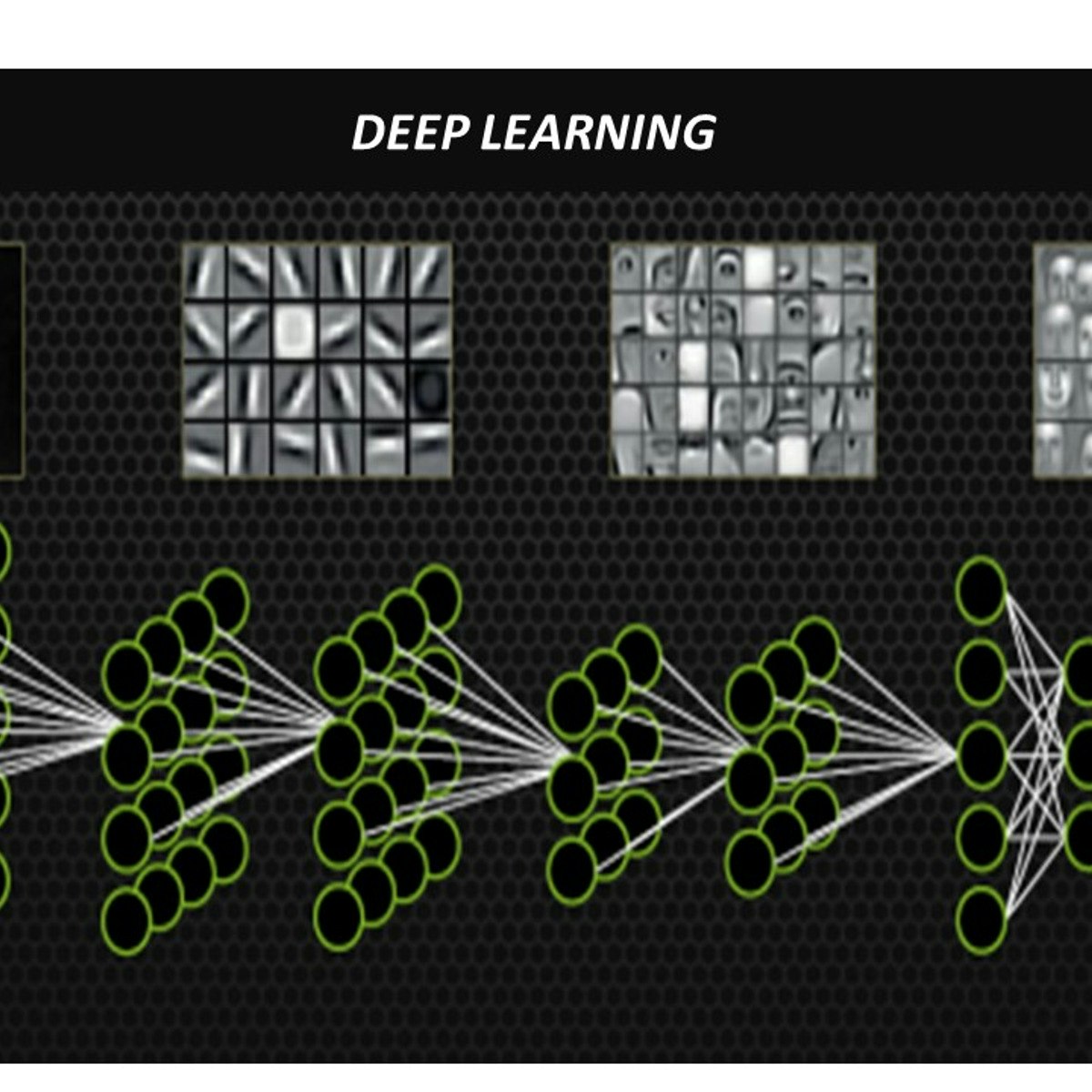
Este proyecto es un curso práctico y efectivo para aprender Deep Learning con ejercicios aplicados. Aprenderás desde cero los fundamentos del Deep Learning. Después irás aprendiendo a desarrollar redes neuronales con Python y Keras a través de ejercicios prácticos. Gracias a este curso aprenderás a programar tus propios modelos de Deep Learning. Gracias a esto podrás predecir si un cliente comprará o no un producto, el precio de la vivienda, etc.
 Universitat Politècnica de València
Visualización de datos con Python
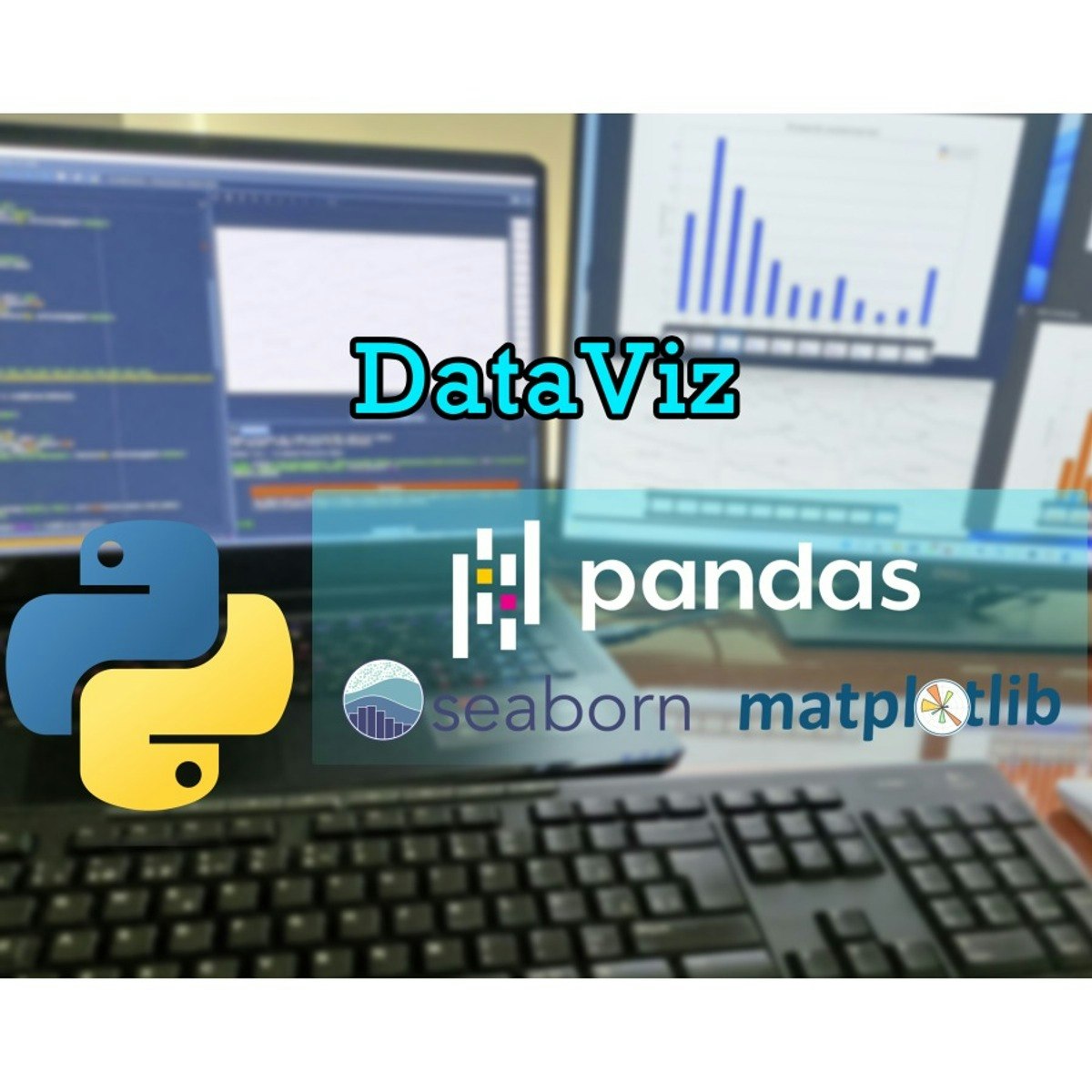
Este curso práctico te proporcionará las habilidades esenciales para empezar a trabajar con la visualización de datos. Comenzarás dominando la librería Pandas para la gestión de datos tabulados. Luego, explorarás Matplotlib para crear y personalizar gráficos básicos, entendiendo sus componentes clave de formato. Finalmente, simplificarás la creación de gráficos estadísticos con la potente librería Seaborn. Todos los módulos se basan en el uso de fuentes de datos reales.
 Snowflake
Introduction to Generative AI with Snowflake
This course introduces learners to generative AI and how to implement common AI use cases using Snowflake. The course starts with an introduction of important concepts, the setup of the learner environment, and the building of a simple application. It’s followed by learning how to use the Cortex LLM functions to accomplish many common AI tasks, and ends with learning how to fine-tune foundation models to perform specific tasks. This course is for anyone looking to skill up on AI, but is particularly suited for data scientists, ML/AI engineers and data analytics professionals. To be successful in this course, you should have a background in Python, GenAI, and LLMs.
 Universidad Nacional Autónoma de México
Inteligencia artificial: proyecto final
En el proyecto culminante del programa especializado Introducción a la Inteligencia Artificial, los estudiantes aplicarán conceptos adquiridos durante el programa en un problema de su elección. El proyecto involucrará el desarrollo de un programa de software y la escritura de un ensayo. Se extenderá por lo menos uno de los temas cubiertos en el programa especializado, realizando una implementación, comparándolo con otras técnicas y reportando los resultados en un ensayo. La evaluación será por pares. Los objetivos del proyecto son: * Aplicar el conocimiento adquirido durante el programa especializado a un dominio particular. * Implementar tecnología de IA con un propósito específico. * Comparar la solución desarrollada con existentes. * Reportar los resultados en un ensayo estructurado (máximo 10 páginas).
 Coursera
Generate Personalized Content with AI Prompts
In this beginner-friendly course, learners discover how to use AI prompts and dynamic content blocks to create messages that resonate with different audiences. The course begins with an introduction to personalization in practice, highlighting where and why dynamic blocks are applied in email marketing and other communication channels. Learners then explore prompt engineering, building templates that insert variables to generate customized outputs at scale. Through hands-on labs, they design dynamic blocks, write and test prompts, and save AI-generated variations into a CSV file for A/B testing. By the end of the course, learners will be able to combine human creativity with AI efficiency to deliver content that feels personal across marketing campaigns, customer communication, and content delivery.
 Pontificia Universidad Católica de Chile
Cómo entrenar a tus electrones 2: Diodos y Transistores
La electrónica ha respaldado el desarrollo científico y tecnológico de la humanidad, ostentando un rol clave en los últimos 50 años. Nos admiramos de la capacidad del ser humano de diseñar circuitos integrados que contienen millones de transistores y que nos permiten procesar con gran precisión las señales más débiles provenientes de las antenas de telefonía celular, de las neuronas del cerebro, de una cámara digital, o de la carga depositada por partículas subatómicas que colisionan en el Gran Colisionador de Hadrones en Suiza. Es difícil entender un circuito electrónico, y aún más difícil diseñarlo. Pero no es imposible. Los electrones pueden ser muy dóciles si sabemos dominarlos. "Cómo entrenar a tus electrones 2: Diodos y Transistores", el segundo de una serie de tres MOOCs, te permitirá dar los primeros pasos para comprender los dispositivos semiconductores más importantes: diodos y transistores de efecto de campo. Las videolecciones acompañadas de pequeños cuestionarios te ayudarán a reforzar tu aprendizaje en cuanto a la comprensión del funcionamiento de los semiconductores, los circuitos principales para rectificar y amplificar voltajes, y las técnicas de análisis más utilizadas.
 Google Cloud
Developing Applications with Google Cloud: Foundations
In this course, you learn the fundamentals of application development on Google Cloud. You learn best practices for cloud applications, and how to select compute and data options to match your application use cases. You're introduced to generative AI and how it's used to help build applications. You learn about authentication and authorization, application deployment, continuous integration and delivery, and monitoring and performance tuning for your applications running in Google Cloud. Using lectures and hands-on labs, you learn how to get started building and running applications on Google Cloud.