

The Global Scholarly Directory.
Discover world-class academic programs curated for the modern intellectual. Search through 19877+ degrees and professional certificates.
 Niel Asher Education
Kettlebell Training Methodology
By the end of this course, you will (1) master foundational and advanced kettlebell techniques and (2) design safe, effective programs for strength, endurance, and recovery. Presented by World Champion Levi Markwardt of Hard to Kill Training, this course blends high-level sport expertise with practical instruction. You’ll learn proper technique for swings, presses, squats, and get-ups, progressing to advanced combinations and flow sequences. Levi demonstrates how kettlebells enhance coordination, functional movement, and resilience—whether used for general fitness, athletic conditioning, or rehabilitation. Learners also explore safety, injury prevention, and programming for individual and group settings. This course is unique for its accessibility and versatility, empowering professionals to integrate kettlebells into diverse training and recovery programs.
 Dassault Systèmes
xDesign Assemblies and Exam Level Part Modeling
Welcome to xDesign Assemblies and Exam Level Part Modeling, the final course in the SOLIDWORKS xDesign for Education Specialization. Make sure to complete the first four courses for a smooth experience. This course brings together everything you've learned and applies it to real-world part modeling and assembly challenges. Upon completion of this learning module, you will be able to: - Create 3D objects from 2D sketch - Create mates in an assembly This final step prepares you for real-world projects. Software Prerequisites: 3D Creator Access powerful capabilities for Engineering with SOLIDWORKS xDesign at a low price, $72 (excluding taxes), follow this link : https://go.3ds.com/CXD1
 Google
Grundlagen: Daten, überall Daten
Dies ist der erste Kurs im Google Data Analytics Certificate. In diesen Kursen lernen Sie alles, was Sie für eine Einstiegsposition in der Datenanalyse benötigen. Unternehmen aller Art benötigen Fachleute für Datenanalyse, die ihnen helfen, Prozesse zu verbessern, Chancen und Trends zu erkennen, neue Produkte auf den Markt zu bringen und durchdachte Entscheidungen zu treffen. In diesem Kurs werden Sie anhand eines von Google entwickelten praxisorientierten Lehrplans in die Welt von Data Analytics eingeführt. Das Material deckt viele wichtige Themen der Data Analytics ab und soll Ihnen einen Überblick über das Google Data Analytics Certificate geben. Momentan bei Google tätige Fachleute für Datenanalyse werden Sie anleiten und Ihnen praktische Möglichkeiten zeigen, mit denen Sie die gängigen Aufgaben von Fachleuten für Datenanalyse mithilfe der besten Tools und Ressourcen erledigen können. Lernende, die dieses Zertifikatsprogramm abschließen, können sich auf Einstiegspositionen in der Datenanalyse bewerben. Es sind keine Vorkenntnisse erforderlich. Nach Abschluss dieses Kurses können Sie: - Praktiken und Prozesse überblicken, die im Arbeitsalltag in Junior- oder Associate-Positionen in der Datenanalyse verwendet werden - wichtige analytische Fähigkeiten (Datenbereinigung, Datenanalyse, Datenvisualisierung) und Tools (Tabellenkalkulationen, SQL, R-Programmierung, Tableau) anwenden, die Sie Ihrer professionellen Toolbox hinzufügen können - zahlreiche Begriffe und Konzepte kennen, die für die Rolle von Junior-Fachleuten für Datenanalyse relevant sind, wie z. B. der Datenlebenszyklus und der Datenanalyseprozess - die Rolle von Analytics im Datenökosystem bewerten - eine Selbsteinschätzung Ihres analytischen Denkens durchführen - Stellenangebote erkunden, die Ihnen nach Abschluss des Programms zur Verfügung stehen, und mehr über bewährte Verfahren bei der Stellensuche erfahren
 Copenhagen Business School
Sustainable Fashion
Sometimes when we say we work with sustainable fashion people look at us like... "Mmmm, is it really possible for something like fashion to be sustainable?" And let's face it, people are right being suspicious. If anything the fashion industry has become increasingly unsustainable over the last decades, using more and more natural resources and creating more and more waste. In this course, we provide an overview of business model theory and discuss business models as essential tools in the transformation towards more sustainable businesses. Throughout the course, we will use business model theory as a foundation to look at how real-world fashion brands are adopting more sustainable ways of doing business. We will provide you with a rich opportunity to examine their efforts and consider strategies for your own organisation. Hopefully, you can also enlighten us with some local examples in your own countries for us to discover together new ways of dealing with sustainability. By the end of the course, you have an understanding of the overall challenges and potential solutions for businesses to become more sustainable. You will learn about the challenges and opportunities of implementing circular business models and we will introduce various tools that companies use to measure and report about sustainability. You will be able to think about business model theory in new ways and apply strategies to manage business model innovation towards sustainable practices. This is a very exciting time to be working in the fashion industry, so let's get started!
 Northeastern University
Engineering Probability and Statistics Part 2
Engineering Probability and Statistics Part 2 covers the principles of statistical inference, including sampling distributions, confidence intervals, hypothesis testing, and analysis of variance (ANOVA) for comparing means across multiple groups. Through a structured yet flexible approach, students will gain the skills needed to apply statistical reasoning to engineering problems and communicate data-driven insights effectively. This course is designed to support continuous engagement and steady progress throughout the term.
 Politecnico di Milano
FPGA computing systems: Partial Dynamic Reconfiguration
New application domains demand ever increasing adaptability and performance. In order to cope with changing user requirements, improvements in system features, changing protocol and data-coding standards, and demands for support of a variety of different user applications, many emerging applications in communication, computing and consumer electronics demand that their functionality stays flexible after the system has been manufactured. Reconfigurable Systems-on-a-Chips (SoCs) employing different microprocessor cores and different types of reconfigurable fabrics are one attractive solution for these domains. The increasing prominence of reconfigurable devices within such systems requires HW/SW co-design for SoCs to address the trade-off between software execution and reconfigurable hardware acceleration. Dynamic reconfiguration capabilities of current reconfigurable devices create an additional dimension in the temporal domain. During the design space exploration phase, overheads associated with reconfiguration and hardware/software interfacing need to be evaluated carefully in order to harvest the full potential of dynamic reconfiguration. The course will introduce the student with the concept of reconfigurability in FPGAs, presenting the available mechanisms and technologies at the device level and the tools and design methodologies required to design reconfigurable FPGA-based systems. The course will present the different aspects of the design of FPGA-based reconfigurable systems, focusing in particular on dynamically self-reconfigurable systems. The design methodologies and tools required to design a dynamically-reconfigurable system will be introduced and described, together with the problems that need to be considered.
 University of Maryland, College Park
Construction Management Project Delivery Methods & Contracts
Learn to align projects with organizational culture, and deliver on time, within budget, and with high quality. This course helps you meet your project goals and objectives. We will review the primary project delivery method arrangements with their advantages and disadvantages, and cover the three major types of contracts. It is the owner’s requirement to analyze the project delivery method advantages and disadvantages. The best way to do this is to examine the project risks and major categories of project risk. Next, we’ll address design. Good design is a result of collaboration among many different people, including the construction manager, architect, engineers, and owner. Although there is always a lead designer, the project is a combination of the collaborative process and consultation with other experts. In this course, we describe the roles and responsibilities of the construction management professional during the design phase: 1. Understanding value engineering. 2. Tasks that fall outside the design activities. These include investigations of local conditions, construction practices, labor markets, and the site conditions. 3. Knowing when to bid a project. Significant time and costs are incurred in preparing a bid. To bid or not to bid. 4. Know the construction phase, and how the work is the same no matter what contract form or project delivery method was chosen. 5. Summarize the activities necessary to properly organize and prepare a project for construction. The construction phase can be the most exciting part of the project cycle. Every day the job conditions change. There will always be problems to solve, logistical challenges to meet, and new people to work with. This is the job of the construction manager.
 Universidad Nacional de Colombia
Más que química
El objeto de la química, como disciplina científica, se enfoca en el estudio de la materia y de los cambios que ésta experimenta. En tanto disciplina científica, a la que se le atribuye la reputación de ser una ciencia complicada y aburrida. Esta reputación, bastante inmerecida, obedece al poco conocimiento que se tiene sobre ella y sobre sus enormes posibilidades de aplicación en el mundo científico, en diferentes campos de la industria y la producción, así como en la vida cotidiana. Así, si se observa con atención el mundo, es posible identificar un sinnúmero de aplicaciones de la química, que hacen la vida más cómoda: éstas van por ejemplo desde la producción de alimentos y la generación de nuevos medicamentos, hasta la producción de nuevos materiales, de gran importancia para misiones espaciales. En este curso, distribuido en 5 módulos, se pretende aproximar al estudiante al maravilloso mundo de la Química. Cada módulo está orientado a trabajar con fundamentos o conceptos básicos de la Química, a través de cuyo estudio se posibilita su mejor comprensión y manejo. Así, el primer módulo versa sobre las medidas y cifras significativas; con él, se aprenderá acerca de la importancia de la medición en la labor del químico. En el segundo módulo se aborda el tema de los factores de conversión, necesarios para los procesos llevados a cabo en el laboratorio. En el tercero, es posible conocer la tabla periódica, su nomenclatura y sus elementos. El cuarto módulo se centra en el trabajo alrededor del concepto de mol y en fórmulas químicas, útiles para comprender las relaciones estequiométricas. Por último, en el quinto módulo se trabaja el tema de las reacciones químicas y la estequiometría, fundamentales para el trabajo no solo del químico, sino del biólogo, el farmaceuta y el ingeniero de alimentos. Este curso sirve como base para otros cursos de química, ya que, con soporte en él, se busca contribuir a resolver problemáticas que presentan muchos estudiantes cuando inician el aprendizaje de la química, a nivel universitario o de bachillerato. Cada en módulo puede encontrar lecturas, multimedias y videos. Al final de cada módulo hay una evaluación de tipo test sobre los conceptos tratados; igualmente, a partir de cada vídeo se dejan unas tareas opcionales, orientadas a trascender lo trabajado en este. Para superar el curso se pueden usar 5 semanas, con una dedicación estimada de 14 horas en total.
 University of Illinois Urbana-Champaign
Wetland Regulation: Local to Global Perspective
This course explores wetland conservation through legal, ecological, and policy perspectives. Learners will examine the regulatory roles of federal, state, and local governments, with a focus on the Clean Water Act (CWA) and Waters of the United States (WOTUS). Global conservation efforts, including the Ramsar Convention, will be analyzed in relation to sustainability objectives. Through case studies, learners will assess factors shaping wetland management, the role of community participation, and adaptation to climate change. The course also evaluates engineering-based and hybrid solutions for enhancing wetland resilience. By the end, learners will develop a critical understanding of wetland conservation challenges and strategies in both U.S. and international contexts. This course is part of the College of ACES suite of online programs. To learn more about online programs from the College of ACES and explore ways to apply your Coursera work toward a degree program at the University of Illinois, visit: https://acesonline.illinois.edu/.
 Universidad Nacional Autónoma de México
Manejo moderno de la caries dental
Se trata de un curso básico sobre el tratamiento de la caries dental para controlar su progresión. Existen diversas posturas sobre el tratamiento de esta enfermedad. En este curso, se revisa una aproximación al tratamiento no invasivo de este problema. La caries dental es examinada no sólo como la destrucción parcial o total del diente, sino como una enfermedad que presenta diferentes fases. Asimismo, se analizan principios y elementos para controlar la caries dental, antes de que se presenten cambios observables en los dientes. Al término del curso: Conocerás las bases para determinar el tratamiento que conduzca al control de la enfermedad caries dental.
 University of Colorado Boulder
Working with the Media
This course builds on foundational public relations concepts by examining how organizations communicate with media and external audiences in complex communication environments. Learners explore the role of public relations in branding and storytelling, with particular attention to how organizational mission and core values guide message development across traditional and digital media.
 Vanderbilt University
ChatGPT + Zapier: Easy Inbox Intelligence for Smarter Email
Transform your inbox into a powerful source of insights with ChatGPT + Zapier: Easy Inbox Intelligence for Smarter Email! This course shows you how to use generative AI to automatically extract, organize, and synthesize information from your emails, helping you build a comprehensive view of your life—from projects and travel plans to dinner reservations and meetings. With ChatGPT and Zapier, you’ll learn to effortlessly pull together scattered details from multiple emails and create a cohesive picture of what matters. Discover how to automate the extraction of key details from incoming messages and compile them into organized summaries, schedules, or action lists. You’ll explore techniques for using AI to integrate information across different email threads, calendars, and notes, making it easy to track everything you need in one place. By connecting ChatGPT and Zapier, you can set up workflows to monitor updates, track commitments, and ensure nothing slips through the cracks. What You’ll Learn: • Automate Information Extraction: Use ChatGPT to pull details from emails and create summaries that organize projects, travel itineraries, meeting schedules, and more. • Build Comprehensive Overviews: Combine multiple email sources into cohesive reports or schedules, turning scattered messages into a unified picture of your plans. • Stay on Top of Everything: Set up smart workflows to keep track of changing plans, key dates, and ongoing tasks, all from your inbox. Key Course Highlights: • Effortless Inbox Intelligence: Learn to quickly turn email chaos into organized summaries that help you stay on top of your projects, personal plans, and professional commitments. • Real-World Use Cases: See practical examples like organizing international travel itineraries with multiple travelers and keeping track of everything as your plans evolve • Advanced Automation Techniques: Discover how to go beyond simple email filtering by using AI to truly understand and connect the information flowing into your inbox. Go Beyond the Course: While the course focuses on email intelligence, the skills you learn can be applied to many other types of information, including integrating data from calendars, task managers, and note-taking apps. Use these techniques to build a complete picture of your work and life, whether you’re juggling multiple projects, coordinating travel, or managing a busy social calendar. By the end of this course, you’ll be able to leverage AI-powered email intelligence to stay organized, save time, and make smarter decisions. Let ChatGPT and Zapier help you transform your inbox into a seamless, connected hub for everything that matters.
 Dartmouth College
Superbosses: Managing Talent & Leadership
How can a company thrive for the long term? It always comes down to people: finding talented people, retaining those people, and doing it continuously. In this course, Professor Sydney Finkelstein will teach participants how to support and leverage their biggest asset, the people around them. By learning to find world-class talent and help them move forward in their career, you will learn to build success for your organization and yourself. Using examples like the NFL’s Bill Walsh, the Slow Food Movement’s Alice Waters, and fashion’s Ralph Lauren, Professor Finkelstein shows that superbosses can be found across industries and up and down the org chart—and teaches us to find the superboss within.
 Packt
Packt
Recommender Systems: An Applied Approach using Deep Learning
Updated in May 2025. This course now features Coursera Coach! A smarter way to learn with interactive, real-time conversations that help you test your knowledge, challenge assumptions, and deepen your understanding as you progress through the course. Recommender systems are used in various areas with commonly recognized examples, including playlist generators for video and music services, product recommenders for online stores and social media platforms, and open web content recommenders. Recommender systems have also been developed to explore research articles and experts, collaborators, and financial services. The course begins with an introduction to deep learning concepts to develop recommender systems and a course overview. The course advances to topics covered, including deep learning for recommender systems, understanding the pros and cons of deep learning, recommendation inference, and deep learning-based recommendation approach. You will then explore neural collaborative filtering and learn how to build a project based on the Amazon Product Recommendation System. You will learn to install the required packages, analyze data for product recommendations, prepare data, and model development using a two-tower approach. You will learn to implement a TensorFlow recommender and test a recommender model. You will make predictions using the built recommender system. Upon completion, you can relate the concepts and theories for recommender systems in various domains and implement deep learning models for building real-world recommendation systems. This course is designed for individuals looking to advance their skills in applied deep learning, understand relationships of data analysis with deep learning, build customized recommender systems for their applications, and implement deep learning algorithms for recommender systems. The prerequisites include a basic to intermediate knowledge of Python and Pandas library.
 EDUCBA
Apply Advanced Dart Programming for Scalable Applications
By the end of this course, learners will be able to apply advanced Dart programming concepts, implement asynchronous and concurrent execution models, design reusable libraries, and build a robust, form-based web application using industry-aligned best practices. This course provides an in-depth exploration of Dart beyond the basics, focusing on advanced language features such as generics, generic classes, user-defined libraries, Futures, Streams, isolates, strong typing, and exception handling. Learners progress from mastering reusable and type-safe code patterns to implementing responsive, non-blocking, and concurrent Dart applications. What makes this course unique is its seamless integration of advanced theory with hands-on project implementation. Learners not only understand how advanced Dart features work, but also apply them directly in a real-world project that involves application setup, state updates, and modular UI component design. Structured modules, graded quizzes, practice assessments, and a guided project ensure both conceptual mastery and practical skill development. This course is ideal for developers seeking to strengthen their Dart expertise and confidently build scalable, maintainable, and production-ready applications.
 The University of Sydney
Introduction to Calculus
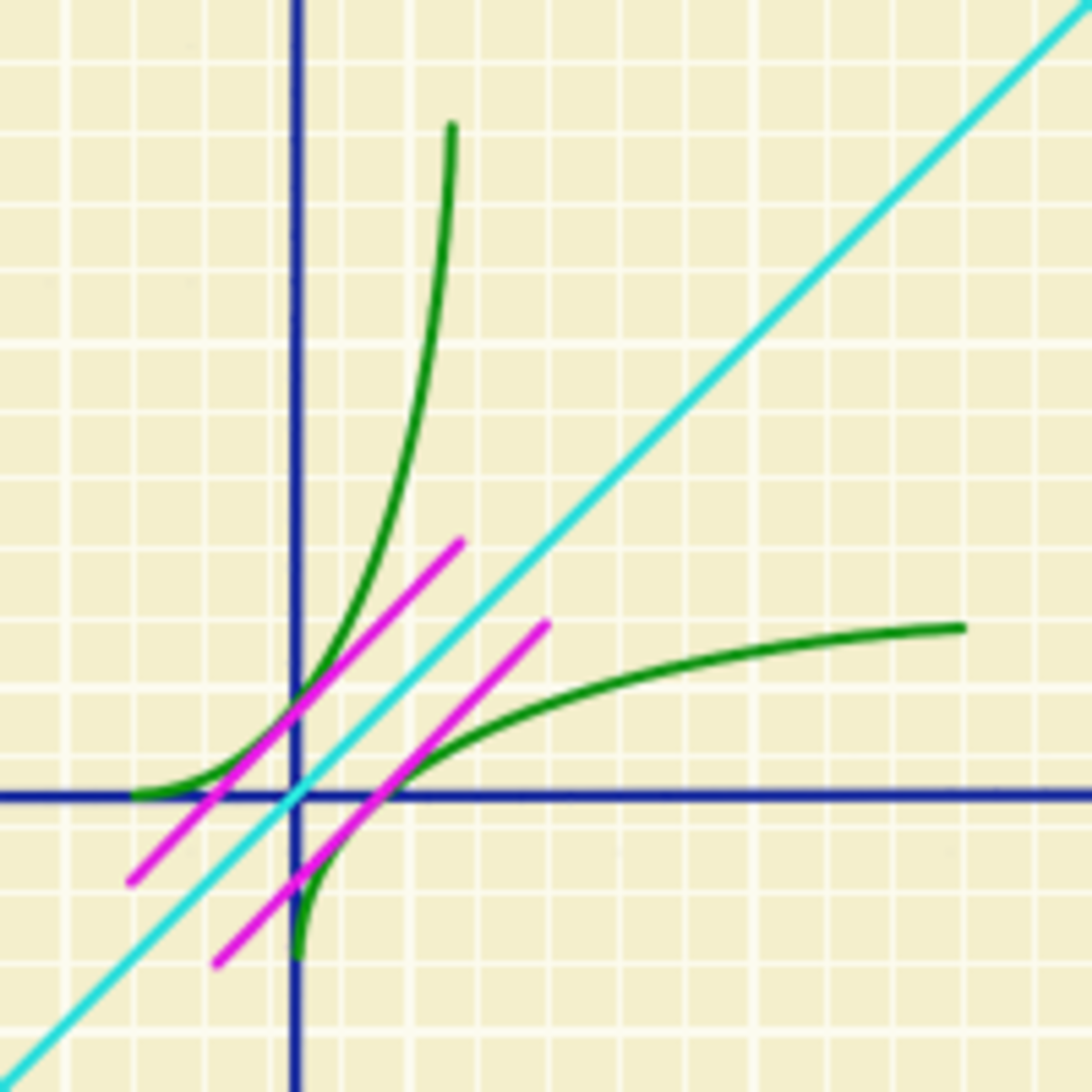
The focus and themes of the Introduction to Calculus course address the most important foundations for applications of mathematics in science, engineering and commerce. The course emphasises the key ideas and historical motivation for calculus, while at the same time striking a balance between theory and application, leading to a mastery of key threshold concepts in foundational mathematics. Students taking Introduction to Calculus will: • gain familiarity with key ideas of precalculus, including the manipulation of equations and elementary functions (first two weeks), • develop fluency with the preliminary methodology of tangents and limits, and the definition of a derivative (third week), • develop and practice methods of differential calculus with applications (fourth week), • develop and practice methods of the integral calculus (fifth week).