

The Global Scholarly Directory.
Discover world-class academic programs curated for the modern intellectual. Search through 19877+ degrees and professional certificates.
 Google Cloud
Security Command Center: Identify and Prioritize Risks
In the context of a real-world use case, learn how to use Security Command Center’s virtual red teaming feature to identify risks. Then, learn how attack exposure scores help you prioritize issues and how risk reports keep stakeholders in the loop.
 EDUCBA
Snake Game in Python with Pygame: Build & Customize
Learners will design, implement, and customize a complete Snake Game in Python using Pygame while mastering essential game development concepts. By the end of this course, participants will be able to apply programming fundamentals, control user input, manage game logic, integrate scoring systems, and enhance gameplay with sound, visuals, and speed customization. This project-based course begins with building the foundation: setting up the environment, creating the snake character, and structuring the game loop. Learners will then explore movement controls, event handling, pause functionality, and text rendering to deliver interactive gameplay. Advanced lessons cover color design, modular coding with functions, boundaries, food mechanics, and testing for accuracy. The course culminates with sound effects, background customization, and speed adjustments, ensuring learners can polish their projects into professional-quality games. Unlike generic tutorials, this case study emphasizes hands-on coding, problem-solving, and real-world application of Python skills. By completing this course, learners gain not only a fully functional game but also transferable programming skills for future projects in Python, Pygame, and beyond.
 Scrimba
API Basics 2: Build a Blog (REST, URLs & HTTP Requests)
This course offers a comprehensive introduction to HTTP requests, REST APIs, and how to build dynamic web applications. You'll learn the fundamentals of HTTP, including request methods such as GET and POST, headers, and bodies. Through hands-on projects, you will retrieve data from APIs, send data to servers, and work with real-world APIs like JSON Placeholder and OpenWeatherMap. The course also gives you hands-on experience. You'll create a functional blog space, retrieving posts from a server and displaying them on a webpage. You’ll enhance the user interface by adding CSS styling, create forms to submit new posts, and use JavaScript to handle form submissions. You’ll also learn how to implement URL parameters and query strings to filter data. By the end of this course, you'll understand how to structure and send HTTP requests, use a basic REST API, and create interactive web pages that communicate with a server. Whether you're a beginner or looking to enhance your web development skills, this course will equip you with essential tools to build dynamic applications.
 Coursera
Machine Learning Pipelines with Azure ML Studio
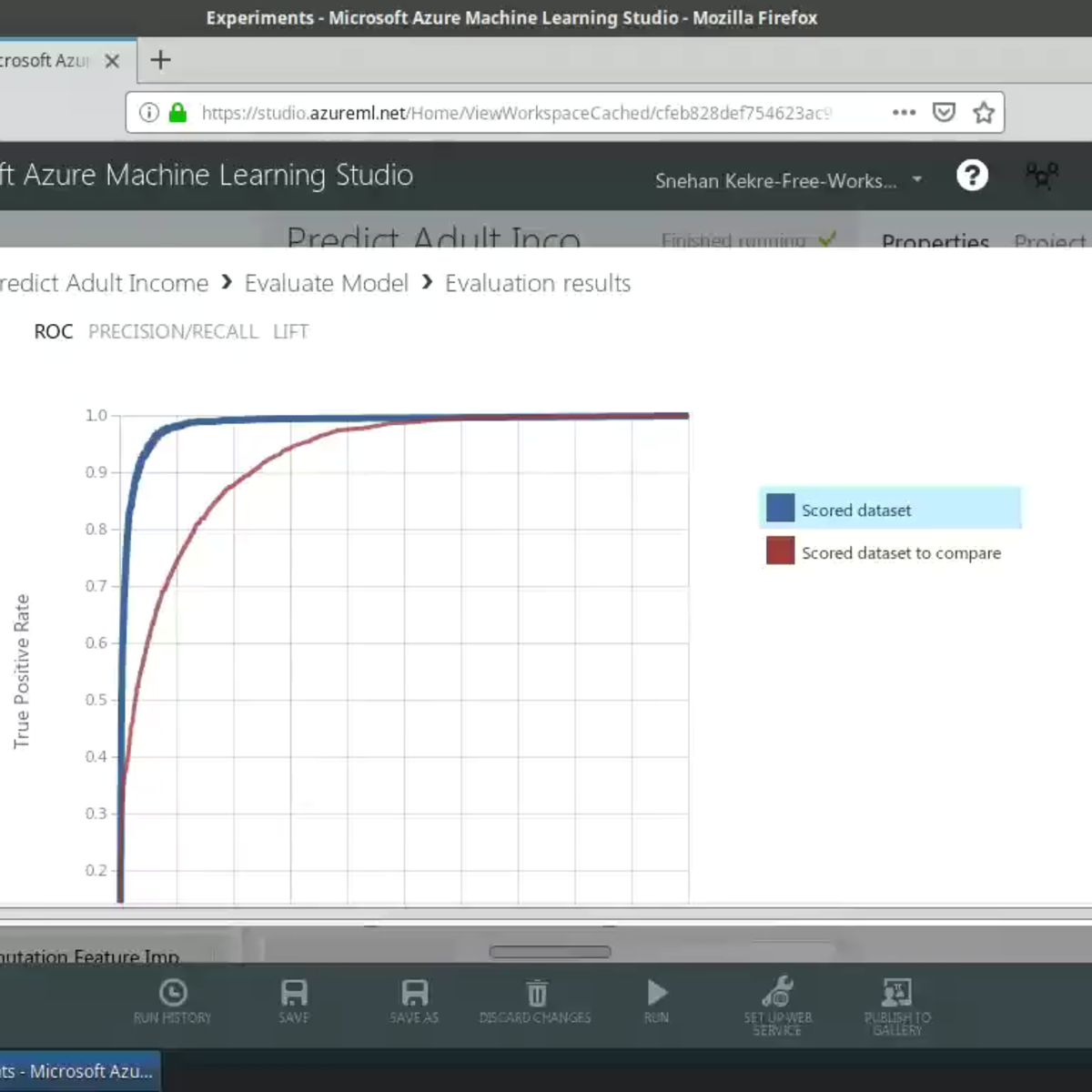
In this project-based course, you are going to build an end-to-end machine learning pipeline in Azure ML Studio, all without writing a single line of code! This course uses the Adult Income Census data set to train a model to predict an individual's income. It predicts whether an individual's annual income is greater than or less than $50,000. The estimator used in this project is a Two-Class Boosted Decision Tree classifier. Some of the features used to train the model are age, education, occupation, etc. Once you have scored and evaluated the model on the test data, you will deploy the trained model as an Azure Machine Learning web service. In just under an hour, you will be able to send new data to the web service API and receive the resulting predictions. This is the second course in this series on building machine learning applications using Azure Machine Learning Studio. I highly encourage you to take the first course before proceeding. It has instructions on how to set up your Azure ML account with $200 worth of free credit to get started with running your experiments! This course runs on Coursera's hands-on project platform called Rhyme. On Rhyme, you do projects in a hands-on manner in your browser. You will get instant access to pre-configured cloud desktops containing all of the software and data you need for the project. Everything is already set up directly in your internet browser so you can just focus on learning. For this project, you’ll get instant access to a cloud desktop with Python, Jupyter, and scikit-learn pre-installed. Notes: - You will be able to access the cloud desktop 5 times. However, you will be able to access instructions videos as many times as you want. - This course works best for learners who are based in the North America region. We’re currently working on providing the same experience in other regions.
 Dubai College of Tourism
Dubai Expo 2020 - A Case Study
This course examines the success and impact of Expo 2020 Dubai, which united 192 nations under the theme "Connecting Minds, Creating the Future." Participants will explore its record-breaking attendance, innovative technologies, and sustainability initiatives, as well as its role in fostering global collaboration and cultural exchange. The course also covers the transformation of the Expo site into District 2020, a hub for innovation and economic growth. Through case studies and discussions, attendees will learn how Expo 2020 set new standards for global events, overcame pandemic challenges, and left a lasting legacy. By the end, participants will understand its influence on future expos and its contribution to global unity and progress.
 University of Colorado Boulder
The Sun and the Total Eclipse of August 2017
A total eclipse is one of the most spectacular sights you can ever see! It looks like the end of the world may be at hand. There is a black hole in the sky where the sun should be. Pink flames of solar prominences and long silver streamers of the sun's corona stretch across the sky. It gets cold, and animals do strange things. People scream and shout and cheer, and remember the experience their whole life. But total eclipses are important scientifically as well. They let us see parts of the sun’s atmosphere that are otherwise invisible. A total eclipse presented the first chance to test Einstein’s prediction that matter can bend space – like near a black hole. The best total eclipse in the United States in 40 years happens August 21st, 2017. This course has two primary goals: 1) to get you excited for the total solar eclipse coming in August 2017 and prepare you and your community to safely view it 2) to provide an inviting overview of the science of the sun and the physics of light If you are most interested in preparing for the eclipse, you can hop right into Week 5! If you want the full course experience, and to get some fun scientific context for what you'll be seeing on August 21st, start with Week 1 and move through the course week by week! [Note: if you start with Week 1, you can skip through some of the repeated material once you get to Week 5.] Overall this course will prepare you to... * Safely view the total or partial solar eclipse * Help others watch safely and even make money by leading a “neighborhood watch” of the eclipse * Review fundamental sun science, including the physics of light, how astronomers study the sun, how it formed, how we know what’s inside it, and where the energy that supports life on earth is generated
 University of Colorado Boulder
Sensors and Sensor Circuit Design
This course can also be taken for academic credit as ECEA 5340, part of CU Boulder’s Master of Science in Electrical Engineering degree. After taking this course, you will be able to: ● Understand how to specify the proper thermal, flow, or rotary sensor for taking real-time process data. ● Implement thermal sensors into an embedded system in both hardware and software. ● Add the sensor and sensor interface into a microprocessor based development kit. ● Create hardware and firmware to process sensor signals and feed data to a microprocessor for further evaluation. ● Study sensor signal noise and apply proper hardware techniques to reduce it to acceptable levels. This course includes specific hardware and software requirements. Please review the FAQ below for complete details.
 EDUCBA
Houdini Soft Body Dynamics: Design & Simulate
By the end of this course, learners will be able to create, simulate, and optimize wire-based dynamics in Houdini, apply physical properties such as mass, density, and plasticity, implement advanced constraint networks, and design project-based simulations like rope bridges and hair systems. This course takes a hands-on, project-driven approach to learning soft body dynamics. Beginning with foundational solvers, learners will explore the role of mass, springs, and drag forces in shaping realistic motion. They will then advance to combining solvers, applying constraints, and leveraging noise-driven forces to control dynamic interactions. With practical projects, including the construction of rope bridges and custom hair systems, learners will gain industry-ready skills in creating complex, production-quality effects. What makes this course unique is its balanced focus on theory, solver integration, and real-world application. Instead of only exploring the technical details, students will also learn how to implement workflows used in film and game production pipelines. By completing this course, learners will not only master Houdini’s powerful wire and constraint solvers but also build a portfolio of simulations that demonstrate creativity, technical skill, and problem-solving expertise.
 Johns Hopkins University
Network Visualization and Intervention
In the "Network Interventions" course, learners will explore the foundational principles of data manipulation, visualization, and the dynamics of networks. This course stands out by seamlessly integrating theoretical knowledge with practical applications. You'll gain expertise in Relational Algebra, empowering you to construct and interpret operations that effectively manage complex datasets. The course also emphasizes the art of Network Visualization, where you will learn to create impactful visual representations of data, making complex information accessible and understandable. Additionally, the course delves into Network Interventions, teaching you how to influence behaviors and ideas within social networks. You will master strategies to identify opinion leaders and implement effective segmentation techniques, essential skills for driving change in various contexts. By the end of the course, you will be equipped not only with analytical and visualization skills but also with the ability to influence social dynamics, preparing you for impactful roles in data-driven environments. This unique combination of skills makes the Network Intervention course an invaluable asset for those looking to thrive in the evolving landscape of data science and social network analysis.
 Packt
Packt
Foundations of Agile and Exam Preparation
Updated in May 2025. This course now features Coursera Coach! A smarter way to learn with interactive, real-time conversations that help you test your knowledge, challenge assumptions, and deepen your understanding as you progress through the course. Master the principles of Agile and prepare for the Agile Certified Professional (ACP) exam with this comprehensive course. You’ll gain an in-depth understanding of Agile methodologies, foundational concepts, and how to effectively manage Agile projects, all while getting equipped to excel in the PMI-ACP exam. The course starts with an overview of the ACP exam, providing guidance on application processes and preparation strategies. You’ll explore the seven domains tested on the exam, learn how PMI evaluates your knowledge, and adopt the "PMI mindset" essential for tackling exam questions. Each section is crafted to ensure you’re confident and ready for the test. You’ll delve into Agile history, concepts, and key methodologies such as Scrum, Extreme Programming, Lean Development, and more. Through engaging lessons, you’ll understand Agile’s core values and principles, learn the terminology, and explore how to adapt methodologies to your project’s needs. Advanced sections cover scaling Agile frameworks like SAFe and Nexus and include strategies for selecting the right methodology for your team. Ideal for aspiring Agile professionals, project managers, and team leaders, this course is suitable for learners with a basic understanding of project management concepts. Whether you’re a novice or a seasoned practitioner, the course offers value through its structured content, practical examples, and actionable insights to ensure success in the exam and in real-world Agile projects.
 Starweaver
Valuation and Investment Analysis
This course develops the core skills required for valuation and investment analysis in corporate finance and capital markets. You will learn how to value businesses, projects, and financial assets using both intrinsic valuation and relative valuation approaches. The course begins with the time value of money, discounted cash flow (DCF) modeling, and the estimation of free cash flow, WACC, and terminal value. It then examines market-based methods, including EV/EBITDA, P/E ratios, comparables analysis, and precedent transactions. Using Excel-based financial modeling, you will build DCF models, conduct sensitivity and scenario analysis, and interpret valuation outputs in the context of risk and investor expectations. The course also explores simulation techniques and the integration of AI tools in financial modeling, with attention to governance and model validation. By the end, you will be able to apply valuation frameworks to assess corporate value, analyze investment risk, and support data-driven financial decision-making.
 University of Geneva
Technologies éducatives : fondements et innovation
Quelles sont les clés de l'apprentissage du futur ? Les plateformes d’apprentissage en ligne, les jeux sérieux, les simulations et les environnements collaboratifs sont de plus en plus courants dans le domaine de l'éducation, mais comment les utiliser efficacement ? Comment s'assurer que ces outils numériques sont réellement bénéfiques pour les apprenants ? Vous voilà arrivé-e au bon endroit ! Ce MOOC sur les fondements de l'apprentissage instrumenté vous permettra d'acquérir des connaissances en psychologie et en sciences de l'éducation pour concevoir, mettre en œuvre et évaluer des dispositifs d'apprentissage intégrant le numérique. Rejoignez-nous dès maintenant pour être à la pointe de l'éducation et donner à vos apprenants la meilleure expérience d'apprentissage possible !
 Coursera
Algorithmic Solutions: Design, Problem Solving, Reporting
“Algorithmic Solutions: Design, Problem Solving, Reporting” is a comprehensive course designed to introduce learners to the fundamental concepts of algorithm design, advanced problem-solving techniques, and effective reporting of results. This course blends theoretical lessons with practical examples to equip participants with the skills necessary to approach complex problems, develop optimized algorithms, and communicate their solutions clearly. I recall a pivotal project where our team's initial approach to a complex scheduling algorithm led to inefficiencies that nearly jeopardized the project's deadline. This experience taught us the critical importance of robust algorithm design and adaptive problem-solving. It's a lesson in the necessity of not just solving problems but solving them right—the first time. For instance, participants will learn how to implement and analyze the Bubble Sort algorithm to understand sorting techniques and use constraint satisfaction techniques to solve Sudoku puzzles and scheduling problems. These examples ensure that learners can directly apply theoretical knowledge to real-world scenarios, enhancing both their problem-solving abilities and practical skills. This course caters to aspiring software engineers, computer science students, IT professionals, and data analysts eager to deepen their understanding of algorithmic design and problem-solving. Participants will explore advanced techniques vital for optimizing software performance and enhancing computational efficiency. Whether you're looking to advance your career or solidify your academic foundation, this course equips you with essential skills to navigate complex programming challenges and excel in diverse IT roles. Participants should have a basic grasp of programming fundamentals, including variables, loops, conditionals, and basic data structures like arrays and lists. Additionally, a fundamental understanding of mathematics is required, particularly in algebra, discrete mathematics (sets, functions, and logic), and basic combinatorics. This foundational knowledge ensures learners can effectively engage with advanced algorithmic concepts and methodologies covered throughout the course. By the end of this course, learners will be able to articulate the core principles of algorithm design, apply diverse algorithmic techniques to solve complex problems, and effectively communicate their findings. Whether you are new to programming or looking to deepen your existing problem-solving skills, this course will provide you with comprehensive insights into the art and science of algorithm design.
 Simplilearn
Foundations of Agile and Core Frameworks Training
This Agile course provides the skills to understand core principles and apply Agile frameworks for effective project management. Start with the foundations of Agile, its importance, and how it differs from Waterfall. Then, learn key frameworks like Scrum, XP, Kanban, and Crystal through real-world case studies and activities. Explore essential practices including Lean, value stream mapping, and DSDM methods such as MoSCoW and timeboxing. Finally, discover scaling frameworks like SAFe, LeSS, and Disciplined Agile to manage large-scale projects and drive enterprise transformation. By the end of this course, you will be able to: - Understand Agile Principles: Explain core concepts and differences from Waterfall - Apply Core Frameworks: Use Scrum, XP, Kanban, and Crystal in projects - Implement Agile Practices: Apply Lean, value stream mapping, MoSCoW, and timeboxing - Scale Agile Effectively: Manage enterprise projects with SAFe, LeSS, and Disciplined Agile Ideal for project managers, team leads, and professionals seeking practical Agile expertise for career growth.
 Johns Hopkins University
International Travel Preparation, Safety, & Wellness
Whether you've traveled before or not, living and working overseas can be challenging. Learn how best to prepare and make the most of your time internationally. This course will prepare you to work and live overseas. It explores the epidemiology of common morbidity and mortality among travelers and examines key prevention, safety, and travel medicine principles and services to contextualize risks and maintain wellness. The course reviews applicable interventions, appropriate vaccines, and personal protection methods to prepare you to respond to expected and unexpected situations and will challenge you to examine travel health and safety priorities through case studies and discussions. The Honors Lesson will assist you with personal preparations for travel through the creation of a country-specific profile.
 Google
IT 보안: 디지털 다크 아트로부터 보호
이 강좌에서는 다양한 IT 보안 개념, 도구, 모범 사례를 다룹니다. 위협 및 공격과 이들이 나타나는 다양한 양상을 소개합니다. 암호화 알고리즘에 관한 배경 정보와 이 알고리즘을 사용하여 데이터를 보호하는 방법을 알아봅니다. 다음에는 정보 보안의 세 가지 A, 즉 인증(Authentication), 권한 부여(Authorization), 계정 관리(Accounting)에 대해 자세히 알아봅니다. 또한 방화벽에서 Wi-Fi 암호화 옵션에 이르는 다양한 네트워크 보안 솔루션도 다룹니다. 강좌는 이러한 모든 요소를 여러 계층의 심층적인 보안 아키텍처로 통합하고 조직이나 팀에 보안 문화를 통합하는 방법에 관한 권장사항으로 마무리됩니다. 이 강좌를 완료하고 나면 다음을 이해할 수 있게 됩니다. ● 다양한 암호화 알고리즘 및 기술의 원리와 장점 및 한계 ● 다양한 인증 시스템 및 유형 ● 인증과 권한 부여의 차이점 ● 잠재적 위험을 평가하는 방법과 위험을 줄이는 방식을 권장하는 방법 ● 네트워크 보안 모범 사례 ● 다른 사람들이 보안 개념을 파악하고 자신을 보호하도록 지원하는 방법