

The Global Scholarly Directory.
Discover world-class academic programs curated for the modern intellectual. Search through 19877+ degrees and professional certificates.
 Scrimba
Learn Next.js
Learn to build web apps with Next.js, the world's most popular full-stack framework. You'll cover routing, layouts, data fetching, optimizing assets, and more, while building PrintForge, a site for 3D printing enthusiasts. Next.js is a powerful React framework for building modern web applications. It combines blazing performance, flexible data fetching, and built-in optimizations. With features including server-side rendering (SSR), static site generation (SSG), API routes, and dynamic routing, Next.js makes it easier than ever to create sleek, scalable, and high-performing apps—without the headache. As with all Scrimba courses, we’ll be getting very hands-on with the code as we build a project called PrintForge—a site for browsing and sharing STL files which are used in 3D printing. This course covers everything you need to get started with Next.js. Whether you're a front-end developer looking to expand your skill set or a fullstack developer aiming to streamline your workflow, this course will enable you to build high-performance web apps that users (and search engines) love.
 EDUCBA
3ds Max Architecture: Model, Texture & Light
By the end of this course, learners will be able to model detailed furniture, apply realistic textures, and configure advanced lighting setups in Autodesk 3ds Max. Through a structured approach, you will construct essential assets such as TV units, tables, lamps, and floor details, while applying UVW mapping, Multi/Sub-Object materials, and PBR texturing workflows to bring surfaces to life. You will also correct UV distortions, simulate realistic glass, and configure skylight and photometric lighting to achieve photorealistic renders. This course uniquely blends hands-on modeling and texturing with professional lighting practices, ensuring you gain end-to-end expertise in architectural visualization. Whether you are a beginner aspiring to enter the 3D industry or an intermediate learner refining your skills, this course provides a step-by-step roadmap to creating portfolio-ready interior scenes. By completing it, you will not only master essential 3ds Max tools but also develop the confidence to design, texture, and render realistic interiors that meet industry standards.
 Universitat Politècnica de València
Physics Fundamentals: Oscillations and Waves
We will define and analyse the physical magnitudes that allow us to characterise the different types of waves that exist, highlighting the importance of the nature of the physical medium in which the wave is propagating. Attention will also be paid to the phenomena that waves can experience when they propagate in space, analysing: Huygens' principle, phenomena of reflection, refraction, diffraction, superposition and polarisation of waves and the Doppler effect.
 Universidad de los Andes
Autoliderazgo y gestión de emociones para avanzar en desafíos complejos
"Autoliderazgo y Gestión de Emociones para Avanzar en Desafíos Complejos" es un curso práctico, enfocado en tu primer círculo de influencia: tú mismo. El curso te invitará a conectarte con tus propósitos e identificar la forma en la que tus creencias, miedos y hambres con frecuencia dificultan el logro de tus propósitos y tu avance en desafíos de liderazgo. El curso te va a permitir identificar, y si lo decides, trabajar temas personales que te ayudarán a ser más efectivo y a acercarte más a vivir tu vida como quieres vivirla. En este curso vamos a preguntarnos ¿cómo alineas tus recursos emocionales con tus propósitos para progresar en desafíos complejos que te importan?, ¿cómo gestionas tus emociones para poder ver y elegir opciones de acción que mejoren tu calidad de vida y la de otros?. El curso te acompañará en el proceso de conocer y poner en práctica una metodología de diagnóstico e intervención en ti y tu vida personal que llamamos Espiral de Liderazgo Personal, que si te das el espacio y la oportunidad te va a ayudar a: 1. conectar con tus propósitos 2. profundizar tu autoconocimiento consciencia de ti: tus recursos y fortalezas, miedos, carencias y excusas 3. descubrir los compromisos internos que a veces dificultan tu avance 4. mejorar tus habilidades para: a. gestionar tus emociones productivamente b. movilizarte a tener la vida que quieres tener Estos objetivos de aprendizaje implican que el curso al que vas a entrar no está diseñado de forma convencional, como clases magistrales en las que un experto te “enseña” conceptos, sino que el rol de los profesores en este curso es el de diseñar oportunidades de aprendizaje para ti, y acompañarte en reflexionar sobre ellas. "Autoliderazgo y Gestión de Emociones para Avanzar en Desafíos Complejos" es el segundo de cuatro cursos que componen el programa especializado en "Liderazgo Efectivo para el Siglo XXI". Los otros tres cursos son: "Estilos de Liderazgo: Opciones para Avanzar en Desafíos Complejos"; "Comunicación, Experimentación y Aprendizaje en Liderazgo"; y "Liderazgo para el siglo XXI: Proyecto Final". Puedes tomar todos los cursos por separado o sólo uno de ellos, sin embargo te recomendamos que te inscribas y participes en los cuatro, ojalá en el orden que te proponemos. Este programa está dirigido a cualquier persona interesada en conectarse con sus propósitos y profundizar sus habilidades para progresar en desafíos personales y colectivos muy complejos. Es especialmente útil para personas en mandos medios y altos en organizaciones públicas, privadas y no gubernamentales (ONGs). También para líderes comunitarios, activistas y en general gente que trabaja con personas y que necesita desarrollar o profundizar habilidades y herramientas para crear, a partir de grupos con opiniones e intereses diversos comunidades que trabajan juntas para avanzar en los temas que les importan. Va a ser útil, también, para personas interesadas en aprender a mejorar los resultados que observan en su esfera de vida más personal.
 Google
Keamanan IT: Pertahanan terhadap Kejahatan Digital
Pelatihan ini membahas berbagai macam konsep, alat, dan praktik terbaik dari keamanan IT. Di sini akan diperkenalkan ancaman dan serangan dan berbagai cara kemunculan mereka. Kami akan memberi Anda beberapa latar belakang algoritma enkripsi dan bagaimana mereka digunakan untuk melindungi data. Kemudian, kami akan membahas lebih jauh tentang “tiga A”dari keamanan informasi: authentication, authorization, accounting. Kami juga akan membahas solusi keamanan jaringan, mulai dari firewall hingga opsi enkripsi Wifi. Pelatihan ini diakhiri dengan menyatukan semua elemen ini ke dalam arsitektur keamanan yang berlapis-lapis dan mendalam, diikuti dengan rekomendasi tentang cara mengintegrasikan budaya keamanan ke dalam organisasi atau tim Anda. Di akhir pelatihan ini, Anda akan memahami: ● bagaimana cara kerja berbagai algoritma dan teknik enkripsi beserta semua manfaat dan keterbatasannya. ● berbagai sistem dan jenis autentikasi. ● perbedaan antara autentikasi dan otorisasi. ● bagaimana mengevaluasi potensi risiko dan merekomendasikan cara untuk mengurangi risiko. ● praktik baik untuk mengamankan jaringan. ● bagaimana membantu orang lain untuk memahami konsep keamanan dan melindungi diri mereka sendiri.
 Packt
Packt
Google Cloud Platform Administration
Mastering Google Cloud Platform administration is essential for modern IT professionals responsible for building, securing, and optimizing cloud environments. This course provides a structured path to understanding the core components of GCP and their impact on scalable, resilient infrastructure in today’s cloud-driven world. Through step-by-step lessons, you will develop practical skills in compute, storage, networking, containers, identity, and operations. You’ll learn not just what each GCP service does, but how to configure, monitor, and manage them to support real organizational workloads. The course stands out by blending foundational theory with hands-on exploration, ensuring that every concept connects directly to real administrative tasks and operational workflows. You’ll gain both conceptual clarity and job-ready experience. This course is ideal for aspiring or current cloud administrators, IT support professionals, and system engineers looking to build or validate GCP skills. Basic familiarity with general IT or cloud concepts is helpful but not required.
 IBM
IBM
SQL for Data Science with R
Much of the world's data resides in databases. SQL (or Structured Query Language) is a powerful language which is used for communicating with and extracting data from databases. A working knowledge of databases and SQL is a must if you want to become a data scientist. The purpose of this course is to introduce relational database concepts and help you learn and apply foundational knowledge of the SQL and R languages. It is also intended to get you started with performing SQL access in a data science environment. The emphasis in this course is on hands-on and practical learning. As such, you will work with real databases, real data science tools, and real-world datasets. Through a series of hands-on labs, you will practice building and running SQL queries. You will also learn how to access databases from Jupyter notebooks using SQL and R. No prior knowledge of databases, SQL, R, or programming is required. Anyone can audit this course at no charge. If you choose to take this course and earn the Coursera course certificate, you can also earn an IBM digital badge upon successful completion of the course.
 Birla Institute of Technology & Science, Pilani
Relational Databases
Master the art of relational databases with this comprehensive course, designed to equip you with essential skills for database modeling, design, and implementation. You’ll start with core concepts like Entity-Relationship (ER) modeling, progressing through relational algebra and foundational SQL commands for creating, manipulating, and querying databases. The course covers advanced topics, including normalization, storage, and indexing techniques, providing a solid understanding of Relational Database Management Systems (RDBMS). You'll delve into critical areas such as transaction processing, concurrency control, database recovery, query optimization, and database security. With a balance of theory and hands-on online practical sessions, you'll gain the confidence to implement relational databases for real-world applications. This course is ideal for anyone interested in database management, from software engineers to data scientists. By the end, you'll have the knowledge and skills to tackle challenging database assignments and excel in a dynamic field.
 EDUCBA
Analyze Cybersecurity Risks in Financial Systems
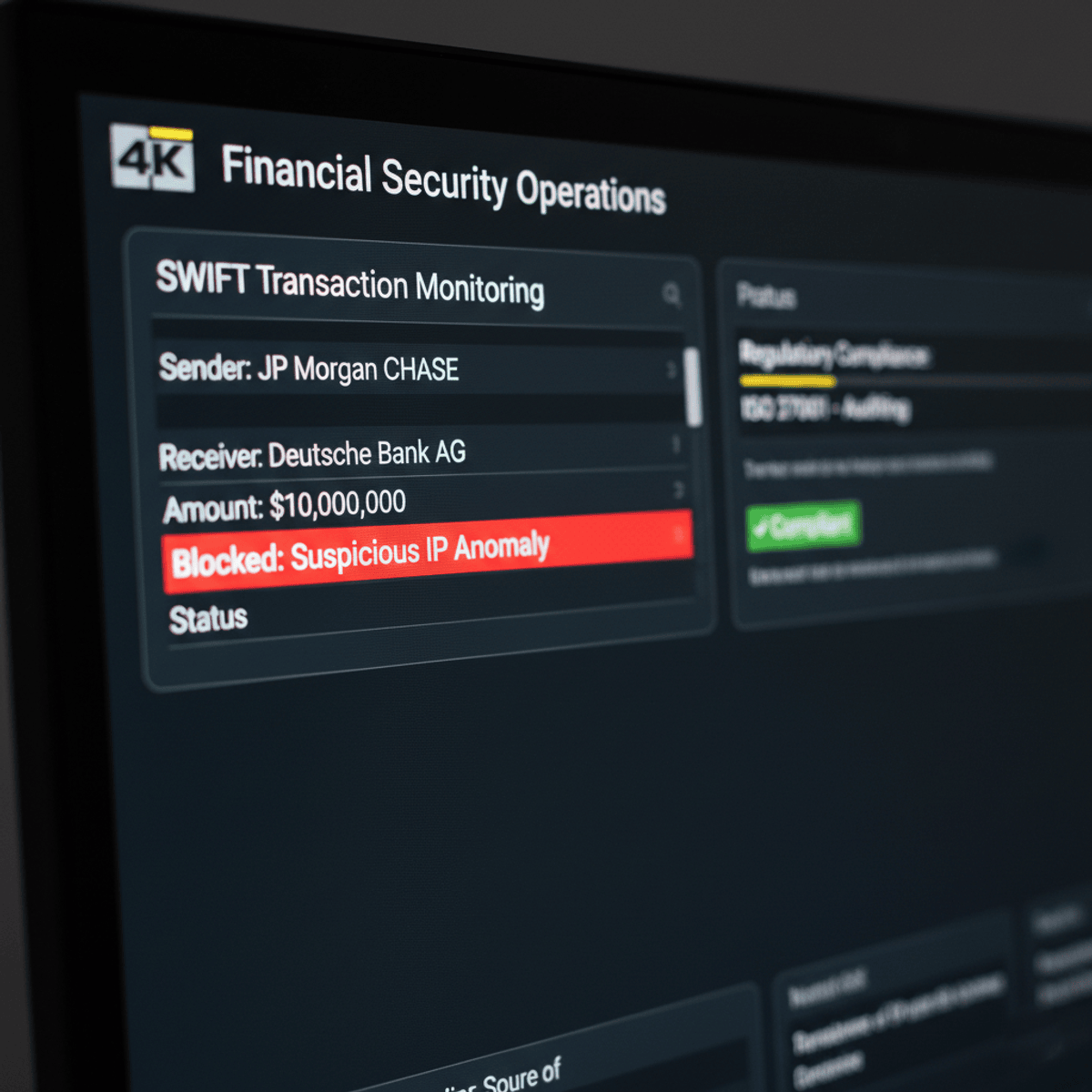
By the end of this course, learners will be able to define core cybersecurity concepts, analyze cyber risks within financial systems, evaluate regulatory and ethical requirements, and apply proactive strategies to manage emerging cyber threats using modern technologies. This course equips learners with a comprehensive understanding of cybersecurity tailored specifically to the financial sector. Participants will explore how cyber threats impact financial institutions, digital transactions, and customer trust, while gaining insights into the people, processes, and technologies that form effective security frameworks. Through structured modules, learners will examine governance models, compliance obligations, ethical responsibilities, and the influence of emerging technologies such as cloud computing, artificial intelligence, and blockchain. What makes this course unique is its finance-first approach to cybersecurity, blending technical awareness with risk management, regulatory compliance, and strategic decision-making. Rather than focusing solely on tools, the course emphasizes real-world application, continuous improvement, and threat navigation strategies relevant to modern financial environments. Upon completion, learners will be better prepared to support secure financial operations, strengthen organizational resilience, and contribute meaningfully to cybersecurity initiatives in regulated industries.
 EC-Council
In the Trenches: Security Operations Center
Cyber-attacks, breaches, and incidents continue to grow. The sophistication and complexity of these attacks continue to evolve. More than ever organizations need to plan, prepare, and defend against a potential cyber incident. Security Operation Centers (SOCs) act as an organization's front-line defense against cyber incidents. SOC analyst accomplishes this by monitoring and responding to network and host anomalies, performing an in-depth analysis of suspicious events, and when necessary, aiding in forensic investigations. This course is designed to be a primer for anyone planning on taking the EC-Council CSA course. We will discuss the structure, organization, and general daily activities of SOC analysts. We will also look at several defensive tools including SEIMs, IDS, and IPS. We will talk about event monitoring and vulnerability management. Finally, we will talk about what to expect when an incident happens.
 Coursera
Build & Evaluate Real-Time Object Detectors
Build & Evaluate Real-Time Object Detectors is an intermediate hands-on course for ML engineers who need to deploy fast, accurate object detectors under real-world constraints. When accuracy falls short of KPIs, or FPS drops below target, you need the skills to diagnose metrics, recommend improvements, and evaluate whether a real-time pipeline meets requirements. You'll learn how to compute and interpret detection metrics like mAP and APsmall, identify causes of underperformance, and propose targeted improvements. Then you'll analyze a complete real-time detection pipeline using models like YOLOv8 and trackers like DeepSORT, and evaluate it against throughput requirements such as 25 FPS at 720p. Through short videos, practical readings, analysis-based labs, and a final graded assessment, you will develop the skills to evaluate detectors, recommend optimizations, and assess whether solutions meet real-time demands.
 Northwestern University
Leadership Through Design Innovation
Today’s workplace calls for a new style of leadership to embolden and accelerate innovation. Design offers a novel way to discover market opportunities, experiment to validate concepts and mitigate risk, and deliver value to all stakeholders. This course offers hands-on experience applying human-centered design process to real-world challenges, and requires you to explore the world around you. Learn how to engage with end users, effectively frame problems, identify potential solutions, and build prototypes to test assumptions and learn what works (and doesn’t). Then dive into a range of ways large and small to bring design innovation into your organization.
 United Cities and Local Governments of Africa
Planning for Climate Change in African Cities
Climate change poses a threat to economic growth and long-term prosperity of many countries around the world. Africa is not an exception, considering the actual and potential impacts of climate change and climate variability that will threaten its vulnerable sectors and human populations. African countries are projected to experience changing rainfall patterns, rising sea levels, and higher temperatures that will affect food security, agricultural production, water availability, and public health, among others. These climate change impacts and climate variability can further produce social and political problems, such as rural-urban migration and water resource disputes. Furthermore, the low levels of development in many African countries, as well as limited institutional, infrastructural, and technical capacities to respond successfully to climate change impacts and climate variability, can exacerbate the situation. In terms of contribution to greenhouse gas (GHG) emissions, although African countries are the lightest polluters, it has also become apparent that alternative energy sources can offset the increasing energy demand and dependence on biomass. Addressing climate change offers possibilities for low-carbon development. Moreover, there are promising mechanisms that can address both climate change actions and development goals simultaneously. At the city level, strengthening resilience, or the ability to respond to and absorb the effects of a hazardous event in a timely and efficient manner and to sustain this ability in the future, and adaptation; the process of adjusting to actual or expected climate change stimuli or their effects, should be at the forefront of planning. Local governments have an important role to play through the provision of adequate infrastructure, regulation of land use, and other public services that are crucial for urban resilience. Mobilizing local governments, in collaboration with national governments, non-governmental organizations, and international organizations, among others, is also critical for an integrated multi-sectoral approach to climate change. The Course on Planning for Climate Change in African Cities provides the foundation for understanding cities’ exposure and sensitivity to climate change, and how cities can manage these impacts in the face of growing uncertainty. It does so by introducing the basic concepts of urban resilience and adaptation, by using illustrative case studies in different African cities. Furthermore, this module provides lectures on the different approaches for climate change planning, whether ad hoc, strategic or mainstreaming; introduces the different steps in the planning cycle – from initial assessment to monitoring and evaluation; and presents the different decision support and assessment tools for prioritizing climate change actions. This course broadens the discussion on planning for climate change by engaging learners to apply their knowledge and practice their decision-making skills in a simulated exercise. In line with development that minimizes the harm caused by climate change impacts, while maximizing the many human development opportunities presented by a more resilient future, we ask: what are the connections between urban risk and vulnerability? How is climate change and urban resilience conceptualized and applied in practice? Which policies and measures should be introduced to address climate change? Finally, how to choose among different measures that address climate change adaptation, urban resilience, and other development objectives? Course Objectives: At the end of this course, learners should be able to: • Recognize the effects, impacts, and drivers of climate change in cities • Understand the drivers of urban risk and vulnerability in the context of climate change • Distinguish the typologies, approaches, and tensions of climate change adaptation • Explain the different approaches and steps in climate change planning • Examine the decision support and assessment tools for climate change • Develop a climate change plan based on participants’ city contexts
 Coursera
Introduction to PicsArt for Social Media Marketing
Consumers are constantly overloaded with information and images in social media. Part of social media marketing is learning creative ways to draw attention to products and services, oftentimes on a lean budget. In this course, learners will create an edited photo project for social media using the free version of PicsArt. PicsArt is a web-based photo and video editing program. Learners can easily create and implement creative edits with online design tools to use when marketing their business. Note: This course works best for learners who are based in the North America region. We’re currently working on providing the same experience in other regions.
 O.P. Jindal Global University
Cognitive Psychology
The Cognitive Psychology course helps students develop an understanding of underlying cognitions processes that govern human behavior. This course examines the cognitive processes that allow us to perceive and attend to the world around us, store information for later retrieval, interact with others, and make decisions before performing actions. Understanding processes involving human mental functions would naturally include discussion topics such as attention, sensation and perception, memory, language, reasoning, and decision making. Students will learn to apply theories and findings to real-world situations and their own cognitive processes.
 University of Pittsburgh
Interactive, Geospatial & Narrative Data Visualization
Elevate your data storytelling skills with "Interactive, Geospatial & Narrative Data Visualization" . This comprehensive program covers the essentials of visualizing data through interactive dashboards, geospatial analysis, and narrative visualization using Python and Tableau. Learn to design and implement interactive visualizations that improve user engagement and make complex data more accessible. Explore geospatial data to create compelling maps and understand spatial relationships. Dive into narrative visualization to craft engaging data stories that convey insights effectively. Master tools like Tableau and Python libraries (Matplotlib, Seaborn, Folium) to create various types of plots and advanced visualizations including maps with markers, choropleth maps, and network graphs. Engage in practical assignments and real-world projects that challenge you to develop, analyze, and optimize data visualizations. By the end of this course, you will have the expertise to build stunning visualizations, interpret complex datasets, and tell impactful data stories.