

The Global Scholarly Directory.
Discover world-class academic programs curated for the modern intellectual. Search through 19877+ degrees and professional certificates.
 EDUCBA
Analyze and Interpret Data Using Excel
Learners will be able to activate Excel’s analytical tools, compute descriptive statistics, visualize data relationships, run regression models, and interpret statistical outputs to make informed, data-driven decisions. This course equips participants with the practical skills needed to analyze real-world datasets using Excel’s built-in functions and the Analysis Toolpak. Through a step-by-step, application-focused approach, learners gain hands-on experience generating summary measures, exploring correlations, creating scatter plots, and executing linear regression. Each module progresses from foundational skills to advanced analytical techniques, ensuring that learners build confidence as they move from basic data preparation to interpreting statistical models. What makes this course unique is its clear, practice-oriented structure that mirrors real workplace analytical tasks. Instead of abstract theory, every video, exercise, and lesson is designed to help learners apply Excel’s statistical capabilities immediately and accurately. By the end of the course, learners will not only understand the underlying concepts but will also be able to perform professional-quality data analysis, making them better prepared for roles in business, research, finance, and data-driven decision-making.
 École Polytechnique Fédérale de Lausanne
Systèmes d’Information Géographique - Partie 1
Organisé en deux parties, ce cours présente les bases théoriques et pratiques des systèmes d’information géographique. - Il propose une introduction aux systèmes d’information géographique qui ne requiert pas de connaissances préalables en informatique - Il donne la possibilité d’acquérir rapidement les notions de base qui vous permettent de créer des bases de données spatiales et de fabriquer des cartes géographiques - Il s’agit d’un cours pratique qui repose sur l’utilisation de logiciels libres, notamment QGIS En somme, si vos études ou votre profession comprennent des activités liées à la gestion de territoires, à l’analyse d’objets distribués dans l’espace géographique (aménagement du territoire, biologie, santé publique, écologie, énergie, etc.), ce cours est fait pour vous! En suivant cette première partie du cours, vous explorerez les principes de base de la numérisation du territoire et du stockage des géodonnées. Vous apprendrez notamment à : - Caractériser des objets et/ou phénomènes spatiaux (modélisation du territoire) du point de vue de leur positionnement dans l’espace (systèmes de coordonnées et projections, relations spatiales) et en fonction de leur nature intrinsèque (mode objet ou vecteur vs. mode image ou raster), - Utiliser les diverses méthodes d’acquisition de données (mesure directe, géoréférencement d’images, digitalisation, source de données existantes, etc.) - Utiliser les divers modes de stockage des géodonnées – Fichiers simples et/ou bases de données relationnelles - Utiliser des outils de modélisation des données pour décrire et implémenter une base de données - Créer des requêtes dans le langage d’interrogation et de manipulation des données La seconde partie du cours portera sur les méthodes d'analyse spatiale et les techniques de représentation des géo-données. Vous apprendrez notamment à: - Analyser les propriétés spatiales de variables discrètes, par exemple en quantifiant l’autocorrélation spatiale - Travailler avec les variables continues (échantillonnage, construction de courbes d’isovaleurs, méthodes d’interpolation) - Utiliser les modèles numériques d'altitude et leurs dérivées (pente, orientation, etc.) - Utiliser les techniques de superposition de géodonnées et d'interaction entre elles - Produire des documents cartographiques selon les règles de la sémiologie graphique - Explorer d’autres formes de représentation spatiale (cartographie interactive sur internet, représentations 3D, etc.) La page https://www.facebook.com/moocsig fournit un forum interactif pour les participants à ce cours.
 LearnKartS
Core AWS Services
Master essential AWS services and gain practical, hands-on skills to design, deploy, and manage cloud solutions confidently. Start with EC2 basics, then move on to AMIs, public vs private IPs, elastic IPs, AWS storage ( discussing S3 & in-depth looking at S3 encryption, CloudFront-CDN & Glacier ), understand scalable storage solutions for your data, and explore Content delivery systems/ Data Protection. Laying the Groundwork: Establish a solid cloud network by mastering Route53, DNS, health checks, DNS resolution, and VPC/Subnet/ACLs at an architectural level to design secure and scalable cloud networks. Finally, you’ll delve into AWS databases (RDS, Aurora with read replicas, Redshift, ElastiCache) and AWS DMS to handle data at scale. By the end of it, you will feel like a high-performance cloud specialist and nothing's cooler than that! Ready to take on an AWS project and become a sought-after IT professional? Enroll now to begin your cloud career! Disclaimer: AWS and Amazon Web Services are trademarks of Amazon.com, Inc. or its affiliates. This course is not affiliated with or endorsed by AWS.
 Google Cloud
Segurança de redes VPC com Cloud Next Generation Firewall
Este curso de treinamento, o terceiro da série Configurar o firewall de próxima geração, mostra como proteger sua infraestrutura de VPC usando o Cloud Next Generation Firewall (NGFW). Saiba mais como implementar políticas hierárquicas e de rede, definir o escopo das regras de firewall e configurar a detecção e prevenção de intrusões para combater ameaças.
 University of California, Irvine
Emergent Phenomena in Science and Everyday Life
Before the advent of quantum mechanics in the early 20th century, most scientists believed that it should be possible to predict the behavior of any object in the universe simply by understanding the behavior of its constituent parts. For instance, if one could write down the equations of motion for every atom in a system, it should be possible to solve those equations (with the aid of a sufficiently large computing device) and make accurate predictions about that system’s future. However, there are some systems that defy this notion. Consider a living cell, which consists mostly of carbon, hydrogen, and oxygen along with other trace elements. We can study these components individually without ever imagining how combining them in just the right way can lead to something as complex and wonderful as a living organism! Thus, we can consider life to be an emergent property of what is essentially an accumulation of constituent parts that are somehow organized in a very precise way. This course lets you explore the concept of emergence using examples from materials science, mathematics, biology, physics, and neuroscience to illustrate how ordinary components when brought together can collectively yield unexpected, surprising behaviors. Note: The fractal image (Sierpinkski Triangle) depicted on the course home page was generated by a software application called XaoS 3.4, which is distributed by the Free Software Foundation under a GNU General Public License. Upon completing this course, you will be able to: 1. Explain the difference in assumptions between an emergent versus reductive approach to science. 2. Explain why the reductivist approach is understood by many to be inadequate as a means of describing and predicting complex systems. 3. Describe how the length scale used to examine a phenomenon can contribute to how you analyze and understand it. 4. Explain why the search for general principles that explain emergent phenomena make them an active locus of scientific investigation. 5. Discuss examples of emergent phenomena and explain why they are classified as emergent.
 Coursera
AWS Cloudfront: Serve content from multiple S3 buckets
In this 2-hour long project-based course, you will learn how to serve content from multiple S3 buckets using AWS CloudFront from the AWS console Amazon CloudFront is a fast content delivery network (CDN) service that securely delivers data, videos, applications, and APIs to customers globally with low latency, high transfer speeds, all within a developer-friendly environment. Whereas Amazon Simple Storage Service (Amazon S3) is an object storage service that offers industry-leading scalability, data availability, security, and performance. By completing the steps in this guided project, you will successfully create multiple AWS S3 buckets & serve or distribute its content using AWS Cloudfront via AWS management console within the AWS Free Tier. You will also get hands-on setting up error pages, global distribution restrictions, etc.
 University of Cape Town
Innovative Finance: Hacking finance to change the world
To address global poverty - do we really not have enough resources or do we not have the right tools to allocate our resources? The tools of finance, when applied correctly, can be an enabler of social and environmental outcomes. This course is designed to give you the ability to build innovative financing strategies that work towards outcomes such as financial inclusion, access to energy, and access to education. The innovative finance process has five key components. It starts with identifying the outcomes you are looking to achieve and next moves on to due diligencing your issue area using techniques like design thinking to make sure you are designing with the end user. Next, you must map all of the resources available for your outcome and then discover opportunities to augment these through business model innovation, multi-stakeholder partnerships, and innovative financial structures. Finally, the last step is to put all of these pieces together to design an innovating financing strategy. Each week dives into a component of the process using examples and real case studies from social entrepreneurs, non-profits, development funders, impact investors, governments, foundations, and more. Over five weeks you’ll learn about new types of revenue creation, financing approaches, business models, and partnerships. By the end of the course, you’ll have the ability to hack finance for social change.
 Northeastern University
Designing Engaging Dashboards for Healthcare Analytics
Introduces processes and design principles for creating meaningful displays of information that support effective business decision-making. Studies how to collect and process data; create visualizations (both static and interactive); and use them to provide insight into a problem, situation, or opportunity. Introduces methods to critique visualizations along with ways to answer the elusive question: “What makes a visualization effective?” Discusses the challenges of making data understandable across a wide range of audiences. Introduces the fundamentals of communication required for effective data storytelling. Other topics may include ethical uses of information displays, storytelling, infographics, immersive visualizations, and good use of data dashboards. Offers students an opportunity to use one or more software tools.
 University of Illinois Urbana-Champaign
Ubiquitous Learning and Instructional Technologies
This course will analyze currently available technologies for learning. Areas addressed include: learning management systems, intelligent tutors, computer adaptive testing, gamification, simulations, learning in and through social media and peer interaction, universal design for learning, differentiated instruction systems, big data and learning analytics, attention monitoring, and affect-aware systems. Participants will explore the processes for selection and implementation of suitable technologies, the design of electronic learning resources, design and application of digital media in teaching and learning, familiarization with web usability and accessibility, and critical analysis of the benefits of technologies in education. -------------------------------- Recommended Background -------------------------------- This course is designed for people interested in the future of education and the "learning society," including people who may wish to join education as a profession, practicing teachers interested in exploring future directions for a vocation that is currently undergoing transformation, and community and workplace leaders who regard their mission to be in part "educative." -------------------------------- Related Resources -------------------------------- Online resources are available here: https://newlearningonline.com -------------------------------- Join our Online Communities! -------------------------------- CGScholar (Create an account and join the New Learning community) https://cgscholar.com/community/community_profiles/new-learning/community_updates Facebook https://www.facebook.com/newlearningonline Twitter https://twitter.com/neolearning -------------------------------- Take this Course for Credit at the University of Illinois -------------------------------- This course has the same content and anticipates the same level of contribution by students in the Assessment for Learning course offered to graduate certificate, masters, and doctoral level students in the Learning Design and Leadership Program in the College of Education at the University of Illinois. Of course, in the nature of MOOCs many people will just want to view the videos and casually join some of the discussions. Some people say that these limited kinds of participation offer evidence that MOOCs suffer from low retention rates. Far from it – we say that any level of engagement is good engagement. On the other hand, if you would like to take this course for credit at the University of Illinois, you will find more information about our program here: https://ldlprogram.web.illinois.edu/overview/ And you can apply here: https://education.illinois.edu/epol/programs-degrees/ldl -------------------------------- The Learning Design and Leadership Series of MOOCs -------------------------------- This course is one of a series of eight MOOCs created by Bill Cope and Mary Kalantzis for the Learning Design and Leadership program at the University of Illinois. If you find this MOOC helpful, please join us in others! e-Learning Ecologies: Innovative Approaches to Teaching and Learning for the Digital Age https://www.coursera.org/learn/elearning New Learning: Principles and Patterns of Pedagogy https://www.coursera.org/learn/newlearning Assessment for Learning https://www.coursera.org/learn/assessmentforlearning Learning, Knowledge, and Human Development https://www.coursera.org/learn/learning-knowledge-human-development Ubiquitous Learning and Instructional Technologies https://www.coursera.org/learn/ubiquitouslearning Negotiating Learner Differences: Towards Productive Diversity in Learning https://www.coursera.org/learn/learnerdifferences Literacy Teaching and Learning: Aims, Approaches and Pedagogies https://www.coursera.org/learn/literacy-teaching-learning Multimodal Literacies: Communication and Learning in the Era of Digital Media https://www.coursera.org/learn/multimodal-literacies
 University of Florida
Healing with the Arts
Through art projects—including visual arts, dance, writing, and music—along with spiritual practices and guided imagery, Healing With the Arts gives you the tools to heal what you need to heal in your life: physical, mental, emotional, and spiritual.
 LearnKartS
Information Security Foundations
Master Information Security Essentials: Learn Core Cybersecurity Skills. Build a rock-solid foundation in information security—one of today’s most essential and sought-after skills. This Information Security Foundations course offers you a practical overview of the essential concepts, tools, and models that are necessary to secure a modern digital system. Begin with the foundational security principles that drive every defensive plan, such as the CIA Triad: confidentiality, integrity, and availability. Discover cryptography and other key security techniques, learning how encryption and authentication secure data between systems. Explore beyond enterprise security models—from Zero Trust to certificate management to blockchain-based trust frameworks—to learn how organizations secure people, applications, and digital identities at scale. You will analyze the real-world threat landscape and build up advanced protection mechanisms that can be put to use when building resilience against potential attacks. Designed in bite-sized, easily digestible learning units with real examples, this Information Security Fundamentals course teaches learners the core skills required for advanced cybersecurity practices and certifications. Start learning the essential skills to pass the CompTIA Security+ exam and begin your cybersecurity career.
 SAS
SAS
Performing Network, Path, and Text Analyses in SAS Visual Analytics
In this course, you learn about the data structure needed for network, path, and text analytics and how to create network analysis, path analysis, and text analytics in SAS Visual Analytics.
 Codio
Codio
Select Topics in Python: Django
Code and run Django websites without installing anything! This course is designed for learners who have some experience with Python but a novice to Django. The modules in this course cover setting up a Django project; understanding the relationship between views, templates, and URL patterns; introduces models and the database; styling with Bootstrap; and deploying Django. To allow for a truly hands-on, self-paced learning experience, this course is video-free. Assignments contain short explanations with images and runnable code examples with suggested edits to explore code examples further, building a deeper understanding by doing. You’ll benefit from instant feedback from a variety of assessment items along the way, gently progressing from quick understanding checks (multiple choice, fill in the blank, and un-scrambling code blocks) to slowly building features, resulting in large coding projects at the end of the course. Course Learning Objectives: View, templates, and URL patterns Models and the database Styling with Bootstrap Deploying Django
 Politecnico di Milano
Sustainable Urban Water Systems
The MOOC “Sustainable Urban Water Systems” aims to provide knowledge about modern and sustainable solutions for urban water management in water-sensitive cities. The focus is on stormwater control and water supply strategies for the mitigation of effects on the water cycles due to human settlements and climate change. In particular, the integration of Nature-based Solutions (NbS) into urban drainage systems, the use of alternative water resources, and the reduction of losses and waste, make cities more resilient and add benefits to both the environment and community.
 Logical Operations
Microsoft Office PowerPoint 2021–2024: Part 1
How do you grab and maintain an audience's focus when you're asked to present important information? By being clear, organized, and engaging. And, that is exactly what Microsoft® Office PowerPoint® 2021 can help you do. Today's audiences are tech savvy, accustomed to high-impact multimedia content, and stretched for time. By learning how to use the vast array of features and functionality contained within PowerPoint 2021, you will gain the ability to organize your content, enhance it with high-impact visuals, and deliver it with a punch. In this course, you will use PowerPoint to begin creating engaging, dynamic multimedia presentations. This material will benefit users of any current Office version. The course environment setup is based on Office 2021. This course covers Microsoft Office Specialist Program exam objectives to help you prepare for the PowerPoint Associate (Office 365 and Office 2019): Exam MO-300. This course is designed for students who wish to gain a foundational understanding of PowerPoint 2021 that is necessary to create and develop engaging multimedia presentations. In this course, you will: identify the basic features and functions of PowerPoint, develop a PowerPoint presentation, perform text formatting, add and arrange graphical elements, modify graphical elements, and prepare to deliver your presentation. This course requires that you have Microsoft PowerPoint installed on a Windows PC. The course setup instructions provided in the first module of the course go into more detail about the hardware and software requirements.
 The Museum of Modern Art
Reimagining Blackness and Architecture
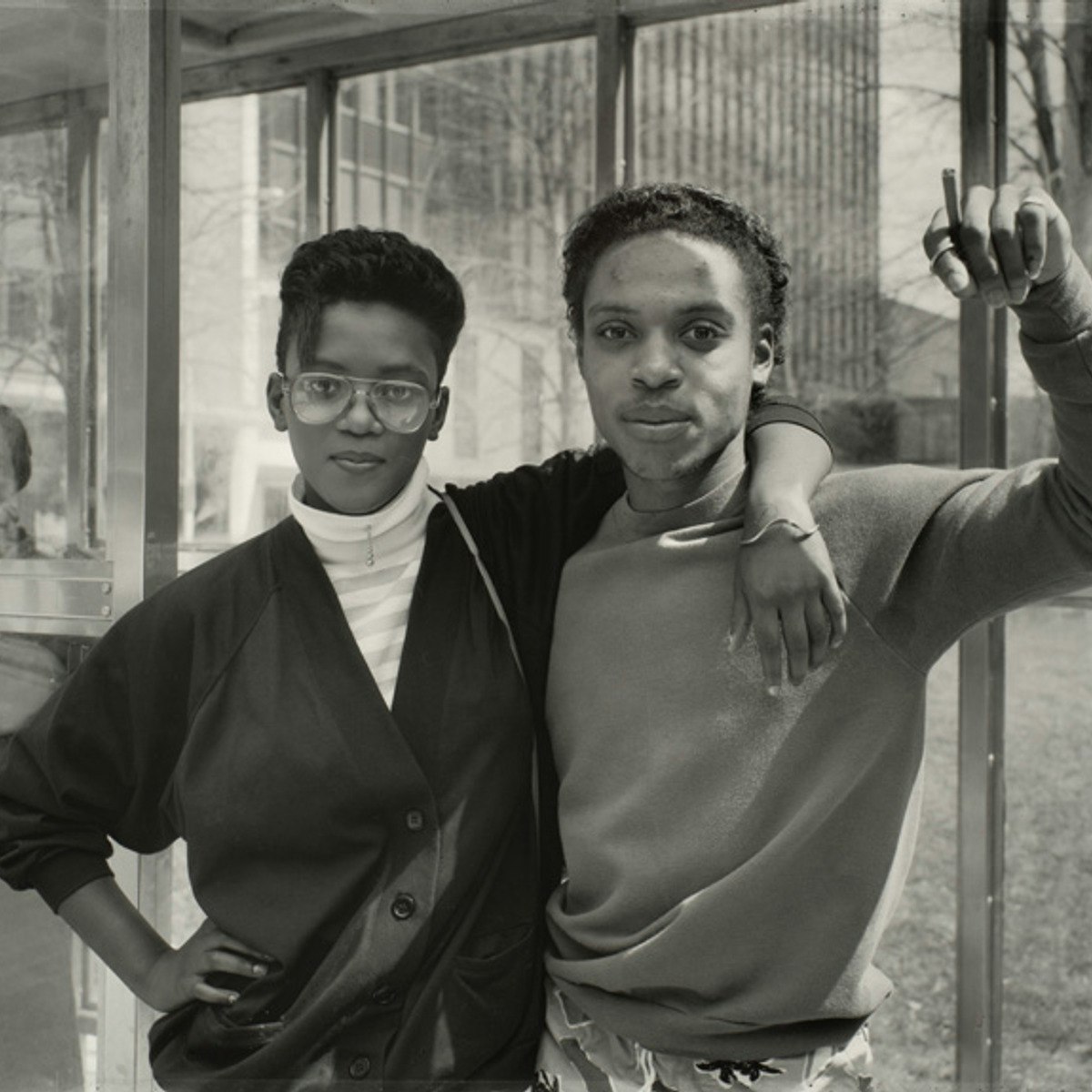
Architecture structures our daily lives. It shapes our homes, streets, neighborhoods, cities, and more. But who gets to create and occupy these spaces? In the United States, a long history of anti-Black racism has erased the stories of Black architects and communities and created spatial inequalities that are built into the physical environment. Reimagining Blackness and Architecture explores the relationship between architecture and Blackness as an identity and a lived experience. You’ll hear directly from Black artists, architects, scholars, and writers who reimagine their surroundings and highlight the ways Black makers have changed the world. You’ll see how architects are working to transform American cities into more equitable places, using everything from textiles, hip-hop, and fiction to spices and spaceships. And you’ll hear from an international range of artists who create spaces for their communities and make stories of Black life visible in their work. The course is structured around five themes: Imagination, Care, Knowledge, Refusal, and Liberation. Each week, through original films, audio interviews, and readings, you’ll expand your understanding of architecture as a practice that reaches across time, place, and form. Creative activities and prompts for reflection will encourage you to consider your own role in shaping your communities. Course image credit: Dawoud Bey. A Couple at a Main Street Bus Stop, Rochester, NY. 1989. Gelatin silver print, 11 7/16 × 22 1/16" (29.1 × 56 cm). The Museum of Modern Art, New York. Acquired through the generosity of Ruth Nordenbrook. © 2021 Dawoud Bey