

The Global Scholarly Directory.
Discover world-class academic programs curated for the modern intellectual. Search through 19877+ degrees and professional certificates.
 Johns Hopkins University
Black Lives Matter
The #BlackLivesMatter movement is the most significant political movement in African American life in the United States in the last fifty years. BLM leaders denounced anti-black racism, white supremacy, and police brutality and reshaped how we think about gender, sexuality, social justice, economic injustice, and crime. The movement is grounded in a long history of African American activism. From slave revolts to the Black Panther Party, from the founding of the Congressional Black Caucus, to the eruption of the #BLM Movements, this course is an interdisciplinary and historical exploration of the BlackLivesMatter movement.
 École Polytechnique
Outsmarting intermittency
Solar and wind offer clean and renewable ways to produce large amounts of electricity. They have boomed over the last few years, evolving from an eco-daydream to a major market and showing unprecedented growth rates. Yet, installing solar panels and wind turbines is by no means the end of the story. The electrical grid, which connects production means to the end-users’ sockets, is not a simple electron pipe. It is the beating heart of our electricity system and ensures its stability. Solar and wind raise specific challenges for the grid, and these challenges will have to be tackled if we want to deploy larger amounts of renewable sources. The aim of this lecture is to introduce these challenges and some approaches considered to overcome them. We are convinced that everyone involved in this journey, from investors, to entrepreneur, policy makers or simple customer should be aware of these issues if we want to make sure they don’t become a bottleneck limiting further development of renewable sources.
 SkillUp
Java Development with Databases
Databases are the backbone of modern applications, powering everything from large scale enterprise systems to web applications. This course gives you the comprehensive grounding you need to work with databases using Java programming. Whether you have a little or no knowledge of databases, if you’re keen to understand the different types of databases and how to work with these databases using Java, this course is for you! During the course, you’ll explore the fundamentals of databases and Java Database Connectivity (JDBC). You’ll get hands-on developing database applications using Spring Boot. Plus, you’ll work with Hibernate and explore other databases such as NoSQL, SQL Graph and time series databases. Throughout the course, you’ll complete hands-on labs and gain valuable practical experience applying your skills. Plus, you’ll complete a final project where you apply your knowledge to a real-world scenario; great for chatting about in interviews! If you’re looking to build the job-ready skills you need to develop Java applications with databases, enroll today.
 Universidad de los Andes
Docencia con pedagogía activa mediada con tecnología digital
Este es el curso tercero y final del Programa Especializado sobre Diseño de instrucción por enfoque de Grandes Ideas. Es un curso avanzado que construye sobre lo aprendido y desarrollado como aplicación en contexto propio en los dos cursos previos de este programa. Es una asignatura totalmente en la red, requiere cerca de 30 horas de trabajo autónomo, dosificables en seis semanas, 5 a 6 horas por semana. Incluye tres módulos en los que se aplica diseño sistemático "de atrás hacia adelante". Primero se determina "qué aprender", en términos de interrogantes esenciales para cerrar brechas de aprendizaje relacionadas con las GI del curso; sobre esta base, se establece "cómo saber que se aprendió lo deseado", mediante "evaluación auténtica" y "evaluación convencional" según las GI exijan o no desempeños que conllevan niveles altos de pensamiento. El "cómo y con qué aprender" se materializa con estrategias de aprendizaje centradas en la participación del estudiante y de los grupos, mediadas con recursos educativos digitales que expanden los ambientes personales y grupales de aprendizaje. A lo largo del curso cada quien trabaja en diseñar una unidad de enseñanza de su propio curso, con guías para autocontrolar la calidad de lo hecho. Si el estudiante desea certificación, debe (1) haber pagado inscripción en Coursera, (2) someter a evaluación por pares el diseño que haya hecho, superando 80% de umbral de logro frente a rúbricas definidas, así como (3) dar información de retorno a no menos de dos compañeros de estudio, asignados al azar por el sistema.
 Fundação Instituto de Administração
Gestão de Stakeholders, Ética e Sustentabilidade Empresarial
Nossas boas-vindas ao Curso Gestão de Stakeholders, Ética e Sustentabilidade Ambiental. Neste curso, você aprenderá sobre o desenvolvimento de conhecimentos para uma gestão ética dos stakeholders. Ao longo do curso serão desenvolvidos conceitos como: legitimidade, materialidade e valor para stakeholder. Serão apresentados modelos de mapeamento, análise, saliência e engajamento de stakeholders. Completam o conteúdo do curso conceitos de responsabilidade, ética e sustentabilidade empresarial. Ao final deste curso, você será capaz de: - Compreender os principais conceitos de ética e sustentabilidade empresarial e de responsabilidade social corporativa; - Aplicar as principais ferramentas de gestão de stakeholders. Este curso é composto por quatro módulos, disponibilizados em semanas de aprendizagem. Cada módulo é composto por vídeos, leituras e testes de verificação de aprendizagem. Ao final de cada módulo, temos uma avaliação de verificação dos conhecimentos. Estamos muito felizes com sua presença neste curso e esperamos que você tire o máximo de proveito dos conceitos aqui apresentados. Bons estudos!
 Google Cloud
ML Pipelines on Google Cloud - Português
Neste curso, você vai aprender com engenheiros e instrutores de ML que trabalham com o desenvolvimento de última geração dos pipelines de ML aqui no Google Cloud. Nos primeiros módulos, vamos abordar o TensorFlow Extended (ou TFX), que é uma plataforma de machine learning do Google baseada no TensorFlow criada para gerenciar pipelines e metadados de ML. Você vai conhecer os componentes e a orquestração de um pipeline com o TFX. Também vamos abordar como é possível automatizar os pipelines usando a integração e a implantação contínuas e como gerenciar os metadados de ML. Depois disso, vamos mudar o foco para discutir como podemos automatizar e reutilizar os pipelines de ML em vários frameworks de machine learning, como tensorflow, pytorch, scikit-learn e xgboost. Você também vai aprender a usar outra ferramenta no Google Cloud, o Cloud Composer, para orquestrar seus pipelines de treinamento contínuo. Por fim, vamos mostrar como usar o MLflow para gerenciar o ciclo de vida completo do machine learning.
 University of Pennsylvania
Influence
What does it mean to be influential? How does one persuade others to pursue a unified goal? How does one leverage power? In this course, you’ll learn how to develop influence and to become more effective in achieving your organizational goals. Professor Cade Massey of the Wharton School has designed this course to help you understand the framework of power and influence and the dynamics of effective networks, and shows you how to develop your skills of persuasion and leverage. By the end of this course, you’ll know your own strengths and how to use them to get what you need, how to gain power and influence, and how to leverage relationships and alliances to achieve your goals in both business and in life.
 Yonsei University
Deep Learning for Business
Your smartphone, smartwatch, and automobile (if it is a newer model) have AI (Artificial Intelligence) inside serving you every day. In the near future, more advanced “self-learning” capable DL (Deep Learning) and ML (Machine Learning) technology will be used in almost every aspect of your business and industry. So now is the right time to learn what DL and ML is and how to use it in advantage of your company. This course has three parts, where the first part focuses on DL and ML technology based future business strategy including details on new state-of-the-art products/services and open source DL software, which are the future enablers. The second part focuses on the core technologies of DL and ML systems, which include NN (Neural Network), CNN (Convolutional NN), and RNN (Recurrent NN) systems. The third part focuses on four TensorFlow Playground projects, where experience on designing DL NNs can be gained using an easy and fun yet very powerful application called the TensorFlow Playground. This course was designed to help you build business strategies and enable you to conduct technical planning on new DL and ML services and products.
 Georgia Institute of Technology
Advanced Engineering Systems in Motion: Dynamics of Three Dimensional (3D) Motion
This course is an advanced study of bodies in motion as applied to engineering systems and structures. We will study the dynamics of rigid bodies in 3D motion. This will consist of both the kinematics and kinetics of motion. Kinematics deals with the geometrical aspects of motion describing position, velocity, and acceleration, all as a function of time. Kinetics is the study of forces acting on these bodies and how it affects their motion. --------------------------- Recommended Background: To be successful in the course you will need to have mastered basic engineering mechanics concepts and to have successfully completed my course entitled Engineering Systems in Motion: Dynamics of Particles and Bodies in 2D Motion.” We will apply many of the engineering fundamentals learned in those classes and you will need those skills before attempting this course. --------------------------- Suggested Readings: While no specific textbook is required, this course is designed to be compatible with any standard engineering dynamics textbook. You will find a book like this useful as a reference and for completing additional practice problems to enhance your learning of the material. --------------------------- The copyright of all content and materials in this course are owned by either the Georgia Tech Research Corporation or Dr. Wayne Whiteman. By participating in the course or using the content or materials, whether in whole or in part, you agree that you may download and use any content and/or material in this course for your own personal, non-commercial use only in a manner consistent with a student of any academic course. Any other use of the content and materials, including use by other academic universities or entities, is prohibited without express written permission of the Georgia Tech Research Corporation. Interested parties may contact Dr. Wayne Whiteman directly for information regarding the procedure to obtain a non-exclusive license.
 Coursera
Stream & Optimize Real-Time Data Flows
Master the design, implementation, and optimization of production-ready streaming data pipelines using Apache Kafka and Flink. This intermediate-level course teaches you to evaluate log configurations against governance requirements (PCI-DSS, GDPR, SOC2) and cost constraints, design stream processing topologies that join and aggregate data in real time with exactly-once semantics, and optimize pipelines through partition tuning, compression, and cost modeling. You'll work through hands-on labs that mirror real-world scenarios at DoorDash, Netflix, and Robinhood: comparing retention policies against compliance rules, building a Kafka Streams application that joins orders and payments to calculate 5-minute revenue totals, and diagnosing performance bottlenecks to meet SLAs within budget. Intermediate data engineers and platform engineers who build or operate real-time streaming systems and want to master Kafka/Flink governance, joins, windowing, and cost-optimized scaling. Understanding of distributed systems, basic Apache Kafka knowledge, familiarity with SQL and streaming concepts, Python or Java programming experience. By the end, you'll design and optimize a multi-tenant streaming platform with governance controls—skills directly applicable to streaming data engineer, real-time platform engineer, and data infrastructure roles.
 EDUCBA
Analyze and Apply Generative AI in Research & Development
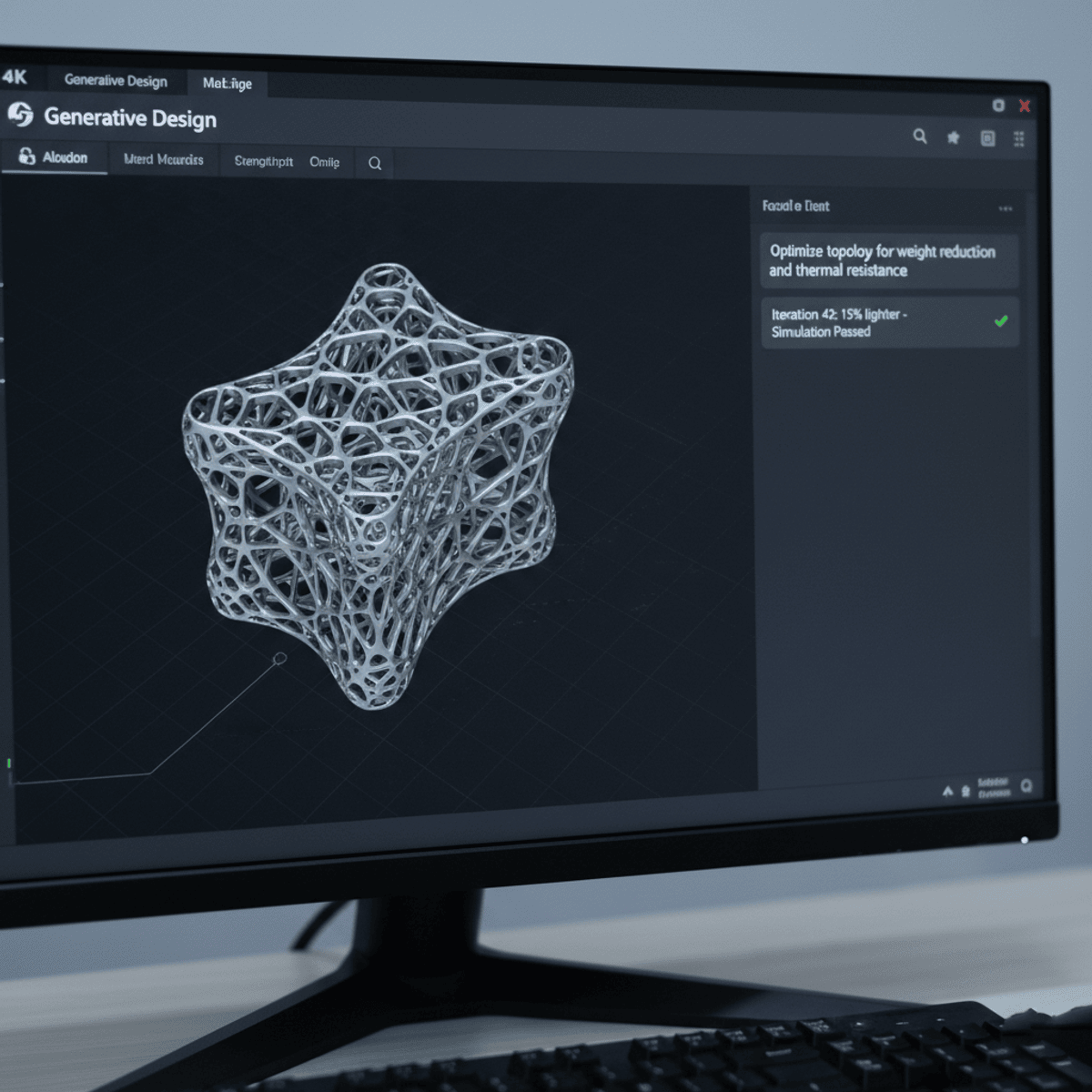
By the end of this course, learners will be able to explain core Generative AI concepts, analyze data-driven R&D workflows, apply AI tools for prototyping and innovation, and evaluate the role of emerging technologies and collaborative ecosystems in accelerating research and development. This course provides a comprehensive, practical understanding of how Generative AI is transforming modern R&D across industries. Learners will explore how AI augments human intelligence, accelerates experimentation, and enables faster, more informed decision-making. Through real-world applications such as data-driven research, rapid prototyping, quantum computing integration, and AI-driven innovation hubs, the course bridges foundational knowledge with forward-looking practices. What makes this course unique is its end-to-end R&D perspective—moving beyond theory to show how Generative AI supports the entire innovation lifecycle, from idea generation to collaborative execution. Designed for researchers, product leaders, engineers, and innovation managers, the course emphasizes strategic thinking, scalability, and future readiness. By completing this course, learners gain the skills and confidence to leverage Generative AI as an enabling technology, drive accelerated innovation, and contribute effectively to next-generation research and development initiatives.
 Coursera
How to find audience interests with Meta Business Suite
Facebook has a new name, and with that new name also, a new platform for their businesses. Now, better known today as Meta has a new view of everything in the Business Suite, and we want to show you how the new tools work. These will show you how to find Facebook Audience Insight. This project will show the tools you need to know this game of Meta Business Suite. That will help you find the audience following you, the one you want to impact, and how this affects or provides better options for your business. You will know all the statistics, ages, countries, or cities where your followers or buyers are registered. So in this project, you will see all the options available to create content and ads aimed at your audience, which points to fantastic opportunities for your business. You will be able to see how to create an ad aimed at the audience you want and validate how the campaigns you have created offer feedback. This project is for you if you want to learn about everything Meta Business Suite offers in your audience area. We are going to practice and put hands-on work on what we learn. Be prepared to learn a lot and practice for your next project.
 Google Cloud
Gemini in Google Sheets - Deutsch
Gemini für Google Workspace ermöglicht Kunden den Zugriff auf generative KI-Funktionen in Google Workspace. Dieser Mini-Kurs vermittelt Ihnen die wichtigsten Gemini-Funktionen. Sie erfahren, wie Sie diese Funktionen in Google Sheets einsetzen können, um produktiver und effizienter zu arbeiten.
 DeepLearning.AI
Advanced Deployment Scenarios with TensorFlow
Bringing a machine learning model into the real world involves a lot more than just modeling. This Specialization will teach you how to navigate various deployment scenarios and use data more effectively to train your model. In this final course, you’ll explore four different scenarios you’ll encounter when deploying models. You’ll be introduced to TensorFlow Serving, a technology that lets you do inference over the web. You’ll move on to TensorFlow Hub, a repository of models that you can use for transfer learning. Then you’ll use TensorBoard to evaluate and understand how your models work, as well as share your model metadata with others. Finally, you’ll explore federated learning and how you can retrain deployed models with user data while maintaining data privacy. This Specialization builds upon our TensorFlow in Practice Specialization. If you are new to TensorFlow, we recommend that you take the TensorFlow in Practice Specialization first. To develop a deeper, foundational understanding of how neural networks work, we recommend that you take the Deep Learning Specialization.
 AI CERTs
Enterprise Blockchain & Auditing
Step into the advanced world of enterprise blockchain with this final track in the From Blocks to Build: Blockchain Dev Essentials specialization. Building on foundational and DApp development skills from Tracks 1 and 2, you’ll explore private blockchain architectures, chaincode development, and auditing techniques critical for secure and scalable enterprise solutions. You’ll gain hands-on experience with Hyperledger Fabric, learning to design, deploy, and extend chaincode while integrating REST APIs and front-end components. Golang programming fundamentals are covered to empower you to develop robust chaincode logic, handle errors, and implement logging and panic management. Security and compliance take center stage as you audit smart contracts, use tools like Firefly and Fabconnect, and ensure your blockchain solutions meet industry standards. Mini-projects and exercises help you apply these concepts to real-world scenarios, preparing you for enterprise deployment challenges. Completion of this track, along with Tracks 1 and 2.
 Google Cloud
Innovating with Google Cloud Artificial Intelligence
Any business professional or team in an organization interested in learning about artificial intelligence, machine learning, and Google Cloud technology.