

The Global Scholarly Directory.
Discover world-class academic programs curated for the modern intellectual. Search through 19877+ degrees and professional certificates.
 Universidad de Palermo
Business Intelligence & Analytics
Esta asignatura será una inversión invaluable para su carrera profesional, proporcionando habilidades y conocimientos prácticos que podrán aplicar directamente en sus roles actuales y futuros donde se podrán sumergir en el fascinante mundo de la inteligencia de negocios y el análisis de datos, adquiriendo habilidades críticas para transformar datos en decisiones estratégicas que impulsen el éxito organizacional. Se comenzará abordando el Business Intelligence, donde se definirán sus principios fundamentales y se explorarán herramientas clave de Business Analytics. Aprenderán a establecer y utilizar OKRs (Objetivos y Resultados Clave), KPIs (Indicadores Clave de Rendimiento) y métricas para medir y mejorar el rendimiento empresarial, comprendiendo cómo el análisis de datos puede influir en la toma de decisiones. Exploraremos la jerarquía DIKW. los modelos de datos dimensionales y, el esquema estrella, para mejorar la precisión del análisis. El curso también abarcará los componentes esenciales de una arquitectura de Business Analytics, explorando soluciones de cloud computing como IaaS, PaaS y SaaS, y analizando elementos clave de cualquier solución de datos. Aprenderán sobre sistemas de planificación de recursos empresariales (ERP) y sistemas operacionales, y cómo estos se integran en la gestión de datos. Se profundizará en los procesos de Extracción, Transformación y Carga de datos (ETL/ELT) y en diferentes tipos de repositorios de datos, como data warehouses, data lakes, lakehouses y data marts. También se enseñarán técnicas avanzadas de análisis e interpretación de datos, junto con métodos para optimizar y automatizar procesos de BI. Abordaremos la importancia del gobierno de datos, aprenderán enfoques básicos para la gestión de datos centrados en transparencia, responsabilidad, estandarización y gestión del cambio. Se discutirán aspectos críticos como la privacidad, con un enfoque en leyes como el GDPR, y se abordarán temas de disponibilidad, usabilidad, consistencia, seguridad, integridad y calidad de los datos, asegurando la integridad y confianza en los sistemas de BI. La visualización y el storytelling con datos serán temas clave, donde aprenderán a seleccionar gráficos adecuados, elegir herramientas ideales según el tipo de usuario, y aplicar las mejores prácticas de visualización. Se incluirá una introducción a herramientas como Looker Studio y técnicas de storyboarding para comunicar datos de manera efectiva, entendiendo la importancia del contexto, la empatía con la audiencia y cómo generar impacto y acción con sus presentaciones. En resumen, el curso abordará la creación de una ventaja competitiva sostenible mediante el desarrollo de competencias, personas y procesos en Business Intelligence y Analytics, porque finalizando el curso discutiremos las habilidades necesarias para construir equipos de alto rendimiento y estrategias para la gestión del talento, preparando a los estudiantes no solo para manejar datos de manera efectiva, sino también para reconocer el camino para liderar iniciativas de BI que impulsen el éxito a largo plazo. Objetivos del curso: • Dimensionar el valor del Business Intelligence y la analítica para la generación y mejora de negocios, por medio de las herramientas a desarrollarse en el curso. • Adquirir los conocimientos técnicos relacionados con el análisis de datos y la toma de decisiones basadas en ellos, para el éxito de los negocios.
 L&T EduTech
Fundamentals of Digital Design for VLSI Chip Design
This comprehensive learning module delves into Boolean algebra and its applications in digital circuit design, covering fundamental concepts like Boolean variables, logic gates, and their relationship with digital logic circuits. Participants explore Boolean expressions, simplification techniques, and consensus theorems, including the advanced Quine McCluskey method. The module also addresses combinational circuits, detailing the design and functionality of adders, subtractors, parity circuits, and multipliers. Encoding complexities are navigated with insights into encoders, decoders, multiplexers, and demultiplexers. Binary shifting operations, emphasizing logical and arithmetic shifting with multiplexers for efficient design, are covered. Moving forward, the module provides an in-depth exploration of sequential circuits, including latch and flip-flop circuits like SR latch, JK flip-flop, and more. Hazards in digital circuits, along with registers, bidirectional shift registers, and various counters, are thoroughly explained. The exploration concludes with Mealy and Moore state sequential circuits. Additionally, participants gain a comprehensive understanding of memory systems, programmable logic devices, and VLSI physical design considerations. The module covers SRAM and DRAM, tri-state digital buffers, Read-Only Memory (ROM), and Programmable Logic Devices (PLD) such as PROM, PLA, and PAL. Architecture and implementation of Complex Programmable Logic Devices (CPLD) and Field-Programmable Gate Arrays (FPGA) are discussed, along with the VLSI design cycle and design styles for CPLD, SPLD, and FPGA. By the end of this course, you will be able to: Understand the distinctions between analog and digital signals and the transformative benefits of digitization. Comprehend various number systems, Boolean algebra, and its application to logic gates. Master Boolean expression manipulation, canonical forms, and simplification techniques. Proficiently handle SOP and POS expressions, recognizing relationships between minterms and maxterms. Recognize the universality of NAND and NOR gates, implementing functions using De Morgan's Law. Master Karnaugh map techniques, including advanced methods and handling don't care conditions. Gain a comprehensive understanding of combinational circuits, covering principles and applications. Understand binary addition principles and design various adder circuits, including 4-bit ripple carry adders. Explore advanced adder designs for arithmetic operations. Proficiently design binary subtractors, analyze overflow/underflow scenarios, and understand signed number representation. Understand parity generation, detection, and various methods of binary multiplication. Master the design and application of various multipliers, incorporating the Booth algorithm. Understand applications of comparators, encoders, and decoders in digital systems. Proficiently use multiplexers and demultiplexers in digital circuit design, recognizing their role as function generators. Understand binary shifting operations, designing logical shifters, and principles of arithmetic and barrel shifting. Grasp foundational principles of sequential circuits, focusing on storage elements and designing an SR latch. Understand the operation of JK flip-flops, addressing race around conditions, and design master-slave JK flip-flops and Gated SR latches. Gain proficiency in designing and analyzing various types of counters in sequential circuits. Understand principles and design techniques for Mealy and Moore state sequential circuits. Grasp fundamental principles of memory, differentiating internal structures between SRAM and DRAM, and gain practical skills in addressing memory, controlling tri-state digital buffers, and understanding ROM, PLD, and various PLDs.
 Sapienza University of Rome
At the Origins of the Mediterranean Civilization: Archaeology of the City from the Levant to the West - 3rd-1st millennium BC
Which are the deepest roots of that mix of cultures that we use to call ‘Mediterranean Civilization’? Which are comminglings and exchanges which produced its most complete fruit, i.e. the city, a place for landscape-modelling communities? And which elements did contribute to build up that baulk of customs, ideas, and innovations which compelled to confrontation and hybridizations different peoples for millennia? What did it made, from pottery to metallurgy, from gastronomy to architecture, from art to religion, of a sea a cradle of civilization? Archaeology may help in disentangling such questions, seeking unexpected answers , by tinkering what ancient Mediterranean peoples left buried in the ground. A privileged point of view of our course is the ancient Phoenician city of Motya, located exactly at the centre of the “sea in the middle”. Throughout the live experience of excavation, with images taken on the field, this course will let you touch the many tesserae of the great mosaic of the Mediterranean Civilization. The field diary of the archaeologist, and the handpick will be the two tools, which will lead us across the sea to discover what such early cities actually were, and how their contribute is still a major part of our shared memory.
 Pearson
Data Science Fundamentals Part 1: Unit 2
This course dives into real-world data sourcing, including making web requests, web scraping, and integrating diverse data types from APIs, files, and databases. You'll learn to parse and structure data in formats like XML and JSON, and leverage object-oriented programming to create robust data models. By the end of the course, you’ll be equipped to efficiently acquire, transform, and prepare data for advanced analysis.
 EDUCBA
Developing and Deploying Web Applications with Python
This course provides a comprehensive, hands-on introduction to building dynamic and interactive web applications using Python. Designed for learners with a foundational understanding of Python, the course progressively explores key techniques used in professional web development and data communication over the internet. Beginning with GUI development using wxPython, learners construct interactive desktop interfaces and enhance applications through text editing and database integration. The course then applies Python's powerful networking capabilities, enabling learners to develop socket servers, demonstrate asynchronous programming with asyncio, and implement event-driven frameworks using Twisted. In the web data parsing segment, learners analyze and clean malformed HTML using Tidy, html.parser, and BeautifulSoup, then extract and transform content for further use. Through practical exercises, learners debug CGI scripts and configure Apache for dynamic content handling, preparing them for web server deployment. Finally, the course constructs web services by generating RSS feeds and invoking remote procedures via XML-RPC. By the end, learners will be able to design, deploy, and integrate Python web components and services confidently and effectively.
 University of Illinois Urbana-Champaign
Project Initiation and Planning
In today’s competitive environment learning to effectively manage projects is a critical skill. This course will focus on initiating and planning projects. The course will cover the more traditional linear process, like waterfall approach, as well as the dynamic and iterative approach of agile and hybrid models, so the learners can decide when one approach is more suitable for any of their projects to maximize the chances of a successful outcome!
 Google Cloud
Multimodal Retrieval Augmented Generation (RAG) using the Vertex AI Gemini API
This is a self-paced lab that takes place in the Google Cloud console. In this lab, you learn how to perform multimodal retrieval augmented generation (RAG) using Vertex AI Gemini API.
 Google Cloud
Introduction to Convolutions with TensorFlow
This is a self-paced lab that takes place in the Google Cloud console. A convolution is a filter that passes over an image, processes it, and extracts features that show a commonality in the image. In this lab you'll see how they work, and try processing an image to extract features from it! You also explore pooling, which compresses your image and further emphasizes the features.
 Google
Системное администрирование и службы IT-инфраструктуры
В этом курсе мы переключимся с работы на одном компьютере на обслуживание целого парка устройств. Системное администрирование – это сфера в IT, связанная с поддержкой компьютерных систем в многопользовательской среде. Из этого курса вы узнаете о службах инфраструктуры, которые поддерживают работу любых организаций – от небольших компаний до огромных корпораций. Мы разберем облачные технологии: подробно рассмотрим управление ресурсами, инфраструктуру и не только. Вы научитесь настраивать серверы, использовать стандартные инструменты для управления компьютерами и пользовательскими данными, а также для организации эффективной работы сотрудников. Наконец, мы расскажем об аварийном восстановлении IT-инфраструктуры. Пройдя этот курс, вы научитесь: ● применять полученные знания при выборе аппаратного обеспечения, поставщиков и сервисов для своей организации; ● разбираться в основных службах инфраструктуры, необходимых для успешной работы организации, и управлять серверами; ● использовать все преимущества облачных технологий для работы организации; ● управлять компьютерами и пользователями при помощи служб каталогов, таких как Active Directory и OpenLDAP; ● выбирать инструменты для работы организации и управлять ими; ● создавать резервные копии данных и восстанавливать IT-инфраструктуру организации в случае сбоев; ● планировать и оптимизировать процессы в IT-среде, применяя знания в области системного администрирования.
 Coursera
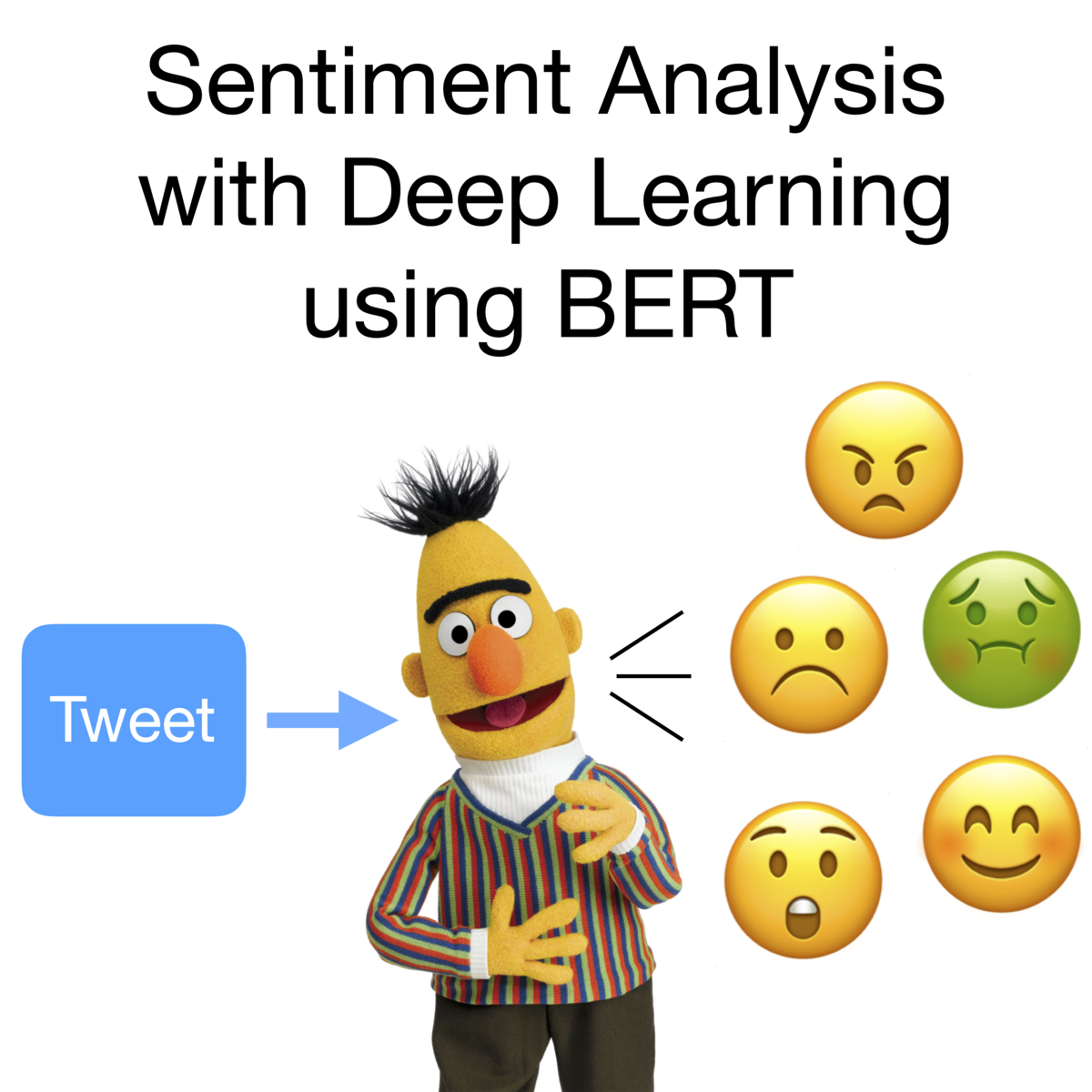
Sentiment Analysis with Deep Learning using BERT
In this 2-hour long project, you will learn how to analyze a dataset for sentiment analysis. You will learn how to read in a PyTorch BERT model, and adjust the architecture for multi-class classification. You will learn how to adjust an optimizer and scheduler for ideal training and performance. In fine-tuning this model, you will learn how to design a train and evaluate loop to monitor model performance as it trains, including saving and loading models. Finally, you will build a Sentiment Analysis model that leverages BERT's large-scale language knowledge. Note: This course works best for learners who are based in the North America region. We’re currently working on providing the same experience in other regions.
 NIIT
NIIT
Building Interactive User Interfaces Using React Library
A frontend application is expected to have an attractive, responsive UI and a seamless UX with swift navigable views. Single Page Applications (SPAs) fulfill these expectations as they are lighter and efficient. React, a popular JavaScript library is used for developing complex user interfaces for single page applications (SPAs). Facebook, Instagram, Netflix, Airbnb etc., are some of the famous websites that use React. In this course, you will learn to construct an SPA by developing reusable and testable React Class components. The library helps you explore React features that enhance the performance of web applications by enabling partial page updates.
 University of London
Doing Economics: Measuring Climate Change
This course will give you practical experience in working with real-world data, with applications to important policy issues in today’s society. Each week, you will learn specific data handling skills in Excel and use these techniques to analyse climate change data, with appropriate readings to provide background information on the data you are working with. You will also learn about the consequences of climate change and how governments can address this issue. After completing this course, you should be able to: • Understand how data can be used to assess the extent of climate change • Produce appropriate bar charts, line charts, and scatterplots to visualise data • Calculate and interpret summary statistics (mean, median, variance, percentile, correlation) • Explain the challenges with designing and implementing policies that address climate change No prior knowledge in economics or statistics is required for this course. No knowledge of Excel is required, except a familiarity with the interface and how to enter and clear data.
 Politecnico di Milano
Project Management: Control using the Earned Value and Risk
Project Management is a fundamental theme to understand and work in any business environments. Once projects are properly planned, the job of a Project Manager is just started. Indeed, PMs need to properly control, re plan, and manage risks during the execution of the project. During the course, the Earned Value Management System – the standard and most diffused technique to properly manage time and cost in a project – is presented. In doing so, the concepts of BCWS (the time-phased budget), the BCWP (the earned value) and ACWP (the actual costs of what has been performed) are introduced along with the main indicators that help managers in taking decision on how to replan the projects according to the estimation at completion. Finally, the main approaches to identify and manage risks are introduced along with the closing phase.
 Coursera
Trace and Fix Data Anomalies
Did you know that hidden data anomalies can cascade through pipelines and corrupt entire dashboards, models, and business decisions? Finding the source of a data issue quickly is essential for maintaining trustworthy analytics and automated workflows. This Short Course was created to help professionals in this field build reliable data quality monitoring and debugging capabilities for maintaining trustworthy automated data workflows. By completing this course, you will be able to trace data anomalies back to their origin, inspect upstream and downstream dependencies, and diagnose quality failures inside complex pipelines—skills that dramatically reduce downtime and improve overall data reliability. By the end of this course, you will be able to: Investigate data quality issues by tracing anomalies to their source within a data pipeline. This course is unique because it connects data engineering principles with hands-on debugging techniques, giving you the practical skills needed to keep pipelines accurate, resilient, and ready for production demands. To be successful in this project, you should have: Basic SQL knowledge Understanding of data pipeline concepts Familiarity with ETL and ELT workflows
 L&T EduTech
Hydrocarbon Exploration and Production
Hydrocarbon Exploration and Production is a comprehensive course that provides insight into the methods and techniques involved in the exploration, drilling and production of hydrocarbon resources. This course is designed to equip the learners with the necessary knowledge and skills to pursue a career in the oil and gas industry, specifically focusing on three key modules: Exploration Methods, Upstream Equipment and Platforms; Drilling Methods and Systems and Methods of Oil Recovery. Exploration Methods delve into the various techniques and strategies employed to identify potential hydrocarbon reserves focusing on geological and geophysical surveys, seismic data interpretation and remote sensing technologies used to map subsurface structures to enable learners to make informed decisions regarding the economic viability of exploration projects. Drilling Methods and Systems gives a comprehensive understanding of the equipment and technologies utilized in upstream operations, including drilling rigs, wellheads and production platforms. It explores different drilling techniques such as rotary drilling, directional drilling and offshore drilling, along with the associated systems for well control and safety. Additional topics, such as well completion, casing and cementing procedures ensure a solid foundation in the practical aspects of drilling operations. Methods of Oil Recovery, emphasizes the techniques employed to maximize hydrocarbon extraction from reservoirs such as primary, secondary and tertiary recovery methods, including water flooding, gas injection and enhanced oil recovery (EOR) techniques. It explores the principles of reservoir engineering, reservoir characterization and well stimulation that are required to optimize oil recovery and production rates. Environmental considerations and sustainability practices in oil recovery will also be highlighted. By the end of the course, the learners will be well-prepared to contribute effectively to the hydrocarbon industry, equipped with the knowledge and technical expertise necessary for successful exploration and production operations. Target learners: Students pursuing Diploma / UG / PG Programs in Chemical/ Petroleum/ Oil and Gas Engineering. Faculties / Working Professionals in the above domain & other aspiring learners. Prerequisite: Basic Chemical/ Petroleum/ Oil and Gas Engineering
 University of California, Irvine
Teaching Tips for Tricky English Grammar
This is the third course in the Teach English: Intermediate Grammar specialization. It will be useful to ESL teachers or those interested in learning to teach English language, but it is not an introduction to teaching course. You will learn about some specific problems students have learning intermediate grammar. You will learn why students have trouble with this tricky grammar and find out new ways to help students conquer it. You will also learn a variety of activities for teaching this content in a fun and interesting way. Finally, you will have opportunities to practice the skills you learn by creating sample assignments and recording short videos of your teaching demonstrations using a video camera, webcam, or smartphone. Learners wanting a grade will be required to submit short videos of their teaching skills. Only learners who pay for the course will be able to take the graded quizzes or submit assignments for feedback. The free version provides access to the lectures and practice activities only.