

The Global Scholarly Directory.
Discover world-class academic programs curated for the modern intellectual. Search through 19877+ degrees and professional certificates.
 Rutgers the State University of New Jersey
Sourcing Excellence
Supply Chains are made up of a network of companies from the initial raw materials to the ultimate consumer of the finished product. Within this network of companies, there are three ongoing flows: products, information, and finances. To properly understand and manage the supply chain, you need to understand all the flows. If you do not consider all of the flows, you will miss opportunities or sub-optimize parts of the supply chain. The second of five courses in this specialization will focus on Sourcing Excellence. You will learn how the inbound flow of products, information, and finances into the company facilitates the supply chain. It will consist of four modules, which will cover the following topics: core sourcing elements; inbound information flow; supply chain financing; and finally the capstone case study. You will have lectures, readings, and discussions with your peers for each topic, as well as a practice quiz in each lesson. At the end of each module, you can put your knowledge to the test and take a graded quiz. The Capstone Analysis module contains a real-life case analysis, as well as a supply chain management project that will enable you to be an expert on a company of your choosing.
 University of Colorado Boulder
Sustainability and the Circular Economy
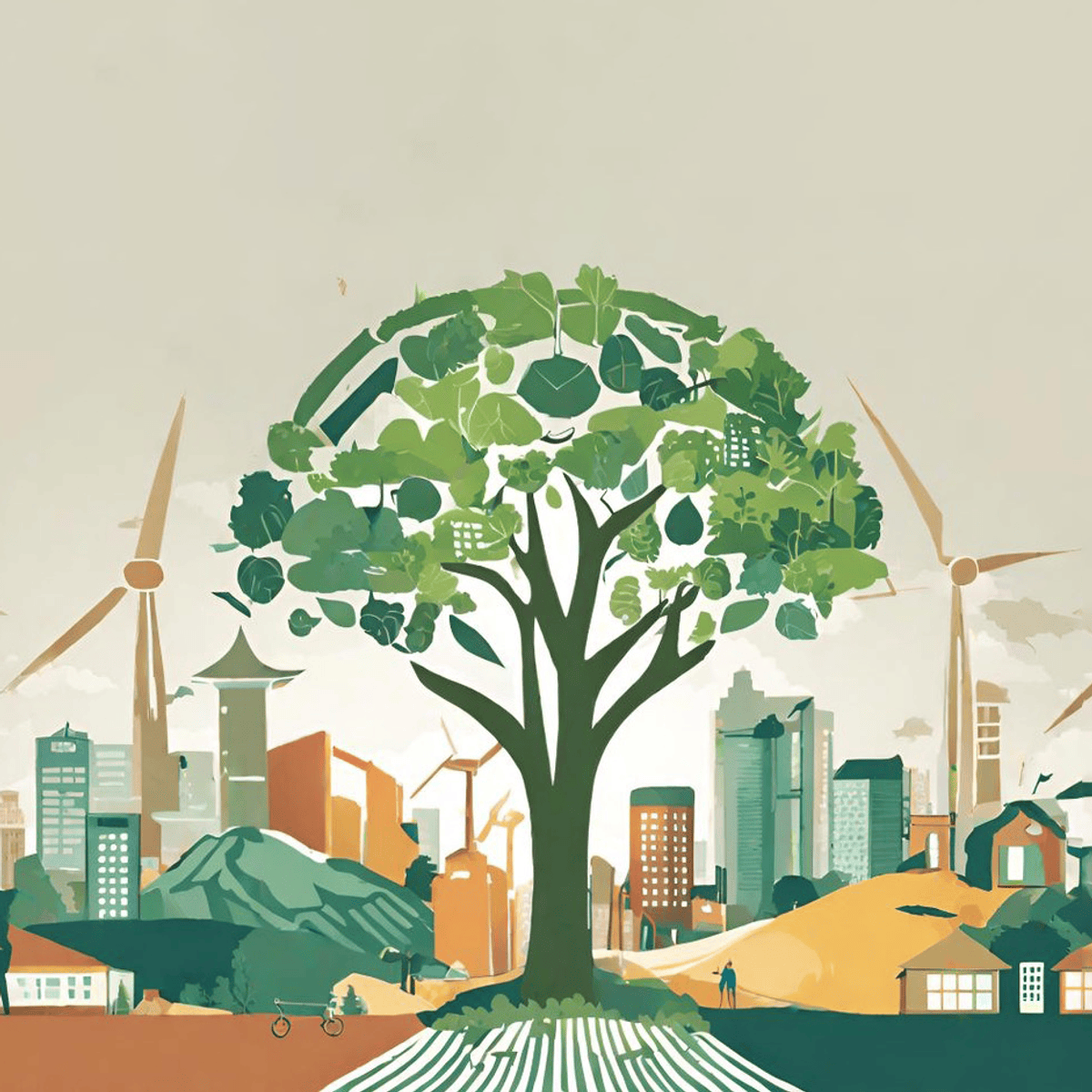
As the world’s population continues to rise toward an expected 10 billion citizens by 2050, it is imperative that business practices change to ensure a high quality of life is possible for all of us, both human and non-human. Today’s learners are very aware of this. Moreover, they are highly motivated and have the extraordinary capacity to create a future that provides both economic success and a more enduring, resilient, and sustainable planet. If you are one of these learners, then Sustainability and the Circular Economy is a course for you. Sustainability and the Circular Economy is the first course in the Applied Sustainability for Technical Managers specialization and builds the foundation for the rest of the specialization. It aims to provide learners with the strategies and tools to realize their vision by integrating sustainability into everyday life, and in the companies where they work. The course opens with an examination of climate change and human impact on the environment, and the opportunities created for innovative solutions that drive real change. We then explore the sources of many of our environmental challenges, and the need to transition to a zero-carbon energy future. A sustainable future is more than just renewable energy, as we need to pay attention to our ever-growing desire for products that add value to our lives. Therefore, the course explores how we’re electrifying transportation, making our homes more energy efficient, eating more sustainable food grown with regenerative agricultural practices, and wearing clothes designed to last and made from more natural materials using fair and equitable labor. It is important to recognize that many of the 10 billion global citizens will want the same products and lifestyles as citizens in wealthier industrialized nations. Yet products require materials - and our current extractive approach to resources will not meet this burgeoning demand. The course concludes with an overview of the Circular Economy, an innovative way of decoupling such economic growth from traditional resource extraction. This course was developed in collaboration with Siemens Digital Industries Software and is part of the "Design for the Circular Economy" collection. Learners who complete and pass the course can receive an industry-recognized digital badge. The “Design for the Circular Economy” microcredential and graduate certificate are developed around the educational goals of providing technical, business, and leadership knowledge and skills that inspire the transformation towards a more circular economy. This includes gaining technical knowledge to apply circular economy principles in product design, minimizing waste and maximizing impact; developing business acumen to implement innovative circular economic models that prioritize sustainability and resilience; and acquiring leadership strategies to communicate effectively and inspire change within an organization. This course can be taken for academic credit as part of CU Boulder’s Master of Engineering in Engineering Management (ME-EM) degree offered on the Coursera platform. The ME-EM is designed to help engineers, scientists, and technical professionals move into leadership and management roles in the engineering and technical sectors. With performance-based admissions and no application process, the ME-EM is ideal for individuals with a broad range of undergraduate education and/or professional experience. Learn more about the ME-EM program at https://www.coursera.org/degrees/me-engineering-management-boulder.
 Packt
Packt
Cyber Secure Coder (CSC-110)
Updated in May 2025. This course now features Coursera Coach! A smarter way to learn with interactive, real-time conversations that help you test your knowledge, challenge assumptions, and deepen your understanding as you progress through the course. Dive into the critical world of secure software development with Cyber Secure Coder (CSC-110). This course equips you with the knowledge and skills to identify vulnerabilities, mitigate risks, and build resilient applications. Learn to safeguard against exploits and develop a deep understanding of secure coding practices, ensuring robust software integrity. Your journey begins with an overview of security in software, delving into how vulnerabilities emerge and how secure requirements can be identified and implemented. Explore key aspects of software security, including vulnerability intelligence, error handling, and hashing techniques. From gathering security requirements to protecting against human-related risks, the course emphasizes practical applications through engaging assignments and activities. The curriculum transitions into advanced topics such as secure design principles, risk management strategies, and countermeasures to common exploits. As you progress, you'll develop proficiency in coding guidelines, preventing buffer overflows, and understanding OWASP's top vulnerabilities across platforms, including web, mobile, IoT, and desktop. Ideal for developers, IT professionals, and security enthusiasts, this intermediate-level course requires basic programming knowledge and an understanding of software development processes. Whether you're refining your coding skills or stepping into cybersecurity, this course provides essential tools to build secure software for today’s digital landscape.
 Banco Interamericano de Desarrollo
Impacto digital sostenible: ecosistemas de startups AgriTech
¿Te interesa descubrir cómo la transformación digital está revolucionando el sector agroalimentario en América Latina y el Caribe? Este curso te permitirá identificar los desafíos y oportunidades que la digitalización y la innovación tecnológica ofrecen en el sector Agrifoodtech. De la mano de especialistas de BID Invest y expertos de la industria, explorarás herramientas y mejores prácticas que destacan las oportunidades de crecimiento y sostenibilidad para startups y empresas en la región. Al finalizar el curso, comprenderás el impacto de la transformación digital en la productividad, la sostenibilidad y el acceso al financiamiento en el sector agroalimentario, y estarás preparado para liderar el cambio hacia un ecosistema Agrifoodtech más innovador y sostenible.
 Infosec
CISSP Domain 8: Software development security
This course examines the need to provide security throughout the SDLC, which aligns with Domain 8 on the CISSP exam. We will compare and contrast Agile and the waterfall methodologies, and look at the assessment of web applications and more traditional applications. We will examine common threats like cross-site scripting, buffer overflows and race conditions. Finally, we will examine databases and their vulnerabilities/solutions.
 Macquarie University
Statistics and Data Analysis with Excel: Intermediate
In today's data-driven world, the ability to analyse and interpret complex data is crucial for making informed, strategic decisions. This comprehensive online course will empower you with advanced statistical techniques to transform raw data into actionable insights, using Microsoft Excel. Through hands-on exercises, you will delve into the world of inferential statistics, learning how to draw meaningful conclusions and make accurate predictions based on sample data. Gain proficiency in creating and interpreting pivot tables, pivot charts, and other interactive data visualisations to effectively communicate your findings. Enhance your digital literacy with extensive use of Excel's advanced functions and the Data Analysis ToolPak, streamlining your data analysis workflow. Join over 1 million professionals who have advanced their careers with our highly-rated Excel courses. Whether you’re looking to boost your employability, enhance your current role, or simply elevate your Excel skills, this course will provide you with the knowledge and tools to stand out in the competitive job market. Enrol now and become a data-driven leader, driving strategic decisions with confidence and precision.
 Starweaver
Incident Response Frameworks
In today's digital battlefield, cyber incidents are not a matter of if, but when. Whether it's ransomware, phishing, or insider threats, the ability to respond swiftly and effectively can mean the difference between containment and catastrophe. This course is designed to equip you with the tools, strategies, and confidence to implement and use industry best practice for cybersecurity incident response to create an incident response process that anyone can follow. We'll explore the most widely adopted industry frameworks (NIST and SANS) and learn how to apply them in real-world scenarios as well as integrate them into your existing IT Service Management solution. Through expert guidance and real-world examples, you'll gain a detailed understanding of how to build response plans, coordinate teams, and recovering from attacks. Whether you're an aspiring cybersecurity professional, an IT support manager, or a team member looking to sharpen your response skills, this course will prepare you to act decisively when it matters most. This course is designed for professionals who play a direct role in keeping IT systems secure and running smoothly. Cybersecurity engineers, Service Desk Analysts, Service Desk Managers, and IT Managers will benefit from the practical, structured approach to handling major incidents. Whether you’re already involved in incident response or looking to build stronger skills, the content is tailored to support real-world responsibilities. To fully engage with the material, you should have a basic understanding of IT Service Management and the four core ITIL pillars: Incident, Problem, Change, and Request. A general grasp of business IT operations, along with familiarity with common cybersecurity events, will help you connect the lessons to the scenarios you encounter in your own environment. By the end of the course, you’ll be able to explain the foundations of cybersecurity major incident response and compare the NIST and SANS frameworks with confidence. You’ll also learn how to build a complete incident response plan tailored to your organisation and understand how to test, evaluate, and continuously improve that plan so it remains effective over time.
 UiPath
UiPath Agentic Automation Associate
This course, available on Coursera with content from UiPath, takes you through the complete journey of building, configuring, and evaluating intelligent agents in UiPath Studio Web, with a focus on Generative AI (Gen AI) activities and scalable evaluation strategies. You’ll begin with Build your first agent with Studio Web, where you’ll create intelligent agents using no-code tools and Autopilot. Then, in Agentic prompt engineering, you’ll learn to design effective prompts that help AI agents deliver accurate, structured, and useful outputs. With Configure context and escalations for agents, you’ll make your agents enterprise-ready by grounding their responses in business context and creating escalation flows for human-in-the-loop scenarios. Finally, in Configure evaluations for agents, you’ll explore structured evaluation sets and scoring methods like LLM-as-a-Judge, Exact Match, and JSON Similarity to test and refine your agents. By the end of this course, you’ll be equipped to build and deploy Studio Web agents that are reliable, context-aware, and evaluation-driven.
 University of the Arts London
Creative AI: Images and Media
This course explores how artificial intelligence is transforming the way we create, interpret, and engage with images and visual media. Focusing on generative tools, datasets, and cultural impact, you’ll learn how AI systems are trained to generate images, how artists are using them creatively, and what ethical, legal, and political questions arise as a result. By the end of the course you will be able to: - Explore how AI can be used to generate and manipulate images using techniques like GANs, CLIP, and diffusion models. - Understand the impact of datasets on the aesthetics and biases of generative AI, and how dataset design influences creative output. - Evaluate the ethical and legal implications of AI image-making, including issues of consent, appropriation, and authorship. - Experiment with text-to-image tools and other generative systems, gaining insight into how artists are working with AI in practice. Through hands-on activities, creative walkthroughs, and interviews with artists and researchers, you’ll investigate how generative systems work, reflect on how they relate to earlier image-making technologies like photography, and examine the social debates surrounding AI art platforms and dataset ethics. Featuring perspectives from leading artists and technologists working at the cutting edge of AI and visual culture, this course provides both the technical understanding and critical insight to begin experimenting with AI in your own creative media practice. No technical experience is required, just curiosity and a willingness to engage with new visual tools and ideas.
 Coursera
Beyond basics: Advanced Data Analysis with Python
In this course, you'll elevate your analytical capabilities with advanced statistical methods and testing procedures. You'll learn to conduct hypothesis tests, design and analyze A/B tests, and automate analytical workflows. Working with real employee and medical data, you'll gain hands-on experience in applying sophisticated analytical techniques to solve complex business problems. Upon completion, you'll be able to: • Perform hypothesis testing and correlation studies. • Design, conduct, and analyze A/B tests to compare different versions of an approach • Automate repetitive tasks, generate professional reports, and document workflows effectively using automated tools. • Tackle a challenge that integrates statistical analysis, A/B testing, and workflow automation to simulate real-world data problems.
 EDUCBA
Master Scrum Fundamentals for PSM-I Certification Success
Learners will explain Agile principles, differentiate Scrum values, apply certification best practices, and evaluate real exam-style scenarios using Scrum Guide concepts. This course empowers participants with a solid understanding of Agile thinking, Scrum fundamentals, and the essential mindset required to succeed as a Scrum Master. Designed for beginners and aspiring Scrum professionals, the course provides a structured pathway to confidently approach the Professional Scrum Master I (PSM-I) exam. Learners benefit from clear video walkthroughs, practical insights, exam do’s and don’ts, and guided practice questions that mirror the style and reasoning found in real certification assessments. By the end of the course, learners gain not only conceptual clarity but also practical exam readiness. What makes this course unique is its step-by-step instructional design, scenario-driven learning, and explicit focus on PSM-I exam expectations, helping learners avoid common pitfalls and strengthen critical thinking aligned with the Scrum Guide. Whether transitioning into Agile roles or preparing for certification, learners will complete the course equipped with the knowledge and confidence required to excel as effective Scrum practitioners.
 Illinois Tech
Deep Learning
An introduction to the field of deep learning, including neural networks, convolutional neural networks, recurrent neural networks, transformers, generative models, neural network compression and transfer learning. This course will benefit students’ careers as a machine learning engineer or data scientist.
 Pearson
Cisco Software-Defined Wan for Enterprise & Cloud: Unit 1
This course explores Cisco SD-WAN and equips you with the skills to optimize and manage complex network environments. You will gain a thorough understanding of the architecture, components, and terminology essential to SD-WAN. You will explore the Overlay Management Protocol to master route and policy advertisement, and the intricacies of the data plane and network segmentation. With hands-on guidance on the vManage user interface, you'll be prepared to implement and oversee efficient, secure, and scalable network solutions.
 Google Cloud
Google Chat - 日本語版
このコースでは、Google Workspace に付属する Google のチャット ソフトウェアである Google Chat について紹介します。 Google Chat で個人やグループにメッセージを送信する方法を説明します。カスタマイズ オプションやコラボレーション機能、そして Google Chat が他の Google Workspace 製品とどのように連携するかについても解説します。 Google Chat のスペースの作成、管理、検索、およびスペースへの参加の方法を確認しながら、スペースの使用方法を詳しく見ていきます。また、スペースとグループ チャットの用途の違いについても説明します。 Google Chat アプリについても紹介し、Google Chat 内でのアプリの検索と使用の方法について解説します。 コースの動画と別に、受講者はハンズオン アクティビティを行い、学んだことを練習します。アクティビティでは 1 人か 2 人の同僚に参加してもらい、Google Chat でやり取りすることを検討してください。
 Coursera
Uncover Product Insights: Analyze User Funnels
Transform scattered user interactions into strategic insights that drive product decisions. This course empowers you with the analytical expertise to systematically interpret product surfaces, establish robust tracking frameworks, and diagnose performance drops through sophisticated funnel analysis. You'll master the art of translating user-facing features into measurable events, creating standardized taxonomies that capture meaningful behavioral data, and conducting root cause analysis when metrics decline. By completing this course, you'll confidently lead analytics implementations, identify friction points that impact conversion rates, and present actionable recommendations to cross-functional teams. This course is unique because it bridges the gap between technical implementation and strategic business impact, teaching you to think like both an analyst and a product strategist. To be successful in this course, you should have basic experience with data analytics and familiarity with product interfaces.
 Scrimba
Intro to Mistral AI
This course teaches you how to interact with Mistral's AI models with JavaScript. This enables you to build intelligent apps, all the way from simple chat completions to advanced use-cases like RAG and function calling. The code is written using Mistral's JavaScript SDK, but the concepts covered are language-agnostic, making this course just as relevant for Python developers as it is JavaScript developers. Created in collaboration between Mistral AI and Scrimba.