

The Global Scholarly Directory.
Discover world-class academic programs curated for the modern intellectual. Search through 19877+ degrees and professional certificates.
 Packt
Packt
Managing Conflict
Updated in May 2025. This course now features Coursera Coach! A smarter way to learn with interactive, real-time conversations that help you test your knowledge, challenge assumptions, and deepen your understanding as you progress through the course. Conflict is inevitable in any workplace, but managing it effectively is a skill that can transform teams and organizations. In this course, you will learn practical techniques to identify, address, and resolve conflicts to create healthier and more productive work environments. You’ll develop key conflict-handling skills, explore resolution strategies, and gain insights into fostering a culture of accountability rather than blame. Your learning journey begins with understanding how to identify a blame culture and steps to eliminate it permanently. From there, you’ll delve into essential conflict management skills and explore proven techniques for resolving workplace disagreements while maintaining professional relationships. The course also introduces the Thomas-Kilmann model, which highlights the five key methods for conflict resolution and when to use each approach. Throughout the course, you’ll build the confidence to approach difficult situations calmly and effectively. By the end, you’ll have practical tools to navigate conflicts, strengthen team dynamics, and contribute to a healthier organizational culture. This course is ideal for professionals at all levels who want to improve workplace relationships and resolve conflicts constructively. No prior experience is required, making it accessible to everyone. The course is perfect for managers, team leaders, and anyone working in collaborative environments.
 Whizlabs
Power BI: Data Modeling and Data Analysis
This course is designed to provide a comprehensive foundation in Power BI, equipping learners with the skills to model, analyze, and visualize data efficiently. Participants will begin by exploring calculated columns and tables, understanding their use cases in data modeling and performance optimization. The course progresses to advanced data modeling in Power BI, covering essential techniques like STAR schema design, model relationships, hierarchies, and role-playing dimensions to optimize data structures. Learners will gain expertise in DAX functions, including numerical calculations, measures, quick measures, and analytical queries, ensuring efficient data manipulation. Additionally, this course covers Power BI Desktop features, enabling participants to create calculation groups, work with DAX query view, and improve performance by reducing granularity. Features like date-time formatting, advanced settings in model view, and restricting access to model data are explored to enhance analytical capabilities. This course is structured into multiple modules, each featuring lessons and video lectures that provide both theoretical understanding and hands-on practice. Participants will engage with 3:00–4:00 hours of instructional content, reinforcing learning through graded and ungraded assignments, ensuring real-world applicability. Whether you're preparing for Power BI certification or seeking to optimize business intelligence workflows, this course equips you with the essential skills to master data modeling, DAX, and visualization for effective analytics. Module 1 - Optimizing Data Models and Performance with DAX in Power BI Module 2 - Power BI Data Modeling: STAR Schema, DAX, and Advanced Modeling Techniques The course is for the Data Managers, Data Analysts, Power BI Associates, and Power BI Experts
 Johns Hopkins University
Digitizing Population Health in Low-Resource Settings
The rapid development of digital technologies provides fundamentally new ways of addressing pressing public health challenges, especially around understanding population health status, strengthening the collection and use of health data to inform public health policies and plan interventions, and strengthening health systems to advance disease prevention, health promotion, and health service delivery. This course introduces foundational concepts in digitization of population health data and programs, with the aim to support decision-making around the appropriate ecosystem for digitizing health data, the key stakeholders who should be engaged for effective digitization and strategies for implementing and scaling digitization efforts to strengthen population health programs. The course discusses special considerations for digitization within low-bandwidth, and low-resource environments and leverages case studies from low and middle-income country settings to orient learners to key concepts. In this course, you will learn: 1. Describe key components of an enabling ecosystem for digitization of population health programs (i.e., leadership and governance; strategy and investment; services and applications; standards and interoperability; infrastructure; legislation, policy, and compliance; and workforce). 2. Discuss the major global initiatives, frameworks, and resources available to support digitization of population health programs and key considerations when using these. 3. Understand how to promote digital ecosystem readiness and the use of maturity models in measuring readiness. 4. Explain key considerations when digitizing population health programs, such as principles of user-centered design, designing for sustainability and scale, and privacy and security of health data. 5. Describe the gender and equity considerations when developing tools and platforms for digital transformation in population health programs, including ways to promote equality and equity. 6. Introduce emerging approaches to the digitization of population health programs, including the use of advanced analytics and artificial intelligence, and critically examine their potential value, limitations, and implications for decision-making, equity, and health system performance. The course is targeted at public health program planners, policymakers, and implementers who are engaged in decision-making around when and how to digitize population health programs. Learners do not need a technology or an engineering background or experience.
 Google Cloud
Google Cloud Fundamentals: Core Infrastructure - Polski
Szkolenie Google Cloud Fundamentals: Core Infrastructure wprowadza ważne pojęcia i terminologię potrzebne w pracy z Google Cloud. Za pomocą filmów i praktycznych modułów szkolenie prezentuje oraz porównuje usługi Google Cloud umożliwiające między innymi przetwarzanie i przechowywanie danych, a także zawiera ważne materiały i narzędzia do zarządzania zasadami.
 Johns Hopkins University
Major Depression in the Population: A Public Health Approach
Public Mental Health is the application of the principles of medicine and social science to prevent the occurrence of mental and behavioral disorders and to promote mental health of the population. This course illustrates the principles of public health applied to depressive disorder, including principles of epidemiology, transcultural psychiatry, health services research, and prevention. It is predicted that by 2020 depressive disorder will be the most important cause of disease burden in the entire world! Every human being suffers from feeling depressed at some point or other, but only about one fifth of the population will experience an episode of depressive disorder over the course of their lives. This course illuminates the public health approach to disease, and the particular complexities of applying this approach to mental disorders, using depression as the exemplar.
 LearnKartS
Kubernetes Fundamentals
Kubernetes is more than a buzzword; it is the core of modern cloud-native programming. This intense course will teach you the essentials of Kubernetes so you can confidently build, manage, and grow containerized applications. You'll begin by understanding how Kubernetes and containers function together, then progress to Kubernetes architecture, which includes master and node components. Learn how to deploy programs with pods, containers, and replica sets using YAML and imperative management techniques. Create your own Kubernetes environment with VirtualBox, Ubuntu VM, Minikube, and Kubectl. Visualize and monitor workloads using the Kubernetes Dashboard, and learn essential commands through real-time demos and case studies. Dive further into networking topics such as pod-to-pod, pod-to-service, ingress, and egress. You'll also learn about persistent storage volumes and how to control their lifecycle. Assignments and real-world tasks, such as developing a music streaming infrastructure with Kubernetes, make the learning experience truly practical. By the end of the Kubernetes certification course, you'll not only understand Kubernetes—you'll be ready to run production-grade workloads. Start your Kubernetes journey today—enroll now and become container-native ready. Disclaimer: CKAD and Certified Kubernetes Application Developer are trademarks of the Cloud Native Computing Foundation. This course is not affiliated with or endorsed by CNCF.
 UBITS
UBITS
Storytelling avanzado: comunicación de alto impacto
En este curso, aprenderás a transformar presentaciones llenas de datos y hechos en narrativas emocionantes y significativas que crean experiencias memorables. Dirigido a líderes y altos ejecutivos que desean actualizar sus procesos de comunicación para enfrentar los retos actuales, este curso te proporcionará herramientas para sincronizar las ondas cerebrales de tu audiencia, activar sus emociones y motivar a la acción. A través del arte del storytelling, comprenderás que algunos elementos como personajes, contextos y conflictos se pueden combinar para transmitir mensajes poderosos e inolvidables. Comprenderás cómo utilizar secuencias emocionales narrativas, y recibirás consejos prácticos para cada etapa de la creación de tus presentaciones, desde la concepción de la idea hasta la ejecución final. Con estos conocimientos elevarás el impacto de tus discursos, serás capaz de crear presentaciones que no solo informen, sino que también inspiren y motiven.
 Saïd Business School, University of Oxford
AI Fundamentals in Financial Services
Artificial Intelligence (AI) is rapidly reshaping the financial services landscape. From fraud detection and algorithmic trading to customer service chatbots and credit scoring, AI is at the heart of a new era in finance. This course is designed to give you a clear, practical understanding of how AI works, what it enables, and how it’s transforming the way financial institutions operate. Through real-world examples, case studies, and engaging learning activities, you’ll gain insights into the key technologies that make AI possible, including machine learning, deep learning, and natural language processing, and see how they are applied across core functions in banking, fintech, and asset management. You’ll also explore how data drives these systems, the different learning methods AI uses, and the implications for strategy, governance, and ethics. Whether you’re a financial professional, policymaker, or simply curious about the future of finance, this course will equip you with the knowledge and confidence to engage in AI-related conversations and decision-making. No programming background is required, just an interest in how technology is shaping the future of financial services. By the end of the course, you will be able to: • Understand the foundational technologies that underpin Artificial Intelligence (AI), including Machine Learning, Natural Language Processing, and Deep Learning. • Explore the central role of data in powering AI systems, and the key learning methods used to train them. • Identify how AI is applied in financial services, including use cases such as fraud detection, credit scoring, customer service, and algorithmic trading. • Critically evaluate the risks, limitations, and ethical challenges associated with deploying AI in financial services. This course is the first in the AI in Financial Services: Foundations through Future Trends specialization. It provides the essential groundwork for understanding how AI works and why it matters in finance. After completing this course, we recommend continuing with 'Designing the Future of Finance' and 'Open Data and Intelligent Finance' courses to explore how AI intersects with Open Finance, embedded systems, and intelligent, ethical financial innovation.
 University of Michigan
Building Web Applications in Django
In this course, you will learn how Django communicates with a database through model objects. You will explore Object-Relational Mapping (ORM) for database access and how Django models implement this pattern. We will review the Object-Oriented (OO) pattern in Python. You will learn basic Structured Query Language (SQL) and database modeling, including one-to-many and many-to-many relationships and how they work in both the SQL and Django models. You will learn how to use the Django console and scripts to work with your application objects interactively.
 Packt
Packt
Create a Dark Moody Atmospheric 2D Game with Unity and C#
Delve into the world of 2D game development with this comprehensive course designed to teach you how to create a dark, atmospheric game using Unity and C#. You’ll begin by installing the Unity game engine and exploring its user interface. From understanding components and game files to mastering Unity's UI, these foundational lessons set the stage for a smooth development experience. As you progress, you’ll implement core mechanics like player movement, jumping, and more advanced actions such as dashing and wall jumping, using intuitive scripts and techniques. Building on this foundation, the course introduces you to the visual elements that define the atmosphere of your game. You’ll learn to add and animate sprites, integrate lighting effects, and use Cinemachine for advanced camera controls. The Tile Map Editor will help you design intricate levels, while dynamic particle effects and soundscapes will enhance the game's immersion. Each lesson is crafted to ensure that you not only understand the mechanics but can also apply them creatively to craft a unique gaming experience. Finally, the course focuses on the finishing touches that turn a good game into a great one. You’ll implement features like collectable items, custom menus, and sound effects that make the game engaging and interactive. Bug-fixing lessons ensure your game runs smoothly, and a final walkthrough shows you how to build and deploy your game, allowing you to share your creation with the world. Whether you're a beginner or looking to refine your skills, this course offers a complete journey from concept to finished product. This course is ideal for beginner to intermediate game developers who are familiar with basic programming concepts and want to learn game development using Unity and C#. No prior experience in Unity is required, but a basic understanding of C# will be beneficial.
 Google Cloud
Google Sheets - Advanced Topics 日本語版
Google スプレッドシートの中級コースは、初級のコースで説明されたコンセプトを元に進められます。 このコースでは、Google スプレッドシートでテーマを適用してカスタマイズする方法を学習し、条件付き書式のオプションを確認します。 Google スプレッドシートの高度な数式と関数をいくつか学習します。関数を使用した数式を作成する方法を確認し、さらに Google スプレッドシート内のデータを参照して検証する方法を学びます。 スプレッドシートには、何百万という数、数式、テキストを入力しておくことができます。このようなデータは要約や可視化を行わないと、十全に活用することが難しい場合があります。このコースでは、グラフやピボット テーブルなど、Google スプレッドシートのデータ可視化オプションを確認します。 Google フォームは、データを収集して迅速なデータ分析を可能にするオンライン アンケートです。フォームで収集したデータをスプレッドシートに接続する作業や、既存のスプレッドシートからフォームを作成する作業を通じて、フォームとスプレッドシートがどのように連携するのかを確認します。 Screen reader support enabled. Google スプレッドシートの中級コースは、初級のコースで説明されたコンセプトを元に進められます。 このコースでは、Google スプレッドシートでテーマを適用してカスタマイズする方法を学習し、条件付き書式のオプションを確認します。 Google スプレッドシートの高度な数式と関数をいくつか学習します。関数を使用した数式を作成する方法を確認し、さらに Google スプレッドシート内のデータを参照して検証する方法を学びます。 スプレッドシートには、何百万という数、数式、テキストを入力しておくことができます。このようなデータは要約や可視化を行わないと、十全に活用することが難しい場合があります。このコースでは、グラフやピボット テーブルなど、Google スプレッドシートのデータ可視化オプションを確認します。 Google フォームは、データを収集して迅速なデータ分析を可能にするオンライン アンケートです。フォームで収集したデータをスプレッドシートに接続する作業や、既存のスプレッドシートからフォームを作成する作業を通じて、フォームとスプレッドシートがどのように連携するのかを確認します。
 Coursera
How to Plan a Content Calendar using Trello
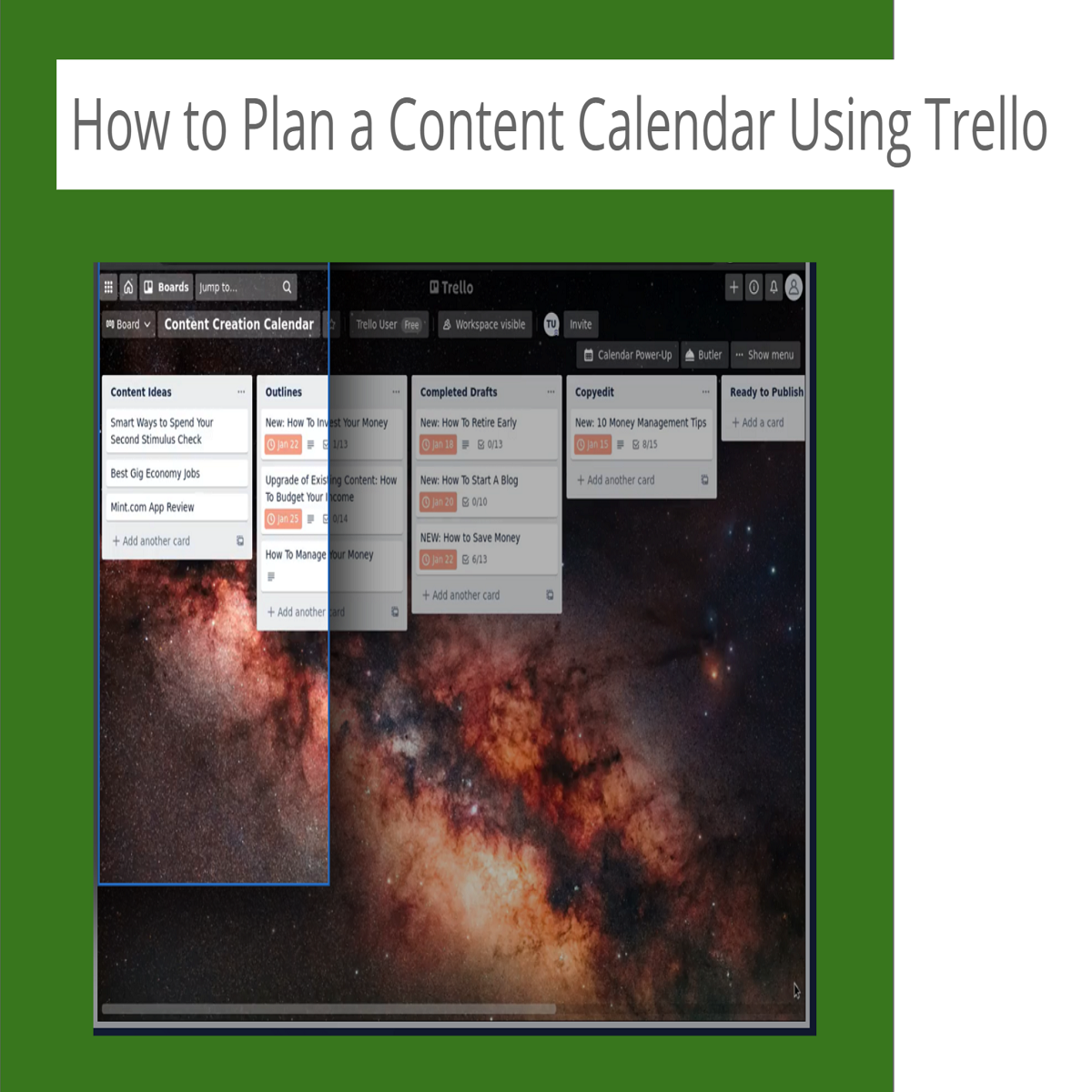
Content creation and managing when it is created is key to business in the online world. Finding tools to manage your content calendar will help to make the job much easier. By the end of this project you will have a content creation calendar on Trello that makes it a breeze. Note: This course works best for learners who are based in the North America region. We’re currently working on providing the same experience in other regions.
 University of Illinois Urbana-Champaign
Professional Responsibility and Ethics for Accountants
Accountants perform a wide variety of activities which include, but are not limited to, accounting, auditing, tax, management consulting, and financial management. However, a professional accountant’s responsibility is not exclusively to satisfy the needs of an employer or professional services client. One of the distinguishing characteristics of the accounting profession is its acceptance of the responsibility to act in the public interest. This course will introduce you to professional guidance that enables accountants to uphold the obligation to act in the public interest while meeting their professional responsibilities to employers and clients. You will also learn foundational knowledge of the moral dimensions of business that are helpful for recognizing and interpreting the ethical issues embedded in situations you will encounter in your career. Topics in the course include professional standards, values and norms, ethical theories, theories of a firm and business purpose, and corporate governance.
 EDUCBA
Apply Protocol-Oriented Programming in Swift Applications
Learners will be able to design reusable behaviors using protocols, apply value semantics with structures, implement selection logic, and use delegation patterns to manage user interaction in Swift applications. This course provides a practical, step-by-step introduction to Protocol-Oriented Programming (POP) in Swift, a core paradigm encouraged by Apple for building scalable and maintainable apps. Starting with foundational concepts, learners explore how protocols define behavior independently of concrete types and how structures leverage value semantics for safer code. Through hands-on examples, learners build data models, display structured lists, and progressively add interaction logic such as selecting and managing favorite items. What makes this course unique is its end-to-end, example-driven approach. Instead of focusing only on theory, learners follow a single evolving use case that demonstrates how POP improves flexibility, testability, and separation of concerns. The course also emphasizes real-world delegation patterns using collection views, helping learners understand how protocols enable clean communication between components. By completing this course, learners gain practical skills to write cleaner, more modular Swift code, making it ideal for developers who want to move beyond inheritance-heavy designs and adopt modern Swift best practices.
 Google Cloud
Vertex AI でノートブックを使用する
このコースは、Vertex AI Notebooks に関する入門コースです。Vertex AI Notebooks は Jupyter ノートブックをベースとした環境であり、データの準備からモデルのデプロイとモニタリングに至るまで ML のワークフロー全体をサポートする統合プラットフォームを提供します。このコースでは、(1)Vertex AI Notebooks の種類とそれぞれの機能、(2)Vertex AI Notebooks の作成と管理の方法について説明します。
 Coursera
Automated Report Generation with Generative AI
In today's data-driven world, generating reports efficiently is a valuable skill for professionals across various industries. This course introduces beginners to the world of automated report generation using AI-powered tools and techniques. You will learn how to leverage the capabilities of artificial intelligence to streamline the reporting process, save time, and improve data accuracy. By the end of this course, you will not only grasp foundational concepts but also have the skills to streamline your personal and professional life; whether it's tracking and reporting on your personal finances, health and wellness, home energy efficiency, or implementing automated reporting solutions for your company's sales or marketing, saving valuable time and resources while improving data accuracy and decision-making. Moreover, you'll have the knowledge and confidence to explore automation opportunities within your workplace, making you an asset in the digital transformation era. Upon completing this course, learners can utilize AI-driven tools to generate automated reports, thereby improving productivity and data accuracy in their respective fields. Audience: Office Professionals, Consultants, Students, Small Business Owners, Reporting and Automation Enthusiasts To fully benefit from the " Introduction to Automated Report Generation with AI " course, learners should have basic computer skills, familiarity with software, an interest in data, analytics, and reporting, and access to a computer or device for practice.