

The Global Scholarly Directory.
Discover world-class academic programs curated for the modern intellectual. Search through 19877+ degrees and professional certificates.
 Universidad de los Andes
Doing Business in Latin America
Join us in the course Doing Business in Latin America. In this course, you will learn about the characteristics of the biggest multilatinas, how they have built their domestic and international competitive advantage, and you will identify which are the challenges and innovations to achieve the sustainability of their superior economic performance. The course includes videos presenting and explaining the topics, learning and evaluation activities, interviews, reviews, reports, and additional bibliography. Assessment activities are designed so that you get feedback, which is saved in the platform, so that you can pick up where you left off when you go online again. Our educational focus enables meaningful and practical learning, in which students build knowledge through their own reflection, their own experience, and genuine cooperation with others. All the learning activities on the course were designed with these principles as a basis. We will guide you through a series of videos and practical assignments that will allow you to reflect on and understand the economic, social, and environmental challenges and opportunities that have allowed multilatinas to build their leadership in and from the Latin American region. This course is for those who want to expand their knowledge about Latin American companies’ businesses. In particular, it is designed for those who want to understand how international success stories are built in the region and how many challenges have turned into opportunities for the business sector. This course does not require any previous knowledge and therefore it is especially relevant for people in academic training, who want to complement their studies or to have a space for reflection and interaction with others who are interested and experienced in this field. Finally, this course can be useful for professors in the field of international business and strategy, who want to gain in-depth knowledge about multilatinas and companies in Latin America. At the end of this course, you will understand thoroughly the most important concepts regarding internationalization topics. You will understand the opportunities offered by the Latin American context that has forced multilatinas to become resilient, to create new value propositions in their activities, and often to rethink the role they play in the territories where they operate. In the final assignment, you will record a video in which you will make a summary of the advantages of doing business in the Latin American region, based on what you have reflected on and learned. This way you will demonstrate your capacity of giving a precise, informed and revealing opinion about the topic. The course is designed to last 4 weeks with a workload of 6-7 hours per week, but you can take as long as you need. All the information about your participation and progress will always be available and updated on Coursera. You can pick up in the activities you left off. For example, you can watch a video as many times as you want, pause it to take notes or put it off while you consult some of the additional bibliography that we provide you with. Finally, this course is part of the specialization Doing Business in Latin America, created by Universidad de los Andes, Instituto Tecnológico de Monterrey, and Pontificia Universidad Católica de Chile. We invite you to take the other two courses if you have not yet taken them. This course is for people who want to expand their knowledge about Latin American companies’ businesses. In particular, it is designed for those who want to understand how international success stories are built in the region and how many challenges have turned into opportunities for the business sector. This course does not require any previous knowledge and therefore it is especially relevant for people in academic training, who want to complement their studies or to have a space for reflection and interaction with others who are interested and experienced in this field. Finally, this course can be useful for professors in the field of international business and strategy, who want to gain in-depth knowledge about multilatinas and companies in Latin America.
 Coursera
SystemVerilog Tutorials: Hardware Design & Verification
This comprehensive, hands-on course equips learners with the practical skills needed to design real hardware using SystemVerilog. Through a structured four-module progression, you will master the fundamentals of RTL development starting from basic modules and data types, moving into advanced constructs like structs, enums, and generate blocks, and culminating in the design of a fully functional digital calculator. Each module includes hands-on exercises, simulation-based assignments and guided coding practice This course is designed for engineering students, FPGA beginners, RTL designers, and software developers transitioning into hardware design. It is also ideal for embedded engineers, verification interns, and anyone preparing for digital logic, FPGA, or ASIC roles that require SystemVerilog proficiency. Learners should have a basic understanding of logic gates and binary arithmetic, along with some familiarity with digital circuits or introductory HDL concepts. No prior SystemVerilog experience is required, but comfort with technical problem-solving will help accelerate learning. By the end of the course, learner will be able to analyze how to model combinational and sequential logic, construct reusable parameterized modules, implement finite-state machines and write clean and scalable RTL. Along the way, you’ll apply real engineering practices such as hierarchical design, clean coding standards, testbench construction, and modular verification. By the end of the course, you will have built a complete modular calculator system designed, implemented, simulated, and tested entirely in SystemVerilog.
 Google Cloud
Gemini for DevOps Engineers - 日本語版
このコースでは、Google Cloud の生成 AI を活用したコラボレーターである Gemini が、エンジニアによるインフラストラクチャの管理にどのように役立つかについて学習します。アプリケーション ログを検索して理解するように Gemini に指示する方法、GKE クラスタを作成する方法、ビルド環境の作成方法を調査する方法を学びます。ハンズオンラボでは、Gemini を使用することで DevOps ワークフローがどのように向上するかを体験します。 Duet AI は、次世代モデルである Gemini に名称変更されました。
 Google Cloud
Transformer Models and BERT Model - Português Brasileiro
Este curso é uma introdução à arquitetura de transformador e ao modelo de Bidirectional Encoder Representations from Transformers (BERT, na sigla em inglês). Você vai aprender sobre os principais componentes da arquitetura de transformador, como o mecanismo de autoatenção, e como eles são usados para construir o modelo de BERT. Também vai conhecer as diferentes tarefas onde é possível usar o BERT, como classificação de texto, respostas a perguntas e inferência de linguagem natural. O curso leva aproximadamente 45 minutos.
 Coursera
Joining Data in R using dplyr
You will need to join or merge two or more data sets at different points in your work as a data enthusiast. The dplyr package offers very sophisticated functions to help you achieve the join operation you desire. This project-based course, "Joining Data in R using dplyr" is for R users willing to advance their knowledge and skills. In this course, you will learn practical ways for data manipulation in R. We will talk about different join operations and spend a great deal of our time here joining the sales and customers data sets using the dplyr package. By the end of this 2-hour-long project, you will perform inner join, full (outer) join, right join, left join, cross join, semi join, and anti join using the merge() and dplyr functions. This project-based course is an intermediate-level course in R. Therefore, to get the most of this project, it is essential to have prior experience using R for basic analysis. I recommend that you complete the project titled: "Data Manipulation with dplyr in R" before you take this current project.
 Packt
Packt
Agile Scrum Master Certification Exam Prep (CSM)
Scrum is a process framework for managing work on complex products, involving a Scrum team, roles, events, artifacts, and rules. This course teaches the principles of Agile and Scrum, focusing on global implementation. You will learn to complete projects efficiently, eliminate risks, and stay flexible. The course fosters teamwork and aligns IT with business, developing skills in team building, time management, and critical thinking. It covers the Agile Manifesto, self-organization, collaboration, timeboxing, and iterative development. -You'll create a Scrum master, define team roles, delegate responsibilities, and plan and implement Sprints. -Understand product backlogs, daily Scrum needs, reviews, and Sprint retrospectives. -Monitor progress and develop action plans. -By the end, you'll handle any project, create a Scrum team, run a Scrum cycle, plan Sprints, reviews, and retrospectives, and monitor Scrum goals. Ideal for those familiar with Agile and Scrum, this course benefits management students, administrators, project specialists, business analysts, and product or plant managers. Prerequisites include an interest in management, basic computer skills, and familiarity with pivotal tracker accounts.
 Coursera
Create a Customer Satisfaction Survey with Typeform
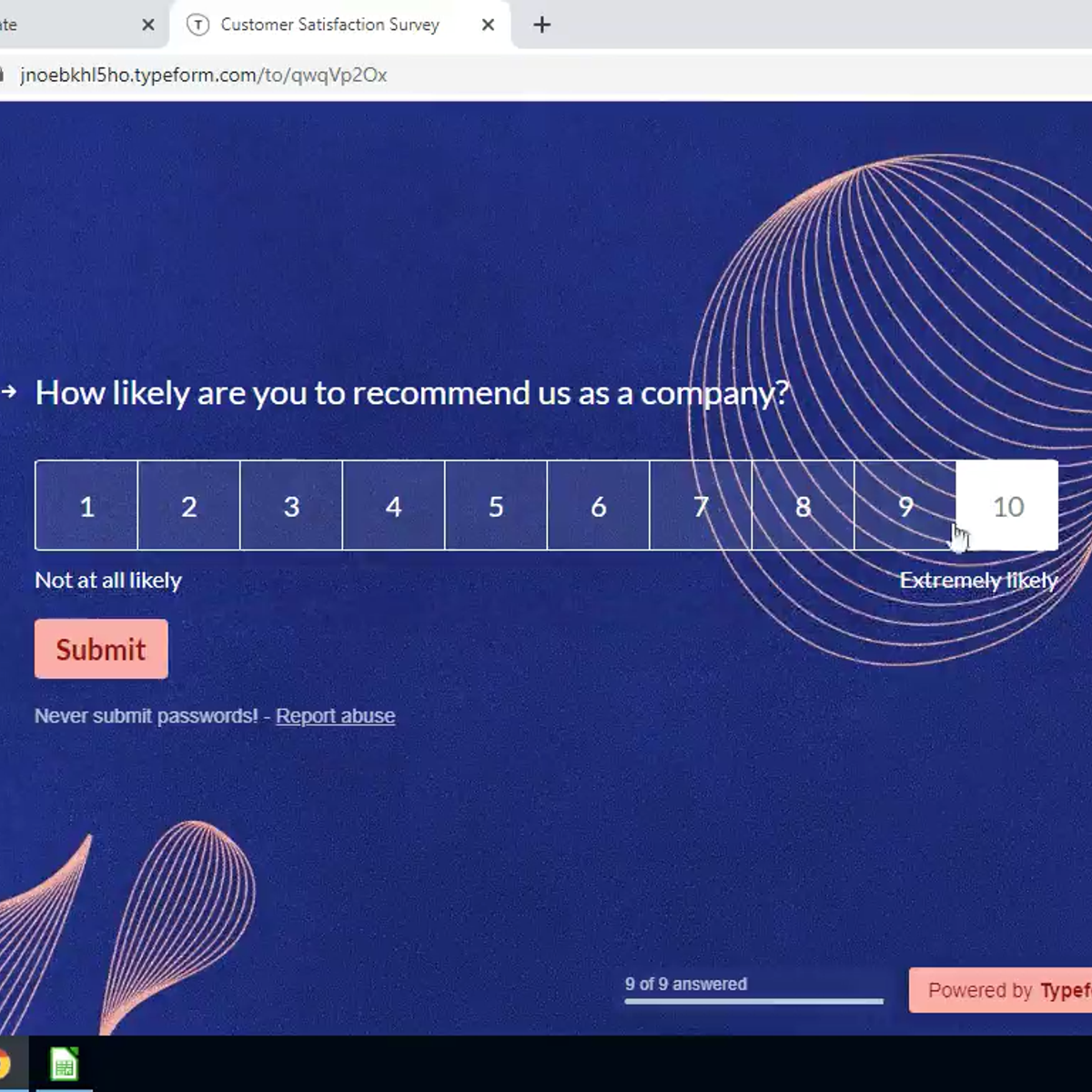
In this 1-hour long project-based course, you will learn how to design and structure a customer satisfaction survey, create it on Typeform and collect answers immediately. Note: This course works best for learners who are based in the North America region. We’re currently working on providing the same experience in other regions.
 Coursera
AI for Business: Generation & Prediction
Artificial Intelligence (AI) is not a new technology, it has been in development for decades. Today, however, AI is in the spotlight as it reshapes the way businesses operate, innovate, and engage with customers. Generative AI stands at the forefront of this transformation. This course demonstrates the foundations and practices of using Generative AI in Business settings. This course provides a brief history of AI and moves quickly into how you can use Generative AI to improve your ways of working. We’ll cover content creation as well as using AI in financial forecasting. Finally, we will also touch on the ethical implications of AI as we seek to evaluate the trajectory of AI in our business environment. Upon completing this course, learners will have a foundational understanding of AI, analyze which AI framework is useful for them, and synthesize this knowledge into their daily work. This program is designed for anyone who is interested in examining the origins of AI and how it can be effectively used by businesspeople. Learners should ideally possess the following prerequisite skills: basic critical thinking; open-mindedness; and an active learning mindset.
 Google Cloud
Looker Studio Pro Essentials - 日本語版
このコースでは、Looker Studio の基礎だけでなく、Looker Studio Pro の高度な特長や機能について説明します。チーム ワークスペースを活用して効率的なコラボレーションを実現する方法、データのセキュリティと管理を強化する方法、Google Cloud カスタマーケアを活用してサポートを受ける方法について学びます。また、データの可視化やレポート機能を向上させるプレミアム機能を紹介します。このコースは、Looker Studio の基本的な知識をすでに持っていて、ビジネスや組織でその可能性を最大限に引き出したいと考えているユーザーを対象としています。
 Board Infinity
Security for Artificial Intelligence Software and Services
The "Security Basics for Artificial Intelligence Software and Services" course provides an in-depth exploration of security measures and best practices in the context of AI. Spanning two comprehensive modules, the course begins with an introduction to the fundamentals of AI security, including ethical considerations and common threats. It then progresses to practical strategies for implementing robust security in AI development, such as secure coding, vulnerability assessment, and adherence to compliance standards. This course is designed to equip learners with the necessary knowledge and skills to safeguard AI systems against emerging threats, ensuring their integrity and reliability. It's ideal for developers, security professionals, and anyone interested in understanding and enhancing the security of AI software and services. Module 1: Introduction to AI Security delves into the critical aspects of securing artificial intelligence systems. This module covers foundational concepts and the importance of AI security, common security threats to AI systems, and ethical AI considerations, including data privacy. It also explores the principles of designing secure AI systems, secure data management practices, and the basics of encryption and access control in AI environments, providing a comprehensive introduction to the complexities and necessities of AI security. "Module 2: Implementing AI Security Practices" advances into the practical application of security measures in AI systems. It begins with secure coding practices, vulnerability assessments, and penetration testing tailored for AI. The module also addresses the implementation of secure AI APIs and endpoints. The second lesson focuses on ongoing security maintenance, compliance with evolving AI security standards and regulations, and anticipates future trends and emerging threats in AI security. This module is essential for anyone aiming to implement and maintain robust security practices in AI environments. This course is tailored for anyone interested in understanding, implementing, and managing security in AI environments, from technical practitioners to those overseeing and governing AI implementations. Disclaimer: This is an independent educational resource created by Board Infinity for informational and educational purposes only. This course is not affiliated with, endorsed by, sponsored by, or officially associated with any company, organization, or certification body unless explicitly stated. The content provided is based on industry knowledge and best practices but does not constitute official training material for any specific employer or certification program. All company names, trademarks, service marks, and logos referenced are the property of their respective owners and are used solely for educational identification and comparison purposes.
 Packt
Packt
A Beginners Guide to Linux
Updated in May 2025. This course now features Coursera Coach! A smarter way to learn with interactive, real-time conversations that help you test your knowledge, challenge assumptions, and deepen your understanding as you progress through the course. Embark on your Linux journey with this hands-on beginner’s course, designed to take you from a complete novice to a confident user of the Linux operating system. The course begins with an introduction to the importance of learning Linux and the various distributions available. You’ll learn how to set up a virtual environment using VirtualBox on Windows and proceed to install both CentOS and Ubuntu from scratch, giving you practical experience right from the start. As you progress, you'll dive into the Linux structure, exploring the directory layout and getting comfortable with the terminal. You’ll learn how to handle files, navigate through the system, and understand the significance of different directories. The course also covers essential text editors like Vim and Nano, along with graphical editors, and introduces you to powerful command-line tools like wildcards, pipes, and aliases, which will streamline your workflow. Finally, the course delves into process and job control, teaching you how to manage shell and environment variables, automate tasks with cron jobs, and gain greater control over your Linux environment. By the end of the course, you'll have a solid foundation in Linux, equipped with the skills necessary to manage and troubleshoot a Linux system effectively. This course is ideal for beginners with no prior experience in Linux. Basic familiarity with computers is recommended, but no programming skills are necessary. It's perfect for students, IT professionals, and anyone looking to expand their knowledge in open-source operating systems.
 Scrimba
API Basics 3: Build a Game (Async JS, Callbacks & Promises)
This course introduces you to the fundamentals of asynchronous JavaScript through hands-on challenges and an engaging project. You will start by learning the basics of callback functions and progress towards understanding promises, method chaining, and the power of async/await. Along the way, you'll apply these concepts in practical coding challenges, such as building a fully functional "War" card game, complete with features such as scoring, card drawing, and a final winner display. The course also explores custom JavaScript functions, the fetch API, and real-world scenarios involving asynchronous code. By the end, you'll have a strong foundation in asynchronous programming, ready to tackle more advanced JavaScript projects.
 Imperial College London
Introduction to Participatory Approaches in Public Health
This course will introduce you to participatory approaches to public health. You will learn about the history of participatory health research and why it is essential to solving contemporary public health challenges. The course will help you to understand the social and cultural context of public health, before introducing you to essential concepts for working with communities: knowledge and power. Finally, you will engage with critical analyses of participatory approaches, to help you to determine if and when such strategies are appropriate. Throughout the course you will analyse real-world case studies of community-based health projects, including historical HIV social movements, public health projects with sex workers, and participatory approaches to the COVID-19 pandemic. The course will equip you to practice public health in partnership with local communities. It is followed by a second course, Applying Participatory Approaches in Public Health Settings, which builds upon the theoretical foundations of this introductory course.
 Board Infinity
Backend Development: Node.js, Express, MongoDB & REST APIs
Course Description Master the fundamentals of backend development and build powerful server-side applications using Node.js, Express.js, and MongoDB. This comprehensive course takes you from understanding client-server architecture to creating secure, scalable APIs with authentication and authorization. Learn to design and implement RESTful services, manage databases efficiently, and integrate APIs seamlessly into modern web applications. Through hands-on projects and practical examples, you'll develop the expertise to handle complex server-side logic and data management challenges. Course Learning Objectives - Understand server-side architecture principles and evaluate different backend technologies for web application development - Create robust Node.js applications using Express.js framework with proper routing, middleware, and error handling - Design and implement MongoDB databases with advanced querying, indexing, and optimization techniques - Develop secure RESTful APIs with JWT authentication, role-based authorization, and proper data validation Course Target Audience - Front-end developers transitioning to full-stack development - Aspiring backend developers seeking comprehensive server-side skills - Software engineers wanting to specialize in API development - Web developers looking to build scalable database-driven applications - Computer science students pursuing modern web development careers Course Benefits Gain highly sought-after backend development skills that are essential for modern web applications. Build a professional portfolio showcasing real-world server-side projects that demonstrate your ability to handle complex data operations and API integrations. Master industry-standard tools and frameworks used by leading tech companies, positioning yourself for high-paying backend developer roles in today's competitive job market. What Makes This Course Unique Our project-based approach focuses on building real-world applications rather than isolated coding exercises. You'll work with the complete MERN stack ecosystem, learning how backend services integrate with frontend applications. Unlike other courses, we emphasize security best practices, performance optimization, and scalable architecture patterns from the beginning. Each module builds upon practical database and API projects that mirror enterprise-level development scenarios, ensuring you're job-ready upon completion. Disclaimer: This course is an independent educational resource developed by Board Infinity and is not affiliated with, endorsed by, sponsored by, or officially associated with MongoDB or any of its subsidiaries or affiliates. This course is not an official preparation material of MongoDB. All trademarks, service marks, and company names mentioned are the property of their respective owners and are used for identification purposes only.
 Coursera
Mastering Data Analysis with Pandas: Learning Path Part 3
In this structured series of hands-on guided projects, we will master the fundamentals of data analysis and manipulation with Pandas and Python. Pandas is a super powerful, fast, flexible and easy to use open-source data analysis and manipulation tool. This guided project is the third of a series of multiple guided projects (learning path) that is designed for anyone who wants to master data analysis with pandas. Note: This course works best for learners who are based in the North America region. We’re currently working on providing the same experience in other regions.
 DeepLearning.AI
머신 러닝 프로젝트 구조화
딥 러닝 전문화 과정의 세 번째 과정에서는 성공적인 머신 러닝 프로젝트를 구축하고 머신 러닝 프로젝트 리더로서 의사 결정을 연습하는 방법을 배우게 됩니다. 이 과정을 마치면 머신 러닝 시스템의 오류를 진단할 수 있고, 오류를 줄이기 위한 전략의 우선 순위를 지정하고, 일치하지 않는 training/test set와 같은 복합적인 ML 설정을 이해하며 휴먼 레벨의 성능에 필적 및/또는 능가하는 ML 설정을 이해하고, 종단 간 학습, 전이 학습, 멀티 태스크 러닝을 적용할 수 있게 됩니다. 이는 또한 기본적인 머신 러닝 지식이 있는 학습자를 위한 독립형 과정입니다. 이 과정에서는 많은 딥 러닝 제품을 구축하고 출시한 Andrew Ng의 경험을 활용합니다. AI 팀의 방향을 제시할 수 있는 기술 리더가 되고 싶다면 이 과정은 수년간의 ML 업무 경험을 거친 후에 얻을 수 있는 ‘산업 경험’을 제공해드립니다. 딥 러닝 전문화 과정은 딥 러닝의 기능, 도전 과제 및 결과를 이해하고 첨단 AI 기술 개발에 참여할 수 있도록 준비하는 데 도움이 되는 기본 프로그램입니다. 머신 러닝을 업무에 적용하고, 기술 경력의 수준을 높이고, AI 세계의 최종적인 단계를 밟을 수 있는 지식과 기술을 쌓을 수 있는 경로를 제공합니다.