

The Global Scholarly Directory.
Discover world-class academic programs curated for the modern intellectual. Search through 19877+ degrees and professional certificates.
 Coursera
Scikit-Learn For Machine Learning Classification Problems
Hello everyone and welcome to this new hands-on project on Scikit-Learn Library for solving machine learning classification problems. In this project, we will learn how to build and train classifier models using Scikit-Learn library. Scikit-learn is a free machine learning library developed for python. Scikit-learn offers several algorithms for classification, regression, and clustering. Several famous machine learning models are included such as support vector machines, random forests, gradient boosting, and k-means.
 Google Cloud
Utiliser BigQuery Machine Learning pour l'inférence
Découvrez BigQuery ML pour l'inférence, pourquoi les analystes de données devraient s'en servir, ses cas d'utilisation et les modèles de ML compatibles. Apprenez également à créer des modèles de ML et à les gérer dans BigQuery.
 Coursera
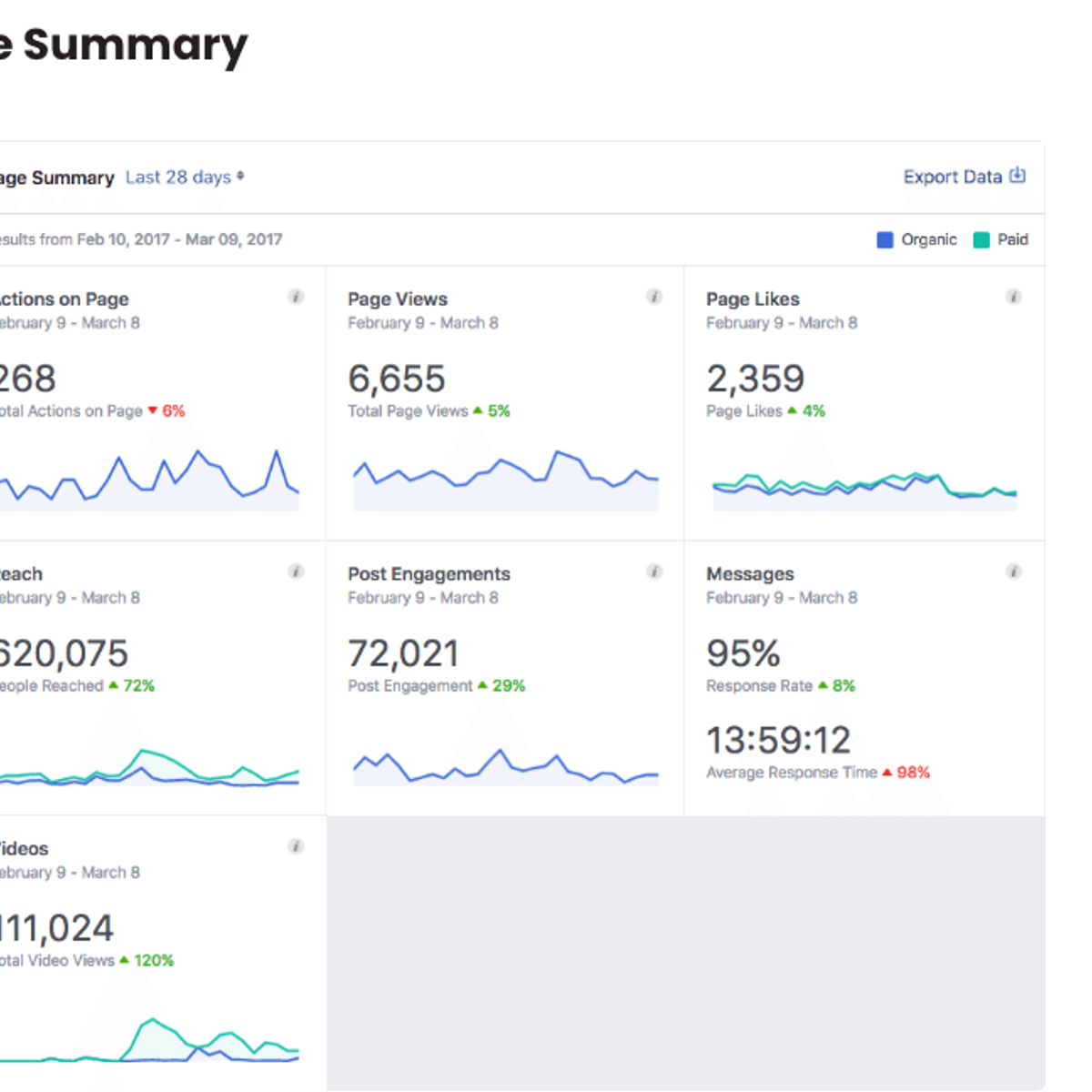
Measure a Marketing Strategy using Facebook Insights
By the end of this project, learners will have a better understanding of ways they can enhance their Facebook Marketing strategies, which will ultimately improve users' Facebook Insights. We will take an in-depth look at how to incorporate marketing strategies that will more likely enhance overall analytics, and learners will develop a deeper understanding of how to use Facebook Insights to track and measure strategic marketing efforts. Having this knowledge, allows Facebook users to more easily adapt and update strategies according to Insight results to get the most out of their Facebook strategy. Note: This course works best for learners who are based in the North America region. We’re currently working on providing the same experience in other regions.
 Coursera
Clean Lists for Delivery
Master the critical foundation of email marketing success through strategic list hygiene. This Short Course was created to help marketing professionals accomplish optimal email deliverability and campaign performance through systematic list management. By completing this course, you'll be able to distinguish between active and inactive subscribers, implement proven re-engagement strategies, and maintain lists that drive measurable business results. By the end of this course, you will be able to: Identify the difference between active and inactive email subscribers Apply best practices for re-engaging or removing inactive subscribers from a list This course is unique because it transforms list management from reactive cleanup to proactive strategy, focusing on sustainable email marketing success rather than short-term metrics. To be successful in this project, you should have a background in basic email marketing platform navigation and campaign creation.
 Google Cloud
Networking in Google Cloud: Network Security - Français
"Welcome to the fourth course of the ""Networking in Google Cloud"" series: Network Security! In this course, you'll dive into the services for safeguarding your Google Cloud network infrastructure. The first module, Distributed Denial of Service (DDoS) Protection, covers how to fortify your network against Distributed Denial of Service (DDoS) attacks, ensuring uninterrupted availability of your services. In the second module, Controlling Access to VPC Networks, you'll learn the network access control, enabling you to define permissions for who can access your resources and how. Finally, in the third module, Advanced Security Monitoring and Analysis, we'll explore how to proactively detect and respond to potential threats, keeping your Google Cloud environment secure and resilient. By the end of this course, you'll have a comprehensive understanding of Google Cloud network security."
 Packt
Packt
CCNA Foundations – Networking Basics and Cisco IOS Essentials
Kickstart your networking career with CCNA Foundations: Networking & Cisco IOS Basics. This comprehensive course covers the essential concepts of networking, guiding you through foundational principles, Cisco IOS operations, and hands-on practice with Cisco devices. By the end of this course, you'll have a solid understanding of networking protocols, subnetting, and how to configure and troubleshoot Cisco network devices. The journey begins with an introduction to networking basics, including the OSI and TCP/IP models. You’ll then explore Cisco IOS, learning how to navigate and configure network devices. The course also covers transport and network layer concepts, diving deep into IP addressing, subnetting, and different types of network traffic. Hands-on lab exercises and Anki flashcards ensure an interactive learning experience, reinforcing theoretical knowledge with real-world applications. As you progress, you'll master IP addressing schemes, subnetting techniques, and variable-length subnet masking (VLSM), essential for designing efficient networks. You'll gain confidence working with Cisco Packet Tracer, simulating real-world scenarios and troubleshooting network configurations. Each module builds upon the last, ensuring a structured and effective learning path. Designed for aspiring network professionals, IT students, and anyone preparing for the CCNA 200-301 certification, this course is beginner-friendly but requires basic computer knowledge. Whether you're looking to start a career in networking or strengthen your technical skills, this course provides the foundational knowledge to succeed.
 Microsoft
R Programming Essentials with Microsoft Tools
Begin your R programming journey with this foundational course that combines essential programming concepts with Microsoft's professional development environment. Through five comprehensive modules, you'll master R basics while working with Visual Studio Code and GitHub Copilot. Starting with fundamental concepts like variables and data structures, you'll progress to working with real data and implementing version control. The course features hands-on projects, AI-assisted coding practice, and culminates in creating your first complete R programming project.
 University of Manchester
Introduction to Molecular Spectroscopy
The course introduces the three key spectroscopic methods used by chemists and biochemists to analyse the molecular and electronic structure of atoms and molecules. These are UV/Visible , Infra-red (IR) and Nuclear Magnetic Resonance (NMR) spectroscopies. The content is presented using short focussed and interactive screencast presentations accompanied by formative quizzes to probe understanding of the key concepts presented. Numerous exercises are provided to facilitate mastery of each topic. A unique virtual spectroscopic laboratory is made available to enable students to measure and analyse spectra online. Assessment is via summative quizzes completed during the course period.
 University of California San Diego
Data Structures and Performance
How do Java programs deal with vast quantities of data? Many of the data structures and algorithms that work with introductory toy examples break when applications process real, large data sets. Efficiency is critical, but how do we achieve it, and how do we even measure it? This is an intermediate Java course. We recommend this course to learners who have previous experience in software development or a background in computer science, and in particular, we recommend that you have taken the first course in this specialization (which also requires some previous experience with Java). In this course, you will use and analyze data structures that are used in industry-level applications, such as linked lists, trees, and hashtables. You will explain how these data structures make programs more efficient and flexible. You will apply asymptotic Big-O analysis to describe the performance of algorithms and evaluate which strategy to use for efficient data retrieval, addition of new data, deletion of elements, and/or memory usage. The program you will build throughout this course allows its user to manage, manipulate and reason about large sets of textual data. This is an intermediate Java course, and we will build on your prior knowledge. This course is designed around the same video series as in our first course in this specialization, including explanations of core content, learner videos, student and engineer testimonials, and support videos -- to better allow you to choose your own path through the course!
 SkillUp
Java App Development Project: Fundamentals, OOP & File I/O
Boost your Java development skills with curated projects designed to help you quickly build real-world experience. Through online project-based labs, you'll apply critical development techniques that employers expect a good Java developer to know. You'll gain hands-on experience coding console-based Java applications, practice your skills working with a console-based recycling tracker, and prove your capabilities building a pet appointment management system that incorporates object-oriented programming (OOP), Java collections including ArrayLists and HashMaps, file inputs and outputs, and exception handling. You'll also demonstrate your ability to write modular code, implement data persistence, and generate formatted output from structured object data. By the end of this course, you'll have built a functional, shareable project that demonstrates your Java proficiency—ideal for showcasing in your portfolio and talking about in technical interviews.
 L&T EduTech
Airport Construction
This course provides a comprehensive practical understanding of the construction and maintenance aspects of airport infrastructure. It delves into the processes that transform blueprints into tangible, operational airport facilities, ensuring safety, durability, and environmental responsibility. Begin with the essential groundwork of pre-construction activities. Understand the intricacies of statutory approvals for site infrastructure and labor licenses, ensuring regulatory compliance. Learn to plan the phase-wise deployment of key resources and establish efficient site infrastructure. Master the estimation of plant and equipment requirements, and gain familiarity with earthmoving, compaction, hoist, and tower crane operations. Explore the practical execution of runway and taxiway construction, focusing on civil works. Understand the airport layout and grading plans, and learn to execute and estimate various layers of flexible and rigid pavements. Master the construction of drainage systems, runway markings, and the installation of ducts and approach lighting systems. Gain insights into navigational and meteorological aids, ensuring the functionality and safety of the airside environment. Understand the critical importance of maintaining and rehabilitating existing airport pavements. Learn to evaluate the condition of runways and taxiways, identifying causes and typical failures in flexible and rigid pavements. Master maintenance, strengthening, and rehabilitation techniques, ensuring the long-term functionality and safety of airport surfaces. Delve into the environmental considerations that shape modern airport construction and operation. Understand the impacts of aircraft noise and learn noise mitigation strategies. Explore social and ecological factors, and master emissions management and water quality control. Learn to implement sustainability practices at airports, and examine real-world applications through in-depth case studies, such as the Singapore Changi Airport. From meticulous pre-construction planning and regulatory approvals to the precise construction of runways and taxiways, you'll learn the critical aspects of pavement maintenance and rehabilitation. Furthermore, you'll explore the vital considerations of environmental impact and sustainability. This course empowers you to be a key player in the physical creation and upkeep of vital aviation infrastructure. The target learners for this specialization are civil engineering graduate students, postgraduate students and professionals working in the field of Airports. The prerequisites include Basic Civil Engineering, Building Materials and Transportation Engineering.
 Erasmus University Rotterdam
Multilevel Modeling
In this course, PhD candidates will get an introduction into the theory of multilevel modelling, focusing on two level multilevel models with a 'continuous' response variable. In addition, participants will learn how to run basic two-level model in R. The objective of this course is to get participants acquainted with multilevel models. These models are often used for the analysis of ‘hierarchical’ data, in which observations are nested within higher level units (e.g. repeated measures nested within individuals, or pupils nested within schools). In this type of data causes of outcomes (e.g. the performance of pupils in schools) are located both at the level of the individual (e.g., own and parental resources), and at a higher, contextual, level shared by some of the individuals (e.g. characteristics of the class and of the teacher). Because of this, the assumption of 'independent observations' is violated with hierarchical data, but multilevel modelling can easily account for that. Moreover, multilevel modelling can easily deal with missing data (in most circumstances). This course is designed and presented by Dr. Joran Jongerling on behalf of the Erasmus Graduate School of Social Sciences and the Humanities (EGSH, www.egsh.eur.nl) of the Erasmus University Rotterdam in the Netherlands. Should you have any questions about the organization or contents of the course, please send us an email at contact@egsh.eur.nl.
 Packt
Packt
The Complete Guide for SQL with Microsoft SQL Server
This course features Coursera Coach! A smarter way to learn with interactive, real-time conversations that help you test your knowledge, challenge assumptions, and deepen your understanding as you progress through the course. Master SQL and Microsoft SQL Server from the ground up in this comprehensive course designed for learners at all levels. You’ll gain a deep understanding of database concepts, command execution, constraints, normalization, transactions, and more—empowering you to manage data with confidence and efficiency. Beginning with the fundamentals of databases and progressing through practical installations and SQL command categories, the course then dives into data manipulation, table operations, importing sample data, and essential SQL clauses. You'll learn to work with various data types and constraints, as well as understand ER diagrams and advanced SQL operations like joins, views, stored procedures, triggers, and transactions. Later modules focus on critical tools like subqueries, string and date functions, mathematical and conversion functions, and database backup, restore, and security best practices. Each section is enhanced with real-world examples to reinforce your learning through practice. This course is ideal for aspiring database professionals, software developers, business analysts, or anyone looking to build a solid foundation in SQL and relational databases. No prior database experience is required, though basic computer skills are helpful.
 University of Geneva
Particle Physics: an Introduction
This course introduces you to subatomic physics, i.e. the physics of nuclei and particles. More specifically, the following questions are addressed: - What are the concepts of particle physics and how are they implemented? - What are the properties of atomic nuclei and how can one use them? - How does one accelerate and detect particles and measure their properties? - What does one learn from particle reactions at high energies and particle decays? - How do electromagnetic interactions work and how can one use them? - How do strong interactions work and why are they difficult to understand? - How do weak interactions work and why are they so special? - What is the mass of objects at the subatomic level and how does the Higgs boson intervene? - How does one search for new phenomena beyond the known ones? - What can one learn from particle physics concerning astrophysics and the Universe as a whole? The course is structured in eight modules. Following the first one which introduces our subject, the modules 2 (nuclear physics) and 3 (accelerators and detectors) are rather self contained and can be studied separately. The modules 4 to 6 go into more depth about matter and forces as described by the standard model of particle physics. Module 7 deals with our ways to search for new phenomena. And the last module introduces you to two mysterious components of the Universe, namely Dark Matter and Dark Energy.
 Google Cloud
Getting Started with the Vertex AI Gemini API with cURL
This is a self-paced lab that takes place in the Google Cloud console. In this lab, you will learn how to use the Vertex AI Gemini API with cURL commands to interact with the Gemini models.
 The Hong Kong University of Science and Technology
Introduction to Indoor Air Quality
Course Overview: https://youtu.be/LLVb4FOn4uU This course provides a basic knowledge of an emerging area – Indoor Air Quality (IAQ) in buildings. Learners will realize the importance of maintaining proper IAQ. Characteristics associated with indoor air contaminants (IAC) are demonstrated, such as • Particulate matters (PM2.5, PM10) • Radon • Volatile organic compounds (VOCs) • Asbestos • Bio-aerosols, and more Safe exposure levels, resulting health effects, measurement techniques, mitigate and control measures of these IAC are discussed. Other important areas related to IAQ such as building ventilation systems, indoor flow characteristics, sick building syndrome, and thermal comfort are also covered in this course.