

The Global Scholarly Directory.
Discover world-class academic programs curated for the modern intellectual. Search through 19877+ degrees and professional certificates.
 Duke University
FinTech Law and Policy
Being a successful FinTech firm requires more than just great technology; it also requires an understanding of the laws and regulations applicable to your business. This course will provide you with that understanding. You will learn about the critical legal, regulatory, and policy issues associated with cryptocurrencies, initial coin offerings, online lending, new payments and wealth management technologies, and financial account aggregators. In addition, you will learn how regulatory agencies in the U.S. are continually adjusting to the emergence of new financial technologies and how one specific agency has proposed a path for FinTech firms to become regulated banks. You will also learn the basics of how banks are regulated in the U.S. If you are unfamiliar with how these new financial technologies work, fear not. We will begin each new course section with a high-level overview of the underlying technology. While the course is principally focused on the U.S. FinTech industry, we cannot possibly cover every relevant legal and regulatory issue. Therefore, this course should not be construed as legal advice. Rather, the goal of the course is to familiarize you with the key legal and regulatory challenges FinTech firms in various sectors face, as well as the critical policy debates that are occurring in Washington D.C. and state capitals across the country.
 University of California San Diego
Hacking COVID-19 — Course 1: Identifying a Deadly Pathogen
In this course, you will follow in the footsteps of the bioinformaticians investigating the COVID-19 outbreak by assembling the SARS-CoV-2 genome. Whether you’re new to the world of computational biology, or you’re a bioinformatics expert seeking to learn about its applications in the COVID-19 pandemic, or somewhere in between, this course is for you! As you go through this journey, we will introduce and explain genomic concepts and give you many opportunities to practice your skills, and we will provide a series of problems with gradually increasing complexity. This first course will only discuss the assembly of the SARS-CoV-2 genome, but future courses in this series will explore follow-up bioinformatics analyses used in the COVID-19 pandemic.
 Packt
Packt
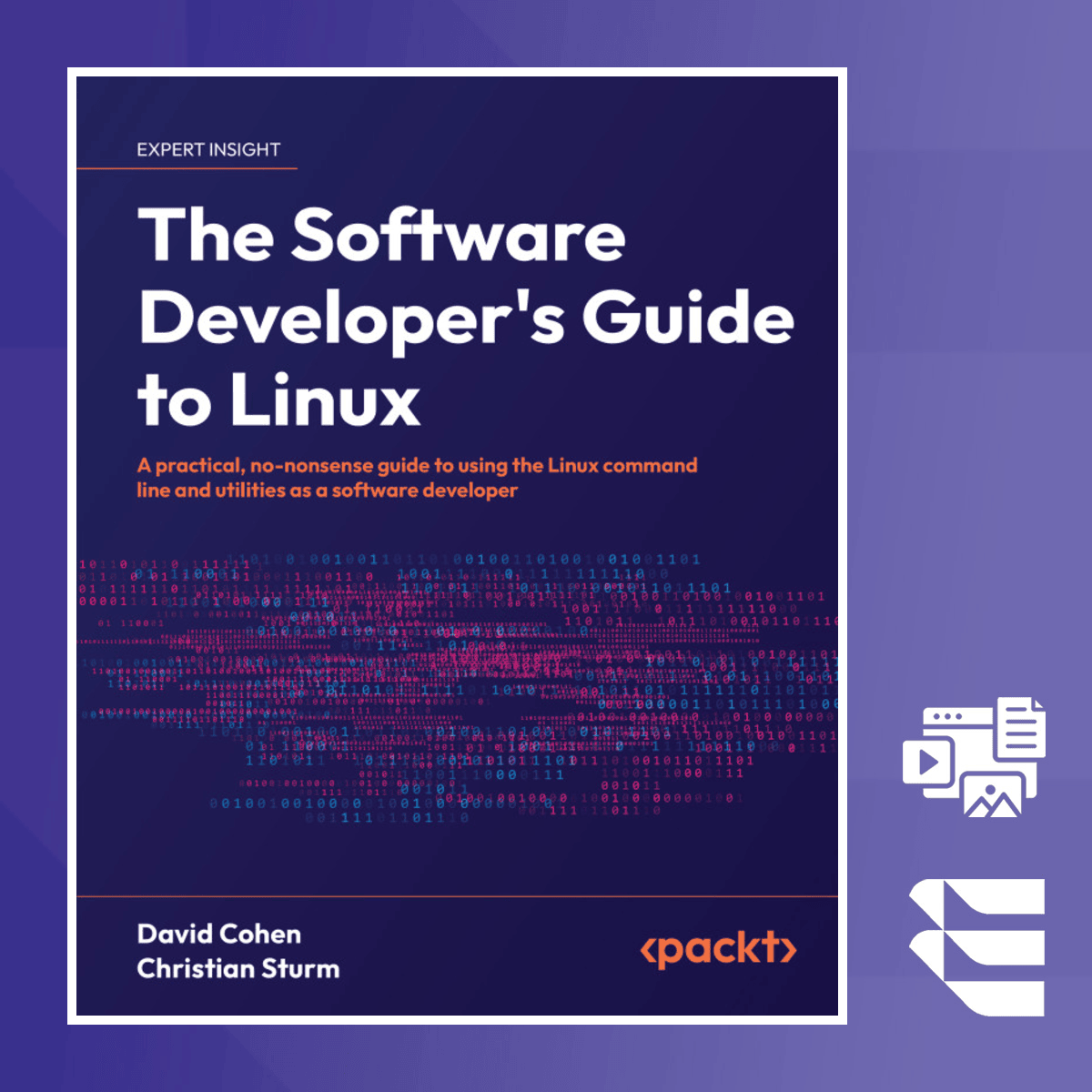
The Software Developer's Guide to Linux
The course is designed to equip software developers with essential Linux command-line skills that are crucial for daily development tasks. It emphasizes practical, real-world applications, helping developers become more efficient and confident when working in Linux environments. By mastering these tools, learners will improve their productivity and streamline their development workflow. Throughout the course, you'll dive into hands-on examples that demonstrate the power of Linux's command-line interface for tasks such as shell scripting, Docker management, and debugging. The course bridges the gap between basic knowledge and advanced proficiency, focusing on skills that are directly applicable to software development rather than system administration. What sets this course apart is its focus on developer-specific tasks and tools. It avoids unnecessary system administration details and instead highlights techniques like shell scripting and leveraging Docker to enhance your workflow. This practical approach ensures that learners can apply what they learn immediately in their development environments. This course is ideal for software developers who have a basic understanding of computers and are looking to improve their Linux command-line skills. While prior knowledge of file systems and text editing will be helpful, no deep Linux expertise is required. By the end, you'll have a solid grasp of Linux command-line tools and techniques to solve real development challenges.
 Creo Incubator
Entrepreneuriat : Idéation et exploration des fondamentaux
Le cours CREO Entrepreneurship : Ideation and Exploring Fundamentals initie les apprenants à l’entrepreneuriat en tant que parcours professionnel et discipline pratique. Il s’adresse aux personnes curieuses de créer une entreprise et souhaitant comprendre concrètement ce que recouvre l’entrepreneuriat, depuis la génération d’idées jusqu’à la conception d’un projet entrepreneurial à un stade précoce. Les participants explorent l’état d’esprit entrepreneurial, le processus d’identification de problèmes réels, ainsi que des techniques permettant de générer des solutions viables. En s’appuyant sur les principes du design thinking, les apprenants apprennent à valider des idées, à comprendre les besoins des utilisateurs et à tester leurs hypothèses. Le cours introduit également les concepts fondamentaux du modèle économique, afin d’aider les participants à comprendre comment la valeur est créée, délivrée et captée dans le contexte d’une start-up. À travers des activités guidées et des exemples appliqués, les apprenants acquièrent une compréhension réaliste de la prise de décision entrepreneuriale, des risques et des opportunités. Le cours met l’accent sur l’exploration et la clarté, permettant aux participants d’évaluer si l’entrepreneuriat correspond à leurs intérêts, leurs compétences et leurs objectifs. À l’issue de ce cours, vous serez en mesure de : - Expliquer ce que recouvre l’entrepreneuriat et les principales caractéristiques des entrepreneurs - Identifier des problèmes pertinents à résoudre à travers une approche entrepreneuriale - Appliquer des méthodes de design thinking pour générer et affiner des solutions - Développer un modèle économique de base pour un nouveau projet - Évaluer si l’entrepreneuriat constitue une voie professionnelle adaptée à votre profil Prérequis : - Aucune expérience préalable en business ou en entrepreneuriat n’est requise. Ce cours s’adresse aux débutants, aux étudiants et aux professionnels découvrant l’entrepreneuriat pour la première fois.
 Google
Satisfaction Guaranteed: Develop Customer Loyalty Online
You made it! Satisfaction Guaranteed: Develop Customer Loyalty Online is the seventh course in the Google Digital Marketing & E-commerce Certificate. In this course, you’ll explore strategies for building customer loyalty in e-commerce. You’ll also explore specific tools to develop and maintain client relationships. At the end of the course you’ll work through a scenario that demonstrates your ability to deliver a successful e-commerce strategy. Finally, you’ll wrap up the course by building professional development skills. We encourage you to complete courses 1–6 before beginning this course because they provide the foundation necessary to complete the activities at the end of this course. Google employees who currently work in the field will guide you, providing hands-on activities and examples that simulate common digital marketing and e-commerce tasks while showing you some of the best tools and resources used on the job. Learners who complete the eight courses in this program will be prepared to apply for entry-level jobs in digital marketing and e-commerce. No previous experience is necessary. By the end of this course, you will be able to do the following: - Identify common strategies for building customer loyalty in e-commerce - Understand how to successfully manage client relationships and measure satisfaction - Monitor an e-commerce store’s performance - Update an e-commerce store based on data - Complete a portfolio scenario to prepare for job interviews - Learn AI skills from Google experts to help complete marketing tasks
 Packt
Packt
No-Code Machine Learning Using Amazon AWS SageMaker Canvas
This course features Coursera Coach! A smarter way to learn with interactive, real-time conversations that help you test your knowledge, challenge assumptions, and deepen your understanding as you progress through the course. In this course, you'll gain hands-on experience with AWS SageMaker Canvas, a powerful no-code tool for machine learning. You'll start by understanding the basics of machine learning and Amazon Web Services (AWS), laying a solid foundation for the rest of the course. As you progress, you'll explore how SageMaker Canvas simplifies building, training, and deploying machine learning models with no coding required. Throughout the course, you'll complete four projects that cover real-world applications such as banknote authentication, spam SMS detection, customer churn prediction, and wine quality prediction. These projects will guide you through adding training data, building models, making predictions, and validating accuracy. The hands-on experience will deepen your understanding and help you master SageMaker Canvas' interface and capabilities. By the end of the course, you'll be able to apply your skills to a variety of machine learning tasks using SageMaker Canvas. This course is ideal for individuals who are new to machine learning or those looking to streamline the process of building machine learning models without writing code.
 Packt
Packt
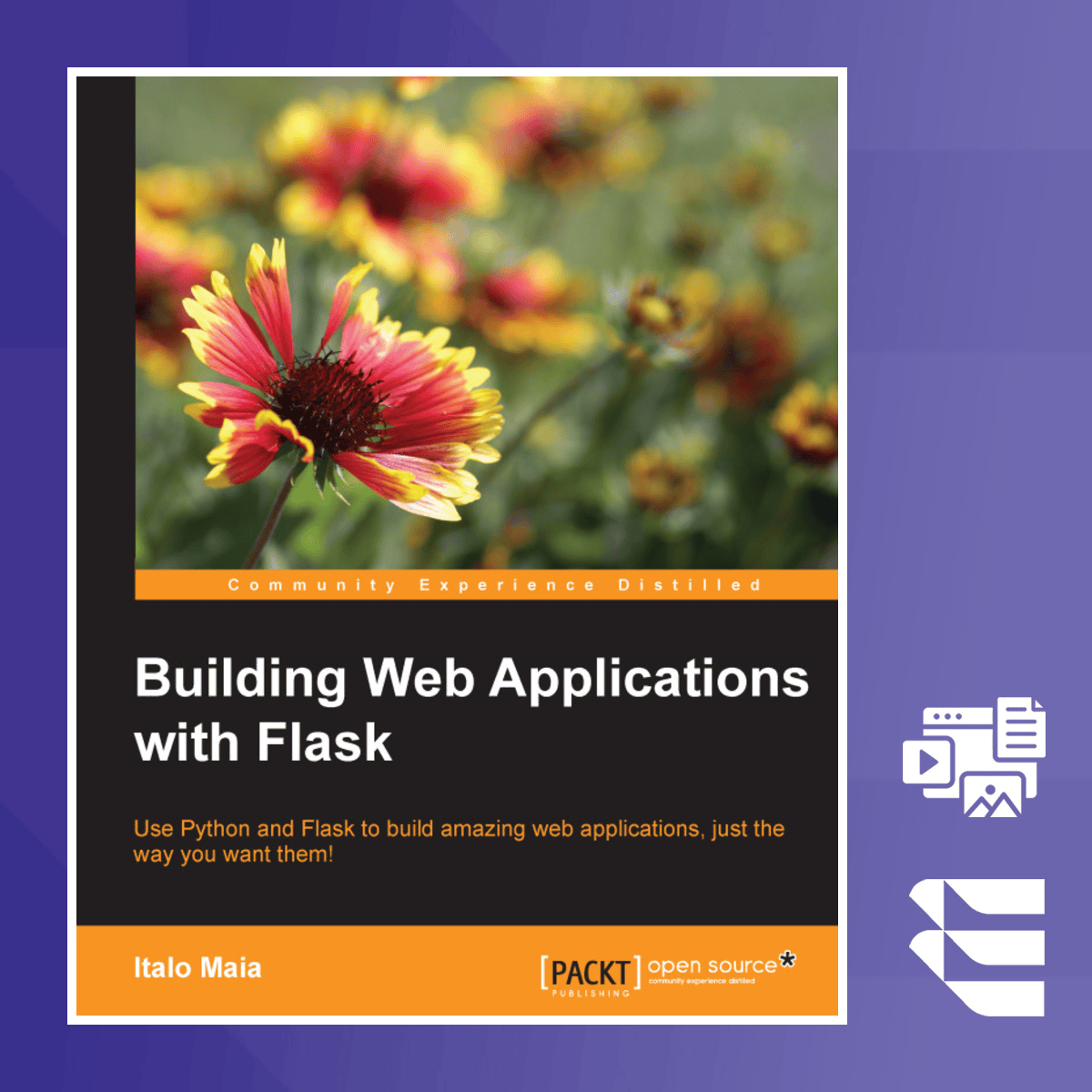
Building Web Applications with Flask
This course focuses on using Python and Flask to create scalable, maintainable web applications. Flask's lightweight framework will empower you to build custom, fully-featured applications, adhering to best industry practices. Whether you're new to web development or looking to enhance your existing Flask skills, this course is designed to provide a comprehensive learning experience. Throughout the course, you will gain hands-on experience in building single-page applications, rendering dynamic content, and implementing secure form handling. By mastering Flask’s extensions and incorporating secure authentication techniques, you'll be well-equipped to develop real-world applications that meet modern standards. What sets this course apart is its project-driven approach, which encourages you to apply theory to practical, real-world scenarios. You will build a scalable web application from the ground up, using the same techniques professionals use in the field. By the end, you'll be confident in your ability to deploy Flask applications in production environments. This course is perfect for Python developers familiar with basic web development who want to take their Flask skills to the next level. A foundational understanding of Python and web concepts is recommended, but no advanced experience is required.
 Peking University
计算机辅助翻译原理与实践 Principles and Practice of Computer-Aided Translation
现代语言服务行业要求从业人员必须具有利用计算机及网络来使用各类技术辅助工具帮助其工作的能力,而不是仅仅学会几款狭义的计算机辅助翻译软件。 本课程主要讲授计算机辅助翻译技术的基础概念,学习多种计算机辅助翻译工具的使用方法,锻炼学生在技术环境下从事翻译工作等各类语言服务工作的能力,帮助学生理解信息化时代的语言服务工作。 课程完整涵盖现代语言服务的基本情况介绍、翻译技术基本概念、语言服务项目执行过程的信息环境与信息技术、如何利用电子辞典、网络资源及语料库工具辅助翻译工作、狭义和广义的计算机辅助翻译工具原理及实战演练、翻译内容质量评定、多人协同翻译项目、翻译管理等多方面的内容。作为翻译类专业学生的必修课程,本课程适合语言类专业学生学习。通过课程的学习,有助于学习者了解现代语言服务行业,增强各类计算机辅助翻译工具的使用技能,提高包括翻译工作在内的各类语言服务工作的效率。 该课程是“北大-德稻网络公开课程”中的一门,由北京大学与德稻教育联合提供。 本课程同时受到“语言能力协同创新计划”资助和支持。 Those who work in modern language service industry are required to be capable of using computers and Internet to aid their translation job by adapting a variety of efficient tools, rather than just using word processor tools and several basic computer-aided translation software. This course teaches the basic concepts of computer-aided translation technology, helps students learn to use a variety of computer-aided translation tools, enhances their ability to engage in various kinds of language service in such a technical environment, and helps them understand what the modern language service industry looks like. This course covers introduction to modern language services industry, basic principles and concepts of translation technology, information technology used in the process of language translation, how to use electronic dictionaries, Internet resources and corpus tools, practice of different computer-aided translation tools, translation quality assessment, basic concepts of machine translation, globalization, localization and so on. As a compulsory course for students majoring in Translation and Interpreting, this course is also suitable for students with or without language major background. By learning this course, students can better understand modern language service industry and their work efficiency will be improved for them to better deliver translation service. The course is one of the PKU-DeTao MOOCs, which is a joint effort by Peking University and DeTao Masters Academy.
 University of Colorado System
Intermediate Object-Oriented Programming for Unreal Games
This course is the fourth and final course in the Specialization about learning how to develop video games using the C++ programming language and the Unreal game engine on Windows or Mac. This course assumes you have the prerequisite knowledge from the previous three courses in the specialization. You should make sure you have that knowledge, either by taking those previous courses or from personal experience, before tackling this course. Throughout this course you'll build on your foundational C# and Unity knowledge by developing more robust games with better object-oriented designs using file input and output, inheritance and polymorphism, and event handling. This course gives you even more tools to help you build great games with C++ and Unreal! Module 1: Start using files to implement your Unreal games Module 2: Learn how inheritance and polymorphism help us write less code for our games Module 3: Implement event handling to make better object-oriented designs and add menus to your Unreal games Module 4: Explore the complete implementation of a small Unreal game
 Microsoft
Data and Business Process Modeling with Microsoft Visio
This course is designed to equip you with essential skills in business process and data modeling using Microsoft Visio. Throughout this program, you will delve into various facets of business analysis and data modeling. Using Microsoft Visio learners will create insightful business processes and data models, and apply these skills to enhance your capabilities in business analysis. After completing this course, you’ll be able to: • Identify and navigate the user interface of Microsoft Visio • Explain how to use Microsoft Visio to create diagrams • Explain the role of business activity and process modeling in a business analysis context • Create business process and activity models in Microsoft Visio • Explain the role of data modeling in a business analysis context • Create data models in Microsoft Visio
 Pontificia Universidad Católica del Perú
Introducción al Desarrollo de Software
El desarrollo de software es una actividad compleja que requiere de una comprensión profunda de los conceptos y procesos involucrados. Este curso está dirigido a personas que quieran iniciarse en el desarrollo de software o que quieran actualizar o formalizar los conceptos sobre este tema. No se requieren conocimientos previos de programación. En este curso revisarás los conceptos principales y generales que son esenciales para un exitoso desarrollo de software. Aprenderás sobre las características de la construcción de software, los procesos involucrados en su desarrollo, modelos de ciclo de vida, terminología utilizada y una visión general del lenguaje unificado de modelado. Este conocimiento te ayudará a comprender mejor el software y su desarrollo.
 Duke University
Data Science Math Skills
Data science courses contain math—no avoiding that! This course is designed to teach learners the basic math you will need in order to be successful in almost any data science math course and was created for learners who have basic math skills but may not have taken algebra or pre-calculus. Data Science Math Skills introduces the core math that data science is built upon, with no extra complexity, introducing unfamiliar ideas and math symbols one-at-a-time. Learners who complete this course will master the vocabulary, notation, concepts, and algebra rules that all data scientists must know before moving on to more advanced material. Topics include: ~Set theory, including Venn diagrams ~Properties of the real number line ~Interval notation and algebra with inequalities ~Uses for summation and Sigma notation ~Math on the Cartesian (x,y) plane, slope and distance formulas ~Graphing and describing functions and their inverses on the x-y plane, ~The concept of instantaneous rate of change and tangent lines to a curve ~Exponents, logarithms, and the natural log function. ~Probability theory, including Bayes’ theorem. While this course is intended as a general introduction to the math skills needed for data science, it can be considered a prerequisite for learners interested in the course, "Mastering Data Analysis in Excel," which is part of the Excel to MySQL Data Science Specialization. Learners who master Data Science Math Skills will be fully prepared for success with the more advanced math concepts introduced in "Mastering Data Analysis in Excel." Good luck and we hope you enjoy the course!
 Kennesaw State University
DFSS for the 6 σ Black Belt
This course is designed for professionals interested in learning the principles of Lean Sigma, the DMAIC process and DFSS. This course is number 8 of 8 in this specialization dealing with topics in Design for Six Sigma Professionals with some completed coursework in statistics and a desire to drive continuous improvement within their organizations would find this course and the others in this specialization appealing. Method of assessment consists of several formative and summative quizzes and a multi-part peer reviewed project completion regiment.
 University of Geneva
International Organizations Management
This course provides an introduction to International Organizations and the United Nations, and explores how business and management tools can be applied in these settings to achieve better, more effective results. With a focus on cross-sector partnerships in a changing world, the course offers you insights into the inner workings of international organizations and the challenges they face today. It will introduce you to effective, state-of-the art management tools and principles to help you lead change in this world – taught by senior staff of international organizations themselves. This is an introductory course offered by the International Organizations MBA (IO-MBA) of the University of Geneva, an executive program for change-makers in international organizations, NGOs and social ventures.
 University of Colorado Boulder
Industrial IoT Markets and Security
In Industrial IoT Markets and Security, students will learn about markets (Transportation, Agriculture and more), platforms (IBM Watson Cloud services for example), software and services, networking basics, wireless communications protocols and a thorough introduction to computer security. Developing tomorrow's industrial infrastructure is a significant challenge. This course goes beyond the hype of consumer IoT to emphasize broader application areas such as Advanced Manufacturing and Building Automation. The Industrial Internet of Things (IIoT), is also known as Industry 4.0. Cisco’s CEO stated: “IoT overall is a $19 Trillion market. IIoT is a significant subset including digital oilfield, advanced manufacturing, power grid automation, and smart cities”. This is part 1 of the specialization. The primary objective of this specialization is to closely examine emerging markets, technology trends, applications and skills required by engineering students, or working engineers, exploring career opportunities in the IIoT space. The structure of the course is intentionally wide and shallow: We will cover many topics, but will not go extremely deep into any one topic area, thereby providing a broad overview of the immense landscape of IIoT. There is one exception: We will study security in some depth as this is the most important topic for all "Internet of Things" product development. In this course students will learn : * What Industry 4.0 is and what factors have enabled the IIoT. * Key skills to develop to be employed in the IIoT space. * What platforms are, and also market information on Software and Services. * What the top application areas are (examples include Manufacturing and Oil & Gas). * What the top operating systems are that are used in IIoT deployments. * About networking and wireless communication protocols used in IIoT deployments. * About computer security; encryption techniques and secure methods for insuring data integrity and authentication. This course can be taken for academic credit as part of CU Boulder’s Master of Science in Electrical Engineering (MS-EE) degree offered on the Coursera platform. The degree offers targeted courses, short 8-week sessions, and pay-as-you-go tuition. Admission is based on performance in three preliminary courses, not academic history. CU degrees on Coursera are ideal for recent graduates or working professionals. Learn more: MS in Electrical Engineering: https://www.coursera.org/degrees/msee-boulder
 Coursera
Créer du contenu marketing pour LinkedIn avec Visme
À la fin de ce projet, vous aurez toutes les compétences de base pour créer du contenu digital pour Linkedin en utilisant Visme, outil en ligne de conception et d’édition de visuels Marketing. Vous serez capable de découvrir en détail les différentes fonctionnalités de la plateforme, et serez en mesure de créer du contenu graphique professionnel pour LinkedIn.