

The Global Scholarly Directory.
Discover world-class academic programs curated for the modern intellectual. Search through 19877+ degrees and professional certificates.
 University of Virginia
Advanced Business Strategy
Advance your strategic analysis skills in this follow-up to Foundations of Business Strategy. In this course, developed at the Darden School of Business at the University of Virginia, you'll learn the tools to analyze strategy across time (competitive dynamics), industries (corporate strategy), geographies (international strategy), and institutions (non-market strategy). Top-ranked faculty will introduce the tools you need to complete a comprehensive evaluation and understand the strategy dynamics of an industry: Competitive Lifecycle, Internationalization and Stakeholder Analyses, and Diversification Matrices.
 University of Illinois Urbana-Champaign
Liderazgo
En este curso, desarrollarás y fortalecerás tu capacidad para liderar y reconocer el liderazgo de otras personas en tu organización. Las habilidades empresariales profesionales relacionadas con el liderazgo adquiridas a través de este curso te ayudarán a tener éxito al trabajar en cualquier organización.
 University of Lausanne
HEALTHY URBAN SYSTEMS - PART 3 : Design and policies
This MOOC is the third part (out of three parts) of the whole MOOC on Healthy Urban Systems. This PART III is very recommended (but not obliged) to take after the PART I and PART II. Once you understood the main concepts and visions of Urban Health, and the best practices of observation in PART I, the theories and models in PART II, you are better prepared to take this PART III on Design and policies. This PART III lasts 4 weeks, comprising two modules of 2 weeks each. The number of credits is 2 ECTS. To obtain these credits, you should achieve all the statements required each week. The final elaboration of a policy design and Health Impact assessment on your proper urban health question, will be specifically evaluated.
 Packt
Packt
HTML Tutorial for Beginners
This course features Coursera Coach! A smarter way to learn with interactive, real-time conversations that help you test your knowledge, challenge assumptions, and deepen your understanding as you progress through the course. In this comprehensive HTML course, you will learn to build websites from the ground up using the foundational language of web development—HTML. Whether you're starting from scratch or refining your existing skills, this course will empower you to create well-structured, accessible web pages that are easy to navigate and visually appealing. The course emphasizes hands-on learning with real-world applications, ensuring that you walk away with practical skills to build your own websites. The course begins with an introduction to the basic structure of HTML documents, then gradually progresses through essential topics such as formatting text, embedding images, adding links, and styling your pages with CSS. You'll explore the various HTML tags that structure web pages and how to control their presentation using CSS. By the end, you’ll also gain expertise in advanced topics like responsive design and table manipulation. Throughout this journey, you will be guided through each concept with clear, easy-to-follow instructions, supported by practical examples and exercises. We’ll also cover more advanced features, including creating forms, setting up navigation links, and styling pages using inline, internal, and external CSS. Each section is carefully crafted to build on the previous one, providing you with a step-by-step learning experience. This course is perfect for anyone eager to start a career in web development or anyone looking to sharpen their HTML skills. It's designed for absolute beginners and requires no prior coding experience. The content is also suitable for those who want to improve their web development knowledge, whether for personal or professional projects. By the end of the course, you will be able to create well-structured HTML pages, apply basic CSS styling, integrate images and links, and build responsive web pages that adapt to different screen sizes.
 Università di Napoli Federico II
Robotics Foundations I - Robot Modelling
This course explores the intersection of mechanics, electronics, signal processing, control engineering, computing, and mathematical modeling in robotics, focusing on the intelligent connection between perception and action. It covers the essential roles of modeling and control in both industrial and advanced field/service robots. Key topics include kinematic models of robot manipulators and mobile robots, the use of the Jacobian for differential kinematics, singular configurations, redundancy analysis, statics models, and inverse kinematics algorithms. Students will learn to derive equations of motion for robotic systems and apply model-based control for trajectory tracking in joint or operational spaces. The course also addresses force and visual control techniques for environmental interactions, parameter estimation methods, nonholonomic constraints for mobile robots, and solutions for trajectory tracking and posture regulation.
 Coursera
User DNA: Crafting Personas & Journey Maps in Miro
In this course, you will learn the research and synthesis skills needed to turn raw data into actionable insights. You'll learn to interpret both qualitative and quantitative user research data, and then synthesize those findings into clear, compelling user personas and journey maps using Miro and Sketch. By identifying key pain points and opportunities along the user journey, you will develop the ability to formulate precise problem statements that will guide your design decisions.
 Coursera
Simple Linear Regression for the Absolute Beginner
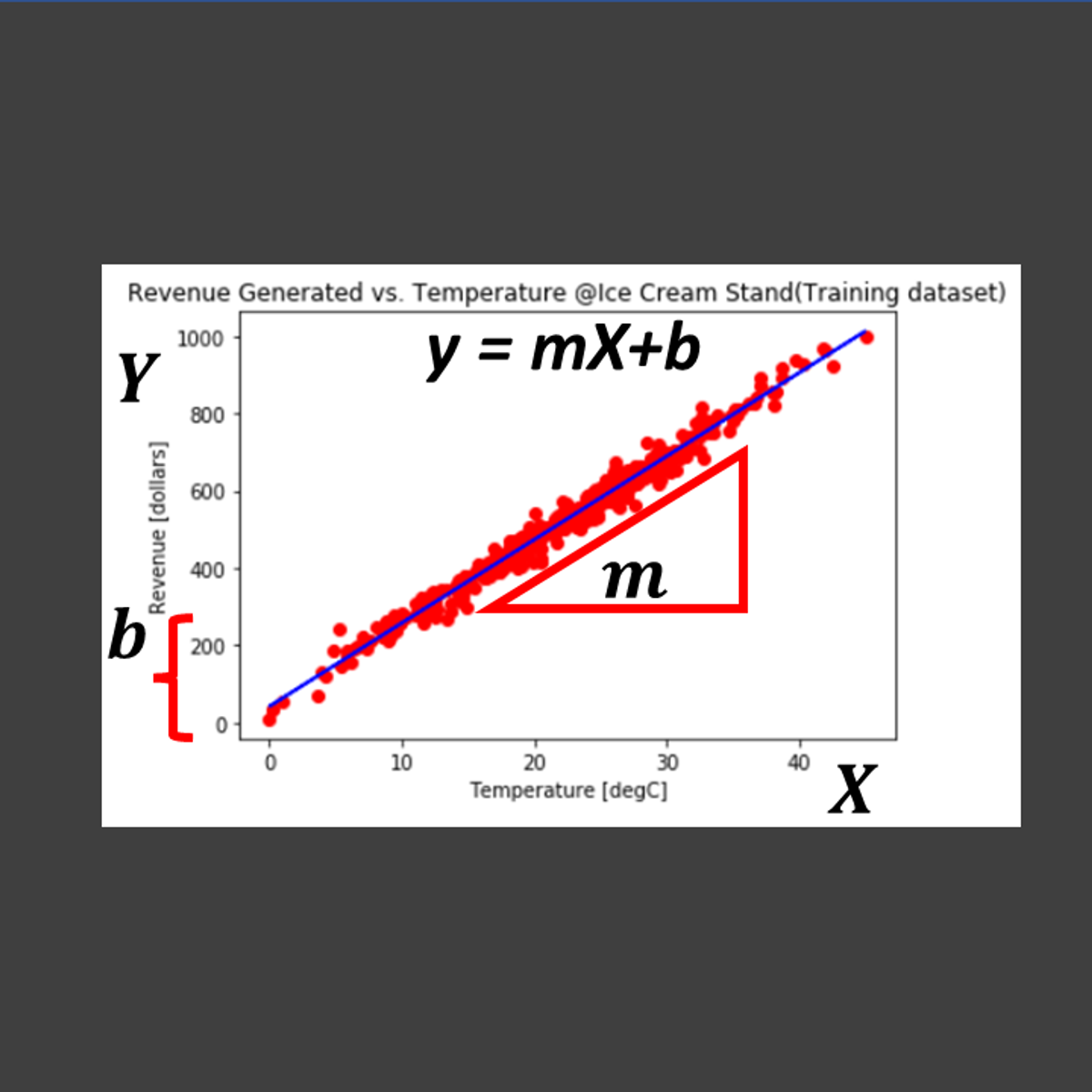
Hello everyone and welcome to this hands-on guided project on simple linear regression for the absolute beginner. In simple linear regression, we predict the value of one variable Y based on another variable X. X is called the independent variable and Y is called the dependent variable. This guided project is practical and directly applicable to many industries. You can add this project to your portfolio of projects which is essential for your next job interview.
 Coursera
How to Conduct a Social Impact Assessment with SROI
In this engaging course, you'll learn how to identify and define the goals and scope of your Social Impact Assessments (SIA), map out the social, environmental, and economic impacts, and accurately value the outcomes. Discover how to quantify the true value of your projects using the Social Return on Investment (SROI) methodology and unlock the potential for positive change. This course is tailored for a diverse group of professionals, including program managers, project leaders, social impact analysts or evaluators, procurement practitioners, and finance and accounting professionals. It also caters to stakeholder engagement or communication specialists and anyone involved in the management or decision-making of these disciplines. These individuals will benefit from learning how to conduct thorough social impact assessments and apply the Social Return on Investment (SROI) methodology in their respective fields. To gain the most from this course, participants should have a basic understanding of social value concepts and be familiar with evaluation principles. This foundational knowledge will enable learners to grasp the more advanced topics covered in the course and effectively apply the SROI methodology to their projects. After completing this course, learners will be able to define and explain the concept of social value and describe the principles of the SROI methodology. They will also be equipped to interpret and communicate SROI results effectively. Additionally, participants will gain the skills to apply the concepts learned in real-world scenarios, enhancing their ability to create and measure social impact through their projects and initiatives.
 University of London
Geometry and Calculus for Computing
Mathematics provides the foundation for reasoning, problem-solving, and analysis in computer science. Geometry and Calculus for Computing equips you with essential tools to model shapes, describe motion, and analyse change. Across four modules, you’ll build a solid grounding in trigonometry, graph sketching, kinematics, exponential and logarithmic functions, and introductory calculus. You’ll learn to connect abstract mathematical concepts to practical computing applications, from computer graphics and simulations to optimisation and algorithm analysis. By the end of the course, you’ll have the skills to interpret functions, calculate gradients, and apply mathematical reasoning to a wide range of computational problems. This course prepares you for advanced study in computer science and data science by strengthening the mathematical toolkit you need to succeed in both academic and professional contexts.
 Google Cloud
Google Threat Intelligence - 繁體中文
Google Threat Intelligence 在掌握威脅方面首屈一指,為全球的資安團隊提供詳細、及時的威脅情報。這個課程介紹 Google Threat Intelligence 的多項功能,以及組織可以透過哪些常見方法,運用這項產品主動減輕威脅。
 Packt
Packt
The Complete LangChain & LLMs Guide
Updated in May 2025. This course now features Coursera Coach! A smarter way to learn with interactive, real-time conversations that help you test your knowledge, challenge assumptions, and deepen your understanding as you progress through the course. Unlock the potential of LangChain and Large Language Models (LLMs) with this comprehensive course designed for AI enthusiasts and developers. From foundational concepts to building advanced applications, you’ll gain hands-on expertise in integrating cutting-edge AI tools to solve real-world challenges. Begin your journey by setting up your development environment, including Python and essential APIs, to create an optimized workspace. Dive deep into the core principles of LLMs and LangChain, exploring their components like chains, agents, memory, and parsers. Through engaging videos and hands-on exercises, you’ll learn to construct AI-driven solutions with precision and scalability. As the course progresses, you’ll tackle real-world projects, such as a newsletter generator, PDF data extractor, and multi-document chatbot. You’ll also explore creative implementations like an image-to-text recipe generator, gaining practical experience with tools like Streamlit, HuggingFace, and Chroma DB. Whether you're an AI enthusiast or a seasoned developer, this course offers valuable insights and practical skills. A basic understanding of Python is recommended, making this course suitable for learners at an intermediate level.
 Xi'an Jiaotong University
Windows可视化程序设计
本课程在前述课程基础上,进一步介绍C#的可视化程序设计。内容包括:Windows程序设计原理;控件,窗体;Windows GDI+系统;文件及目录的操作。通过本课程的学习,你将可以摆脱单调的控制台窗口,初步掌握使用C#开发Windows窗口应用程序的技巧,使你的应用程序界面更优美,使用更方便,与Windows操作系统的结合更紧密,实现更强大的功能。
 Saïd Business School, University of Oxford
AI Essentials
Artificial Intelligence is no longer just a futuristic concept, it is a present-day force reshaping industries, workflows, and decision-making across the global economy. This course introduces the core ideas, methods, and applications of AI, with a focus on how business professionals can engage with this fast-moving field responsibly and strategically. You’ll explore the foundations of machine learning, deep learning, and neural networks, and examine how different types of AI systems – from narrow, task-specific models to generative tools – are built and deployed. By connecting technical concepts to real-world use cases, you’ll gain insight into how AI creates value, what risks it introduces, and why ethical and governance frameworks are essential for its safe use. Through accessible explanations, practical examples, and expert insights from the University of Oxford, this course provides the conceptual grounding to understand AI today and prepare for what’s next. Whether you’re a manager, analyst, policymaker, or team leader, you’ll leave equipped to ask better questions, evaluate AI opportunities, and collaborate more effectively with technical teams. This is the first course in the AI Foundations for Business Professionals specialisation. It provides the essential knowledge base you’ll need before progressing to more applied topics in Generative and Agentic AI, and AI Governance.
 University of Colorado Boulder
Healthy Aging and the Future of Cannabis Research
This Healthy Aging and Future of Cannabis Research course is designed to have you think critically about the health effects of cannabis (i.e., marijuana) in the context of inflammation, exercise, and aging. You'll learn how inflammation and the microbiome may be related to the disorders discussed in class, and how cannabis may influence these disorders through modulating inflammation. We'll describe the relationship between the endocannabinoid system and exercise, and how cannabinoids may affect exercise performance and recovery. You'll learn how to identify key features of aging and how cannabinoids may influence the aging process. Obtaining this knowledge will be helpful in terms of informing public policy, public health, and personal decisions regarding the use of cannabis products.
 EDUCBA
3ds Max Architecture: Model, Refine & Create
Learners will be able to identify and navigate the 3ds Max interface, manipulate 3D objects with precision, construct foundational furniture models, integrate components effectively, and assemble complete interior elements with professional accuracy. This course is designed for beginners and aspiring interior designers who want to transform their creative ideas into tangible 3D models using Autodesk 3ds Max. Starting with the essentials of the interface, learners progress step by step from handling objects and mastering orientation to building, refining, and completing a realistic chair model. By focusing on practical, hands-on exercises, the course ensures that learners not only understand the tools but can confidently apply them in real-world design scenarios. What makes this course unique is its clear modular structure, blending theory with guided practice, while emphasizing precision, workflow efficiency, and industry relevance. By the end of the course, learners will have developed both the technical skills and the creative confidence to model professional-grade interior design elements, setting a strong foundation for advanced 3D visualization projects.
 Google Cloud
Generative KI: Grundlegende Konzepte
„Generative KI: Grundlegende Konzepte“ ist der zweite Kurs des Lernpfads „Generative AI Leader“. In diesem Kurs lernen Sie die grundlegenden Konzepte der generativen KI kennen. Sie erfahren, wie sich KI, ML und generative KI unterscheiden und wie generative KI geschäftliche Herausforderungen mithilfe verschiedener Datentypen bewältigt. Außerdem erhalten Sie Einblicke in die Strategien von Google Cloud, um die Einschränkungen von Foundation Models zu überwinden, und in die wichtigsten Herausforderungen für eine verantwortungsbewusste und sichere KI-Entwicklung und ‑Bereitstellung.