

The Global Scholarly Directory.
Discover world-class academic programs curated for the modern intellectual. Search through 19877+ degrees and professional certificates.
 Coursera
Run Inference & Hypothesis Tests
Statistics isn't just about numbers—it's about making confident decisions that drive business success. This Short Course was created to help data analysts accomplish statistical inference with precision and clarity. By completing this course, you'll be able to apply confidence intervals to compare conversion rates across segments, evaluate error trade-offs in experimental design, conduct hypothesis tests in Python/R, and visualize power analysis to guide decision-making. By the end of this course, you will be able to: Apply statistical rigor to business problems with measurable impact Transform raw data into statistically-backed insights Communicate findings that stakeholders trust and act upon This course is unique because it bridges statistical theory with real-world application, using authentic business scenarios from leading tech companies. To be successful in this project, you should have a background in basic statistics and programming experience in Python or R.
 SkillUp
Software Development on SAP HANA
This short course will help you gain foundational knowledge of software development on SAP S/4HANA. You will explore the career paths relevant to SAP S/4HANA. The course introduces you to the core architectural concepts in SAP S/4HANA, such as standout features, data modeling, and career paths. Additionally, you will learn about data modeling in SAP S/4HANA and the various development tools and techniques used. These include SQL Script, extract, transform, load (ETL), reporting, and analytics. Further, the course delves into the functional modules of SAP S/4HANA, such as designing enterprise structure, Fiori apps, and statutory and MIS reporting. Finally, the course takes you through the various stages of the SAP Activate methodology for implementation, its deployment options, and the process of migration. By the end of this course, you will be able to: • Explain the fundamental features of SAP S/4HANA and its key advantages • Describe the process of data modeling in SAP S/4HANA • Explain the deployment options and implementation methodology in SAP S/4HANA • Describe the key objectives of the SAP S/4HANA functional modules This course is intended for technical and non-technical professionals who want to build their careers in the field of SAP to show their expertise in requirements gathering, data modeling, designing enterprise structures, and implementing SAP systems. Though there are no prerequisites for this course, some domain experience is important for functional roles, and experience in technology and programming is necessary for technical roles. You will need an SAP GUI login, access to the client HANA database, and authorizations and user roles related to the respective module.
 Duke University
Introduction to Chemistry: Reactions and Ratios
This is an introductory course for students with limited background in chemistry; basic concepts involved in chemical reactions, stoichiometry, the periodic table, periodic trends, nomenclature, and chemical problem solving will be emphasized with the goal of preparing students for further study in chemistry as needed for many science, health, and policy professions.
 University of Illinois Urbana-Champaign
Safety & Community Implications of AI in Agriculture
The agriculture industry is on the verge of a digital revolution that will transform various farming practices, from land preparation to harvesting and pest control. This revolution includes the use of advanced machinery like driverless tractors and harvesters, as well as automated systems for milking and feeding livestock. The ongoing technological advancements and integration of automation have the potential to profoundly affect both the economic and social aspects of rural communities. This includes the creation of new jobs and the displacement of traditional production roles. While automation and robotics hold promise in addressing sustainability challenges, their impact on the agricultural workforce remains uncertain. The interaction between humans and robots in agriculture gives rise to concerns about occupational safety and health that require attention for the well-being of the workforce.
 UiPath
Automation Techniques in RPA
The Automation Techniques in RPA course will provide knowledge about Extraction and its Techniques, Screen Scraping, Data Scraping and PDF Extraction. In the later part of the course, you will gain knowledge about Workbook, Excel and Email Automation in Studio. You will also learn about activities for workbooks and excel automation along with Email protocols and related activities. Building on each concept, there will be demonstration videos that will explain these operations and methods. The course has multiple practice exercises which will help in strengthening your knowledge and understand the creation of workflows in Studio.
 University of Leeds
Exploratory Data Analysis
Statistical analysis is an indispensable aspect of data analysis because it allows us to collect, review and analyse data to draw valuable conclusions in various industries. This is why the market for statisticians is projected to grow in the future. If you want to build your statistics and probability expertise and learn about data visualisation, this short course is a great introduction to statistics as the art of learning from data. With real-life examples, you will explore the differences between data and information to discover the need for statistical models to gain objective and reliable inferences. You will consider what "unbiased" data collection means and explore various examples of data misrepresentation, misconception or incompleteness which will help you to develop statistical intuition and good practice skills. Data visualisation is a sought-after skill. To create graphical and numerical summaries, you’ll learn and practice R software skills working in RStudio for exploratory data analysis. You will develop an intuitive concept of probability by completing probability experiments and computer simulations of binomial trails e.g., tossing a coin or rolling a die. By the end of the course, you will be able to understand the role of statistical models in data analysis, develop numerical and graphical summaries using RStudio, and perform probability experiments in computer simulations. No matter your current mathematics skill level, you will find something of interest in the course that offers many practical and real-life examples of statistics in action. This course is a taster of the Online MSc in Data Science (Statistics) and it can also be completed by learners who want to understand the fundamentals of exploratory data analysis and data visualisation.
 Arizona State University
Using Rapid Prototyping in the Engineering Design Process
Hello, everyone! Welcome to this course on Using Rapid Prototyping in the Engineering Design Process. This is part of the Rapid Prototyping and Tooling specialization. In this course, I’ll cover the engineering design process and how it can be used to solve open-ended problems. I’ll discuss the different stages of prototyping and why it is advantageous to produce prototypes rapidly. I’ll then discuss engineering drawings and how to communicate information about 3-dimensional objects on 2-dimensional mediums such as paper or a computer screen. Finally, I’ll end this course by discussing computer-aided design, also known as CAD, and how it can greatly assist in making prototypes. By exploring many examples from different robotics projects I’ve had the opportunity to work on, by the end of this course, you should have a better understanding of the engineering design process and where rapid prototyping fits into it, as well as some tools to help you with developing high-quality prototypes. There’s a lot of awesome content to cover, so without further ado, let’s dive into the world of rapid prototyping!
 Packt
Packt
Intermediate Game Development: Combat, Zombies, and HUD
This course features Coursera Coach! A smarter way to learn with interactive, real-time conversations that help you test your knowledge, challenge assumptions, and deepen your understanding as you progress through the course. Take your game development skills to the next level with this intermediate course, where you'll dive into creating thrilling combat mechanics, zombie AI, and interactive HUD elements in Unity. This course focuses on enhancing gameplay through complex systems such as Finite State Machines (FSM) for intelligent zombie behavior, ragdoll physics for realistic deaths, and a targeting system for precise combat. By the end, you’ll have a fully interactive, action-packed game where combat mechanics and dynamic AI behaviors come to life. Throughout the course, you will learn how to animate and spawn zombies, program their movements using NavMeshes, and develop an intelligent AI system using FSMs. You’ll also create dynamic combat systems like ragdolls, shooting mechanics, and player damage, ensuring a more immersive and engaging player experience. Finally, you will master Unity’s UI tools to design an intuitive Heads-Up Display (HUD) to track player health, ammo, and objectives with real-time updates. This course is perfect for game developers who want to dive deeper into gameplay mechanics, AI development, and interactive user interfaces. It’s ideal for those who already have a basic understanding of Unity and game development and are ready to tackle intermediate challenges. By the end of the course, you will be able to integrate AI, combat systems, and HUD elements into a seamless and polished Unity game.
 Google Cloud
Creating a Virtual Machine
This is a self-paced lab that takes place in the Google Cloud console. In this hands-on lab, you’ll learn how to create a Google Compute Engine virtual machine and understand zones, regions, and machine types. To preview, watch the short video Create a Virtual Machine, GCP Essentials.
 Edureka
Generative AI Essentials for Finance and Accounting
This program explores Generative AI in Finance, equipping analysts, FP&A professionals, accountants, and finance leaders with the skills to automate workflows, generate deeper insights, and build AI-powered financial planning and reporting solutions. You’ll begin by mastering the foundations of Generative AI, prompt engineering basics, and advanced prompting techniques for financial analysis, structured outputs, and role-based financial scenarios, using tools like ChatGPT, Claude, Google AI Studio. You’ll then advance to AI-powered Financial Data Analysis and Reporting, applying Miro AI for FP&A workflow design, Notion AI for automated reporting and variance summaries, and NotebookLM for extracting insights, commentary, and analytical storylines from financial documents. Next, you’ll explore AI-driven Budgeting, Forecasting, and Scenario Planning, using ChatGPT and Excel AI plugins to build financial models, and Gamma AI to create dynamic, presentation-ready financial narratives. By the end of this program, you will be able to: - Define Generative AI fundamentals and how it applies to modern finance. - Use ChatGPT, Claude, and Google AI Studio to automate analysis and reporting. - Craft and refine prompts for structured outputs, forecasting, and scenario insights. - Build FP&A workflows, reports, and commentary with Miro AI, Notion AI, and NotebookLM. - Create AI-driven budgets, financial models, and scenarios using ChatGPT and Excel AI plugins. - Produce executive-ready financial presentations with Gamma AI. - Implement AI-driven financial operations for greater accuracy, speed, and strategic impact. This program is designed for FP&A analysts, finance managers, accountants, and business leaders aiming to integrate Generative AI into financial operations, planning, and reporting. A foundation in financial analysis, Excel, and business reporting will help maximize your learning experience. Learners require a reliable internet connection, a modern web browser, and access to commonly used AI and productivity tools; no specialized hardware or software installation is necessary. Join us to unlock the full potential of Generative AI in Finance, and transform the way you analyze data, build models, and deliver insights with next-generation AI systems.
 University of Illinois Urbana-Champaign
Introduction to Cannabis
In this Introduction to Cannabis, you will build a foundation of cannabis production skills from classification to physiology to production management. The Cannabis Modules are designed to provide students with an understanding of the cannabis classification system, including subspecies and varieties, and proper management practices for target compounds and products. Understanding cannabis biology and phenology is critical for proper management practices to produce terpenes, cannabinoids, fiber, and seed oil and protein, as well as the applications of those products. Furthermore, discrepancies between scientific and vernacular names of cannabis and the inconsistency of vernacular names mislead producers and consumers. These Cannabis Modules aim to equip learners with knowledge for cannabis indoor and outdoor production, classification of subspecies and varieties, biology, and more!
 Board Infinity
C# for .NET Developers
In this comprehensive course, learners will dive deep into the foundations of C# programming, an essential component of the .NET framework. The course begins by exploring the basics of programming concepts such as variables, data types, and control structures. Then it progressively ventures into more advanced topics, including object-oriented programming (OOP). The course unfolds through the following core modules: The "Introduction to ASP.NET" module offers participants a comprehensive understanding of ASP.NET and its architecture. It covers how to create dynamic web applications using ASP.NET, construct web forms, work with server controls, and use data sources to retrieve and display information. In the "C# Programming Fundamentals" module, participants will delve into the syntax, concepts, and principles of C#. It extensively covers aspects such as data types, variables, operators, expressions, control structures, as well as the basics of creating and calling methods and functions. The "Advanced C# Programming" module provides an in-depth exploration of advanced C# programming concepts and techniques. This encompasses advanced programming constructs such as LINQ, delegates, events, and object-oriented programming principles like inheritance, polymorphism, and encapsulation. It also covers advanced topics in exception handling, threading, and asynchronous programming. By the end of the course, you'll have a solid understanding of C# programming, the .NET framework, and how to use them to build a variety of applications. You'll have the skills and knowledge you need to start your career as a C# developer or take your current skills to the next level. Disclaimer: This course is an independent educational resource developed by Board Infinity and is not affiliated with, endorsed by, sponsored by, or officially associated with Microsoft Corporation or any of its subsidiaries or affiliates. This course is not an official preparation material of Microsoft Corporation. All trademarks, service marks, and company names mentioned are the property of their respective owners and are used for identification purposes only.
 Coursera
Find the Best in your Budget with Upwork
Sorting through a website like Upwork can be a fairly daunting task if you aren’t familiar with what to look for. This project will not only walk through the process of creating an Upwork account, but also includes a walkthrough of the process of connecting with a freelancer through their service to fulfill your needs!
 Dartmouth College
Mechanics & Origins of Bipedalism
This course will take you through the kinematics of human locomotion including modeling upright walking as a controlled fall, how muscles and bones work together to move individuals using a series of joints and levers, and how the abductor mechanism works to solve the “seesaw problem” of side-to-side wobbling. You will also understand how paleoanthropologists look for musculoskeletal adaptations in fossils to reconstruct how something in the past moved. You’ll explore how musculoskeletal adaptations correlate with bipedalism, as well as what significance these clues hold for telling us about how hominins moved. Additionally, you will learn the kinematics of other habitual striding bipeds found in the animal kingdom. Every module of this course has been created with the intention of a “hands-on” learner experience, where you can play around with and learn from 3D renditions of different human and animal fossils. Through these exercises, you will be able to observe and describe animal behavior in order to explain the function of their locomotion and how that relates to our own.
 Coursera
Get started with Asana
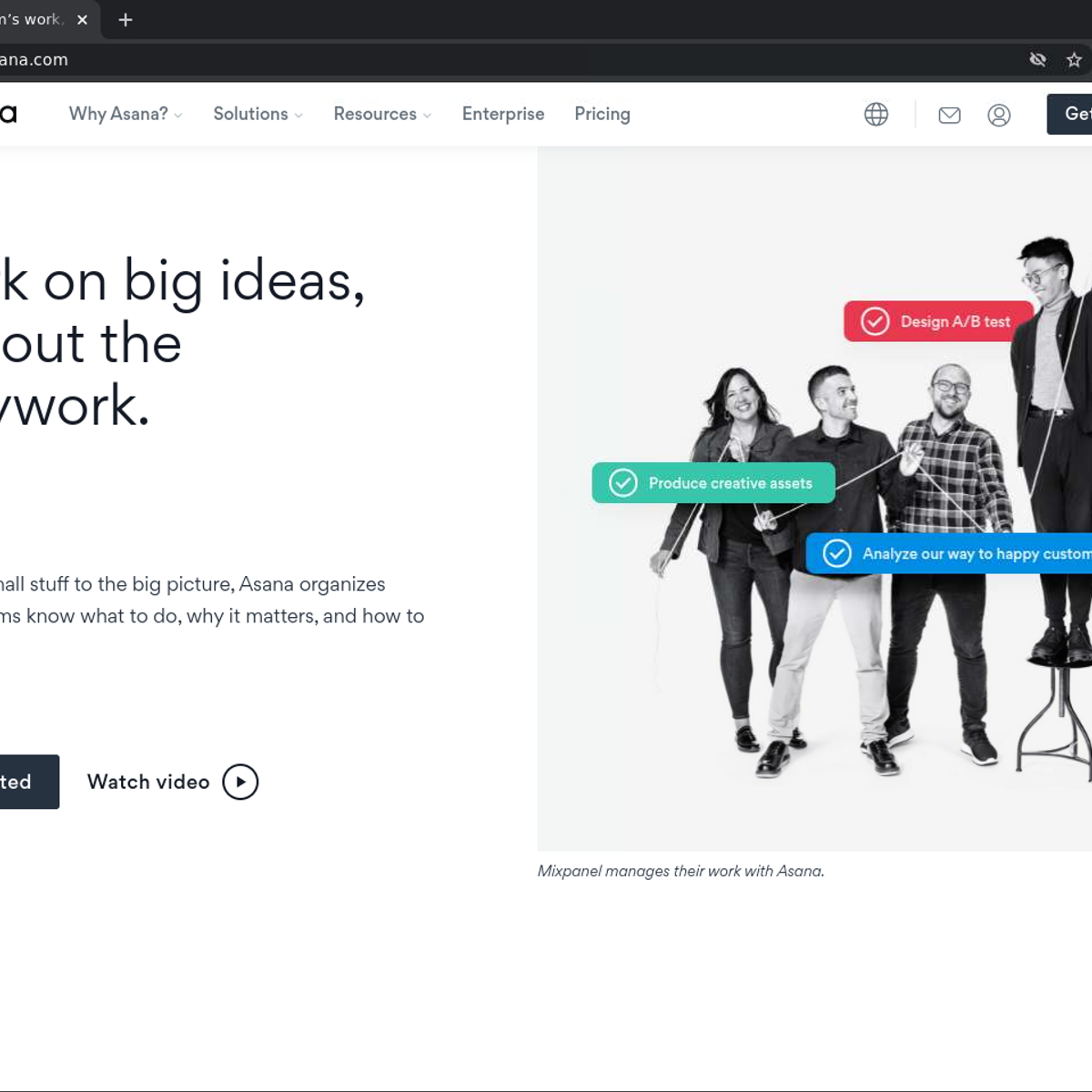
In this guided project we will get started with Asana project management software by creating a free trial account online, project, task and subtasks. We will create sections to group tasks and manage execution with team members, comments, files and dependencies. change the views and manage your work with tracking, sorting and filtering. We will achieve a comprehensive overview of project management and Asana with the most important concepts needed to start running your projects.
 Coursera
Optimize with GA & RL
Ready to transform your optimization skills with cutting-edge AI? This Short Course was created to help data analysis professionals accomplish advanced optimization in inventory management and supply chain decision-making. By completing this course, you'll master genetic algorithms for inventory problems, implement Q-learning agents for supply chain simulations, and fine-tune parameters for optimal performance. You'll gain hands-on experience comparing heuristic methods with traditional approaches and evaluating exploration-exploitation trade-offs. By the end of this course, you will be able to: Apply genetic algorithms to inventory-replenishment problems Train Q-learning agents in grid-world supply-chain simulations Evaluate convergence speed vs. solution quality trade-offs Optimize ε-greedy parameters for reinforcement learning performance This course is unique because it bridges theoretical optimization concepts with practical supply chain applications using real-world datasets and industry-standard tools. To be successful in this project, you should have programming experience with Python and basic knowledge of optimization principles.