

The Global Scholarly Directory.
Discover world-class academic programs curated for the modern intellectual. Search through 19877+ degrees and professional certificates.
 EDUCBA
Apply Microsoft Excel Fundamentals for Data Analysis
By the end of this course, learners will be able to navigate the Excel 2016 interface, enter and manage data accurately, apply formulas and functions for calculations, format data for clarity, use logical tools for decision-making, and troubleshoot common Excel errors. This Microsoft Excel 2016 beginner course is designed to help learners build strong spreadsheet skills from the ground up. Starting with Excel basics such as workbooks, worksheets, and the Ribbon, the course gradually progresses into data entry, calculations, formatting, and essential formulas like SUM, AVERAGE, and IF. Learners also gain practical experience through a guided case study that reinforces real-world data handling. What makes this course unique is its structured, hands-on approach that blends concept explanation with practical application and efficiency tips. Built-in shortcuts, logic functions, and error-handling techniques ensure learners not only understand Excel but also work confidently and efficiently. Upon completion, learners will be well-equipped to use Excel for everyday tasks, business reporting, and data analysis, making this course ideal for students, professionals, and anyone looking to strengthen their Excel fundamentals.
 Google Cloud
A Tour of Google Cloud Hands-on Labs
This is a self-paced lab that takes place in the Google Cloud console. In this first hands-on lab you will access the Google Cloud Platform Console and use these basic Google Cloud features: Projects, Resources, IAM Users, Roles, Permissions, and APIs.
 Case Western Reserve University
Introduction to International Criminal Law
-- About the Course -- From the Nuremberg trial to the case against Saddam Hussein, from the prosecution of Al-Qaeda terrorists to the trial of Somali pirates – no area of law is as important to world peace and security as international criminal law. Taught by one of the world’s leading experts in the field, this course will educate students about the fundamentals of international criminal law and policy. We will explore the contours of international crimes such as genocide, war crimes, terrorism, and piracy. We will examine unique modes of international criminal liability and specialized defenses. And we will delve into the challenges of obtaining custody of the accused and maintaining control of the courtroom. -- Course Syllabus -- This course comprises eight units (or "modules"). Each will include an assigned reading, typically an article or book chapter, as well as a simulation designed to bring the readings to life. I will also offer video lectures on each of the topics, accompanied by slides. In addition, there will be online role-play exercises and debates, enabling the students to share their own insights. The order of class sessions will be: (1) History: From Nuremberg to The Hague (2) International Crimes Part 1: War Crimes, Genocide, Crimes against Humanity, and Torture (3) International Crimes Part 2: Terrorism and Piracy (4) Special modes of liability: command responsibility, co-perpetration, and incitement (5) Special defenses: insanity, obedience to orders, duress, and head of state immunity (6) Gaining custody of the accused: extradition, luring, abduction, and targeted killing (7) Pre-Trial Issues: plea bargaining, self-representation, and exclusion of torture evidence (8) Maintaining control of the courtroom -- Recommended Background -- You don’t have to be a lawyer and there are no prerequisites for this course. However, the course will be conducted at the level expected of advanced undergraduate students. Therefore, for all participants, reading and writing comfortably in English at the undergraduate college level is desirable. -- Suggested Readings -- Students should read the assigned online materials for each unit in advance of the class session. In addition, students are invited to subscribe to “War Crimes Prosecution Watch,” a free bi-weekly e-newsletter that summarizes the latest developments in the field of international criminal law. -- Course Format -- This course is made up of eight content units. Each unit is based on an online reading assignment, a video lecture of about one hour in length, and one or more role play exercises to stimulate on-line discussion. The course also offers in-video enrichment quizzes (ungraded) for each unit, a ten question multiple choice midterm diagnostics exam (ungraded), and a ten question True/False Final Exam. -- FAQ-- How will this course be graded? This course is graded on completion. In order to complete the course each student must: (1) finish each module (or “lesson”); (2) write at least one essay response of 200 words or more for at least one simulation throughout the course; and (3) get a score of 6 out of 10 or better on the Final Exam. What resources will I need for this course? For this course, all you need is an Internet connection, and the time to read and discuss the exciting materials available online. What is the coolest thing about this course? The topics we will be discussing are ripped from the headlines. The topics are often controversial and thought-provoking, and always exciting.
 Coursera
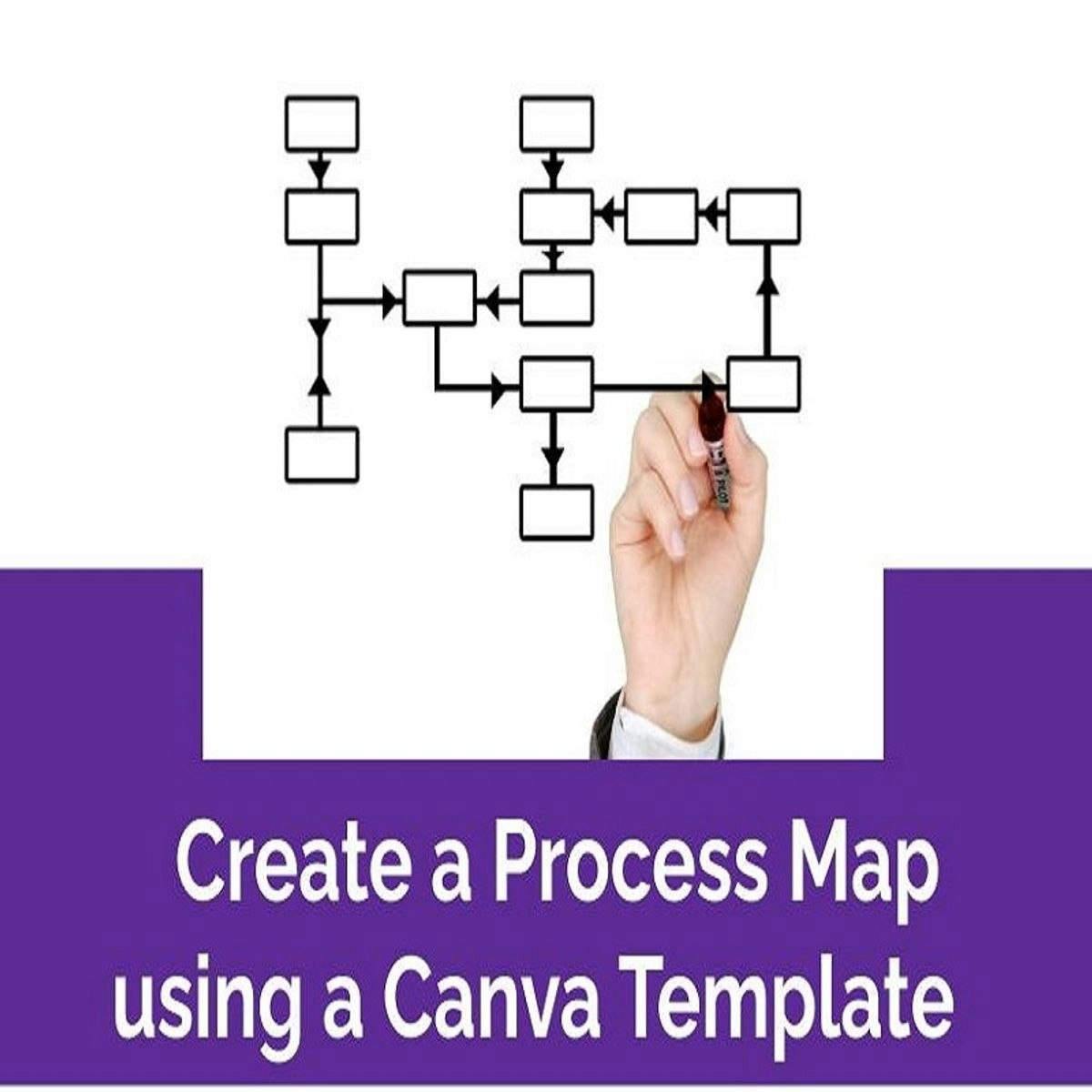
Create a Process Map using a Canva Template
In this 1-hour long project-based course, you will learn how to create a free Canva account, use Canva templates in your process map design, and download your completed design for later use. Note: This course works best for learners who are based in the North America region. We’re currently working on providing the same experience in other regions.
 Microsoft
Web Development Fundamentals
Welcome to Web Development Fundamentals, the second course in the JavaScript Starter Kit Professional Certificate program. This course will introduce you to the essential technologies for modern web development, teaching you how to create professional, responsive websites using HTML, CSS, and DOM manipulation with JavaScript. By the end of this course, you will be able to: - Create professional web page structures using semantic HTML elements and accessibility best practices - Implement responsive web designs using CSS properties and layout techniques that work across all device sizes - Develop dynamic web content using DOM manipulation and event handling to create interactive user experiences - Design and implement secure data management systems with proper form validation and XSS prevention - Build a complete To-Do List web application that demonstrates mastery of HTML, CSS, and JavaScript integration For the final project in this course, you will progressively develop a fully functional To-Do List web application that combines all web development fundamentals into a portfolio-ready project. You'll create semantic HTML structures, implement responsive CSS designs, build interactive features using DOM manipulation, handle user events and form submissions, and manage data persistence using browser storage. Throughout the development process, you'll learn to follow professional web standards, implement accessibility best practices, and create secure, user-friendly web applications that demonstrate real-world development skills. To succeed in this course, you should have programming experience with JavaScript variables, functions, control flow, and basic data structures. Familiarity with basic computer concepts and comfort using a web browser are also required. The course uses an online development environment, so you can start building web applications immediately.
 Banco Interamericano de Desarrollo
PM4R Agile: Agile Mindset in Development Projects
The changing and dynamic reality of development and social impact projects demands new, more flexible project management approaches that allow for adapting to changes or unforeseen events that may arise during project execution and, in addition, to achieve development in a sustainable, inclusive and respectful manner, applying the highest standards of integrity, transparency and accountability. For this reason, AcademiaBID, the IDB's learning platform, has developed the PM4R Agile methodology. With this hybrid methodology you will be able to progress more efficiently in the projects you are participating in, while increasing transparency, continuously engaging stakeholders and motivating the team. In this course you will learn the basic concepts of agile that promote the development of the agile mindset and why it is important for managing development and social impact projects. In addition, you will learn the roles that make up an agile team and what their responsibilities are during project execution. During these weeks, we will support you with practical activities to internalize the agile principles of PM4R Agile and the expected behaviors of each of these principles. Through a self-diagnosis, you will be able to analyze the degree of agility you have at the beginning, both at the individual level and at the level of your organization. In this way, you will be able to reinforce your knowledge and practice of the agile mindset principles before applying the 5 steps of the PM4R Agile methodology. Start today to apply agility in your project with a methodology adapted to your needs. We are waiting for you in the course.
 University of Colorado Boulder
Packaging Design for the Circular Economy
The Circular Economy is about zero waste, where products are disassembled into their constituent components, either to be recycled or composted. While considerable attention has focused on the product itself, a product can only be sustainable or circular if the packaging it comes in is also sustainable and circular. This second course in the “Sustainable and Circular Product Development” specialization provides an overview of packaging today, and how it is evolving to become more sustainable. Topics include defining sustainable and circular packaging, packaging as a system, design and functionality, conventional and innovative packaging materials, advances in recycling technologies, and rethinking our approach to packaging. This course was developed in collaboration with Siemens Digital Industries Software and is part of the "Design for the Circular Economy" collection. Learners who complete and pass the course can receive an industry-recognized digital badge. The “Design for the Circular Economy” microcredential and graduate certificate are developed around the educational goals of providing technical, business, and leadership knowledge and skills that inspire the transformation towards a more circular economy. This includes gaining technical knowledge to apply circular economy principles in product design, minimizing waste and maximizing impact; developing business acumen to implement innovative circular economic models that prioritize sustainability and resilience; and acquiring leadership strategies to communicate effectively and inspire change within an organization. This course can be taken for academic credit as part of CU Boulder’s Master of Engineering in Engineering Management (ME-EM) degree offered on the Coursera platform. The ME-EM is designed to help engineers, scientists, and technical professionals move into leadership and management roles in the engineering and technical sectors. With performance-based admissions and no application process, the ME-EM is ideal for individuals with a broad range of undergraduate education and/or professional experience. Learn more about the ME-EM program at https://www.coursera.org/degrees/me-engineering-management-boulder.
 University of Michigan
Las personas, la tecnología y el futuro de la movilidad
¡Bienvenido al curso Las personas, la tecnología y el futuro de la movilidad! Este curso ofrece una introducción no especializada a algunas de las principales innovaciones tecnológicas que se desarrollan actualmente en el ámbito de la movilidad y en el que se invita a los estudiantes a aplicar diversos conceptos de las ciencias sociales para comprender las posibles consecuencias sociales de estas tecnologías. El curso está dirigido a estudiantes de todos los niveles y no requiere formación previa en ingeniería o ciencias sociales. El contenido que se presenta en este curso se basa en una serie de entrevistas y clases, y se creó en asociación con Siemens. El curso también incluye una experiencia interactiva de vídeo en 360º que permite a los estudiantes explorar los componentes principales de un vehículo autónomo, dar un paseo en un coche autónomo y conocer la nueva tecnología de detección que podríamos ver en las ciudades inteligentes de hoy y del futuro. En este curso se desafía a los estudiantes a imaginar la movilidad del futuro de forma más segura, limpia y equitativa. Analizaremos los recientes avances tecnológicos, así como las implicaciones socioeconómicas y políticas, de dos importantes espacios tecnológicos en evolución relacionados con la movilidad: la electrificación y la automatización.
 Coursera
GenAI for Lead Scoring and Identification
In this course, "GenAI for Lead Scoring and Identification," you’ll discover how to streamline lead evaluation processes using advanced AI technologies. Through hands-on projects, you’ll learn to build custom AI solutions with platforms like OpenAI GPT and Google Gemini to automate lead scoring, segmentation, and identification. By mastering prompt engineering and applying best practices, you’ll enhance the accuracy and efficiency of lead management, driving smarter decision-making and improved sales conversions. Designed for marketing and sales professionals at the beginner level, this course is tailored to those who want to streamline their lead evaluation workflows and adopt AI-powered solutions in their organizations. Whether you're a Marketing Manager, Sales Representative, or Business Development Specialist, this course equips you with practical knowledge and tools to prioritize high-value leads effectively, saving time and resources. The course requires participants to have basic computer proficiency, including working knowledge of tools like MS Office, Google Drive, Google Sheets, Email, and ChatGPT. No prior experience with AI tools or programming is necessary, making this course accessible to all who want to explore AI in lead evaluation. Learners will be empowered to implement AI-driven solutions in their lead evaluation processes. They will be able to automate and enhance lead scoring and segmentation tasks using Generative AI, ensuring increased accuracy and efficiency. Participants will master prompt engineering, develop custom AI tools using OpenAI GPT and Google Gemini, and integrate best practices and ethical considerations into their workflows, positioning themselves as forward-thinking professionals in their fields.
 Google Cloud
Serverless Data Processing with Dataflow: Pipelines - 日本語版
Dataflow コースシリーズの 2 回目である今回は、Beam SDK を使用したパイプラインの開発について詳しく説明します。まず、Apache Beam のコンセプトについて復習します。次に、ウィンドウ、ウォーターマーク、トリガーを使用したストリーミング データの処理について説明します。さらに、パイプラインのソースとシンクのオプション、構造化データを表現するためのスキーマ、State API と Timer API を使用してステートフル変換を行う方法について説明します。続いて、パイプラインのパフォーマンスを最大化するためのベスト プラクティスを再確認します。コースの終盤では、Beam でビジネス ロジックを表現するための SQL と DataFrame、および Beam ノートブックを使用してパイプラインを反復的に開発する方法を説明します。
 Fundação Instituto de Administração
Models & Frameworks to Support Sales Planning
Welcome to Course 3 - Models & Frameworks to Support Sales Planning – In this course, you’ll go through a conceptual approach to selling models and frameworks. As a primary learning outcome of this course, we emphasize the improvement in the analytical competencies and skills to develop sales planning and management. And the learning process goes through the application of the models and frameworks that contribute to supporting these processes. This course is aimed at professionals who seek improvement in conceptual support to the sales planning process, especially with an emphasis on applying selling models and frameworks methodology. At this point of the Strategic Sales Management specialization, you have an excellent understanding of the integration of sales planning to the strategy of the company. You also have a vision of major prescriptions and recommendations to support this integration, and proceed to strategic sales planning by applying intelligence analysis. Now, in this course, selling models and frameworks will be discussed, from a conceptual standpoint to add methodological structure into the sales planning process. Therefore, throughout the modules of this course, the subjects discussed will include topics of sales management (module 1), the selling models and frameworks (module 2) that support sales planning, which relates to the hard skills that may be applied. In the third module of this course, soft skills are brought to the discussion, since they comprise an essential component because sales functions include many aspects of the human interactions. Please follow the steps of the course, and for academic objectives, we would recommend you to do it in the sequence of modules proposed, though you may take them in a different order. We look forward to having you during the course modules and lessons.
 Coursera
Excel for Beginners: Introduction to Spreadsheets
This 1-hour, project-based course is an introduction to spreadsheets. We’ll be using Excel on the Web in this project, which is the free spreadsheet program offered by Microsoft. However, all of the concepts that you will learn in this project will be applicable to other spreadsheet programs, such as LibreOffice Calc and Google Sheets. We will cover the following concepts in a hands-on manner: - Basic data entry, formatting and calculations - Relative and absolute cell references - Formulae and basic functions: sum, average, min, max - Conditional formatting Please Note: If you don't have a free Microsoft account, you will need to create one to be able to complete the content.
 EDUCBA
Talend ETL: Design, Optimize & Apply Workflows
By the end of this course, learners will be able to design ETL workflows in Talend, manage metadata for consistency, integrate multiple data sources, apply custom Java logic, and optimize jobs with filters, child jobs, and logging. The course equips learners to analyze business problems, implement data pipelines, and document workflows for collaboration and scalability. This project-based course begins with Talend fundamentals, introducing components, job creation, and routines. Learners then apply their skills to a real-world Credit Card Transactions case study, importing Excel data, storing it in SQLite, and extending functionality with Java. The course concludes with an Operations Optimization project, where learners design advanced workflows, filter records, modularize jobs, and monitor performance through logging. Unlike generic tutorials, this course combines hands-on projects with real-world datasets to build both technical skills and problem-solving confidence. Whether you are a data engineer, ETL developer, or analytics professional, this course will help you apply, optimize, and document Talend workflows effectively, preparing you for enterprise-level data integration challenges.
 University of Michigan
Hearing Loss in Children
Approximately 2 to 3 out of 1000 children in the United States are born with a significant hearing loss. Early identification and intervention of hearing loss is crucial to children’s lifelong learning outcomes. It is well documented that later identification of hearing loss can lead to significant delays in children’s speech, language, literacy, social and emotional development. This course addresses gaps currently existing in the health education curriculum for pediatric hearing loss and gives learners the foundational knowledge that can be applied immediately in a broad range of health, educational, and home settings. Benefits of the course include: • Basics of hearing and vestibular systems • Overview of early hearing screening programs • Clinic videos related to diagnosis, treatment & management of hearing loss in children • Personal interviews with children who are Deaf or Hard of Hearing • Overview of the public health & educational infrastructure supporting children who are Deaf or Hard of Hearing • Taught by multi-disciplinary pediatric experts • Exclusive operating room footage exploring ear anatomy and surgical ear procedures The University of Michigan Medical School designates this enduring material for a maximum of 11.5 AMA PRA Category 1 Credit(s)™. The University of Michigan Medical School is accredited by the Accreditation Council for Continuing Medical Education (ACCME) to provide continuing medical education for physicians. This activity contributes to the CME component of the American Board of Pediatrics’s Maintenance of Certification Part II program. More information can be found in the course. If you would like to earn CME/MOC credit for participating in this course, please review the information in the course prior to beginning the activity. At the end of the course you will get specific instructions on how to get your free CME.
 Universidad de Palermo
Inteligencia Artificial aplicada al Marketing
“Inteligencia Artificial Aplicada al Marketing" es un curso online diseñado para introducir a profesionales, emprendedores y estudiantes en el mundo de la IA como motor de transformación del marketing digital. A través de explicaciones dinámicas y casos prácticos, los participantes aprenderán cómo aprovechar herramientas de IA para automatizar procesos, generar contenido de alto impacto y crear experiencias digitales sin necesidad de programar. El curso combina teoría y práctica para ofrecer una formación sólida, actualizada y orientada a la aplicación real. El recorrido comienza con una introducción a los fundamentos de la IA, sus tipos y su aplicación en el marketing actual. En el primer módulo, se exploran herramientas de generación de contenido como ChatGPT, Gemini, DeepSeek, SEO Writing, Jenni.ai, mostrando cómo pueden ser utilizadas para redactar textos, idear campañas, asistir al cliente y optimizar la comunicación de marca. Esta base conceptual permite a los estudiantes comprender el papel de la IA generativa como aliada estratégica en la creación de contenido digital. En el segundo módulo, el curso se adentra en el universo del desarrollo sin código, donde la inteligencia artificial y las plataformas no-code como 10Web, Softr, Hostinher, WXPO y GoodBarber permiten construir sitios web, tiendas online y aplicaciones móviles de forma rápida y sin conocimientos de programación. Se exploran aquí las capacidades de automatización del diseño, la integración con bases de datos y las posibilidades de lanzar productos digitales funcionales en cuestión de horas. El tercer módulo está enfocado en la automatización de procesos de marketing. A través de herramientas como Systeme.io y Make, los participantes aprenderán a diseñar embudos de ventas automatizados, campañas de email marketing inteligentes y flujos de trabajo integrados entre diversas plataformas. La capacidad de automatizar la generación de leads, el seguimiento de clientes y las conversiones será un diferencial clave que los alumnos podrán aplicar de inmediato en sus proyectos o empresas. Finalmente, el módulo cuatro se centra en la producción de contenido visual y audiovisual potenciado por IA. Se presentarán herramientas como Canva, Creatify, InVideo y Mootion, con las que se pueden crear imágenes, gráficos y videos optimizados para redes sociales como TikTok, Instagram y YouTube. También se verán herramientas especializadas para la gestión de redes y tareas específicas, como Repurpose y Wondercraft. Este módulo busca que los estudiantes desarrollen estrategias multimediales efectivas y creativas con el apoyo de la inteligencia artificial, elevando así la calidad y eficiencia de sus campañas digitales.
 Northeastern University
Agile Software Development Part 2
This course delves into Agile software development, offering students a practical understanding of the software development life cycle (SDLC) with a strong emphasis on Agile methodologies. Throughout the program, participants will explore the technical, cultural, and social aspects of agility, empowering them to navigate the complexities of modern software development.