

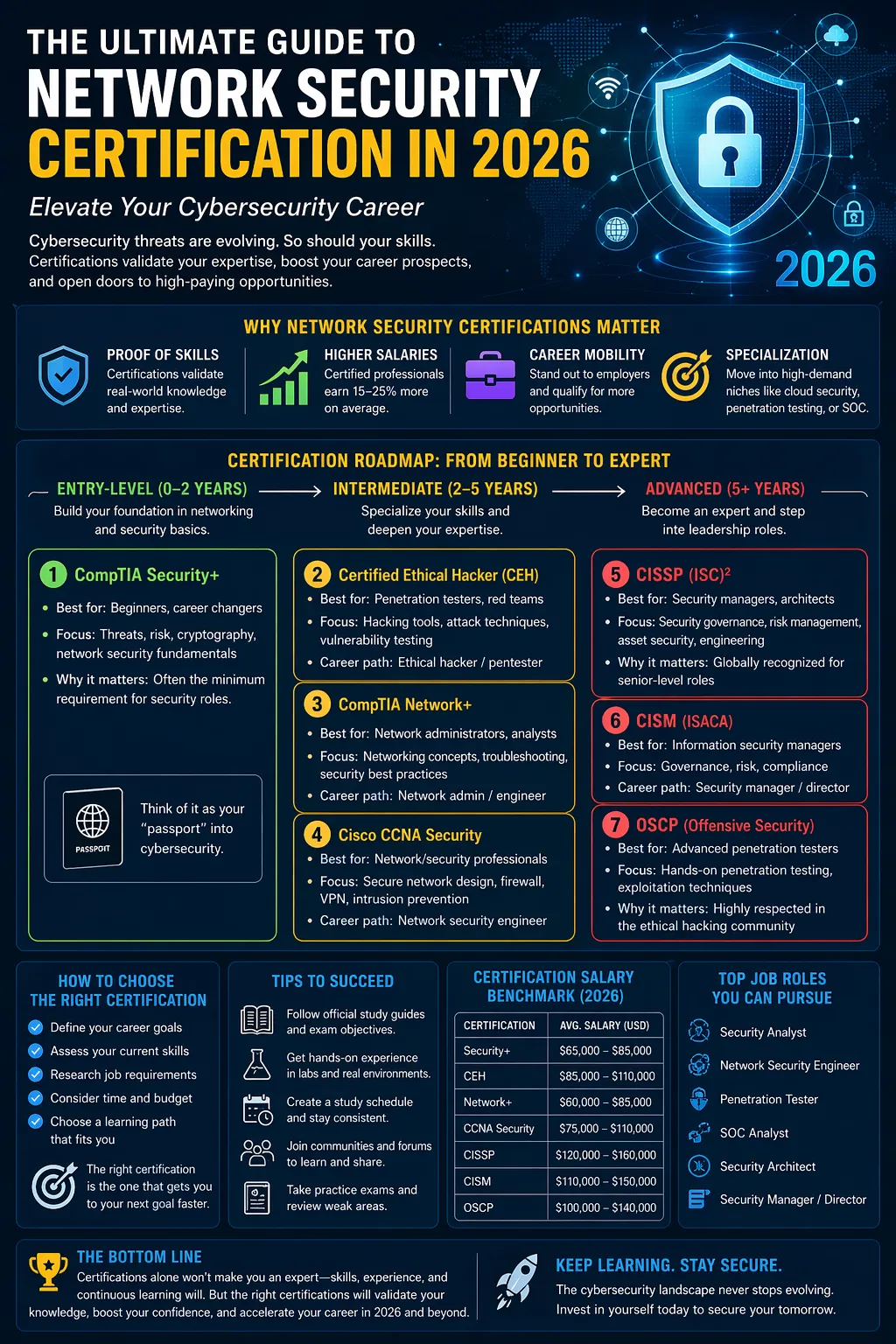
In an era where data breaches cost companies millions and cyber threats evolve by the second, network security certification has become the gold standard for IT professionals. Whether you are a beginner looking to break into the tech industry or an experienced engineer aiming for a leadership role, the right credentials can significantly impact your salary and job security.
This guide explores the most in-demand network security certifications for 2026 and provides direct pathways to high-quality training.
Why Pursue a Network Security Certification?
As businesses transition to hybrid cloud environments and AI-driven infrastructures, the demand for certified experts is skyrocketing. A professional certification does more than just validate your skills; it:
- Increases Earning Potential: Certified professionals often earn 20-30% more than their non-certified peers.
- Global Recognition: Industry-standard certs like CISSP and Security+ are recognized by employers worldwide.
- Niche Expertise: Gain specialized knowledge in areas like penetration testing, cloud security, or incident response.
Top Network Security Certifications to Watch in 2026
1. CompTIA Security+
Often cited as the best entry-level certification, CompTIA Security+ provides a solid foundation in core security functions. It covers threat management, cryptography, and identity and access management (IAM).
2. Certified Information Systems Security Professional (CISSP)
For those aiming for senior management roles, the CISSP is the "gold standard." It requires years of experience but offers immense ROI, focusing on security architecture, risk management, and operations.
3. Certified Ethical Hacker (CEH)
Offensive security is a critical part of network defense. The CEH certification teaches you to think like a hacker to better protect corporate networks from malicious attacks.
Featured Courses to Kickstart Your Journey
To help you navigate these career paths, we have curated a list of top-tier courses available through Videsh Education. These programs are designed to provide both theoretical knowledge and practical application.
Foundational Secure Networking
If you are new to the field, starting with the basics of network infrastructure is essential. This course covers the TCP/IP model, OSI layers, and common monitoring techniques.
- Recommended Course: Introduction to Secure Networking
Cybersecurity for Business Leaders
Security is no longer just a technical issue; it is a business priority. This program is ideal for professionals who need to understand how large data breaches happen and how to secure corporate networks at scale.
- Recommended Course: Introduction to Cybersecurity for Business
Advanced Threat Detection & Identity Management
For those who have already mastered the basics, advancing into secure development practices and complex threat detection is the next logical step. This course is perfect for security analysts and incident responders.
- Recommended Course: Systems and Cybersecurity Fundamentals (Part 2)
Key Skills Covered in These Certifications
High-ranking network security content focuses on the following technical domains, which are also the most searched terms in the industry:
- Cloud Security: Protecting data across AWS, Azure, and Google Cloud environments.
- Firewalls and IPS: Managing Intrusion Prevention Systems to block unauthorized access.
- Zero Trust Architecture: The "never trust, always verify" approach to modern network access.
- VPN and Encryption: Securing remote workforces and sensitive data transfers.
How to Choose the Right Certification?
Selecting the right path depends on your current career stage:
- Beginners: Start with the Introduction to Secure Networking to build a base.
- Mid-Level: Focus on vendor-specific certifications (like Cisco or Palo Alto) or the Systems and Cybersecurity Fundamentals course to deepen your technical reach.
- Experts: Aim for the CISSP or CISM to move into strategic leadership and governance.
Conclusion: Future-Proof Your Career
The landscape of network security is shifting toward AI-assisted workflows and automated threat response. Staying relevant requires continuous learning and verified credentials. By enrolling in a recognized network security certification program today, you are not just getting a certificate—you are securing your professional future.
Ready to take the next step? Explore the full catalog of Cybersecurity and IT Courses and start your journey toward becoming a certified expert.
Develop a nuanced understanding of the solutions and countermeasures essential for safeguarding against evolving threats. Prerequisites: Participants should have a foundational understanding of network security concepts and experience with basic network administration. Familiarity with cloud computing principles and hybrid network architectures is beneficial but not mandatory.
The course is designed for security professionals, network administrators, and IT professionals seeking to enhance their expertise in the context of cloud and hybrid environments. Whether you're looking to advance your career, stay ahead of industry trends, or deepen your knowledge in network security, this course provides a structured and comprehensive approach. By the end of the program, participants will be well-equipped to address the complexities of securing cloud and hybrid networks in today's technology landscape.