

The Global Scholarly Directory.
Discover world-class academic programs curated for the modern intellectual. Search through 19877+ degrees and professional certificates.
 EDUCBA
Apply Advanced Data Operations in Apache Cassandra
By the end of this course, learners will be able to apply intermediate Cassandra data operations, optimize write performance, implement indexing strategies, and evaluate trade-offs in distributed data design. Cassandra Training – Intermediate Level is designed for developers and data engineers who already understand Cassandra fundamentals and want to move confidently into real-world, production-ready usage. The course dives deep into how Cassandra handles data modification, including truncate and update operations, secondary indexing with CQLSH and Java APIs, batch processing, and conditional updates using lightweight transactions. Learners will gain practical insight into Cassandra’s internal write mechanisms, helping them avoid common performance pitfalls while designing scalable and efficient data models. Through structured modules and progressive lessons, the course bridges the gap between theory and implementation, enabling learners to write safer updates, choose the right indexing approach, and use batch operations responsibly. What makes this course unique is its focus on why Cassandra behaves the way it does, not just how to execute commands. This performance-aware, use-case-driven approach equips learners with decision-making skills essential for building robust, high-throughput distributed systems using Apache Cassandra.
 Packt
Packt
Containerize Spring Boot CRUD with Docker and Docker Compose
Updated in May 2025. This course now features Coursera Coach! A smarter way to learn with interactive, real-time conversations that help you test your knowledge, challenge assumptions, and deepen your understanding as you progress through the course. In this course, you will master Docker and Docker Compose to run Spring Boot applications and databases within containers. Initially, you will understand the necessity of executing apps in containers and familiarize yourself with Docker, Image, Container, Docker Hub, and Dockerfile. We will explore the benefits of using Docker, creating Dockerfiles, building Docker images, and launching containers. You will learn to convert a regular Spring Boot program into a Docker-based application, run databases within containers, and enable inter-container communication. Additionally, you will: - Check logs, manage images and containers - Create and utilize Docker Compose files to run multiple containers. - Cover creating Spring Boot applications using the Spring Initializer, - Understanding the Docker Hub, its repositories, images, and tags, and tagging Docker images to specific versions. - Build code, tag images, and push them to Docker Hub. By the end, you'll be proficient in building, running, and pushing containers to the central hub. This course is ideal for anyone interested in containers with basic Java and Spring Boot knowledge. This course is ideal for Java developers, DevOps engineers, and IT professionals looking to enhance their skills in containerization and microservices deployment. A basic understanding of Java, Spring Boot, and RESTful APIs is recommended.
 University of Michigan
Life Cycle Assessment
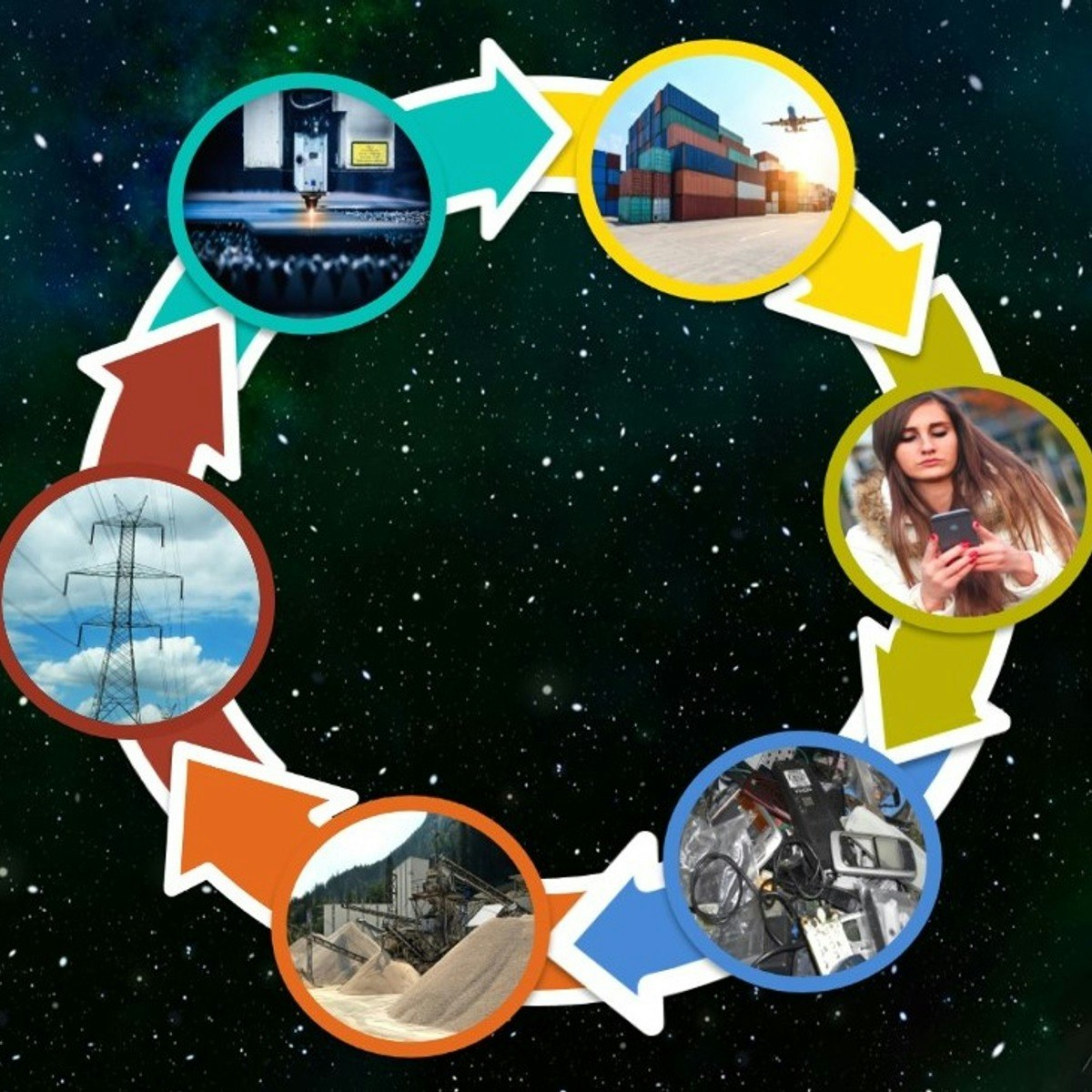
This course will introduce you to Life Cycle Assessment (LCA ) methodology, a tool to assess the environmental impact of products and systems over the whole product life cycle, from cradle to grave. After a discussion of the potentials and limitations of quantitative LCA compared to other assessment tools, we will detail and practice each of the LCA phases. 1) The goals and system definition phase defines the goal and scope of the study, including the product function, functional unit, and the product system and its boundaries. 2) The Life Cycle Inventory phase quantifies the inventory of the various elementary flows of resource extractions and substance emissions crossing the system boundary, providing an overview of existing databases. 3) The life cycle impact assessment (LCIA) phase determines multiple environmental impacts damage and provides an overview of the existing LCIA methods 4) The interpretation phase analyses results from an LCA case study to provide recommendations towards more sustainable products. Leading actions in several industrial sectors (agriculture and foods, automotive, personal care products, and energy) will be examined through relevant case studies in order to demonstrate how effective environmental life-cycle assessment leads to new product development.
 Packt
Packt
ChatGPT - Foundations
This course features Coursera Coach! A smarter way to learn with interactive, real-time conversations that help you test your knowledge, challenge assumptions, and deepen your understanding as you progress through the course. Unlock the full potential of generative AI with this foundational course on ChatGPT. Whether you're a professional seeking to boost productivity or a curious learner exploring the frontiers of artificial intelligence, this course will help you master the principles of effective AI interaction and responsible use. You'll gain hands-on insights into what makes ChatGPT such a transformative tool and how to apply it thoughtfully and creatively in real-world contexts. Your learning journey begins with a comprehensive introduction to ChatGPT and the GPT-4 architecture. You'll then explore the art of crafting effective prompts—essential for getting high-quality responses from the model. As the course progresses, you'll uncover how to navigate the limitations of ChatGPT, ensuring that you're equipped to critically evaluate outputs and avoid common pitfalls. Ethics and responsibility form the final cornerstone of the course. You'll learn how to engage with AI tools mindfully, considering the implications of data privacy, intellectual property, and content accountability. This structured and engaging course includes a secret bonus to wrap up your learning experience on a high note. This course is ideal for professionals, educators, students, and anyone new to AI who wants to understand ChatGPT from the ground up. No prior experience with AI or programming is required, making it perfect for beginners ready to take their first steps into this transformative technology. By the end of the course, you will be able to describe ChatGPT’s capabilities and limitations, craft effective prompts, apply AI responsibly, and integrate ChatGPT into your personal or professional workflows with confidence.
 Dubai College of Tourism
Hospitality Pricing Strategies and Distribution Channels
This detailed course is designed for hospitality professionals, including revenue managers, hotel managers, marketing managers, and anyone involved in pricing and revenue optimisation within the hospitality industry. This detailed course provides a deep dive into pricing strategies for the hospitality industry. You'll learn to optimise pricing, effectively manage rate integrity and parity, and leverage advanced pricing techniques. Additionally, you'll explore various distribution channels, their associated costs, and how to maximise reach and revenue. By the end of this course, you will be equipped to make data-driven pricing decisions, implement effective rate strategies, and develop a comprehensive pricing strategy to drive business success.
 Niel Asher Education
Principles of Resistance Training and Practical Application
By the end of this course, you will (1) design progressive, periodized strength programs and (2) apply the science of resistance training to optimize athletic performance. This comprehensive course with Dr. Jason Miller delivers a science-based understanding of resistance training — from its historical roots to advanced movement applications. Learners explore the evolution of strength development, foundational terminology, and how different training modes (free weights, machines, bands, and bodyweight) can be safely adapted for any population or goal. Through practical and theoretical modules, the course explains how muscle mechanics, neuromuscular recruitment, and the stretch–shortening cycle determine strength, power, and performance outcomes. By the end, students will be able to design goal-specific programs grounded in biomechanics and physiology, apply structured progressions across key movement patterns, and optimize results through evidence-informed strategies. This course bridges the gap between academic theory and practical training design—making it invaluable for coaches, therapists, and professionals seeking to elevate both performance and safety in resistance-based programs.
 Packt
Packt
Core Game Setup and Basic Horror Mechanics
Updated in May 2025. This course now features Coursera Coach! A smarter way to learn with interactive, real-time conversations that help you test your knowledge, challenge assumptions, and deepen your understanding as you progress through the course. This course guides you through the fundamental processes of creating a game in Unreal Engine, focusing specifically on horror mechanics. You'll start with the basics, learning how to set up game instances, modes, states, and player controls, ensuring you have a solid foundation to build on. You’ll work through detailed instructions on how to create an engaging HUD, player controller, and character setup that sets the stage for immersive gameplay. Once the core setup is complete, the course shifts focus to character movement mechanics, like camera handling, WASD movement, and jumping. This section is crucial for designing a responsive first-person character, laying the groundwork for a seamless gameplay experience. The course then delves into specific horror mechanics—flickering lights, door interactions, flashlight systems, and realistic physics-based features that enhance the horror atmosphere. By the end, you will have created key elements needed for an eerie, tension-filled game environment. Designed for aspiring game developers with basic knowledge of Unreal Engine, this course provides a step-by-step guide to mastering game design principles. You’ll learn how to build immersive environments and mechanics that are central to creating suspense in horror games. Whether you are crafting a prototype or building a full game, this course provides the knowledge and practical skills to bring your horror concepts to life. This course is ideal for aspiring game developers and Unreal Engine enthusiasts who have a basic understanding of game development. Prior experience with Unreal Engine is recommended, but not required, as the course covers essential setup processes.
 Packt
Packt
CertNexus Certified IoT Practitioner (ITP-110)
Updated in May 2025. This course now features Coursera Coach! A smarter way to learn with interactive, real-time conversations that help you test your knowledge, challenge assumptions, and deepen your understanding as you progress through the course. The CertNexus Certified Internet of Things Practitioner (ITP-110) course offers a comprehensive introduction to the world of IoT, helping you understand its key components and how it integrates with technology, business, and security. By completing this course, you will gain a deep understanding of IoT systems, their development life cycle, and their real-world applications across various industries. In this course, you will first explore the impact of IoT, including its benefits and the common challenges that arise when adopting these technologies. Understanding the foundational terminology and the components that make up IoT systems will allow you to build strong foundational knowledge to support your journey. You will also dive into the IoT ecosystem, covering everything from the physical components like sensors and actuators to the role of cloud computing and network components. You'll learn how to identify where IoT can be applied across industries, which will be crucial for building real-world solutions that address specific market needs. In the final sections, the course will guide you through the IoT development life cycle. You will learn the various phases involved in building an IoT system, from initiating and planning the project to gathering requirements, designing, and testing the solution. The course will also touch on security, privacy, and safety considerations, ensuring you understand how to address risks while developing IoT solutions.
 LearnQuest
Coaching Sales Professionals and Scaling Results
Advance your career by mastering the systems, self-management, and relationship strategies needed for ongoing sales performance. This course teaches learners to implement sales technology, leverage data, and proactively invest in their professional growth. It equips you with actionable routines for maintaining motivation, handling stress, and positioning yourself as a resilient, adaptable sales leader. Consideration is given to business environments unique to India and the USA, with an emphasis on practical upskilling and long-term impact.
 Google Cloud
Securing Virtual Machines using Chrome Enterprise Premium
This is a self-paced lab that takes place in the Google Cloud console. In this lab, you will learn how you can use Identity-Aware Proxy (IAP) TCP forwarding to enable administrative access to VM instances that do not have external IP addresses or do not permit direct access over the internet.
 École Polytechnique Fédérale de Lausanne
Innovative Governance of Large Urban Systems
Learn about the three phases of the urban value chain: planning, governance and regeneration. With lecturers from all around the world and concrete case studies, this course will give you a comprehensive overview about the “Innovative Governance of Large Urban Systems”. This course has assembled some of the most relevant experiences and knowledge from our Innovative Governance of Large Urban Systems (IGLUS) Executive Master’s program, which has been offered by EPFL during the past 5 years. IGLUS consists of 2-week action-learning organized in over 10 major cities around the world, during which participants acquire an in-depth understanding of the challenges cities are facing and the ways they are addressing them. This MOOC will share this knowledge with you, thanks to some of our lecturers from various disciplines and from all around the world. During this course, you will learn about the three phases of the urban value chain, which are: planning, governance and regeneration. In particular, we will address the unique challenges of the phases and ask questions such as: how to design cities? How to govern them, especially when it comes to their institutional, financial, economic and social dimensions? And how to regenerate urban spaces?
 University of California, Davis
Advanced Content and Social Tactics to Optimize SEO
Discover the content marketing and social media ecosystems and how these interconnected channels drive search results to a website. Leverage content marketing and social media as part of your SEO strategy, and how to use influence marketing to establish a website’s authority.
 Universidade de São Paulo
Introdução à Ciência da Computação com Python Parte 1
Bem vindo ao curso de Introdução à Ciência da Computação destinado aos alunos regulares da Universidade de São Paulo e a todos os demais interessados em aprender não só a programar em Python mas também os conceitos básicos da Ciência da Computação! Aqui você irá aprender os principais conceitos introdutórios de Ciência da Computação e também aprenderá a desenvolver pequenos programas na linguagem Python. Este curso não possui pré-requisitos. Não é esperado que você tenha qualquer experiência prévia em programação, no entanto, se supõe que o aluno domine os conceitos básicos de matemática do ensino fundamental. O objetivo principal é desenvolver o raciocínio aplicado à formulação e resolução de problemas computacionais. O ato de programar é uma ferramenta útil para trabalhar esse raciocínio, bem como tornar mais concretos outros conceitos comuns em Ciência da Computação. Ao término do curso, o aluno estará capacitado para escrever pequenos programas em Python e prosseguir para a parte 2 do curso. Bom aprendizado! === Esse curso foi elaborado com o apoio dos Profs. José Coelho de Pina e Carlos Hitoshi Morimoto do Departamento de Ciência da Computação do IME-USP. Nelson Posse Lago, gerente técnico do CCSL-IME-USP, Vinicius Frota, Gabriel Crispino, Antonio Abello, Athos Ribeiro e Yorah Bosse têm sido excelentes assistentes de ensino, ajudando a manter a qualidade do curso.
 Skillshare
Premiere Pro Pt. 1 — Getting Started & Editing Basics
If you’re new to video editing, this is the perfect place to begin. In this course, Jordy Vandeput introduces you to Adobe Premiere Pro and guides you through the essential tools you need to start editing with confidence. You’ll learn how to set up a project, navigate the workspace, and build an efficient editing workflow. From working with the timeline to applying effects and blending layers, you’ll establish the foundation needed for professional-quality editing. By the end of this course, you’ll be able to: * Set up and organize projects in Adobe Premiere Pro. * Navigate the workspace and timeline with confidence. * Apply essential editing techniques including trimming, reframing, and blending. This course is designed for beginners and creative enthusiasts who want to edit videos without feeling overwhelmed by technical details. No prior experience with Premiere Pro is required — just bring your creativity and curiosity. With hands-on lessons and real-world examples, you’ll finish the course ready to move on to more advanced editing techniques. *Please note: Adobe Premiere Pro software is required to complete this course Instructor bio: Jordy is a filmmaker, video editor, and educator, best known for hosting Cinecom, one of the largest YouTube channels on filmmaking and video editing with over 2.5 million subscribers. After graduating from film school in 2012, Jordy discovered his passion for teaching online and has since focused on creating engaging, hands-on learning experiences. Unlike traditional education, Jordy’s classes emphasize practical skills and creative problem-solving, aiming to deliver an immersive class experience rather than just information. His goal is to help learners gain confidence and mastery in filmmaking and video editing.
 Board Infinity
Cloud FinOps
"Fundamentals of Cloud FinOps" is a short course designed to navigate the complexities of cloud computing economics, focusing on optimizing costs while leveraging the full power of the cloud. It comprises four modules that sequentially build knowledge from cloud computing basics and pricing strategies to the specialized field of Cloud Financial Operations (FinOps) and practical tools for cost billing and governance. Each module is crafted to address different facets of cloud cost management, including understanding cloud service models, deploying cost-effective cloud strategies, applying FinOps principles, and utilizing cost management tools. Through this course, participants will gain a holistic view of how to efficiently manage and optimize cloud expenditures in any organization, ensuring that cloud investments align with business objectives while fostering a culture of financial accountability and cross-functional collaboration. Module 1 delves into the specialized field of Cloud Financial Operations (FinOps), a practice designed to maximize the financial efficiency of cloud spending in a scalable and predictable manner. It introduces the fundamentals of FinOps, its significance in cloud management, and the foundational elements that underpin this discipline. The module further explores the operational domain and capabilities of FinOps, providing insights into its practical application within businesses to ensure cost-effective cloud service usage. Through understanding personas involved in FinOps, key principles, phases, and the maturity cycle, learners will grasp how FinOps integrates with modern business strategies to optimize cloud investments. Module 2 equips with a comprehensive understanding of cloud billing and cost management, essential for overseeing cloud expenditures and governance. It starts by explaining the hierarchy of cloud accounts and the structure of cloud billing, offering foundational knowledge on how cloud costs are organized and reported. The module progresses to explore various tools designed for managing these costs, including both cloud-native and third-party solutions, and demonstrates their application in real-world scenarios. Through this module, participants will gain insights into effective strategies for monitoring, analyzing, and optimizing cloud spending, ensuring financial accountability and governance in cloud environments. This course is most suitable for individuals involved in cloud computing operations, finance, procurement, or management roles within organizations that utilize cloud services. It would benefit cloud architects, IT managers, finance professionals, and anyone responsible for optimizing cloud spending and ensuring cost-effective cloud service usage. Additionally, individuals interested in cloud economics and seeking to enhance their understanding of cloud financial operations (FinOps) would find this course valuable. Disclaimer: This is an independent educational resource created by Board Infinity for informational and educational purposes only. This course is not affiliated with, endorsed by, sponsored by, or officially associated with any company, organization, or certification body unless explicitly stated. The content provided is based on industry knowledge and best practices but does not constitute official training material for any specific employer or certification program. All company names, trademarks, service marks, and logos referenced are the property of their respective owners and are used solely for educational identification and comparison purposes.
 Codio
Codio
Object-Oriented Java: Inheritance and Encapsulation
Code and run your first Java program in minutes without installing anything! This course is designed for learners with limited coding experience, providing a solid foundation of not just Java, but core Computer Science topics that can be transferred to other languages. The modules in this course cover inheritance, encapsulation, polymorphism, and other object-related topics. Completion of the prior 3 courses in this specialization is recommended. To allow for a truly hands-on, self-paced learning experience, this course is video-free. Assignments contain short explanations with images and runnable code examples with suggested edits to explore code examples further, building a deeper understanding by doing. You'll benefit from instant feedback from a variety of assessment items along the way, gently progressing from quick understanding checks (multiple choice, fill in the blank, and un-scrambling code blocks) to small, approachable coding exercises that take minutes instead of hours.