

The Global Scholarly Directory.
Discover world-class academic programs curated for the modern intellectual. Search through 19877+ degrees and professional certificates.
 Coursera
Data Warehousing: Schema, ETL, Optimal Performance
Data warehousing is a critical component of modern business intelligence, providing a centralized repository for structured and organized data. This course focuses on the fundamental aspects of data warehousing, including schema design, extract, transform, load (ETL) processes, and techniques for optimizing performance. By comprehending these core concepts, participants will be equipped to design and implement efficient data warehouses that support informed decision-making and business intelligence initiatives. This course is tailored for Data Engineers, Database Administrators, Business Intelligence Developers, and Data Analysts who are looking to deepen their understanding of data warehousing. These professionals play a crucial role in managing and analyzing vast amounts of data, ensuring that organizations can leverage this data for strategic decision-making. By enhancing their skills in data warehousing, participants will be better equipped to contribute to their organizations' business intelligence efforts and improve overall data management practices. To gain the most from this course, participants should have a basic knowledge of databases and SQL. Familiarity with these foundational concepts is essential as it will allow learners to effectively grasp the more advanced topics covered in the course. This background knowledge will enable participants to engage more deeply with the material, understand the practical applications, and apply the techniques discussed to real-world scenarios. Upon completing this course, learners will be able to explain the importance of data warehousing in business intelligence, highlighting how it supports decision-making processes. They will also gain the skills to design and implement effective schema designs for data warehouses, ensuring data is organized and accessible. Additionally, participants will learn to implement ETL processes to efficiently load and transform data into a data warehouse and apply performance optimization techniques to enhance the efficiency and responsiveness of data warehouse systems.
 University of Michigan
Database Design and Basic SQL in PostgreSQL
In this course you will learn more about the historical design of databases and the use of SQL in the PostgreSQL environment. Using SQL techniques and common commands (INSERT INTO, WHERE, ORDER BY, ON DELETE CASCADE, etc) will enable you to create tables, column types and define the schema of your data in PostgreSQL. You will learn about data modeling and how to represent one-to-many and many-to-many relationships in PostgreSQL. Students will do hands-on assignments creating tables, inserting data, designing data models, creating relational structures and inserting and querying relational data in tables.
 Universidad de Palermo
Liderazgo y comunicación
El líder ¿nace o se hace? En este curso podrás identificar las características de quienes ejercen el liderazgo, que durante muchos años fue considerado como una habilidad innata, no adquirida y conforme a ciertos rasgos de la personalidad de algunos individuos. Sin embargo, las investigaciones, entre ellas la del Dr. Roberto Vola Luhrs en su libro “Lo que sobra es el Talento", han demostrado que determinadas circunstancias favorecen al desarrollo de estas habilidades en algunos individuos. Según esto, al líder lo hacen también las situaciones, por lo tanto, los estilos de liderazgo deben ser acordes con las circunstancias. El rol del líder implica gestionar individuos y estos no son todos iguales. El liderazgo es circunstancial y para ello se requiere de capacidad y habilidades que permitan al líder evaluar las situaciones particulares y variar su estilo de liderazgo de acuerdo con ellas, es decir, no se debe permanecer estático. Recorriendo este curso lograrás tener un criterio para reconocer los tipos de liderazgo y la importancia de la comunicación, su complejidad e influencia directa sobre los modelos mentales y las reacciones de las personas, pues la incorrecta descodificación de un mensaje resultará en un error o confusión posterior, que afectará el sentido de la comunicación. Finalmente, comprenderás que el líder actúa como formador, coach y propiciador de un clima de confianza donde quiera que sea llamado a actuar.
 Google Cloud
Getting Started with Splunk Cloud GDI on Google Cloud
This is a self-paced lab that takes place in the Google Cloud console. A step-by-step guide through the process to configure multiple methods to ingest Google Cloud data into Splunk
 Logical Operations
Practical Leadership
You have developed skills to be successful in your field. In this course, you will learn the practical skills you need to be an effective leader in your organization. Leadership enhances the skills employees at all levels need to be truly successful. When you learn practical leadership skills, you'll have the ability to motivate, coach, communicate with, and teach employees in such a way that they are more effective in their jobs and, as a result, you become more effective in your job. Individuals taking this course may be new managers and individual contributors seeking to develop or enhance leadership abilities with practical skills. In this course, you will: transition from an individual contributor to a leader; develop an effective team; lead a team effectively; increase your effectiveness in leading different types of teams; and develop a team mission, values statement, and vision to achieve business results.
 Johns Hopkins University
Precalculus: Mathematical Modeling
This course helps to build the foundational material to use mathematics as a tool to model, understand, and interpret the world around us. This is done through studying functions, their properties, and applications to data analysis. Concepts of precalculus provide the set of tools for the beginning student to begin their scientific career, preparing them for future science and calculus courses. This course is designed for all students, not just those interested in further mathematics courses. Students interested in the natural sciences, computer sciences, psychology, sociology, or similar will genuinely benefit from this introductory course, applying the skills learned to their discipline to analyze and interpret their subject material. Students will be presented with not only new ideas, but also new applications of an old subject. Real-life data, exercise sets, and regular assessments help to motivate and reinforce the content in this course, leading to learning and mastery.
 DeepLearning.AI
Building Systems with the ChatGPT API
In Building Systems With The ChatGPT API, you will learn how to automate complex workflows using chain calls to a large language model. Unlock new development capabilities and improve your efficiency in this brand new short course. You’ll build: 1. Chains of prompts that interact with the completions of prior prompts. 2. Systems where Python code interacts with both completions and new prompts. 3. A customer service chatbot using all the techniques from this course. You’ll learn how to apply these skills to practical scenarios, including classifying user queries to a chat agent’s response, evaluating user queries for safety, and processing tasks for chain-of-thought, multi-step reasoning. This one-hour course, taught by Isa Fulford (OpenAI) and Andrew Ng (DeepLearning.AI), builds on the lessons taught in the popular ChatGPT Prompt Engineering for Developers, though it is not a prerequisite. Hands-on examples make each concept easy to understand. Built-in Jupyter notebooks allow you to seamlessly experiment with the code and prompts presented in the course.
 IE Business School
Liquidity and Solvency in Financial Accounting
This course on liquidity and solvency in financial accounting is designed to provide a comprehensive understanding of how to assess a company's short-term and long-term financial health. You will learn to calculate and interpret liquidity ratios, analyze management efficiency through various financial ratios, and evaluate a company's long-term solvency. This short course is part of the previous Master Track Certificate in Business Essentials. You may also be interested in a related short course from this program, "Profitability in Financial Accounting."
 Packt
Packt
Statistics & Mathematics for Data Science & Data Analytics
Updated in May 2025. This course now features Coursera Coach! A smarter way to learn with interactive, real-time conversations that help you test your knowledge, challenge assumptions, and deepen your understanding as you progress through the course. This course equips you with essential statistical and mathematical tools to become proficient in data science and analytics. You will learn key concepts in descriptive statistics, probability theory, regression analysis, hypothesis testing, and more. By the end of the course, you will have a deep understanding of how statistical methods can be applied to solve real-world data problems and enhance data-driven decision-making. The course begins with an introduction to the basics of descriptive statistics, such as measures of central tendency, dispersion, and the differences between sample and population data. You will then explore distributions, including the normal distribution and Z-scores, and how to apply them in various scenarios. The journey continues with probability theory, where you will tackle concepts like Bayes' theorem, expected value, and the central limit theorem, building a solid foundation for statistical analysis. Next, you will dive into hypothesis testing and learn how to perform tests like t-tests and proportion testing. You will also understand the significance of confidence intervals, the margin of error, and Type I and Type II errors. The regression section teaches you how to predict data values using linear regression, explore correlation coefficients, and analyze model accuracy with metrics such as MSE and RMSE. This course is ideal for aspiring data scientists, analysts, and anyone who wants to use statistics to interpret data. No prior knowledge of statistics is required, though familiarity with basic mathematics will be helpful. The course is structured to be engaging and practical, offering exercises and real-world applications that allow you to practice your skills.
 The Chinese University of Hong Kong
Solving Algorithms for Discrete Optimization
Discrete Optimization aims to make good decisions when we have many possibilities to choose from. Its applications are ubiquitous throughout our society. Its applications range from solving Sudoku puzzles to arranging seating in a wedding banquet. The same technology can schedule planes and their crews, coordinate the production of steel, and organize the transportation of iron ore from the mines to the ports. Good decisions on the use of scarce or expensive resources such as staffing and material resources also allow corporations to improve their profit by millions of dollars. Similar problems also underpin much of our daily lives and are part of determining daily delivery routes for packages, making school timetables, and delivering power to our homes. Despite their fundamental importance, these problems are a nightmare to solve using traditional undergraduate computer science methods. This course is intended for students who have completed Advanced Modelling for Discrete Optimization. In this course, you will extend your understanding of how to solve challenging discrete optimization problems by learning more about the solving technologies that are used to solve them, and how a high-level model (written in MiniZinc) is transformed into a form that is executable by these underlying solvers. By better understanding the actual solving technology, you will both improve your modeling capabilities, and be able to choose the most appropriate solving technology to use. Watch the course promotional video here: https://www.youtube.com/watch?v=-EiRsK-Rm08
 Vanderbilt University
Generative AI for Legal Services Primer
This course covers what Generative AI is and its applications to a variety of tasks in the legal field. The course will cover ethics and privacy, basic prompt engineering strategies for legal use cases, and how to leverage Generative AI to augment your legal expertise. This is a rapidly advancing area and a primary goal of this course is to prepare everyone for the pace of change that is taking place and to develop a mindset of continuous curiosity that will enable lawyers to adapt along with the technology
 Coursera
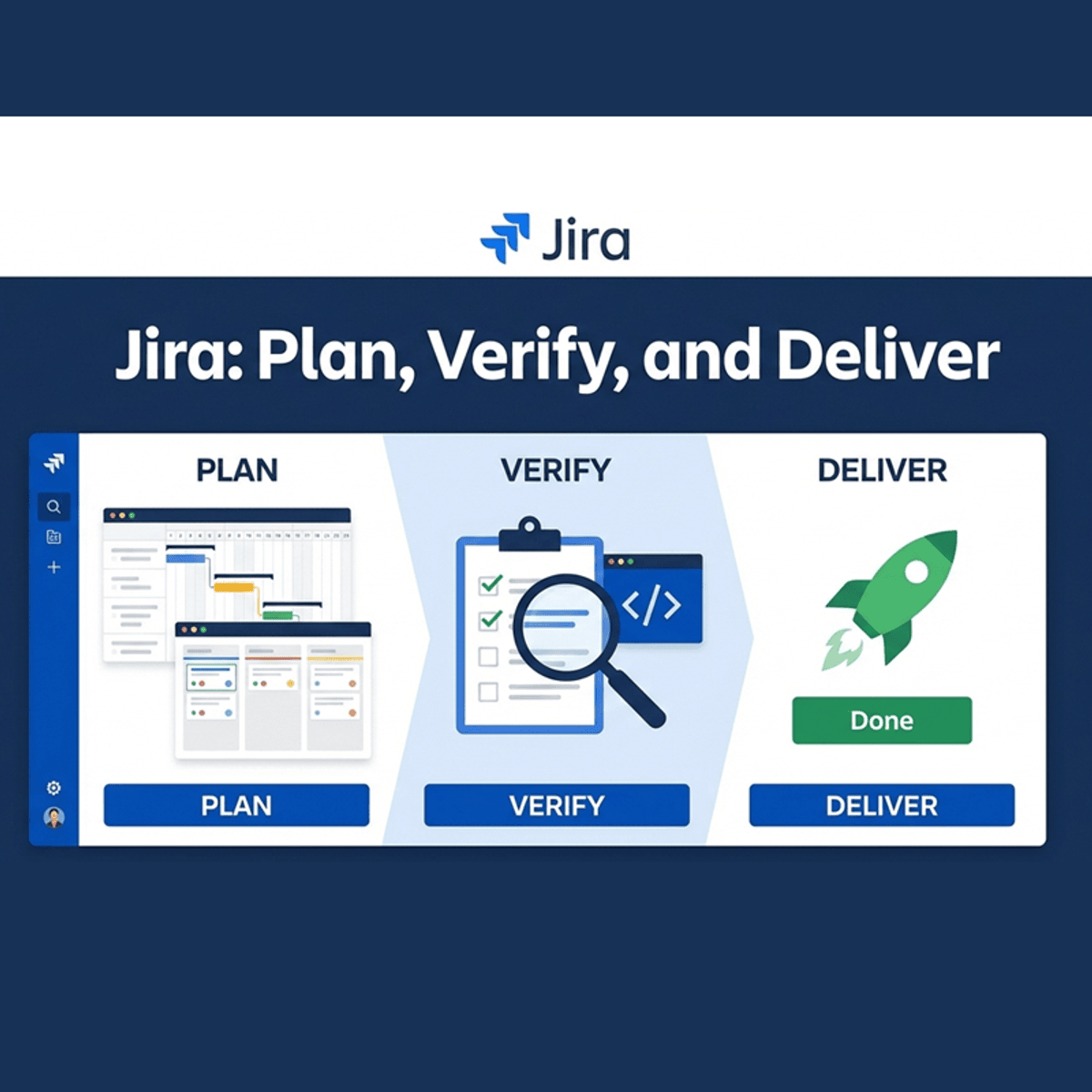
Jira: Plan, Verify, and Deliver
In today's fast-paced agile environments, quality is not an afterthought—it's built into every step of the process. Jira: Plan, Verify, and Deliver is a hands-on course for anyone looking to bring more structure, clarity, and predictability to their team's workflow. This course moves beyond basic ticket-tracking to teach you two of the most powerful quality gates in agile development: the INVEST criteria for user stories and the "Definition of Done" (DoD) for completed tasks. You will learn to act as a quality gatekeeper, using the INVEST checklist to inspect user stories for clarity, value, and readiness before development begins. Then, you will master the art of using a DoD checklist to systematically verify that completed work meets all team-agreed standards. Through practical simulations and real-world scenarios in a Jira-like environment, you will gain the confidence to reduce ambiguity, minimize rework, and ensure every task is truly "Done."
 University of Michigan
Service Transformed: Lessons in U.S. Veteran Centered Care
Improving health care for veterans has become a matter of national attention and has gained increasing attention from the medical community. With the current surge of veterans reintegrating into civilian society it is critical to improve the training of the next cadre of providers who will provide care for our veterans. It is widely known that veterans receive care in all aspects of the health system, thus providers in veteran focused care facilities, military health serves and civilian locals must be aware of the unique needs of veterans. It is perhaps even more important to educate civilian providers who may be unfamiliar with the unique physical, mental and emotional needs related to military service. Course Audience - all health professions learners, example: - medical students, resident physicians, dental students, - nursing students, advanced practice nurses, - social work, pharmacy student as graduate level learners - as well as any and all health professionals interested in veteran-centered care What You Will Learn: This course will provide learners the opportunity to engage with material to facilitate their understanding of the origins of Academic Medical Centers and Veterans Administration affiliations, recognize and manage the influence of bias, class, and power on the clinical encounter and self-reflect on their biases that particularly affect U.S. military veterans. This course also features several video clips from the acclaimed documentary, Where Soldiers Come From, directed by Heather Courtney. The views expressed in this course are those of the authors and do not necessarily reflect the position or the policy of the Department of Veterans Affairs or the U.S. government.
 Northwestern University
Leadership Through Marketing
The success of every organization depends on attracting and retaining customers. Although the marketing concepts for doing so are well established, digital technology has empowered customers, while producing massive amounts of data, revolutionizing the processes through which organizations attract and retain customers. In this course, students will learn how to identify new opportunities to create value for empowered consumers, develop strategies that yield an advantage over rivals, and develop the data science skills to lead more effectively, allocate resources, and to confront this very challenging environment with confidence.
 Google Cloud
Modernizing Applications with Apigee X
This is a self-paced lab that takes place in the Google Cloud console. In this lab, you deploy a backend service on Cloud Run. The backend service implements a REST API for a bank, storing customers, accounts, ATMs, and transactions in a Firestore database. You create a shared flow that retrieves and caches content from an external service. You then call that shared flow from your API proxy, and use JavaScript code to modify an API response.
 Packt
Packt
Advanced AI Techniques and Behavior in Unity
This course features Coursera Coach! A smarter way to learn with interactive, real-time conversations that help you test your knowledge, challenge assumptions, and deepen your understanding as you progress through the course. In this advanced-level course, you will explore sophisticated AI techniques for creating realistic, dynamic, and intelligent behaviors in Unity. Starting with crowd simulation, you will learn how to simulate large groups of agents moving as one, as well as how to implement flocking behavior for AI groups. The course takes you through the process of creating goal-driven AI using Goal-Oriented Action Planning (GOAP), and introduces behavior trees to structure complex decision-making systems. The course begins with a focus on crowd simulation, where you will learn how to simulate both fleeing and flocking behaviors in groups of agents. Then, you will dive into Goal-Oriented Action Planning (GOAP), creating intelligent agents that plan their actions dynamically based on environmental conditions. Additionally, you’ll explore behavior trees, a powerful tool for organizing AI actions and decision-making, allowing your agents to execute tasks like navigation, combat, and interaction with the game world. Designed for developers looking to level up their AI development skills, this course requires prior experience with Unity and basic AI concepts. Whether you're developing strategy games, simulation games, or action games, the techniques learned in this course will help you build more complex and engaging AI systems for your games. By the end of the course, you will be equipped to implement highly adaptive AI for a variety of game environments.