

The Global Scholarly Directory.
Discover world-class academic programs curated for the modern intellectual. Search through 19877+ degrees and professional certificates.
 University of Illinois Urbana-Champaign
Financial Statements, SEC Filings and Ratio Analysis
The objective of Financial Statement and Ratio Analysis for MBAs is to provide you with the knowledge and skills necessary to analyze, interpret, understand, and use financial information to make informed decisions. We will discuss financial reporting from a user’s perspective, use a variety of tools to break apart financial reports into meaningful units for analysis, forecast financial statements, and value a firm. This course is intended to give you exposure to the issues facing users of financial statements. You will better understand your role in the financial reporting process if you know how the financial statements will ultimately be used. Financial Statement and Ratio Analysis for MBAs will require you to think critically about issues for which there can be more than one “correct” answer. Hence, your analysis and conclusions must be based on sound assumptions and well-constructed analysis and arguments.
 Kennesaw State University
Developing a Leadership Framework
This course offers seasoned and up-and-coming leaders a clear, concise overview of the challenges of organizational leadership and practical strategies for improving as leaders. The lessons are structured around essential leadership responsibilities, including defining leadership, understanding what it is not, and understanding how to construct a leadership framework utilizing the elements of the 4D Leadership Development Framework. In addition, articles, self-evaluation forms, discussion post activities, and practice questions encourage participants to apply leadership principles to their situations. With a strong foundation in leadership theory and the most recent research, the program is designed for immediate practical application.
 Universidades Anáhuac
El Cerebro que Aprende
En este curso aprenderás sobre los procesos que tiene el cerebro para intervenir en el aprendizaje.
 Coursera
Plan, Optimize, and Launch AI Projects
Plan, Optimize, and Launch AI Projects is an intermediate course for project managers, team leads, and hands-on AI practitioners who want to ship real work, not just talk about it. AI projects rarely fail because a model breaks. They fail because plans are unclear, people are overloaded, and dates do not line up. This course builds three practical skills you can use next week: read and rebalance capacity with a simple heat map, test feasibility against budget, data, and compliance, and use hybrid planning to connect Agile sprints to milestone dates. You will learn through short videos, a focused reading set, one hands-on lab, a coach-guided reflection, and practice quizzes. You will create a heat map, run a baseline review with a change log, and practice mapping sprint work to a milestone so leaders and teams see the same plan. By the end, you will be able to design and adapt plans that keep AI initiatives moving, with clear ownership, visible risks, and credible delivery dates.
 Google
Start the UX Design Process: Empathize, Define, and Ideate
Start the UX Design Process: Empathize, Define, Ideate is the second course in a certificate program that will equip you with the skills needed to apply to entry-level jobs in user experience (UX) design. In this course, you’ll complete the first phases of the design process for a project that you’ll be able to include in your portfolio. You will learn how to empathize with users and understand their pain points, define user needs using problem statements, and come up with lots of ideas for solutions to those user problems. Current UX designers and researchers at Google will serve as your instructors, and you will complete hands-on activities that simulate real-world UX design scenarios. Learners who complete the courses in this certificate program should be equipped to apply for entry-level jobs as UX designers. No previous experience is necessary. By the end of this course, you will be able to: - Empathize with users to understand their needs and pain points. - Create empathy maps, personas, user stories, and user journey maps to understand user needs. - Develop problem statements to define user needs. - Generate ideas for possible solutions to user problems. - Conduct competitive audits. - Start designing a mobile app, a new project to include in your professional UX portfolio.
 Google Cloud
Cloud Storage: Qwik Start - CLI/SDK
This is a self-paced lab that takes place in the Google Cloud console. This hands-on lab shows you how to perform basic tasks in Cloud Storage using the gsutil command-line tool. Watch the short video Google Cloud Storage: Massive Scalability Plus More.
 University of Cape Town
Educating Deaf Children: Becoming an Empowered Teacher
Many Deaf children around the world still leave school functionally illiterate. In some cases, there is no allowance made for the education of Deaf children at all. This 4-week course provides you with invaluable knowledge and skills about teaching Deaf children. You will learn about the importance of Deaf culture and community, the need for a language-rich environment for the Deaf child from as young as possible, and that having access to sign language can help Deaf children academically, emotionally, and socially. We also cover various accommodations and modifications that you can apply in your classroom and learning environment to create an accessible learning experience for Deaf children. You will also find that a shift in attitude will enable you to connect with Deaf children with more understanding. This course does not teach sign language since each country has its own sign language. We hope that through this course you become an empowered teacher - for yourself, for your fellow teachers, and most importantly, for the Deaf children in your classroom. You will be able to purchase a Verified Certificate if you wish to show evidence of your achievements, but this is optional, and you may apply for Financial Aid if you are unable to pay the certificate fee.
 Universidad de Palermo
Product Management, Visión y Estrategia
El gerenciamiento de un producto o de una cartera de productos es una tarea compleja y que requiere atender a una diversidad de aspectos, ya sean estos de índole estratégica, táctica u operativa. Cualquiera sea el caso que la gestión de productos involucre, será siempre determinante tener una visión clara y firme acerca de lo que el producto debe ser y, consecuentemente, construir una decidida orientación al cliente que conduzca la toma de decisiones acerca de cómo debe trabajarse para construir y sostener una propuesta de valor diferencial, atractiva y relevante para los mercados a atender. Sobre la base de lo anterior, a lo largo de este curso se realizará un recorrido que invitará a transitar los siguientes puntos: en el primer módulo se expondrán ideas inherentes a la importancia de contar con una visión estratégica del producto, para luego poner foco en el modelo de negocio y en cómo este debe organizarse para potenciar la inserción y competitividad en los mercados de actuación. Posteriormente, en el segundo módulo, se trabajarán conceptos esenciales para la gestión estratégica y para la creación de un posicionamiento potente que sea sostenible en el tiempo y que permita llevar adelante una gestión exitosa. En el tercer módulo se analizarán aspectos tácticos y operativos vinculados con las formas de comercializar y comunicar lo que la empresa tiene para ofrecer; se abordarán conceptos esenciales acerca de la construcción de los canales de distribución o comercialización y, a continuación, se detallarán aquellos lineamientos pilares para lograr una comunicación efectiva que impacte positivamente en los públicos objetivo que se deseen atender. Finalmente, en el cuarto módulo se desarrollarán los fundamentos de la fijación de precios y se explicará cómo los precios constituyen una variable determinante para alcanzar el posicionamiento buscado. Asimismo, se buscará exponer con claridad cómo la gestión adecuada de los precios permitirá llevar adelante un negocio competitivo y rentable. Además de los desarrollos teórico-prácticos, propios de la presentación de los diversos temas hasta aquí mencionados, se incluyen actividades adicionales, tales como foros y cuestionarios que ayudarán a la internalización de las ideas, herramientas y conceptos trabajados. Objetivos del curso: • Lograr una mirada amplia acerca de algunos de los múltiples aspectos vinculados con la gestión de productos. • Internalizar en qué consiste la idea de posicionamiento y cómo la misma resulta fundamental para el éxito de un producto. • Reconocer cómo la gestión de productos involucra otros tantos aspectos inherentes a la mezcla de marketing. • Comprender por qué las decisiones de precios son determinantes para la gestión de productos competitivos y rentables.
 Universidad de los Andes
Introducción a la inteligencia artificial contemporánea
La inteligencia artificial (IA) es un área del conocimiento enfocada en el diseño de componentes de hardware y software que emulen el comportamiento y pensamiento humano en la realización de tareas y toma de decisiones. Su objetivo es desarrollar capacidades computacionales que puedan resolver tareas previamente consideradas como exclusivas de la inteligencia humana. La IA ha sido especialmente útil para modelar y resolver problemas de alta complejidad que requieren del análisis de grandes volúmenes de datos y con un alto grado de incertidumbre. Por esta razón, en los últimos años, la investigación y áreas de aplicación de la IA han aumentado considerablemente, convirtiéndose en una parte esencial para el avance tecnológico y la transformación digital en la academia, la industria y los sectores empresariales. Este curso te permitirá comprender el concepto de inteligencia artificial, identificar los avances actuales y retos futuros en este campo y analizar las implicaciones éticas del despliegue de sistemas de IA en el mundo contemporáneo. En particular, podrás examinar los paradigmas más importantes de aprendizaje de máquinas y algunas aplicaciones claves de la inteligencia artificial en seis diferentes áreas del conocimiento: visión por computador, procesamiento de lenguaje natural, representación del conocimiento, sistemas embebidos, sistemas de control y aprendizaje por refuerzo. Este curso incluye videos de presentación y explicación de los temas, entrevistas con expertos en el área de la IA, actividades de aprendizaje y evaluación, lecturas, foros de reflexión, actividades de programación, etc. Todos estos elementos te llevarán por una ruta de aprendizaje que se ha diseñado para que comprendas los principales conceptos de la IA y logres ver su aplicación en cada una de las áreas con ejemplos de aplicación en la vida real.
 Coursera
Using MySQL Database with PHP
In this 1.5 hour project, you will combine your knowledge of HTML, object-oriented PHP, SQL, and MySQL to make a dynamic website that uses MySQL database on the web server. You will learn two different methods, one applies to 12 other SQL databases and one specific to MySQL. Basic HTML, object-oriented PHP, relational database, and SQL required as prerequisites. Completing my courses "Build an Automobile Listing Website with PHP" and "Learn Object-Oriented Programming with PHP" first is highly recommended.
 Peking University
计算机组成 Computer Organization
本课程重点讲述计算机的内部结构和工作原理,着眼于软件和硬件的衔接互动,注重基本概念和真实系统的对应。
 University of California, Irvine
Virtual Teacher Final Project
The Final Project will be a hands-on, comprehensive project that practitioners of virtual education can implement in their profession. For this final project, learners will draft a design plan for an online learning module utilizing materials learned from the virtual teacher series. Learners will choose the subject matter, method of delivery, tools, instructional strategies, and assessments, with the goal of creating a module of online or blended instruction that meets the needs of their students. Learners do not have to create, develop or teach the online learning module they design. Upon completing this course, you will be able to: 1. Design a fully online or blended instructional module 2. Apply theories and/or strategies of effective online instruction
 Packt
Packt
Digital Note-Making for Creative Thinking with Obsidian
This course explores the power of digital note-making as a tool to expand your thinking and enhance your knowledge management skills. You'll learn how to connect your ideas, cultivate a long-term mindset, and apply modern strategies for organizing your thoughts in a structured way. You will gain hands-on experience in creating and maintaining a digital knowledge garden, which serves as a foundation for creative work and deeper understanding. The course provides practical strategies and frameworks for using digital tools effectively, guiding you through the process of note-making, not just note-taking. What sets this course apart is its focus on connecting ideas over time to uncover patterns and develop insights. You’ll learn to use digital notes to enhance both creativity and critical thinking, blending theory with real-world applications to maximize knowledge retention. This course is perfect for knowledge workers, students, educators, and digital creators who wish to improve their information management practices. Whether you're a beginner or looking to refine your note-making skills, this course will empower you to unlock your intellectual potential. Copyright @ 2024 Jorge Arango. All rights reserved. Originally published by Rosenfeld Media, LLC. This course edition is published by Packt Publishing under license from Rosenfeld Media LLC. No part of this material may be reproduced, distributed, or transmitted in any form or by any means, electronic, mechanical, photocopying, recording, or otherwise, without prior written permission from the author or the publisher.
 Arizona State University
Bayesian Statistical Concepts and Methods
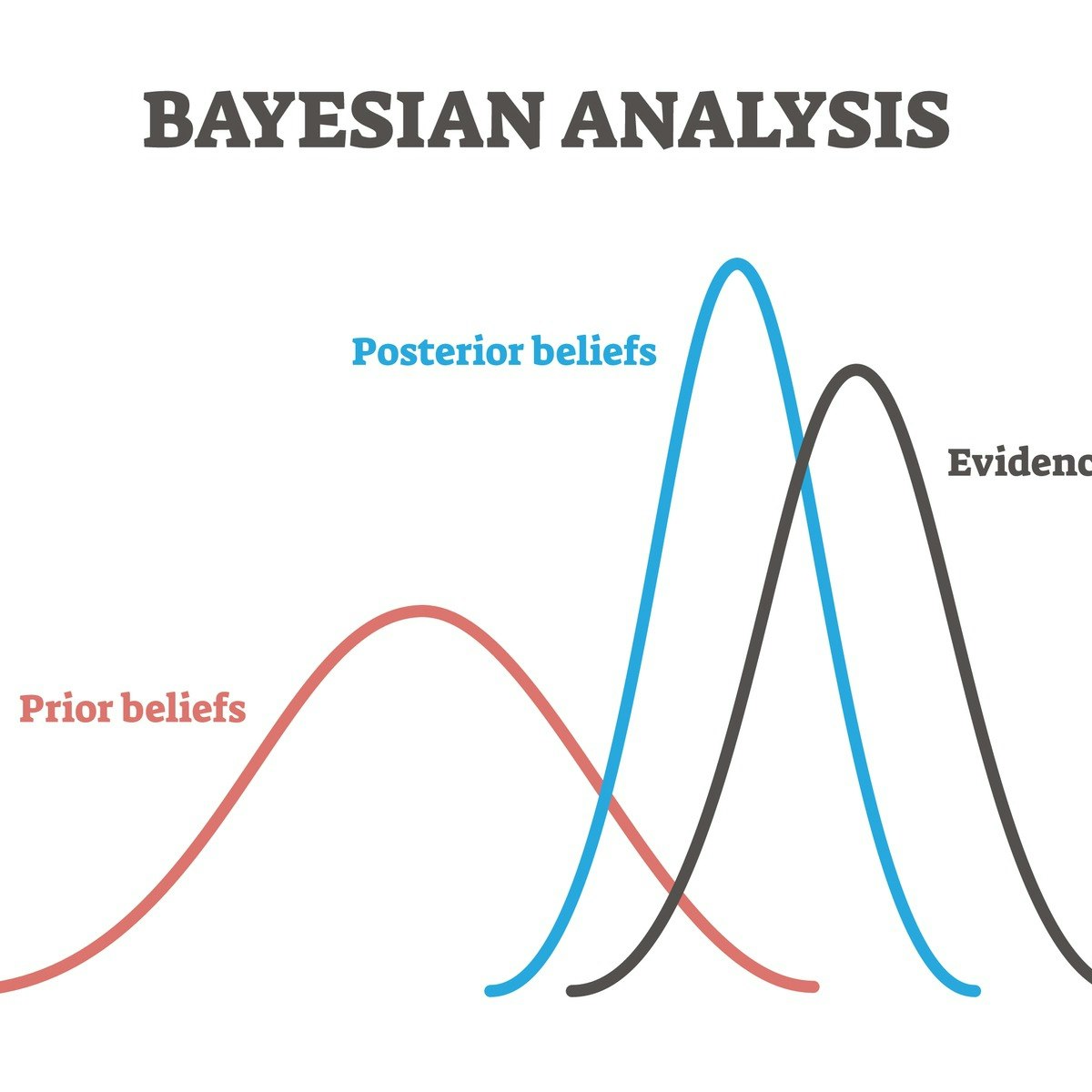
Welcome to Bayesian Statistical Concepts and Methods. In this course, you will use Bayesian methods in data analysis and modeling; work with posterior distributions, distributions without closed form, directed acyclic graphs, Markov Chain Monte Carlo algorithms; and employ R and the Stan platform for statistical modeling. You will also be introduced to Bayesian hierarchical models, which are useful for the interpretation of multi-level data (sub-group versus group).
 IE Business School
The "What" of the Marketing Strategy
In this course, you will explore the essentials of marketing, where you'll learn to understand the marketplace, create value through strategic marketing, and capture value for profit and brand equity. Engage with customers across digital and physical platforms, and manage initiatives with key performance indicators to ensure successful marketing outcomes. Develop and implement effective marketing strategies with measurable results.
 Digital Marketing Institute
Social Media and Social Content Strategy
Digital Marketing Institute is the global standard in Digital Marketing Certification. Our mission is to give our students the confidence and knowledge they need to advance in their careers through this specialization. More than 3.6 billion people globally are using social media in 2021 so social is certainly popular. But with advertising spend on social expected to surpass $100 billion in 2021, clearly social media is as much about big business, competition, and profit as it is about connecting people. If you want to understand the forces transforming businesses today and, in particular, the key challenges facing social media marketers as they attempt to cut through the noise, engage their audiences, and demonstrate tangible business value, this course will help you do so. You will learn the core principles of social media marketing before drilling deeper into engaging, nurturing, and building a loyal social community. After completing this course, you will be able to: - • Identify the benefits and advantages to a business of using social media to engage an audience • Differentiate between the social platforms used by businesses and their relative advantages for targeting consumers • Set up a social media account for a business • Build, manage, and sustain an active social media community This course also introduces social content strategy and explains how to balance the advantages of organic social content seeding against the immediacy of paid social content promotion. It covers how to implement a content strategy and the basics of measuring its effectiveness. This is the second course in the Digital Marketing Institute’s Social Media Marketing specialization. On completion of all courses in your Specialization, you will also be awarded a Digital Marketing Institute Certified Digital Marketing Associate certification, along with three months of free Power Membership, allowing you to boost your career and unlock your next opportunity. 92% of DMI members have said their courses have had a positive impact on their careers, while 88% are now working at senior or manager level.