

The Global Scholarly Directory.
Discover world-class academic programs curated for the modern intellectual. Search through 19877+ degrees and professional certificates.
 Fundação Instituto de Administração
Introdução ao Workforce Management
Nossas boas-vindas ao Curso Introdução ao Workforce Management. Neste curso, você aprenderá os conceitos fundamentais de Workforce Management (WFM), estruturados em uma metodologia prática e aplicável em sua realidade. Ao final deste curso, você será capaz de conhecer, de forma detalhada, os processos de WFM nas organizações, o que permite definir as principais estratégias de RH e implementar as iniciativas de WFM. Também saberá identificar quais as principais iniciativas, boas práticas e tendências para a área. Este curso é composto por quatro módulos, disponibilizados em semanas de aprendizagem. Cada módulo é composto por vídeos, leituras e testes de verificação de aprendizagem. Ao final de cada módulo, temos uma avaliação de verificação dos conhecimentos. Estamos muito felizes com sua presença neste curso e esperamos que você tire o máximo de proveito dos conceitos aqui apresentados. Bons estudos!
 Coursera
Agentic AI Content for Practitioners (Teams: Finance)
Agentic AI Content for Practitioners (Teams: Finance) is an intermediate-level course designed for finance professionals and data specialists seeking to revolutionize financial workflows through intelligent automation. In a landscape where regulatory pressure, fraud risk, and operational complexity are ever-increasing, manual finance processes are no longer sustainable. This course empowers learners to design and deploy AI agents that intelligently analyze transactions, optimize financial operations, and adapt to shifting market and compliance demands. Through hands-on labs, real-world use cases, and interactive simulations, you'll build agents that reason through complex financial data—detecting anomalies, routing invoices, automating cash flow management, and generating ESG insights. These agents go beyond scripted logic; they use memory, planning, and tool invocation to continuously improve performance and align with your financial goals. By the end of the course, you’ll know how to identify high-value automation opportunities, configure intelligent agents within finance systems, and implement solutions that are auditable, explainable, and human-aligned—ensuring measurable ROI and strategic impact across your finance function.
 Adobe
Adobe
Branding Basics with Adobe Express
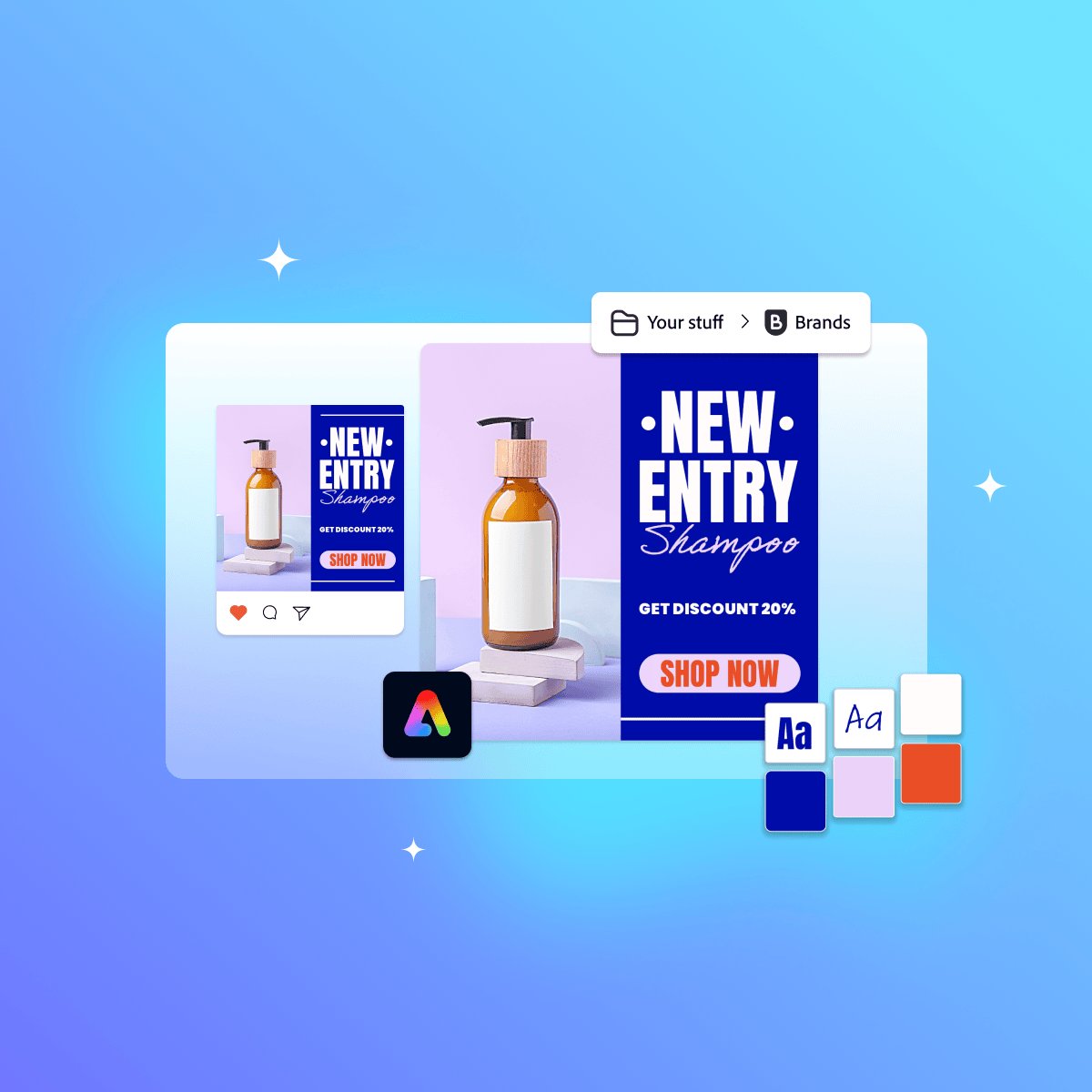
Bring your brand to life with Adobe Express. In this hands-on course, you’ll learn how to design memorable logos and build a cohesive brand identity that captures your unique story. You'll start by exploring logo design fundamentals through combining typography, color, and shape using the intuitive Logo Maker. Then, you'll take your branding further by defining your purpose, creating consistent visuals, and organizing assets with Adobe Express brand kits and libraries. By the end, you’ll have the confidence and tools to create a professional, unified brand presence that stands out across every platform.
 Johns Hopkins University
Building Data Visualization Tools
The data science revolution has produced reams of new data from a wide variety of new sources. These new datasets are being used to answer new questions in way never before conceived. Visualization remains one of the most powerful ways draw conclusions from data, but the influx of new data types requires the development of new visualization techniques and building blocks. This course provides you with the skills for creating those new visualization building blocks. We focus on the ggplot2 framework and describe how to use and extend the system to suit the specific needs of your organization or team. Upon completing this course, learners will be able to build the tools needed to visualize a wide variety of data types and will have the fundamentals needed to address new data types as they come about.
 University of California, Davis
Continuous Integration
In today's world, software development is highly complex and often has large teams of developers working on small pieces of a larger software project. This course will go over the basic principles of using a continuous integration system effectively to constantly improve software. We're going to describe the different stations of continuous test, build, integration and deploy processes required for DevOps practices and apply best practices for quality software management, and tooling to accomplish iterative software build & test processes. You will be able to create an automated job for continuous build, test, integrate, and deploy with Travis CI and use branching and project workflows to enhance the quality, speed and feedback loops for your software assets. We'll describe the attributes of Deterministic Builds and how they are applied within the CI pipeline and use the Continuous Integration data and analytics to measure and improve the health of your software assets. Automation at scale is now more achievable for software development teams, as continuous integration makes it possible.
 Icahn School of Medicine at Mount Sinai
Big Data Science with the BD2K-LINCS Data Coordination and Integration Center
The Library of Integrative Network-based Cellular Signatures (LINCS) was an NIH Common Fund program that lasted for 10 years from 2012-2021. The idea behind the LINCS program was to perturb different types of human cells with many different types of perturbations such as drugs and other small molecules, genetic manipulations such as single gene knockdown, knockout, or overexpression, manipulation of the extracellular microenvironment conditions, for example, growing cells on different surfaces, and more. These perturbations are applied to various types of human cells including cancer cell lines or induced pluripotent stem cells (iPSCs) from patients, differentiated into various lineages such as neurons or cardiomyocytes. Then, to better understand the molecular networks that are affected by these perturbations, changes in levels of many different molecules within the human cells were measured including: mRNAs, proteins, and metabolites, as well as cellular phenotypic changes such as cell morphology. The BD2K-LINCS Data Coordination and Integration Center (DCIC) was commissioned to organize, analyze, visualize, and integrate this data with other publicly available relevant resources. In this course, we introduce the LINCS DCIC and the various Data and Signature Generation Centers (DSGCs) that collected data for LINCS. We then cover the LINCS metadata, and how the metadata is linked to ontologies and dictionaries. We then present the data processing and data normalization methods used to clean and harmonize the LINCS data. This follows by discussions about how the LINCS data is served with RESTful APIs. Most importantly, the course covers computational bioinformatics methods that can be applied to other multi-omics datasets and projects including dimensionality reduction, clustering, gene-set enrichment analysis, interactive data visualization, and supervised learning. Finally, we introduce crowdsourcing/citizen-science projects where students can work together in teams to extract gene expression signatures from public databases, and then query such collections of signatures against the LINCS data for predicting small molecules as potential therapeutics for a collection of complex human diseases.
 EDUCBA
Master Marketing Strategy: Analyze, Design & Evaluate
Analyze, Design & Evaluate is a comprehensive case study-driven program designed to help learners understand, apply, and evaluate core principles of modern marketing. Through real-world corporate scenarios, you will explore how to define vision and mission, set measurable objectives, and design strategic initiatives that align with customer needs. The course emphasizes brand development—covering equity, identity, awareness, and trust—while also applying analytical tools like SWOT, PESTLE, and Geo Assessment to evaluate environments effectively. Learners will design impactful digital and tangible campaigns, allocate budgets strategically, and assess outcomes through evaluation and impact analysis. By the end of this course, participants will be able to analyze brand value, design customer-centric strategies, and evaluate marketing performance for sustainable growth.
 Arizona State University
Factorial and Fractional Factorial Designs
Many experiments in engineering, science and business involve several factors. This course is an introduction to these types of multifactor experiments. The appropriate experimental strategy for these situations is based on the factorial design, a type of experiment where factors are varied together. This course focuses on designing these types of experiments and on using the ANOVA for analyzing the resulting data. These types of experiments often include nuisance factors, and the blocking principle can be used in factorial designs to handle these situations. As the number of factors of interest grows full factorials become too expensive and fractional versions of the factorial design are useful. This course will cover the benefits of fractional factorials, along with methods for constructing and analyzing the data from these experiments.
 Aptly
Aptly
Advertising and E-commerce on TikTok
This is the third course in the Marketing with TikTok specialization. In this course, you will explore different ways to advertise on TikTok and how to utilize each one. You will also learn strategies on how to use TikTok for E-commerce. You will discover the analytics platform that TikTok has built and how to use it to optimize your advertising efforts on this exciting platform.
 Packt
Packt
SwiftUI iOS 16 Crash Course - Emoji Quote App in SwiftUI
Updated in May 2025. This course now features Coursera Coach! A smarter way to learn with interactive, real-time conversations that help you test your knowledge, challenge assumptions, and deepen your understanding as you progress through the course. SwiftUI creates user interfaces for any Apple platform and helps create beautiful and dynamic apps quickly. SwiftUI helps build functional apps across all Apple platforms with surprisingly little code. The course begins with a brief introduction to the text, modifiers, stacks, state variables, and animations and then advances to cover ForEach views, sheets, pickers, sliders, toggle switches, scroll views, buttons, etc. You will move on to developing the main app and learn how to create an app icon based on Pexels Figma. Then, you will learn to disassemble an SVG image and convert it to PNG using Pexel Figma and Shape and Path to create a speech bubble and add text. You will create a color palette to support light and dark modes and develop a model of a quote-based app on a free quote API, part of the MVVM (Model, view model, View design pattern). When tapped, you will test the emoji to generate a new quote and copy the image to the clipboard with a long press. This course will teach you to create image grids using an iPad/iPhone and create a share sheet to customize the images/quotes; change text color/size or image size, share or save it, and test the app’s functionality on a simulator. Upon completion, you can develop an Emoji Quote app using SwiftUI/iOS 16. The course aims for succinct yet fairly comprehensive SwiftUI/iOS 16 development. This course caters to individuals wishing to acquire application development skills using SwiftUI/iOS 16 with beginner to advanced programming skillsets; however, more than basic to intermediate programming skills are desirable at least to make the most of the course. Anyone wishing to learn programming on iOS 16 using SwiftUI and individuals wanting to learn a quick course on what can be developed using SwiftUI would benefit from this course.
 Amazon Web Services
AWS Transit Gateway Getting Started
With AWS Transit Gateway, you can build a single gateway to connect multiple virtual private clouds (VPCs) and on-premises networks. In this course, you will learn the benefits and technical concepts of Transit Gateway. If you are new to the service, you will learn how to start using Transit Gateway through a demonstration using the AWS Management Console. You will learn about simplifying your network architecture by eliminating the need for separate peer connections between VPCs and networks.
 Whizlabs
Microsoft Compliance Solutions Capabilities
Welcome to Microsoft Compliance, Privacy & Risk Management, a comprehensive course designed for compliance managers, IT auditors, and security professionals who want to master Microsoft’s compliance and governance ecosystem. This course begins with an introduction to Microsoft’s Service Trust Portal, privacy principles, and Microsoft Priva for managing privacy risks and data subject requests. You’ll then explore Microsoft Purview’s compliance capabilities, including Compliance Manager and Compliance Score. The course dives deeper into Purview’s data classification, sensitivity labels, retention policies, and unified data governance solutions. Finally, you’ll learn to manage insider risks, conduct eDiscovery investigations, and leverage audit capabilities for compliance and forensic analysis. By the end of the course, you’ll be ready to implement Microsoft Purview solutions that protect sensitive data, manage compliance requirements, and mitigate organizational risk. This course delivers 6–7 hours of expert-led content structured into three modules, each with video lessons, demos, and knowledge checks. Who Should Take This Course? Compliance Managers and GRC Professionals IT Security and Risk Management Teams Microsoft 365 Administrators Professionals preparing for SC-400 or seeking hands-on Purview experience Course Modules: Module 1: Microsoft Compliance & Privacy Management Essentials Module 2: Microsoft Purview: Information Protection, Governance & Risk Management
 Packt
Packt
Foundations of Microservices and REST APIs with Spring Boot
This course features Coursera Coach! A smarter way to learn with interactive, real-time conversations that help you test your knowledge, challenge assumptions, and deepen your understanding as you progress through the course. Build the skills to design, develop, and secure scalable microservices using Spring Boot and Spring Cloud. This course equips learners with a practical understanding of RESTful web services, API architecture, and the essential tools required to create robust backend solutions in Java. Whether you're new to microservices or seeking a structured foundation, this course provides the hands-on knowledge to get you started confidently. You’ll begin with an introduction to microservices architecture and how Spring Boot simplifies development. Then, you'll explore foundational concepts like installing the Java development environment, understanding SOAP vs REST, and learning how to build and expose RESTful APIs. From there, you’ll incrementally develop a complete REST API with advanced features including versioning, filtering, error handling, Swagger documentation, and authentication using Spring Security. The final sections dive deeper into microservices concepts, connecting your services with relational databases using JPA, Hibernate, and MySQL, and implementing scalable microservice patterns. You’ll also explore tools like Docker, HAL Explorer, and Actuator for deployment, monitoring, and exploration. This course is designed for developers with basic Java knowledge who want to learn backend API development and microservices design. It is ideal for aspiring full-stack developers, backend engineers, and system architects. A working knowledge of object-oriented programming is recommended. This is an intermediate-level course. By the end of the course, you will be able to build REST APIs with Spring Boot, integrate them with databases, implement microservice architecture with Spring Cloud, and deploy scalable, secure applications with confidence.
 DeepLearning.AI
LLMOps
In this course, you’ll go through the LLMOps pipeline of pre-processing training data for supervised instruction tuning, and adapt a supervised tuning pipeline to train and deploy a custom LLM. This is useful in creating an LLM workflow for your specific application. For example, creating a question-answer chatbot tailored to answer Python coding questions, which you’ll do in this course. Through the course, you’ll go through key steps of creating the LLMOps pipeline: 1. Retrieve and transform training data for supervised fine-tuning of an LLM. 2. Version your data and tuned models to track your tuning experiments. 3. Configure an open-source supervised tuning pipeline and then execute that pipeline to train and then deploy a tuned LLM. 4. Output and study safety scores to responsibly monitor and filter your LLM application’s behavior. 5. Try out the tuned and deployed LLM yourself in the classroom! 6. Tools you’ll practice with include BigQuery data warehouse, the open-source Kubeflow Pipelines, and Google Cloud.
 EDUCBA
MongoDB: The Complete Guide to NoSQL Database Development
This comprehensive course ensures you develop a foundational understanding of MongoDB, covering its principles, architecture, and essential operations. You'll gain hands-on skills installing MongoDB, executing CRUD operations, and navigating its architecture. Progressing to advanced concepts, you'll delve into schema design, indexing, and performance optimization, incorporating advanced querying techniques using Mongoose. The course further extends to integrating MongoDB with Mongoose, emphasizing document creation, RESTful API design, and validation practices. Finally, you'll explore MongoDB's advanced functionalities, mastering data distribution, fault tolerance, and performance strategies. You will possess a robust skill set for proficient MongoDB development and management by the course's conclusion.
 University of Zurich
An Intuitive Introduction to Probability
This course will provide you with a basic, intuitive and practical introduction into Probability Theory. You will be able to learn how to apply Probability Theory in different scenarios and you will earn a "toolbox" of methods to deal with uncertainty in your daily life. The course is split in 5 modules. In each module you will first have an easy introduction into the topic, which will serve as a basis to further develop your knowledge about the topic and acquire the "tools" to deal with uncertainty. Additionally, you will have the opportunity to complete 5 exercise sessions to reflect about the content learned in each module and start applying your earned knowledge right away. The topics covered are: "Probability", "Conditional Probability", "Applications", "Random Variables", and "Normal Distribution". You will see how the modules are taught in a lively way, focusing on having an entertaining and useful learning experience! We are looking forward to see you online!