

The Global Scholarly Directory.
Discover world-class academic programs curated for the modern intellectual. Search through 19877+ degrees and professional certificates.
 Imperial College London
Immunology: Autoimmunity, Allergy, and Transplants
In this course, you will explore the mechanisms and immune responses involved in autoimmune diseases and in hyper-responsive phenomena, such as asthma. You will examine in detail the potential causes and factors behind an overactive immune system and the disorders that might ensue if the response is not adequately controlled. you will also analyse the effects of overactive immune response in transplant rejection.
 Packt
Packt
Advanced Terraform - Variables, Modules, & State Management
Updated in May 2025. This course now features Coursera Coach! A smarter way to learn with interactive, real-time conversations that help you test your knowledge, challenge assumptions, and deepen your understanding as you progress through the course. This advanced Terraform course teaches you how to master variables, modules, and state management. By the end, you'll be proficient in defining and implementing input variables, validating and typing them, and managing data structures like maps and objects. You’ll learn to handle sensitive data securely, use .tfvars and .auto.tfvars files, and write clean Terraform code. The course includes hands-on exercises to apply features like count and for_each to manage multiple resources, and covers module design, including reusable AWS modules for EC2 and VPCs. You’ll also learn best practices for organizing, testing, and publishing Terraform modules to enhance workflow efficiency. As you progress, you’ll explore state management, including importing, refactoring, and removing infrastructure. You’ll master tools like the taint command and validating resources with preconditions and postconditions, enabling confident handling of complex deployments. This course is ideal for professionals with prior experience in Terraform or cloud infrastructure management looking to refine modular design and state management skills.
 Packt
Packt
Advanced Linux Troubleshooting and System Recovery
Updated in May 2025. This course now features Coursera Coach! Dive deep into the art of diagnosing and resolving critical Linux system issues in this comprehensive advanced course. You’ll develop the expertise to handle everything from kernel panics and performance bottlenecks to full-scale disaster recovery, using real-world scenarios and proven system recovery techniques. The course kicks off with advanced system administration troubleshooting, including memory issues, process failures, and network configuration challenges. You’ll also master key utilities like sed, systemctl, and SOS report, while learning to recover lost root passwords, rollback patches, and resolve command execution problems. Later modules focus on virtual and physical system recovery, exploring strategies for handling serious crashes and implementing disaster recovery plans. You'll finish with an extensive toolbox of commands and utilities covering file permissions, service management, backups, system monitoring, and Linux security hardening. This course is ideal for experienced Linux users, sysadmins, and IT professionals who want to elevate their troubleshooting capabilities. Prior Linux experience is required, and the course is best suited for Advanced learners.
 University of Colorado Boulder
Solar Power Sensors
Solar Power Sensors starts with a discussion on how solar panels generate electrical energy. It then moves to the electronic components: silicon solar cells, perovskite cells, photovoltaic manufacturing methods and the power generation components: sun trackers, solar inverters, solar battery storage. We reference sensors used to monitor electronics and power generation components, as well as sensors that that are essential for maximizing solar panel efficiency. Solar Sensors can also be taken for academic credit as ECEA 5351, part of CU Boulder’s Master of Science in Electrical Engineering.
 Sungkyunkwan University
EKP2: Formation of Korean Neo-Confucianism
In the “Exploration to Korean Philosophy” series, we will delve deeper into the subject matter than what was previously addressed in the courses “Introduction to Korean Philosophy and Culture (IKPC)” and “In Search for the Origins of Korean Philosophy (SOKP).” In EKP2, “Formation of “Korean” Neo-Confucianism,” is a course that zooms in on the era when Korean philosophy blossomed and looks into detailed topics. Here we will look at the debate between Buddhism and Confucianism, the diagrams that Koreans drew to capture the world and explore the inner self of humans, and the philosophy of salvation through the heart, which is the goal of these attempts.
 ESSEC Business School
Paths to a Sustainable Future
This MOOC is an introduction to social and ecological transition. Ecological issues (climate change, loss in biodiversity, scarcity of resources, etc.) and their social consequences (growing inequalities, poverty, conflicts, forced migrations, etc.) call upon us to promote a paradigm shift, to redesign our production and consumption patterns, as well as our lifestyles. This is what transition is all about. In this MOOC, you will encounter some of the changes needed for transition at different levels: worldviews (political), systems (the economy, management...) and lifestyles (at personal and community levels). Following the MOOC will help change your way of thinking or living, as well as to transform the structures of society. You will learn about possible existing solutions, and also see that new solutions need to be invented. This MOOC will also highlight the importance of working with others. Anyone can follow the course, without prerequisites. If you already have some knowledge of the topic, it will allow you to discover a number of approaches to transition and strengthen your understanding of both challenges and ideas for change. This MOOC was developed by the European University For Transition Erasmus + project. The European University for Transition (EU4TRANSITION) Erasmus + project developed innovative learning and research practices (e.g. new curricula, teaching methods, institutional network) to accompany the transition in the education field. It developed multidisciplinary, pragmatic and holistic approaches for teaching and learning in the field of « Transitions » and facilitate the exchanges, flows and co-creation of knowledge and, more specifically, skills. Partners were: ESSEC BUSINESS SCHOOL, UNIVERSITEIT VOOR HUMANISTIEK, UNIVERSIDAD PONTIFICIA COMILLAS, ARTERRA BIZIMODU, YASAR UNIVERSITESI, MTÜ EESTI ÖKOKOGUKONDADE ÜHENDUS and CAMPUS DE LA TRANSITION. More information at: https://eu-4-transition.essec.edu/home This project has received funding from Erasmus Plus under grant agreement N°2020-1-FR01-KA203-080465. Disclaimer: the European Commission’s support for the production of this publication does not constitute an endorsement of the contents, which reflect the views only of the authors, and the Commission cannot be held responsible for any use which may be made of the information contained therein.
 The Chinese University of Hong Kong
Structural Equation Model and its Applications | 结构方程模型及其应用 (普通话)
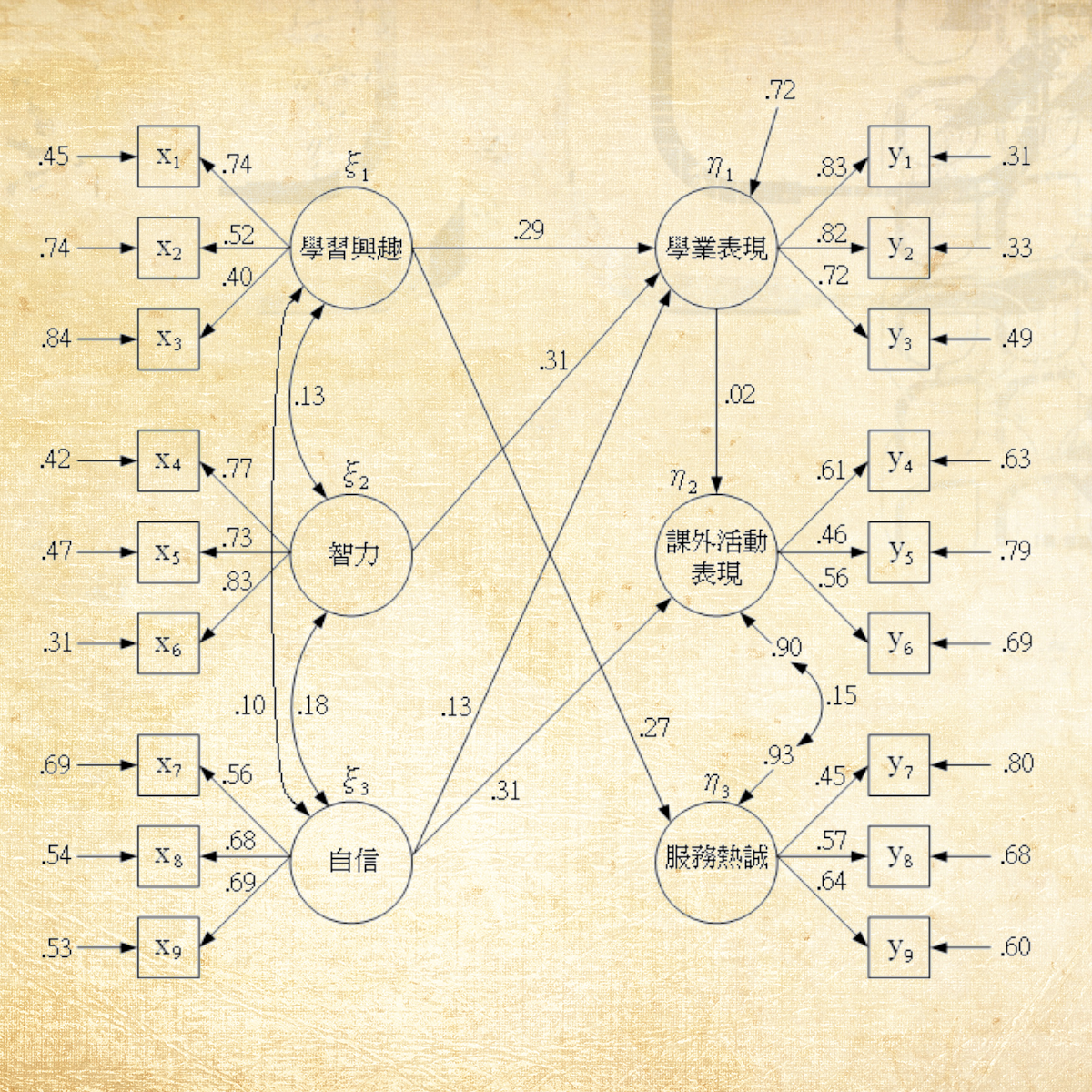
在社会学、心理学、教育学、经济学、管理学、市场学等研究领域的数据分析中,结构方程建模是当前最前沿的统计方法中应用最广、研究最多的一个。它包含了方差分析、回归分析、路径分析和因子分析,弥补了传统回归分析和因子分析的不足,可以分析多因多果的联系、潜变量的关系,还可以处理多水平数据和纵向数据,是非常重要的多元数据分析工具。本课程系统地介绍结构方程模型和LISREL软件的应用,内容包括:结构方程分析(包括验证性因子分析)的基本概念、统计原理、在社会科学研究中的应用、常用模型及其LISREL程序、结果的解释和模型评价。学员应具备基本的统计知识(如:标准差、t-检验、相关系数),理解回归分析和因子分析的概念。 注:本课程配套教材为《结构方程模型及其应用》(以LISREL软件为例)。
 Google Cloud
Essential Cloud Infrastructure: Foundation - Español
En este curso acelerado on demand, se presentan los servicios flexibles y completos de infraestructura y plataforma que proporciona Google Cloud, con un enfoque en Compute Engine. Mediante una serie de clases por video, demostraciones y labs prácticos, los participantes pueden explorar y, también, implementar elementos de soluciones, incluidos componentes de infraestructura, como redes, máquinas virtuales y servicios de aplicaciones. Aprenderás a usar Google Cloud mediante la consola y Cloud Shell. También te familiarizarás con la función de un arquitecto de nube, enfoques para el diseño de la infraestructura y la configuración de redes virtuales con una nube privada virtual (VPC), proyectos, redes, subredes, direcciones IP, rutas y reglas de firewall.
 Pontificia Universidad Católica de Chile
Mecánica de materiales
La mecánica de materiales, conocida también como resistencia de materiales o mecánica de sólidos, es una rama de la mecánica aplicada que estudia el comportamiento de cuerpos sólidos en equilibrio no sometidos a aceleraciones ante diferentes estados de carga o solicitaciones externas (tracciones, compresiones o fuerzas de corte). El objetivo fundamental de esta ciencia es establecer los esfuerzos internos y las deformaciones producidas por efecto de las cargas externas, con el fin de diseñar cualquier tipo de estructura que sirva a su propósito sin presentar fallas. A lo largo del curso, se estudiarán tres conceptos fundamentales de esta disciplina, como lo son: el equilibrio de fuerzas y momentos; la compatibilidad geométrica de las deformaciones; y la relación entre esfuerzos internos y deformaciones. El curso combinará videos donde se explicarán los conceptos teóricos y demostrarán sus aplicaciones, con test para que los estudiantes practiquen de manera independiente los conocimientos adquiridos.
 Johns Hopkins University
Principles of fMRI 1
Functional Magnetic Resonance Imaging (fMRI) is the most widely used technique for investigating the living, functioning human brain as people perform tasks and experience mental states. It is a convergence point for multidisciplinary work from many disciplines. Psychologists, statisticians, physicists, computer scientists, neuroscientists, medical researchers, behavioral scientists, engineers, public health researchers, biologists, and others are coming together to advance our understanding of the human mind and brain. This course covers the design, acquisition, and analysis of Functional Magnetic Resonance Imaging (fMRI) data, including psychological inference, MR Physics, K Space, experimental design, pre-processing of fMRI data, as well as Generalized Linear Models (GLM’s). A book related to the class can be found here: https://leanpub.com/principlesoffmri.
 Google Cloud
AI Infrastructure: Networking Techniques
Welcome to the ""AI Infrastructure: Networking Techniques"" course. While AI Hypercomputer is renowned for its massive computational power using GPUs and TPUs, the secret to unlocking its full potential lies within the network. High-performance computing and large-scale model training demand incredibly fast, low-latency connections to continuously feed processors with data. In this course, you will learn to leverage Google Cloud's high-bandwidth, low-latency infrastructure to optimize data transfer and communication between all the components of your AI system. By the end, you will grasp the critical role networking plays across the entire AI pipeline from data ingestion and training to inference and be able to apply best practices to ensure your workloads run at maximum speed.
 California Institute of the Arts
Game Design Document: Define the Art & Concepts
The Capstone project is a place for you to develop your game idea into a fully-fleshed proposal. A game design document is your game bible, the go-to document that defines the genre of your game, its look and feel, and the evolution of gameplay. This four-part capstone project guides you to distill and improve the foundational aspects of your game so that you may express your ideas in a clear and productive way. Note: Only learners who have earned a certificate in the four previous courses in the Specialization are eligible to take the Capstone.
 University of Colorado Boulder
Suffering and the Human Condition
Suffering is an inevitable yet poorly understood feature of human existence. This course examines how societies respond to the puzzling reality of human anguish. Among the questions it addresses are the following: What is suffering? Which types of human affliction are unique to the modern world? Have the meaning and portrayal of suffering changed over time? Do digital media sensitize or desensitize us to the anguish of distant others? In addition to introducing students to academic literature and debates on these topics, Suffering and the Human Condition will give them the opportunity to learn a method for studying human affliction that identifies the actors that perpetuate it.
 University of Washington
Speaking to persuade: Motivating audiences with solid arguments and moving language
In the professional realm, we need to be able to argue without being argumentative. Whether you are fundraising for a nonprofit, pitching a business proposal, or suggesting a change to company policy, you are making arguments. In making the case for your topic, you often want to raise awareness, identify a pressing problem, discuss appropriate solutions, and outline specific steps for the audience. To be persuasive, you must be clear (the audience may have little to no existing knowledge), you must be convincing (you are trying to sway the audience that your argument is valid), and you must be compelling (you are trying to motivate the audience enough so that they want to take specific actions). Persuasive speaking thus requires clarity, strategy, topic mastery, plus a sense of style and presence. By the end of this course, you should be able to design persuasive speeches that address problems and solutions and that motivate audience members. You should be able to use rhetorical style strategically and deliver passionate and compelling speeches. Learners will record speeches, providing and receiving peer feedback.
 Packt
Packt
Geometry Nodes For Blender 4.4
Embark on a transformative journey in procedural 3D design with Blender’s Geometry Nodes system. In this course, you'll learn to build sophisticated procedural environments, from scattering objects across terrains to animating dynamic scenes with realistic wind effects. Along the way, you'll harness the full potential of Geometry Nodes to create intricate designs with optimized performance, blending art and technology seamlessly. The course begins by covering the fundamentals, ensuring you’re equipped with essential tools and knowledge. You'll gain hands-on experience through practical projects such as the "Glade" scene, which includes everything from terrain shaping and object scattering to animating natural phenomena. As the course progresses, you'll dive into advanced techniques like instancing, creating responsive animations, and controlling procedural assets with vertex groups and ray casts. By the end of the course, you'll be comfortable using Geometry Nodes for various creative and technical applications in Blender. This course is ideal for 3D artists, animators, and game developers who want to incorporate procedural workflows into their projects. It's perfect for users with basic Blender knowledge who are eager to dive deeper into procedural modeling and animation. The course is designed to be accessible to intermediate learners but will also challenge those looking to enhance their skills. By the end of the course, you will be able to confidently use Geometry Nodes to build procedurally generated environments, animate natural phenomena, optimize performance, and integrate modeling with materials in a cohesive workflow.
 Infosec
Certified Secure Software Lifecycle Professional (CSSLP)
CSSLP is an industry leading secure software development certification that teaches and evaluates best practices for software security. Earning a CSSLP demonstrates the advanced technical skills and knowledge required to design and build security best practices into each phase of the software development lifecycle (SDLC). In this course, we will prepare for the CSSLP exam, as we review secure software concepts, describe the phases of the Software Development Lifecycle (SDLC), and investigate the importance of authentication, authorization, and auditing for software security.