

The Global Scholarly Directory.
Discover world-class academic programs curated for the modern intellectual. Search through 19877+ degrees and professional certificates.
 Coursera
Enhancing Communication with Remind
By the end of this project, you will have set up an account with Remind and be fully prepared to use Remind with your class. Remind allows you to simplify communication by reaching parents using the method that works best for them. By the end of this project, you will have an effective method for communicating with parents or other stakeholders that you can use right away. *You will need a free Remind account for this project.
 Universitat Autònoma de Barcelona
Ensenyament de llengües i alfabetització de persones adultes
Ensenyes llengua o vols ensenyar llengua a persones adultes? Aquest curs està dirigit a persones docents i voluntàries d'institucions educatives, entitats, ONG, etc., i d’altres persones interessades que s’inicien o volen aprofundir en la didàctica de la llengua i l’alfabetització. En aquest curs parlarem dels perfils i necessitats de l’alumnat, de propostes per ensenyar llengua, de l’alfabetització de persones adultes i d’alguns reptes que podem trobar quan ens iniciem en aquest camp. Adquiriràs coneixements i estratègies per dissenyar i implementar classes de llengua adequades per aquest perfil d’alumnat.
 The University of Edinburgh
Climate Change: Carbon Capture and Storage
The atmosphere is a shared resource and the amount of greenhouse gases it can absorb is a finite resource. This introductory course to the technology of Carbon Capture and Storage is designed for a wider audience with an interest in energy, sustainability and climate change. The aim of Carbon Capture and Storage is to achieve - Deep reductions in carbon dioxide emissions to the atmosphere - Unlock carbon negative solutions to achieve a neutral carbon balance to the atmosphere in the 21st century Carbon Capture and Storage makes cheap, widely available fossil fuels ‘safe to use’ in the context of the Paris Climate Change agreement of 2015. It prevents their carbon dioxide emissions from entering the atmosphere to store them permanently and safely underground. The course is taught by a team of leading academics at the University of Edinburgh with decades of experience in this field. It aims to bridge the gap between the forefront of the latest developments in science, engineering, geology, policy and economics, and the wider public. The aim is to help you understand this technology objectively and why it is so important in our efforts against climate change. We hope the course will make you want to find out more about climate change mitigation options and that you will continue to further educate yourself in this area. Learners can apply for Financial Aid directly with Coursera to assist with the cost of accessing the full course and gaining a certificate for successfully completing the course.
 Google Cloud
Découvrir Cloud Spanner
Dans ce cours, vous allez découvrir Cloud Spanner. Cloud Spanner vous sera présenté et sera comparé à d'autres produits de base de données. Cela vous aidera à mieux comprendre quand et comment utiliser Spanner pour répondre à vos besoins en termes de bases de données relationnelles à grande échelle. Vous apprendrez à créer et à gérer des bases de données Spanner au moyen de différents outils sur Google Cloud, à optimiser les schémas relationnels en tenant compte du modèle de base de données distribuée de Spanner, à interagir avec vos bases de données Spanner à l'aide des API Spanner, à intégrer Spanner à vos applications, et à utiliser d'autres outils Google pour administrer des bases de données Spanner et gérer des données.
 University of Colorado Boulder
Introduction to Python for Scientific Computing
Whether you’re a scientist, engineer, student, or industry professional working with data or quantitative tasks, this course is your gateway to solving real-world problems with Python. Designed for beginners, no prior programming experience is required. We start with the basics and build up to powerful tools and techniques used every day in research and industry. You’ll learn how to fit data to custom models, automate repetitive tasks, create clear and professional visualizations, work efficiently with arrays, solve optimization problems, integrate and differentiate mathematical functions, and more using essential libraries like NumPy and SciPy. By the end of the course, you’ll be ready to start tackling scientific computing challenges in your field and build a strong foundation for more advanced topics like data science, statistics, and computational modeling. Whether you’re just starting out or looking to sharpen your skills, this practical, hands-on course opens the door to a wide range of applications across science, engineering, and beyond.
 Google Cloud
Scaling with Google Cloud Operations
"Organizations of all sizes are embracing the power and flexibility of the cloud to transform how they operate. However, managing and scaling cloud resources effectively can be a complex task. Scaling with Google Cloud Operations explores the fundamental concepts of modern operations, reliability, and resilience in the cloud, and how Google Cloud can help support these efforts. Part of the Cloud Digital Leader learning path, this course aims to help individuals grow in their role and build the future of their business."
 Arizona State University
What is the Human Factor in Design?
Course 1 provides an overview of human factors, systems and human errors. It covers the key concepts and applications of human factors and introduces various methods for reducing human error.
 Packt
Packt
Computer Vision: YOLO Custom Object Detection with Colab GPU
Updated in May 2025. This course now features Coursera Coach! A smarter way to learn with interactive, real-time conversations that help you test your knowledge, challenge assumptions, and deepen your understanding as you progress through the course. In this comprehensive course, you'll dive into the world of real-time object detection with YOLO, one of the most powerful algorithms for detecting objects in images and videos. The course begins with an introduction to YOLO and object detection, followed by setting up your development environment with Anaconda and installing essential libraries like OpenCV. A review of Python basics ensures you are equipped with the necessary programming knowledge before delving into convolutional neural networks (CNNs). Once your environment is ready, the course progresses into more advanced topics such as implementing YOLO for pre-trained object detection. You’ll explore practical examples, including detecting objects in images, videos, and live webcam feeds. The course then takes you through custom training with YOLOv4, where you will learn to collect and label data, train-test split, and prepare Darknet for training your own models. Each phase of custom training is covered step by step, including synchronization with Google Colab and Drive, testing Darknet, and fine-tuning the training process. By the end of the course, you'll be adept at training YOLO models for specific use cases, including the detection of various objects and even custom challenges such as COVID-19 detection. Along the way, you'll troubleshoot common issues like GPU usage limits in Colab and explore real-world case studies to solidify your understanding. No prior knowledge of YOLO is required, but a basic understanding of machine learning concepts will be helpful. This course is designed for data scientists, machine learning engineers, and computer vision enthusiasts who are familiar with Python programming.
 Coursera
Créer une présentation de marché cible avec Canva
À la fin de ce projet, vous aurez toutes les compétences de base pour créer une présentation de votre marché cible utilisant gratuitement la plateforme Canva, outil en ligne de création et d’édition de visuels Marketing. Grâce à ce projet, vous serez capable de créer une présentation Marketing gratuitement qui vous permettra de comprendre votre audience en détails et de proposer une offre adéquate à la demande de votre marché cible. Remarque : ce cours fonctionne le mieux pour les étudiants basés en Amérique du Nord. Nous nous efforçons actuellement d'apporter la même expérience dans d'autres régions.
 IE Business School
Critical Perspectives on Management
This course is designed for students of all backgrounds who have an interest in how firms are governed, the forces that have helped define modern management practice, and the outcomes of that practice not only for the firm itself, but also for the societies in which they operate. For students who are thinking of a career in management, it may also prove useful as a basic introduction to some of the conceptual vocabulary and ideas behind modern theories of management. Using a wide disciplinary approach - from economics and history to social theory and even a smattering of biblical criticism - the course will invite students to consider several core management strategies and priorities from often unexpected perspectives in order to judge their success or failure. The key objective of the course is to bring into critical focus how we think about the function and culture of management, how managers understand their role within a firm, how they take decisions, set priorities and benchmark success and failure. Topics include: the function of the firm; the role of incentive; the ways in which narrative forces shape decision making, and how market relationships define the managerial culture in ways that can lead to sub-optimal outcomes.
 Coursera
NGO Startup Analysis with Nonprofit Business Model Canvas
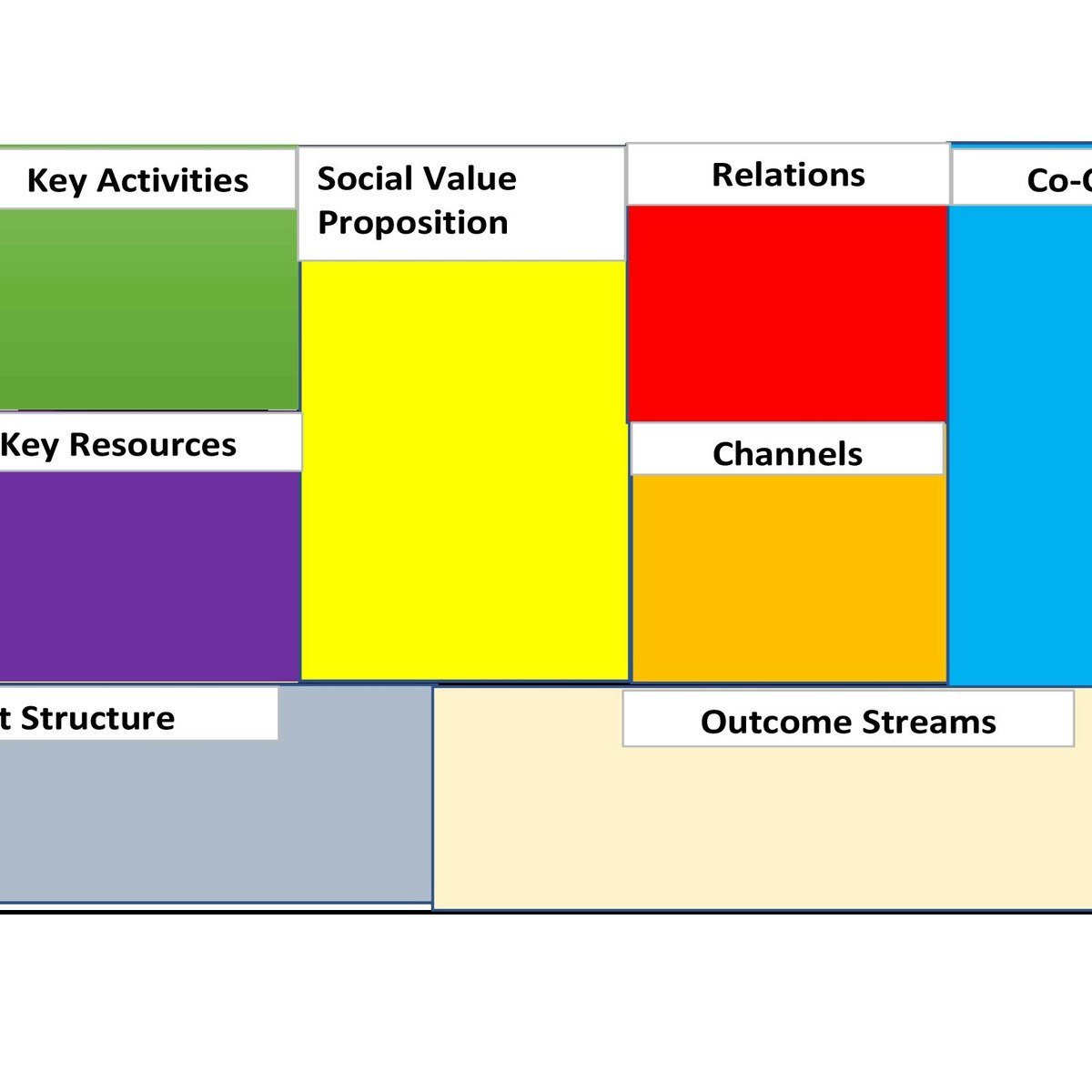
By the end of this guided project, you will be able to use the Nonprofit Business Model Canvas to create, deliver, and capture value for your Non-Governmental Organization (NGO). The canvas serves as a blueprint to help you to design, and operationalize your idea in a more systematic approach. The Canvas is 9-block visualization tool derived from the popular Business Model Canvas, but modified to fit into the NGO context. Essentially, the canvas helps you and your team to answer pertinent questions relating to strategic decision-making, allocation of resources, or developing proposal for grants. Because the canvas makes it easy for you to share ideas and solicit feedback, it’s therefore a quick communicate and strategic planning tool. For us to practically demonstrate how to use the Nonprofit Business Model Canvas to conduct analysis and make informed decisions, we will use a spreadsheet to analyze an NGO startup as a case study. Example of the case study would empower you to apply the model to your organization or any other NGO of your choice. The project is for social entrepreneurs who want to make positive impact on the lives of others. Also, for social investors or donors that want to understand the operations of an NGO. At the end of the project, you will be able to use the canvas to creates and delivers value for your beneficiaries and other stakeholders
 Coursera
Portfolio Development in Canva
Portfolio Development in Canva guides learners through the process of creating a professional, audience-focused design portfolio that showcases both skills and outcomes. Rather than simply compiling past projects, the course emphasizes strategy—defining portfolio goals, curating the right work for target audiences, and building a cohesive narrative that communicates process, problem-solving, and impact. Learners will practice transforming projects into compelling case studies with structured storytelling, visual process documentation, and measurable results that resonate with decision-makers such as hiring managers and clients. The course also covers best practices for digital portfolio presentation, navigation, and format optimization for different contexts—from quick reviews to in-depth portfolio discussions. Through a sequence of readings, screencasts, and applied activities, participants will assemble a complete digital portfolio with case studies and professional presentation design, positioning themselves for greater visibility and career advancement.
 Google
Fundamentos do design da experiência do usuário (UX)
Fundamentos de design de experiência do usuário (UX) é o primeiro de uma série de sete cursos para equipar você com as habilidades necessárias para se candidatar a vagas iniciantes em design de experiência do usuário. Os designers de UX têm como foco as interações entre pessoas e produtos como sites, app para dispositivos móveis e objetos físicos. Designers de UX tornam essas interações diárias práticas, agradáveis e acessíveis. A função de designer de UX iniciante pode incluir ter empatia com os usuários, definir dificuldades, apresentar soluções de design, criar wireframes, protótipos e maquetes e testar designs para receber feedback. Seus instrutores serão designers e pesquisadores de UX atuais do Google, e você realizará atividades práticas que simulam situações reais de projeto de UX. Os alunos que concluírem os sete cursos deste programa de certificação estarão equipados para se candidatar a vagas de designers de UX iniciantes. Nenhuma experiência anterior é necessária. Ao final deste curso, você será capaz de: - definir a área de UX e explicar por que ela é importante para clientes e empresas; - compreender os conceitos básicos de design de UX, como design centrado no usuário, o processo de design, acessibilidade e design voltado à equidade; - identificar os fatores que contribuem para um design com ótima experiência do usuário. - revisar as responsabilidades comuns do trabalho de designers de UX iniciantes e das equipes com que trabalham; - explorar oportunidades de trabalho e planos de carreira no campo da experiência do usuário; - explicar por que os sprints de design são uma parte importante e útil do trabalho de designers de UX; - começar a criar um portfólio on-line para mostrar seus próximos trabalhos; - inscrever-se e participar de comunidades on-line de experiência do usuário.
 Coursera
Demystifying EV Batteries: Tech & Management
In a world transitioning to sustainable transportation, understanding Electric Vehicle (EV) battery technology is paramount. This course is your gateway to uncovering the technology behind electric vehicle batteries, making you an informed and empowered part of the electric mobility revolution. This is a foundational course that will cover a range of concepts and applications related to Electric Vehicle (EV) Batteries, such as chemistry, capacity, energy, power, and cycle life. We will review Battery Management systems, including metrics and intelligent management techniques. The learners will also acquire knowledge related to performance optimization, charging and discharging methods, infrastructure, and factors affecting battery health. Upon completing this course, you will be able to get a strong foundation on the fundamentals of battery technology used in electric vehicles. This will enable you to review battery technology projects and their application in the real world. You will gain know-how in optimal battery charging and discharging practices for efficiency and longevity. These skills will empower learners to make informed decisions, maximize the performance and lifespan of electric vehicle batteries, and contribute to the sustainable use of electric vehicles. This program is designed for anyone who is interested in battery technology used for electric vehicle applications. This includes engineers working in product development to faculty and students from academia. Learners should ideally be aware of the basic structure and architecture of an electric vehicle. It is also recommended for the learner to be aware of basic physics and chemistry to understand the technical terms covered in the course.
 Pontificia Universidad Católica de Chile
Sonidos digitales: síntesis y procesamiento en el computador
En este curso se abordarán los principales tópicos relacionados con la generación (síntesis) y el procesamiento de sonidos en el computador. Durante el transcurso de éste, se abordarán los fundamentos teóricos del sonido y los conceptos técnicos del audio digital, el procesamiento de audio y la síntesis de sonidos. Se revisarán las principales formas y métodos para diseñar, crear y modificar sonidos en formato digital para usarlos en tus propias composiciones musicales o arreglos. Al final del curso los conceptos aprendidos se aplicarán en una aplicación musical, utilizando herramientas de software especializadas, en la forma de un procesador multi-efecto de audio o un sintetizador digital.
 Packt
Packt
Introduction to Microservices with .NET 8 and CQRS
This course features Coursera Coach! A smarter way to learn with interactive, real-time conversations that help you test your knowledge, challenge assumptions, and deepen your understanding as you progress through the course. Learn how to build microservices using .NET 8, CQRS, and architecture. Starting with the fundamentals of microservices, you'll explore their characteristics and challenges. Discover the best practices for implementing microservices and when not to use them. You’ll gain experience by building a Catalog API microservice with Vertical Slice Architecture and CQRS using MediatR. Learn to structure your project, implement domain entities, create endpoints, and containerize your microservices using Docker. Explore the latest features of .NET 8 and C# 12, and understand how they enhance microservice development. You’ll also learn to integrate these concepts with containerization, minimal APIs, and testing practices. This course is ideal for developers with experience in .NET and microservices who want to master CQRS and modern microservice development patterns. By the end, you will be proficient in building scalable, maintainable microservices with .NET 8 and CQRS.