

The Global Scholarly Directory.
Discover world-class academic programs curated for the modern intellectual. Search through 19877+ degrees and professional certificates.
 Universidad Nacional Autónoma de México
Gobierno corporativo: estructuras
En este curso identificarás las estructuras de gobernanza en una entidad, los organismos reguladores que la supervisan para generar un ambiente de rendición de cuentas y en cumplimiento de las responsabilidades legales.
 Yonsei University
Big Data Emerging Technologies
Every time you use Google to search something, every time you use Facebook, Twitter, Instagram or any other SNS (Social Network Service), and every time you buy from a recommended list of products on Amazon.com you are using a big data system. In addition, big data technology supports your smartphone, smartwatch, Alexa, Siri, and automobile (if it is a newer model) every day. The top companies in the world are currently using big data technology, and every company is in need of advanced big data technology support. Simply put, big data technology is not an option for your company, it is a necessity for survival and growth. So now is the right time to learn what big data is and how to use it in advantage of your company. This 6 module course first focuses on the world’s industry market share rankings of big data hardware, software, and professional services, and then covers the world’s top big data product line and service types of the major big data companies. Then the lectures focused on how big data analysis is possible based on the world’s most popular three big data technologies Hadoop, Spark, and Storm. The last part focuses on providing experience on one of the most famous and widely used big data statistical analysis systems in the world, the IBM SPSS Statistics. This course was designed to prepare you to be more successful in businesses strategic planning in the upcoming big data era. Welcome to the amazing Big Data world!
 University of London
The Data Science Profession – Student View
This course is primarily aimed at individuals who want to learn how Data Science is applied in the real world, what we mean by data, and what we mean by machine learning. The course also covers concepts such as K-means and categorical and numerical data.
 Siemens
Applied Computational Fluid Dynamics
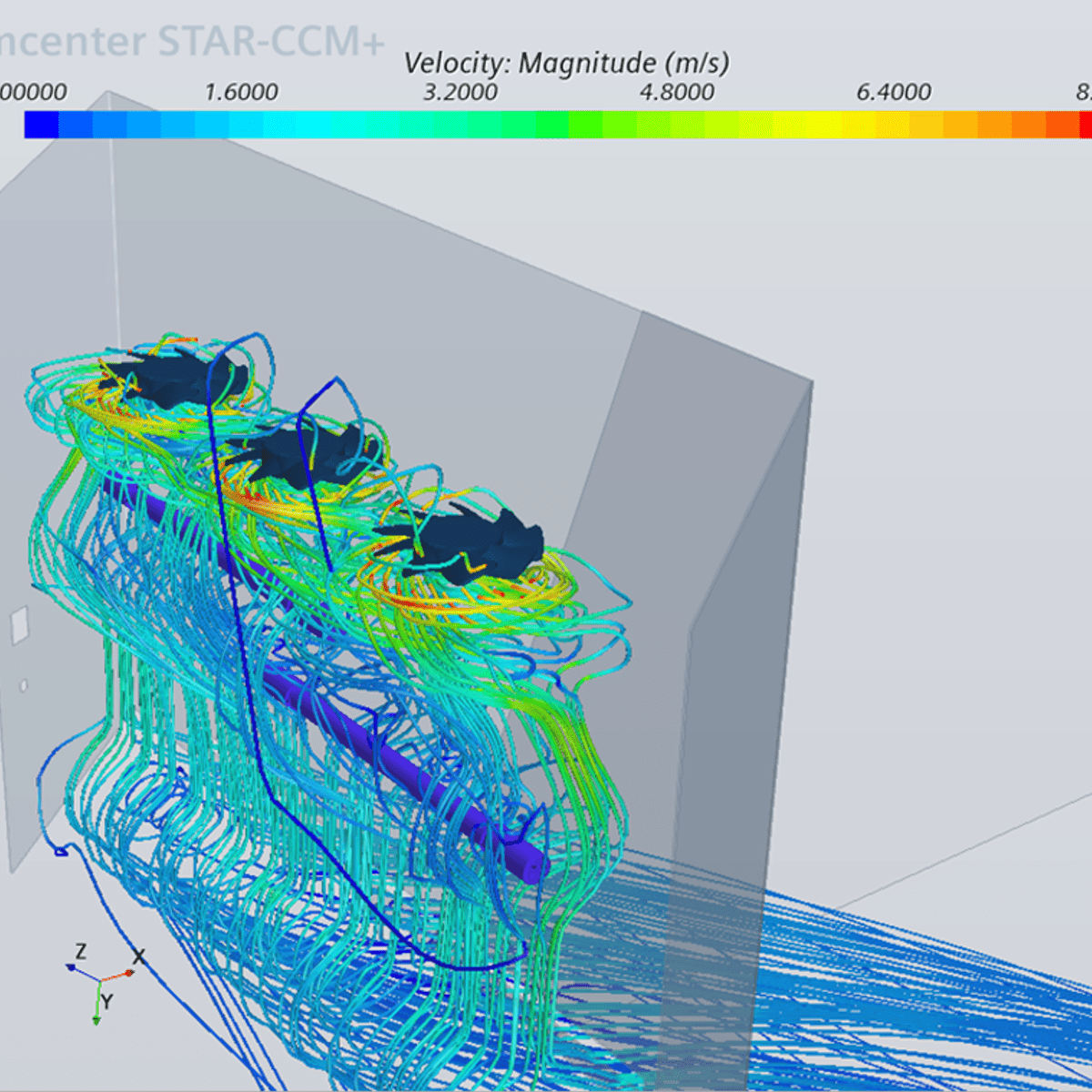
If you’re reading this, you’re likely interested in exploring applied computational fluid dynamics (CFD) using the Simcenter STAR-CCM+ software or another CFD tool. This course can be a first step in improving your job performance and furthering your career or educational trajectory. We’ve created this course to help you use the knowledge of flow physics and computational fluid dynamics to obtain quality solutions of flow and heat transfer problems most efficiently. This course is not about instructions on how to use a particular software. Simcenter STAR-CCM+ was used exclusively for all simulations presented in this course. Still, the learning outcomes would be the same if another public or commercial software were used, as long as it has the same capabilities.
 University of Minnesota
Herbal Medicine
There is strong demand for alternatives to pharmaceuticals for a variety of common illnesses due to concerns of safety, efficacy, and a desire for more “natural” products. Despite this growing interest, “conventional” healthcare providers may have little to no knowledge about herbal medicines, which is further compounded by the sometimes misleading information in the media and on the internet. This course provides the necessary background for providers to begin to incorporate herbal medicines into their practice, particularly in regards to their therapeutic properties, efficacy (or lack thereof), and safety concerns, including quality control and potential adverse effects. Continuing Education Credit This course has been designed to meet Minnesota Board of Nursing continuing education requirements for 16 contact hours and may be eligible for CE credit from other professional boards that allow self-documenting of continuing education activities. It is your responsibility to check with your regulatory board to confirm this course meets your local requirements and, if necessary, to provide them with the certificate of completion you get if you pay for and fulfill all the requirements of this course.
 Coursera
Prompt Engineering with GPT: Programming for Custom Content
Ever wondered how we can use AI in programing to make our workloads easier? In this 2-hour long project-based course, you will master the art of prompt engineering to design an educational tool using the capabilities of OpenAI's GPT-3 language model. You will be creating a multiple-choice quiz generator using Python and GPT-3. You will write a Python script from scratch that is able to generate a custom multiple-choice exam, capable of dynamically adjusting the topic, number of questions, and number of potential answers. To successfully navigate this project, you should have a basic understanding of Python programming, functions, variable assignments, and experience working with APIs.
 Packt
Packt
Modern JavaScript Tooling, Modules, and Backend Integration
Updated in May 2025. This course now features Coursera Coach! A smarter way to learn with interactive, real-time conversations that help you test your knowledge, challenge assumptions, and deepen your understanding as you progress through the course. In this course, you’ll learn to master modern JavaScript tooling, modules, and backend integration. By the end, you'll be able to efficiently organize your code using JavaScript modules, both CommonJS and ES Modules, and leverage tools like Node.js, NPM, and Webpack. You'll also gain hands-on experience in setting up backend APIs with Node.js and Express, integrating MongoDB, and deploying full-stack applications. The course empowers you to enhance your development workflow, optimize production code, and build complex applications that span both frontend and backend. Your journey begins with understanding JavaScript modules and their role in code organization and maintainability. You will dive into the basics of Node.js and NPM, learning to install packages and manage dependencies. As you progress, you’ll explore Webpack as a module bundler, configuring it to optimize your code and improve site performance. Additionally, you'll learn to use Babel for transpiling modern JavaScript for compatibility across browsers. The practical experience culminates in building and deploying a full-stack application, integrating both backend and frontend tools. The course continues by introducing real-world development practices, such as integrating MongoDB and Mongoose for data storage, creating a RESTful API, and handling HTTP requests. You’ll also explore the process of deploying your applications on platforms like Netlify, ensuring your projects are accessible to users worldwide. By the end of this course, you'll have a strong foundation in both frontend and backend integration, as well as the tools needed for efficient development and deployment. This course is ideal for developers with a basic understanding of JavaScript who are looking to take their full-stack development skills to the next level. Prior experience with web development concepts and the command line is recommended.
 Columbia University
Construction Scheduling
This course focuses on learning how to develop and manage a schedule. The first module provides an overview of the Construction Scheduling course. The second module introduces bar or Gantt charts and how they are used as scheduling tools. During the third module, learners will create activity precedence diagrams, also referred to as activity on node diagrams, which graphically represent the construction activities in a project and their relationships. The fourth module provides an overview of the types of construction activity relationships encountered in a construction project and how to represent them in an activity precedence diagram. Forward and backward pass calculations are covered in the fifth module, and during the sixth module, Professor Odeh discusses the importance of critical paths, including what it is and why it is important. By the end of this course, you will be able to: -Discover key project scheduling techniques and procedures -Learn how to develop and manage a schedule, and understand scheduling tools such as bar charts, activity on arrow, and activity on nodes -Explore the multiple relationships that connect all the construction activities in our project from start to finish -Learn about creating a network diagram, defining the importance of the critical path in a project network, and defining project activities float -Understand the fundamentals of bar charts, precedence diagrams, activity on arrow, Program -Evaluation and Review Technique (PERT), range estimating, linear project operations, and the line of balance (LOB)
 Starweaver
Threat Hunting Techniques
In today’s rapidly evolving digital landscape, cyber threats are becoming increasingly sophisticated and elusive. Attackers employ advanced techniques to infiltrate systems, often bypassing traditional security measures. For security professionals, this presents a significant challenge: how can we defend against threats that are designed to evade detection? The answer lies in integrating data science with modern security practices. This course is specifically designed for defenders who want to stay ahead of emerging threats by blending human intuition with machine-driven analytics. In the age of data overload, it’s not enough to simply rely on outdated detection approaches. Defenders need to harness the power of modern data science tools and techniques to uncover hidden anomalies, detect behavioral patterns, and identify subtle signals of compromise that may otherwise go unnoticed. This course equips you with the skills needed to navigate and combat the evolving cybersecurity landscape by utilizing cutting-edge techniques in data science. Throughout the course, you will dive deep into log analysis, threat detection hypotheses, and machine learning models applied to real-world cybersecurity scenarios. You will gain hands-on experience using industry-standard tools like Splunk and Jupyter Notebooks, allowing you to apply what you’ve learned to live data and active threats in your organization or in a training environment. This course is built for defenders who want to sharpen their hunting instincts and use data more effectively. It’s ideal for SOC analysts ready to move beyond alert triage, threat hunters who want to uncover deeper behavioral patterns, blue team engineers looking to build repeatable detection workflows, and cybersecurity students eager to gain hands-on experience with tools like Splunk and Jupyter. Learners should come in with a basic understanding of Python, familiarity with common log formats, and a solid grasp of core cybersecurity concepts. With these foundations in place, you’ll be able to move comfortably into the data-driven workflows and hands-on hunting techniques explored throughout the course. By the end, you’ll understand the full threat hunting lifecycle and how machine learning strengthens hypothesis-driven investigations. You’ll be able to clean, enrich, and visualize raw telemetry; apply anomaly detection techniques like Isolation Forest and DBSCAN; and design a complete ML-powered hunt in Splunk and Jupyter that detects suspicious behavior with clarity and confidence.
 Packt
Packt
Power BI Essentials and Advanced Techniques
This course features Coursera Coach! A smarter way to learn with interactive, real-time conversations that help you test your knowledge, challenge assumptions, and deepen your understanding as you progress through the course. Unlock the full potential of Power BI with this comprehensive course, covering everything from basic report creation to advanced DAX calculations. You’ll start by learning how to navigate the Power BI interface, connect to data sources, and create your first reports with interactive visuals. The course dives deep into advanced topics such as data modeling, time intelligence calculations, and dynamic ranking. Through practical examples, you'll gain hands-on experience in building sophisticated reports, applying advanced features, and optimizing your Power BI workflows. As you move through the course, you’ll explore the Power Query editor for data transformation, enabling you to prepare and clean data for analysis. You'll also master creating DAX measures and calculated columns to derive valuable insights from your data. Each module builds on the previous one, progressively guiding you toward expertise in Power BI, from basic setups to complex analyses. This course is structured to help you grow step-by-step, ensuring you grasp foundational concepts before advancing to more complex techniques. Interactive exercises, quizzes, and real-time feedback will test your skills as you progress, making learning not only effective but engaging. By the end of the course, you’ll be proficient in creating insightful Power BI reports that can handle complex datasets and deliver high-level analytics to support data-driven decision-making.
 Universidade de São Paulo
Inove na gestão de equipes e negócios: O crescimento da empresa
Aprenda a gerir equipes na sua empresa, e também estratégias de como crescer o seu negócio com profissionais das maiores startups brasileiras, como upLexis, Revelo, Playax e Beleza na Web. Neste curso você irá entender mais sobre como escalar, como criar e manter a cultura, como ser um líder, como gerir e contratar equipes, como desenvolver produtos e como cuidar da operação da sua empresa. Neste curso serão abordados os seguintes temas: - O que é escalar - Missão e cultura da empresa, o que são e como definir - Quando e como contratar - CEO e liderança - Como ser produtivo - Desenvolvimento de talentos - Como motivar e formar equipes - Qualidade de vida no trabalho - Desenvolvimento de produtos - Scrum, Kanban, Design Sprint e Design Thinking - Processos de tomada de decisão - Priorização - Processos, entendendo e definindo - Tradução de estratégia em metas e planos de ações - Como avaliar os resultados Ao final desse curso, esperamos que você esteja familiarizado com os principais conceitos, metodologias e práticas para lidar com o crescimento da sua empresa. Não deixe de ver as perguntas frequentes antes de se inscrever Conheça os nossos outros cursos: - Criação de Startups: Como desenvolver negócios inovadores https://www.coursera.org/learn/criacao-startups - UX / UI: Fundamentos para o design de interface https://www.coursera.org/learn/ux-ui-design-de-interface - Consolidando empresas: Estrutura jurídica e financeira https://www.coursera.org/learn/consolidando-empresas - Marketing Digital https://www.coursera.org/learn/estrategia-marketing-digital - Marketing e vendas B2B: fechando novos negócios https://www.coursera.org/learn/marketing-vendas-b2b
 Amazon Web Services
Getting Started with AWS Fargate
With AWS Fargate, you can build applications without managing servers. In this course, you will learn the benefits and technical concepts of Fargate. If you are new to the service, you will learn how to start using Fargate through a demonstration using the AWS Management Console. You will learn about the native architecture and how the built-in features can help you deploy and manage your applications, not infrastructure.
 Coursera
Automate and Evaluate ML Pipeline Tests
Machine learning systems shift over time, making structured testing essential. In this short course, you’ll learn how to evaluate ML pipelines using unit, integration, and smoke tests and how to detect data drift across critical features. You will also create automated regression test suites that compare new model outputs to golden datasets, helping you catch degradation early and deploy reliably. Through concise videos, readings, hands-on practice, and guided coaching, you’ll define meaningful ML test cases and configure nightly pytest suites. By the end, you will have a practical, reusable testing framework you can apply directly to real-world ML pipelines.
 Google
إجراء بحث تجربة المستخدم واختبار المفاهيم المبكرة
إجراء بحث تجربة المستخدم واختبار المفاهيم المبكرة هي الدورة الرابعة في برنامج الشهادة والتي ستزودك بالمهارات التي تحتاجها للتقدم إلى وظائف المبتدئين في مجال تصميم تجربة المستخدم (UX). في هذه الدورة، ستتعلم كيفية التخطيط وإجراء دراسة قابلية الاستخدام لجمع الملاحظات حول التصميمات. بعد ذلك، ستقوم بتعديل تصميماتك منخفضة الدقة بناءً على الرؤى المستمدة من بحثك. سيعمل مصممو تجربة المستخدم والباحثون الحاليون في Google كمدربين لك، وستكمل الأنشطة العملية التي تحاكي سيناريوهات تصميم تجربة المستخدم في العالم الحقيقي. يجب أن يكون المتعلمون الذين يكملون الدورات السبع في برنامج الشهادة مؤهلين للتقدم بطلب للحصول على وظائف مصممي تجربة المستخدم المبتدئين. بنهاية هذه الدورة، ستكون قادرًا على: - التخطيط لدراسة بحث تجربة المستخدم، والتي تتضمن خلفية المشروع، وأهداف البحث، وأسئلة البحث، ومؤشرات الأداء الرئيسية، والمنهجية، والمشاركين، والنص. - شرح أهمية احترام الخصوصية وبيانات المستخدم. - إجراء دراسة قابلية الاستخدام الخاضعة للإشراف وغير خاضعة للإشراف. - تدوين الملاحظات أثناء إجراء دراسة قابلية الاستخدام. - إنشاء مخططات تقارب لتجميع البيانات وتحليلها. - تجميع الملاحظات من البحث والتوصل إلى رؤى. - تطوير مهارات عرض مقنعة لاستخدامها في مشاركة رؤى مستمدة من البحث. - تعديل التصميمات منخفضة الدقة بناءً على الرؤى المستمدة من البحث. - استمر في تصميم تطبيق جوال لتضمينه في ملفك الشخصي المهني. لتحقيق النجاح في هذه الدورة، يجب عليك إكمال الدورات الثلاث السابقة في برنامج الشهادة. أو يجب أن تتوفر لديك القدرة على إجراء بحث المستخدم للإبلاغ عن إنشاء خرائط التعاطف، والشخصيات، وقصص المستخدم، وخرائط رحلة المستخدم، وبيانات المشكلات، وعروض القيمة؛ بالإضافة إلى القدرة على إنشاء إطارات شبكية ونماذج أوّلية منخفضة الدقة على الورق وفي Figma.
 Packt
Packt
Advanced Rust Programming and Real-World Applications
This course features Coursera Coach! A smarter way to learn with interactive, real-time conversations that help you test your knowledge, challenge assumptions, and deepen your understanding as you progress through the course. In this comprehensive Rust programming course, you’ll build the skills needed to become an expert in one of the fastest-growing programming languages. The course starts from the basics and guides you through advanced topics, including concurrency, error handling, and web development. With practical tips and real-world examples, you'll be able to apply Rust's unique features to solve complex programming challenges. As you progress, you’ll work on hands-on projects such as web scraping and implementing blockchain applications, allowing you to solidify your understanding and gain practical experience. You’ll also dive deep into Rust’s advanced features, like lifetimes, traits, and downcasting, ensuring you’re equipped to tackle real-world coding problems with confidence. This course is designed for learners who are ready to dive into Rust and advance their skills. You’ll encounter challenges and opportunities to apply what you’ve learned, helping you master concurrency, memory management, and performance optimization. It’s perfect for developers looking to level up their system programming skills. By the end of the course, you will be able to efficiently manage memory, handle complex types, optimize code for performance, and work with concurrency models in Rust. You’ll also gain the ability to develop real-world projects such as web services, blockchain applications, and more.
 Coursera
Forecast bikeshare demand using time series models in R
In this project, you’ll help a bike rental company enhance its fleet management and pricing strategy by building a daily bike rental forecasting model using time series analysis techniques in R. Your objectives include loading, cleaning, processing, and analyzing daily rental transaction data, and developing and evaluating time series models for the most accurate predictions. The company will use your validated forecasting model to determine the optimal number of bikes to keep in each station and set dynamic pricing based on predicted demand. Upon completion, you’ll be able to demonstrate your ability to perform a comprehensive data analysis project that involves answering critical business questions, extensive data visualization, and model selection. There isn’t just one right approach or solution in this scenario, which means you can create a truly unique project that helps you stand out to employers. ROLE: Data Analyst SKILLS: R, RStudio, Data Analysis, Data Modelling, Time Series Modelling, Data Interpretation PREREQUISITES: Load, clean, explore, manipulate, and visualize data using R Write code in RStudio and R Markdown Knowledge of time series