

The Global Scholarly Directory.
Discover world-class academic programs curated for the modern intellectual. Search through 19877+ degrees and professional certificates.
 Google Cloud
Using gsutil to Perform Operations on Buckets and Objects
This is a self-paced lab that takes place in the Google Cloud console. In this lab you will use gsutil to create a bucket, then perform operations on objects inside the bucket.
 University of California, Irvine
Project Management: The Basics for Success
This course combines the essential elements of Project Management and Team Leadership into one course. Through class engagement and reflection, you will acquire further understanding of the responsibilities of leadership and become better prepared to apply this knowledge to the project environment. Upon completing this course, you will be able to: 1. Learn about the role of high performance teams and leadership in project management 2. Learn about the tools and techniques for developing and strengthening high performance teams and team members 3. Learn about the stages in project cycle 4. Apply best practices to develop competencies and skills in planning and controlling projects to ensure successful outcomes 5. Learn how to monitor project activities and assess progress 6. Learn to communicate proficiently to report project status and performance to stakeholders and contribute to organizational knowledge base
 Adobe
Adobe
Typography and Layout
Typography is more than choosing fonts—it’s about giving words personality and structure. In this course, you’ll explore how type conveys mood, hierarchy, and meaning, and how thoughtful layouts guide the eye through content. Working in Adobe Illustrator, you’ll experiment with type tools, grids, and alignment to create designs that feel intentional and expressive. Each module builds your skills step-by-step—from understanding typographic basics to composing complete layouts that balance type, image, and space. You’ll leave the course with the confidence to design visual compositions where words and visuals work seamlessly together, communicating clearly and beautifully across any medium.
 Packt
Packt
GitHub Copilot & ChatGPT for Devs - Code Smarter in 2024
Updated in May 2025. This course now features Coursera Coach! A smarter way to learn with interactive, real-time conversations that help you test your knowledge, challenge assumptions, and deepen your understanding as you progress through the course. Unlock the full potential of AI-powered coding with GitHub Copilot & ChatGPT. This course empowers developers to streamline their workflows, generate clean, efficient code, and harness AI tools to solve real-world coding challenges. You’ll learn to write smarter prompts, understand how AI coding assistants function, and integrate these tools seamlessly into your projects. Starting with the basics, you’ll set up GitHub, OpenAI accounts, and VSCode, ensuring your development environment is AI-ready. Dive deep into ChatGPT, learning to leverage it for tasks like code generation, function creation, debugging, and explaining complex code. The course also explores free alternatives like Google Gemini, offering a well-rounded AI assistant comparison. Next, discover GitHub Copilot, from setup to mastering its features. You'll practice advanced prompting techniques through written inputs and comments, explore agents like @workspace, and gain tips to enhance collaboration in Git-based projects. Hands-on projects like building a Tic-Tac-Toe game and dockerizing applications solidify your learning. Perfect for developers of all levels, this course requires basic programming knowledge. Whether you're a beginner aiming to improve your productivity or an experienced developer looking to optimize workflows, this course will equip you with practical skills to code smarter using AI.
 University of Colorado System
What is Palliative Care?
Palliative care provides invaluable help for patients living with serious or life-limiting illness and their family caregivers. Palliative care should be part of healthcare services to improve quality of life, the ability to tolerate and benefit from treatment and improve survival. In this course, you will learn about the nature of suffering and how this concept can help you understand the experience of people living with serious illness. Next, you will learn skills to more effectively communicate with patients, families and other care providers to both understand their experiences and provide an extra layer of support. In the next module you will explore your own core values and beliefs and how they impact your work with others. Finally, you will learn how to do a whole person assessment to understand the needs of people with serious illness so you can develop a plan to support them. You will be able to immediately use these insights, skills and tools in your work with people living with serious illness. In later courses, you will learn to ease pain and other symptoms, such as loss of appetite, shortness of breath and fatigue. In the final course, you will explore ways to ease psycho-social-spiritual distress. These courses will prepare you to bring basic palliative care to all in need.
 Google Cloud
Orchestrating the Cloud with Kubernetes (AWS)
This is a self-paced lab that takes place in the Google Cloud console. In this lab you will learn how to provision a complete Kubernetes cluster using Google Container Engine; deploy and manage Docker containers using kubectl; and break an application into microservices using Kubernetes’ Deployments and Services.
 EDUCBA
Advanced Smart Contract Development
The course aims to provide a solid foundation in blockchain technology, covering key concepts such as decentralized consensus, distributed ledgers, and immutability. Participants will grasp the fundamental principles that underpin Ethereum and other blockchain platforms. ● Participants will learn about the specific architecture and components of the Ethereum blockchain, including the Ethereum Virtual Machine (EVM), accounts, transactions, and smart contracts. They will gain an understanding of how these components work together to enable decentralized applications. ● The course will introduce participants to Solidity, the programming language used for developing smart contracts on the Ethereum platform. Participants will learn the syntax, features, and best practices of Solidity programming, enabling them to write secure and efficient smart contracts. ● Participants will learn how to develop, test, and deploy smart contracts on the Ethereum blockchain. They will gain hands-on experience in creating smart contract code, implementing functionalities, and testing their contracts using various tools and frameworks. ● The course will cover methods for interacting with the Ethereum network, including sending transactions, querying contract data, and utilizing Ethereum development tools and libraries. Participants will gain practical skills in interacting with the Ethereum blockchain programmatically.The course aims to provide a solid foundation in blockchain technology, covering key concepts such as decentralized consensus, distributed ledgers, and immutability. Participants will grasp the fundamental principles that underpin Ethereum and other blockchain platforms. ● Participants will learn about the specific architecture and components of the Ethereum blockchain, including the Ethereum Virtual Machine (EVM), accounts, transactions, and smart contracts. They will gain an understanding of how these components work together to enable decentralized applications. ● The course will introduce participants to Solidity, the programming language used for developing smart contracts on the Ethereum platform. Participants will learn the syntax, features, and best practices of Solidity programming, enabling them to write secure and efficient smart contracts. ● Participants will learn how to develop, test, and deploy smart contracts on the Ethereum blockchain. They will gain hands-on experience in creating smart contract code, implementing functionalities, and testing their contracts using various tools and frameworks. ● The course will cover methods for interacting with the Ethereum network, including sending transactions, querying contract data, and utilizing Ethereum development tools and libraries. Participants will gain practical skills in interacting with the Ethereum blockchain programmatically. Target audience: 1) Developers 2) Blockchain Enthusiasts 3) Entrepreneurs and Product Managers 4) Technical Professionals in the Finance and Banking industries 5) Students and Researchers Pre-requisites: 1) Participants should have a solid understanding of programming concepts and experience with at least one programming language such as JavaScript, Python, or Solidity. 2) Blockchain Basics 3) Web Development Skills 4) Command Line Experience: 5) Solidity and Ethereum Development Tools
 University of Colorado Boulder
Introduction to R Programming and Tidyverse
This course is a gentle introduction to programming in R designed for 3 types of learners. It will be right for you, if: • you want to do data analysis but don’t know programming • you know programming but aren’t familiar with R • you know some R programming but want to learn the tidyverse verbs You will learn to do data visualization and analysis in a reproducible manner and use functions that allow your code to be easily read and understood. You will use RMarkdown to create nice documents and reports that execute your code freshly every time it’s run and that capture your thoughts about the data along the way. This course has been designed for learners from non-STEM backgrounds to help prepare them for more advanced data science courses by providing an introduction to programming and to the R language. I am excited for you to join me on the journey! The course logo was created using images of stickers from the RStudio shop. Please visit https://swag.rstudio.com/s/shop.
 University of Michigan
Innovations in Investment Technology: Artificial Intelligence
Explore the evolution of AI investing and online wealth management. Investing and managing your wealth online has never been easier, but how does AI investing work and what are the challenges? On this course, you’ll explore how technology has changed the way we invest money. You’ll consider the evolution of AI-driven online wealth management platforms, robo-advisors, and learn how they work and why they’re successful. Moving from human-based data-driven investing strategies to neural networks, you’ll assess the ability of artificial intelligence to make investment decisions and discover the role of AI and machine learning in making trading decisions.
 EDUCBA
Master Photoshop CC: Apply Smart Selection & Design Tools
Learners will apply advanced Photoshop CC tools, analyze image composition, and create professional-quality visual designs using intelligent selections, transformations, and content-aware features. By the end of this course, learners will confidently manipulate objects, correct perspective, match backgrounds, refine typography, and enhance images using modern Photoshop workflows. This course is designed to help learners move beyond basic editing by focusing on real-world design techniques such as object selection with AI, non-destructive transformations, gradient-based color matching, pixel stretching effects, and perspective correction. Through step-by-step demonstrations, learners gain hands-on experience with the latest Photoshop CC features, including automated background removal, advanced warp controls, updated brush tools, and enhanced Content Aware Fill. What makes this course unique is its tool-centric, workflow-driven approach, ensuring learners understand not just how tools work, but when and why to use them. Ideal for aspiring designers, content creators, photographers, and marketing professionals, this course equips learners with practical skills that improve design accuracy, efficiency, and creative confidence in professional Photoshop projects.
 University of Florida
Agroforestry III: Principles of Plant and Soil Management
Agroforestry III: Principles of Plant and Soil Management is a detailed review of fundamental principles and best practices for successful agroforestry projects through understanding plant and soil interactions. This interdisciplinary module, presented by leading experts in the field, is the third in the five-module course covering the various aspects of agroforestry including the global distribution of the practices, their underlying principles, and major scientific advances during the past nearly five decades. Students will gain extensive knowledge and skills related to agroforestry systems, best practices and scientific management that can be useful in promoting their professional development and sharpening their land management skills.
 Whizlabs
GCP: Monitoring, Security, and Costs
GCP: Monitoring, Security, and Costs Course is the third course of Exam Prep: Google Cloud Certified Associate Cloud Engineer Specialization. This course provides an in-depth exploration of Google Cloud’s Operations Suite, focusing on monitoring, logging, and tracing to enhance system observability. The course also introduces Cloud Trace for distributed tracing and performance diagnostics. Security fundamentals are covered through Cloud IAM and Cloud Key Management Service (KMS), including practical workflows for encryption and decryption. It covers infrastructure automation with Cloud Deployment Manager. The course expands into event-driven architecture using Cloud Pub/Sub and its integration with Cloud Functions. Learners also explore the Google Cloud Marketplace and resource management best practices. The course is divided into two modules, and Lessons and Video Lectures further segment each module. This course facilitates learners with approximately 2:00-2:30 Hours of Video lectures that provide both Theory and Hands-On knowledge. Also, Graded and Ungraded Quizzes are provided with every module to test the ability of learners. - Module 1: Cloud Monitoring in Google Cloud - Module 2: Security and Costs in Google Cloud The course is designed for professionals and learners aiming to master GCP architecture and services. It combines foundational concepts with real-world implementation scenarios for cloud infrastructure, networking, storage, and data management. - Associate Cloud Engineer - Cloud Support Engineer - Cloud Operations Engineer - Site Reliability Engineer (Junior/Associate level) By the end of the course, learners will be able to: - Monitor and troubleshoot Google Cloud apps using Monitoring, Logging, and Trace. - Set up alerts, dashboards, and logging agents for app performance tracking. - Estimate and control GCP costs using Pricing Calculator and Budgets.
 Google Cloud
Gemini in Google Docs - 日本語版
Gemini for Google Workspace は、生成 AI 機能へのアクセスをユーザーに提供するアドオンです。動画レッスン、ハンズオン アクティビティ、実用的な例を使用して、Gemini in Google ドキュメントの機能について詳しく説明します。Gemini を使用して、プロンプトに基づいて文書のコンテンツを生成する方法を学びます。また、Gemini を使用して、記述済みのテキストを編集し、全体的な生産性の向上を支援することも検討します。このコースを修了すると、自信を持って Gemini in Google ドキュメントを活用し、文章作成能力を向上させるための知識やスキルを身に付けることができます。
 Coursera
AI Project Milestones with Confidence
Managing AI projects requires more than ambition; it requires precision in planning and evaluation. In this course, Learners will learn how to define clear, measurable milestones with exit criteria, map dependencies to uncover critical path risks, and evaluate milestone completion reports against scope, quality, and readiness standards. Through videos, readings, and hands-on practice, they’ll gain confidence in turning vague project goals into structured milestones that drive accountability. Learners will practice using tools like PERT charts to identify blockers, analyze real-world milestone conflicts such as GPU procurement delays, and work through case studies where they must decide whether to approve or reject milestone closure. By the end, learners will be able to create milestone schedules, anticipate risks, and make evidence-based go/no-go decisions that ensure AI projects stay on track and deliver results with quality.
 The Chinese University of Hong Kong
Structural Equation Model and its Applications | 结构方程模型及其应用 (粤语)
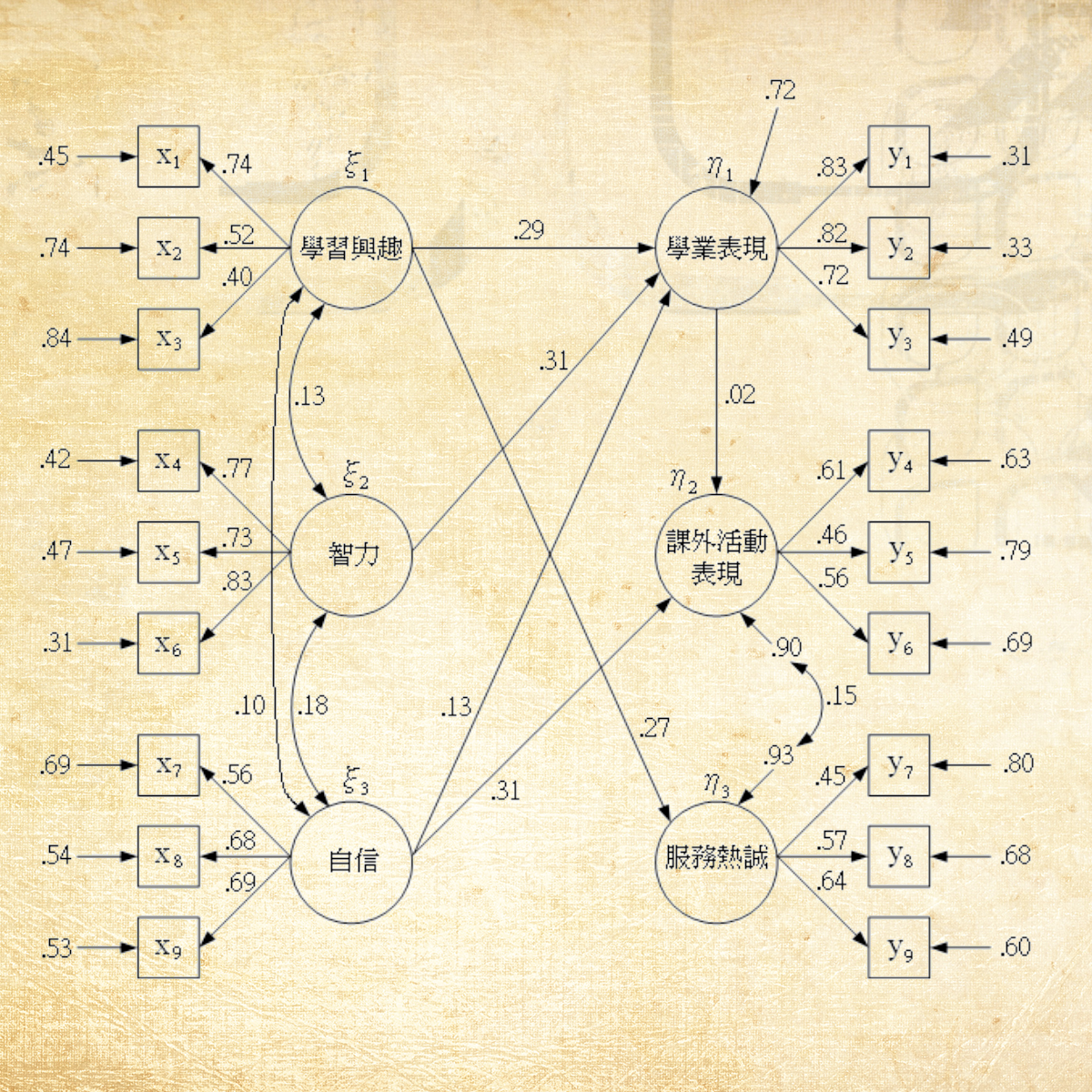
课程介绍: 在社会学、心理学、教育学、经济学、管理学、市场学等研究领域的数据分析中,结构方程建模是当前最前沿的统计方法中应用最广、研究最多的一个。它包含了方差分析、回归分析、路径分析和因子分析,弥补了传统回归分析和因子分析的不足,可以分析多因多果的联系、潜变量的关系,还可以处理多水平数据和纵向数据,是非常重要的多元数据分析工具。本课程系统地介绍结构方程模型和LISREL软件的应用,内容包括:结构方程分析(包括验证性因子分析)的基本概念、统计原理、在社会科学研究中的应用、常用模型及其LISREL程序、结果的解释和模型评价。学员应具备基本的统计知识(如:标准差、t-检验、相关系数),理解回归分析和因子分析的概念。 注:本课程配套教材为《结构方程模型及其应用》(以LISREL软件为例)。 修课背景要求: 讲学语言:普通话及广东话 / 简体中文 这是一个艰深的高阶课程,学员应有下述的知识及训练:(i) 使用SPSS, SAS或其他类似软件包;(ii) 回归;和(iii) 因子分析(探索性因子分析)。 课程目标: 完成课程之后,学生的预期学习成果是: 1. 能够说出与传统的ANOVA和回归分析法相比,结构方程模型的优点; 2. 能够在仪器上进行验证性因子分析; 3. 能够用结构方程模型分析简单的全模型; 4. 通过计算出各种拟合指数和运用其他评估标准,能够比较并选出适合的模型; 5. 能够基于相应的参数统计修改模型;
 University of Alberta
Client Needs and Software Requirements
This course covers practical techniques to elicit and express software requirements from client interactions.