

The Global Scholarly Directory.
Discover world-class academic programs curated for the modern intellectual. Search through 19877+ degrees and professional certificates.
 Emory University
From Freedom Rides to Ferguson: Narratives of Nonviolence in the American Civil Rights Movement
The Modern Civil Rights Movement is a significant landmark in United States history. This movement was a struggle for human rights directly challenging the nation to extend its democratic principles to African Americans and all peoples. This course sheds light on the often overlooked strategic planning that supported the direction of the events and is told by a voice intimately involved in the organization of movement—Dr. Bernard LaFayette, Jr. Topics include the history of the campaigns, the different coalitions and groups, philosophy and methods of nonviolent direct action, and the contemporary application of nonviolent conflict transformation. The course hosts several guest speakers, including Andrew Young, Reverend C.T. Vivian, Henry "Hank" Thomas, and Constance Curry. Upon completion of this course, learners will be able to: ● Discuss the contributions and involvement of civil rights activists and leaders in the Civil Rights Movement (CRM) campaigns in the United States. ● Examine the chronology and phases of the Movement and CRM campaigns. ● Recognize and characterize the diverse activist groups involved in the CRM. ● Discuss Martin Luther King Jr.’s philosophy of nonviolence from a historical perspective. ● List and define the principles and strategies of nonviolence. ● Examine organizational and social change applications related to nonviolence. ● Identify the role of nonviolence in modern activism along with additional resources to broaden knowledge of principles of nonviolence. ● Recognize the application of nonviolence theories to activism, current issues, and everyday life.
 Fortinet, Inc.
FortiManager Administrator
In this course, you will learn the fundamentals of using FortiManager for the centralized network administration of many FortiGate devices. In interactive labs, you will explore deployment strategies, which include single or multiple ADOMs, device registration, policy packages, shared objects, installing configuration changes, provisioning FortiManager as a local FortiGuard distribution server, and troubleshooting the features that are critical to day-to-day use after you deploy FortiManager.
 Codio
Codio
Mastering Ansible Automation
Learn the essentials to quickly master automation with Ansible! While this course is designed for learners with limited coding experience, it is helpful (though not required!) to have familiarity with Linux or Unix-like operating systems, the command line interface, and the basics of shell scripting. To allow for a truly hands-on, self-paced learning experience, this course is video-free. Assignments contain short explanations with images and runnable code examples with suggested edits to explore code examples further, building a deeper understanding by doing. You'll benefit from instant feedback from a variety of assessment items along the way, gently progressing from quick understanding checks (multiple choice, fill in the blank, and un-scrambling code blocks) to small, approachable coding exercises that take minutes instead of hours. The modules in this course cover an introduction to Ansible, automations, and connecting to web-based systems.
 Coursera
Effective Hiring: Interview Training for Managers
Hiring the right people is one of the most critical responsibilities of a manager—but are you confident in your interviewing skills? A structured hiring process can mean the difference between building a high-performing team or facing costly turnover. This course is designed for managers, team leads, and decision-makers who want to confidently assess candidates, conduct structured interviews, and make objective hiring decisions. Whether you’re looking to strengthen your interview techniques, eliminate bias, or streamline hiring process, this course provides practical and actionable strategies to build a strong team. Through expert insights, real-world scenarios, and engaging videos, you’ll learn to: 1. Define job success criteria and structure interviews 2. Ask the right questions using behavioral and competency-based techniques 3. Avoid common hiring mistakes and unconscious bias 4. Use assessment scorecards for fair candidate comparison and data-driven decisions This course is designed for managers, team leaders, and decision-makers across industries who want to refine their hiring skills and build stronger teams. Whether you are a first-time manager or an experienced leader looking to enhance your interview techniques, this course provides practical, structured training to help you hire effectively and with confidence. No prior experience in hiring or interviewing is required. However, familiarity with basic management, workforce planning, and business communication skills for assessing candidates may be helpful. By the end of this course, learners will be able to conduct structured, bias-aware interviews, assess candidates using behavioral techniques and scorecards, and make confident, data-driven hiring decisions that lead to stronger team outcomes. They will also learn to avoid common hiring pitfalls and create a positive candidate experience that reflects their organization’s values.
 Coursera
Apache Kafka - An Introduction
Apache Kafka is a powerful, open-source stream processing platform that enables businesses to process and analyze data in real-time. This course introduces the core concepts and architecture of Apache Kafka, guiding learners. This course is designed for aspiring data engineers, software developers interested in data processing, and IT professionals looking to diversify into data engineering. It also targets data scientists seeking to understand real-time analytics platforms and technical managers overseeing data-driven projects. Learners are expected to have a basic understanding of programming concepts and familiarity with the command line. No prior experience with Apache Kafka is required, but having a general interest in messaging systems and real-time data processing will be beneficial. After completing this course, learners will be able to describe Apache Kafka's architecture and its components, enhancing data pipeline efficiency. They will also be able to configure and manage Kafka clusters, ensuring high availability and fault tolerance. Additionally, learners will be equipped to create and use topics, publishers, and subscribers to facilitate real-time data exchange, as well as implement basic stream processing applications using Kafka Streams to address real-world data challenges.
 Coursera
Design and Develop a Website using Figma and CSS
In this 2-hour long project-based course, you will learn how to use the basic tools and features of Figma, design a website’s prototype and convert it into a website exactly as designed, using HTML and CSS. Note: This course works best for learners who are based in the North America region. We’re currently working on providing the same experience in other regions.
 Coursera
How to Create a Facebook Business Manager Account
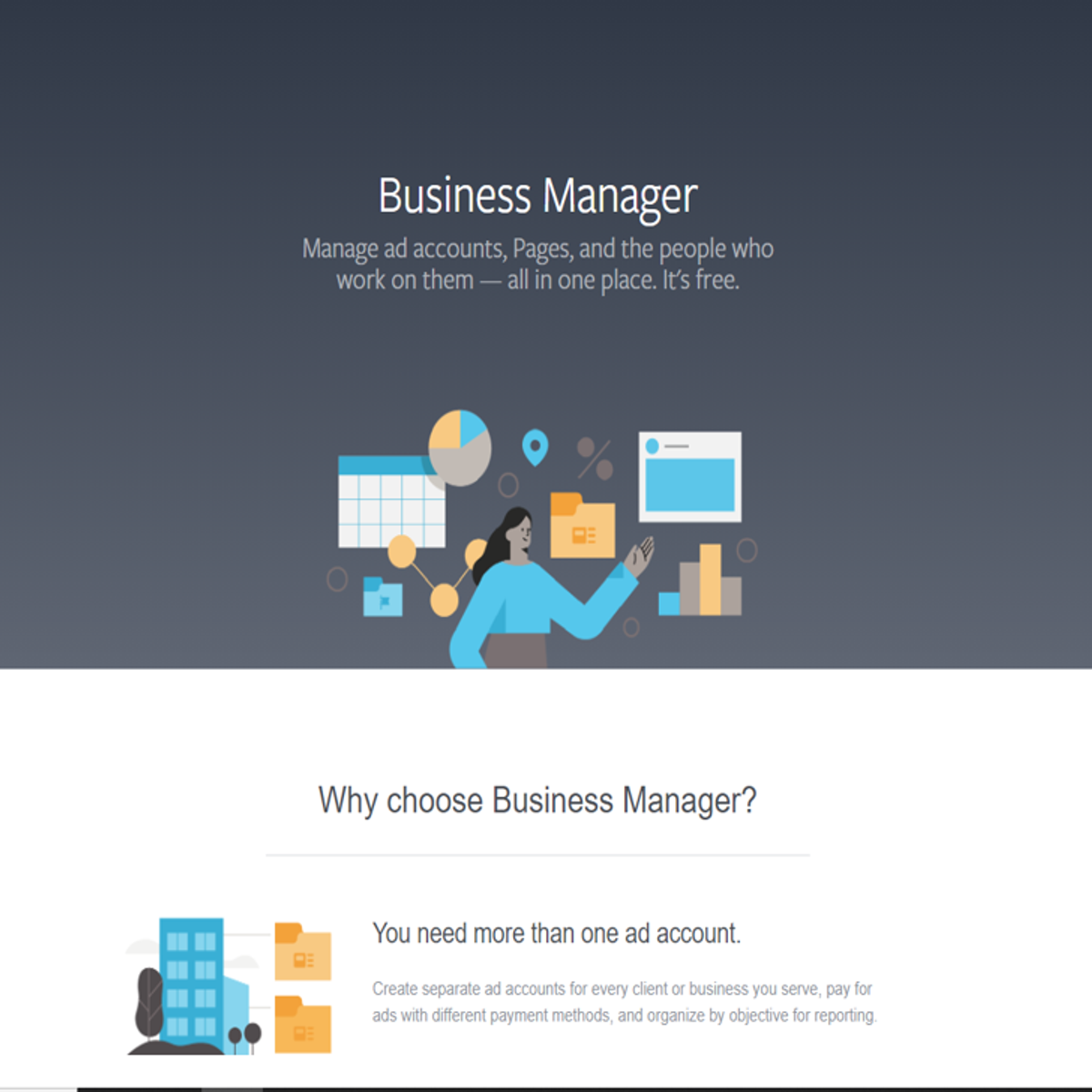
By the end of this project, learners will have an understanding about all the features in Facebook Business Manager. Also, using a hands-on approach, learners will create a Facebook Business Manager account. Facebook Manager is a central hub for managing numerous aspects of a business with a Facebook presence. According to Facebook, “Business Manager allows advertisers to manage their marketing efforts in one place and share access to assets across their team, partner agencies and vendors.” Note: This course works best for learners who are based in the North America region. We’re currently working on providing the same experience in other regions.
 University of London
Working with Objects in C++
This course is the fourth of five courses aiming to help you to become confident working in the object-oriented paradigm in the C++ language. This specialisation is for individuals who want to learn about objected oriented programming. It's an all-in-one package that will take you from the very fundamentals of C++, all the way to building a crypto-currency exchange platform. During the five courses, you will work with the instructor on a single project: a crypto-currency exchange platform. Whilst building the project, you will learn about a range of programming techniques from basic control flow and input/output through to file parsing, object-oriented techniques and user interaction on the console. In this fourth course, you will implement the matching engine for the crypto-currency exchange platform. You will learn about C++ vector iterations, test data to evaluate the matching engine algorithm, and deepen your knowledge about exception handling to write robust code. Upon completing the course, you will be able to: * Write functions that calculate basic statistics by iterating over vectors of objects * Use test data to evaluate the correctness of an algorithm * Use exception handling to write robust user input processing code
 University of Washington
Speaking to inform: Discussing complex ideas with clear explanations and dynamic slides
In the professional realm, most speeches and presentations we give are informative in scope. A scientist needs to explain her recent research findings. A financial officer needs to report on quarterly earnings to his company’s board. A technology professional needs to educate a consumer about a new product. Any time you need to convey ideas or demonstrate a process, you’re dealing with informative speaking. Informative speaking is a fun puzzle. You need to think from the perspective of your audience to identify what they need to hear in order to understand the key ideas. How much does the audience already know? What are the most important elements to convey? How should one convey these ideas with appropriate breadth and depth given the time constraints of the speech? This demands a strategic approach to speech design that we’ll undertake in this class. By the end of the course, you should be able to explain complex ideas vividly and accessibly, design clear and compelling presentation slides, convey your passion for a topic while maintaining your professional credibility, and speak dynamically from notes and/or a manuscript. Learners will record speeches, providing and receiving peer feedback.
 The Hong Kong University of Science and Technology
Understanding Modern Physics I: Relativity and Cosmology
Course Overview: https://youtu.be/xyF-MmGNxd0 The 20th century was known as the century of physics. In the past 120 years, concepts such as space, time, energy, entropy and particles were understood to much deeper levels. New paradigms of thinking such as relativity and quantum mechanics emerged. This course is the first course in the Understanding Modern Physics series, which covers an introduction to special relativity, general relativity and cosmology. We will find: (i) How space and time are relative to observers, and unified into a more fundamental construction of spacetime; (ii) Why the spacetime is not absolute, but rather curves in response to matter, and how gravity emerge as a result of such spacetime curvature; and (iii) What is the framework to understand the evolution of the whole universe, and how that is related to problems such as the origin of space and matter, and the fate of our universe. Note: the videos with a (*) are optional. They provide complementary information but not in the learning objective or assignment questions. Feel free to choose to watch them or not.
 ESSEC Business School
L'investissement à impact : les nouvelles frontières
Dans ce 3e MOOC, nous allons explorer les nouvelles frontières de l’investissement à impact, autrement dit les perspectives d’évolution de ce secteur en fort développement : ses nouvelles tendances, ses innovations, ses prochains horizons. Les différents modules explorent différentes perspectives : Le 1er module vise à remettre en perspective le développement de l’investissement à impact par rapport à la finance durable de manière générale et à l’investissement conventionnel, afin d’identifier leurs convergences et divergences. Le 2e module se consacrera aux leviers de développement de l’investissement à impact pour augmenter les encours sous gestion. Le 3e module sera dédié à quelques outils en mesure de valoriser l’extra-financier habituellement absent des considérations d’investissement, au travers de ce qu’on appelle les “dispositifs de paiement aux résultats”, au premier rang desquels on trouve le contrat à impact. Enfin, dans le 4e module, nous mettrons le cap sur le “Sud” afin de constater et d’évaluer le développement de l’investissement à impact dans ces pays, d’en identifier les enjeux spécifiques et les potentiels leviers de développement. A l’issue de ce 3e MOOC, vous serez en mesure : 1) D’appréhender les dynamiques d’évolution des différentes formes de la finance durable, notamment celles de l’investissement à impact, ainsi que sa progression par rapport à l’investissement conventionnel 2) D’identifier les ressorts concrets qui permettront à l’investissement à impact de se développer et de s’étendre dans les années à venir 3) De décrire le fonctionnement de plusieurs outils qui permettent à l’investissement à impact de relever le défi de valoriser la valeur extra-financière créée pour la société et l’environnement 4) D’expliquer enfin quels sont les enjeux et les leviers de développement de l’investissement à impact dans les pays dits “du Sud”.
 Google - Spectrum Sharing
Renew your CBRS Professional Installer certification
This course is for existing CBRS Certified Professional Installers who want to renew their certification. You will find practical information about the re-certification process and how to install your new certificate as well as all the modules in the basic CBRS Certification training material. No exam is required to renew the certification. Upon completing the course , you will receive your CPI credentials and your new certificate will be automatically registered with WinnForum. If you are new to CBRS or want to get certified for the first time check out our Become a CBRS Professional Installer course .
 Universidad Austral
Introducción a la contabilidad: comienza tu emprendimiento.
En este curso vas a ser testigo del desarrollo del emprendimiento del matrimonio Rodríguez Arnaudi. El objetivo es aprender, mediante las etapas propias de un emprendimiento, los conceptos fundamentales de la contabilidad. Con este curso podrás aplicar los principales conceptos de la contabilidad para reconocer las distintas etapas de un negocio. Y entender la utilidad y la importancia de la información contable para la toma de decisiones de negocio Explorarás los principios de la ecuación patrimonial básica: activos, pasivos, y patrimonio neto. Esto permitirá conocer el mecanismo esencial de registración contable, la partida doble. Sabiendo que toda transacción económica consta de dos partes, una de financiación (haber) y una de aplicación, (debe). Verás diferentes ejemplos prácticos para entender las principales transacciones de una empresa o emprendimiento que se reflejan en el balance y en el estado de resultados. Para este curso inicial no es necesario que tengas conocimientos previos, dado que la estructura del caso planteado, acompaña paso a paso los contenidos necesarios para comprender la contabilidad de un negocio.
 McMaster University
Experimentation for Improvement
We are always using experiments to improve our lives, our community, and our work. Are you doing it efficiently? Or are you (incorrectly) changing one thing at a time and hoping for the best? In this course, you will learn how to plan efficient experiments - testing with many variables. Our goal is to find the best results using only a few experiments. A key part of the course is how to optimize a system. We use simple tools: starting with fast calculations by hand, then we show how to use FREE software. The course comes with slides, transcripts of all lectures, subtitles (English, Spanish and Portuguese; some Chinese and French), videos, audio files, source code, and a free textbook. You get to keep all of it, all freely downloadable. This course is for anyone working in a company, or wanting to make changes to their life, their community, their neighbourhood. You don't need to be a statistician or scientist! There's something for everyone in here. ⎯⎯⎯⎯⎯⎯⎯⎯⎯⎯⎯⎯⎯⎯⎯ Over 1500 people have completed this online course. What have prior students said about this course? "This definitely is one of the most fruitful courses I have participated at Coursera, considering the takeaways and implementations! And so far I finished 12 [courses]." "Excelente curso, flexible y con suficiente material didáctico fácilmente digerible y cómodo. No importa si se tiene pocas bases matemáticas o estadísticas, el curso proporciona casi toda explicación necesaria para un entendimiento alto." "I wish I had enrolled in your course years ago -- it would have saved us a lot of time in optimizing experimental conditions." Jason Eriksen, 3 Jan 2017 "Interesting and developing both analytical and creative thinking. The lecturer took care to bring lots of real live examples which are fun to analyze." 20 February 2016. "... love your style of presentation, and the examples you took from everyday life to explain things. It is very difficult to make such a mathematical course accessible and comprehensible to this wide a variety of people!" ⎯⎯⎯⎯⎯⎯⎯⎯⎯⎯⎯⎯⎯⎯⎯
 Google Cloud
AI Generatif: Memahami Konsep Dasar
Gen AI: Mengungkap Konsep-konsep Dasar adalah kursus kedua dari jalur pembelajaran Pemimpin AI Generatif. Dalam kursus ini, Anda akan mempelajari konsep dasar AI generatif dengan mengeksplorasi perbedaan antara AI, ML, dan AI generatif, serta memahami bagaimana berbagai jenis data memungkinkan AI generatif mengatasi tantangan bisnis. Anda juga akan mendapatkan insight tentang strategi Google Cloud untuk mengatasi keterbatasan model dasar dan tantangan utama dalam pengembangan dan deployment AI yang bertanggung jawab dan aman.
 Whizlabs
AWS: Database
AWS: Databases Course is the fourth course of Exam Prep DVA-C02: AWS Certified Developer Associate Specialization. This course assists learners in learning the core concepts of NoSQL, contrasting it with traditional SQL databases. It covers key aspects of DynamoDB, including compute capacity, read consistency, transactions, and streams. The course also explores other NoSQL options like Amazon MemoryDB for Redis, covering cluster setup, data loading, and its comparison with ElastiCache for Redis. Finally, it provides an overview of Amazon RDS, a managed relational database service. This course is divided into one module which is further segmented by Lessons and Video Lectures. This course facilitates learners with approximately 3:00-3:30 Hours of Video lectures that provide both Theory and Hands-On knowledge. Also, Graded and Ungraded Quizzes are provided with every module to test the ability of learners. - Module 1: Managed NoSQL Database Services in AWS By the end of the course, learners will be able to: - Describe Amazon DynamoDB, including its core features, data model, and key use cases. - Understand key features and benefits of Amazon MemoryDB for Redis. - Difference between MemoryDB for Redis and ElastiCache for Redis. - Explore key features of Amazon Relational Database Service (RDS).