

The Global Scholarly Directory.
Discover world-class academic programs curated for the modern intellectual. Search through 19877+ degrees and professional certificates.
 H2O.ai
H2O Gen AI Ecosystem Overview - Level 2
Expand your understanding of H2O's GenAI platform with the Ecosystem Overview - Level 2 course, presented by H2O's very own Sanyam Bhutani! This course provides an in-depth comprehensive exploration of the tools, applications, and methodologies tailored for artificial intelligence (AI) and machine learning (ML) within the H2O ecosystem. You will delve deeper into efficient data preparation techniques, advanced model training, deployment strategies, and real-time monitoring solutions, covering the full spectrum of all the capabilities available. Through engaging modules, you will soon master the art of harnessing H2O's cutting-edge technologies to streamline workflows and optimize artificial intelligence (AI) and machine learning (ML) processes. Whether you are new to the field of AI and ML or an experienced practitioner, this course equips you with essential skills to leverage the GenAI ecosystem effectively. Sanyam Bhutani, with his extensive expertise as a Kaggle Grand Master, ensures the content is both informative and practical, enriching your learning experience. Join us to unlock the full potential of H2O's GenAI platform and propel your artificial intelligence and machine learning projects to new heights! Enroll today and gain invaluable insights that will enhance your proficiency in utilizing these powerful tools for creating and deploying advanced AI and ML solutions.
 Google Cloud
Responsible AI: Applying AI Principles with GC - Indonesia
Seiring semakin meningkatnya penggunaan Kecerdasan Buatan dan Machine Learning di kalangan perusahaan, proses membangunnya secara bertanggung jawab juga menjadi semakin penting. Membicarakan responsible AI mungkin lebih mudah bagi banyak orang daripada mempraktikkannya. Jika Anda tertarik untuk mempelajari cara mengoperasionalkan responsible AI dalam organisasi Anda, kursus ini cocok untuk Anda. Dalam kursus ini, Anda akan mempelajari bagaimana Google Cloud mengoperasionalkan responsible AI, dengan praktik terbaik dan pelajaran yang dapat dipetik. Hal ini berguna sebagai framework bagi Anda untuk membangun pendekatan responsible AI.
 Arizona State University
Electron and Ion Beam Characterization
Electron and ion beams are widely used for both qualitative and quantitative analysis of semiconductor materials and devices. They can be used to image structures with sub-nm resolution and to provide information about elemental composition and dopant concentration. This course describes the fundamentals of electron and ion beam characterization and includes a project that analyzes the surface roughness of a solar cell.
 Coursera
Emotional Intelligence in Leadership
Welcome to "Emotional Intelligence in Leadership"! Are you ready to elevate your leadership capabilities through the power of emotional intelligence? Whether you're a current leader, aspiring manager, or professional looking to enhance your interpersonal skills, this course is designed for you. With 30 years of hands-on experience managing teams and the theoretical insights from my MBA and PhD, I've crafted this course to give you practical strategies and tools that are both actionable and backed by solid research. Think about the impact of truly recognizing and managing emotions—both your own and those of your team. Throughout this course, you'll dive into concepts such as empathy, self-awareness, and effective communication through engaging videos. You’ll read about the latest research on emotional intelligence and participate in activities that help you apply these insights in real-world scenarios. This course is designed for current and aspiring leaders, managers, team leaders, HR professionals, educators, individuals seeking leadership development, consultants and coaches, students and recent graduates, nonprofit and community leaders, entrepreneurs and startup founders, healthcare professionals, and anyone interested in personal and professional development. Whether you are a manager, supervisor, human resources practitioner, business owner, or coach, this course provides valuable insights and skills to enhance your leadership capabilities. There are no prerequisites for this course, making it accessible to anyone interested in developing their leadership skills. Whether you are at the beginning of your career or an experienced professional looking to refine your abilities, this course offers a comprehensive approach to leadership development without the need for prior knowledge or experience. By the end of this course, learners will develop self-awareness by recognizing and assessing their emotions, identifying strengths and weaknesses, and conducting accurate self-assessments. They will enhance self-regulation by managing impulsive behaviors, handling emotions healthily, and adapting to leadership changes. Additionally, learners will cultivate empathy by understanding team members' emotions, showing genuine concern, and building stronger relationships. Finally, they will improve social skills by communicating effectively, resolving conflicts, and collaborating well with others in leadership roles.
 American Council on Exercise
Professional Conduct and Establishing a Practice
Section V presents valuable information related to getting a health coaching business off the ground successfully and keeping the business running smoothly.
 Universitat de Barcelona
THINK GLOBAL: TEACHERS TRAINING COURSE (IDP-ICE)
A group of seven European partners from Catalonia, Belgium, and Wales worked together on the Erasmus+ funded ‘Think Global’ project on global competence. The project seeks to address the following research question through development and piloting of practical classroom activities: What is global competence, and how can it be learned effectively? The Think Global project explores, through international collaboration, how global competence is defined, taught, learned, and measured in the classroom. It offers a model of professional learning for teachers to support students in developing global competence and its relationship with ODS. So, this training course is addressed to school teachers and other school stakeholders. The focus of the course is to empower school teachers to implement cross-curricular projects on global competence, and it is delivered in an open online platform. The course is divided into five modules. The first is an overview of cross-cultural theory on global competences, the theoretical framework and the research and studies developed on the topic. The second module is based on principles and strategies. The third module deals with methodologies and developing global competence programs. The fourth module is about project based learning. The last module of the course consists of designing a global competence project to be implemented in the classroom. Teachers can decide what they need to work to achieve their objectives. In this way, they can decide which modules they need to work on, however it can be interesting to develop a final project to develop all the modules. It can provide teachers with a deeper understanding and reflections about our subjects and the development of global competence.
 EDUCBA
Agile Project Management: Estimate, Lead & Deliver Value
This comprehensive course empowers learners to apply, analyze, and evaluate key practices in Agile Project Management across planning, stakeholder engagement, team leadership, and continuous improvement. Designed for intermediate-level professionals, the curriculum is structured into four progressive modules: Module 1 explores foundational Agile roles, planning techniques, and the value of collaboration, introducing iterative practices and value-based prioritization. Module 2 emphasizes engaging stakeholders, aligning expectations, and understanding ROI communication, while planning for value delivery and pre-project readiness. Module 3 focuses on building and leading empowered Agile teams, leveraging motivation theories, leadership styles, and interpersonal effectiveness for team performance. Module 4 dives into Agile estimation, Earned Value Management (EVM), risk analysis, and continuous improvement strategies using data-driven tools and practices. Throughout the course, learners will engage in quizzes, case-based scenarios, and real-world examples to demonstrate practical understanding and formulate strategies for Agile excellence. By the end, learners will be equipped to design adaptive project systems, prioritize with financial and stakeholder insight, and implement continuous improvement cycles that enhance team agility and project outcomes.
 Microsoft
Building Powerful Reports and Dashboards in Power BI
In this course, you will gain the skills to create impactful reports and interactive dashboards using Microsoft Power BI, helping businesses make data-driven decisions. The course focuses on the data visualization process. You will gain practical skills like designing professional reports, optimizing layouts for different audiences, and leveraging Power BI’s interactive features. Additionally, you will explore how to use Power BI to integrate data from various sources, transform it into meaningful insights, and present it in a visually engaging way. Ultimately, you will learn how to create user-centered dashboards and reports, ensuring clarity and actionable insights. By the end of this course, you will be able to: - Explain the data visualization process and how it drives business intelligence. - Create dashboards in Power BI. - Create interactive reports in Power BI. This course is for anyone interested in a career in data analytics and business intelligence, or for roles that require working with business data, such as marketing and sales professionals. It will help you develop specific skills in effectively communicating data insights to business stakeholders. To be successful in this course, you should already be proficient in extracting, transforming, and loading data in Microsoft Power BI, as well as using multiple data sources and configurations to build a semantic model. You should also know how to use Power Query, create and customize effective visualizations, and write data analysis expressions to calculate statistics. Moreover, knowing about the fundamentals of business intelligence, principles for ethical data handling, and understanding business needs will put you in a position to succeed. To complete this course, you’ll need: - A laptop or desktop PC with Microsoft Windows - At least 8 gigabytes of RAM - A stable internet connection - Power BI Desktop - Microsoft 365
 Amazon Web Services
Planning a Machine Learning Project
The Planning a Machine Learning Project course introduces requirements to determine if ML is the appropriate solution to a business problem. This course focuses on business leaders and other decision-makers currently or potentially involved in ML projects.
 Universidade Estadual de Campinas
Conceitos Básicos de Logística e Supply Chain
Neste curso o aluno irá desenvolver habilidades que permitam criar soluções para problema operacionais típicos usando conceitos básicos da Logística e do Supply Chain: Transporte, Estoques, Informação e Nível de serviço. Transporte e Distribuição: O aluno irá analisar a demanda e oferta de transporte, os custos e modais disponíveis e desenvolver uma solução de distribuição integrada ao demais componentes da cadeia de suprimentos. Estoque e Armazenagem: O aluno irá analisar as necessidades dos consumidores, interpretar seus resultados da demanda para propor um modelo aderente de previsão, além de definir políticas de manutenção de estoque (puxado e empurrado) e definir critérios para sistemas de armazenagem. Ciclo de Pedido e Nível de serviço: a interface entre a logística e as demais áreas da organização como vendas, marketing e produção é fundamental para o alinhamento estratégico. O aluno irá interpretar as necessidades dos clientes internos e externos para calcular o ciclo de atendimento ao cliente e ajustar o nível de serviço adequado.
 Duke University
Data Visualization and Communication with Tableau
One of the skills that characterizes great business data analysts is the ability to communicate practical implications of quantitative analyses to any kind of audience member. Even the most sophisticated statistical analyses are not useful to a business if they do not lead to actionable advice, or if the answers to those business questions are not conveyed in a way that non-technical people can understand. In this course you will learn how to become a master at communicating business-relevant implications of data analyses. By the end, you will know how to structure your data analysis projects to ensure the fruits of your hard labor yield results for your stakeholders. You will also know how to streamline your analyses and highlight their implications efficiently using visualizations in Tableau, the most popular visualization program in the business world. Using other Tableau features, you will be able to make effective visualizations that harness the human brain’s innate perceptual and cognitive tendencies to convey conclusions directly and clearly. Finally, you will be practiced in designing and persuasively presenting business “data stories” that use these visualizations, capitalizing on business-tested methods and design principles.
 Packt
Packt
Embracing a Skills-First Mindset
This course features Coursera Coach! A smarter way to learn with interactive, real-time conversations that help you test your knowledge, challenge assumptions, and deepen your understanding as you progress through the course. In this course, you will discover how adopting a skills-first mindset can drive both personal and organizational growth. Focusing on practical skills rather than traditional credentials, you'll learn how skill development is key to staying competitive and fostering success in today's fast-paced world. The course will guide you through building a culture of continuous learning, both individually and within your organization. You will explore strategies for improving communication, fostering leadership, and enhancing employee engagement through skills training. Whether you're aiming to improve your own versatility or create a growth-focused culture at work, this course provides valuable insights and practical steps. It is ideal for anyone looking to elevate their career or lead a skills-first transformation in their organization.
 Coursera
Crunch Vectors with GeoPandas
Working with spatial data means more than making maps—it means producing results that planners and decision-makers can trust. In this short, hands-on course, Crunch Vectors with GeoPandas, learners practice transforming raw vector data into map-ready, planning-quality insights using GeoPandas. Through realistic examples and guided activities, learners perform spatial joins between cities and counties, choose spatial relationships intentionally, reproject data to EPSG:3857 for web mapping, and summarize attributes into clear service-territory totals. Designed for beginner data analysts, this course builds confidence in spatial reasoning, validation, and aggregation—helping learners deliver datasets that support accurate mapping, reporting, and real-world planning decisions.
 Vanderbilt University
ChatGPT for Project Management: Insight, Planning, & Success
In "ChatGPT for Project Management: Insight, Planning, & Success," you will learn how to leverage large language models (LLMs) to enhance your project planning and strategy development. This course covers techniques for using LLMs to break down complex projects into manageable tasks, phases, goals, risks, and more. You’ll discover how to utilize AI for organizing project components into timelines, schedules, strategies, dependencies, and Gantt charts to create a cohesive plan. Explore how prompting can give you instant access to "subject matter expert" insights on any topic, and learn how to control LLM output with the template pattern for precisely formatted plans and project documents. You’ll also master the use of AI to analyze risks, assess alternative approaches, generate metrics and OKRs, and optimize your project plan. By the end of this course, you'll have the skills to integrate LLMs into your project planning process, driving insight, strategy, and success.
 Packt
Packt
Unreal Engine 5 - Make AAA Game Vehicles
Updated in May 2025. This course now features Coursera Coach! A smarter way to learn with interactive, real-time conversations that help you test your knowledge, challenge assumptions, and deepen your understanding as you progress through the course. In this course, you’ll dive deep into the world of Unreal Engine 5, learning how to design and implement AAA-quality game vehicles. Starting with the basics, you'll explore the Matrix City sample and learn how to source and import vehicles into Unreal. You’ll also go step-by-step through customizing cars, including input mapping, camera rotations, and adding immersive sounds and visuals that bring your game environment to life. As you progress, the focus shifts to advanced vehicle mechanics. You'll master the process of setting up essential car functions like friction, suspension, and engine tweaks. The course also covers the intricacies of blueprints for features like speed meters, brake lights, and the logic behind entering and exiting vehicles. By following along with the comprehensive walkthroughs, you’ll gain practical skills that can be applied to real-world projects. Finally, the course wraps up with enhancements that elevate your vehicles to AAA standards. You’ll learn how to integrate sound effects, particle effects, and even racing elements such as timers and checkpoints. By the end of this journey, you’ll have the knowledge and tools to create professional-grade vehicles for any Unreal Engine project. This course is perfect for game developers, 3D artists, and Unreal Engine users with a basic understanding of game development. Familiarity with Blender is helpful but not required.
 Johns Hopkins University
Using Sensors With Your Raspberry Pi
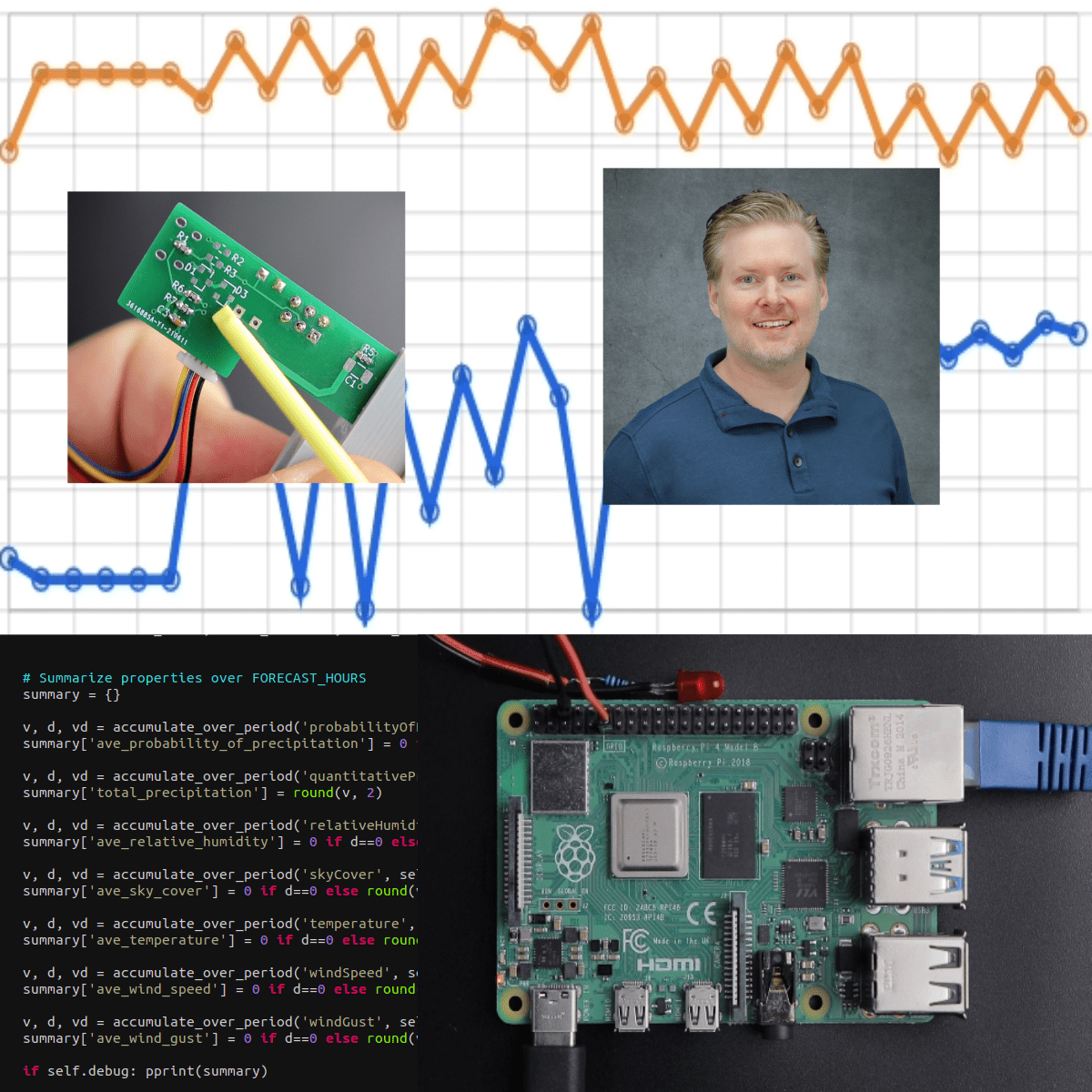
This course on integrating sensors with your Raspberry Pi is course 3 of a Coursera Specialization and can be taken separately or as part of the specialization. Although some material and explanations from the prior two courses are used, this course largely assumes no prior experience with sensors or data processing other than ideas about your own projects and an interest in building projects with sensors. This course focuses on core concepts and techniques in designing and integrating any sensor, rather than overly specific examples to copy. This method allows you to use these concepts in your projects to build highly customized sensors for your applications. Some of the ideas covered include calibrating sensors and the trade-offs between different mathematical methods of storing and applying calibration curves to your sensors. We also discuss accuracy, precision, and how to understand uncertainty in your measurements. We study methods of interfacing analog sensors with your Raspberry Pi (or other platform) with amplifiers and the theory and technique involved in reducing noise with spectral filters. Lastly, we borrow from the fields of data science, statistics, and digital signal processing, to post-process our data in Python.