

The Global Scholarly Directory.
Discover world-class academic programs curated for the modern intellectual. Search through 19877+ degrees and professional certificates.
 Google Cloud
生成式 AI 代理:實現組織轉型
「生成式 AI 代理:實現組織轉型」是 Gen AI Leader 學習路徑的第五堂也是最後一堂課程。本課程將探討組織如何運用自訂生成式 AI 代理,解決特定的業務難題。您將動手練習建構基本的生成式 AI 代理,同時探索這類代理的各種元件,例如模型、推論迴圈和工具。
 Pragmatic AI Labs
Data Engineering with Delta Lake on Databricks
Build production-ready data pipelines using Delta Live Tables and the Medallion Architecture on Databricks. This hands-on course teaches you to design, implement, and monitor ETL workflows that transform raw data into reliable, business-ready datasets through a structured bronze-silver-gold layering pattern. This course is primarily aimed at first- and second-year undergraduates interested in engineering or science, along with professionals with an interest in programming. You will start by mastering DLT fundamentals — declarative pipeline syntax in both SQL and Python, streaming ingestion with Auto Loader, and schema evolution strategies. Next, you will implement each Medallion Architecture layer: bronze for raw ingestion with lineage tracking, silver for data cleaning with expectations-based quality gates, and gold for business aggregations optimized with Z-ordering and partitioning. The course culminates in a capstone project where you build a complete inventory management system using Change Data Capture with `apply_changes()`, multi-source ingestion, and end-to-end pipeline orchestration. Every concept is reinforced through labs on Databricks Community Edition — no paid account required. Whether you are transitioning from batch ETL to streaming or building your first lakehouse pipeline, this course gives you the practical skills employers demand in modern data engineering roles.
 Università di Napoli Federico II
Python per la Data Science
Python per la Data Science è un corso cruciale per qualsiasi professionista che voglia analizzare grandi quantità di dati attraverso le più recenti tecniche di machine Learning e Deep learning. Il core del corso è rappresentato dall’utilizzo dei notebook: una nuova forma di fruizione dei contenuti didattici in cui testo e teoria sono affiancati a numerosi codici eseguibili e modificabili. Il formato è visivamente simile ad un file PDF a cui si aggiunge l’interattività tipica dei prodotti software. Il risultato? Un corso fortemente interattivo a vocazione pratica in cui, codice dopo codice, si manipolano dati fino a giungere ad esempi avanzati di image processing. Non ti resta altro da fare che iscriverti al Corso e metterti alla prova con “Python per la Data Science”: ti aspetto! Questo corso fa parte della Specialization in Data Science con Python e R, cui sarà possibile iscriversi non appena il corso sarà partito.
 Packt
Packt
IoT Hardware Projects with SwiftIO Playground
This course features Coursera Coach! A smarter way to learn with interactive, real-time conversations that help you test your knowledge, challenge assumptions, and deepen your understanding as you progress through the course. Dive into the exciting world of IoT with SwiftIO Playground. In this hands-on course, you'll embark on 46 unique playground projects, ranging from basic LED control to complex applications such as weather stations, accelerometer-based locks, and even Tic-Tac-Toe games. Each project helps you build real-world IoT systems using Swift code and hardware, empowering you to develop interactive, smart applications. Starting with simple tasks like blinking LEDs and controlling buttons, you’ll advance to more intricate projects like creating a weather station, controlling movement with an accelerometer, and even programming musical instruments. As you move forward, you'll be working with various sensors, Wi-Fi connectivity, and LCD displays. The course follows a structured approach, allowing you to progress step by step, building your IoT knowledge and skills. This course is perfect for beginners with no prior experience in hardware programming. It’s ideal for those who want to learn IoT concepts through interactive projects using SwiftIO. No prior knowledge of electronics or Swift coding is required, though a curiosity for technology and electronics will be beneficial. By the end of the course, you will be able to build your own IoT projects, interface with hardware components, manage sensors, control actuators like LEDs and buzzers, and use Wi-Fi to fetch and store data.
 Universidad de los Andes
Sexualidad...mucho más que sexo
La mayoría de las personas, en algún momento de la vida, hemos experimentado inseguridad para hablar acerca de sexualidad con niñas, niños, estudiantes, pareja o colegas. Al finalizar este curso serás capaz de hablar de la sexualidad de manera clara, directa, usando información actualizada y sin sentimientos de vergüenza. Además, podrás diferenciar la sexualidad de los conceptos de sexo, género, orientación sexual y genitalidad. También describirás con seguridad los procesos biológicos, psicológicos y socioculturales que intervienen en el desarrollo de la sexualidad a lo largo de la vida. Asimismo, vas a lograr establecer la relación de la sexualidad con las decisiones que toman las personas en diferentes áreas, al igual que con su bienestar físico, psicológico y social. En síntesis, al terminar este curso habrás perfeccionado habilidades para tu trabajo y tu propia vida y podrás explicar por qué la sexualidad es mucho más que sexo. Este curso está dirigido a personas que trabajan en educación, promoción de la salud y procesos comunitarios. También es muy útil para madres y padres de familia, y para cualquier persona interesada en superar barreras para hablar acerca de la sexualidad. ¡Te esperamos en nuestro curso! Requisitos o preparación previa recomendada Todas las personas interesadas en la temática son bienvenidas. No se necesita una preparación previa específica. El conocimiento que has adquirido a lo largo de la vida sobre la sexualidad es suficiente para avanzar en el proceso. Formato del curso Cada lección consistirá en una serie de videos de 3 a 7 minutos de duración cada uno. En cada lección vas a encontrar actividades de evaluación formativas, es decir, actividades que favorecen la autoevaluación, la reflexión personal y el análisis crítico de información. Al finalizar cada una de las lecciones vas a encontrar una evaluación sumativa que te va a permitir verificar tu comprensión del tema y el cumplimiento de los objetivos que te proponemos. En algunas lecciones hemos incluido lecturas complementarias para reforzar o ampliar la información que te proporcionamos. Organizaciones Aliadas La producción de este curso ha contado con el apoyo del Fondo de Población de las Naciones Unidas - UNFPA
 EDUCBA
Analyze Marketplace Data with Power BI & DAX
Learners will analyze marketplace datasets, design efficient Power BI data models, and build dynamic insights using DAX calculations to support real-world business decision-making. By the end of this course, learners will be able to interpret product, store, region, transaction, and return data, create optimized lookup and fact tables, and develop calculated columns and measures for meaningful marketplace analysis. This practical, project-based course guides learners step by step through a complete Microsoft Power BI marketplace analysis workflow, starting from understanding business requirements and raw data to building robust data models and advanced DAX logic. Learners gain hands-on experience working with realistic datasets, ensuring they can confidently apply skills in professional analytics roles. What makes this course unique is its end-to-end, scenario-driven approach, combining data preparation, modeling best practices, and DAX fundamentals within a single cohesive marketplace project. Rather than focusing on isolated features, the course emphasizes how analytical components work together to produce accurate, scalable insights. Upon completion, learners will be well-equipped to apply Power BI and DAX skills to real marketplace, retail, and business intelligence projects, making them job-ready for data analysis and reporting roles.
 GRAMMY GO
Building Your Brand, Sustaining Growth and Networking
Kickstart your journey with "Building Your Brand, Sustaining Growth, and Networking," the final course in the "Building Your Audience for Music Professionals" Specialization. This four-module course hones your ability to elevate your music brand, emphasizing sustainable growth, effective networking, and industry resilience. What You Will Learn: - Master Industry Networking: Forge impactful connections to fuel collaboration and brand visibility. - Drive Sustainable Growth: Craft strategies ensuring your brand’s growth adapts with the industry, maintaining relevance and engagement. - Optimize Promotion: Learn to maximize promotional impact without stretching your budget, focusing on strategic, cost-effective methods. - Enhance Resilience: Develop a mindset to navigate industry challenges, sustaining motivation and brand momentum. Final Project: Your journey culminates in creating a partnership plan targeting a specific music industry opportunity. This project will showcase your ability to strategize collaborations that promote brand growth, drawing on networking insights, promotional tactics, and resilience strategies acquired throughout the course. Who This Course Is For: This course is specially designed for emerging music artists, aspiring managers, producers, promoters, and industry professionals who recognize the power of a strong brand in building a sustainable music career. Whether you're launching a new project or seeking to refine your existing brand, this course provides the foundational knowledge and practical tools to achieve your branding and promotional objectives.
 Kennesaw State University
Six Sigma Tools for Analyze
This course will cover the Measure phase and portions of the Analyze phase of the Six Sigma DMAIC (Define, Measure, Analyze, Improve, and Control) process. You will learn about lean tools for process analysis, failure mode and effects analysis (FMEA), measurement system analysis (MSA) and gauge repeatability and reproducibility (GR&R), and you will be introduced to basic statistics. This course will outline useful measure and analysis phase tools and will give you an overview of statistics as they are related to the Six Sigma process. The statistics module will provide you with an overview of the concepts and you will be given multiple example problems to see how to apply these concepts. Every module will include readings, discussions, lecture videos, and quizzes to help make sure you understand the material and concepts that are studied. Our applied curriculum is built around the latest handbook The Certified Six Sigma Handbook (2nd edition) and students will develop /learn the fundamentals of Six Sigma. Registration includes online access to course content, projects, and resources but does not include the companion text The Certified Six Sigma Handbook (2nd edition). The companion text is not required to complete the assignments. However, the text is a recognized handbook used by professionals in the field. Also, it is a highly recommended text for those wishing to move forward in Six Sigma and eventually gain certification from professional agencies such as American Society for Quality (ASQ).
 Johns Hopkins University
R Programming
In this course you will learn how to program in R and how to use R for effective data analysis. You will learn how to install and configure software necessary for a statistical programming environment and describe generic programming language concepts as they are implemented in a high-level statistical language. The course covers practical issues in statistical computing which includes programming in R, reading data into R, accessing R packages, writing R functions, debugging, profiling R code, and organizing and commenting R code. Topics in statistical data analysis will provide working examples.
 University of Colorado Boulder
Cybersecurity for Data Science
This course aims to help anyone interested in data science understand the cybersecurity risks and the tools/techniques that can be used to mitigate those risks. We will cover the distinctions between confidentiality, integrity, and availability, introduce learners to relevant cybersecurity tools and techniques including cryptographic tools, software resources, and policies that will be essential to data science. We will explore key tools and techniques for authentication and access control so producers, curators, and users of data can help ensure the security and privacy of the data. This course can be taken for academic credit as part of CU Boulder’s Master of Science in Data Science (MS-DS) degree offered on the Coursera platform. The MS-DS is an interdisciplinary degree that brings together faculty from CU Boulder’s departments of Applied Mathematics, Computer Science, Information Science, and others. With performance-based admissions and no application process, the MS-DS is ideal for individuals with a broad range of undergraduate education and/or professional experience in computer science, information science, mathematics, and statistics. Learn more about the MS-DS program at https://www.coursera.org/degrees/master-of-science-data-science-boulder.
 Alfaisal University | KLD
إدارة الأزمات | Crisis Management
تناقش هذه الدورة موضوع إدارة الأزمات (Crisis Management)، لا شك أننا جميعاً نريد حياة هادئة دون أزمات لكن بطبيعة الحال يمكن للأزمات أن تحدث في أي وقت، لذا ينبغي أن نكون مستعدين للتوصل إلى حلول سريعة لما يعترضنا. يمكن تعريف إدارة الأزمات (Crisis Management) أنها عملية ممنهجة للتغلب على اﻷزمات، والتحكم بضغوطها والاستفادة من إيجابياتها وتحقيق أقصى المكاسب منها في أقصر وقت والحد من الخسائر على قدر الإمكان، سندرس هذا النوع من الإدارة وللتوضيح سنسلط الضوء على أمثلة من قصص واقعية. هذه الدورة هي دورة تمهيدية؛ فهي تلقي الضوء على أساسيات الموضوع بشكل عام بهدف التعريف به وبمحاوره الأساسية التي يجب الإلمام بها. إذا كنت من المهتمين بإتقان إدارة الأزمات، أو كان مجال عملك يتطلب امتلاك تلك المهارة وتوظيفها في سياق عملك، فهذه الدورة ستكون مثالية لإغناء خبرتك وتطوير مهاراتك في فهم وتوظيف إدارة الأزمات بشكل فعال ومؤثر ينعكس بنتائج ملموسة على أعمالك. حيث ستزودك هذه الدورة باطلاع واسع ودقيق على مجموعة من المحاور المتعلقة بهذا الموضوع، مثل: الإجراءات الوقائية الواجب اتخاذها لإدارة الأزمات بفاعلية، مبادئ إدارة الأزمات، أهم الأسباب التي تؤدي إلى فشل إدارة الأزمات، توضيح أنواع الأزمات.
 University of Illinois Urbana-Champaign
Accounting Analysis I: The Role of Accounting as an Information System
This course is the first course in a five-course Financial Reporting Specialization that covers the collection, processing, and communication of accounting information (via financial reports) about economic entities to interested parties (i.e., managers and external stakeholders such as stockholders and creditors). To gain the most relevant knowledge from these courses, learners should have taken a basic accounting course prior to this Specialization (which can be done through Coursera courses, such as any accounting course from the Fundamentals of Accounting Specialization: https://www.coursera.org/specializations/accounting-fundamentals). This Specialization focuses on accounting concepts, principles and theory with an emphasis on problems that arise in applying these concepts for external reporting purposes. Specific emphasis is placed on measurement of assets, liabilities, equities and income, as well as disclosure of additional information that may assist users understand the financial reports. After a brief introduction to the course, we will spend time understanding the overall financial accounting structure and standards as well as review the fundamental accounting process used to prepare the financial statements, which will establish a framework for the study of the concepts in the remaining courses in the Financial Reporting Specialization. In this course, we will begin our review of key information included in the Balance Sheet and Income Statement and their related financial disclosures. The Statement of Cash Flows will be introduced briefly with more discussion to follow in later courses of the Specialization. Also, we will provide a cursory review of key concepts involving time value of money as we will finish this course with focus on revenue recognition, including discussion of the new revenue standard. We will review the general approach for recognizing revenue, special issues affecting revenue recognition including long-term construction contracts. In addition, we will discuss and review common ratios used in profitability analysis. The University of Illinois at Urbana-Champaign, consistently ranked as one of the nation's top three accounting programs, now offers a master’s in accounting at a very affordable tuition rate and is completely online. The iMSA is a full Master of Accountancy program and students graduate with an MS that is highly recognized. Try an open course or two, then apply for admission into the credit-bearing version as you may be eligible to take credit-bearing courses during the application process. If you are missing any prerequisites for the full degree, you can complete Coursera courses to demonstrate readiness and strengthen your application for the iMSA. For more information on this exciting iMSA online program, refer to this link: https://www.coursera.org/degrees/imsa
 IBM
IBM
Introduction to Data Analytics
Ready to start a career in Data Analysis but don’t know where to begin? This course presents you with a gentle introduction to Data Analysis, the role of a Data Analyst, and the tools used in this job. You will learn about the skills and responsibilities of a data analyst and hear from several data experts sharing their tips & advice to start a career. This course will help you to differentiate between the roles of Data Analysts, Data Scientists, and Data Engineers. You will familiarize yourself with the data ecosystem, alongside Databases, Data Warehouses, Data Marts, Data Lakes and Data Pipelines. Continue this exciting journey and discover Big Data platforms such as Hadoop, Hive, and Spark. By the end of this course you’ll be able to understand the fundamentals of the data analysis process including gathering, cleaning, analyzing and sharing data and communicating your insights with the use of visualizations and dashboard tools. This all comes together in the final project where it will test your knowledge of the course material, and provide a real-world scenario of data analysis tasks. This course does not require any prior data analysis, spreadsheet, or computer science experience.
 University of Virginia
Aspectos básicos de la planificación y la gestión de proyectos
Vivimos rodeados de proyectos. Prácticamente todas las organizaciones dirigen proyectos, ya sea de manera formal o informal.Los tenemos en casa y en el trabajo. A través de determinados parámetros, principios de planificación y metodologías de ejecución, los proyectos se pueden gestionar de forma eficiente y efectiva. La gestión de proyectos ofrece a las organizaciones (y las personas) el lenguaje y los marcos para organizar proyectos, programar actividades, utilizar recursos y minimizar riesgos. Este es un curso de introducción a los conceptos básicos de la planificación y ejecución de proyectos. Identificaremos los factores que llevan al éxito en este ámbito y aprenderemos a planificar, analizar y gestionar proyectos. Los alumnos repasarán metodologías de vanguardia y evaluarán los desafíos de varios tipos de proyectos.
 Nanyang Technological University, Singapore
Motivating Gen Z Learners: What Parents and Teachers Need to Know
The purpose of this course is to equip parents and educators with the knowledge of motivational theories and their application in real-life contexts. Following the storyline of two children, Bob and Sarah, course participants are presented with a variety of problem scenarios. These depict common motivational issues that the participants can resolve using the motivational principles described in the course. Through the various sessions, parents and educators will progressively build a repertoire of strategies that enable them to better understand the Gen Z learners and to enhance their motivation to learn. Course participants will also have the opportunity to check their own understanding through quizzes and to interact with one another through discussion forums. This course was created with the National Institute of Education at Nanyang Technological University, Singapore. About National Institute of Education (NIE) As an autonomous institute of the Nanyang Technological University, the National Institute of Education (NIE), Singapore, is Singapore’s national teacher education institute and plays a key role in the preparation of teachers and in the provision of teacher professional and school leadership development programmes. Its university-based teacher education programmes leverage the strong partnerships with the Ministry of Education and Singapore schools to develop teachers who are grounded in theory and strong in practice. As an institute within a world-class research university, NIE also offers rigorous graduate education in the form of masters and doctoral programmes for local and international students.
 University of Michigan
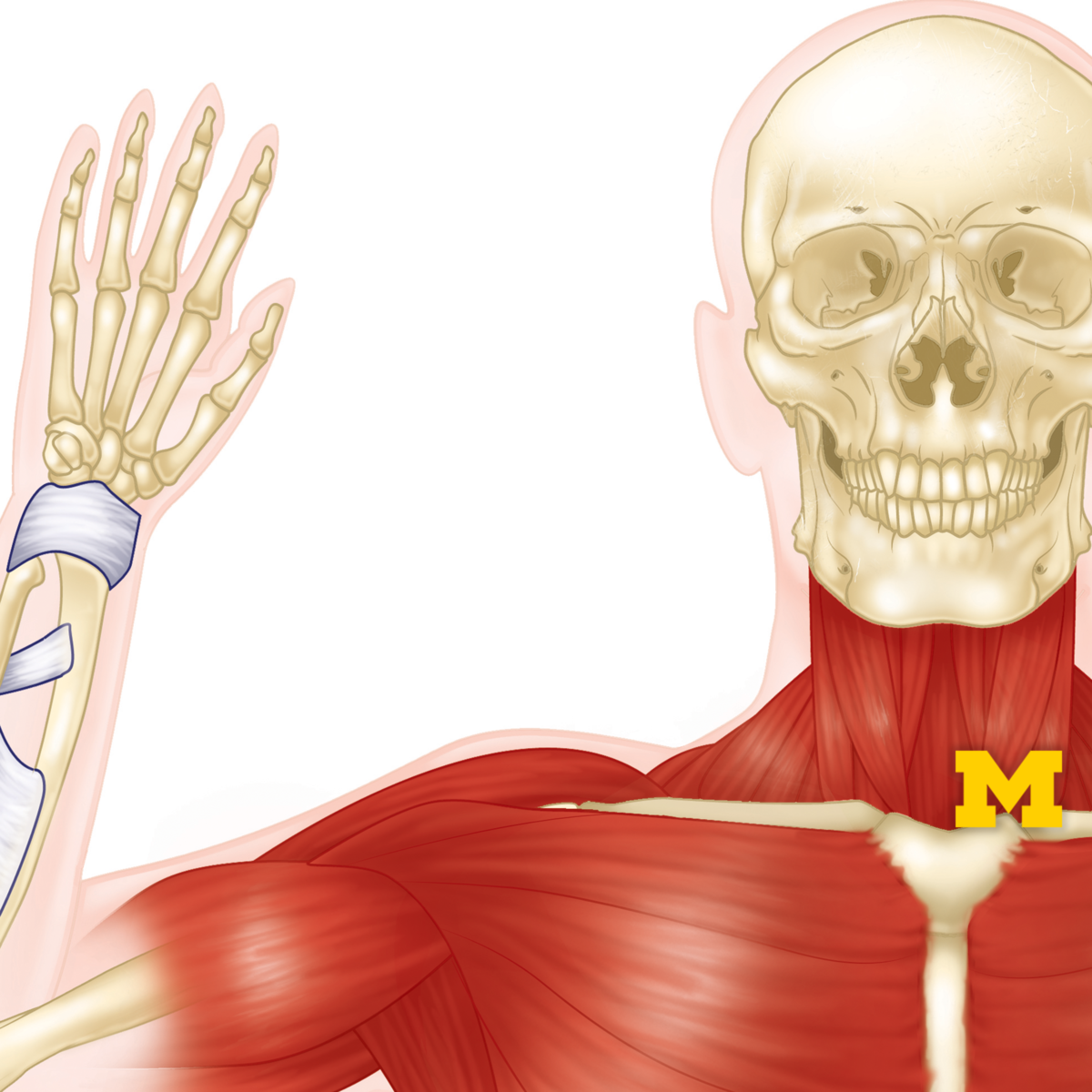
Anatomy: Musculoskeletal and Integumentary Systems
In this anatomy course, part of the Anatomy Specialization, you will learn how the components of the integumentary system help protect our body (epidermis, dermis, hair, nails, and glands), and how the musculoskeletal system (bones, joints, and skeletal muscles) protects and allows the body to move. You will engage with fascinating videos, lectures, and anatomical visual materials (illustrations and cadaveric images) to learn about these properties and functions.