

The Global Scholarly Directory.
Discover world-class academic programs curated for the modern intellectual. Search through 19877+ degrees and professional certificates.
 Packt
Packt
Intro to Redux
This course features Coursera Coach! A smarter way to learn with interactive, real-time conversations that help you test your knowledge, challenge assumptions, and deepen your understanding as you progress through the course. In this course, you will gain a solid foundation in Redux, an essential tool for managing application state in JavaScript. You will learn its core principles, understand why it is used, and gain insights into its real-world applications. By the end, you will be able to leverage Redux to improve your development process and create more efficient, maintainable applications. The course begins with an overview of Redux and its significance. It then introduces the core principles that form the foundation of Redux. After mastering the basics, you’ll dive deeper into advanced concepts, particularly focusing on how lists are treated differently in Redux applications. Finally, the course wraps up with a brief but effective review of everything you’ve learned, ensuring you’re equipped with the knowledge to use Redux confidently. Whether you’re a beginner or have some prior experience, this course provides a clear and practical introduction to Redux that’s easy to follow. This course is designed for beginner JavaScript developers interested in using Redux for state management. It’s ideal for those looking to improve their web application development skills. A basic understanding of JavaScript and familiarity with frontend web development concepts are recommended.
 University of Pennsylvania
Application of AI, InsurTech, and Real Estate Technology
In this course, you’ll learn about the emerging technologies in Artificial Intelligence and Machine Learning that are utilized in InsurTech and Real Estate Tech. Professor Chris Geczy of the Wharton School has designed this course to help you navigate the complex world of insurance and real estate tech, and understand how FinTech plays a role in the future of the industry. Through study and analysis of Artificial Intelligence and Machine Learning, you’ll learn how InsurTech is redefining the insurance industry. You’ll also explore classifications of insurtech companies and the size of the InsurTech, Real Estate Tech, and AI markets. You will also explore FinTech specialties with Warren Pennington from Vanguard. By the end of this course, you’ll be able to identify emerging technologies of AI, Machine Learning, and Financial Technologies from a variety of insurance and real estate tech companies and their impact in the future of finance and investments.
 Universidad Nacional Autónoma de México
Habilidades humanas y de negocios para negociar
En este curso los participantes analizarán los conceptos de efectividad de una negociación, que consiste en una interacción humana, y la satisfacción de los deseos e intereses en las negociaciones. Todos tenemos el deseo de mejorar y superarnos. La forma de lograrlo es conocerse a sí mismo y a las personas con las que se negocia o se interactúa.
 University of Illinois Urbana-Champaign
Ordered Data Structures
In this course, you will learn new data structures for efficiently storing and retrieving data that is structured in an ordered sequence. Such data includes an alphabetical list of names, a family tree, a calendar of events or an inventory organized by part numbers. The specific data structures covered by this course include arrays, linked lists, queues, stacks, trees, binary trees, AVL trees, B-trees and heaps. This course also shows, through algorithm complexity analysis, how these structures enable the fastest algorithms to search and sort data.
 Coursera
How to use influencer marketing to grow instagram business
In this project, you will learn how to grow up your business through building a powerful marketing strategy, select the right influencers, and learn how to create a useful content to share it with the marketing influencers.
 Unilever
Supply Chain Software Tools
In the Supply Chain Software Tools course, you’ll learn about the challenges of handling large amounts of data and how to effectively gather, analyze, and use the data. You’ll learn about the latest cutting-edge technological solutions that can streamline operations, and emerging trends (such as artificial intelligence) that allow large amounts of data to be processed and summarized instantly. Additionally, you’ll prepare for a job as a supply chain analyst by building your resume, learning how to market yourself and gain insights into the job research and application process. By the end of this module, you’ll be able to: Recognize supply chain emerging trends. Describe the software tools available for supply chain analytics such as cloud-based solutions, AI-powered projections, advanced analytics, data lakes, and database management. Explain how to access real-time insights, review inventory availability and movement, replenish schedules, and review historical data. Identify how to build accurate plans and forecasts for planning, data collection, validation, aggregation, and financial consolidation. Identify how to test assumptions with scenarios to assist with forecasting decision making. Optimize supply chain operations. Identify patterns and trends in supply chain data and streamline processes. Prepare for a job as a Supply Chain Analyst.
 University of California San Diego
Design Principles: an Introduction
What makes an interface intuitive? How can I tell whether one design works better than another? This course will teach you fundamental principles of design and how to effectively evaluate your work with users. You'll learn fundamental principles of visual design so that you can effectively organize and present information with your interfaces. You'll learn principles of perception and cognition that inform effective interaction design. And you'll learn how to perform and analyze controlled experiments online. In many cases, we'll use Web design as the anchoring domain. A lot of the examples will come from the Web, and we'll talk just a bit about Web technologies in particular. When we do so, it will be to support the main goal of this course, which is helping you build human-centered design skills, so that you have the principles and methods to create excellent interfaces with any technology.
 Google
Membuat Desain dan Purwarupa High-Fidelity di Figma
Membuat Wireframe dan Purwarupa High-Fidelity adalah materi kelima dalam program sertifikat ini yang akan membekali Anda dengan keterampilan yang perlu Anda terapkan pada pekerjaan desain pengalaman pengguna (UX) tingkat pemula. Dalam materi ini, Anda akan mengikuti tutorial langkah demi langkah untuk mempelajari cara membuat desain high-fidelity, yang disebut maket atau mockup, di Figma, sebuah alat desain yang populer. Kemudian, Anda akan mengubah desain tersebut menjadi purwarupa interaktif yang berfungsi seperti layaknya sebuah produk jadi. Anda akan melakukan penelitian untuk mengumpulkan masukan tentang desain Anda dan melakukan perbaikan. Terakhir, Anda akan belajar cara membagikan desain Anda kepada tim pengembangan dan menampilkan pekerjaan Anda dalam portofolio UX profesional Anda. Desainer dan peneliti UX dari Google akan menjadi instruktur Anda, dan Anda akan terlibat langsung dalam menyelesaikan berbagai aktivitas yang mengambil skenario desain UX dari dunia nyata. Peserta didik yang berhasil menyelesaikan ketujuh materi program sertifikasi ini telah memiliki keterampilan untuk melamar pekerjaan sebagai desainer UX pemula. Pada akhir materi ini, Anda akan mampu: - Membuat mockup (maket) dan purwarupa high-fidelity di Figma. - Mendefinisikan dan menerapkan elemen dan prinsip desain visual yang umum. - Mendemonstrasikan bagaimana sistem desain dapat digunakan untuk mengorganisir, standarisasi, dan memperbaiki desain. - Memahami peran sesi kritik desain dan masukan saat iterasi/mengulangi desain. - Menyerahkan proyek desain yang sudah jadi kepada tim teknik. - Menyelesaikan desain aplikasi seluler untuk disertakan dalam portofolio UX profesional. Materi ini sesuai untuk desainer UX tingkat pemula yang telah menyelesaikan empat materi sebelumnya dari Google UX Design Certificate (Sertifikat Desain UX Google). Sebagai alternatif, pembelajar yang belum menyelesaikan materi sebelumnya harus memiliki pemahaman yang kuat tentang proses desain, cara membuat desain low-fidelity di atas kertas dan di Figma, dan bagaimana melakukan studi kegunaan.
 Tecnológico de Monterrey
Definición y Medición
En este curso conoceremos la importancia del Mapeo de Flujo de Valor la cual es una herramienta que nos sirve para ver y entender un proceso e identificar sus desperdicios, permitiendo detectar fuentes de ventaja competitiva, ya que nos permite ayudar a establecer un lenguaje común entre todos los usuarios y comunicar ideas de mejora enfocado al uso de un plan priorizando los esfuerzos de mejoramiento. Es importante mencionar que el flujo de valor es la técnica de dibujar un “mapa” o diagrama de flujo que nos permite mostrar los materiales e información desde el proveedor hasta el cliente y que busca reducir y eliminar desperdicios pudiendo ser útil en la planeación estratégica y la gestión del cambio. Existen diferentes formatos de diagrama de flujo como el SIPOC siendo de los más utilizados y una vez que se concluye su uso, nos muestra todos los proveedores, los procesos y los clientes, para proceder a seleccionar la ruta crítica a mapear para el VSM con el objetivo de mejorar el proceso o el sistema en base al plan estratégico de la empresa. Podemos resumir que, en primer lugar, debemos definir cuál es el problema que queremos resolver, tenemos que ponernos en situación, saber dónde estamos. Esto es importante, ya que será difícil continuar si fallamos en el primer paso. La definición del mismo es fundamental para establecer unos correctos KPIs que nos permitan tener un mejor conocimiento de la situación. Una vez que sabemos dónde estamos, deberemos saber a dónde vamos. El camino tiene que ser medible, y por ello, definir unas métricas a seguir y que nos ayuden a conocer la situación en la que se encuentra el problema que queremos resolver. Debemos medir estos indicadores y establecer finalmente una ruta de seguimiento que nos permita más adelante poder analizar la situación. Al terminar el segundo curso de Definición y Medición: • Identificarás las áreas de oportunidad y desperdicios en el mapa del estado actual. • Generarás la creación de pasos para el mapa del estado futuro de acuerdo con las características de pensamiento esbelto. • Definirás los proyectos de mejora a través del mapa del estado futuro.
 Google Cloud
Filtering and Sorting Data in Looker
This is a Google Cloud Self-Paced Lab. In this lab, you will learn how to filter and sort data, and create looks with Looker.
 Arizona State University
Digital Tools and Well-Being
Well-being matters in every part of life: your physical health, mental health and even your relationships. With every new digital tool that comes into your life, that relationship with your own health can change — for better or worse. You might be distancing yourself from others if you get too addicted to using your device. Or, you might be using these devices to improve your professional life. The difference lies in knowing what well-being means, and what digital tools do to change your way of life. With the expertise of Dr. Nicholas Proferes of the ASU School of Social and Behavioral Sciences, the Digital Tools and Well-being course will put the tools, knowledge and strategies of technological health directly into your hands. You’ll learn the fundamentals and get acquainted with your digital well-being toolkit. Then, you’ll directly apply them in hands-on scenarios. Well-being involves your personal life and your professional life. Using digital tools with well-being in mind requires knowledge of both sides. By using digital tools appropriately, you can protect your personal life, enhance your physical health and build productivity. This balance is a skill that anyone can learn and apply anywhere. Take the next step of your digital health journey today!
 University of Pennsylvania
English for Media Literacy
Welcome to English for Media Literacy, a course created by the University of Pennsylvania, and funded by the U.S. Department of State Bureau of Educational and Cultural Affairs, Office of English Language Programs. To enroll in this course for free, click on “Enroll now” and then select "Full Course. No certificate." This course is designed for non-native English speakers who are interested in learning more about U.S. media literacy. In this course, you will explore different types of mass media, such as newspapers, magazines, television, and social media. This course will also give you the opportunity to develop a broader understanding of the role media plays in our lives, while building your vocabulary and giving you the language skills needed to analyze what you read and watch. The first unit in this course will provide an introduction to media literacy and give you an opportunity to evaluate your own media literacy level. In unit 2, you will learn how to identify facts versus opinions in the media. The next unit in the course will focus on the differences between social media and traditional media, while unit 4 will look at how gender and identity are covered in the media. In the final unit of the course, you will demonstrate your increased media literacy by through a culminating final project on social media. Development of this course was funded by the U.S. Department of State Bureau of Educational and Cultural Affairs Office of English Language Programs. Unless otherwise noted, all course materials are available for re-use, repurposing and free distribution under a Creative Commons 4.0 Attribution license.
 Columbia University
Economics of Money and Banking
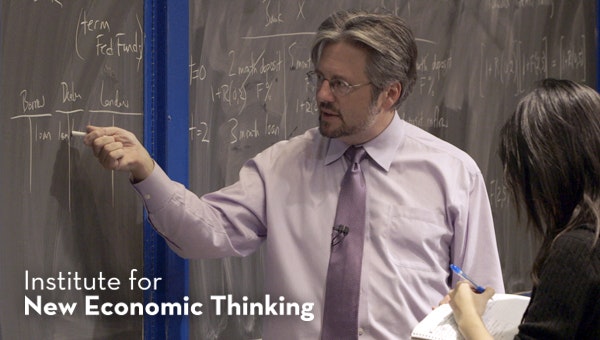
The last three or four decades have seen a remarkable evolution in the institutions that comprise the modern monetary system. The financial crisis of 2007-2009 is a wakeup call that we need a similar evolution in the analytical apparatus and theories that we use to understand that system. Produced and sponsored by the Institute for New Economic Thinking, this course is an attempt to begin the process of new economic thinking by reviving and updating some forgotten traditions in monetary thought that have become newly relevant. Three features of the new system are central. Most important, the intertwining of previously separate capital markets and money markets has produced a system with new dynamics as well as new vulnerabilities. The financial crisis revealed those vulnerabilities for all to see. The result was two years of desperate innovation by central banking authorities as they tried first this, and then that, in an effort to stem the collapse. Second, the global character of the crisis has revealed the global character of the system, which is something new in postwar history but not at all new from a longer time perspective. Central bank cooperation was key to stemming the collapse, and the details of that cooperation hint at the outlines of an emerging new international monetary order. Third, absolutely central to the crisis was the operation of key derivative contracts, most importantly credit default swaps and foreign exchange swaps. Modern money cannot be understood separately from modern finance, nor can modern monetary theory be constructed separately from modern financial theory. That's the reason this course places dealers, in both capital markets and money markets, at the very center of the picture, as profit-seeking suppliers of market liquidity to the new system of market-based credit.
 Packt
Packt
Foundations of Information Security and Incident Handling
Updated in May 2025. This course now features Coursera Coach! A smarter way to learn with interactive, real-time conversations that help you test your knowledge, challenge assumptions, and deepen your understanding as you progress through the course. Discover the foundational principles of Information Security and Incident Handling in this comprehensive course. You'll gain essential knowledge about key concepts, risk management, vulnerability assessments, and incident response frameworks. With guidance from experts Daniel and Adam, you’ll learn how to assess risks, manage vulnerabilities, and ensure compliance with legal and industry standards. The course begins with an introduction to information security concepts, including vulnerability and threat management, risk frameworks like NIST RMF, and the legal and compliance considerations every incident handler should know. By establishing a strong foundational understanding, you will be ready to tackle more complex topics. The second section dives deep into the nine-step Incident Handling and Response (IH&R) Process. From preparation and triage to evidence gathering, eradication, and post-incident reviews, each step is explored in detail to ensure you can manage incidents effectively. Practical insights and expert tips help solidify your learning. Ideal for IT professionals, security enthusiasts, and anyone aiming to enhance their skills in cybersecurity, this course requires no prior knowledge but benefits those familiar with basic IT concepts. It's designed for beginners and intermediates aiming to excel in incident handling and security management.
 Board Infinity
Executing Full Text Queries with Elasticsearch
Embark on a comprehensive journey into the realm of Elasticsearch with this thoughtfully crafted course, divided into three distinct modules. Ideal for beginners or those aiming to reinforce their foundational understanding, this course offers a clear and progressive path to mastering Elasticsearch. In the first module, Introduction to Elasticsearch, participants dive into Elasticsearch's core. They will understand its architecture, explore its foundational elements, and gain hands-on experience creating indices and understanding nodes and clusters. The second module, Query Mechanism, and Optimization, offers a journey through Elasticsearch queries. Learners will familiarize themselves with the Explain API, explore key query tuning techniques, and enhance their search performance skills. In the third module, Advanced Elasticsearch Techniques, attendees delve into sophisticated facets of Elasticsearch. They will master advanced query mechanisms, appreciate the significance of aggregation, and discern the role of nested queries and facets in comprehensive data interpretation. Upon course completion, attendees will have forged a comprehensive understanding of Elasticsearch, standing poised to deploy efficient search solutions and ready to tackle more nuanced Elasticsearch challenges. Disclaimer: This course is an independent educational resource developed by Board Infinity and is not affiliated with, endorsed by, sponsored by, or officially associated with Elastic NV or any of its subsidiaries or affiliates. This course is not an official preparation material of Elastic NV. All trademarks, service marks, and company names mentioned are the property of their respective owners and are used for identification purposes only.
 University of California, Davis
JavaScript Basics
This course introduces the programming language JavaScript and shows the websites that include the type of interactions students will eventually be able to develop. Learners will understand the importance of how JavaScript was developed and why such history impacts the way JavaScript is currently written and in future releases. Learners will write their first scripts, have their HTML and CSS skills assessed, create variables and arrays and assign values to them. If student’s skills are lacking, resources and recommendations are provided to improve these skills. There is ample opportunity for students to practice these first, core skills.