

The Global Scholarly Directory.
Discover world-class academic programs curated for the modern intellectual. Search through 19877+ degrees and professional certificates.
 Coursera
Commencer votre première réunion en ligne avec ZOOM
À la fin de ce projet, vous apprendrez à utiliser la plateforme ZOOM pour établir des réunions en ligne à des fins personnelles ou professionnelles. Ce projet guidé est une introduction à ZOOM et est conçu pour les personnes qui souhaitent avoir accès à un outil facile à utiliser, gratuit et performant pour échanger virtuellement mais de manière privée avec des personnes partout dans le monde. ZOOM offre un accès sécurisé pour créer, gérer ou joindre des réunions téléphoniques ou par vidéo avec autant de participants que vous le souhaitez. De plus, ZOOM offre des fonctionnalités vastes pour animer vos réunions, les personnaliser ou encore les rendre plus interactives. C’est aussi une plateforme simple et gratuite, accessible par ordinateur, tablette ou téléphone, qui est utilisée par des milliers d’utilisateurs dans le monde. Après avoir terminé ce projet, vous pourrez accéder à la plateforme, sélectionner et modifier les principales fonctionnalités offertes et créer votre propre réunion virtuelle. This course works best for learners who are based in the North America region. We’re currently working on providing the same experience in other regions.
 Packt
Packt
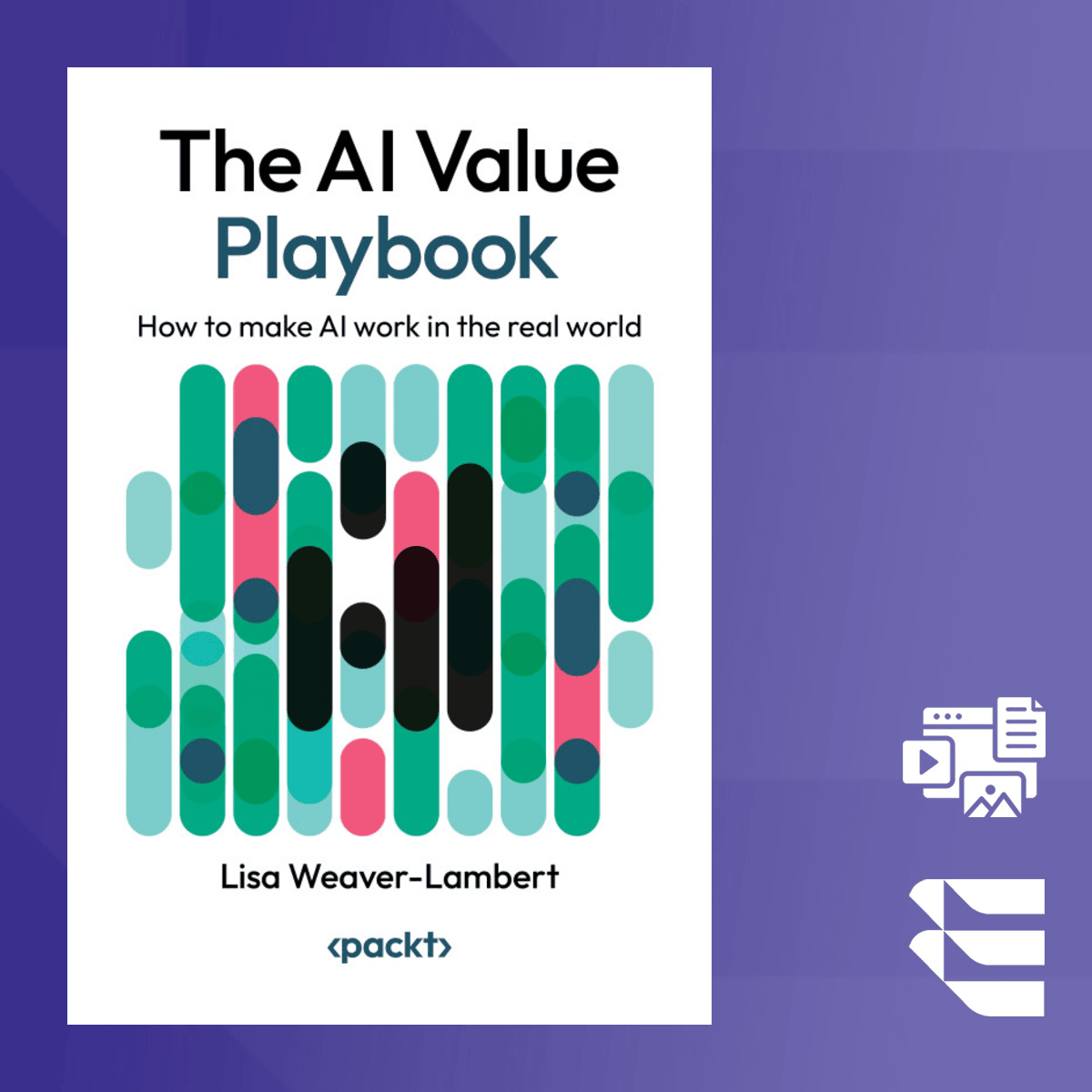
The AI Value Playbook: Making AI Work in the Real World
In this course, you'll learn how to leverage AI to drive business value and strategy. Gain insights into AI's role in business operations and how to implement it effectively. You'll be guided through real-world applications, industry perspectives, and actionable strategies to maximize AI’s impact. What sets this course apart is its focus on practical, business-driven results, ensuring that you understand how to implement AI in your organization. Designed for non-technical business leaders, this course is perfect for those seeking to unlock the potential of AI in their companies.
 Scrimba
Intro to AI Engineering
Upon completing the this course, learners will have established a robust foundation in AI principles and hands-on proficiency with AI tools and APIs. They will learn the art of crafting and manipulating AI models, enabling them to integrate AI into applications with confidence. This course stands out by offering a detailed exploration of AI engineering, from the basics to deeper techniques like the "Few Shot" approach and the creation of images with the latest DALL·E 3 API. Participants will also learn to navigate AI safety and ethical considerations, ensuring responsible use of AI technology. With a blend of theoretical knowledge and practical application, this course is uniquely positioned to empower learners to become innovative problem solvers in the AI domain.
 Duke University
Python Programming Fundamentals
This introductory course is designed for beginners and individuals with limited programming experience who want to embark on their software development or data science journey using Python. Throughout the course, learners will gain a solid understanding of algorithmic thinking, Python syntax, code testing, debugging techniques, and modular code development--essential skills for a successful career in software engineering, development, or data science. By the end of this course, you will learn to: - Gain a stepwise approach to problem-solving using algorithms and programming logic. - Apply common functions, conditional statements, and loops to build Python scripts and programs. - Work with the VS Code programming environment to enhance coding proficiency. - Use testing and debugging strategies to ensure code reliability. - Perform logical and mathematical operations on datasets. In the final week of the course you will apply your new algorithm design and programming skills to a data analysis problem: analyzing heart rate data.
 The University of Sydney
Critical Thinking Skills for University Success
In this course, you will learn how to develop your Critical Thinking Skills to help you achieve success in your university studies. After completing this course, you will be able to: 1. Use critical thinking and argumentation in university contexts to improve academic results 2. Understand the importance and function of critical thinking in academic culture 3. Use a variety of thinking tools to improve critical thinking 4. Identify types of argument, and bias within arguments, in order to better evaluate the strength of arguments 5. Use evidence to support claims in arguments 6. Apply critical thinking and argumentation to real world problems and issues
 Google Cloud
Cloud Operations for GKE
This is a self-paced lab that takes place in the Google Cloud console. In this lab you will set up Monitoring and visualizing metrics from a Kubernetes Engine cluster
 LearnQuest
Scrum Master Certification: Scrum Methodologies
This course is designed to help Scrum beginners learn the foundational knowledge to become proficient with Agile Scrum. Throughout the course, learners will explore User Stories and how they are prioritized in Agile, Velocity, Backlog Refinement, and Market Actions. Learners will also learn about different Scrum Reports and methods of managing risks.
 Sciences Po
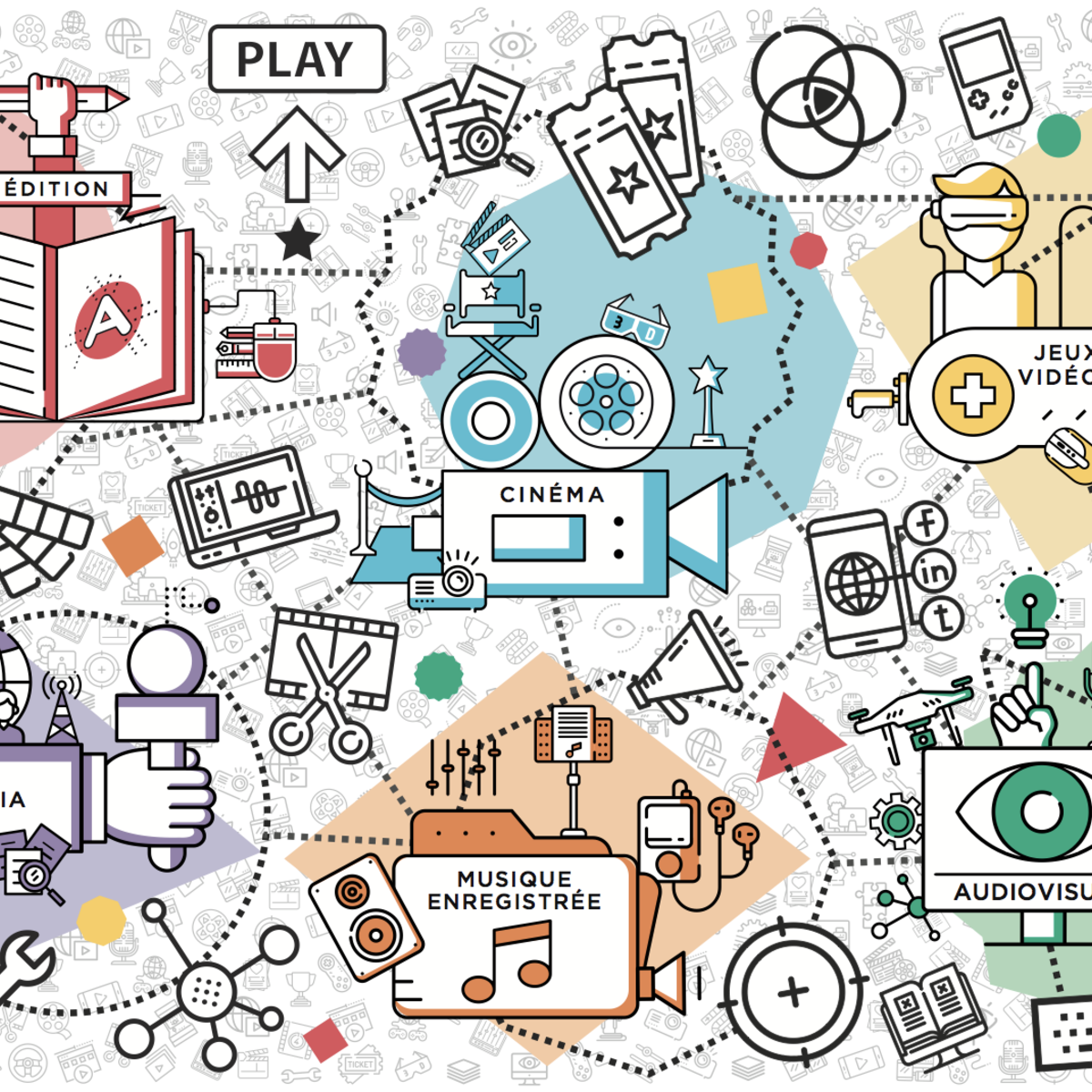
Entreprendre dans les Industries Culturelles à l'ère du numérique
À travers son fil pédagogique riche d’interviews d'experts et de cours d'enseignants, le MOOC Entreprendre dans les industries culturelles à l'ère du numérique proposé par l'École d'affaires publiques de SciencesPo et le Ministère de la Culture, invite à découvrir les clés de l'entrepreunariat culturel à l'aune du monde numérique. Suivre la chaîne de valeur de l’entreprise culturelle conduit à aborder successivement la présentation du secteur des industries culturelles (IC) dans ses grandes lignes, les caractéristiques des publics et les tendances de consommation. La question de la création des contenus sera abordée aussi sous l’angle de ses enjeux économiques et financiers. Toute structuration d'entreprise requiert une organisation propre aux entreprises dites des industries culturelles. Les thèmes de la promotion, la diffusion et la distribution des biens culturels seront également une des clés de voûtes de la vision globale de l'entreprise culturelle dans ce monde numérisé. Ce cours est composé de cours donné par des enseignants et de témoignages d'experts. LES ENSEIGNANTS et LES PROFESSIONNELS Emma Archer, Maître de conférences à Sciences Po en Affaires publiques et à la Sorbonne Karen Autret, Directrice du SPIIL, dialogue avec Amélie de Ronseray Jean-Christophe Baillie, Fondateur de Novaquark Tonjé Bakang, Fondateur d'AFROSTREAM et Part-Time director chez The Family Alexander Barclay, Digital policy and innovation pour l’Etat de Genève Laurence Barone, Directrice adjointe chez Relais Culture Europe Valérie-Laure Bénabou, Professeure de droit à l’Université Aix-Marseille Lorenzo Benedetti, Fondateur du Studio Bagel Pierre-Jean Benghozi, Membre du collège de l'ARCEP Françoise Benhamou, Professeure d’économie Université Paris 13 Frédéric Bereyziat, DGA Unifrance Laurent Bizot, Fondateur de No Format! Christian Bombrun, Vice président Marketing, Entertainment and Digital Services chez Orange Stéphane Bossuet, Directeur de ARTENREEL Adeline Braescu-Kerlan, Responsable Incubateur des politiques publiques à Sciences Po Pascal Brunet, Directeur chez Relais Culture Europe Dominique Cardon, Medialab, Sciences Po Marion Carré, Fondatrice de Ask Mona Vincent Carry, Créateur de Arty Farty Camille Caubrière, Co-fondatrice de Guestviews Clothilde Chalot, Co-fondatrice de NoMadMusic Philippe Chantepie, Inspecteur général au ministère de la Culture Jean-Baptiste Clais, Conservateur au Musée du Louvre, enseignant MI Affaires publiques à Sciences Po , Olivier Cohen, Directeur des Editions l'Olivier Rachel Cordier, Directeur de AGEC-Culture Nicolas Colin, Directeur The Family Coline Debayle, CEO d’ARTIPS Romain Delaume, interview écrite pour le Projet d'Artagnans Anaïs Del Bono, Co-auteure de Le financement participatif culturel Lisa Doby, CCI Alizée Doumerc, Co-fondatrice de Guestviews Florent Dumont, Directeur des études et du marketing antenne de FTV Emmanuel Durand, Maître de conférence à Sciences Po - fondateur du parcours innovation sociale à Sciences Po Louis Fleuret, French Tech Pascal Foy, Responsable mission d’entreprises chez Audiens Gilles Freissinier, Arte Isabelle Giordano, Journaliste David Godevais, Conseiller Culture à la Mairie de Paris Emily Gonneau, Fondatrice de Nüagency et Unicum Eric Hainaut, Expert comptable chez Com’Com Steven Hearn, Président de Scintillo Xavier Lardoux, Directeur du Centre National du Cinéma Luc de Larminat, Directeur d'Opale Guillaume Leblanc, DG de SNEP Laurence Le Ny, VP Start up Content chez Orange Carole Le Rendu, Professeure associée en MRH à Audencia Laure Leroy, directrice des Editions Zulma Nicolas Lesur, Président de Unilend Jean-Christophe Levassor, Directeur de La Condition Publique Sébastien Loubry, Business Development and Communication director du fonds d'investissement Axa Strategic Venture Thierry Mandon, Directeur général de Rollin Publications André Manoukian, Fondateur de Muzeek Guillaume Maréchal, Co-auteur de Le financement participatif culturel Marion Mazauric, Fondatrice de la maison d’édition Au diable vauvert David Michel, CEO et Founder de Cottonwood et Marathon Media Pascal Nègre, Fondateur de #NP, Ex-directeur d’Universal Julien Neuville, Fondateur de Nouvelles Ecoutes Eric Petrotto, CEO de DOOD et 1DLab Jacqueline Pacaud, Commission Européenne Wladimir Pandolfo, Senior Warner Music et professeur à Sciences Po Paris Nicolas Parpex, Senior Investment Director à Bpifrance Investissement Bruno Patino, Directeur éditorial d'ARTE et directeur de l'école de journalisme de Sciences Po Catherine Peyrot, Responsable de plateforme incubation chez LINCC Guillaume Pfister, Directeur Marketing France Deezer Guillaume Proust, Expert comptable et commissaire aux comptes à la Compagnie Fiduciaire Bruno Racine, ex président de la BNF Amélie de Ronseray, Directrice du développement et des partenariats de Artips Pauline Rouer, Enseignante à Sciences Po Paris Alexandre Rovetto, Entrepreneur Cecilie de Saint Venant, Directrice de la communication, de la marque et du mécénat CHAMBORD Eric Scherer, Directeur de l'innovation de France Télévisions Valérie Senghor, ex-directrice du développement et de l'innovation au Centquatre Christine Sinapi, Directrice académique et du développement pédagogique à Burgundy School of Business Romain Slitine, Maître de conférence et fondateur du parcours Innovation Sociale à Sciencespo Alain Sussfeld, DG de UGC François Taddei, Directeur du CRI Julie Zerbib, INPI PRÉREQUIS Ce MOOC est un cours qui s’adresse à un public large. Il traite des questions et enjeux liés à l'entrepreneuriat culturel à l'ère du numérique, il ne nécessite aucun prérequis PLAN DU COURS Séance 0 - Appréhender les contours des industries culturelles Séance 1 - Cerner les grands enjeux économiques des IC et le potentiel entrepreunarial Séance 2 - Observer les mutations des consommations culturelles Séance 3 - Saisir la reconfiguration des contenus et de la création Séance 4 - Penser le modèle de son entreprise Séance 5 - Actionner les bons leviers de financements Séance 6 - Promouvoir, diffuser, distribuer les biens culturels aux publics Séance 7 - De l'entrepreneur au dirigeant d'entreprise : la boîte à outils de l'entrepreneuriat culturel ÉVALUATION Un section QCM est proposée en fin de Mooc. EQUIPE PÉDAGOGIQUE Emma Archer, Alexander Barclay, Françoise Benhamou, Anaïs Del Bono, Florence Botello, Adeline Braescu-Kerlan, Guillaume Pfister, Amélie de Ronseray, Thomas Scaramuzza, Charlotte Khouri, Pôle Audiovisuel Sciences Po CONDITIONS D'UTILISATION Conditions d’utilisation du contenu du cours Droits réservés Licence restrictive : la production relève de la propriété intellectuelle de son auteur et ne peut donc pas être réutilisée. Conditions d’utilisation des contenus produits par les participants Droits réservés Licence restrictive : la production relève de la propriété intellectuelle de son auteur et ne peut donc pas être réutilisée. PARTENAIRES Ministère de la Culture | Ecole d'affaires publiques de SciencesPo Paris
 Wesleyan University
The Modern and the Postmodern (Part 1)
This course examines how the idea of "the modern" develops at the end of the 18th century in European philosophy and literature, and how being modern (or progressive, or hip) became one of the crucial criteria for understanding and evaluating cultural change. Are we still in modernity, or have we moved beyond the modern to the postmodern?
 Packt
Packt
Advanced Detailing, Roof Design & Texturing
Take your Blender skills to the next level with this advanced course in stylized architectural modeling and texturing. Designed for experienced Blender users, you’ll focus on building a richly detailed, stylized tavern from the ground up: gaining the skills to bring game-ready and cinematic environments to life. Your journey begins with mastering techniques for enhancing detail and realism, from bending wood textures to crafting windows and shutters that feel authentic and immersive. You’ll then explore advanced roof and structural modeling, adding curved wooden frameworks, lanterns, and intricate roof attachments that give your designs character and precision. As the modules progress, you’ll tackle complex modeling and texturing challenges, including chimney creation, balcony structures, staircases, and polished exterior details. Along the way, you’ll refine your UV mapping and texture workflows, ensuring every surface is consistent, realistic, and production-ready. By the end of this 7-module course, you will have: • Built a fully detailed tavern model, complete with stylized exteriors and architectural features. • Mastered advanced texturing, structural modeling, and UV techniques. • Learned to apply these skills to game environments, visualizations, or animation projects with professional-level quality. This course is ideal for working 3D artists and Blender users who already have experience with modeling and texturing, and who want to elevate their craft in architectural environment design. If your goal is to create highly detailed, stylized buildings for games or digital art, this course will give you both the expertise and portfolio-ready projects to showcase your skills. This course now features Coursera Coach — your interactive learning companion that helps you test your knowledge, challenge assumptions, and deepen your understanding as you progress.
 Packt
Packt
Advanced C++ Features and Data Structures
This course features Coursera Coach! A smarter way to learn with interactive, real-time conversations that help you test your knowledge, challenge assumptions, and deepen your understanding as you progress through the course. Take your C++ programming skills to the next level by mastering advanced features and foundational data structures essential for building high-performance software. In this comprehensive course, you'll explore file handling, inheritance, polymorphism, templates, the Standard Template Library (STL), and core data structures such as stacks, queues, and linked lists. You’ll begin with file input/output, learning how to read from and write to files to persist data across sessions. Real-world projects like salary reports and student rosters reinforce your ability to manage external data. Next, you'll dive into object-oriented programming with inheritance and polymorphism, building derived classes and role-based systems like an RPG character creator to see these concepts in action. As the course progresses, you’ll explore C++ templates and the STL, learning how to write reusable, efficient code using powerful generic containers and algorithms. You’ll also cover critical concepts like smart pointers, operator overloading, and rules for safe memory management. Projects like a language translator and crop simulator tie these topics together. In the final stretch, the focus shifts to data structures. You'll implement both array-based and linked versions of stacks, queues, and lists, and apply templating to create flexible, type-safe data abstractions. By combining theory with hands-on coding, you’ll build a toolkit for solving complex programming problems. By the end of the course, you will be able to apply advanced C++ features like templates and polymorphism, utilize STL containers effectively, manage memory with modern techniques, and implement foundational data structures from scratch.
 Google Cloud
IAM Custom Roles
This is a self-paced lab that takes place in the Google Cloud console. Cloud IAM provides the right tools to manage resource permissions with minimum fuss and high automation. You don't directly grant users permissions. Instead, you grant them roles, which bundle one or more permissions. This allows you to map job functions within your company to groups and roles.
 Amazon Web Services
Developing Machine Learning Solutions
In this machine learning course, you will learn about the machine learning lifecycle, and how to use AWS services at every stage. Additionally, you will discover the diverse sources for machine learning models and learn techniques to evaluate their performance. You will also understand the importance of machine learning operations (MLOps) in streamlining the development and deployment of your machine learning projects.
 University of California, Irvine
Gérer les risques et les modifications d’un projet
Ce cours vous aidera à gérer efficacement les risques d’un projet en identifiant, en analysant et en communiquant les modifications inévitables du périmètre et des objectifs du projet. Vous comprendrez et mettrez en pratique les éléments nécessaires pour mesurer et rendre compte du périmètre, du planning et de la performance des coûts du projet. Vous serez équipé des outils permettant de gérer les modifications de la manière la moins perturbante possible pour votre équipe et les autres parties prenantes du projet. À la fin de ce cours, vous serez en mesure de : 1. Définir les composantes d'un plan de gestion des communications 2. Comprendre l'importance des canaux de communication 3. Définir les éléments clés nécessaires pour mesurer et rendre compte du périmètre, du planning et de la performance des coûts 4. Identifier les événements à risque du projet 5. Hiérarchiser les risques identifiés 6. Développer des réponses pour un risque hautement prioritaire 7. Identifier et analyser les modifications du périmètre du projet 8. Décrire les causes et les conséquences des modifications du projet 9. Définir l'objectif de la conduite d'une session leçons tirées
 Google Cloud
Encoder-Decoder Architecture - 简体中文
本课程简要介绍了编码器-解码器架构,这是一种功能强大且常见的机器学习架构,适用于机器翻译、文本摘要和问答等 sequence-to-sequence 任务。您将了解编码器-解码器架构的主要组成部分,以及如何训练和部署这些模型。在相应的实验演示中,您将在 TensorFlow 中从头编写简单的编码器-解码器架构实现代码,以用于诗歌生成。
 Board Infinity
Logical & Analytical Reasoning — Exam & Recruitment Prep
Course Description: Logical Reasoning for Entrance Exam & Job Placements is a comprehensive course designed to enhance critical thinking, logical reasoning, and analytical problem-solving skills. This course covers a wide range of topics, including mastering series and patterns, decoding and arrangement strategies, logical comparisons, spatial and diagrammatic reasoning, and advanced logical concepts. Learners will develop the expertise needed to excel in competitive exams, academic assessments, and professional aptitude tests. Through practical exercises and conceptual learning, participants will gain confidence in applying logical techniques to real-world scenarios. Module Descriptions: Module 1: Mastering Series and Patterns Explore number and letter series, arithmetic operations, and complex logical patterns to build a strong foundation in series-based reasoning. Module 2: Decoding and Arrangement Strategies Learn coding-decoding techniques, linear and circular arrangements, and advanced strategies to enhance problem-solving in structured arrangements. Module 3: Logical Comparisons and Distributions Analyze distribution, selection, and logical comparison problems to sharpen analytical thinking and decision-making abilities. Module 4: Spatial and Diagrammatic Reasoning Master concepts involving Venn diagrams, cubes, dice, clocks, and calendars to solve visual and spatial reasoning challenges effectively. Module 5: Advanced Logical Reasoning Tackle advanced topics like blood relations, direction sense, input-output problems, syllogisms, and logical connectives to refine high-level reasoning skills. Course Learning Objectives By the end of this course, learners will be able to: - Analyze complex series patterns and logical sequences. - Apply reasoning techniques in coding-decoding and arrangements. - Evaluate logical deductions using Venn diagrams and syllogisms. - Develop strategies for solving distribution and comparison problems. - Interpret spatial and diagrammatic reasoning challenges efficiently. Course Target Audience: - Students preparing for competitive exams or academic challenges. - Early professionals seeking to enhance problem-solving skills. - Global learners aiming to strengthen logical thinking abilities. - Corporate employees looking to improve strategic decision-making. - Anyone interested in improving analytical reasoning for personal growth. Course Benefits: - Enhanced Analytical Skills: Develop logical thinking and analytical reasoning for competitive success. - Problem-Solving Confidence: Gain the ability to solve complex reasoning problems effectively. - Competitive Edge: Improve your chances of excelling in entrance exams and job placements. - Practical Application: Apply learned techniques to real-world scenarios and decision-making. - Global Relevance: Acquire skills applicable across diverse industries and career paths. Disclaimer: This is an independent educational resource created by Board Infinity for informational and educational purposes only. This course is not affiliated with, endorsed by, sponsored by, or officially associated with any company, organization, or certification body unless explicitly stated. The content provided is based on industry knowledge and best practices but does not constitute official training material for any specific employer or certification program. All company names, trademarks, service marks, and logos referenced are the property of their respective owners and are used solely for educational identification and comparison purposes.