

The Global Scholarly Directory.
Discover world-class academic programs curated for the modern intellectual. Search through 19877+ degrees and professional certificates.
 Institut Mines-Télécom
IoT Communications and Networks
By presenting the building blocks of the IoT network architecture, this MOOC will help learners adapt to the fast changing communications and networking environment of IoT. The IoT world represents billions of sophisticated objects, such as sensors, actuators and meters, that are deployed nearly everywhere, in homes, hospitals, factories, cities, and are connected to the Internet. However, they come with limited capacity in terms of memory storage, computational power and energy; how can these objects then ensure network reliability and timely transmission? That is what you will learn in this course: how we can set up wireless communications and networking in the IoT to achieve these goals. This course has received financial support from the Patrick & Lina Drahi Foundation.
 IBM
IBM
Introduction to Hardware and Operating Systems
Ready to dive into the world of hardware and operating systems? This beginner-friendly course builds essential entry-level skills needed for roles in IT support, networking, cybersecurity, and software development. During this course, you’ll explore core computing concepts and the four functions of computing. You’ll then dive into internal hardware such as CPUs, motherboards, GPUs, memory, interfaces, ports, and peripherals. Plus, you’ll look at how modern technologies such as virtualization (including host/guest OS and hypervisors), parallel-processing GPUs, IoT devices, and VR/AR systems are transforming today’s IT environments. You’ll get hands-on with operating systems, including Windows, macOS, Linux, and mobile platforms, and practice workstation setup, configuration, acquisition, and troubleshooting just like an IT professional. Plus, you’ll look at specialized devices like wearables and e-readers to gain practical technology insights. Throughout, interactive labs help reinforce your learning. Then, in a final project, you’ll apply your new skills in real-world scenarios. This course is also part of the series to help you prepare for CompTIA Tech+ and A+ certification exams.
 Google Cloud
Exploring Data Transformation with Google Cloud
Cloud technology can bring great value to an organization, and combining the power of cloud technology with data has the potential to unlock even more value and create new customer experiences. “Exploring Data Transformation with Google Cloud” explores the value data can bring to an organization and ways Google Cloud can make data useful and accessible. Part of the Cloud Digital Leader learning path, this course aims to help individuals grow in their role and build the future of their business.
 University of Colorado System
Software Requirements Prioritization: Risk Analysis
Risk Analysis, Assessment, and Prioritization looks at how you can manage conflicts at system levels, but it can also be applied to lower level assessments. How do you manage and document conflict, along with alternatives? In analyzing alternatives, you must consider risks. In this course, we'll look into how to analyze risk, evaluate risk, document risks, and use this information for prioritization of requirements. Qualitative and Quantitative approaches will be covered.
 University of Pittsburgh
Probability Theory and Regression for Predictive Analytics
Transform your data science capabilities with the "Probability Theory and Regression for Predictive Analytics" course. This program is designed to provide essential mathematical and statistical skills necessary for predictive modeling and data analysis. Dive into probability concepts, including conditional probability, Bayes’ Theorem, and various probability distributions. Further, apply regression techniques to enhance your ability to predict and interpret data trends. Begin by understanding and calculating conditional probabilities and learning Bayes’ Theorem for probabilistic inference. Explore different probability distributions such as Bernoulli, Binomial, Geometric, Poisson, and Normal distributions, which are fundamental for modeling and analyzing data. Advance to ordinary least squares (OLS) regression, applying matrix transposition and probabilistic techniques to fit linear models to data. Gain a deeper understanding of regression analysis methodologies, from basics to advanced topics, including multicollinearity, interaction effects, Lasso regression, and logistic regression. Engage in practical assignments and real-world projects to apply probability theory and regression techniques, using Python as a powerful tool for statistics and predictive analytics. By the end of this course, you'll be equipped with a solid foundation to tackle advanced data science topics confidently.
 Coursera
Patient Communication and Education
In healthcare, clear and empathetic communication is not just a soft skill—it is a critical component of patient safety and effective treatment. Yet, communication breakdowns are common, leading to errors and decreased patient trust. This course, Patient Communication and Education, is designed for healthcare professionals who want to master the art of patient interaction. You will step into immersive, simulated scenarios to practice and refine your communication techniques in a safe, repeatable environment. Through these role-playing exercises, you will receive system-generated feedback to pinpoint specific areas for improvement, helping you consciously adjust your approach. You will also learn how to translate complex health information into accessible, engaging patient-education toolkits. By selecting and structuring multimedia content like videos and graphics, you will build a cohesive digital resource that empowers patients to understand and manage their care. This course provides the practical skills to enhance patient trust, improve health outcomes, and build a foundation for excellence in patient-centered care.
 University of California, Davis
DevOps Culture and Mindset
This course gives you the basic foundational principles of DevOps with a particular focus on culture and the DevOps mindset. We’ll learn about how DevOps is grounded in lean principles, and how it can help improve collaboration between developers and operations team members. We'll learn about ideas regarding systems thinking, feedback loops, continuous improvement, loosely coupled architecture and teams, managing risk, and dealing with unplanned work. We’ll learn about strategies to manage work, monitor it, keep it organized, and maintain a high level of quality by following key DevOps principles. We’ll also discuss various organizational models and structures that are used by companies in their DevOps transformations. You’ll learn about value stream mapping, and ensuring continuous workflow. Ultimately, we'll learn key ideas and tactics that you can employ at your own organizations to improve both time-to-market and increase the value delivered for your customers, no matter your product line or industry.
 Coursera
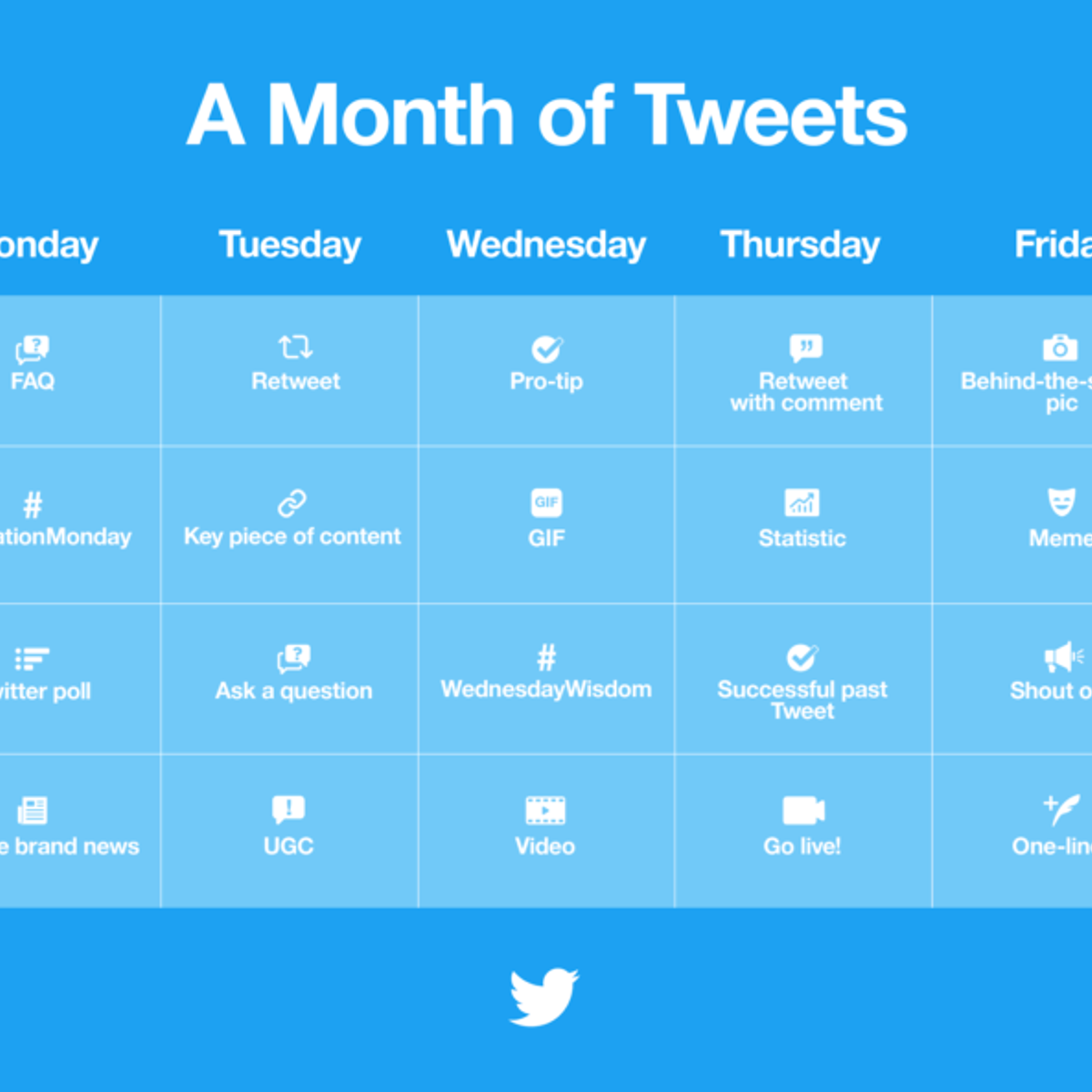
Создаем контентный календарь для твитов
В этом курсе-проекте продолжительностью 1 час вы получите следующие навыки: планирование твитов и создание контентного календаря для твитов. Примечание. Этот курс изначально создан для учащихся из Северной Америки. На данный момент мы адаптируем его и для других регионов.
 JetBrains
Python: Mastering NumPy Essentials
Unlock the real power of Python with NumPy - the essential library behind data science, AI, and scientific computing. In this hands-on course, you’ll quickly go from basic array operations to writing fast, efficient code used in real data workflows. Learn by doing: you’ll practice inside a professional IDE, get instant feedback, and build the skills needed for real-world projects in data analysis, machine learning, and high-performance computing. By the end of the course, you’ll feel confident working with multi-dimensional data and ready to take on more advanced Python or data science challenges. New to Python or want a quick refresher before diving in? Start with our beginner-friendly course Python from Scratch: https://www.coursera.org/learn/jb-python-from-scratch
 Michigan State University
The Search for Great Ideas: Harnessing creativity to empower innovation.
Where do great business ideas come from? We all have compelling business concepts that we've been thinking about for years. In this course we will explore how to use observational tools and other techniques for idea generation and we will talk about how to evaluate the good ideas from the bad. The goal is to settle on a business idea that you are not only passionate about but also has real market application. At the end of this course learners will be able to: -build a resource inventory from which they can assess and create market opportunities; -pursue market opportunities consistent with personal passions and capabilities; and -triage potential ideas in terms of which have the greatest potential for commercial and personal success.
 University of California, Davis
Computational Social Science Methods
This course gives you an overview of the current opportunities and the omnipresent reach of computational social science. The results are all around us, every day, reaching from the services provided by the world’s most valuable companies, over the hidden influence of governmental agencies, to the power of social and political movements. All of them study human behavior in order to shape it. In short, all of them do social science by computational means. In this course we answer three questions: I. Why Computational Social Science (CSS) now? II. What does CSS cover? III. What are examples of CSS? In this last part, we take a bird’s-eye view on four main applications of CSS. First, Prof. Blumenstock from UC Berkeley discusses how we can gain insights by studying the massive digital footprint left behind today’s social interactions, especially to foster international development. Second, Prof. Shelton from UC Riverside introduces us to the world of machine learning, including the basic concepts behind this current driver of much of today's computational landscape. Prof. Fowler, from UC San Diego introduces us to the power of social networks, and finally, Prof. Smaldino, from UC Merced, explains how computer simulation help us to untangle some of the mysteries of social emergence.
 Edureka
Microsoft Fabric Data Engineer: DP-700 Exam Prep
Microsoft Fabric represents a fundamental shift in enterprise data architecture—unifying data engineering, data warehousing, real-time intelligence, and data integration into a single, cohesive SaaS ecosystem. As a Fabric Data Engineer, you should have subject matter expertise with data loading patterns, data architectures, and orchestration processes. This course is purpose-built to help you master those competencies through hands-on implementation and architectural decision-making. Navigate the full Microsoft Fabric landscape—OneLake, Lakehouse, Warehouse, Spark, Data Factory, Dataflows Gen2, Real-Time Intelligence, and Delta Lake. This course delivers a unified, high-performance data architecture built for both batch and streaming analytics. Start strong with scalable lakehouses and robust data ingestion. Scale smarter by orchestrating complex ETL pipelines, Spark transformations, and Medallion architectures powered by Delta Lake. Go deeper into specialized domains—mastering T-SQL in modern warehouses, designing real-time solutions with Eventhouse and KQL, and automating workflows with Activator. Then operationalize like a pro. Implement RLS/OLS security, integrate Purview governance, monitor performance metrics, and align with compliance—all within enterprise-grade standards. Cap it all off with a dedicated exam preparation hub—complete with strategic decision frameworks, practical scenario analysis, and full-length mock exams that simulate the real certification and boost your test-day confidence. By the end of this course, you will be equipped to: - Design and implement enterprise-scale data engineering solutions using Microsoft Fabric components, including Lakehouse, Data Warehouse, and Real-Time Intelligence. - Develop scalable data ingestion and transformation workflows using Pipelines, Dataflows Gen2, Apache Spark, and Delta Lake. - Process and analyze data using Spark, T-SQL, and KQL across batch and streaming architectures. - Implement Medallion Architecture patterns and dimensional modeling principles for structured, analytics-ready data lakes. - Configure security controls, including RLS, OLS, network settings, and granular access permissions. - Monitor and optimize Fabric environments using capacity metrics, DMVs, and performance analysis tools. Designed for data engineers, ETL developers, data architects, and analytics professionals seeking to validate and elevate their expertise in the Microsoft Fabric ecosystem, this course blends certification rigor with real-world architectural depth. Elevate your data engineering capabilities. Prove your readiness. Become a certified Microsoft Fabric Data Engineer.
 Coursera
Project and Stress-Test Financial Plans
Financial plans are only as strong as the assumptions behind them. In this hands-on course, learners build a multi-year P&L projection that connects top-down market forecasts with bottom-up sales and cost assumptions, and then stress-test the plan to evaluate resilience under pressure. By the end of the course, learners will confidently model revenue and expenses over three years, run downside scenarios, and propose margin-preserving actions—all core skills for analysts and managers in FP&A, strategy, or operations.
 Illinois Tech
Introduction to Open Source Application Development
This course introduces basic concepts of systems programming using a modern open source language. You will learn to apply basic programming concepts toward solving problems, writing pseudocode, working with and effectively using basic data types, abstract data types, control structures, code modularization and arrays. You will learn to detect errors, work with variables and loops, and discover how functions, methods, and operators work with different data types. You will also be introduced to the object paradigm including classes, inheritance, and polymorphism. Learning Python has become increasingly popular in recent years, and for a good reason. Python is a versatile programming language that can be used for a wide range of applications, including data science, machine learning, web development, and more. In an introductory Python course such as this, you can expect to learn the basics of Python syntax, data types, control structures, and functions. Learning Python can lead to many career benefits, including increased job opportunities, higher salaries, and the ability to work on exciting and innovative projects. Additionally, adding online courses and certifications to a resume can demonstrate a commitment to professional development and a willingness to learn new skills. Upon successful completion of this course, you will be able to: - Recall and describe software application and development theory and concepts - Write, compile, execute, troubleshoot, analyze, evaluate, and resolve simple problems through program coding using Python computer language. - Develop, synthesize, and identify important language standard libraries and utilities. - Apply data transfer techniques between modules using parameters and return values. - Construct applications to use simple files for input and output. - Implement arrays as structures to contain data. - Use a higher-level programming language to code, test, and debug software designs. - Implement concepts of Object Oriented Programming (OOP), inheritance and polymorphism. - Describe integration of Graphical User Interfaces (GUIs) and event driven programming. - Analyze a complex computing problem and to apply principles of computing and other relevant disciplines to identify solutions (ABET Computing Criterion 3.1) - Design, implement, and evaluate a computing-based solution to meet a given set of computing requirements in the context of the program’s discipline (ABET Computing Criterion 3.2) - Identify and analyze user needs and take them into account in the selection, creation, evaluation, and administration of computer-based systems (ABET IT Criterion 3.6)
 Simplilearn
Advanced GenAI Tools Course
This comprehensive Generative AI Tools and Business Impact course equips you with the skills to evaluate, adopt, and apply top GenAI tools across diverse business functions. Begin by understanding how Generative AI is reshaping industries through real-world demos—set up workflows in Zapier, generate videos using AI, and build app prototypes with Uizard. Progress into mastering widely used tools like Otter.ai, Julius, and Miro to enhance team productivity and collaboration. Advance further by exploring high-demand platforms such as Gemini, Descript, Claude, and Sora for content creation, automation, and strategic innovation. To be successful in this course, you should have a basic understanding of digital tools and business workflows, along with an interest in using emerging AI technologies to improve efficiency. By the end of this course, you will be able to: - Understand GenAI Business Applications: Explore how AI is driving innovation across industries - Build AI-Enhanced Workflows: Use Zapier, Uizard, Otter.ai, and Miro for smarter operations - Master Popular GenAI Tools: Apply Gemini, Descript, Claude, and Sora in real-world scenarios - Boost Efficiency with AI: Leverage GenAI for automation, collaboration, and content generation Ideal for business professionals, digital strategists, and tech teams aiming to drive innovation and productivity through Generative AI.
 University of Washington
Ukraine: History, Culture and Identities
Explore the history, culture and society of the people of Ukraine from the Middle Ages to the present in this introductory course developed by the Ukrainian Institute, educational studio EdEra, and the National University of Kyiv-Mohyla Academy and offered on Coursera in cooperation with the University of Washington. The culture and identities of Ukrainian people have existed in this region for more than a thousand years. Like most Eastern European countries, Ukraine is a rather young country — it declared its independence in 1991. Since then, it managed to survive three revolutions struggling for the protection of democratic values and human rights; radically changed the vector of international politics; and advanced significantly in the development of arts and culture. Learn about the events and processes that took place before independence was declared and see what historical and cultural heritage was preserved by the Ukrainian people when it entered the 21st century in this program taught by researchers, experts in history and political science, and professors from the National University of Kyiv-Mohyla Academy. Dr. Natalia Shlikhta, Associate Professor, Head of the Department of History, National University of Kyiv-Mohyla Academy Dr. Maksym Yakovlev, Head of the Department of International Relations, National University of Kyiv-Mohyla Academy, Director of the School for Policy Analysis Dr. Tetiana Grygorieva, Associate Professor of the Department of History, National University of Kyiv-Mohyla Academy Dr. Vadym Aristov, Senior lecturer of the Department of History, National University of Kyiv-Mohyla Academy Dr. Kateryna Dysa, Associate Professor of the Department of History, National University of Kyiv-Mohyla Academy