

The Global Scholarly Directory.
Discover world-class academic programs curated for the modern intellectual. Search through 19877+ degrees and professional certificates.
 The University of Hong Kong
Epidemics
“If history is our guide, we can assume that the battle between the intellect and will of the human species and the extraordinary adaptability of microbes will be never-ending.” (1) Despite all the remarkable technological breakthroughs that we have made over the past few decades, the threat from infectious diseases has significantly accelerated. In this course, we will learn why this is the case by looking at the fundamental scientific principles underlying epidemics and the public health actions behind their prevention and control in the 21st century. This course covers the following four topics: 1. Origins of novel pathogens; 2. Analysis of the spread of infectious diseases; 3. Medical and public health countermeasures to prevent and control epidemics; 4. Panel discussions involving leading public health experts with deep frontline experiences to share their views on risk communication, crisis management, ethics and public trust in the context of infectious disease control. In addition to the original introductory sessions on epidemics, we revamped the course by adding: - new panel discussions with world-leading experts; and - supplementary modules on next generation informatics for combating epidemics. -------------------------------------------------------- (1) Fauci AS, Touchette NA, Folkers GK. Emerging Infectious Diseases: a 10-Year Perspective from the National Institute of Allergy and Infectious Diseases. Emerg Infect Dis 2005 Apr; 11(4):519-25. What you'll learn - Demonstrate knowledge of the origins, spread and control of infectious disease epidemics - Demonstrate understanding of the importance of effective communication about epidemics - Demonstrate understanding of key contemporary issues relating to epidemics from a global perspective
 University of Cape Town
Becoming a changemaker: Introduction to Social Innovation
This course is for anyone who wants to make a difference. Whether you are already familiar with the field of social innovation or social entrepreneurship, working for an organization that wants to increase its social impact, or just starting out, this course will take you on a journey of exploring the complex problems that surround us and how to start thinking about solutions. We will debunk common assumptions around what resources are needed to begin acting as a social innovator. We will learn from the numerous examples of social innovations happening all over the world. You will be challenged to get out of your comfort zone and start engaging with the diverse spaces around you. By the end of the course, you will have formed your own approach to social innovation, and you will have begun to develop the concepts, mindset, skills, and relationships that will enable you to start and evolve as a changemaker. The Bertha Centre for Social Innovation and Entrepreneurship co-created this course with RLabs, a social movement ‘born-and-bred’ in Bridgetown, Cape Town that is now active in 22 countries. The movement empowers youth through innovative and disruptive technology by teaching them vital skills and providing much needed support and a sense of community. Advocating and supporting initiatives such as RLabs forms part of the Bertha Centre’s mandate. The Centre is a specialised unit at University of Cape Town’s Graduate School of Business, and is the first academic centre in Africa dedicated to advancing social innovation and entrepreneurship.
 EDUCBA
RESTful API Project - Employee Management System Tool
This hands-on course guides learners through the design, development, and deployment of a real-world RESTful API using Spring Boot and Java. Structured around the creation of an Employee Management System, the course helps learners progress from project setup to the implementation of controller logic, business services, data access layers, and application configuration. Through a modular approach, learners will first construct domain models, organize service and repository logic, and then design REST endpoints for handling CRUD operations. The final section focuses on bootstrapping the application, configuring runtime settings, and preparing the system for deployment. Throughout the course, learners will engage with Bloom’s-aligned objectives to: • Construct modular backend architecture using Spring Boot conventions • Design RESTful APIs using annotations and HTTP methods • Implement controller logic to process client requests • Configure application settings for flexible deployment • Integrate all layers into a scalable, production-ready API system Whether you're a developer seeking to solidify your backend skills or a student aiming to build a portfolio-grade project, this course provides both conceptual clarity and practical application.
 University of Colorado System
Design and Build a Data Warehouse for Business Intelligence Implementation
The capstone course, Design and Build a Data Warehouse for Business Intelligence Implementation, features a real-world case study that integrates your learning across all courses in the specialization. In response to business requirements presented in a case study, you’ll design and build a small data warehouse, create data integration workflows to refresh the warehouse, write SQL statements to support analytical and summary query requirements, and use the MicroStrategy business intelligence platform to create dashboards and visualizations. In the first part of the capstone course, you’ll be introduced to a medium-sized firm, learning about their data warehouse and business intelligence requirements and existing data sources. You’ll first architect a warehouse schema and dimensional model for a small data warehouse. You’ll then create data integration workflows using Pentaho Data Integration to refresh your data warehouse. Next, you’ll write SQL statements for analytical query requirements and create materialized views to support summary data management. For data integration workflows and analytical queries, you can use either Oracle or PostgreSQL. Finally, you will use MicroStrategy OLAP capabilities to gain insights into your data warehouse. In the completed project, you’ll have built a small data warehouse containing a schema design, data integration workflows, analytical queries, materialized views, dashboards and visualizations that you’ll be proud to show to your current and prospective employers.
 Check Point Software Technologies Ltd.
Check Point Jump Start: Quantum Spark Network Security
Check Point Quantum Spark (SMB) Appliances are high-performance, integrated devices offering optional WiFi and LTE support. Standard Check Point Network Security features such as Firewall, VPN, Anti-Virus, Application Control, URL Filtering, Email Security, and SandBlast Zero-Day Protection are supported. This course includes these modules: 1. Introduction 2. Installation 3. WebUI Overview 4. Out-of-the-Box State 5. Policy Customization 6. Smart Accel 7. VoIP Wizard 8. Local Management 9. Centrally Managed 10. SMP 11. Active Directory Sync 12. Threat Prevention 13. SSL Inspection 14. Configure Interface 15. Configure Wireless Networks 16. Enable cellular 17. Reach My Device 18. Reuse Token 19. Configure Watchtower 20. Automatic and Manual Upgrade 21. Site-to-Site VPN 22. Remote Access VPN 23. Monitoring 24. Troubleshooting Overview 25. Backup and Restore 26. Configure OSPF This course is suitable for new Check Point customers with prior experience configuring or administrating Check Point Network Security products.e.g. This is primarily aimed at first- and second-year undergraduates interested in engineering or science, along with high school students and professionals with an interest in programming.
 Logical Operations
SQL Querying: Advanced
In today's competitive environment, information is one of the most important factors in determining the success of an organization. If you are able to manage and retrieve information efficiently, you can streamline the organization's processes and give it a competitive edge. Some data analysis tasks may require that you query multiple tables simultaneously or create complex views of data. In the course SQL Querying: Fundamentals, you learned the basics of SQL querying. In this course, you will build on this foundation, learning advanced querying techniques, such as writing nested queries and using views to simplify repetitive querying tasks. You will also learn how to perform common database administration tasks such as duplicating tables; modifying table structures; inserting, updating, or deleting data; and indexing tables to optimize query performance. You will also learn how to work with multiple tasks as a transaction. This course is intended for individuals who have basic SQL skills and who want to expand their skillset with more advanced tasks. In this course, you will: use nested queries to generate query output; manipulate table data by inserting, modifying, and deleting data; manipulate the structure of tables; work with views to present data; index data to improve querying efficiency; and manage database transactions. This course requires that you have Microsoft SQL Server Express and Microsoft SQL Server Management Studio (SSMS) installed on a Windows PC. The course setup instructions provided in the first module of the course go into more detail about the hardware and software requirements.
 Coursera
Portfolio Optimization using Markowitz Model
In this 1-hour long project-based course, you will learn how to optimize a two-asset portfolio at the optimum risk-to-return with finding the maximum Sharpe ratio. To achieve this, we will be working around the Sharpe ratios of two given assets, we will find the efficient frontier of these assets, and find where they intersect the best by utilizing the Markowitz Model. The content of this course draws on the knowledge of Project: Compare Stock Returns with Google Sheets, so you are highly recommended to take it first if you are not familiar with how the Sharpe ratio is calculated and don’t have an understanding of how the risk-to-return metrics work. Note: This course works best for learners who are based in the North America region. We're currently working on providing the same experience in other regions. This course's content is not intended to be investment advice and does not constitute an offer to perform any operations in the regulated or unregulated financial market.
 Infosec
Fundamental Privacy Acts and Laws
In this path we will explore The US Federal Government Branch and Information Privacy. We will also cover US healthcare privacy related laws and privacy compliance including HIPAA, HITECH, GINA and more.
 University of Arizona
Marketing Communications: Intro to Consumer Behavior
Want to know what really drives your customers? This non-credit online course in consumer behavior and marketing communications, offered through the University of Arizona Online on Coursera, provides working professionals and adult learners with practical tools to understand customer insights and turn them into action. Designed for learners who want to upskill, reskill, or explore college-level marketing coursework, this course examines how consumer goals, pain points, personality traits, cultural context, and social influence shape buying decisions—and how these insights inform effective marketing and brand strategy. Through real-world examples and hands-on exercises, you’ll learn to apply segmentation, targeting, and positioning (STP) frameworks, create actionable customer personas, and use behavioral science and storytelling techniques to design marketing communications that motivate action and build lasting connections. This course offers a flexible, low-risk opportunity to engage with college-aligned coursework on a smaller scale, making it an ideal starting point for professionals considering continued education or a future pathway into University of Arizona credit-bearing programs. By the end of this course, you will be able to: 1. Explain how consumer goals, pain points, personality traits, cultural context, and social influence impact buying behavior and marketing effectiveness. 2. Apply segmentation, targeting, and positioning strategies to create brands of enduring value. 3. Create actionable customer personas that capture goals, barriers, and influencers to guide marketing decisions and personalization 4. Use behavioral insights and storytelling techniques to design marketing strategies that motivate action and build lasting connections. This the First course in the Management of Marketing Communications specialization. The other two courses are: - Marketing Communications: The Customer's Journey - Marketing Communications: Culture and Messaging Learners who complete this course and successfully pass the final exam may be eligible to earn University of Arizona credit through the credit‑by‑exam process. This option provides a flexible pathway for those interested in applying their learning toward future academic goals. For questions about eligibility, requirements, or next steps, please contact CAPE‑Info@email.arizona.edu.
 Fractal Analytics
Design Thinking for Data Professionals
Design thinking gives data professionals a proven, human‑centered method to build analytics solutions users actually adopt. Learn to empathize with stakeholders, frame business problems, prototype dashboards and data products, and test solutions with measurable impact. This hands‑on course blends product thinking with analytics craft—so you can design data experiences that inform, persuade, and change behavior. You’ll practice stakeholder interviewing, personas, jobs‑to‑be‑done (JTBD), KPI/metric frameworks, experiment design (A/B testing), and iterative prototyping. By the end, you’ll deliver evidence‑based recommendations and user‑validated artifacts that translate data into outcomes.
 Google Cloud
Deploy Go Apps on Google Cloud Serverless Platforms
This is a self-paced lab that takes place in the Google Cloud console. Use GO (golang) to deploy an app on App Engine, Cloud Run, and Cloud Functions using Cloud Build
 Universitat de Barcelona
The Mediterranean, a Space of Exchange (from the Renaissance to Enlightenment)
The course The Mediterranean, a Space of Exchange (from Renaissance to Enlightenment) aims to explain the Mediterranean, using history and the analysis of the past, as a space generated by routes and circulation. We consider it crucial to disclose mobility as a historical factor: a mobility comprised of four major elements, namely people, objects, ideas and practices. In our analysis of Mediterranean reality between the fifteenth and sixteenth centuries, from the Renaissance to the Enlightenment, we will pay particular attention to its western shores, an area seething with transfers and exchanges, in the social and economic spheres as well as the political and cultural, with the Iberian Peninsula, the various islands and the Italian Peninsula, all spaces of great dynamism. El curso El Mediterráneo, espacio de intercambios (del Renacimiento a la Ilustración) quiere explicar, desde la historia y el análisis del pasado, el Mediterráneo como un espacio generado por las rutas y las circulaciones. Consideramos necesario divulgar la movilidad como factor histórico. Una movilidad centrada en cuatro grandes ámbitos: las personas, los objetos, las ideas y las prácticas. Al analizar la realidad mediterránea entre los siglos XV y XIX, del Renacimiento a la Ilustración, ponemos un foco especial en su orilla occidental, un área abocada a la transferencia y el intercambio, tanto en el ámbito social y económico como en el político y cultural, con la Península Ibérica, las islas y la Península Itálica como espacios de gran dinamismo.
 Packt
Packt
Certified Six Sigma Yellow Belt Training
Updated in May 2025. This course now features Coursera Coach! A smarter way to learn with interactive, real-time conversations that help you test your knowledge, challenge assumptions, and deepen your understanding as you progress through the course. This course begins with an ice-breaker story and explores the differences between Kaizen, Lean, and Six Sigma, followed by an understanding of the DMAIC Roadmap and the role of a Six Sigma Yellow Belt individual. You'll delve into the Define phase, capturing the voice of the customer, distinguishing needs from wants, and translating voices to requirements. In the Measure phase, you'll identify eight types of waste, employ a data collection plan, practice sampling techniques, and get introduced to Minitab. The Analyze Phase covers brainstorming root causes, prioritizing them, and using graphical tools like Pareto charts and histograms. The Improve Phase teaches solution-generation techniques such as brainstorming and assumption-busting. Finally, the Control Phase includes control charts and differentiating between common and special causes. By the course's end, you'll execute a Six Sigma Yellow Belt project, master Lean and Six Sigma tools, perform analysis using Minitab, and identify root causes. This course is designed for professionals seeking to enhance their process improvement skills and achieve Six Sigma Yellow Belt certification. A basic understanding of business processes and data analysis is recommended.
 Coursera
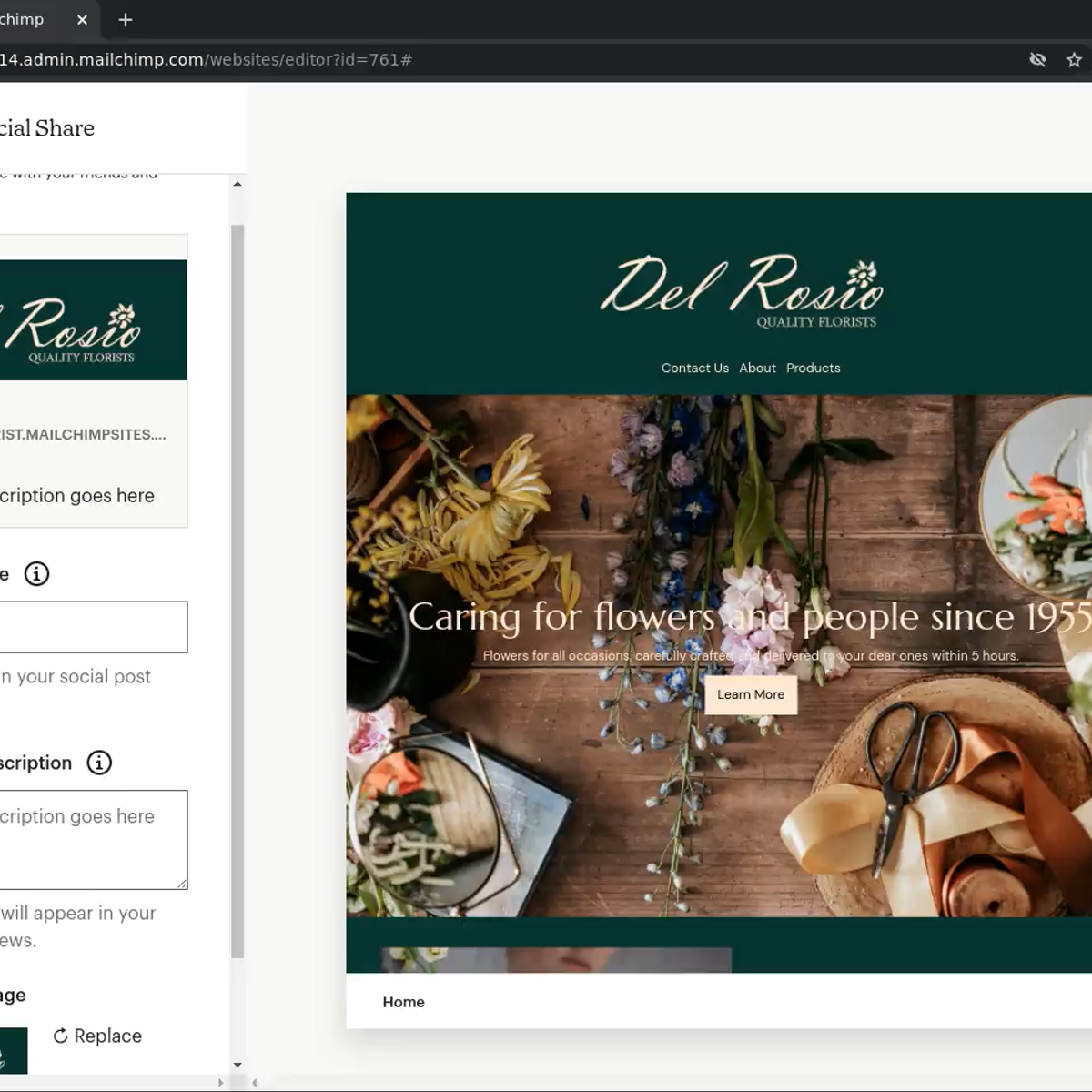
Create a website with MailChimp
In this 2.5 hours project you will create a complete website using MailChimp Website builder. You will create a website structure starting from the business goals, organize calls-to-action, create pages, arrange page sections, edit image and text content, connect content with links, preview for desktop and mobile, finally publish online. You will have the opportunity to create a website for your portfolio with full hands-on practice activities.
 Coursera
Interactive Document Design in Canva
The Interactive Document Design in Canva course teaches learners how to design engaging, screen-optimized digital documents that go beyond static PDFs. Learners begin with the foundations of digital layout design, focusing on readability, accessibility, and consistent template creation for multi-page documents. Building on this foundation, the course introduces interactive elements—such as hyperlinks, buttons, and navigation systems—that improve user experience and make documents more engaging. Participants also learn best practices in user experience design, including intuitive navigation and visual cues for interactivity. Finally, the course covers finalization and export, ensuring interactive PDFs retain functionality across different devices and platforms. Practical, hands-on projects guide learners through creating a complete interactive product catalog, testing interactivity, and preparing files for digital distribution. By the end, learners will have the skills to create professional, functional interactive documents that improve communication and client engagement.
 Simplilearn
Jenkins training for Beginners
This comprehensive course on Jenkins for Developers equips you with the skills to automate builds, manage source code, and streamline CI/CD pipelines using Jenkins. Begin by mastering Jenkins fundamentals—installation, configuration, and administration—while exploring the user interface through beginner-friendly tutorials. Progress to managing Jenkins users and roles to support collaborative development. Then, dive into source code management by integrating Git and other SCM tools to automate code pulls and repository management. Conclude with deployment automation using Jenkins pipelines and agent.jar to efficiently manage deployments across environments and improve delivery speed. To be successful in this course, you should have a basic understanding of programming concepts and any version control system. By the end of this course, you will be able to: - Set up and manage Jenkins for CI/CD pipelines - Configure users, roles, and permissions for team collaboration - Integrate Jenkins with Git and automate source code management - Build and deploy applications using Jenkins pipelines and agent.jar Ideal for developers, DevOps engineers, and software teams.