

The Global Scholarly Directory.
Discover world-class academic programs curated for the modern intellectual. Search through 19877+ degrees and professional certificates.
 Duke University
Writing, Running, and Fixing Code in C
Building on the course Programming Fundamentals, this course will teach you how to write code by first planning what your program should do—an important approach for novice and professional programmers. You will learn how to compile and run your program, and then how to test and debug it. This course builds on the Seven Steps you have already learned and provides a framework for systematically testing for problems and fixing them, so you can find and fix problems efficiently.
 John Wiley & Sons
Effective Management: Essential Manager Skills
Based on the best-selling book, The Effective Manager, by Mark Horstman, Kate Braun, and Sarah Sentes. Effective management is at the heart of every successful organization. This course equips professionals with practical, behavior-based techniques to build trust, enhance communication, and lead teams effectively in today’s hybrid and remote work environments. Learners will discover actionable methods for delivering impactful feedback, coaching for growth, and mastering the art of delegation. Each module emphasizes applying these skills directly to real workplace scenarios, ensuring that participants not only understand the principles but can use them to achieve measurable results. What sets this course apart is its focus on practical execution—combining proven management frameworks with real-world examples and exercises. The result is a repeatable system that helps managers strengthen their leadership capabilities and drive consistent team performance. This course is ideal for both new and experienced managers looking to enhance their leadership effectiveness, improve team dynamics, and build long-term managerial confidence. No prior familiarity with Manager Tools concepts is required. From The Effective Manager Copyright © 2023 by Manager Tools Publishing. All rights reserved. Published by John Wiley & Sons, Inc., Hoboken, New Jersey. Published simultaneously in Canada. Used by arrangement with John Wiley & Sons, Inc.
 University of Maryland, College Park
Customer Value, Acquisition, and Retention
In today’s data-driven world, businesses have unparalleled access to customer information, enabling them to develop strategies that foster loyalty, enhance retention, and boost profitability. This course examines how firms leverage customer data to establish lifetime connections, maximize customer equity, and optimize their marketing investments. Through a deep dive into customer lifetime value (CLV), customer equity, and customer relationship concepts, you will gain insights into the metrics and models that drive effective decision-making.
 University of Colorado Boulder
Network Analysis for Marketing Analytics
Network analysis is a long-standing methodology used to understand the relationships between words and actors in the broader networks in which they exist. This course covers network analysis as it pertains to marketing data, specifically text datasets and social networks. Learners walk through a conceptual overview of network analysis and dive into real-world datasets through instructor-led tutorials in Python. The course concludes with a major project. This course can be taken for academic credit as part of CU Boulder’s Master of Science in Data Science (MS-DS) degree offered on the Coursera platform. The MS-DS is an interdisciplinary degree that brings together faculty from CU Boulder’s departments of Applied Mathematics, Computer Science, Information Science, and others. With performance-based admissions and no application process, the MS-DS is ideal for individuals with a broad range of undergraduate education and/or professional experience in computer science, information science, mathematics, and statistics. Learn more about the MS-DS program at https://www.coursera.org/degrees/master-of-science-data-science-boulder.
 University of California San Diego
Social Computing
People are social creatures and the modern Internet reflects that. Technology has made collaboration at a distance possible in new ways that present their own set of challenges. This course will introduce you to the major challenges and opportunities for creating online communities. What does the future hold? Learn how social computing can create collaboration experiences that go beyond what’s possible face to face.
 Kennesaw State University
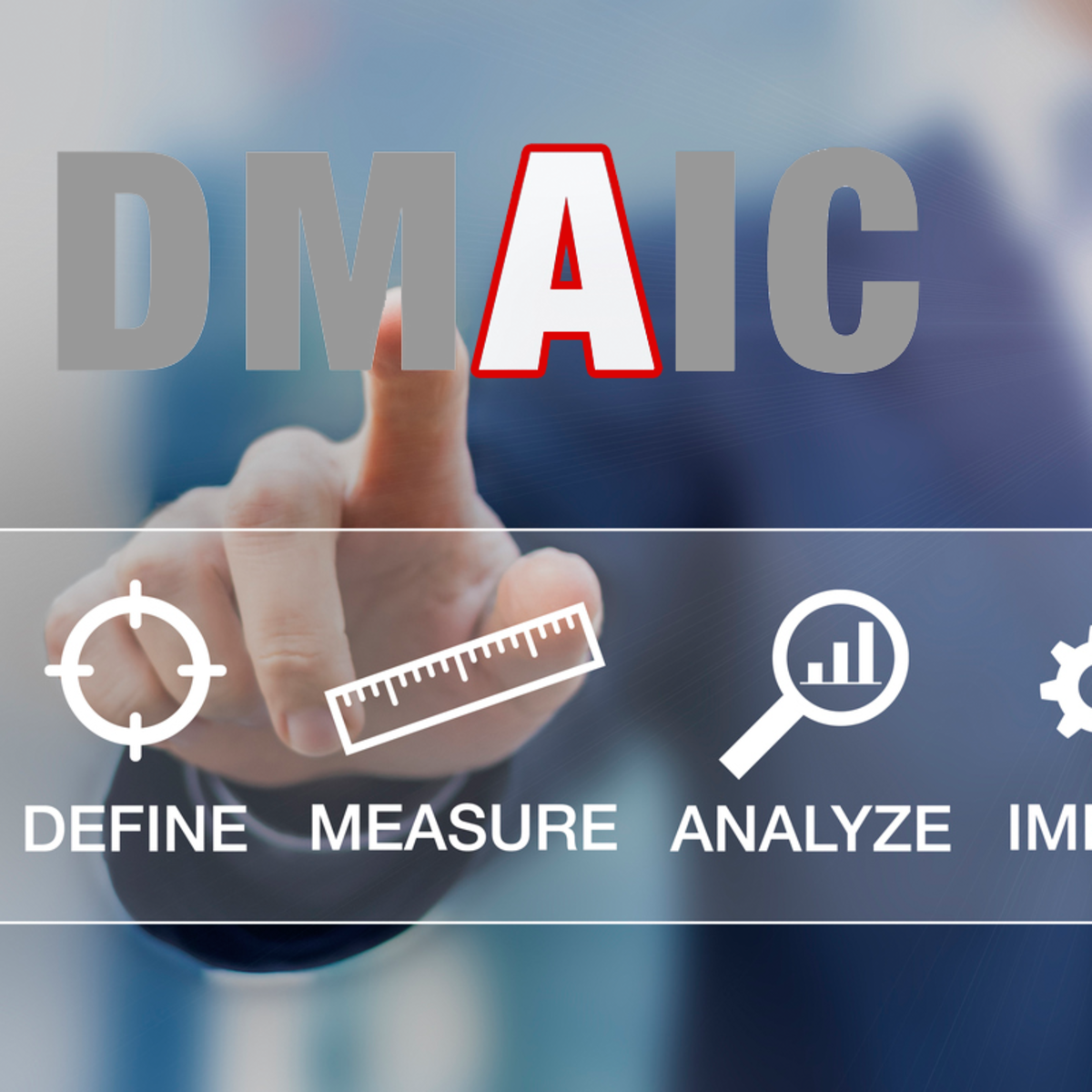
Six Sigma Advanced Analyze Phase
This course is for you if you are looking to dive deeper into Six Sigma or strengthen and expand your knowledge of the basic components of green belt level of Six Sigma and Lean. Six Sigma skills are widely sought by employers both nationally and internationally. These skills have been proven to help improve business processes and performance. This course will take you deeper into the principles and tools associated with the "Analyze" phase of the DMAIC structure of Six Sigma. It is highly recommended that you complete the "Yellow Belt Specialization" and the courses "Six Sigma and the Organization (Advanced)" and "Six Sigma Advanced Define and Measure Phase" before beginning this course. In this course, your instructors will introduce you to, and have you apply, some of the tools and metrics that are critical components of Six Sigma. This course will provide you with the advanced knowledge of hypothesis testing and design of experiments as they are associated with Six Sigma and Lean. Every module will include readings, videos, and quizzes to help make sure you understand the material and concepts that are studied. Registration includes online access to course content, projects, and resources but does not include the companion text The Certified Six Sigma Green Belt Handbook (2nd edition). The companion text is NOT required to complete the assignments. However, the text is a recognized handbook used by professionals in the field. Also, it is a highly-recommended text for those wishing to move forward in Six Sigma and eventually gain certification from professional agencies such as American Society for Quality (ASQ).
 University of California, Davis
Planned Giving
In this comprehensive overview of planned giving, you’ll gain an introduction to the basic terminology and concepts in the field as well as an overview of each planned giving vehicle. Learn to identify and assess prospective donors, recognize planned giving benefits to your donors, match a donor’s interests and needs with the appropriate planned giving options, and structure a successful solicitation. You’ll understand the importance of administration of planned gifts to ensure compliance with policies and fulfillment of obligations to the donor. Apply your knowledge by developing a multi-step donor strategy and a marketing strategy, working on case studies, networking, and analyzing success factors.
 Packt
Packt
Materials and Textures in Unreal Engine 5
Updated in May 2025. This course now features Coursera Coach! A smarter way to learn with interactive, real-time conversations that help you test your knowledge, challenge assumptions, and deepen your understanding as you progress through the course. Master the art of materials and textures in Unreal Engine 5 and elevate your game design skills. This course provides an in-depth understanding of Unreal Engine's material system, equipping you with the knowledge to create stunning, realistic environments. Learn to apply techniques that enhance visual storytelling and improve player immersion. The course begins with an overview of materials, textures, and their inputs. You’ll explore key concepts like normal maps, anisotropy, and blend modes. By mastering tools like the Material Editor Toolbar and material instances, you’ll gain the confidence to create dynamic and efficient materials for game development. Next, you’ll dive deeper into advanced topics such as shading models, water materials, texture masking, and material layers. Through practical examples, you’ll learn how to use math and input data expressions, material functions, and UV mapping to achieve intricate and functional designs. Nodes like rotator, panner, and time will teach you how to bring your materials to life with dynamic effects. This course is ideal for aspiring game developers, 3D artists, and professionals looking to refine their Unreal Engine expertise. Basic knowledge of 3D modeling and texturing is recommended. Whether you’re a beginner or have some experience, you’ll find this course a valuable addition to your skillset.
 Logical Operations
CCNA: Networking Basics, Switching, Addressing, and Routing
This course will be useful to anyone looking to become an entry-level network administrator. You will learn basic concepts related to networking, like topologies, models, and protocols. You'll also configure switching using techniques like virtual local area networks (VLANs). Then, you'll configure IP addressing using IPv4 and IPv6, and configure static and dynamic routing. This is the first course in a multi-course Specialization. All of the courses in this Specialization are meant to be used alongside the optional Boson NetSim® labs, which are sold separately on the Logical Operations store: https://store.logicaloperations.com/cisco-solutions-implementation-and-administration-ccna-200-301-lab-environment.html. Use of these labs is optional, although they are highly recommended due to the significant benefit that hands-on practices brings to the learning experience.
 EDUCBA
Bayesian Statistics: Excel to Python A/B Testing
By the end of this course, learners will be able to apply Bayesian statistics for decision-making in both business and healthcare contexts, implement probabilistic models in Excel, and perform advanced A/B and multi-variant testing using Python. The course begins with a hands-on introduction to Bayesian reasoning in Excel, where you will learn to structure datasets, calculate joint and conditional probabilities, and update prior probabilities with real-world healthcare examples. You will practice building Bayesian probability tables, interpreting repeated test outcomes, and analyzing predictive performance for evidence-based decision-making. Next, the course transitions into computational Bayesian statistics with Python. You will gain practical experience with Markov Chain Monte Carlo (MCMC) sampling, approximate posterior distributions using PyMC, and explore hierarchical models for A/B and multi-variant testing. What sets this course apart is its dual approach: simple Excel-based foundations for immediate application, followed by advanced Python implementations for scalable experimentation and machine learning integration.
 LearnQuest
Foundations of IoT Systems and Industrial Automation
This comprehensive course offers learners a deep dive into the world of IoT systems and their integration with Industrial Automation. Uncover the historical roots and architectural nuances of IoT, emphasizing the pivotal role of sensor technologies and diverse communication tools. Through this exploration, participants will establish a solid foundation in IoT concepts, understanding how its components collaborate, exploring various sensor types, and evaluating communication protocols. The course then extends its focus to Industrial Automation, shedding light on its far-reaching impact across various sectors. From the core components of Industry 4.0 to the practical applications of automation in manufacturing and logistics, participants gain valuable insights into the transformative technologies driving industrial progress. This dual exploration sets the stage for a holistic understanding of how Industrial Automation and IoT collaborate, shaping the future of industries. This introductory course is designed for all learners interested in building a strong foundation for IoT systems and industrial automation concepts. The course imparts best practices for navigating complexities in data management, analytics, security, and privacy concerns, providing practical insights crucial for safeguarding and optimizing IoT implementations. By the course's conclusion, participants will possess the skills and knowledge necessary to navigate the evolving landscapes of IoT systems and Industrial Automation effectively.
 Google Cloud
Configuring IAM Permissions with gcloud
This is a self-paced lab that takes place in the Google Cloud console. In this lab introduces you will use the gcloud CLI tool to set up and configure command features of Cloud Identity and Access Management.
 University of California, Santa Cruz
Russian History: from Lenin to Putin
In this course, Peter Kenez, Professor Emeritus at UC Santa Cruz, explains the events of modern Russian history and introduces its most significant actors—from Vladimir Lenin to Vladimir Putin.
 Board Infinity
Data Visualization with Tableau
Dive deep into the compelling world of data visualization with this beginner-friendly course, illuminating the art of transforming data into insightful visuals using Tableau. Arranged in four comprehensive modules, this course outlines a clear learning trajectory, transitioning from foundational concepts to advanced visualization techniques. In the initial module, the focus is on grasping the essentials of Tableau, the cornerstone of effective data visualization. Here, you'll acquaint yourself with Tableau's fundamental tools and features, setting a solid base for your data storytelling journey. The subsequent module propels you into the world of data transformation. Dive deep into Tableau's core functionalities, from understanding the dynamics of Marks Cards and Legends to the significant roles of Green and Blue pills. This phase empowers you to mold raw data into compelling visual stories. Progressing further, the third module introduces you to the vast spectrum of Tableau charts. From basic bar charts to complex visualizations, you'll learn to select the apt visual medium, ensuring your data narratives resonate and captivate. Concluding your journey, the fourth module immerses you in advanced Tableau techniques and dashboard design. By leveraging sophisticated features and crafting interactive dashboards, you'll be able to present your insights with greater impact. By the end of the course, not only will you have a portfolio of compelling data visualizations to showcase, but you'll also possess a profound understanding of data visualization principles and a robust proficiency in Tableau. Disclaimer: This course is an independent educational resource developed by Board Infinity and is not affiliated with, endorsed by, sponsored by, or officially associated with Salesforce Inc. or any of its subsidiaries or affiliates. This course is not an official preparation material of Salesforce Inc.. All trademarks, service marks, and company names mentioned are the property of their respective owners and are used for identification purposes only.
 Packt
Packt
Incident Response, Risk Management, and Compliance
Updated in May 2025. This course now features Coursera Coach! A smarter way to learn with interactive, real-time conversations that help you test your knowledge, challenge assumptions, and deepen your understanding as you progress through the course. In an era of evolving cyber threats, mastering incident response, risk management, and compliance is essential for protecting organizations. This course provides an in-depth exploration of cybersecurity governance, attack detection, and security frameworks, preparing you to manage incidents, assess risks, and ensure regulatory compliance. You'll gain hands-on insights into secure coding, digital forensics, and vulnerability assessments to build a proactive security posture. Your learning journey begins with application security, covering DNS security, secure file transfers, and advanced coding techniques to mitigate vulnerabilities. You'll then explore incident response strategies, including threat identification, forensic investigations, and post-incident recovery. Through real-world scenarios, you'll learn to analyze malware threats, privilege escalation tactics, and injection-based attacks. Next, the course delves into risk management, governance, and compliance frameworks. You'll explore ISO standards, security policies, and audit processes to maintain security and regulatory adherence. Additionally, you'll gain expertise in penetration testing, business impact analysis, and third-party risk management to fortify your organization against evolving threats. Ideal for cybersecurity professionals, IT auditors, and compliance officers, this course requires a foundational understanding of networking and security principles. It’s perfect for those looking to enhance their expertise in incident response, risk mitigation, and regulatory compliance.
 Johns Hopkins University
Strategic and Inclusive Leadership
The course "Strategic and Inclusive Leadership" empowers you to build the leadership skills necessary for navigating today’s diverse, dynamic organizational environments. It takes a comprehensive approach, exploring critical leadership principles such as inclusive leadership, gender dynamics, team leadership, and crisis management. You will learn how to align strategic thinking with organizational missions, values, and vision, while also refining your leadership profile to unlock your full potential. What makes this course unique is its focus on practical, real-world applications of leadership concepts, ensuring you can apply what you learn immediately to drive change. By analyzing leadership behaviors, team dynamics, and crisis case studies, you’ll gain a deeper understanding of both the challenges and opportunities in leadership today. This course is ideal for professionals looking to lead with impact, fostering inclusive, high-performing teams, and preparing for success in times of crisis. Whether you’re a seasoned leader or aspiring to develop your leadership potential, this course will guide you to the next level in your leadership journey.