

The Global Scholarly Directory.
Discover world-class academic programs curated for the modern intellectual. Search through 19877+ degrees and professional certificates.
 Board Infinity
Introduction to Software Quality Assurance
"Begin your professional journey into software design, testing, and quality assurance with this structured, beginner-friendly course. Designed for learners with no prior experience, it builds a strong foundation in the principles, processes, and best practices of delivering high-quality software in real-world projects. Through a balanced mix of theory, real-life examples, and guided practice, you will learn to evaluate software quality, follow structured testing processes, identify and document defects effectively, and contribute to ensuring products meet user expectations and business goals. You will gain hands-on exposure to the complete software testing life cycle, understand how testing is applied in both Agile and Waterfall models, and develop professional documentation skills such as writing test cases and preparing detailed defect reports. By the end of the course, you will have the knowledge and practical skills to confidently take on entry-level quality assurance roles or enhance your effectiveness in related software development positions. By the end of the course, you will be able to: - Apply software quality assurance principles to real projects. - Execute the complete software testing life cycle with confidence. - Implement various testing types and levels effectively. - Prepare structured, professional test and defect documentation. This course is ideal for aspiring QA professionals, junior testers, software development students, and anyone seeking a practical understanding of quality assurance in modern software projects. "e.g. This is primarily aimed at first- and second-year undergraduates interested in engineering or science, along with high school students and professionals with an interest in programming. Disclaimer: This is an independent educational resource created by Board Infinity for informational and educational purposes only. This course is not affiliated with, endorsed by, sponsored by, or officially associated with any company, organization, or certification body unless explicitly stated. The content provided is based on industry knowledge and best practices but does not constitute official training material for any specific employer or certification program. All company names, trademarks, service marks, and logos referenced are the property of their respective owners and are used solely for educational identification and comparison purposes.
 Skillshare
The Art of Storytelling: Editing in Adobe Premiere Pro
By the end of this course, you will be able to edit with intention in Adobe Premiere Pro—shaping timing, pacing, and rhythm to convey clear meaning, organizing your workflow efficiently, and finishing your videos with polished audio and color grading. In this class, Abner Cross guides you through a balanced journey that blends creative storytelling principles with hands-on technical mastery. This course is divided into three essential parts: defining your message and creative brief, understanding editing theory and storytelling techniques, and mastering Premiere Pro tools to execute your vision seamlessly. You’ll explore concepts like the Kuleshov Effect, cut-on-action, rhythm, keyframing, transitions, and effect controls—while building an efficient folder structure and workflow that supports long-term growth. Ideal for beginners and intermediate creators, this class is perfect for aspiring professional editors, remote freelancers, and content creators who want to elevate their storytelling. To succeed, you’ll need a computer and Adobe Premiere Pro installed—no prior professional experience required. If you’re ready to move beyond simply cutting clips and start crafting meaningful stories, this course gives you both the mindset and the mechanics to do it.
 American Psychological Association
Psychology of the Self
Unlock a deeper understanding of yourself with this enlightening course surveying the psychology of the self-concept, self-esteem, and self-regulation. With engaging videos and self-exploration activities, this program provides an overview of the intricate workings of the human mind, exploring how your self-concept and self-motives shape your thoughts, emotions, and behaviors. Key topics covered: Self-Concept: Learn how your understanding of yourself can impact your emotions, affect your views of others, and cause you to act like different people in different situations. Self-Esteem: Discover the benefits of high self-esteem, why low self-esteem isn't what you think it is, and how your culture plays a key role in how you feel about yourself. Self-Regulation: Learn practical techniques for managing your emotions, overcoming impulsive behaviors, and achieving your goals.
 Coursera
Medical Billing: Code, Claim, Collect
"Did you know that 90% of hospital bills contain errors, costing the healthcare system $750 billion annually? This Short Course was created to help health administration professionals master the foundational skills that prevent costly billing mistakes and ensure timely reimbursements. By completing this course, you'll be able to confidently navigate medical coding systems, understand how claims move through the payment process, and submit electronic claims that get processed quickly and accurately. You'll master the essential terminology that payers use, recognize common billing codes, and follow proven guidelines for charge entry that healthcare facilities rely on every day. By the end of this course, you will be able to: • Recognize common medical billing codes and payer-specific terminology • Understand the fundamental stages of a claim life-cycle • Apply charge entry guidelines to submit an electronic claim This course is unique because it combines hands-on practice with real claim scenarios, giving you the confidence to handle billing processes from day one. You'll work with the same tools and workflows that medical offices use daily, ensuring your skills transfer immediately to the workplace. To be successful in this course, you should have a background in basic healthcare concepts and computer literacy."
 University of Michigan
Uso de bancos de dados com Python
Este curso apresentará aos alunos os conceitos básicos da Linguagem de Consulta Estruturada (SQL), bem como o design básico do banco de dados para armazenar dados como parte de um esforço de coleta, análise e processamento de dados em várias etapas. O curso usará o SQLite3 como banco de dados. Também criaremos rastreadores da Web e processos de coleta e visualização de dados em várias etapas. Usaremos a biblioteca D3.js para fazer a visualização básica de dados. Este curso abordará os capítulos 14 e 15 do livro “Python para Todos”. Para ter êxito neste curso, você deve estar familiarizado com o material abordado nos capítulos 1 a 13 do livro e os três primeiros cursos desta especialização. Este curso aborda o Python 3.
 Alberta Machine Intelligence Institute
Generative AI for Audio and Images: Models and Applications
Generative AI for Audio and Images: Models and Applications offers an in-depth exploration of how modern generative models such as Variational Autoencoders (VAEs), Generative Adversarial Networks (GANs), Transformers, and Diffusion models are used to create, manipulate, and enhance audio, image, and video content. Learners examine the architectures, training processes, and use cases of these models across different modalities, gaining both conceptual understanding and practical insights through hands-on activities. The course also highlights the ethical and societal implications of generative AI, including bias, transparency, intellectual property, and the challenges of deepfake technologies. By covering foundational theory as well as state-of-the-art approaches and applications, this course prepares learners to apply and develop generative AI creatively and responsibly for the audio and image modalities. By the end of this course, learners will be able to: Outline core concepts, challenges, and the history of AI-generated audio. Analyze important foundational audio generation models, such as variational and vector quantized autoencoders (VAE and VQ-VAE) Examine how these models integrate with the latest GenAI technologies to form hybrid, state-of-the-art transformer and diffusion-based audio generation systems, Study the architecture and functionality of Generative Adversarial Networks (GANs), and their variations. Implement and train GAN models for creating and enhancing visual content, Explore cutting-edge techniques such as diffusion models and transformers for image and video creation. Discuss the ethical considerations regarding generative AI for audio and images.
 The Hong Kong University of Science and Technology
Software Engineering: Modeling Software Systems using UML
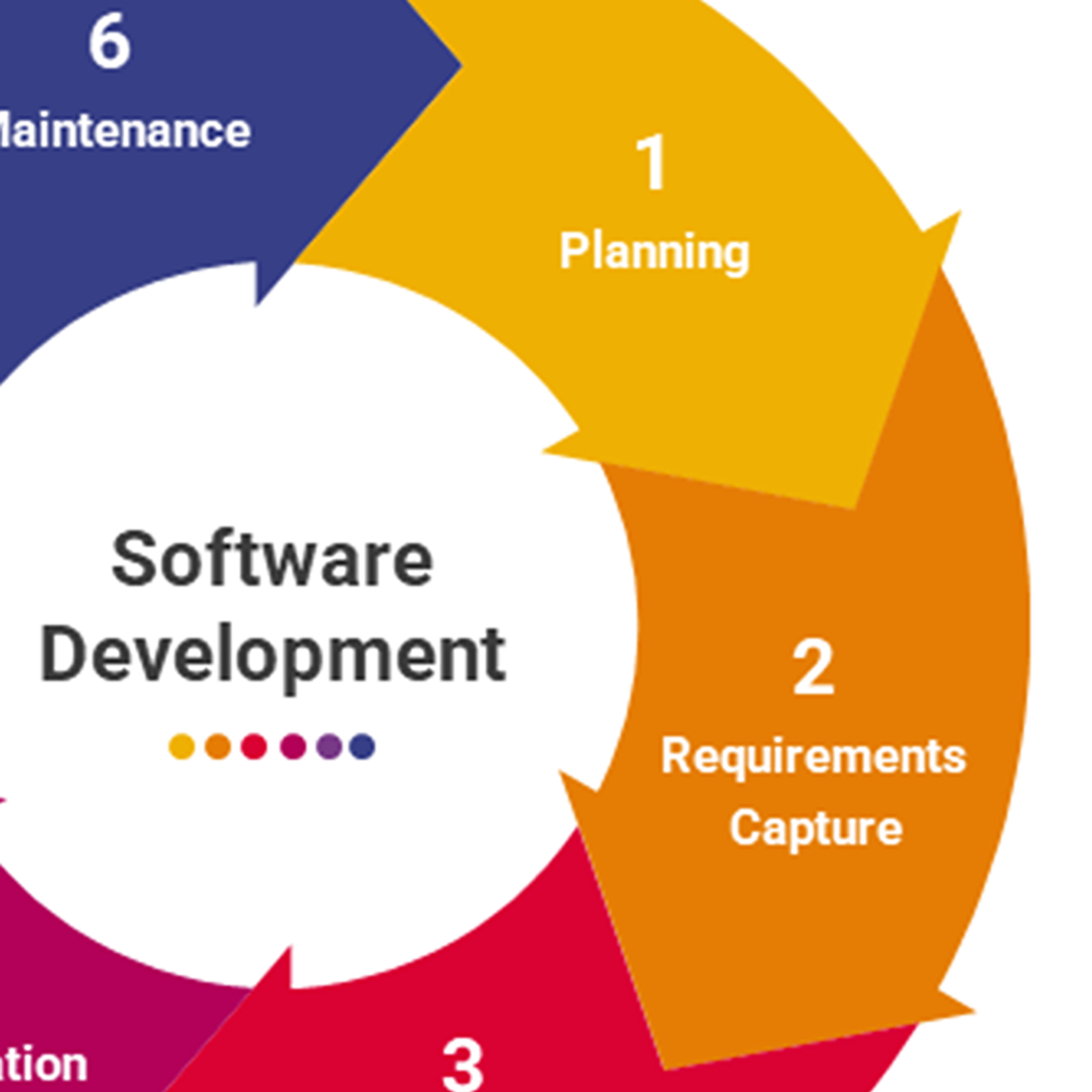
Software Development Life Cycle (SDLC) is the process of developing software through planning, requirement analysis, design, implementation, testing, and maintenance. This course focuses on the requirement analysis phase of SDLC, and you will learn how to use UML models to capture the system requirements and to facilitate communication between client/users and developers. UML is a general purpose visual modeling language for systems. It can be used to highlight different aspects of the system that are of interest to different stakeholders. Data requirements are captured in the domain model, which describes the important concepts of the application domain as classes, associations between them and constraints on them. Functional requirements are captured in the use-case model to describe the interactions between the system and its environment (users, other systems). UML incorporates the current best practices in Object-Oriented modeling techniques. Basic object-oriented programming (OOP) concepts are required to attempt the course. It is recommended to take the courses in the order they are listed, as they progressively develop techniques and concepts about software engineering, but it is not a hard requirement.
 University of California, Davis
Wine Tasting: Sensory Techniques for Wine Analysis
With its roots in ancient cultures as early as 6,000 BC, wine has long been part of the human experience. Today, increasing worldwide interest in wine and its complexities and varieties has created an international market valued at $304 billion annually. For the learner who is just getting started in the study of wine, this course will help you take the first steps toward understanding the physiological process of wine tasting. The first module will explore types of wine and help you set up your own tasting. You’ll also begin to build a sensory vocabulary. In module 2 you will review classic wine types of the world and set up flights of specific wines. Later we’ll examine the various faults and defects that can appear in wine as well as techniques for spotting problems. In week 4 we’ll delve into the complex world of wine and food pairings, and its “seven deadly sins.” The course will culminate in a peer review project in which you will apply the knowledge and sensory techniques you have developed throughout the course to assess a specific wine.
 Northwestern University
The Talmud: A Methodological Introduction
The Talmud is one of the richest and most complicated works of literature the world has ever known. Since being composed around 1500 years ago it has inspired not only religious reverence but significant intellectual engagement. In this course learners will be introduced to the unique characteristics of this text and the challenges that inhere in studying it while studying a chapter of the Talmud. Students of the course can expect to develop an appreciation for how the Talmud works and why it continues to inspire religious and intellectual devotion. They will be challenged to employ critical reading skills and to analyze legal and historical concepts.
 Coursera
Mastering Data Analysis with Pandas: Learning Path Part 2
In this structured series of hands-on guided projects, we will master the fundamentals of data analysis and manipulation with Pandas and Python. Pandas is a super powerful, fast, flexible and easy to use open-source data analysis and manipulation tool. This guided project is the second of a series of multiple guided projects (learning path) that is designed for anyone who wants to master data analysis with pandas. Note: This course works best for learners who are based in the North America region. We’re currently working on providing the same experience in other regions.
 Coursera
Choosing an Objective for a Facebook Ad Campaign
By the end of this project, you will be able to choose the right Facebook Ad Campaign Objective for your brand using the Facebook Business Manager’s “Ads Manager”. Throughout this project, you will be able to identify all 11 types of Facebook Ad Campaign objectives and the difference between them. This will help you easily identify the right objective needed for your brand’s Ad Campaign on Facebook. This guided project is for intermediate level learners who know how to use Facebook’s Ads Manager to create Ads but don’t know which objective to choose from when running their Ad Campaigns. We are going to use Facebook Business Manager which is the business arm for Facebook. This platform helps you create Ads, Analyze and create your audiences, Ad business information to your pages and many more. When running Ads, Facebook Business Manager is a better platform than just boosting through the Facebook directly as it gives us access to more objectives and data to run our Ad Campaign in the best way possible.
 Politecnico di Milano
New paradigms in wastewater management
The water cycle is strictly related to the fair and sustainable development of any society. Appropriate technologies and practices are needed for providing clean water and adequate sanitation to citizens worldwide, while facing environmental and societal challenges, such as climate change and increasing urbanization. Wastewater treatment facilities are nowadays shifting from infrastructures providing effective clean water, sanitation and environmental protection towards advanced biorefineries that can recover valuable resources (as reusable water, biopolymers and nutrients) from wastewater, while aiming at more stringent effluent quality targets, at energy neutrality, and at lowering the overall environmental impact. This MOOC is aimed at providing key elements in relation to the management of the urban water cycle, including both conventional goals and the challenges of the smart cities of the future. This MOOC presents a full picture, although very concise, of present and emerging technologies for wastewater treatment, presented by professors teaching at Politecnico di Milano.
 University of California, Santa Cruz
C++ For C Programmers, Part B
This course is for experienced C programmers who want to program in C++. The examples and exercises require a basic understanding of algorithms and object-oriented software.
 Erasmus University Rotterdam
Entrepreneurial Competencies for Landscape Restoration
Welcome! Dear learner, Since 2013, Rotterdam School of Management, Erasmus University (RSM) and Commonland have collaborated in developing joint education to address the vital importance of healthy ecosystems and landscapes for business and to explore the contribution business and management thinking can bring to large-scale landscape restoration. RSM and Commonland established the European Network for the Advancement of Business and Landscape Education (ENABLE) and the ENABLE partnership applied successfully to the EU-funded ERASMUS+ program. Within ENABLE (www.rsm.nl/enable) we developed and delivered 2 MOOCs on the Coursera platform between September 2016 and September 2019: • A Business Approach to Sustainable Landscape Restoration • Business Model Innovation for Sustainable Landscape Restoration Although the ENABLE partnership formally ended in 2019, RSM and Commonland continued to develop ways to jointly reach students and professionals who can connect the dots within a landscape approach between: - ecological/natural ecosystems - entrepreneurial/business ecosystems - financial/investment ecosystems - soci(et)al ecosystems We call these professionals Chief Ecosystem Orchestrators, or “CEO4.0”, referring to their orchestrating role within and between these different types of ecosystems as part of a broader landscape context. Also CEO4.0 links with the “next level” CEO and with the 4 Returns approach developed and applied by Commonland. Key focus of the CEO4.0 will be to enable and facilitate business model innovation and multiple value creation within a landscape approach, aligning and integrating the objectives and interests of all stakeholders (including the natural world) at landscape level while dealing with complexity of breaking through silos of systems, sectors and scales. The CEO4.0 is characterized by an entrepreneurial mindset and this course helps you to develop and cultivate the entrepreneurial competencies you need within the challenging context of integrated landscape management and holistic landscape restoration with a business approach. As such, we are happy to launch this course as the first formal building block of the CEO4.0 curriculum, leading the way to societal and business resilience with lower risks and higher (long-term and multiple) returns. In this course, we will help you to become an entrepreneurial professional by developing and cultivating an entrepreneurial mindset yourself. This course is for you if: You are a (start-up) entrepreneur or an intrapreneur already, or work in the entrepreneurial ecosystem, for example as a policy maker or impact investor You are already involved in a landscape initiative, - and you want to learn how to work in a more entrepreneurial way; - become an entrepreneurial professional regardless of your background as a landscape practitioner; - and/or you want to focus on interventions that create value for a felt need within the landscape(s) you are working in or have impact on. Happy learning, Eva Rood, Director Positive Change at Rotterdam School of Management www.rsm.nl/positivechange Dr. Simon Moolenaar, Director Knowledge, Education & Innovation at Commonland www.commonland.com
 Banco Interamericano de Desarrollo
Políticas educativas efectivas basadas en evidencia
Este curso sintetiza las principales investigaciones teóricas y prácticas que sustentan políticas educativas basadas en evidencia y profundiza sobre los principales avances y desafíos de los sistemas educativos de América Latina y el Caribe. Annelisse, profesora en Guatemala, apunta que: "Me he desarrollado en el área educativa privada por muchos años, sin embargo, quería tener la experiencia de trabajar en el sector público, pero no contaba con nada de experiencia ni conocimientos que me hicieran una candidata elegible. El curso me dio la oportunidad de ese conocimiento y pude obtener empleo desde abril 2020. Muchas gracias por la oportunidad brindada a través de los cursos". El curso ha sido organizado alrededor de cinco áreas clave que se han identificado en sistemas de aprendizaje exitosos. • La necesidad de definir metas altas de aprendizaje estudiantil que guíen todas las actividades del sistema educativo. • Asegurar el acceso a programas de desarrollo infantil temprano y preescolar de alta calidad para que todos los estudiantes ingresen al sistema escolar listos para aprender. • Contar con docentes efectivos que permitan mejorar y reducir brechas de aprendizajes. • Asegurar que todas las escuelas cuenten con los recursos adecuados y sean capaces de utilizarlos efectivamente para promover el aprendizaje de sus alumnos. • Asegurar que todos los jóvenes adquieran las habilidades necesarias para alcanzar su máximo potencial en el mundo del trabajo y contribuir a la sociedad. El curso está dirigido a personas interesadas en mejorar la calidad de la educación a través de políticas educativas basadas en evidencia.
 LearnKartS
Risk Identification
Welcome to the Risk Identification Course! This course covers the second domain of the PMI-RMP® Exam Content Outline (ECO)-2022. The successful Risk management starts by identifying potential risks early and accurately. This Risk Identification course is an important part of the PMI-RMP® specialization, which will provide you with expertise in identifying and classifying risks, thus providing a base for effective risk management. In this course, you will get interactive lessons, practice assignments, and graded quizzes that will help you develop an in-depth understanding of important topics such as brainstorming, root cause analysis, and risk categorization. You will also be guided on how to work through some important tools, including SWOT Analysis, mind mapping, and Checklist Analysis in order to build and update a Risk Register aligned with organizational objectives. By the end of this course, you’ll be able to: • Effectively identify and categorize risks using proven methodologies. • Engage stakeholders with techniques like focus groups and interviews to gather insights on potential risks. • Analyze risks with advanced tools like affinity diagrams and assumptions analysis. • Build and maintain a comprehensive Risk Register to document and manage risks. • Integrate triggers, compliance, and constraints into your risk identification process. Disclaimer: PMI, Project Management Institute, PMI-RMP, and the PMI logo are registered marks of the Project Management Institute, Inc.” This course is not affiliated with, endorsed by, or authorized by PMI.