

The Global Scholarly Directory.
Discover world-class academic programs curated for the modern intellectual. Search through 19877+ degrees and professional certificates.
 The Chinese University of Hong Kong
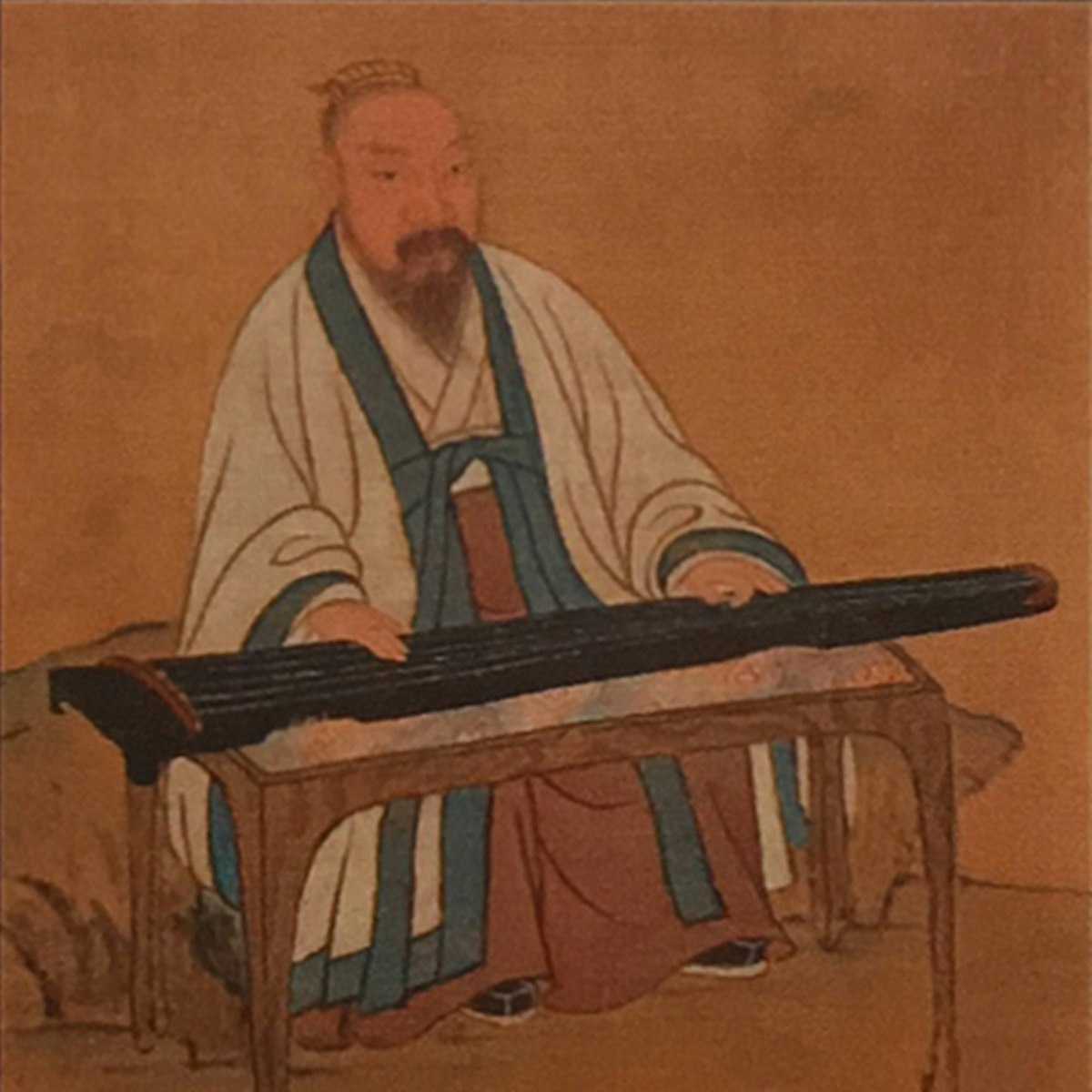
Religion and Thought in Modern China: the Song, Jin, and Yuan
This sequence of four courses will propose a multi-disciplinary approach to the study of Chinese cultural history conceived of as a succession of modes of rationality (philosophical, bureaucratic, and economic). The focus will be on the moments of paradigm shift from one mode of rationality to another. For each of these moments, cultural facts and artifacts—thought, literature, ritual—will be examined in relationship to changing social, political, and economic systems. The first two courses will cover the periods of the Warring States (481-256 BCE) and the Period of Division (220-589 CE), with a brief excursion into the Han (206 BCE-220 CE). The Warring States laid the social and cultural foundations for the emergence of the imperial mode of rationality; the Period of Division saw the Buddhist “conquest” of China and the emergence of a rationality defined by the opposition of the Three Teachings to shamanism, that is, of a clear contrast between elite and popular culture. The third and fourth courses will focus on the emergence of modern China in the Song-Yuan (960-1368) and of today’s China 1850 to the present. We will see how the modern attack on religion, redefined as "superstition", led not only to religious reform movements but also to a society in which science and the nation became the primary value systems promoted by the state. The courses are listed below: A Critical Cultural History of China - Early China I: Intellectual Change in the Warring States and Han (481 BCE-220 CE) A Critical Cultural History of China - Early China II: Religious Transformation in the Period of Division (220-589 CE) A Critical Cultural History of China - Modern China I: Religion and Thought in the Song, Jin, and Yuan (960-1368) A Critical Cultural History of China - Modern China II: Structuring Values (1850-2015)
 Dassault Systèmes
SOLIDWORKS Foundations: Sketching and Extrusion
Welcome to SOLIDWORKS Foundations: Sketching and Extrusion, the first course in the SOLIDWORKS 3D CAD for Education Specialization. In this course, you will learn how to use SOLIDWORKS to solve CAD problems. The problems involve creating a 3D object from a 2D sketch using the Extruded Boss/Base feature. You will also learn about the sketch tools & end conditions for extrude feature. Upon completion of this learning module, you will be able to: - Create sketch profiles - Extrude the sketch profiles - Create sketch fillets/chamfers - Convert & Offset Entities in a sketch - Create sketch entities using mirror command - Create and use Global Variables and Equation - Use start & end conditions for extrude boss This course is ideal for beginners and those new to SOLIDWORKS, particularly students, educators, and early-career professionals in engineering and design. Software Prerequisites: SOLIDWORKS Desktop EDU Access powerful capabilities for Engineering with SOLIDWORKS Desktop at a low price, $60 (excluding taxes), follow this link : https://go.3ds.com/CSW1
 Johns Hopkins University
Black Agricultural Solutions to Food Apartheid: A Teach-Out
Black Agricultural Solutions to Food Apartheid is a series where we dive deep into the historical, ancestral, and spiritual connections that Black people have to land and agriculture. Throughout this course, we encourage participants to learn about their ancestral foodways, agrarian practices, and spiritual connections. These sessions share wisdom and highlight the importance of food sovereignty, rebuilding community, and land based living. Participants will gain a deeper understanding of the spiritual and ancestral relationships that many Black people have to a higher power, land, plants, and each other. Participants will walk away from this series with an understanding of the many benefits of gardening and farming, including but not limited to social capital, collective agency, physical wellbeing, deepened spiritual connections, community resilience, economic autonomy, organizing, mobilizing, and improved mental and emotional health. Participants will leave this session with the desire to learn more about their own familial relationships to food and land, as well as a greater understanding of Black agriculture.
 Microsoft
C# Programming Fundamentals and Development Environment
This course introduces learners to the fundamentals of programming with C#. You’ll gain hands-on experience writing, compiling, and executing C# code while exploring essential concepts like variables, data types, operators, control flow, and functions. By the end, you’ll have a strong foundation to build more complex applications and the confidence to begin solving real programming challenges. By the end of this course, you will be able to: - Write, compile, and execute basic C# programs - Use variables, data types, operators, and expressions effectively - Implement conditional logic and loops to control program flow - Create reusable functions for modular code
 EDHEC Business School
Building Strategic Foresight Capabilities
Today, organizations find themselves dealing with an increasing amount of uncertainty. They are often ill-equipped at responding to disruptive change and find themselves blindsided by ‘unexpected’ landslides in their ecosystems. In order to hold their ground, they need to upgrade their capabilities, become more agile in adapting to change and drive firm-level, society-level and industry-level change proactively. This course introduces you to strategic foresight, its main methods and tools and their application in public and private organisations. Foresight allows organisations to get ahead of the curve, pre-emptively catch trends, define more effective and robust policies and drive positive futures. You will also learn how foresight is an inclusive way of preparing for the future, how to involve a wide set of stakeholders, overcome silo thinking and leverage collective intelligence to advance the status quo. The course is built on over 15 years of benchmarking among leading organisations and leverages on the collective experience of three lecturers, who introduced foresight, strategy, innovation and design thinking to public organisation and in leading private sector companies. After completing this course, you will understand the need for strategic foresight, as well as how and where it is used, which benefits it yields and why leading organisations systematically invest in staying on top of the future.
 Packt
Packt
Stay Interviews
This course features Coursera Coach! A smarter way to learn with interactive, real-time conversations that help you test your knowledge, challenge assumptions, and deepen your understanding as you progress through the course. In this course, you’ll learn to effectively use stay interviews as a powerful tool to retain top talent and improve employee satisfaction. You’ll explore how one simple question can uncover insights into employee motivations and concerns, fostering trust and stronger organizational culture. The course offers practical strategies for engaging employees and enhancing their morale through deep, empathetic listening. As you progress, you’ll gain techniques to create a psychologically safe environment where feedback thrives, and discover how stay interviews can be a tool for driving positive workplace change. Learn the best practices for conducting meaningful stay interviews that produce actionable results. Ideal for HR professionals, managers, and leaders, this course will equip you with the skills to implement stay interviews successfully, even without prior HR experience.
 LearnQuest
Close, Negotiate, and Amplify Virtual Sales Success
Secure commitments, negotiate confidently, and nurture lifelong clients in a digital-first environment. This course delivers actionable frameworks for objection handling, e-negotiation, and closing deals in multi-stakeholder, remote scenarios. Move beyond the sale by mastering digital onboarding, post-sale support, and upselling using analytics and automation—equipping you to outperform peers regardless of region or business model.
 Universidad Nacional Autónoma de México
Mediciones corporales para la salud
Quien egresa de este curso, aprende a realizar mediciones corporales correctas en diferentes puntos anatómicos utilizando la metodología y los instrumentos para tal fin, a partir de los cuales determinará alteraciones en las dimensiones corporales.
 Amazon Web Services
Introduction to PartyRock
Discover the potential of generative AI with AWS PartyRock, a platform that lets you create applications without coding. In this 30-minute introductory course, you'll learn how to build, customize, and share AI-powered applications in an intuitive and practical way.
 Google Cloud
Secure Software Supply Chain: Create and Use Cloud Workstations
This is a self-paced lab that takes place in the Google Cloud console. In this lab, you will use Cloud Workstations to create a workstation configuration and launch a new workstation instance from that configuration.
 Packt
Packt
Build Your First Game in Unity
This course features Coursera Coach! A smarter way to learn with interactive, real-time conversations that help you test your knowledge, challenge assumptions, and deepen your understanding as you progress through the course. Dive into game development with Unity 6 and bring your first Android games to life. You'll learn to build engaging 2D and 3D games from scratch using Unity’s powerful engine, while strengthening your programming skills with a crash course in C#. Whether it's scripting dynamic gameplay mechanics or designing immersive environments, this course offers a complete hands-on journey. Starting with setting up Unity and Visual Studio, you'll gradually build simple tap shooters and progress to more complex games like a 3D dodging challenge and an endless ninja runner. Each section is structured for progressive mastery—combining theory, coding practice, and real-world game projects. The course is ideal for beginners with a passion for game development and zero prior experience. No background in programming or Unity is required—just a willingness to learn and explore. Difficulty level is Beginner. By the end of the course, you will be able to build and export multiple Android games, write functional C# scripts in Unity, and confidently design game mechanics, UI systems, and mobile-ready experiences.
 Universidade de São Paulo
Laboratório de Programação Orientada a Objetos - Parte 2
Esta é a segunda parte do curso avançado de Programação Orientada a Objetos oferecido pelo Departamento de Ciência da Computação do IME-USP. O curso é voltado para profissionais ou estudantes interessados em Desenvolvimento de Software Avançado e que já dominam uma linguagem de programação e já conhecem os fundamentos básicos da orientação a objetos. Nesta segunda parte do curso, aprenderemos mais padrões de projeto, os princípios SOLID, o que são arcabouços (frameworks), injeção de dependências, veremos aplicações de padrões em sistemas reais e discutiremos desafios para a OO no futuro. Ao final do curso, o estudante será capaz de refletir sobre aspectos avançados de arquitetura de software e conhecerá técnicas para desenvolver sistemas de qualidade. Com esse curso, você poderá começar a construir um espaço diferenciado entre os profissionais do Desenvolvimento de Software, tanto trabalhando no meio empresarial quanto na academia. Nós nos divertimos bastante (e suamos um pouquinho) para montar esse curso prá você! Espero que você também se divirta bastante (e sue um pouquinho :-) para cursá-lo! Fabio Kon e a equipe de Ciência da Computação do IME-USP
 Google Cloud
Grounding Gemini Models in Vertex AI
This is a self-paced lab that takes place in the Google Cloud console. In this lab, you will learn how to use grounding in Vertex AI to generate content grounded in your own documents and data.
 Coursera
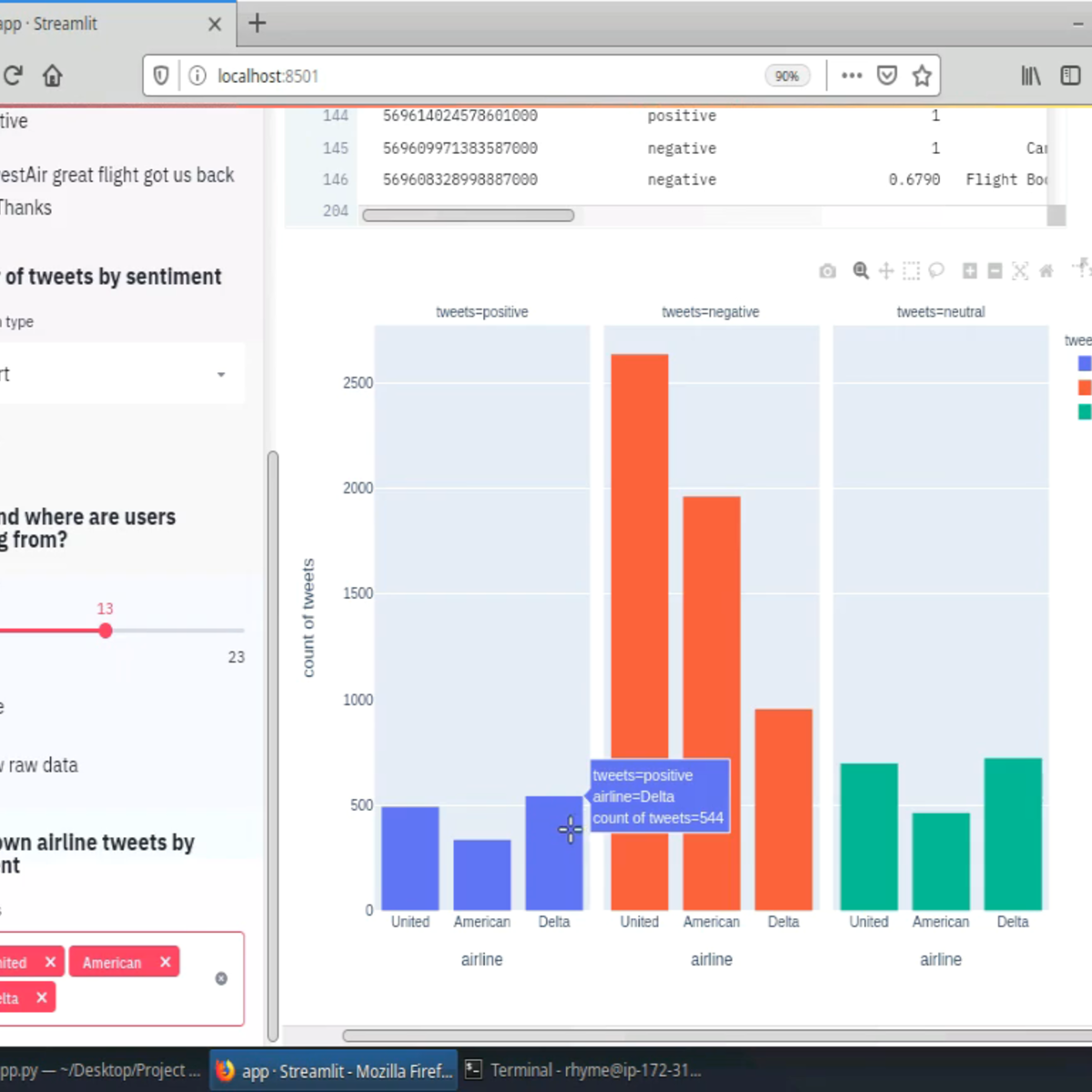
Create Interactive Dashboards with Streamlit and Python
Welcome to this hands-on project on building your first interactive, data dashboard with the Streamlit library in Python. By the end of this project, you are going to be comfortable with using Python and Streamlit to build beautiful and interactive dashboards and web apps, all with zero web development experience! We are going to load, explore, visualize and interact with data, and generate dashboards in less than 150 lines of Python code! Prior experience with writing simple Python scripts and using pandas for data manipulation is recommended. Note: This course works best for learners who are based in the North America region. We’re currently working on providing the same experience in other regions.
 Logical Operations
Excel: Dashboards and Geospatial Visualizations
In this course, you'll continue to develop your data-analysis skills in Excel by presenting visual insights with dashboards. You'll also create geospatial visualizations in Excel. This is the third course in a multi-course Specialization. All of the courses in this Specialization require that you have a recent version of Microsoft Excel installed. The course setup instructions provided in the first course go into more detail about the hardware and software requirements.
 EDUCBA
Seaborn Python: Visualize & Analyze Data Distributions
This intermediate-level course is designed to help learners analyze, visualize, and interpret data distributions using the powerful Seaborn library in Python. Building upon foundational knowledge of data visualization, the course takes a hands-on approach to explore univariate and bivariate distributions, apply linear and polynomial regression models, and demonstrate advanced statistical plots such as KDE plots, pairplots, jointplots, and lmplots. Through structured lessons and guided coding examples, learners will gain practical experience in crafting insightful visualizations that enhance exploratory data analysis. Emphasis is placed on understanding the relationship between variables and how these relationships can be effectively communicated using Seaborn’s built-in functions. By the end of the course, learners will be able to: • Identify key distribution types and the appropriate plots to represent them. • Construct regression-based visualizations to model complex relationships. • Customize multivariate visualizations using hue, facet grids, and plot styling. • Evaluate patterns and trends in data using statistical plotting techniques. This course is ideal for aspiring data analysts, data scientists, and Python developers looking to advance their data storytelling and statistical graphics capabilities using Seaborn.