

The Global Scholarly Directory.
Discover world-class academic programs curated for the modern intellectual. Search through 19877+ degrees and professional certificates.
 Packt
Packt
Django (Python) Web Framework - The Comprehensive Guide
Updated in May 2025. This course now features Coursera Coach! A smarter way to learn with interactive, real-time conversations that help you test your knowledge, challenge assumptions, and deepen your understanding as you progress through the course. Unlock the power of Django, the versatile Python web framework, with this comprehensive guide. From setup to deployment, this course equips you with the skills to create robust and scalable web applications. Gain a deep understanding of Django’s Model-View-Template (MVT) architecture, database integration, user authentication, and much more. Begin your journey by learning about web architecture, Django’s features, and the tools required for development. Progress through hands-on modules covering project setup, creating reusable templates, building interactive forms, managing databases, and implementing user authentication. You’ll also master advanced techniques like QuerySet APIs, class-based views, and RESTful API development using Django REST Framework. As you advance, explore styling your app with Bootstrap, session management, and building user-friendly features such as search bars, favorite items, and interactive comments. Finally, deploy your application to Heroku, ensuring it is ready for real-world use. Each step includes practical exercises to solidify your understanding and prepare you for real-world projects. This course is perfect for aspiring web developers, backend engineers, or Python enthusiasts seeking to expand their skill set. With no prior Django experience required, this beginner-to-intermediate-level course welcomes anyone with a basic understanding of Python programming.
 University of Colorado Boulder
Linux Embedded System Topics and Projects
This course is used as the capstone in a three course sequence, including Linux System Programming and Introduction to Buildroot and Linux Kernel Programming and Introduction to Yocto Project. Both of these courses must be completed before starting this course. This course builds on the content in the previous two prerequisite courses to develop a final project of your choosing targeting Linux device targeting hardware. The final project is delivered using concepts from Agile Scrum. Several pertinent, recent, and relevant Embedded System development related topics are covered as a part of the course curriculum, which you may optionally choose to incorporate into your final project. Linux Embedded Systems Topics and Projects can also be taken for academic credit as ECEA 5307, part of CU Boulder’s Master of Science in Electrical Engineering. This course includes specific hardware and software requirements. Please review the FAQ below for complete details.
 Vanderbilt University
Building HTTP APIs with Spring
Unlock the power of building HTTP APIs with Spring, one of the most versatile and widely-used Java frameworks, in this comprehensive course tailored for both beginners and seasoned developers. Dive deep into building robust, scalable, and secure HTTP APIs from scratch and gain mastery over RESTful services with Spring Boot. What You'll Learn: Foundational Concepts: Understand the principles of REST and the significance of stateless APIs. Spring Boot Mastery: Kickstart your applications and reduce the boilerplate with Spring Boot. Dive into data access, security configurations, and more. Data Persistence: Integrate with databases using Spring Data JPA and discover the magic of CRUD operations without writing SQL. Security: Safeguard your APIs with Spring Security, implementing authentication and authorization mechanisms. Testing: Ensure your APIs stand the test of time with unit, integration, and end-to-end testing strategies. Who Should Enroll: Students should have a solid understanding of coding in Java.
 EDUCBA
Talend Data Integration Studio: Intermediate
By the end of this course, learners will be able to organize Talend projects efficiently, apply Java components for custom transformations, configure dynamic context parameters, debug ETL workflows, and manage file operations for real-world scenarios. The course equips professionals with the skills to design scalable and reusable jobs that adapt seamlessly across environments such as Development, UAT, and Production. Learners will benefit from hands-on guidance that bridges theory with practice, starting from structured project setup to executing row-level Java transformations. The course also emphasizes best practices, error handling, and debugging techniques to ensure reliable and maintainable ETL processes. A dedicated project on insurance operations reinforces practical application, giving learners exposure to end-to-end ETL pipelines with file input, schema validation, and data storage. What makes this course unique is its balance of technical depth and practical relevance. It goes beyond simple demonstrations to help learners implement industry-ready solutions with Talend’s advanced features. Whether you are a data engineer, ETL developer, or analytics professional, this course empowers you to take your Talend expertise to the next level with confidence.
 Google
Bases de la conception Expérience Utilisateur (UX)
Le cours Bases de la conception Expérience Utilisateur (UX) est le premier d’une série de sept cours qui vous permettront d’acquérir les compétences nécessaires pour travailler en tant que UX Designer / Concepteur UX débutant. Les concepteurs UX se spécialisent dans les interactions entre les utilisateurs et des produits tels que les sites Internet, les applications mobiles et les objets. Les concepteurs UX rendent ces interactions quotidiennes accessibles, agréables et conviviales. Les fonctions d’un concepteur UX Débutant pourront inclure de s’identifier aux utilisateurs, définir les difficultés, rechercher des solutions conceptuelles, créer des maquettes fonctionnelles, des prototypes, tester des solutions jusqu’à l’analyse des commentaires. Des concepteurs et chercheurs UX de Google vous serviront d’instructeurs. Vous réaliserez des travaux pratiques simulant des scénarios de conception UX. Les élèves qui termineront les sept cours de ce programme de formation seront aptes à postuler aux emplois de concepteurs UX débutants. Aucune expérience préalable n’est nécessaire. À la fin de ce cours vous serez capables : - de définir le domaine UX et d’expliquer son importance pour les consommateurs et les entreprises. - de comprendre les fondamentaux de la conception UX tels que la conception centrée sur l’utilisateur, le processus de conception, l’accessibilité et la conception axée sur l’équité. - d’identifier les facteurs qui contribuent à une excellente conception d’expérience utilisateur. - de citer les responsabilités professionnelles standard des concepteurs débutants et des équipes UX avec lesquelles ils travaillent. - de rechercher les opportunités d’emploi et les parcours professionnels dans le domaine de l’expérience utilisateur. - d’expliquer pourquoi les « design sprints » sont une partie importante et utile du travail d’un concepteur UX. - de commencer à créer un portfolio en ligne où vous pourrez présenter vos futurs travaux. - de rejoindre et participer en ligne à des communautés UX.
 Universitat Politècnica de València
Fundamentos TIC para negocios: Programación
Este curso forma parte del cuarto módulo de un programa introductorio dedicado a comprender cómo se utilizan los sistemas de información dentro de las organizaciones. Toda la serie se ha desarrollado tomando como referencia los contenidos del examen estadounidense CLEP Information Systems and Computer Applications, con el propósito de ofrecer una puerta de entrada sólida al campo de las Tecnologías de la Información y la Comunicación (TIC) y su papel en el entorno empresarial.
 Packt
Packt
MS Teams – Security, Compliance, and Advanced Administration
Updated in May 2025. This course now features Coursera Coach! A smarter way to learn with interactive, real-time conversations that help you test your knowledge, challenge assumptions, and deepen your understanding as you progress through the course. Master the advanced features of Microsoft Teams with this comprehensive course designed to bolster your security, compliance, and administrative skills. Gain hands-on expertise in implementing app policies, managing permissions, and setting up custom configurations to enhance productivity and maintain robust governance within your organization. Start your journey by exploring how to create and manage app permission and setup policies using both the Teams Admin Portal and PowerShell. Build a strong foundation for app governance that empowers your organization to safely use Teams apps tailored to specific needs. Delve deeper into security and compliance management, learning how to assign Teams Admin Roles, implement retention and DLP policies, and establish Information Barrier Policies to control communications between user segments. Master audit logs, legal holds, and compliance alerts to stay ahead of potential risks. This course is perfect for IT administrators, compliance officers, and professionals tasked with managing Microsoft Teams at an advanced level. A basic understanding of Teams administration is recommended, with a focus on intermediate to advanced-level concepts.
 Edureka
AI Applications: Computer Vision and Speech Recognition
Welcome to AI Applications: Computer Vision and Speech Recognition, where you will gain hands-on expertise in using cutting-edge technologies to process visual data and interpret human speech. This course equips you with practical skills to address real-world challenges in computer vision and speech analysis. By the end of this course, you will be able to: - Analyze speech waveforms using advanced audio signal processing techniques. - Develop a strong understanding of computer vision principles and applications. - Perform morphological operations on images and videos within a customized environment. - Implement advanced audio and video processing techniques. - Apply OpenCV functionalities to build robust solutions for image and video analysis. This course is ideal for AI enthusiasts, data scientists, and developers aiming to expand their skills in computer vision and speech recognition. Prior experience with Python programming and a basic understanding of machine learning concepts is recommended for optimal learning. Master the skills required to build intelligent systems in the evolving field of artificial intelligence with this focused course.
 Emory University
Marketing Analytics Capstone Project
This capstone project will give you an opportunity to apply what we have covered in the Foundations of Marketing Analytics specialization. By the end of this capstone project, you will have conducted exploratory data analysis, examined pairwise relationships among different variables, and developed and tested a predictive model to solve a marketing analytics problem. It is highly recommended that you complete all courses within the Foundations of Marketing Analytics specialization before starting the capstone course.
 Stanford University
Probabilistic Graphical Models 3: Learning
Probabilistic graphical models (PGMs) are a rich framework for encoding probability distributions over complex domains: joint (multivariate) distributions over large numbers of random variables that interact with each other. These representations sit at the intersection of statistics and computer science, relying on concepts from probability theory, graph algorithms, machine learning, and more. They are the basis for the state-of-the-art methods in a wide variety of applications, such as medical diagnosis, image understanding, speech recognition, natural language processing, and many, many more. They are also a foundational tool in formulating many machine learning problems. This course is the third in a sequence of three. Following the first course, which focused on representation, and the second, which focused on inference, this course addresses the question of learning: how a PGM can be learned from a data set of examples. The course discusses the key problems of parameter estimation in both directed and undirected models, as well as the structure learning task for directed models. The (highly recommended) honors track contains two hands-on programming assignments, in which key routines of two commonly used learning algorithms are implemented and applied to a real-world problem.
 Packt
Packt
Advanced Ruby Programming and Object-Oriented Design
Master Ruby and object-oriented design in this advanced course built for developers who are ready to take their programming expertise to the next level. Through 15 in-depth modules, you’ll move beyond the basics to write clean, reusable, and maintainable code while developing the skills to build and scale complex Ruby applications. Your journey begins with an exploration of blocks, procs, and lambdas, where you’ll learn how to write flexible code and work with advanced features like the yield keyword, return values, and custom iterators. You’ll then dive into classes and object design, mastering hierarchies, variables, method overriding, and encapsulation with private and protected methods. Next, the course expands into inheritance, modules, and mixins, showing you how to extend functionality and structure applications effectively. Along the way, you’ll apply best practices for robust design and gain hands-on experience with file I/O, sets, and date/time manipulation. The final modules take you into practical development workflows, including regular expressions, exception handling, testing with Minitest, writing documentation, and managing Ruby gems. Each section emphasizes not just technical detail but also professional practices that prepare you for real-world development challenges. By the end of this course, you will have: - Mastered Ruby’s advanced features, including blocks, procs, lambdas, and iterators. - Built a strong understanding of object-oriented design, inheritance, modules, and mixins. - Practiced core development tasks such as file handling, regex, and testing. - Developed the skills to design and maintain complex Ruby applications with confidence. This course is designed for experienced Ruby developers who are already comfortable with the language’s syntax and fundamentals. If you’re ready to level up your programming expertise and build maintainable, production-ready Ruby projects, this course will give you the tools to succeed. Updated in May 2025. This course now features Coursera Coach — your interactive learning companion that helps you test your knowledge, challenge assumptions, and deepen your understanding as you progress.
 Coursera
Optimize and Migrate Vectors
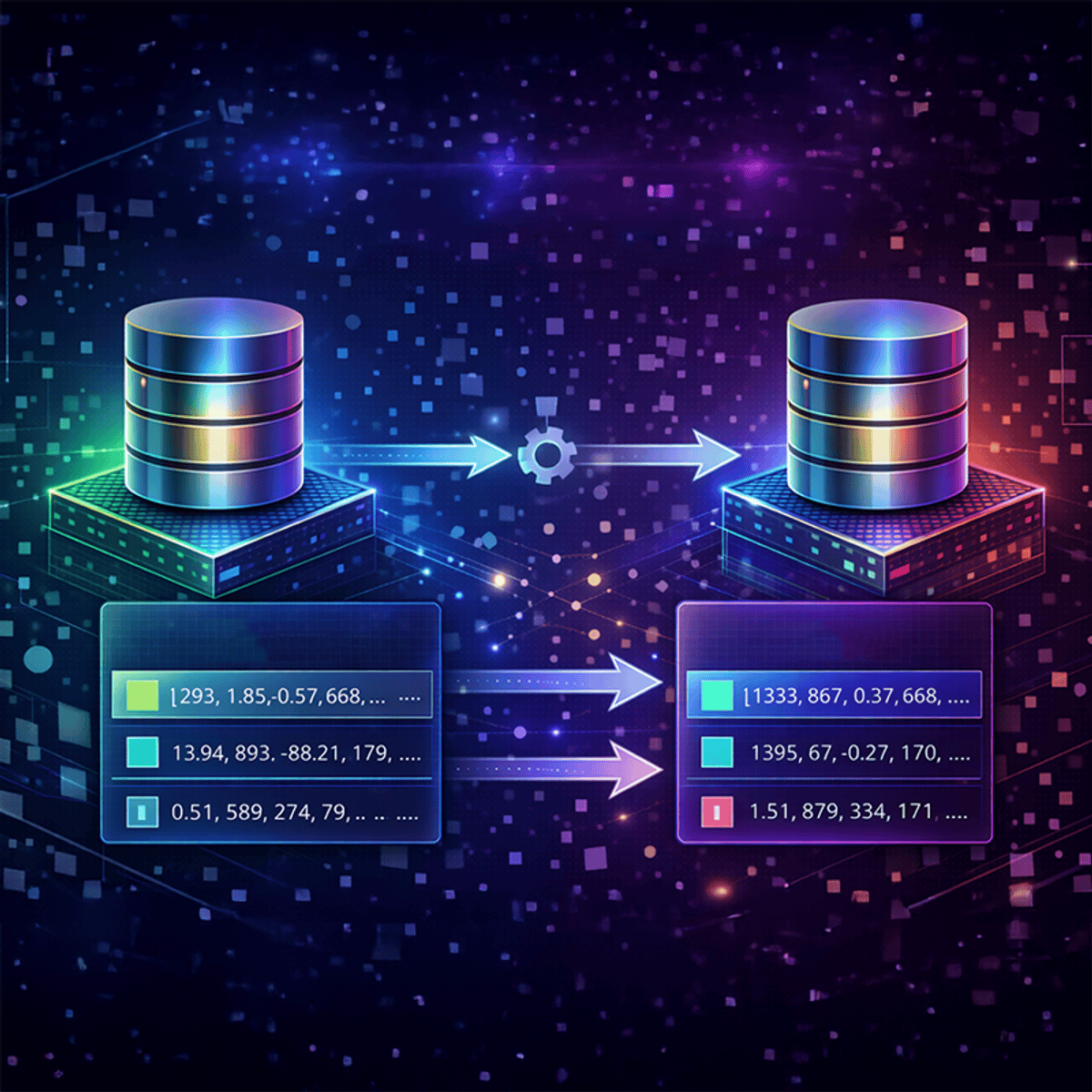
Optimize and Migrate Vectors is an intermediate course for Machine Learning engineers and developers looking to master the operational side of vector databases. In the world of Vector-Ops, building a functional application is only the baseline; the real challenge lies in maintaining sub-millisecond latency and infrastructure agility as data scales. This 90-minute, hands-on course tackles two critical job tasks: performance tuning and platform migration. The course requires Python skills, vector database concepts, and API/command-line experience. Docker Desktop with 8GB+ RAM must be installed on your system. This course is focused on real-world execution. You will learn to diagnose performance bottlenecks and tune vector index parameters to cut query latency by up to 40%. Next, you will learn how to architect and execute a full-scale data migration, scripting the transfer of over 100,000 vectors from a Chroma database to Weaviate in batches while ensuring zero data loss. By the end, you will possess the operational expertise to optimize, scale, and migrate vector infrastructure in enterprise AI environments.
 Packt
Packt
PowerPoint Excellence – Advanced Design & Animation
This course features Coursera Coach! A smarter way to learn with interactive, real-time conversations that help you test your knowledge, challenge assumptions, and deepen your understanding as you progress through the course. This course is designed for individuals who want to master advanced PowerPoint techniques. You’ll learn to create professional presentations with dynamic effects, including elite text animations, morphing techniques, motion paths, and 3D movement. The course also covers custom transitions, data visualization, and advanced picture animations. As you progress, you'll work on real-world projects that showcase advanced features in PowerPoint. Each section builds on the last, helping you design and animate complex slides with ease. Ideal for professionals, educators, and anyone looking to improve their PowerPoint skills. A basic understanding of PowerPoint is recommended, but no prior advanced knowledge is required. By the end of the course, you will be able to create high-level animations, use morph transitions, design custom templates, and enhance presentations with 3D movements.
 Google Cloud
Como criar pipelines de dados em lote no Google Cloud
"Neste curso intermediário, você aprenderá a projetar, criar e otimizar pipelines de dados em lote robustos no Google Cloud. Além do tratamento básico de dados, você vai aprender sobre transformações em grande escala e orquestração eficiente de fluxos de trabalho, essenciais para a eficiência em Business Intelligence e relatórios importantes. Pratique o uso do Dataflow para Apache Beam e do Serverless para Apache Spark (Dataproc sem servidor) na implementação e resolva questões importantes em qualidade de dados, monitoramento e alertas, garantindo um pipeline confiável e excelência operacional. Recomendamos ter conhecimento básico de armazenamento em data warehouse, ETL/ELT, SQL, Python e conceitos do Google Cloud."
 University of Colorado System
Cyber Threats and Attack Vectors
Data breaches occur nearly every day. From very large retailers, down to your fantasy football website, and anywhere in between, they have been compromised in some way. How did the attackers get in? What did they do with the data they compromised? What should I be concerned with in my own business or my systems? This course is the second course in the Practical Computer Security. It will discuss types of threats and attack vectors commonly seen in today’s environment. I hate to be the bearer of bad news, but threats are all over the place! This course isn’t designed to insight fear that there is no hope for keeping systems and business secure, but rather educate you on how attacks are carried out so that you have a better sense of what to look out for in your business or with your systems.
 Yale University
America's Unwritten Constitution
An introduction to basic techniques of constitutional interpretation.