

The Global Scholarly Directory.
Discover world-class academic programs curated for the modern intellectual. Search through 19877+ degrees and professional certificates.
 University of Zurich
Sprachtechnologie in den Digital Humanities
AKTUELL: Am 20.05.2019 startet die vorläufig letzte Runde des MOOCs "Sprachtechnologie in den Digital Humanities". Anschliessend wird der Kurs auf der Plattform Coursera pausiert, d.h. Einschreibungen in den Kurs werden ab diesem Datum nicht mehr möglich sein. Die Videos bleiben aber nach wie vor über unseren YouTube-Kanal (https://www.youtube.com/channel/UChb3Rd5vo3WEgMSy99VInaw) bzw. den SwitchTube-Kanal der Uni Zürich (https://tube.switch.ch/channels/bb3adc02) sichtbar. Die Pausierung dient primär zur Aktualisierung und Erweiterung der Kursinhalte und Lernmaterialien. KURS-BESCHREIBUNG: Sie möchten wissen, was genau die Digitalisierung von Texten beinhaltet? Sie haben sich schon immer gefragt, wie Texte in einem Korpus optimal durchsuchbar gemacht werden? Sie wundern sich, wie Texte mit linguistischen Informationen angereichert werden können? Dann sind Sie in diesem Kurs genau richtig!! Er bietet einen Überblick über die wichtigsten Konzepte und Probleme bei der Digitalisierung und Annotation von geschriebenen Texten. In sechs thematischen Modulen verteilt auf sechs Wochen lernen Sie relevante Technologien und Werkzeuge kennen. Jedes Modul beinhaltet zwei bis drei Videos (10-20 Minuten), ein Quiz oder ein Peer-Assessment sowie kurze Hintergrundtexte und weiterführende Links zu ausgewählten Themen. Für wen ist dieser Kurs interessant: Dieser Kurs richtet sich an Korpuslinguist/-innen, an Geisteswissenschaftler/-innen und Sprachinteressierte, die von einer rein sprachwissenschaftlichen Perspektive ausgehend auch ein paar Schritte in die Welt der Digitalisierung von Texten wagen und die dahinterstehenden Technologien kennenlernen möchten. Für diesen Kurs brauchen Sie keine Programmierkenntnisse. Mit Interesse an der Digitalisierung und Annotation von Texten sind Sie bestens gerüstet für diesen Kurs. Wir freuen uns, mit Ihnen diese digitalen Wege zu beschreiten, die in den Geisteswissenschaften immer wichtiger werden.
 H2O.ai
H2O Wave Starter Course
H2O Wave Starter Course is meticulously designed for developers and AI enthusiasts eager to dive into H2O Wave, an open-source platform that simplifies the creation of browser-based AI applications using Python . Led by Sukanya Joshi, a Data Scientist at H2O ai, and other industry experts, this course offers a perfect blend of theory and hands-on practice . You will start by understanding the core concepts of H2O Wave and its potential in the AI landscape .As you progress, you will set up your development environment, create your first interactive app, and learn how to deploy it to the H2O AI Cloud .What sets this course apart is its focus on practical, real-world applications ; you will delve into advanced features such as integrating Enterprise H2O GPTe with a YouTube Chatbot application, giving you insights into how AI can enhance user interactions and content analysis . Moreover, you will also be introduced to the H2O Gen App Store, a vibrant marketplace where you can explore pre-built AI apps, contribute your own, and connect with a community of like-minded developers. By the end of this course, you will have the skills to create, deploy, and showcase your own AI applications. Whether you are a beginner or an experienced developer, this H2O Wave Starter Course offers practical knowledge and hands-on experience to elevate your AI skills to the next level .
 Universidad de los Andes
Fundamentals of Using Generative AI
This course is primarily intended for university students, professionals from various fields, and technology enthusiasts who are interested in understanding the impact and applications of Generative Artificial Intelligence. From communicators seeking to explore new creative tools to educators, programmers, and scientists aiming to integrate this technology into their daily work, the content has been carefully designed to be accessible and relevant to a broad and diverse audience. Throughout this course, participants will discover the fundamentals of Generative AI, explore its connection to broader concepts such as machine learning and deep learning, and gain an understanding of how chatbots based on Large Language Models (LLMs) operate. A central element of this course is learning about prompts and their advanced use. Prompts are carefully formulated instructions or questions that enable effective interaction with language models to obtain precise and relevant results. As we progress, students will not only understand how to structure basic prompts but also how to employ advanced prompting techniques to maximize the utility and creativity of Generative AI tools, adapting them to specific needs within their professional workflows. Through explanatory videos, interactive readings, hands-on activities, and critical reflections, students will develop key competencies to analyze, apply, and critically assess this emerging technology, laying the groundwork for its integration into innovative projects and professional solutions.
 Amazon Web Services
Fundamentals of Analytics on AWS
In this course, you will learn how AnyCompany Media, a global giant in the media and entertainment industry, overcomes their data challenges. Follow their journey to become a data driven organization in their operations and strategic decision-making. Throughout the course, you will learn about the fundamental concepts of analytics, high level overview of machine learning, the 5 Vs of big data, and AWS services for specific analytics use cases. You will then learn how AnyCompany Media, a global giant in the media and entertainment industry, overcomes its data and analytics challenges. Follow along as it becomes data-driven in operations and strategic decision-making with data lakes, data warehouses, and modern data architecture on Amazon Web Services (AWS).
 Google
Think Outside the Inbox: Email Marketing
Think Outside the Inbox: Email Marketing is the fourth of eight courses in the Google Digital Marketing & E-commerce Certificate. This course will explore how to execute a successful email marketing campaign. Email marketing is one of the oldest and most proven digital marketing channels, and it is an essential component of an overall digital marketing strategy. Email is a primary channel for many businesses in reaching existing customers, encouraging interaction with the business, driving purchases, and building loyalty. In this course, you’ll explore email marketing and cover topics like: creating an email marketing strategy, executing email campaigns, and measuring the results of those campaigns. You’ll also learn how to use mailing lists and utilize automation and workflows. Google employees who currently work in the field will guide you, providing hands-on activities and examples that simulate common digital marketing and e-commerce tasks while showing you some of the best tools and resources used on the job. Learners who complete the eight courses in this program will be equipped to apply for entry-level jobs in digital marketing and e-commerce. No previous experience is necessary. By the end of this course, you will be able to do the following: - Write effective preview text and subject lines using best practices - Create email marketing automation and workflows - Build and maintain email lists - Write effective email copy - Conduct contact management and list segmentation - Employ best practices to handle personally identifiable information, or PII, and user data safely - Measure and analyze email campaign results
 Tecnológico de Monterrey
Leadership and organizational behavior
Leadership is everywhere. It is involved in nearly every social action, in some form. Many people who have the potential to be leaders do not realize it. Many who become leaders do not know how to manage those responsibilities. Great leaders can inspire change; bad leaders can cripple their followers with stress and frustration. What differentiates these two is a clear vision, an effective plan, and knowledge of how people work. In this class, you will learn the foundations of psychology at work, so that you can better understand others and guide them to shared goals. Along the way, you will answer these questions: Why do you want to be a leader? What kind of leader can you be? How can you persuade and influence people? How can you motivate and inspire people? Whether you are a formal or informal leader.
 Microsoft
Cybersecurity Testing and Prevention
This course engages you in the world of cybersecurity attack and defense, dealing with both sides and working with the tools associated with security testing within a cloud environment. You’ll gain knowledge on the penetration testing strategies employed by the industry to assess the integrity of their network. You’ll also interpret the results of security scans and deal with mitigation strategies such as vulnerability management. After completing this course, you’ll be able to: • Explain the concept of system testing • Create a penetration test plan • Execute penetration testing on a cloud platform
 University of Minnesota
Healthcare Marketplace
In this course in the Healthcare Marketplace specialization you will identify, define, and describe potential business and public policy solutions to the challenges facing society’s growing demand for health services. Students will master a body of knowledge on the health care sectors major components through reading and reflection. Healthcare has many different cultural components that will be discussed as historic trends as well as future demographic challenges. You will understand diverse philosophies and cultures within and across societies as they relate to healthcare. This outcome is particularly critical because of the tradeoffs needed to be assessed as medical technology advances faster than budgets and perhaps cultures are sometimes willing to tolerate. At the end of the day, you will gain an appreciation for the role of creativity, innovation, discovery, and expression across disciplines in the development of new medical care solutions through and examination of the physician, medical technology and financing sub-sectors of the health economy.
 University of Minnesota
Preparing to Manage Human Resources
One way or another, all employees are managed. But approaches to managing employees varying from employee-to-employee, job-to-job, manager-to-manager, organization-to-organization, and country-to-country. This course provides a foundation for developing your own approach to skillfully managing employees by illustrating alternative human resource management (HRM) strategies, introducing the importance of the legal context, and thinking about what motivates employees. This will then give you the factual and conceptual basis for developing specific, critical HRM skills in subsequent courses on hiring employees, managing performance, and rewarding employees. Don't know anything about HRM? That's OK! Leave this course with a new-found understanding of the range of options available for managing employees, a grasp of what makes workers tick, and the readiness to develop your own HRM skills.
 Rutgers the State University of New Jersey
Business Intelligence and Competitive Analysis
American Airlines (AAL), one of the world’s largest airline group and a SP500 company, is in trouble. With the growth rate of its stock price ranked at the bottom of all major US airlines, AAL needs to find out its key problems, the root causes, and how to turn the company and its stock price around. Addressing the challenge faced by AAL may well be a large-scale management consulting project. To start, business intelligence and competitive analysis (or competitive intelligence for short) is required to discover the problems and identify the causes for the company which lay the foundation for the turning-around strategies. In this course, you will gain the knowledge, skills and experience in data analytics / visualization and story-telling for effective competitive intelligence analysis. Upon completion of the course, you should be able to conduct competitive intelligence on companies of your choice like a management consultant. Note: To gain hands-on experiences in competitive intelligence via data analytics, you need to get into action. To this end, this course utilizes an external website (free) for you to practice the skills learned.
 Birla Institute of Technology & Science, Pilani
Natural Language Processing
Are you curious about how chatbots hold conversations or how ChatGPT generates human-like responses? This course in Natural Language Processing (NLP) is your gateway into the fascinating world where language meets AI. Designed for students and professionals alike, the course blends essential theory with hands-on experience to equip you with the skills needed to build intelligent language systems. We start by unravelling what makes language so complex—and why teaching machines to understand it is such a challenging task. You’ll explore the inner workings of Natural Language Understanding (NLU) and Generation (NLG), investigate real-world NLP applications, and dive into current trends like large language models (LLMs) and transformer-based systems. From there, you’ll roll up your sleeves and learn core NLP techniques like tokenization, stemming, lemmatization, and sentence segmentation. You’ll master vector-based approaches like Bag of Words and TF-IDF, then progress to powerful word embeddings like Word2Vec, Skip-gram, and GloVe. As you advance, you'll build language models, train simple neural networks, and explore cutting-edge tools in POS tagging, syntactic parsing, and semantic analysis. You’ll even touch the future with knowledge graphs and Word Sense Disambiguation. By the end, you’ll be ready to innovate in the fast-evolving NLP landscape. Graduates of this NLP course can pursue roles such as NLP Engineer, Machine Learning Engineer, or Data Scientist with a focus on language technologies. Opportunities also exist in AI-driven fields like chatbots, voice assistants, sentiment analysis, and information retrieval. Advanced learners may explore careers in research, LLM fine-tuning, or knowledge graph development. Are you ready to unlock the power of cutting-edge NLP skills? Join us on this exciting journey into the world of language, AI, and intelligent data processing!
 Coursera
Exploratory vs Confirmatory data analysis using Python
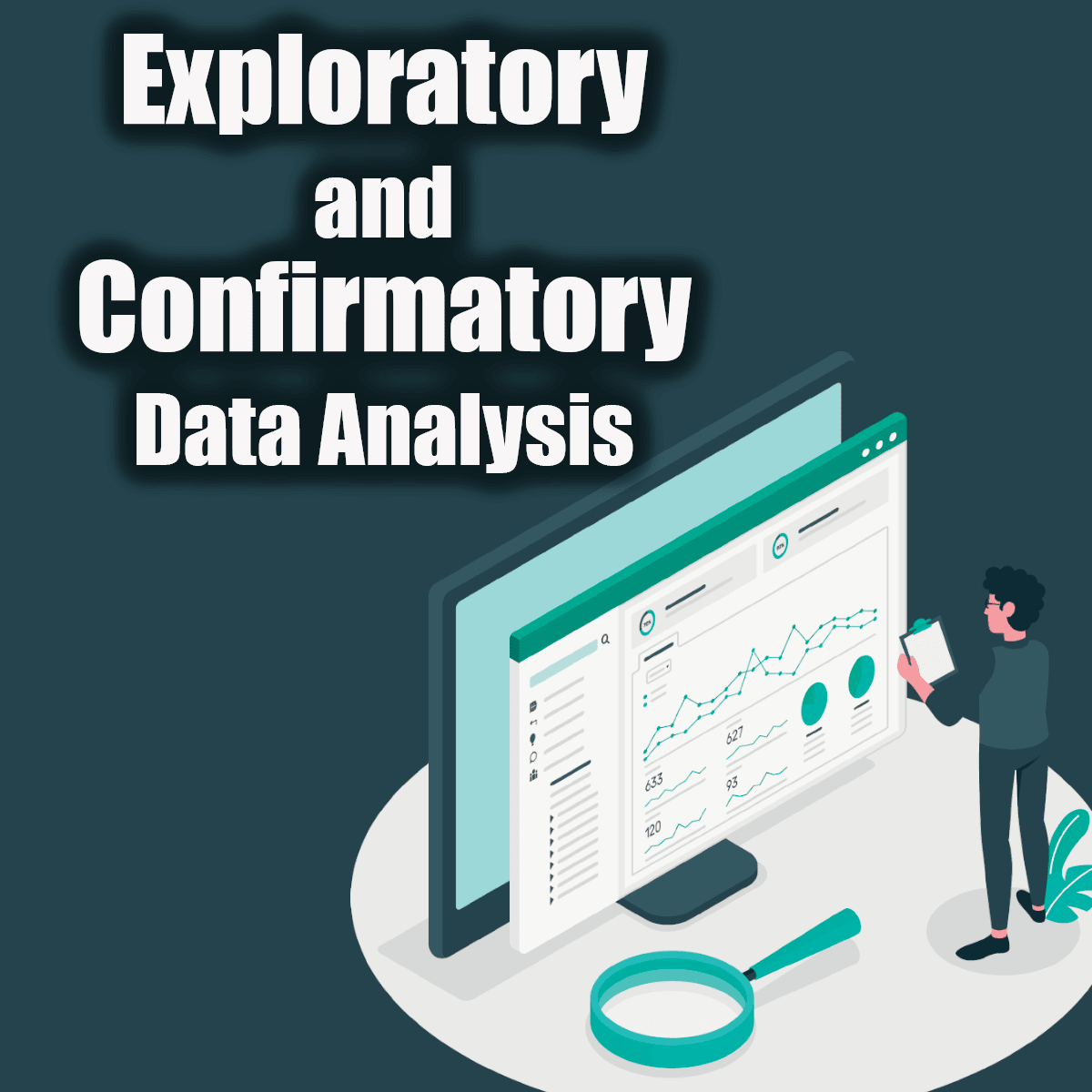
This Guided Project, Exploratory and Confirmatory Data Analysis using python, is for those who want to learn about different methods of data analysis. In this 2-hour-long project-based course, you will understand and apply Exploratory Data Analysis, build different Data visualizations, apply different exploration techniques based on the data at hand and define and understand the concept of Confirmatory Data Analysis. This project is unique because you will learn how and where to start your data exploration. You will also learn how to implement different data visualizations using python and when to use them. To be successful in this project, you will need to be experienced in python programming language and working with jupyter notebook environment. Let's get started!
 Rutgers the State University of New Jersey
Supply Chain Management Strategy
Have you ever wondered what it takes to manage a successful supply chain? It all comes down to the right strategy. Supply Chain Management Strategy is the indispensable direction for managing a successful supply chain. This course is the capstone of the Supply Chain Management specialization. While, it is strongly recommended that you take all courses in this specialization, you do not have to if you believe you already have those skills. You will use the tools acquired in the previous four courses to create a supply chain management strategy in a real-life case scenario. At the completion of this course you will have shown mastery of the tools and techniques to successfully manage a complex network of companies that we call the supply chain.
 Google Cloud
Cloud SQL for PostgreSQL: Qwik Start
This is a self-paced lab that takes place in the Google Cloud console. Create a Google Cloud SQL PostgreSQL instance. Perform SQL operations using the GCP Console and the psql client.
 Arizona State University
Classification and Planned Experiments
Welcome to Classification and Planned Experiments. This course will first contrast regression models with classification models, which have broad application in machine learning. It will then introduce basic classification techniques, focusing on K-nearest neighbor, and logistic regression. You will examine data visualizations and see how setting hyperparameters or estimating parameters supports interpretation and effective classification. The course will then address another powerful field of applied statistics called experimental design, which is concerned with running controlled tests (experiments) to try to understand causal relationships between factors of interest. Several types of designs will be introduced, including ones that use computer modeling. You will learn the principles of experimental design and work through several examples to help you understand how to actually set up, run and analyze these experiments leveraging data.
 EDUCBA
Design a Pavilion in SketchUp: 3D Modeling Case Study
By completing this course, learners will be able to analyze pavilion design requirements, apply space planning principles, construct accurate 3D models in SketchUp, and produce visually compelling rendered presentations using V-Ray. Learners will progress from understanding project intent to creating a fully detailed, presentation-ready pavilion model. This course offers a practical, case study–driven approach to 3D modeling using SketchUp, making it ideal for learners who want hands-on experience rather than isolated tool demonstrations. Participants will learn how to plan pavilion layouts using top views, translate 2D plans into structured 3D forms, refine geometry with SketchUp tools and patterns, and enhance realism through V-Ray materials, rendering settings, and background environments. By the end of the course, learners will have a complete pavilion project that demonstrates both technical modeling skills and design thinking. The course is unique in its end-to-end workflow focus, guiding learners through every stage of a real-world architectural modeling scenario. This makes it especially valuable for students, designers, and professionals seeking to strengthen their SketchUp and architectural visualization skills through applied learning rather than theory alone.