

The Global Scholarly Directory.
Discover world-class academic programs curated for the modern intellectual. Search through 19877+ degrees and professional certificates.
 Packt
Packt
C# Basics For Absolute Beginners in C# and .NET
Updated in May 2025. This course now features Coursera Coach! A smarter way to learn with interactive, real-time conversations that help you test your knowledge, challenge assumptions, and deepen your understanding as you progress through the course. This course is designed to take you from a complete beginner to understanding the fundamentals of C# and .NET. By the end of this course, you'll have a solid foundation in C# programming, from setting up your development environment to writing, debugging, and troubleshooting your code. You will begin by exploring what C# is, setting up Visual Studio Code, and diving into your first program. As you progress, you'll learn how to work with variables, arrays, and different data types in C#, such as text, numbers, and booleans. Understanding operators in C# will be your next step, where you’ll master the basic types, including unary, mathematical, assignment, comparison, and conditional operators. In the following sections, you'll dive deeper into control flow with selection statements (if, if-else, switch) and iterative statements (while, do-while, for, foreach). You'll practice these concepts with hands-on demos and assignments that will help you build a strong understanding of how C# works in different scenarios. This course is perfect for absolute beginners who have no prior programming experience. It’s also suitable for those who want to learn the basics of C# to further develop skills for more advanced programming topics. There are no prerequisites, and the course is beginner-friendly with step-by-step tutorials.
 Board Infinity
Fundamentals of Risk-Based and White-Box Test Techniques
This course provides a comprehensive understanding of Risk-Based Testing and White-Box Test Techniques, both of which are essential components in the technical testing landscape. It begins with a detailed exploration of Risk-Based Testing, emphasizing the role of the Technical Test Analyst in identifying, analyzing, and mitigating risks throughout the testing process. The course then delves into the fundamentals and advanced concepts of White-Box Test Techniques, covering critical topics such as Statement Testing, Decision Testing, and MC/DC Testing. Learners will gain hands-on knowledge through video lectures and practical examples, equipping them with the skills necessary to implement effective risk-based strategies and white-box testing methods in real-world scenarios. Learning Objectives: 1. Explain the Technical Test Analyst’s role in Risk-Based Testing, including risk identification and mitigation. 2. Understand the application of fundamental and advanced white-box testing techniques. 3. Compare and evaluate white-box test techniques to choose the most suitable method for different scenarios. 4. Implement effective API testing practices using appropriate tools and techniques. Target Audience This course is intended for advanced participants who have already gained several years of practical experience in software testing and have completed the basic ISTQB Certified Tester Foundation Level (CTFL) course. It is ideal for professionals looking to reinforce their existing knowledge with more robust theoretical concepts and gain deeper insights into advanced testing practices. This course is particularly suited for those seeking to elevate their expertise in risk-based and white-box testing techniques, enabling them to handle complex testing scenarios with greater proficiency. Prerequisites 1. Foundation Level Certification: Learners should ideally hold the ISTQB Certified Tester Foundation Level (CTFL) certification, as this course builds on the foundational concepts covered at that level. 2. Basic Understanding of Software Testing: A fundamental understanding of software testing principles, methodologies, and processes, including test design techniques and the testing life cycle, is required. Please refer to this link for detailed prerequisites- https://www.istqb.org/certifications/technical-test-analyst. Disclaimer: This course is an independent educational resource developed by Board Infinity and is not affiliated with, endorsed by, sponsored by, or officially associated with ISTQB or any of its subsidiaries or affiliates. This course is not an official preparation material of ISTQB. All trademarks, service marks, and company names mentioned are the property of their respective owners and are used for identification purposes only.
 University of Houston
Value-Based Care: Quality Improvement in Organizations
COURSE 6 of 7. Fragmented healthcare has created the need for healthcare reform, changing how healthcare is delivered and managed by shifting the structure and culture of healthcare organizations across the U.S. In this course, you will explore ways that provider organizations can successfully move from volume to value through implementing Quality Improvement plans and Continuous Quality Improvement. Organizational improvement is a continuous process. To be successful means coming to grips with things you have to do, how they get done, and who needs to be involved. Paramount to the process is recognizing that every role—every team member—in the organization is important to a successful VBC strategy. You will also learn about adaptive leadership and how to advance vision and innovation through collaboration. Collaborative relationships between team members and leadership are critical to the transformation. You will explore strategies to gain buy-in, agreement, and understanding about the organization’s vision of value-based care and learn to engage team members in developing solutions to challenges. In the summative assignment, you will identify a measurable value-based care goal that would benefit from process improvement, describe how that goal will be communicated with the care team, and explain your role in leading the targeted improvements.
 EDUCBA
Apply Mobile RPA Automation for Ecommerce Apps
By the end of this course, learners will be able to configure a mobile automation environment, build UiPath-based mobile RPA workflows, extract structured ecommerce data, and analyze prices and ratings to generate actionable insights. This hands-on project-based course is designed to help learners gain practical experience with mobile device automation using RPA in a real-world ecommerce context. Learners will work with UiPath and Appium to automate interactions within a mobile ecommerce application, from launching the app and navigating workflows to scraping product data and images. The course progressively guides learners through data transformation techniques, including converting extracted data into HTML reports, and performing analytical comparisons on prices and customer ratings. What makes this course unique is its end-to-end focus on mobile RPA, an area often underrepresented compared to web or desktop automation. Rather than isolated demonstrations, learners complete a cohesive automation project that mirrors industry use cases. This course is ideal for automation engineers, RPA developers, and learners seeking to expand their skills into mobile ecommerce automation, enabling them to deliver more comprehensive and scalable automation solutions.
 Board Infinity
Quality Improvement and Management
Course Description: This course offers a comprehensive introduction to Quality Improvement and Management, covering fundamental concepts, advanced techniques, ISO standards, and strategies for enhancing customer satisfaction. It is designed to equip participants with the knowledge and skills necessary to implement quality improvement principles effectively in various settings. Learning Objectives: By the end of this course, you will be able to: Apply foundational principles of quality improvement and management by analyzing, evaluating, and implementing quality enhancement strategies. Utilize advanced quality improvement tools and techniques, such as the PDCA cycle and Statistical Process Control, to identify areas for improvement and implement sustainable solutions. Interpret and implement ISO 9000 series standards to ensure compliance and enhance organizational processes and performance. Enhance customer satisfaction by synthesizing feedback, translating it into actionable improvements, and fostering a customer-centric culture within the organization. Target audience, this course is suitable for- Manufacturing, Quality, Production, QA, and QC Engineers interested in enhancing product/service quality. Lean management students and quality enthusiasts seeking expertise in Quality Improvement and Management. Professionals aiming to deepen their knowledge and practical skills in quality management. Please note: This is an introductory level course designed to provide skills and knowledge in Quality Improvement and Management but does not guarantee job placement. Disclaimer: This is an independent educational resource created by Board Infinity for informational and educational purposes only. This course is not affiliated with, endorsed by, sponsored by, or officially associated with any company, organization, or certification body unless explicitly stated. The content provided is based on industry knowledge and best practices but does not constitute official training material for any specific employer or certification program. All company names, trademarks, service marks, and logos referenced are the property of their respective owners and are used solely for educational identification and comparison purposes.
 Google - Spectrum Sharing
CBRS Professional Training
This course, developed by Google, is for installers and network managers who work with Certified Professional Installers. Through a mix of video lectures, step-by-step explanations, and quizzes, the program will introduce you to the concept of shared spectrum and the components of the CBRS ecosystem. At the end of this training you will receive a course completion certificate. If you want to become a Certified Professional Installer, check out the Become a CBRS Certified Professional Installer (CPI Package) course https://www.coursera.org/learn/google-cbrs-cpi-training.
 Packt
Packt
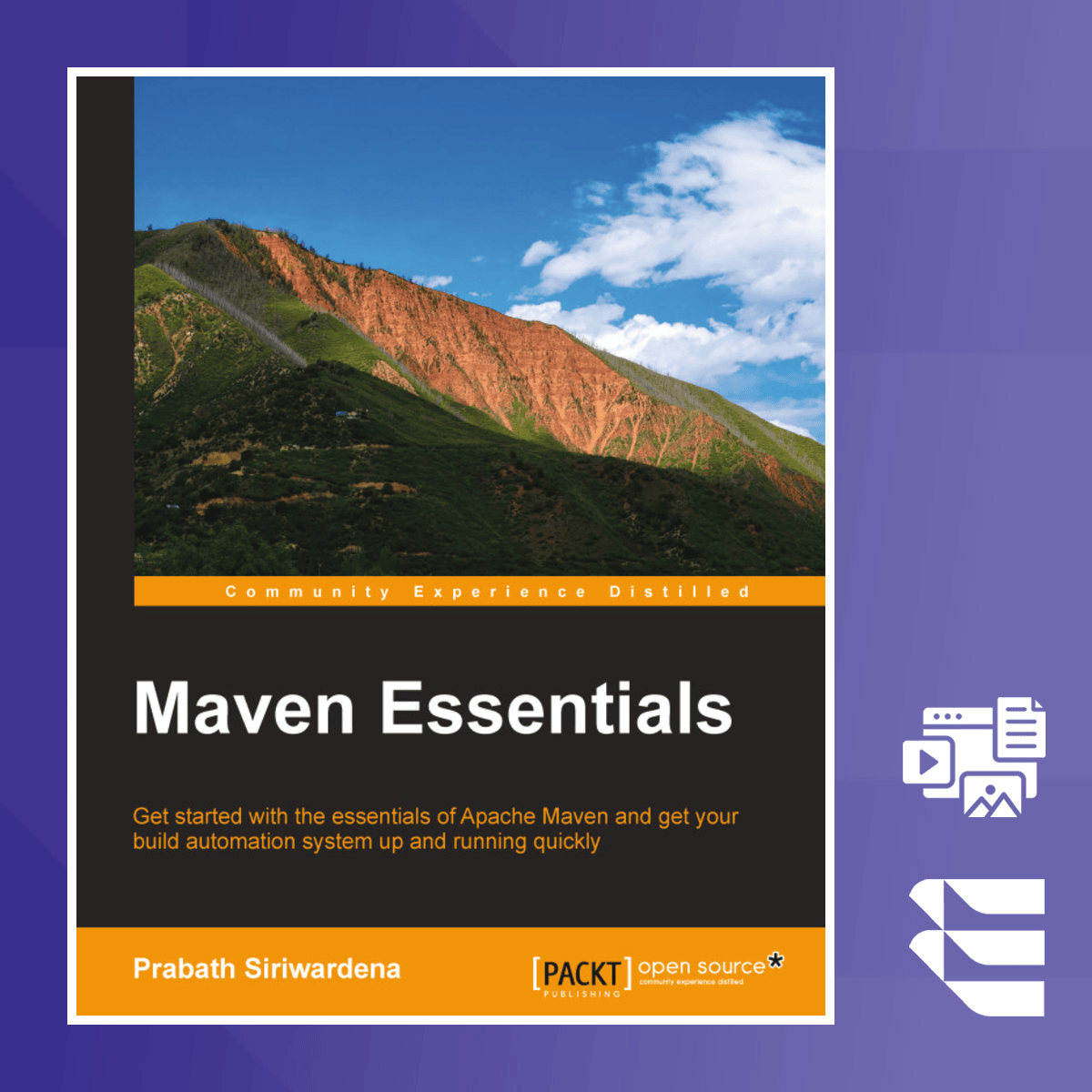
Apache Maven Essentials for Build Automation
In this course, you will dive into the core concepts and architecture of Apache Maven, learning how to leverage its powerful features for efficient build automation. With a focus on practical applications, you will quickly grasp the fundamentals of Maven to automate and optimize your build processes. By the end of this course, you’ll have hands-on experience creating custom plugins, managing dependencies, and optimizing your build lifecycle. These skills will make your workflows more streamlined and boost your productivity. This course combines theoretical insights with real-world applications, ensuring you understand both the “why” and the “how” behind Maven. You will also gain experience through real-world projects, simulating enterprise-level build automation needs. This course is ideal for experienced developers who are familiar with build automation and want to deepen their understanding of Maven. A basic understanding of Java development is recommended for maximum benefit.
 University of Colorado Boulder
Wind Turbine Sensors
“Wind Turbine Sensors” starts with a discussion on how wind turbines generate energy and the major parts of a wind turbine. It then moves to a deep dive on the mechanical components (turbine blades, hub assembly, gearbox. yaw drive, brakes) and the sensors that monitor these components. Then we discuss the generator and transformer and sensors for these electrical components. Finally, we discuss the sensors that measure the wind speed and sensors that optimize electrical power. Wind Turbine Sensors can also be taken for academic credit as ECEA 5350, part of CU Boulder’s Master of Science in Electrical Engineering.
 University of Pennsylvania
Philosophy of Science
For the last four centuries, scientists have aimed to provide us with an understanding of the world around us. By all appearances, science has made substantial progress during this time. But is this progress real or illusory? And if it is real, how has this progress been made? This four-week course will consider these important questions. Specific topics will include how scientists generate knowledge through observations, experiments, and simulations; scientific objectivity and failures of scientific objectivity; the self-correcting nature of the scientific community; the positive and negative influences that values can have on science; the relationship between science and religion; and the role of the public in guiding the scientific enterprise.
 Coursera
Wie man auf Pinterest werben kann
In diesem geführten Projekt werden sie (3 lernziele) lernen, wie Sie ein Unternehmenskonto machen, was Sie genau machen sollen um eine Anzeige zu erstellen und schließlich die Anzeige starten. Am Ende dieses Projekts haben Sie gelernt, den richtigen weg, um auf Pinterest zu werben.
 Board Infinity
Fostering Accountability for your Team as a Manager
The course provides a practical framework for managers and team leaders to build a culture of accountability without micromanagement. Designed for professionals leading hybrid or diverse teams, it helps you identify gaps in ownership, create transparent systems for commitments, and reinforce responsibility through trust-based leadership. You’ll begin by exploring what accountability looks like in high-performing teams and how to recognize early signs of disengagement or low follow-through. Using diagnostic tools and behavioural models, you’ll assess accountability challenges and identify improvement opportunities. Next, you’ll learn strategies to strengthen accountability through structures, feedback, and culture. From setting clear expectations and performance agreements to designing feedback loops and consequence management plans, this course blends leadership theory with hands-on techniques. By the end of this course, you will be able to: -Diagnose accountability issues using real-world frameworks. -Build team norms and agreements that promote shared responsibility. -Apply feedback, coaching, and consequence management effectively. -Create a personalized action plan to foster a culture of trust and ownership. Disclaimer: This is an independent educational resource created by Board Infinity for informational and educational purposes only. This course is not affiliated with, endorsed by, sponsored by, or officially associated with any company, organization, or certification body unless explicitly stated. The content provided is based on industry knowledge and best practices but does not constitute official training material for any specific employer or certification program. All company names, trademarks, service marks, and logos referenced are the property of their respective owners and are used solely for educational identification and comparison purposes.
 Coursera
Map Buyer Journey
Stop creating content and start creating conversations. "Content Strategy: Mapping Content to the Buyer Journey" is an essential course for marketers who want to move from random acts of content to a purposeful, data-driven strategy. If you've ever felt like you're on a content treadmill with no clear direction, this course provides the map. You will learn to define and use buyer personas—the foundation of a successful content plan—to transform abstract audience data into relatable human stories. Drawing on real-world masterclasses from brands like HubSpot, Salesforce, and Warby Parker, you will learn to analyze content through the lens of the buyer journey: Awareness, Consideration, and Decision. This isn't just theory; it's a practical framework. Through hands-on simulations, you will audit existing content, identify its strategic purpose, and learn to spot the critical gaps in your content plan. By the end of this course, you will have the skills to ensure every blog post, video, and case study has a clear purpose and moves your audience one step closer to a solution.
 Korea Advanced Institute of Science and Technology(KAIST)
Introduction to Basic Vibrations
Introduction to Basic Vibrations starts with the fundamental principle of vibrations with a single and double degree of freedom systems. These fundamental vibration systems provide a solid platform not only to understand general vibrations but also to apply or use them into simple mechanical problems.
 Snowflake
Building Generative AI Apps to Talk to Your Data
In this course, you’ll learn how to build conversational AI applications that let users interact with their data, whether structured in tables or unstructured in documents, using natural language. Designed as the next step after our Intro to GenAI course, this course focuses on building practical applications with Snowflake Cortex, including Cortex Search for unstructured data and Cortex Analyst for structured data. You'll gain the skills to connect these applications to real data sources, build robust backends, and deliver user-friendly interfaces for GenAI apps using Streamlit. By the end, you’ll know how to design, build, and deploy end-to-end GenAI apps that democratize access to the insights previously locked away in data. This course is built for developers, data scientists, and ML engineers looking to bring natural language interfaces into their organizations.
 Universidades Anáhuac
Colaboración intergeneracional en las organizaciones
¿Sabías que la combinación de experiencia y nuevas ideas puede ser la clave para revolucionar cualquier organización? Imagina liderar equipos donde la sabiduría de generaciones pasadas y la innovación de las más jóvenes se entrelazan para crear resultados extraordinarios. En este curso no solo aprenderás sobre colaboración intergeneracional, lo vivirás. Desde cómo identificar las motivaciones únicas de cada generación hasta desarrollar habilidades de empatía y comunicación que inspiren, te convertirás en un experto en liderar y conectar personas más allá de sus diferencias. Este curso es para ti si eres: • Un líder o gerente que busca gestionar equipos diversos y multigeneracionales. • Un profesional interesado en fortalecer la cohesión y el desempeño organizacional. • Alguien que desea desarrollar habilidades de comunicación y empatía para mejorar el entorno laboral. Este curso te ofrece: ৹ La identificación de las distintas generaciones para mejorar el ambiente laboral y el desempeño organizacional. ৹ Formas para el desarrollo de la empatía como habilidad social fundamental. ৹ Herramientas para gestionar y liderar eficazmente diferentes generaciones en el entorno laboral. ৹ Pautas prácticas para abordar y aprovechar las características únicas de cada generación. ৹ Estrategias para trasladar conocimiento de manera segura y atractiva, teniendo en cuenta cómo aprende cada generación. Si estás listo para transformar las dinámicas de tu equipo, preservar el conocimiento crítico y construir un futuro laboral inclusivo y productivo, este curso es para ti. ¡Haz que tu organización sea un lugar donde todas las generaciones brillen juntas!
 Google Cloud
Continuous Delivery with Jenkins in Kubernetes Engine
This is a self-paced lab that takes place in the Google Cloud console. In this lab you will deploy and completely configure a continuous delivery pipeline using Jenkins running on Kubernetes Engine and go through the dev - deploy process.