

The Global Scholarly Directory.
Discover world-class academic programs curated for the modern intellectual. Search through 19877+ degrees and professional certificates.
 Google Cloud
Video Intelligence: Qwik Start
This is a self-paced lab that takes place in the Google Cloud console. In this lab use the Google Cloud Video intelligence app to extract metadata from a sample video file. Watch the short video Google Cloud Video Intelligence - Search every moment of every video in your catalog.
 University at Buffalo
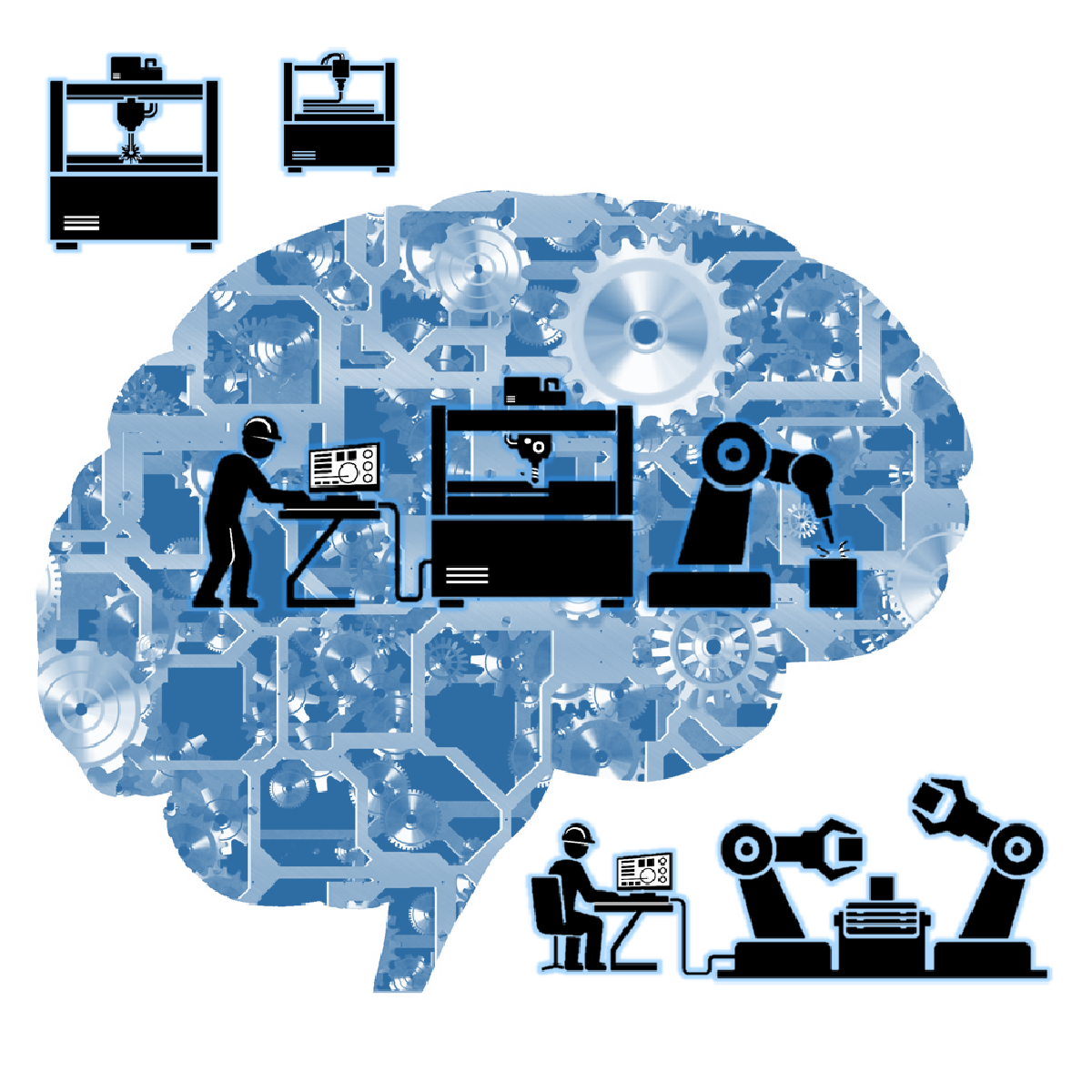
Intelligent Machining
Manufacturers are increasingly utilizing machine tools that are self-aware – they perceive their own states and the state of the surrounding environment – and are able to make decisions related to machine activity processes. This is called intelligent machining, and through this course students will receive a primer on its background, tools and related terminology. Learn how the integration of smart sensors and controls are helping to improve productivity. You’ll be exposed to various sensors and sensing techniques, process control strategies, and open architecture systems that can be leveraged to enable intelligent machining. This course will prepare you to contribute to the implementation of intelligent machining projects. Main concepts of this course will be delivered through lectures, readings, discussions and various videos. This is the fifth course in the Digital Manufacturing & Design Technology specialization that explores the many facets of manufacturing’s “Fourth Revolution,” aka Industry 4.0, and features a culminating project involving creation of a roadmap to achieve a self-established DMD-related professional goal. To learn more about the Digital Manufacturing and Design Technology specialization, please watch the overview video by copying and pasting the following link into your web browser: https://youtu.be/wETK1O9c-CA
 California Institute of the Arts
Approaching Music Theory: Melodic Forms and Simple Harmony
This course is about how music works. It is about the relationship between the technical and aesthetic details of music. It is also about how developing a meaningful theoretical vocabulary can help you think and talk about musical style, and how learning that vocabulary can expand your appreciation for music. In this course you will learn music theory not by looking at theory itself, but by listening to, looking at, and—yes!—writing your own musical examples. By hearing, seeing, and writing yourself, you will learn about classical, modern, ancient, pop, jazz, and folk styles. Through lectures, relevant examples, and numerous practice assignments, we will examine fundamental aspects of melody. We will move into working with two voices and counterpoint, and finally to three voices and the beginnings of harmonic function. This is an intermediate-level course for musicians and composers who already have some understanding of music theory through previous study. If you are a musician or composer looking to build a deeper understanding of music theory for composing, performing, or improvisation, you have come to the right place. If you are an amateur lover of music or, perhaps, play a musical instrument and want to develop a deeper sense of appreciation for music theory, aesthetics, and history, you are also in the right place!
 EDUCBA
Analyze and Apply Digital Marketing Fundamentals
By the end of this course, learners will be able to explain core marketing principles, analyze customer and market dynamics, apply strategic marketing frameworks, and evaluate the role of digital technologies in modern marketing communication and value creation. This beginner-level course provides a structured and comprehensive introduction to marketing and digital marketing, starting from foundational concepts and progressing toward advanced digital frameworks. Learners explore how marketing has evolved, how organizations understand customers, design strategies, build brands, and communicate value across traditional and digital channels. The course emphasizes clear conceptual understanding while connecting theory to real-world business contexts. Learners benefit by gaining a strong marketing foundation that supports careers in business, entrepreneurship, digital marketing, and management. Through carefully sequenced modules, practical examples, and assessment-driven learning, participants develop the ability to think strategically about markets, customers, and digital ecosystems. What makes this course unique is its integrated approach: it bridges traditional marketing theory with modern digital structures, behavioral insights, and communication models. Rather than focusing on tools alone, the course builds strategic thinking skills that remain relevant across industries and evolving digital platforms.
 Universiteit Leiden
Population Health: Predictive Analytics
Predictive analytics has a longstanding tradition in medicine. Developing better prediction models is a critical step in the pursuit of improved health care: we need these tools to guide our decision-making on preventive measures, and individualized treatments. In order to effectively use and develop these models, we must understand them better. In this course, you will learn how to make accurate prediction tools, and how to assess their validity. First, we will discuss the role of predictive analytics for prevention, diagnosis, and effectiveness. Then, we look at key concepts such as study design, sample size and overfitting. Furthermore, we comprehensively discuss important modelling issues such as missing values, non-linear relations and model selection. The importance of the bias-variance tradeoff and its role in prediction is also addressed. Finally, we look at various way to evaluate a model - through performance measures, and by assessing both internal and external validity. We also discuss how to update a model to a specific setting. Throughout the course, we illustrate the concepts introduced in the lectures using R. You need not install R on your computer to follow the course: you will be able to access R and all the example datasets within the Coursera environment. We do however make references to further packages that you can use for certain type of analyses – feel free to install and use them on your computer. Furthermore, each module can also contain practice quiz questions. In these, you will pass regardless of whether you provided a right or wrong answer. You will learn the most by first thinking about the answers themselves and then checking your answers with the correct answers and explanations provided. This course is part of a Master's program Population Health Management at Leiden University (currently in development).
 EDUCBA
Build & Implement a C# .NET Fever Tracking System
By the end of this course, learners will be able to analyze system requirements, design a structured database, create intuitive user interfaces, and develop a fully functional Fever Tracking System using C# and .NET. Learners will also validate health data, handle application errors, and refine system features to ensure reliability and usability. This practical, hands-on course guides learners through the complete lifecycle of building a real-world healthcare application. Starting with system planning and database design, the course progressively moves into UI creation and backend development, ensuring learners clearly understand how each layer of the application works together. Rather than focusing on isolated concepts, learners build a complete Fever Tracking System step by step. What makes this course unique is its end-to-end project-based approach, where learners transform a real use case into a working application. By the end of the course, learners gain job-ready experience in C# .NET development, database-driven application design, and healthcare-focused system implementation, making it ideal for students, beginners, and professionals seeking practical .NET project experience.
 Tecnológico de Monterrey
Cálculo Diferencial e Integral unidos por el Teorema Fundamental del Cálculo
Los cursos de Cálculo Diferencial y Cálculo Integral tradicionalmente se ofrecen separados y respetando ese orden. El primero estudia la derivada, y el segundo, la integral, siendo este momento en el que aparece el Teorema Fundamental del Cálculo (TFC) para establecer la relación entre ambos conceptos. En el presente curso vamos a hacer una diferencia: introduciremos la derivada y la integral como conceptos relacionados desde un principio. Vamos a iniciar con la interpretación del Teorema Fundamental del Cálculo, con esto nos referimos a descubrir su significado real en la solución de problemas. Llegaremos a asociar con él la actividad práctica de calcular el valor de una magnitud que está cambiando. Habiendo realizado esta interpretación, los conceptos de derivada e integral se verán relacionados desde un principio, lo que te permitirá predecir el valor de una magnitud que está cambiando. Las nociones fundamentales de derivada e integral las identificaremos con las ideas de “razón de cambio” y de “acumulación del cambio”, y el TFC nos proveerá de la estrategia de solución. Recordarás que la Matemática Elemental incluye el Álgebra, la Geometría y la Geometría Analítica. Podemos decir que éstas son Matemáticas que estudian lo estático. En cambio, la Matemática Superior, que incluye el Cálculo, estudia lo dinámico. Con el Cálculo se inicia el estudio del cambio, una realidad presente en nuestro entorno cotidiano sin duda alguna. Costos, temperaturas, poblaciones, velocidades, energías, capitales de inversión, longitudes, etc., son algunos ejemplos de esto. En este curso podrás entender al Cálculo como una estrategia de solución para el estudio del cambio y diferenciarlo de las Matemáticas Elementales, aunque utilice de ellas bastante información. Al finalizar este curso podrás: Describir de qué manera los modelos matemáticos polinomial, exponencial natural, y trigonométricos (seno y coseno), son una construcción que responde a esta práctica de predicción. Los verás a todos ellos surgir de esta práctica cuando una magnitud real particular cumple ciertas condiciones en su “razón de cambio” con respecto a la magnitud de la que depende. Utilizar la introducción de procesos infinitos (¡no imposibles!) en la construcción de la respuesta de predicción, con ello entenderás por qué se habla de Matemática Superior y de un pensamiento matemático avanzado. Valorar una forma de pensar diferente, donde nuestro razonamiento matemático trascienda la sola manipulación de fórmulas algebraicas.
 Packt
Packt
General Data Protection Regulation (GDPR)
This course features Coursera Coach! A smarter way to learn with interactive, real-time conversations that help you test your knowledge, challenge assumptions, and deepen your understanding as you progress through the course. This course provides a comprehensive understanding of the General Data Protection Regulation (GDPR), focusing on its key principles, individual rights, and governance mechanisms. By the end, you'll be equipped to navigate data privacy issues confidently and ensure compliance with the regulation. Starting with an overview of the GDPR's historical context, the course delves into personal data definitions, roles of controllers and processors, and the complexities of GDPR compliance. You'll also gain deep insights into the core principles of data protection, understanding the responsibilities of data controllers and processors. The journey continues by exploring individual rights under the GDPR, including access, rectification, erasure, and more, offering practical advice on handling requests. The course also covers the critical areas of breach notification, accountability, governance, and data transfers, providing a complete picture of GDPR enforcement. This course is designed for data protection officers, legal professionals, business owners, and anyone responsible for handling personal data. No prior experience with data protection is required, making this course suitable for beginners with an interest in GDPR compliance.
 Google Cloud
AI Infrastructure:AI Hypercomputer 简介
准备好探索 AI Hypercomputer 了吗?这门课程将带您轻松入门!我们将介绍相关基础知识,并阐释它们如何助力 AI 处理 AI 工作负载。您将了解超级计算机内部的各个组件,如 GPU、TPU 和 CPU,并知晓如何根据您的需求选择合适的部署方法。
 Kennesaw State University
The Measure Phase for the 6 σ Black Belt
This course is designed for professionals interested in learning the principles of Lean Sigma, the DMAIC process and DFSS. This course is number 4 of 8 in this specialization dealing with topics in the Measure Phase of Six Sigma Professionals with some completed coursework in statistics and a desire to drive continuous improvement within their organizations would find this course and the others in this specialization appealing. Method of assessment consists of several formative and summative quizzes and a multi-part peer reviewed project completion regiment.
 University of Pittsburgh
Data Visualization Fundamentals in Python
The "Data Visualization Fundamentals in Python" course empowers you to transform data into compelling visual narratives. Dive into the principles and best practices of data visualization, blending the art and science to tell impactful data stories using Python. Through this course, you will master creating basic and advanced data visualizations and learn to effectively communicate complex information visually. You will explore Python libraries such as Matplotlib and Seaborn and understand how to customize visual elements to create clear, insightful, and visually appealing data representations. You will develop skills to apply fundamental principles, incorporate human perception aspects, customize your plots, and create interactive visualizations ensuring an accurate interpretation of data. This course will equip you with techniques for transforming complex datasets into coherent visuals, optimizing your ability to convey data-driven insights effectively.
 Scrimba
Responsive Web Essentials: Design & Navigation
While we can all clearly recognize what a great user interface looks like, it's actually really hard to build one! That's exactly what this course is all about. In it, Gary Simon will turn you into a UI design master. He'll teach you UI design from the ground up, and give you the skills you need to make sure that your next project both looks good and feels good to use. You’ll start by defining a solid HTML structure, then explore mobile-first CSS techniques that lay a foundation for a flexible, accessible layout. Learn how to make your designs responsive with breakpoints, fluid grids, and adaptable components that work seamlessly across devices. You’ll apply skills through real-world challenges, working through each stage of responsive design with practical, engaging exercises. By the end, you’ll have the skills to develop responsive web pages and user-friendly interfaces.
 The University of Tokyo
Interactive Teaching(インタラクティブ・ティーチング)
本講座のオンライン・セッションは、ナレッジ・セッション、スキル・セッション、ストーリー・セッションの3部構成になっています。ナレッジ・セッションでは、「インタラクティブ」な学びを促す教育のあり方について学びます。またスキル・セッションでは、演劇・表現の観点から、参加者が主体的に学ぶ場を作るための技法を学びます。さらに、ストーリー・セッションでは、各領域で第一線を走る研究者・実践者たちが、「教えること」にいかに向き合い、実践してきたのかを学びます。大学院生や大学教員のみならず、初中等教育の教員、企業の教育担当者の方など「教えること」に携わるすべての方に向けたコンテンツとなっております。 詳しいコースの内容は以下の動画をご覧ください。 https://www.coursera.org/lecture/interactive-teaching/jiang-zuo-nogai-yao-toshou-jiang-fang-fa-course-outline-learners-guide-eUoJ2 This course consists of three parts: Knowledge sessions, Skill sessions, and Story sessions. In Knowledge sessions, you can learn how to use pedagogical knowledge to promote students’ interactive learning. In Skill sessions, you can learn techniques for creating an environment for active learning from a theatrical and expressive perspective. In Story sessions, leading researchers and practitioners in their respective fields will share their teaching practices and experiences. This course is intended not only for graduate students and university teachers, but also for primary and secondary teachers and people in human resource development departments of companies. This course provides a meaningful opportunity for all the people engaged in “teaching.” For more information about the course, please see the following video "Course Outline & Learner's Guide". https://www.coursera.org/lecture/interactive-teaching/jiang-zuo-nogai-yao-toshou-jiang-fang-fa-course-outline-learners-guide-eUoJ2
 Arizona State University
Introduction to Semiconductor Packaging
This course will cover various aspects of microelectronics and nanoelectronics. This field aims to advance and improve the functionality of electronic devices by scaling transistors to smaller feature sizes. The course will introduce you to essential concepts such as length scales, transistor actions, and feature sizes of integrated circuits. The course will also look at historical observations and trends using Moore’s Law, which currently guides and predict development of the Semiconductor industry. Most importantly, our goal is to highlight why packaging is so important and relevant today. Furthermore, we will also explore the anatomy and function of a semiconductor package, starting with substrate-level package interconnection to the motherboard. We will also describe features as we differentiate various types of packages and how they differ in materials, design, and reliability.
 University of Michigan
Using AI to Expand Creativity
“Using AI to Expand Creativity” encourages you to think deeply about AI and its relationship to the essential humanity of creative expression. With the rapid adoption, growth, and development of contemporary AI tools, we believe teaching you how to think about this fundamental dynamic will prepare you for an unpredictable future. This course features instructor-led discussions of the history of AI's implementation in twentieth and twenty-first-century art and a contemplation of technology's basic impact on creative practice. Guest lectures also feature experts Brian Miller, Brian Gogan, Julie Zhu, and Kelly Hoppenjans, who will discuss experimental uses of AI tools, including AI-powered robotic musical performance. As the final course in this three-course series, you will engage with work from the previous two courses to deliver a cumulative experience that will transform your future engagement with AI tools. This is the third course in “AI for Creative Work,” a series exploring how artificial intelligence can enhance the work of creatives.
 University of Michigan
Building Web Applications in PHP
In this course, you'll explore the basic structure of a web application, and how a web browser interacts with a web server. You'll be introduced to the request/response cycle, including GET/POST/Redirect. You'll also gain an introductory understanding of Hypertext Markup Language (HTML), as well as the basic syntax and data structures of the PHP language, variables, logic, iteration, arrays, error handling, and superglobal variables, among other elements. An introduction to Cascading Style Sheets (CSS) will allow you to style markup for webpages. Lastly, you'll gain the skills and knowledge to install and use an integrated PHP/MySQL environment like XAMPP or MAMP.