

The Global Scholarly Directory.
Discover world-class academic programs curated for the modern intellectual. Search through 19877+ degrees and professional certificates.
 Packt
Packt
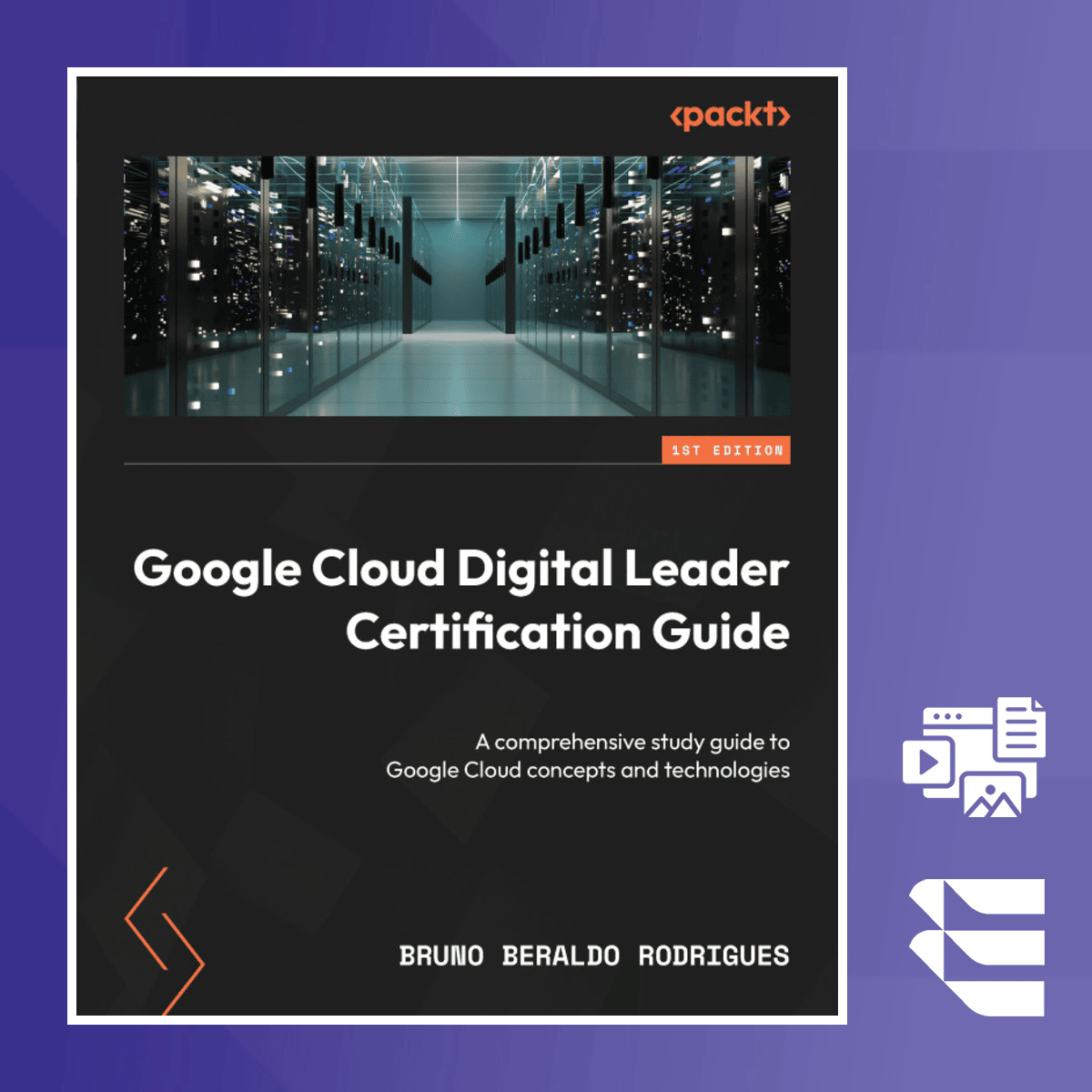
Google Cloud Digital Leader Certification Guide
This course offers a comprehensive study guide for the Google Cloud Digital Leader Certification. It covers essential concepts and technologies within Google Cloud, focusing on infrastructure modernization, data innovation, and security. Whether you're looking to break into the cloud field or expand your expertise, this course provides the foundational knowledge needed for success. Through a combination of theoretical insights and real-world scenarios, learners will gain practical skills for applying Google Cloud technologies. By mastering these tools, you will be prepared to drive transformation within your organization and pass the certification exam with confidence. What sets this course apart is its clear blend of technical education and business context. By combining cloud infrastructure knowledge with practical business applications, learners can immediately apply what they learn to their professional roles. This course is ideal for individuals with little to no prior experience in cloud computing, as well as those interested in pursuing the Google Cloud Digital Leader certification. It's tailored for both technical and non-technical audiences.
 École Polytechnique Fédérale de Lausanne
Introduction à la programmation orientée objet (en C++)
Ce cours introduit la programmation orientée objet (encapsulation, abstration, héritage, polymorphisme) en l'illustrant en langage C++. Il présuppose connues les bases de la programmation (variables, types, boucles, fonctions, ...). Il est conçu comme la suite du cours « Initiation à la programmation (en C++) ». Comme son prédécesseur, ce cours s'appuie sur de nombreux éléments pédagogiques : vidéos sous-titrées, quizz dans et hors vidéos, exercices, devoirs notés automatiquement, notes de cours.
 EDUCBA
Master Advanced Google Ads Optimization Strategies
Learners will analyze advanced Google Ads strategies, implement accurate conversion tracking, optimize campaigns using automation and smart bidding, and evaluate performance using forecasting and placement insights. By the end of this course, learners will be able to design data-driven Google Ads campaigns that align closely with real business objectives and deliver measurable results. This advanced course is designed for professionals who already understand Google Ads fundamentals and want to move into high-impact optimization and decision-making. Learners will gain practical expertise in audience targeting, interpreting account change history, defining meaningful conversions, and configuring reliable conversion tracking. The course further explores keyword planning, performance forecasting, automated rules, smart bidding strategies, and expanding reach across Google’s partner networks. What makes this course unique is its end-to-end focus on strategic optimization rather than basic setup. Each module emphasizes real-world application, helping learners connect campaign data to business outcomes. Through structured lessons and assessment-driven learning, participants will build confidence in managing complex Google Ads environments and making informed optimization choices—skills that are directly applicable to marketing roles, agency work, and performance-driven advertising projects.
 Coursera
Marketing Analytics: Data Predictions and Dashboards
This course offers skills and a toolkit for transforming complex data into strategic marketing insights. It covers the essentials of marketing analytics, including data collection and analysis to identify patterns, and teaches predictive modeling for forecasting market trends and customer behavior. Furthermore, you'll gain skills in crafting visual dashboards to present your findings compellingly. With an emphasis on practical application through real-world examples, this course will be useful for marketing specialists, data analysts, and everybody who is thrilled to learn marketing analytics from the beginning. This course caters to a diverse audience including Marketing Analysts, Business Intelligence Professionals, Digital Marketing Managers, Social Media Managers, Data Scientists with a focus on Marketing, Brand Managers, Advertising Managers, and Business Directors. Professionals in these roles are poised to enhance their skill set by delving into marketing analytics, predictive modeling, and data-driven decision-making, crucial for driving business success in today's competitive landscape. Participants are expected to have a beginner level understanding of marketing analytics, predictive analytics, and modeling. They should possess a grasp of digital marketing concepts, marketing principles, and basic data analytics principles. Additionally, experience with data visualization tools is desired, as proficiency in these tools will facilitate the comprehension and application of course concepts. Upon completing this course, learners will be equipped to identify the key components and sources of marketing analytics, allowing them to understand the underlying framework of marketing data analysis. They will be able to describe the process of creating predictive analytics and models for marketing, providing them with the capability to explain complex data-driven insights to stakeholders. Furthermore, participants will develop the ability to analyze marketing data to extract actionable insights and create effective marketing dashboards, empowering them to drive informed decision-making and optimize marketing strategies. shorten the paragraph.
 EDUCBA
Master Dart Programming: Intermediate Control Flow & OOP
By completing this course, learners will be able to apply conditional logic, implement iterative control structures, design reusable functions, and build object-oriented Dart programs using industry-relevant best practices. Learners will gain the ability to analyze programming problems, construct menu-driven applications, manage user input, and design scalable code using classes, inheritance, and abstraction. This Dart Programming Training: Intermediate Level course is designed for learners who already understand Dart basics and want to strengthen their problem-solving and application-development skills. Through a structured, module-based approach, learners progress from decision-making constructs to looping techniques, functional programming, and object-oriented design. Each concept is reinforced through real-world assignments, logic walkthroughs, and hands-on coding exercises that mirror practical development scenarios. What makes this course unique is its strong focus on logic building and practical application, rather than theory alone. Learners work with real program flows, user-driven inputs, and assignment-style problems that improve coding confidence and readiness for larger projects. By the end of the course, learners will be equipped to write clean, maintainable, and efficient Dart code suitable for intermediate-level application development and future Flutter learning paths.
 LearnQuest
Lead the AI-Enabled Business Transformation
Transition from pilot projects to enterprise-scale AI adoption with confidence. This module equips you with proven frameworks and practical tools to scale AI solutions systematically across business units. Learn how to manage evolving technical and organizational challenges while navigating complex regulatory landscapes in the US and India. Master compliance-by-design principles and risk assessment techniques using no-code platforms to ensure your AI initiatives deliver measurable, sustainable business impact.
 Google Cloud
Dialogflow CX: Managing Environments
This is a self-paced lab that takes place in the Google Cloud console. Most businesses go through different phases of project development and production cycles. Effective maintainance of these projects require systems and processes to manage versions and environments. Dialogflow provides tools within the UI for managing multiple versions and loading specific versions to dedicated environments, which allows usage for different purposes (and perhaps by different teams). In this lab you'll explore the management of Dialogflow versions and environments.
 Duke University
ESG Mindsets for Business Transformation
This course explores the transformative power of adopting the right mindsets for successful ESG implementation. Participants will discover solution-focused perspectives essential for tackling challenges and shifting toward sustainable thinking. By developing adaptability and strategic thinking, learners will be equipped to lead impactful change and align their actions with Environmental, Social, and Governance (ESG) principles in today’s evolving business landscape.
 Coursera
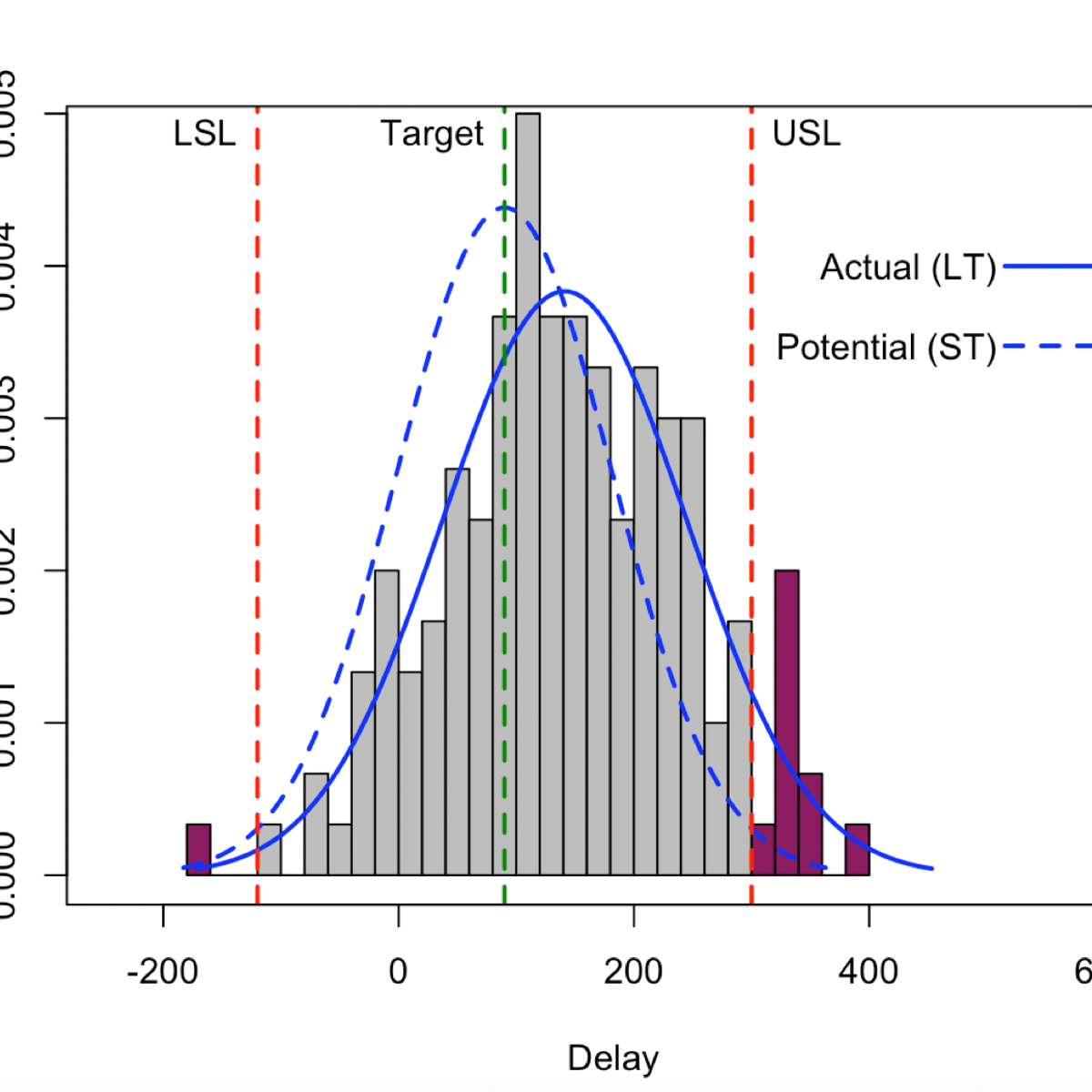
RStudio for Six Sigma - Process Capability
Welcome to RStudio for Six Sigma - Process Capability. This is a project-based course which should take under 2 hours to finish. Before diving into the project, please take a look at the course objectives and structure. By the end of this project, you will understand the concepts like DPU, DPO and DPMO; learn to import discrete defect data file and perform Process Capability Analysis, understand Throughput Yield and Rolled Throughput Yield (RTY) and calculate RTY for data imported from a file, understand Z score, Short and Longterm Standard Deviation, Short and Longterm Z Bench, Cp, Cpk, Pp, Ppk, and perform Process Capability Analysis for continuous data.
 Coursera
DMAIC: Optimize Financial Processes Fast
In this short, practical course, you’ll learn how to use Lean Six Sigma’s DMAIC framework—Define, Measure, Analyze, Improve, and Control—to streamline financial workflows and reduce inefficiency. Through real-world finance examples and hands-on activities, you’ll practice diagnosing root causes, eliminating delays, and sustaining improvements in reporting and control processes. You’ll also apply the SIPOC mapping technique to visualize suppliers, inputs, and outputs, revealing where value is created—or lost—across your workflow. Designed for finance and FP&A professionals, this course gives you a structured, data-driven approach to process improvement that leads to faster cycles, fewer errors, and more confident financial decisions.
 University of Pennsylvania
Introducción a la Contabilidad Financiera
Domina las habilidades técnicas necesarias para analizar estados financieros y declaraciones. Después podrás aplicar estas habilidades a un reto empresarial del mundo real como parte de la Programa Especializado de Fundamentos Empresariales de Wharton.
 Coursera
Intereses del usuario típico en Facebook
Al final de este proyecto guiado, podrás dirigirte efectivamente a tu grupo objetivo y anunciar tu negocio en Facebook. El objetivo de este proyecto consiste en familiarizarte con los intereses de los usuarios en Facebook para que puedas ajustar tu estrategia de Marketing en Facebook de manera correspondiente. La meta del marketing en las redes sociales es encontrar métodos creativos para atraer la atención de su grupo objetivo en las redes sociales, muchas veces con un presupuesto de marketing mínimo. Hoy crearas una página de negocio en Facebook. Luego aprenderás a acceder a Facebook Insights, una herramienta maravillosa que te permite analizar los intereses de tu grupo objetivo en Facebook. Construiremos un documento en Google slides para definir y describir a tu persona de interés.
 University of California, Davis
Digital Strategies: Managing Sociotechnological Co-Evolution
Unravel the mysteries behind the accelerating pace of technological change, exploring mathematical principles and historical precedents behind AI and large learning models (LLM). Gain insights into the dichotomy of continuous innovation versus disruptive breakthroughs, and evaluate their profound impact on industries and economies worldwide. Investigate the societal implications of technological diffusion, analyzing inequalities and proposing viable policy solutions. Navigate the complex terrain of ethical considerations in technological advancement, addressing issues of bias, inclusivity, and AI alignment. Delve into the ethical frameworks guiding innovation, while contemplating the future of human-machine collaboration and the ethical imperatives therein.
 Coursera
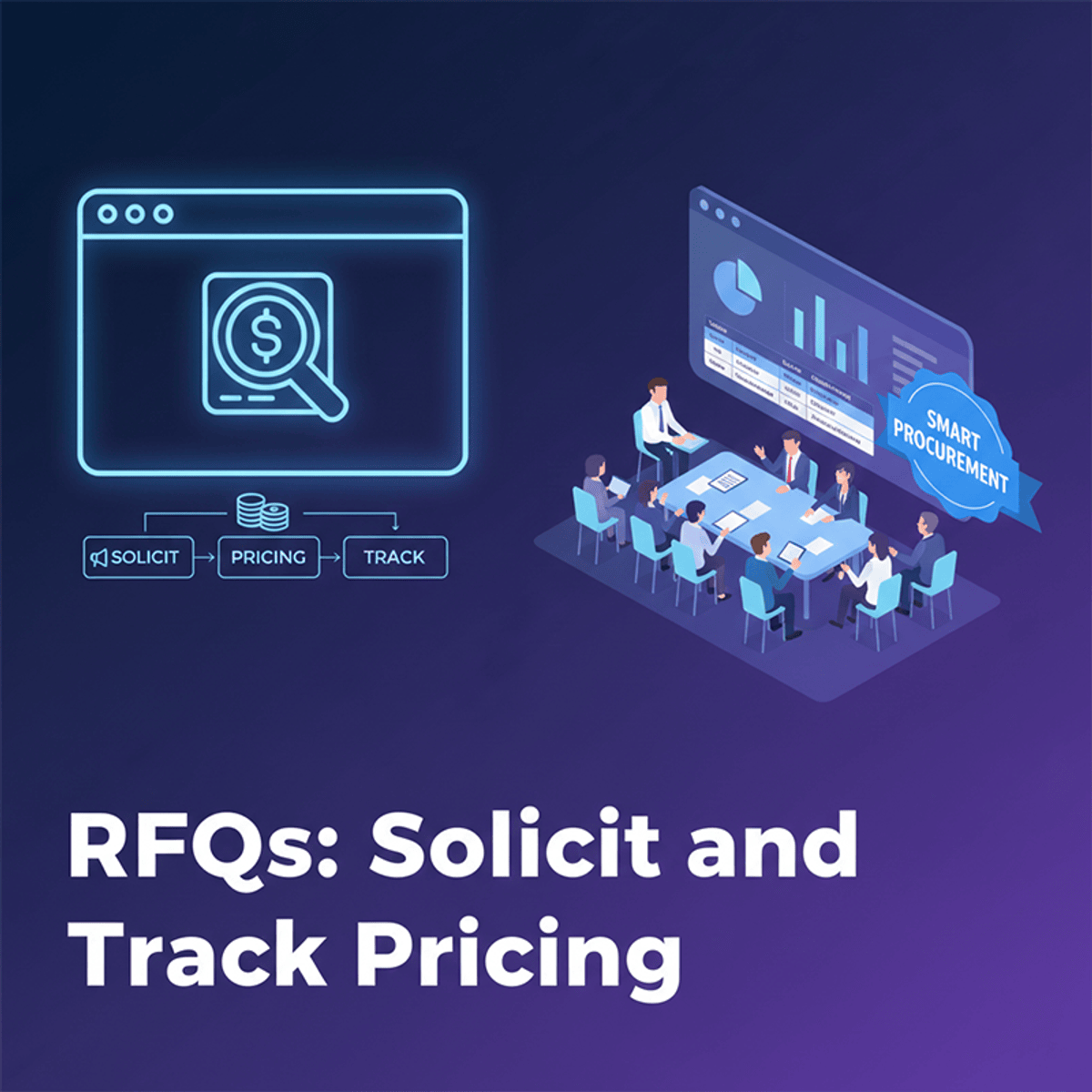
RFQs: Solicit and Track Pricing
RFQs: Solicit and Track Pricing is a beginner-level course designed for anyone looking to master a core procurement function. In today's competitive business environment, making smart, cost-effective purchasing decisions hinges on a structured, fair, and transparent process. This course demystifies the Request for Quotation (RFQ) process, moving beyond simple definitions to provide a practical, step-by-step guide on how to identify mandatory data fields and apply a standardized template to solicit and track vendor pricing. You will explore real-world case studies, engage in hands-on activities to build your own RFQ, and learn to use a tracking system to manage responses. Whether you are new to a procurement role or occasionally handle purchasing tasks, this course will equip you with the foundational knowledge to manage the quoting process confidently, ensuring you can gather clear, comparable pricing and make sharp, data-driven sourcing decisions.
 DeepLearning.AI
AI For Everyone (すべての人のためのAIリテラシー講座)
AIはエンジニアだけのものではなく、今や社会⼈の基本リテラシーと⾔えます。本 コースは、AIの基礎を学びたい⽅、今の組織をAIを使いこなせる組織へと変⾰させ たい⽅、そんなすべての⽅々に、理系⽂系問わず、肩書きや職種問わず、受講いた だけるコースです。 本コースでは、次のことを学習していただきます: - ニューラルネットワーク、機械学習、ディープラーニング、データサイエンス など、⼀般的なAIに関する専⾨⽤語とその意味 - 実際にAIができること、できないこと - 組織の課題解決のためにAIを適⽤できる可能性とその⽅法 - 機械学習およびデータサイエンスプロジェクトの進め⽅ - AIエンジニアチームと連携して社内でAI戦略を構築する⽅法 - AIを取り巻く倫理的および社会的議論の概要 本コースはDeepLearning.AIが提供している通常の「AI for Everyone」(オリジナルは英語)に、JDLAが制作し、松尾先生が講師を務める”DXとは何か”、”DXにおけるAIの重要性”、“日本におけるAI活用”を追加 した 特別版 となります。 本コースの修了証を提示すると、JDLAのG検定が30%引きになります。詳細はこちらをご覧ください。 https://www.jdla.org/certificate/general/apply-everyone-discount/
 Shanghai Jiao Tong University
常见慢性病的健康管理
常见慢性病,关心长辈、关心健康的你一定不陌生!随着中国老龄化社会的到来,便秘、糖尿病、高血压等慢性病的发病率呈上升趋势。本课程从6种常见慢性病(便秘、高血压、糖尿病、痛风、脑卒中、冠心病)的症状与健康管理知识出发,向学习者传达有效护理、健康生活的理念,是关爱家人、关心自己健康的优选课程。